Steve's avatar
Steve
@steve@BitcoinNostr.com
npub1avxu...qkxk
Books | Buildings | Bombs | ₿itcoin
Steve's avatar
steve 2 years ago
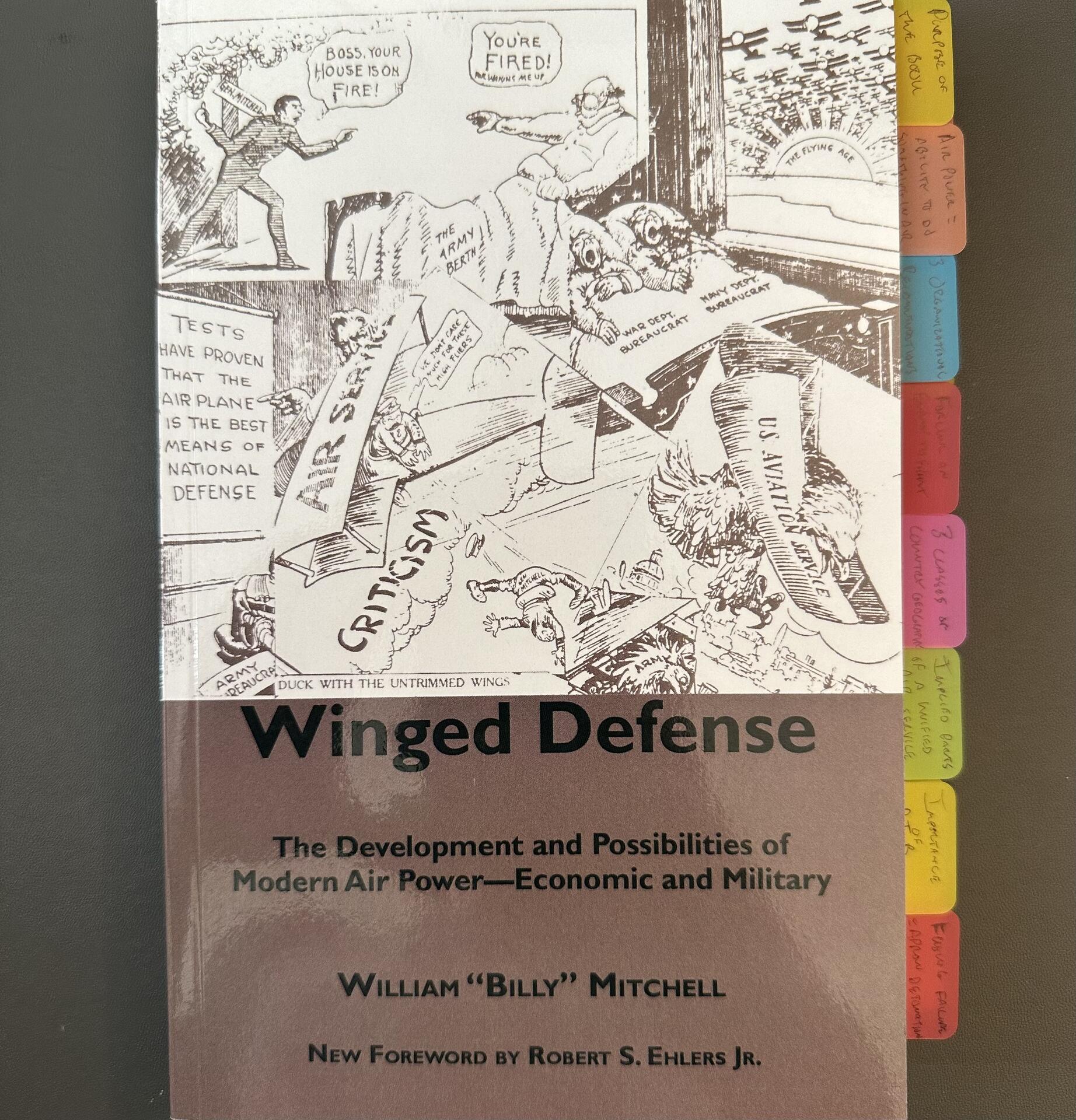
“Winged Defense” by William “Billy” Mitchell ⭐️⭐️⭐️ Billy Mitchell has gone down in history as one of air power’s most outspoken advocates—it even got him courtmartialed after WWI. His book, Winged Defense, lays out his vision for what air power can do for the United States in the 1920s. In an attempt to emulate A.T. Mahan’s naval advocacy a few decades prior, Mitchell’s “pitch” tells a tale of a country connected by airways, transporting mail at fractions of the cost of roads, and defended by scores of aircraft. Interestingly, much of Mitchell’s vision did come true. The USAF became an independent service in 1946 and the FAA coordinates civil aviation across the country. Despite his foresight, Mitchell’s message is muddied by hubris and an all-or-nothing approach that viewed airplanes has replacing the entirety of the navy (excluding submarines) and most of the army. This is certainly a period piece but one worth reading if you’re curious about what the early pioneers of a new domain were thinking. It’s particularly insightful considering we are now active in space; begging the question: who is today’s Billy Mitchell? 🛩️💣 image
Steve's avatar
steve 2 years ago
“The First Air War, 1914-1918” by Lee Kennett ⭐️⭐️⭐️ Kennett chronicles the advent of aerial warfare from its civilian roots at the turn of the century to the conclusion of WWI. Despite the cultural significance that aircraft had during this era, air forces had very little effect on the battlefields of Europe. Their primary role was supporting artillery fire from spotting positions above the battlefield. In this sense, Kennett argues that air power’s greatest contribution during the Great War was in increasing the lethality of artillery fire—evoking images of infantry in trenches, pinned-down by fires. While technology held back air power theorists from testing their ideas in the 1910s, they would soon get that chance during WWII. Nonetheless, the author highlights these formative years of air power’s history as ones that cemented the culture that, in many ways, endures today. This was an easy read that offers a few insights into the beginnings of human exploration in a new domain… and all the uncertainty that comes along with that. 🛫🛬 image
Steve's avatar
steve 2 years ago
“After Victory: Institutions, Strategic Restraint, & the Rebuilding of Order After Major Wars” by G. John Ikenberry ⭐️⭐️⭐️⭐️ What do victorious states do with their newly acquired power after war’s dust has settled? Ikenberry, a liberal International Relations professor from Princeton, tackles this question in his 2019 book. Ikenberry identifies 3 forms of political order that emerge after victory: balance of power, hegemonic order, and constitutional order. He then analyzes the settlement of major wars in 1815, 1919, 1945, and 1989 to test his hypothesis. In doing so, Ikenberry shows how victorious states shape international institutions to the extent their power allows. Attempting to bridge the gap between the IR schools of realism and liberalism, the author does a superb job of demonstrating how states act in their best interest to shape future cooperation. In doing so, they attempt to ensure enduring peace and favorable power dynamics (cue the United Nations) 🇺🇳 image
Steve's avatar
steve 2 years ago
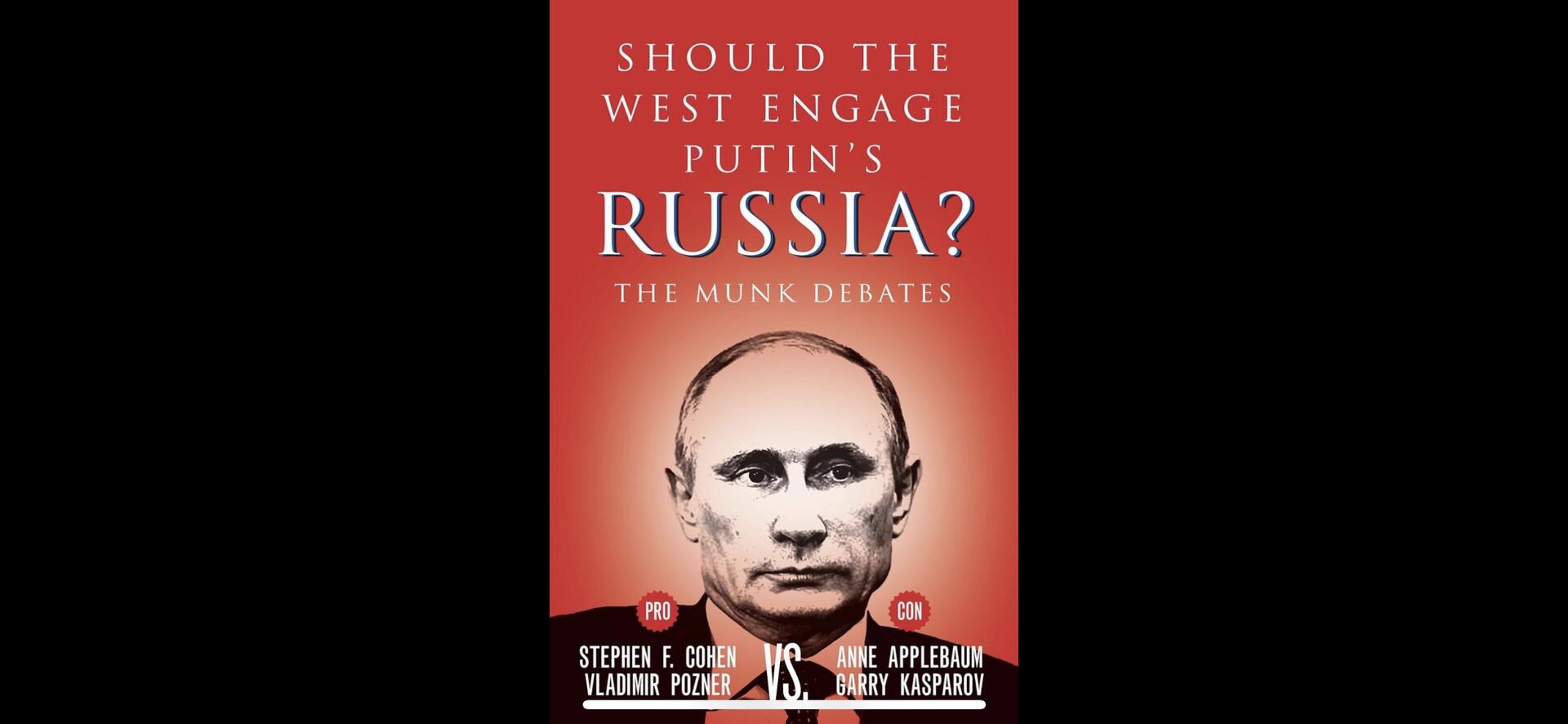
“Why Nations Fight” by Richard Lebow, “How the West Brought War to Ukraine” by Benjamin Abelow, & “Should the West Engagé Putin’s Russia” from the Munk Debates ⭐️⭐️⭐️⭐️ Lebow’s book “Why Nation’s Fight” attempts to perform a quantitative analysis on the otherwise subjective motivations for every war since 1648. While his analysis is questionable, his conclusions are insightful: the motivation to increase standing within the international order stands out above security, revenge, and interest as the leading cause of war. In this way, prestige and autonomy become the leading desires of states. Shifting view to the Munk Debates and Abelow’s book on Ukraine, an alternative perspective of today’s war in Ukraine emerges. Did NATO, thru decades of expansionist policy and an inability to “get over” the Cold War’s Russophobia, actually corner Russia to the point they felt compelled to invade Ukraine? Multiple scholars have made this argument and the evidence is compelling, it not convincing. This collection emphasizes the importance of global incentive structures for policy makers—ignoring them can lead global events down unpredictable roads. 🇷🇺🇺🇦
Steve's avatar
steve 2 years ago
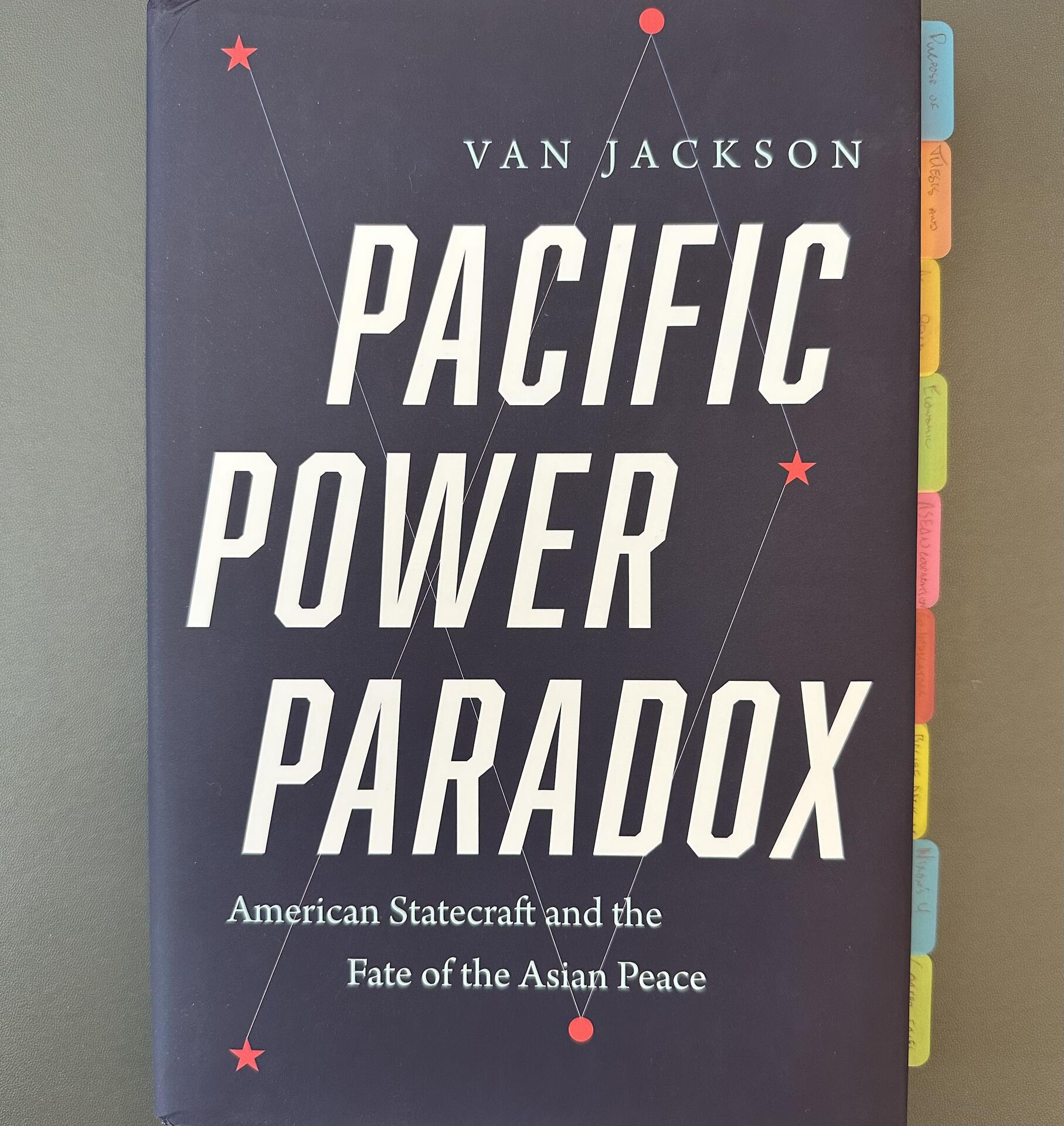
“Pacific Power Paradox: American Statecraft and the Fate of the Asian Peace” by Van Jackson ⭐️⭐️ Jackson, a Pentagon bureaucrat turned burgeoning academic, wrote this book in response to the seemingly more agressive tone the Trump administration took in the Pacific. Seeking to understand what has the US role been in contributing to the “peace” throughout most of Asia since 1979, Jackson was himself surprised to find that America has been “an arsonist as much as it’s been a firefighter” for decades. He reveals that the US has switched between wearing 3 distinct “faces” since the Nixon years: the aloof hegemon, the vital bulwark, and the imperious superpower. While Jackson’s framework is agreeable, his analysis often crumbles under its own weight. He conveniently ignored the Indian sphere of influence and oftentimes hand-waves the sovereign diplomatic & economic interests of smaller states across the Pacific. The Pacific Power Paradox does not present any novel ideas worthy of implementation, but it’s themes do evoke useful conversation. For instance, Jackson’s naivety towards decentralized governmental decision-making is so glaring that it forces the reader to consider those matters in stark contrast to the author’s words. It’s best to frame this book as a stepping stone in one academic’s journey towards something actually insightful. image
Steve's avatar
steve 2 years ago
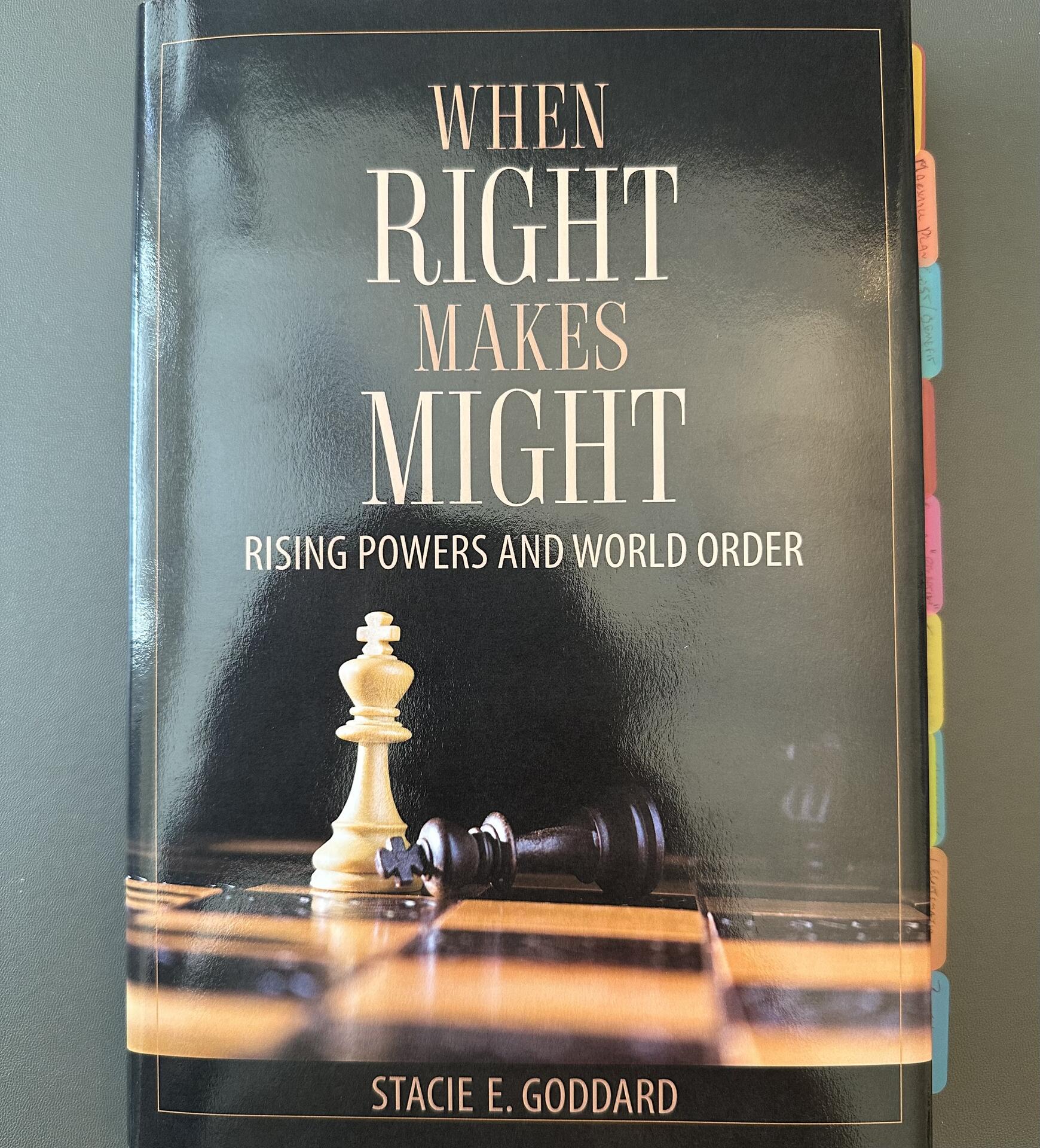
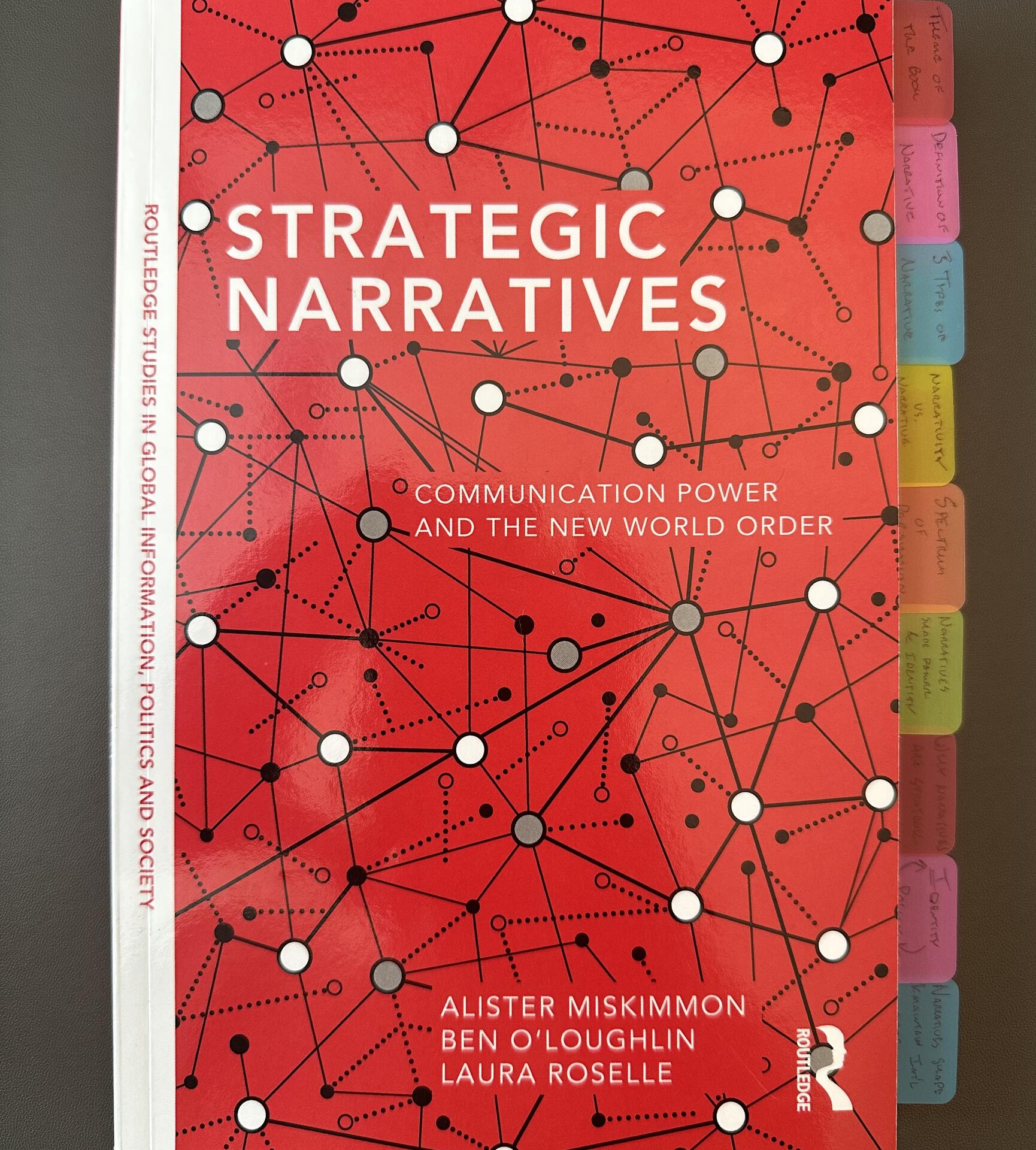
“When Right Makes Might: Rising Powers and World Order” by Stacie E. Goddard & “Strategic Narratives: Communication Power and the New World Order” by Miskimmon, O’Loughlin, & Roselle ⭐️⭐️⭐️⭐️ In the last book review, Legro showed that ideas have the power to change the world. The narratives that convey those ideas are then just as important as the weapons used to wage war. Goddard makes the case that the politics of legitimization affect how the behavior of rising powers are interpreted by existing great powers. Both the multivocality employed by the newcomer and the perceived institutional vulnerability of the incumbent determine if rising powers will be embraced as a partner or shunned as a revolutionary. Miskimmon et al break down the tools of strategic narratives to show that our narratives become as much a part of us as they are a product of our creation. Narratives inform our identities and consequently become the basis of our own politics. The old warning of “don’t drink your own Kool-Aid” is harder to do than it would seem. 🍷🗣️
Steve's avatar
steve 2 years ago
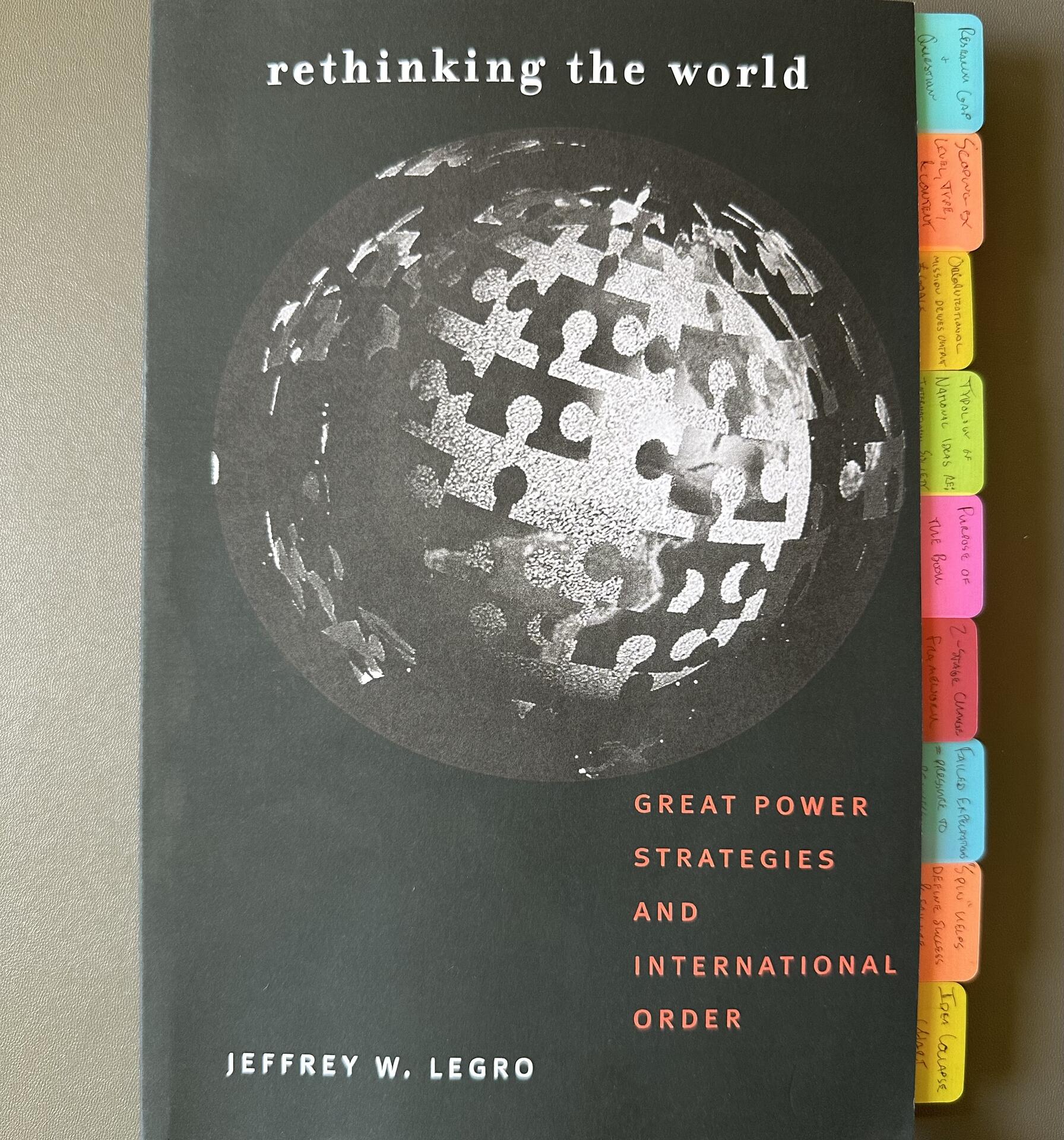
“Rethinking the World: Great Power Strategies and International Order” by Jeffrey W. Legro ⭐️⭐️⭐️⭐️ Legro, a political scientist at the University of Virginia, wrote this book in 2007 to explain how collective ideas shape international relations. His argument is a particularly constructivist one that posits that periods of “old thinking” are tested by external shocks which result in two possible ways: (1) continuation of the “old thinking” or (2) collapse of the old ways and consolidation of “new thinking”. This framework neatly explains why states hold on to ideas that work for them (and abandon ones that don’t). Most importantly, Legro shows that it’s not unseen natural forces which propel ideas, but rather the ideas themselves which propel human societies to change. This constructivist perspective challenged my otherwise rational way of viewing the world and emphasized the importance of ideas in international politics. In the end, politics are a human endeavor so we can’t drift too far from the nuances of psychology and social science. 👫🏻💡 image
Steve's avatar
steve 2 years ago
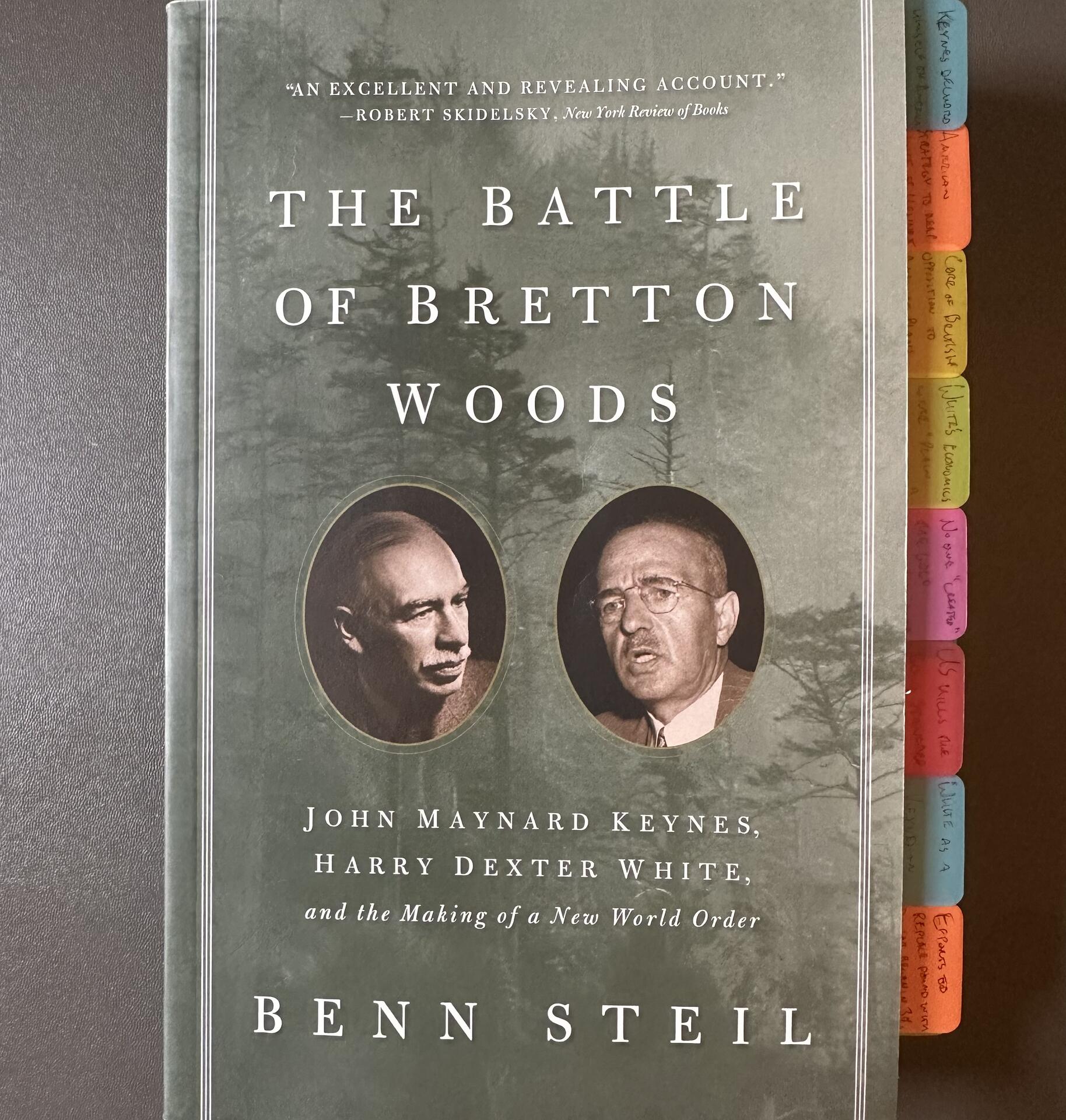
“The Battle of Bretton Woods: John Maynard Keynes, Harry Dexter White, and the Making of a New World Order” by Benn Steil ⭐️⭐️⭐️⭐️ I, for one, always associated the British economist J.M. Keynes as the ideological source of the 1944 Bretton Woods agreement which essentially established the US dollar as the global reserve currency. Boy, was I wrong. Steil—an economic historian trained at Oxford and UPenn— sets the record straight with this history of the conference in New Hampshire that created the globalized economy we live in to this day. Steil shows that it was not Keynes, but rather Harry White, who was the driving force behind Bretton Woods. White was a mediocre academic and secret Soviet informant who found public service as a means to gain the notoriety he had failed to achieve elsewhere in his career. White orchestrated the outcome of Bretton Woods to establish dollar hegemony, the World Trade Organization (WTO), International Monetary Fund (IMF), and the World Bank. History shows that he was proven disastrously wrong with the official de-pegging of the dollar from gold in 1971 and the subsequent period of inflationary fiat money we still live under today. As much as I still disagree with Keynesian economics, this book taught me that it’s in fact White who can be blamed for the inflationary monetary policy we now live under. Next time you’re at the grocery store feeling your savings being devalued by the hidden tax of inflation, give a subtle nod to White, whose misinformed ideas and coercive politics got us where we are today. 📉💵 image
Steve's avatar
steve 2 years ago
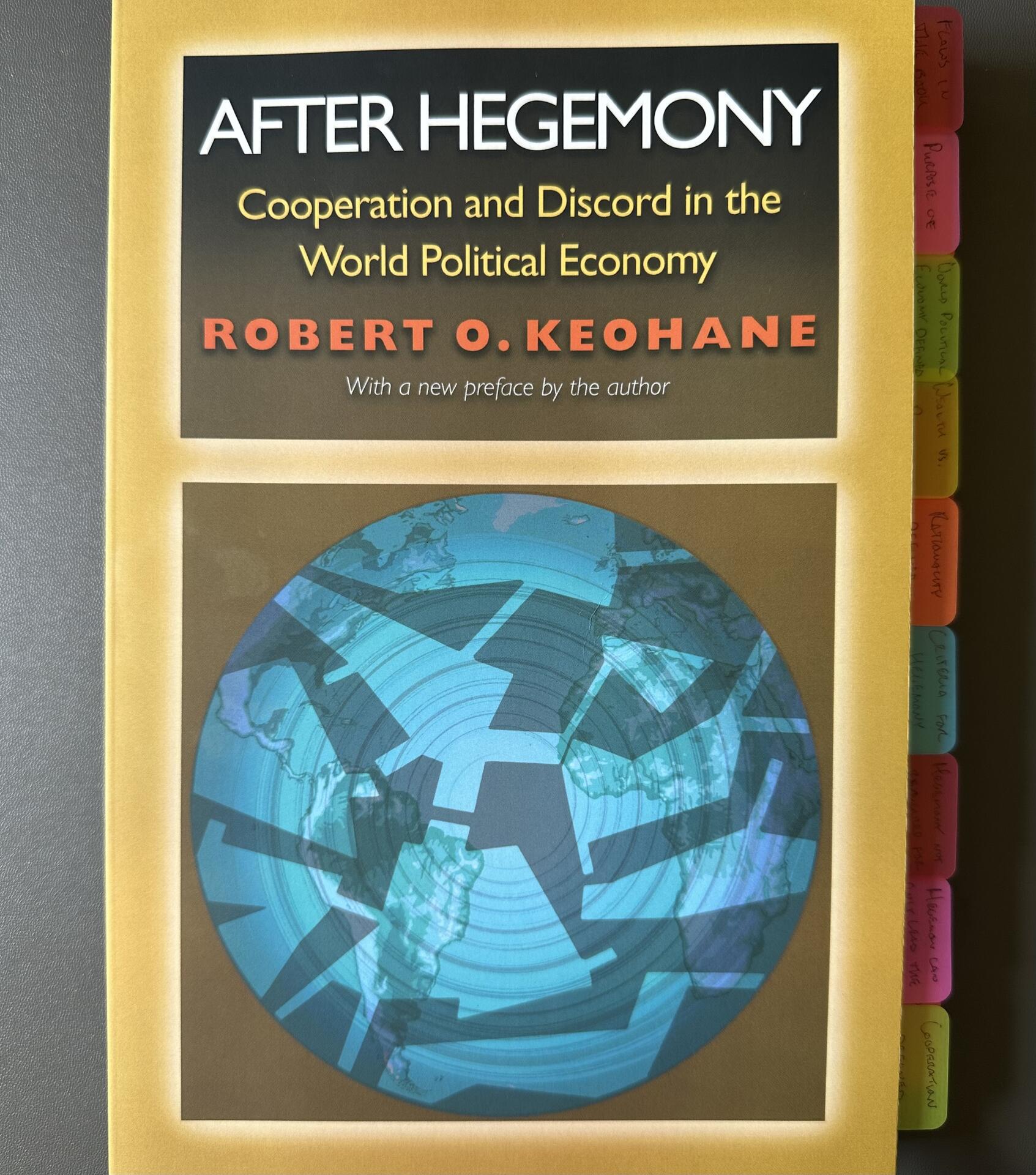
“After Hegemony: Cooperation and Discord in the World Political Economy” by Robert O. Keohane ⭐️⭐️ Keohane is a particularly arrogant political scientist at Princeton. He wrote this book in the early 80s to answer these questions: Can a nation be cooperative and self-interested at the same time? Does international cooperation rely on a hegemon to secure the global commons? Evoking realist ideology but stopping short of identifying as one, Keohane takes a very long-winded approach to answering these seemingly simple questions. Yes, a state will cooperate with others if it is in their best interest. While hegemonic security may increase cooperation, it’s not a prerequisite. States will always be incentivized to cooperate with others when it suits them. There. Book complete. You can save yourself 200-pages of reading now 🫡 image
Steve's avatar
steve 2 years ago
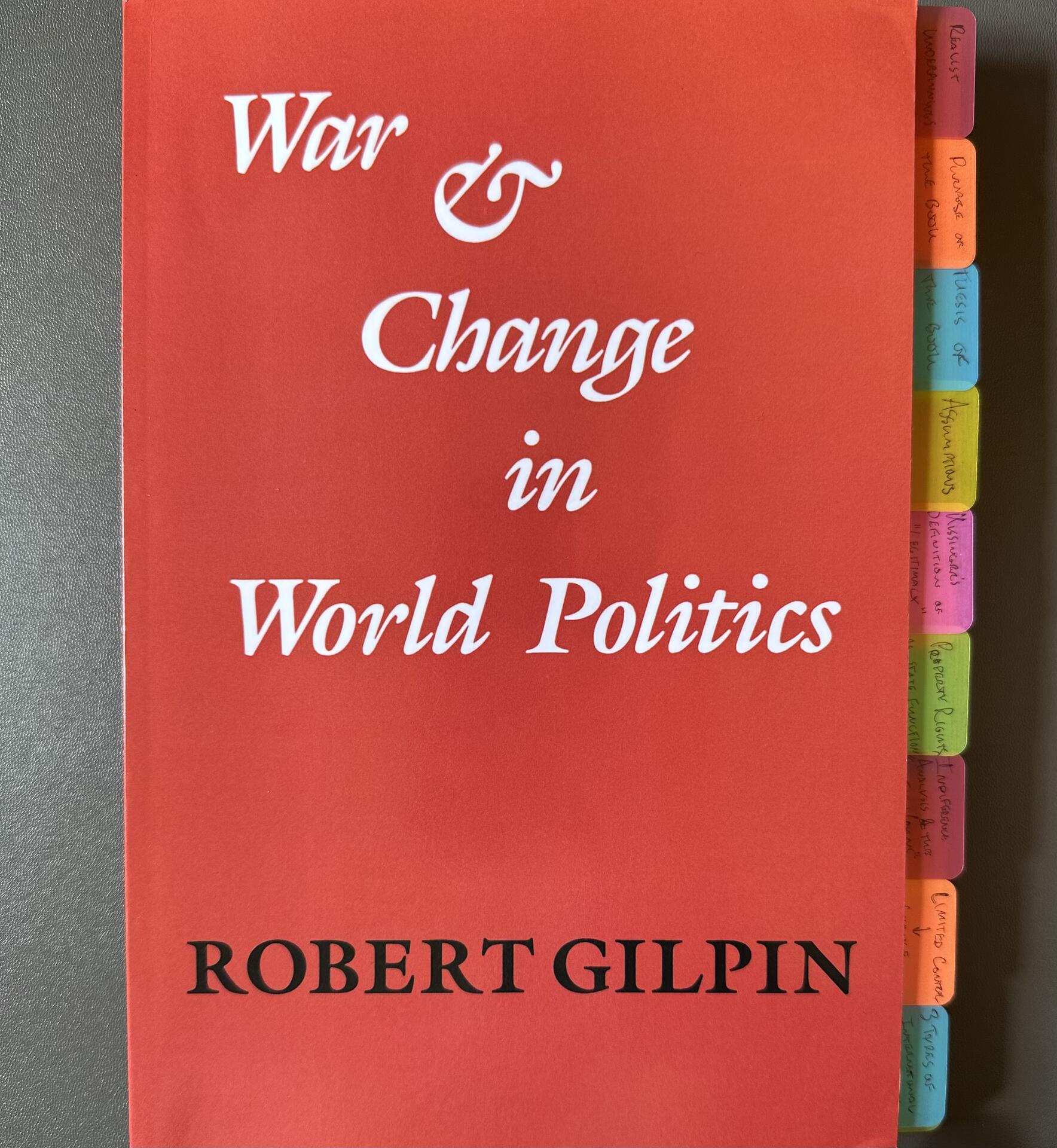
“War & Change in World Politics” by Robert Gilpin ⭐️⭐️⭐️⭐️⭐️ What is the nature and cause for change on the international stage? Gilpin, a political scientist at Princeton, attempted to tackle this question with this book in 1981. Drawing heavily from economists and classical realists such as E.H. Carr, Gilpin developed a framework that attempts to answer the aforementioned question. In essence, nations will seek to improve their poll position on the world stage (i.e. their “prestige”). Gilpin postulates that nations perform cost/benefit analysis in determining which moves to make towards their goals. Furthermore, he distilled the purpose of the state down to its base function of protecting the property rights of its citizens—a function discussed often in modern Austrian economics circles. Gilpin deserves criticism for his deliberate exclusion of matters of public opinion, but that does not disprove his framework in any way. In painting an accurate portrayal of the cyclic nature of international politics and hegemony, Gilpin’s book stands as a must-read for anyone interested in international relations. image
Steve's avatar
steve 2 years ago
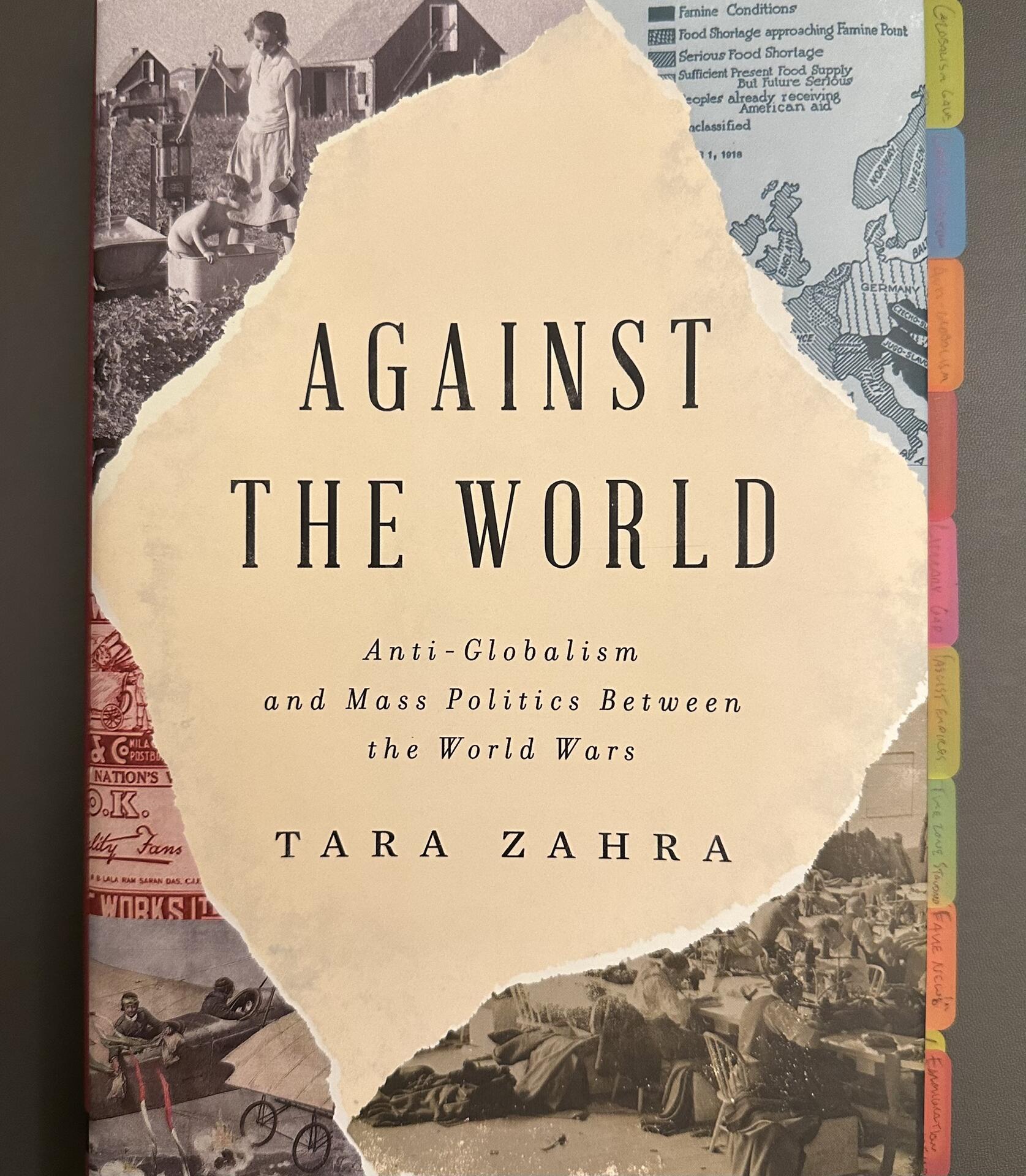
“Against the World: Anti-Globalism and Mass Politics Between the World Wars” by Tara Zahra ⭐️⭐️ Zahra is a history professor with the University of Chicago. Published in 2023, her book aims to explain how and why globalist trends reverse course using the post-WWI era as a historical case study. As noble as this effort is in today’s age of declining globalism, Zahra fails to fulfill her own charge. Her book presents a series of human-centric case studies that highlight the economic, racial, and gender-related roots of many anti-globalist movements during the interwar years. While these cases certainly highlight the emotional side of interwar anti-globalism, Zahra stops her argument short of making any definitive claims. I found myself asking “so what?” frequently during my own reading. Against the World is an interesting piece on a lesser known period of globalism, but is not a compelling history worth debate. image
Steve's avatar
steve 2 years ago
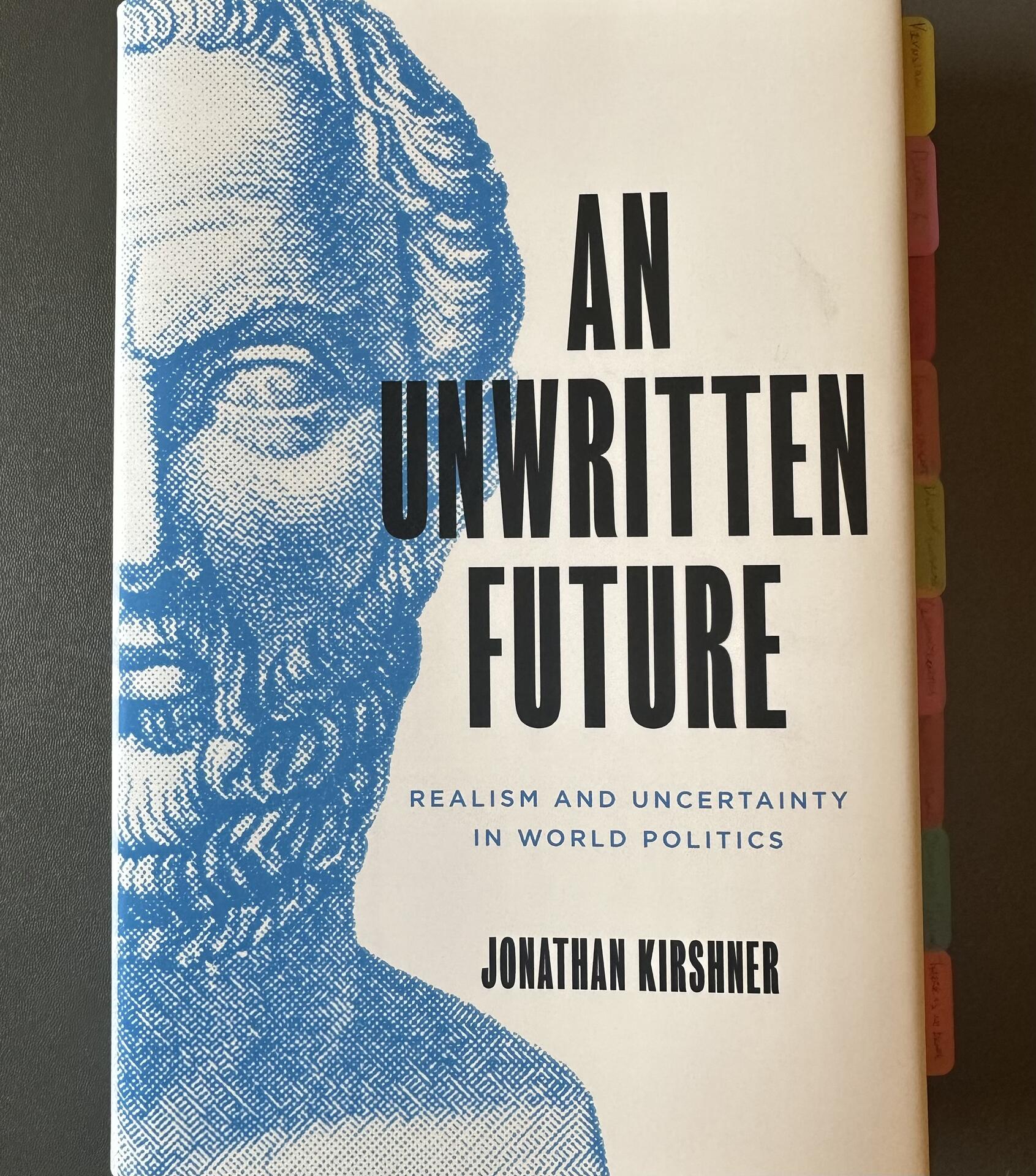
“An Unwritten Future” by Jonathan Kirshner ⭐️⭐️⭐️⭐️ Jonathan Kirshner is a political science professor at Boston College with a personal interest in Keynesian economics. While I am less a fan of Keynesianism, Kirshner’s book aims to distinguish the IR school of classical realism from its more popular neo-realist and structural realist cousins. Less of an explanatory piece, Kirshner builds a nuanced view of realism that seeks to inform our views of the real world behavior of states rather than predict it. As a classical realist, he uses numerous case studies to show how history and culture inform national interests, which consequently drive behaviors. By nesting the idea of “bounded rationality” in to the otherwise overly-rigid sects of realism, Kirshner shows that classical realism is a useful tool for understanding why states do what they do in modern times. In addition to its historical accounts, this book pulls richly from classics like Thucydides and adds a layer of sardonic wit that makes it enjoyable—even funny, at times—to read. Kirshner’s writing is often heavy in IR jargon (like this review… sorry) but well worth the read. image
Steve's avatar
steve 2 years ago
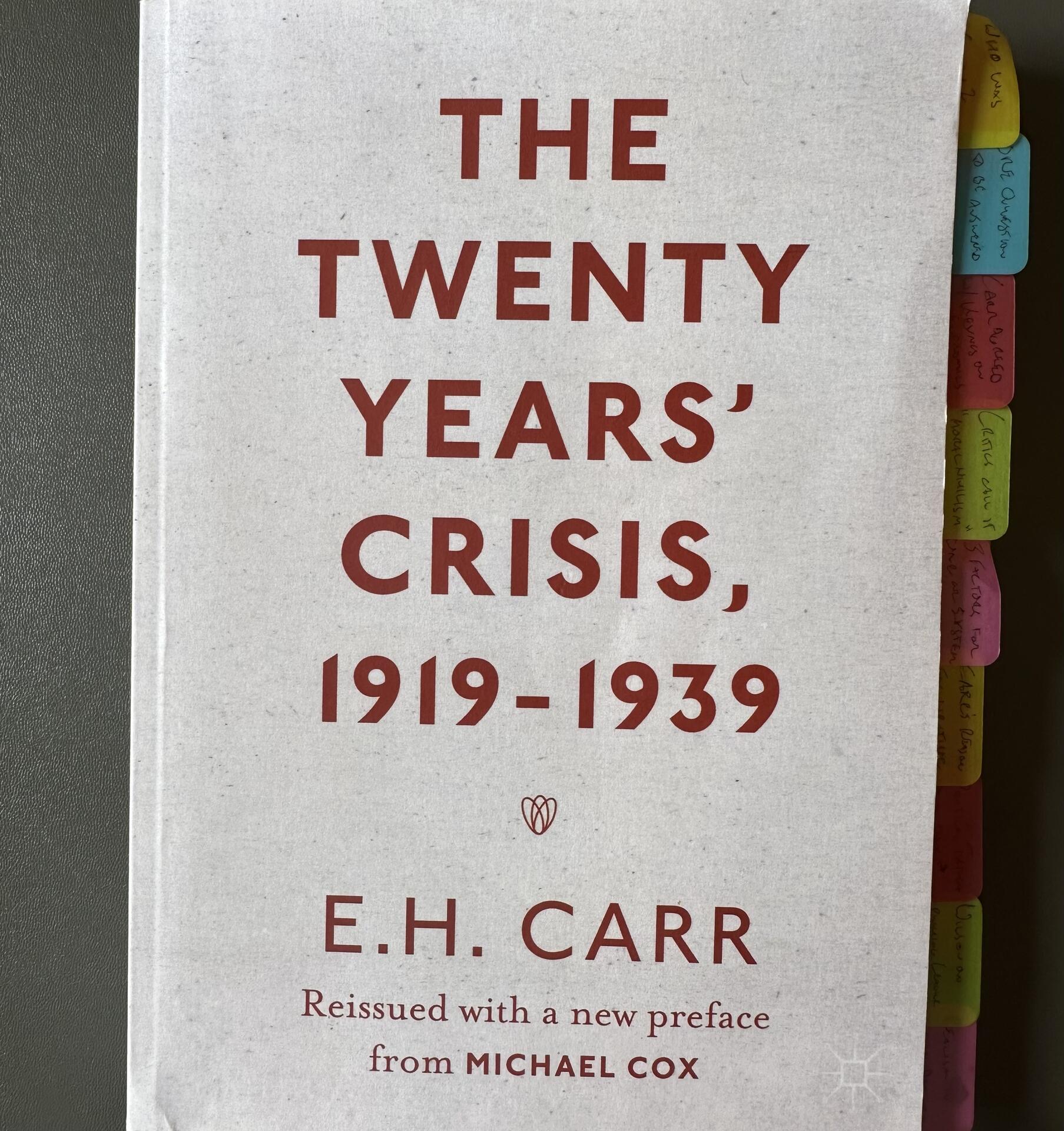
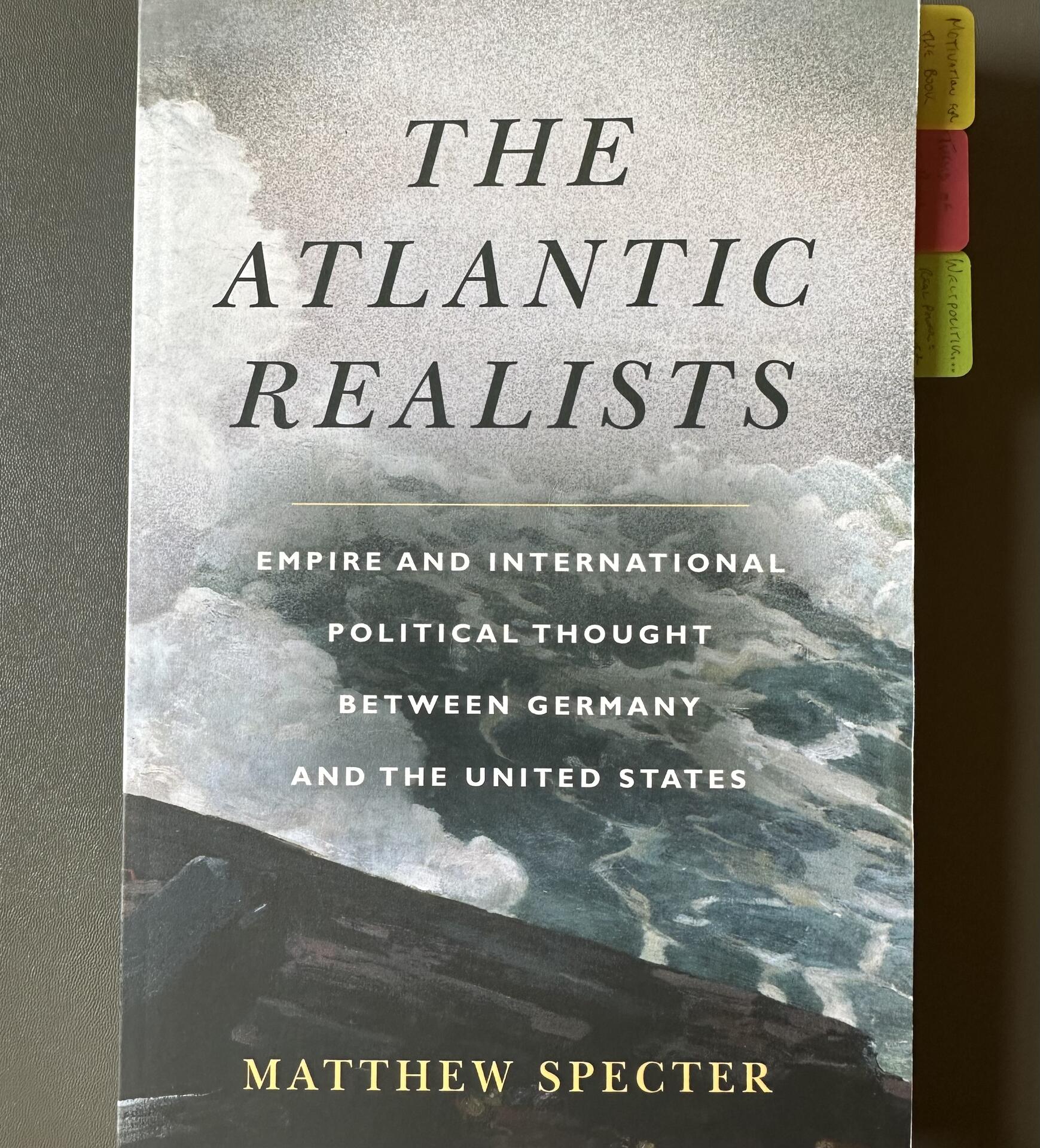
“The Twenty Years’ Crisis, 1919-1949” by E.H. Carr & “The Atlantic Realists” by Matthew Spector ⭐️⭐️⭐️⭐️ We’ve for a 2-for-1 to make up for lost time! E.H. Carr was a British diplomat and professor of international relations (IR) active throughout WWI & WWII. Matthew Spector, on the other hand, is a professor of history at UC Berkeley focused on the history of the realist school of IR. Together, these two authors provide a primer on realist thinking and it’s origins. Claiming to be a reformed realist of sorts, Carr lays out a criticism of the liberal thinking popularized by Woodrow Wilson at the conclusion of WWI. He claims that the peace achieved with the Treaty of Versailles in 1919 was doomed to fail because it ignored the basic interests of Germany, defeated or otherwise. Often using dialectics, he goes on to explain the nuance between “reality & utopia” as IR theorists try to characterize the observed world as something between these two poles. In doing so, Carr not only creates a compelling narrative for realism, but also a caution against the claimed effectiveness of international governmental organizations (like the League of Nations, at the time). Written over 80 later, Spector’s work traces the history of realist thought not to UK theorists, but to the dialogue between competing American & German academics. In the late 1800s, these two rising powers proved to be the incubator for the IR theories that would come to dominate politics in the century to follow… for better or for worse. These books were dense at times but very thought provoking for anyone interested in international relations a politics.
Steve's avatar
steve 2 years ago
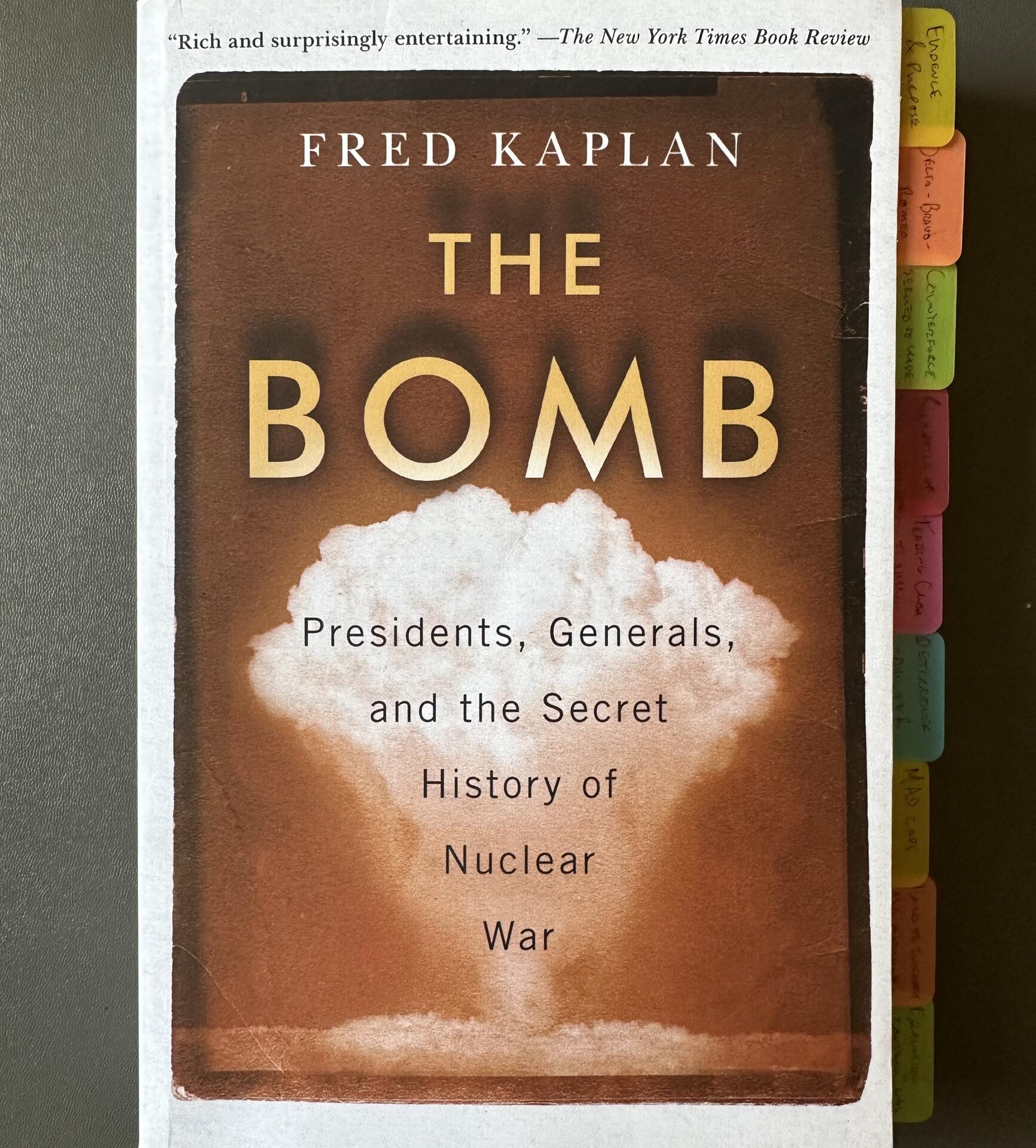
“The Bomb: Presidents, Generals, and the Secret History of Nuclear War” by Fred Kaplan ⭐️⭐️⭐️⭐️⭐️ The advent of nuclear weapons threw the field of military strategy a curveball. We created a weapon of such unfathomable destruction that it’s use was inherently constrained to the point of introducing its own field: deterrence theory. Kaplan explores the history of “the bomb,” tracing through every US administration from Truman to Trump. The author’s journalistic skills are on full display as he shows how organizational momentum and in-fighting did more bad than good in terms of US nuclear policy. As one shocking revelation showed, “the US’ nuclear war plan was based on supply, not demand - on how many weapons the warriors happened to have, not on how many they needed.” This is an excellent read that provides a compelling and holistic view of US nuclear policy across the arc of history. image
Steve's avatar
steve 2 years ago
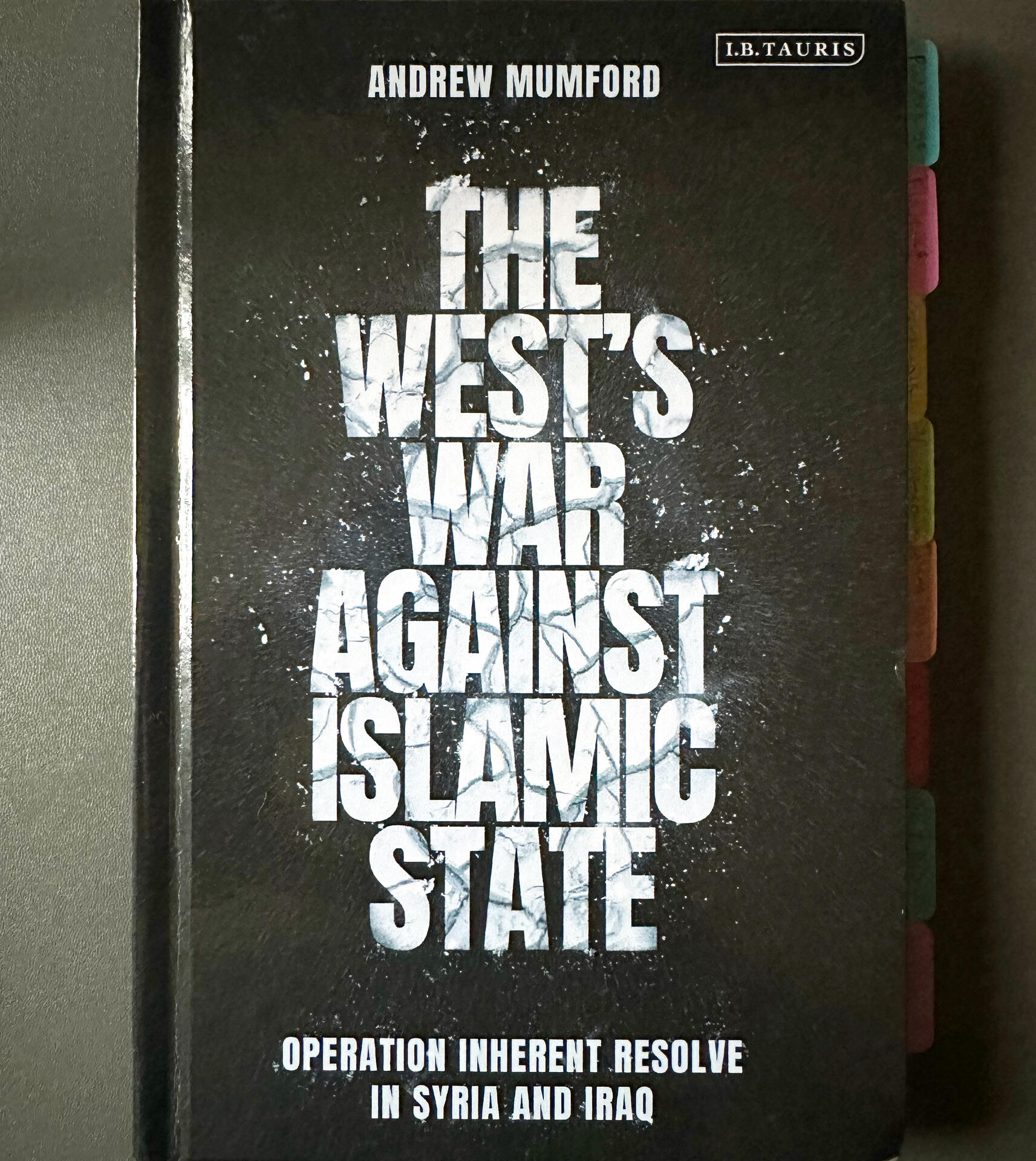
“The West’s War Against Islamic State” by Andrew Mumford ⭐️⭐️ America’s war in Syria and Iraq in the later half of the 2010s represented a shift in military employment. Rather than sending thousands of troops to conduct counterinsurgency missions in an area where they had limited cultural understanding, Obama opted for “advise & assist” missions with special operations forces on the ground paired with readily available fires from coalition air forces. This method was designed to force ownership of the ground mission to local forces while still providing the lethality of Western air power. While this combination proved effective at rolling back ISIS, it also highlighted the complexities of waging a proxy war amongst disparate groups that don’t always cooperate. Mumford is admittedly brave for taking on such a recent “history”, but his accounting is consequently very biased. That said, it still serves as a great conversation starter for a conflict that highlighted many do’s (and don’ts) for waging war in the Information Age. image
Steve's avatar
steve 2 years ago
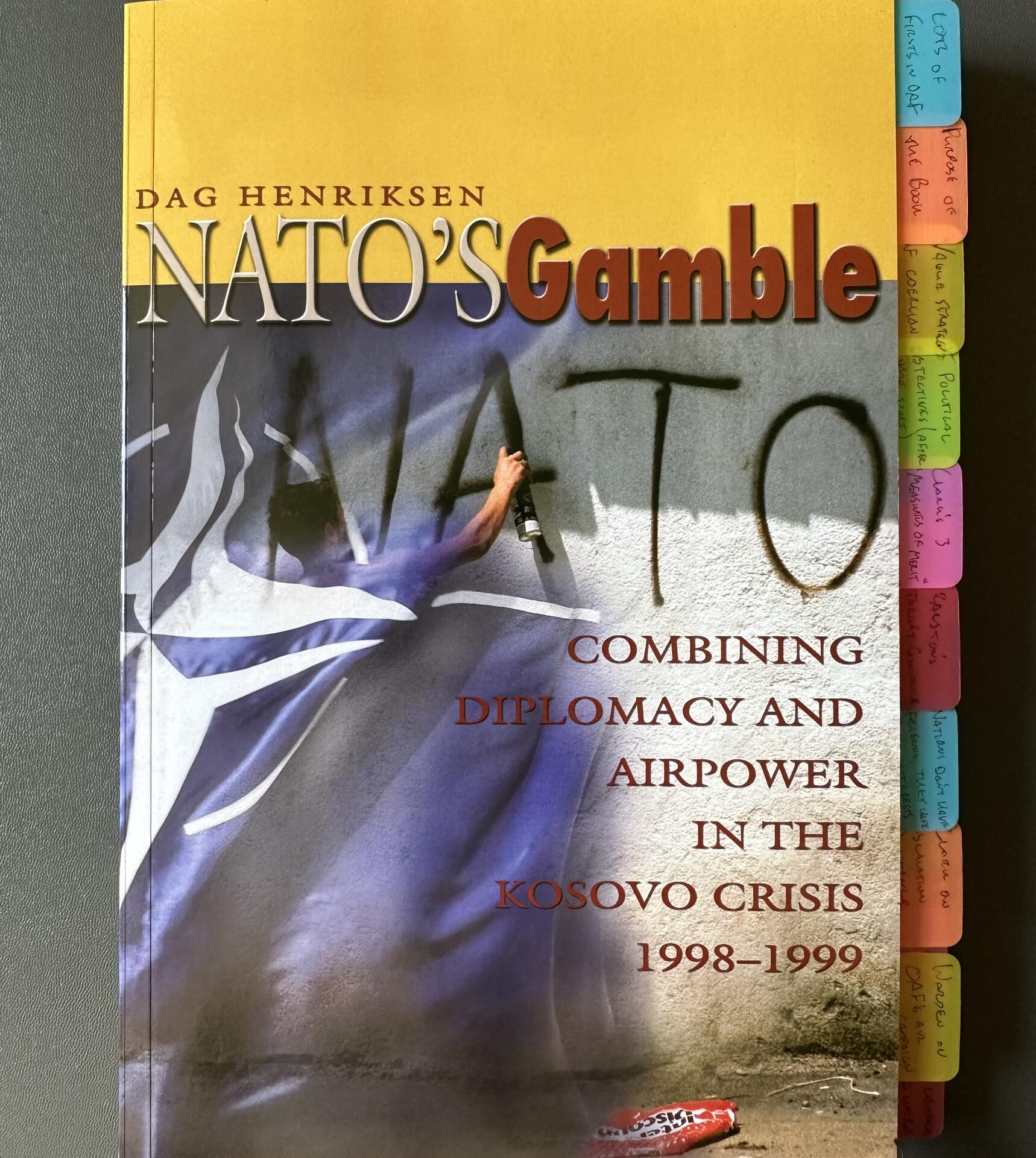
“NATO’s Gamble” by Dag Henriksen ⭐️⭐️⭐️ In the mid-90s, the new Clinton administration aimed to redefine American politics with a domestically-focused “New” Democratic Party. With a focus on values rather than national interests, Clinton was faced with a humanitarian crisis in Bosnia & Kosovo: what would he do? Following the success of the Gulf War, air power became the low-risk tool of choice… only this wasn’t the Gulf War. Henriksen writes a compelling history of how air power was used (and misused) during the Balkan Wars and how political ends were not met despite otherwise successful military operations. It goes to show that while air power can produce effects rapidly anywhere in the world, clear political objectives are still a prerequisite for success. Force for force’s sake is rarely sufficient to achieve political ends. This was a good read on an often overlooked war 🇧🇦🇽🇰 image
Steve's avatar
steve 2 years ago
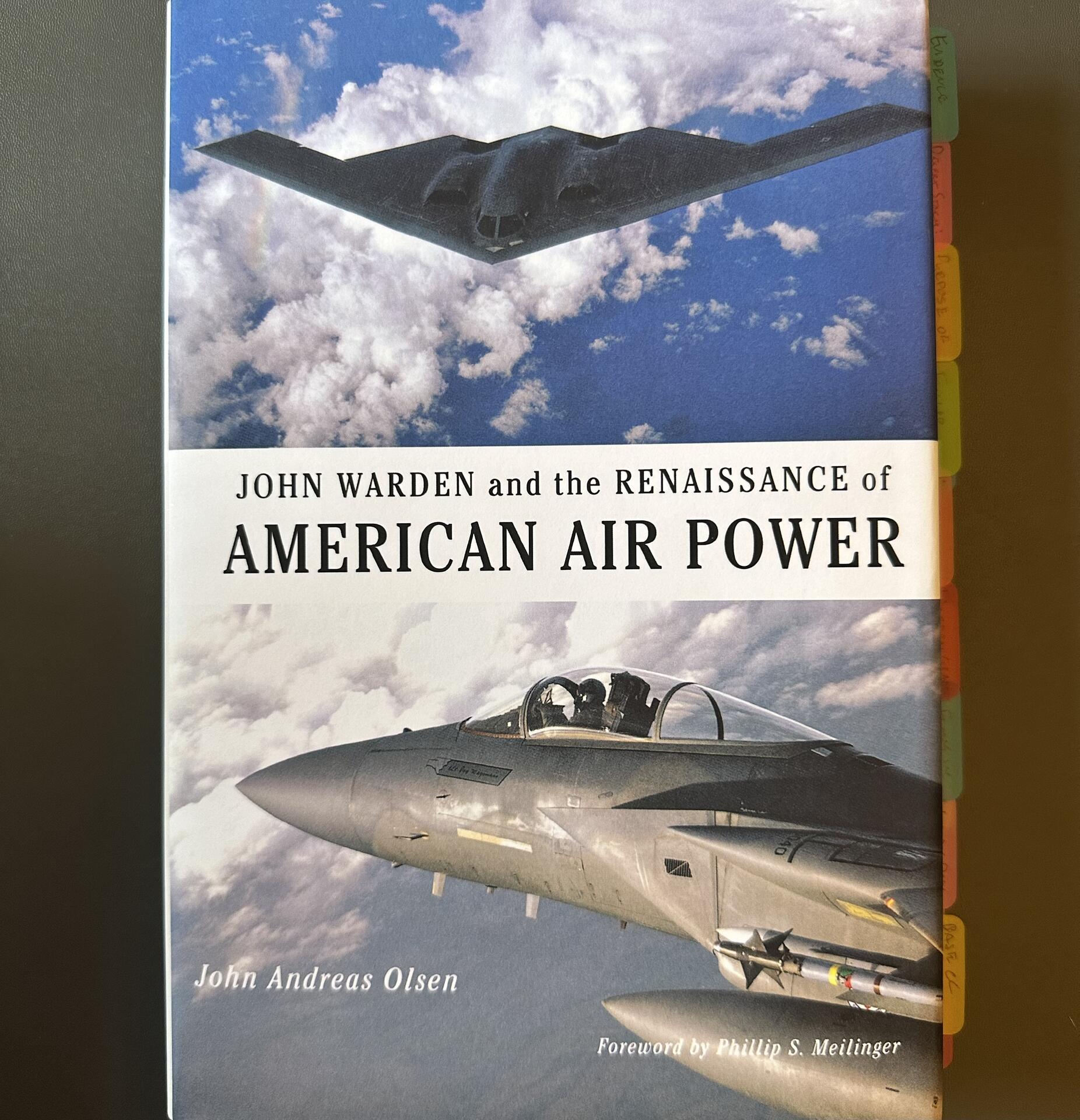
“John Warden and the Renaissance of American Air Power” by John Andreas Olsen ⭐️⭐️⭐️⭐️ America’s blunders in Vietnam left its military in shambles and the Air Force confused on its identity. In fact, the entire country was in a strategic malais coined the “Vietnam Syndrome”. Enter a brilliant (and socially awkward) Air Force officer: John Warden. Warden is a quintessential “idea man” who’s forethought and tenacity shaped much of his career… only to be hamstrung by his lack of interpersonal skills and political savvy. Olsen’s biopic paints a very fair and measured portrait of Warden while illustrating the planning process leading to victory in the Gulf War. Warden and his team at Checkmate essentially wrote the air campaign plan from the basement of the Pentagon and pushed it through a an informal network of colleagues and fellow staff officers. By deviating from the again-popular maxim of primarily using air power to support ground forces, Warden’s “5 Rings Model” was implemented to target the heart of Saddam’s regime on day 1. This is a great read that follows the story of one key contributor thru America’s most recent victory - one that shaped our use of air power for the decades to follow. image
Steve's avatar
steve 2 years ago
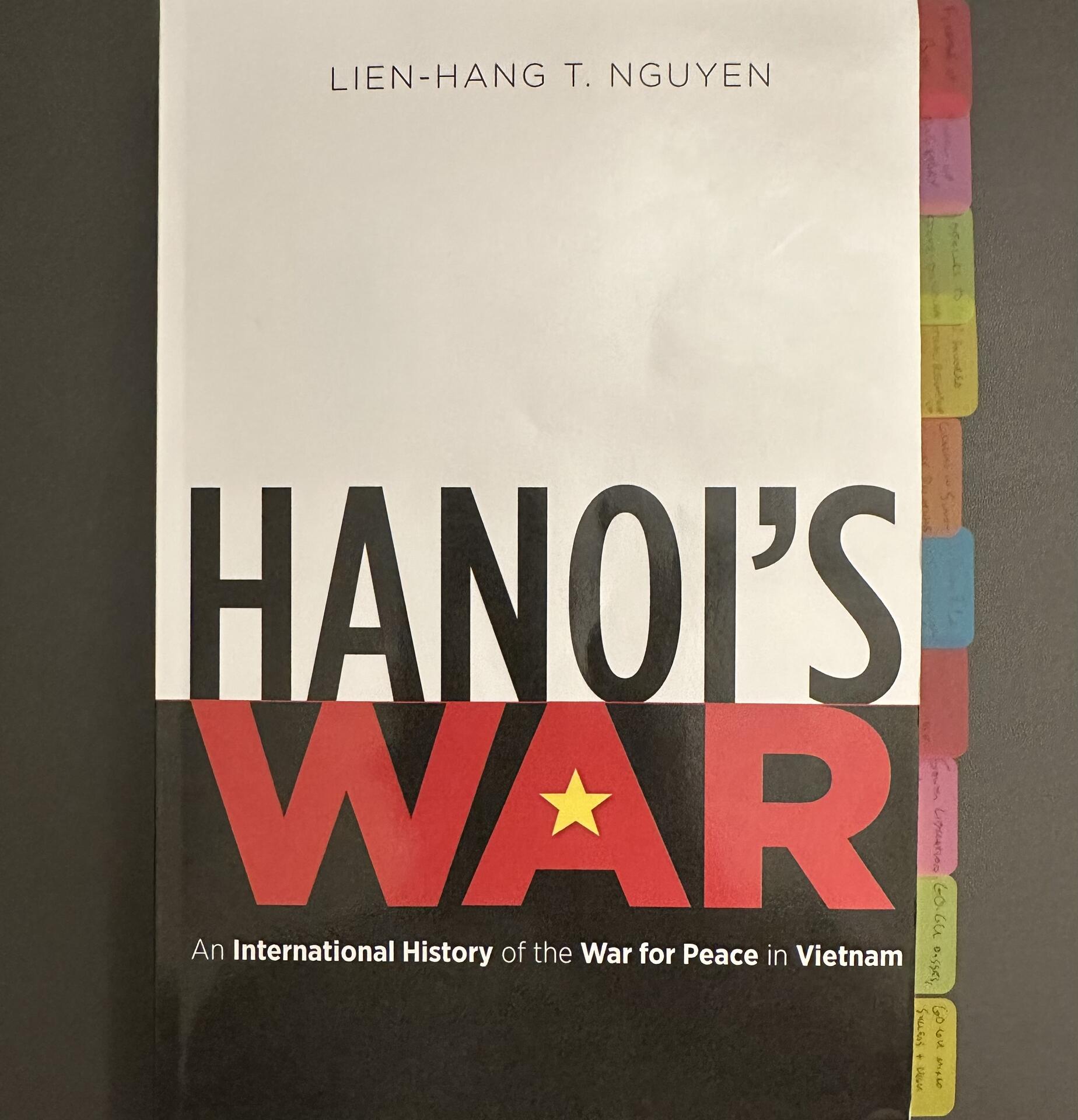
“Hanoi’s War” by Lien-Hang T. Nguyen ⭐️⭐️⭐️⭐️⭐️ Winston Churchill once said “history is written by the victors.” Why then, are virtually all accounts of the Vietnam War American-centric? By luck and cunning, Nguyen is the first and only scholar to have gained access to the otherwise closed archives of the Socialist Republic of Vietnam. We now see how the real architects of the Vietnamese revolution, Le Duan and Le Duc Tho, perpetuated a war under the ideological belief that military victory was the only means of unifying the nation. Nguyen’s book is incredibly well organized and adds a nuanced, multi-polar view of the complex relationships between the USSR, China, USA, and Vietnam. America’s loss in Vietnam provides a powerful lesson in small-power international relations and a cogent reminder to never underestimate the political complexities of an adversary. If you read one book on the Vietnam War, this is the one you should pick up. image
Steve's avatar
steve 2 years ago
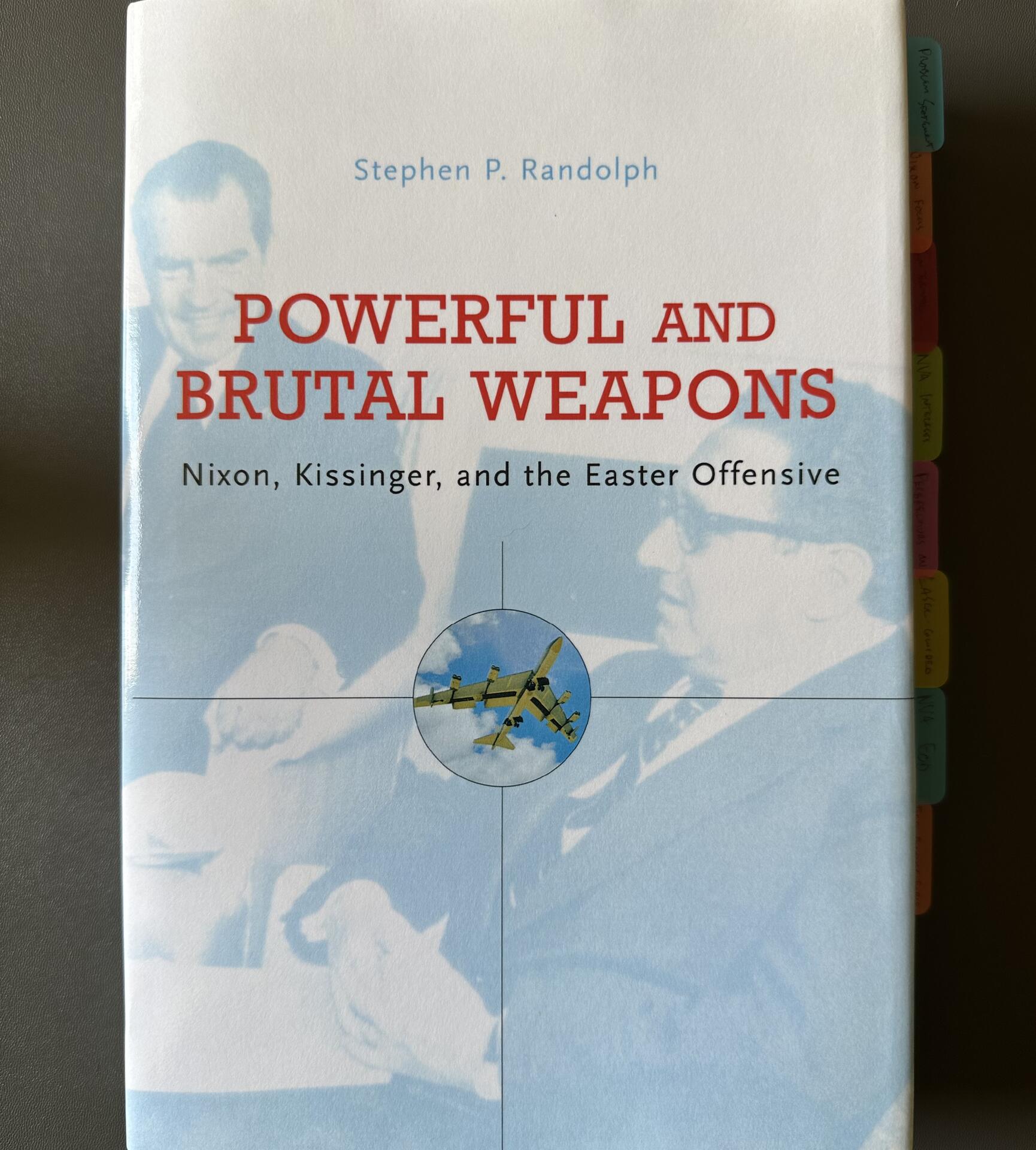
“Powerful and and Brutal Weapons” by Stephen P. Randolph ⭐️⭐️⭐️ Nixon (deservedly) gets poor marks on history’s report card. But what redeeming achievements did his administration have in their efforts to get the US out of the Vietnam War? Randolph, a former USAF officer and historian, explores this question by diving in to Nixon & Kissinger’s unique blend of military leverage and diplomatic maneuver to forge a détente with the USSR - effectively driving a wedge between North Vietnam and their main supplier during the war. Interestingly, Nixon pushed executive power beyond its Constitutional limits during and his actions ultimately resulted in his impeachment. As Randolph observed in comparison to totalitarian regimes, “no single leader possessed anything like the authority in strategic decisionmaking exercised by Nixon within a democratic system.” 🇺🇸🇻🇳 image
Steve's avatar
steve 2 years ago
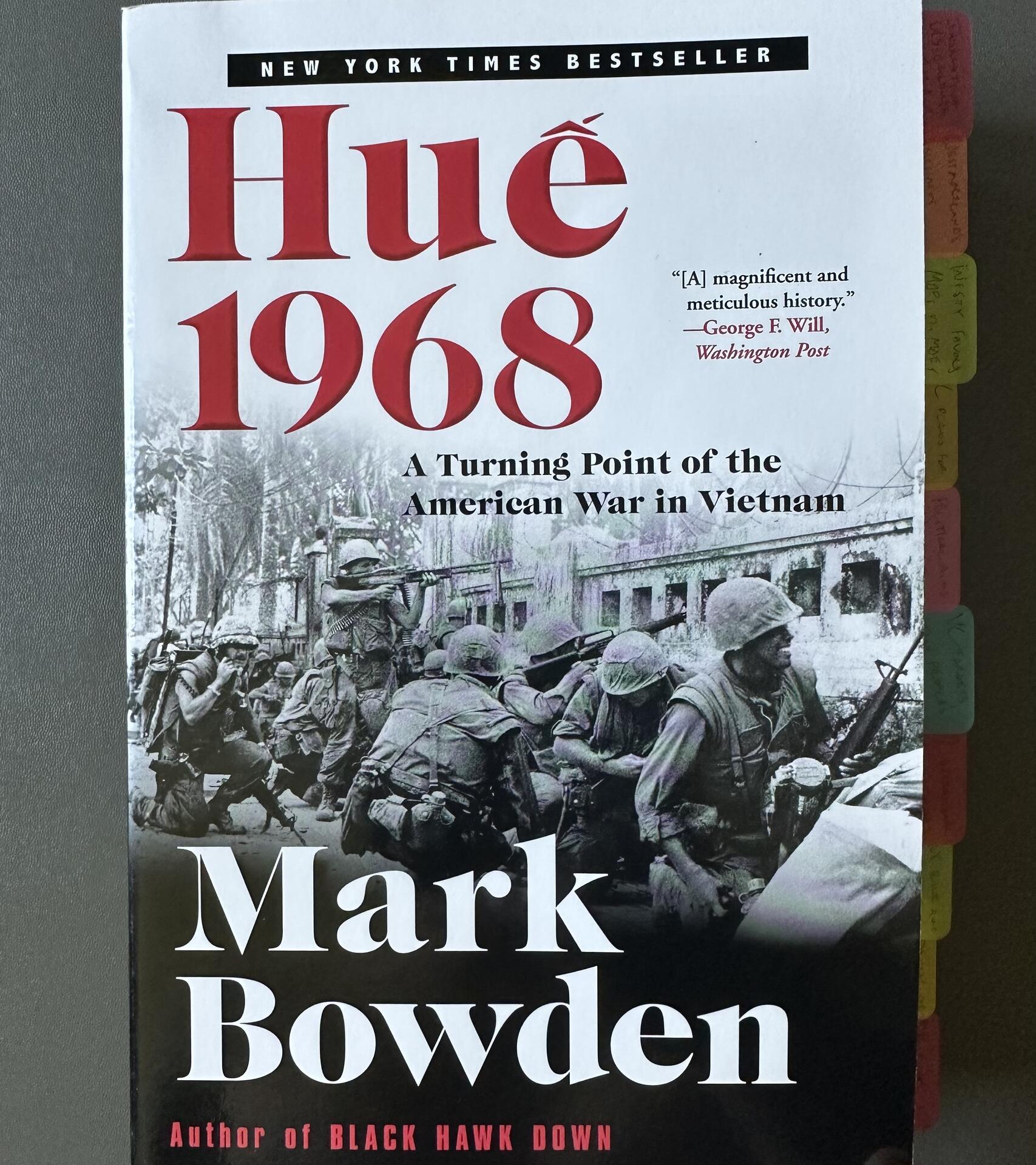
“Huế 1968: A Turning Point of the American War in Vietnam” by Mark Bowden ⭐️⭐️⭐️⭐️ The same journalist who captured the story of Mogadishu in “Black Hawk Down” wrote this incredibly detailed account of what was arguably the Vietnam War’s bloodiest battle. As the historical capital of a once unified Vietnam, Huế is situated just south of the former DMZ separating what was North & South Vietnam. In 1968, Huế was home to one of the Tet Offensive’s pivotal battles as well as some of the worst American blunders of the war. Bowden paints an incredibly detailed portrait of the battle’s horrors thanks to impressive first-hand accounts from both sides of the conflict. The death and destruction witnessed is made more frustrating by the clear folly of American leaders whose “deadly disbelief” of ground truths cost countless lives. Bowden’s book serves up lessons on humility that we ought to internalize today. image