Steve

Zero-JS Hypermedia Browser

avatar
Steve
@steve@BitcoinNostr.com
npub1avxu...qkxk
Books | Buildings | Bombs | ₿itcoin

Notes (20)

“The Case for U.S. Nuclear Weapons in the 21st Century” by Brad Roberts ⭐️⭐️⭐️⭐️ Roberts is an interesting author known for bridging the gap between academia and policy-makers in the federal government. As his only published book, “A Case for U.S. Nuclear Weapons” provides a historical analysis of U.S. nuclear policy from the end of the Cold War in 1991 to the Obama administration. He takes a refreshingly operationalized approach to nuclear deterrence by exploring nuclear deterrence “theories of victory” for both the U.S. and its adversaries (DPRK, Iran, Russia, China) to identify pressure points for coercive leverage. Roberts categorizes activities across the competition continuum into three bins: gray, red, & black-and-white, representing escalation tiers. Ultimately, Roberts makes the case that the U.S. nuclear posture is not currently built to perform the tasks asked of it. Specifically, he calls for an increased supply of low-yield weapons along with dual-capable aircraft permanently stationed in places like the Korean Peninsula. This was a compelling read that highlights the continuity between the Obama & Biden administrations, while simultaneously acknowledging the realities brought to the forefront during the Trump administration. 🛩️☢️ image
2023-12-15 17:19:06 from 1 relay(s) View Thread →
“Nuclear Strategy in the Modern Era: Regional Powers and International Conflict” by Vipin Narang ⭐️⭐️⭐️ The study of coercion and nuclear deterrence is primarily one of qualitative studies—it’s difficult to perform quantitative analysis when only two atomic weapons have ever been operationally employed throughout history. Narang, a chemical engineer turned political scientist, attempts a genuine mixed-methods analysis to answer two questions: Why do states choose specific nuclear postures and do those chosen postures effectively deter adversaries? Narang uses the cases of China, India, Pakistan, France, Israel, and South Africa to explore the efficacy of three distinct options: catalytic, assured retaliation, and asymmetric escalation nuclear postures. While his analysis is fraught with potentially damning assumptions, Narang approaches this difficult subject in a manner that does prove useful for policy advocates and academics alike. His conclusion that only asymmetric escalation postures actually produce deterrent effects is also compelling, even if you take the analysis with a grain of salt. This book was ambitious in its analysis but definitely helps the reader categorize a topic as “fuzzy” as nuclear coercion. ☢️ image
2023-12-14 16:32:21 from 1 relay(s) View Thread →
“Emotional Choices: How the Logic of Affect Shapes Coercive Diplomacy” by Robin Markwica ⭐️⭐️⭐️⭐️⭐️ Not many books can be deemed “transformative” but damn… this one earned that distinction. Markwica challenges prevailing scholars from international relations, psychology, AND coercion theory to present a novel framework for how emotions affect coercive diplomacy. The author begins this ambitious task with a thorough, multi-disciplinary literature review that reconciles traditional realist and liberal IR views thru a constructivist lens. Our identities, cultures, and norms shape the emotions we feel when exposed to outside stimuli. Those emotions, consequently, affect both our appraisals of emerging situations as well as our actions in response to them. Markwica tests his framework by applying it to two cases: the 1962 Cuban Missile Crisis and the 1991 Gulf War. Across both cases, the author shows that 50% of the key decisions made by Nikita Khrushchev and Saddam Hussein during each crisis were heavily influenced by their felt emotions and the cognitive constructs that informed them. This was a very structured book that reads more like a dissertation than a novel—a fact which only aids the reader in absorbing the multi-disciplinary points made by the author. Ultimately, the conclusion is clear: your feelings DO matter. ☺️😥😱😡 image
2023-12-11 21:54:02 from 1 relay(s) View Thread →
“The Dynamics of Coercion” by Daniel Byman & Matthew Waxman ⭐️⭐️⭐️ Whereas Brodie and Schelling sought to characterize and describe the coercive environment they observed in nuclear-age international relations, Byman & Waxman aimed to describe the exact mechanisms by which coercion affects behavior. The authors describe five commonly used coercive mechanisms: power base erosion, unrest, decaptitation, weakening, and denial. By analyzing their adversary in great detail, a would-be adversary can identify pressure points that are vulnerable to coercion. Then, by matching the proper instrument (ex. air strikes or nuclear threats), the coercer can apply leverage to said pressure points to induce some form of desired behavior. The authors apply their categorization schema to a plethora of international affairs dating from the 1956 Suez Crisis up to the Balkans War in the 1990s. While the book is hardly prescriptive, it does build on previous works to add a much-needed common vernacular on coercion studies, particular as it relates to deterrence theory. This wasn’t a thrilling read, but it delivers on its promises by providing a solid foundation for future work. 🥕🗡️ image
2023-12-11 02:27:36 from 1 relay(s) View Thread →
“Arms and Influence” by Thomas C. Schelling ⭐️⭐️⭐️⭐️⭐️ The late Prussian general, Carl Von Clausewitz, once described war as a contest of wills. Victory is then achieved when your opponent does what you want. Schelling expands on this fundamental idea to great detail, showing how states and individuals alike use force (or the threat of force) to coerce others. Schelling makes an important distinction in defining coercion. He splits it up into two sub-categories: deterrence (“don’t do that, or else”) and compellence (“do what I say, or else”). This distinction is subtle but incredibly relevant. Anyone who has spent even a small amount of time with children has used both deterrence and compellence strategies—it is a fundamental aspect of all bargaining behaviors. On the world stage, nations bargain in a very similar fashion. While Schelling idealistically models nations as unitary rational actors (they’re really large conglomerates of multiple decision-makers with complex interests), his simplification creates a useful baseline to discuss strategy in a more effective way. What behaviors do we want our adversaries to exhibit? What does our adversary value? What do we value? These questions can guide fruitful discussions on how best to approach complex environments like security between nuclear powers. Schelling is renowned for his work and this book is indicative of that fame… it is well earned. 🔫🧠 image
2023-12-07 22:36:35 from 1 relay(s) View Thread →
Just switched from nostr:npub18m76awca3y37hkvuneavuw6pjj4525fw90necxmadrvjg0sdy6qsngq955 to nostr:npub12vkcxr0luzwp8e673v29eqjhrr7p9vqq8asav85swaepclllj09sylpugg for my primary Nostr interface on iOS and I gotta say… big improvement in UI and the Lightning integration is seamless. Well done, folks 👌
2023-12-06 03:43:55 from 1 relay(s) View Thread →
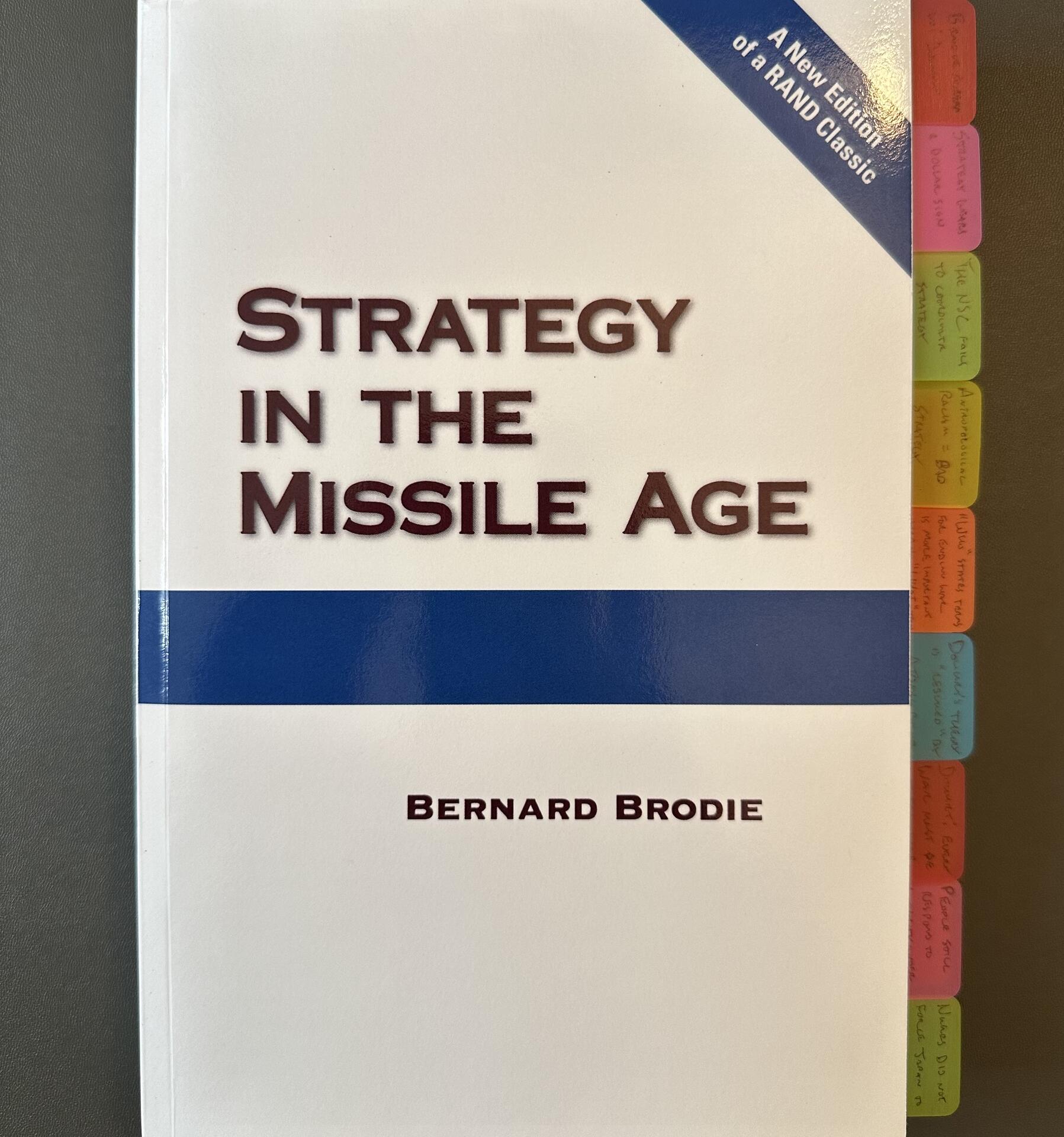
“Strategy in the Missile Age” by Bernard Brodie ⭐️⭐️⭐️⭐️ Known as the “American Clausewitz” and credited as the first nuclear strategist, Brodie 1959 treatise on nuclear deterrence was ahead of its time. The book begins with a thorough literature review of military strategy dating to the Napoleonic era and traces themes to the nuclear age. The ballistic missile, more so than the bomber, represented a tectonic shift in the transitional offense/defense balance that previously governed strategy. As ballistic missile defense was largely non-existant at the time, strategy shifted from countering employed weapons to deterring an adversary from using them in the first place. Brodie wrote the book against the backdrop of Eisenhower’s “massive retaliation” nuclear strategy and consequently advocated for a more nuanced flexible response approach that saw adoption during the Vietnam War (albeit not in a nuclear context). Although repetitive at times, this book clearly articulates how nuclear weapons deter as much as their holder’s credibility will allow. While the Information Age has introduced significant nuance in deterrence theory, Brodie’s work is still largely relevant even amidst contemporary fears of a Russian nuclear strike in Ukraine. This book is foundational for anyone studying nuclear weapons and their implications today. 🚀 image
2023-12-05 21:11:02 from 1 relay(s) View Thread →
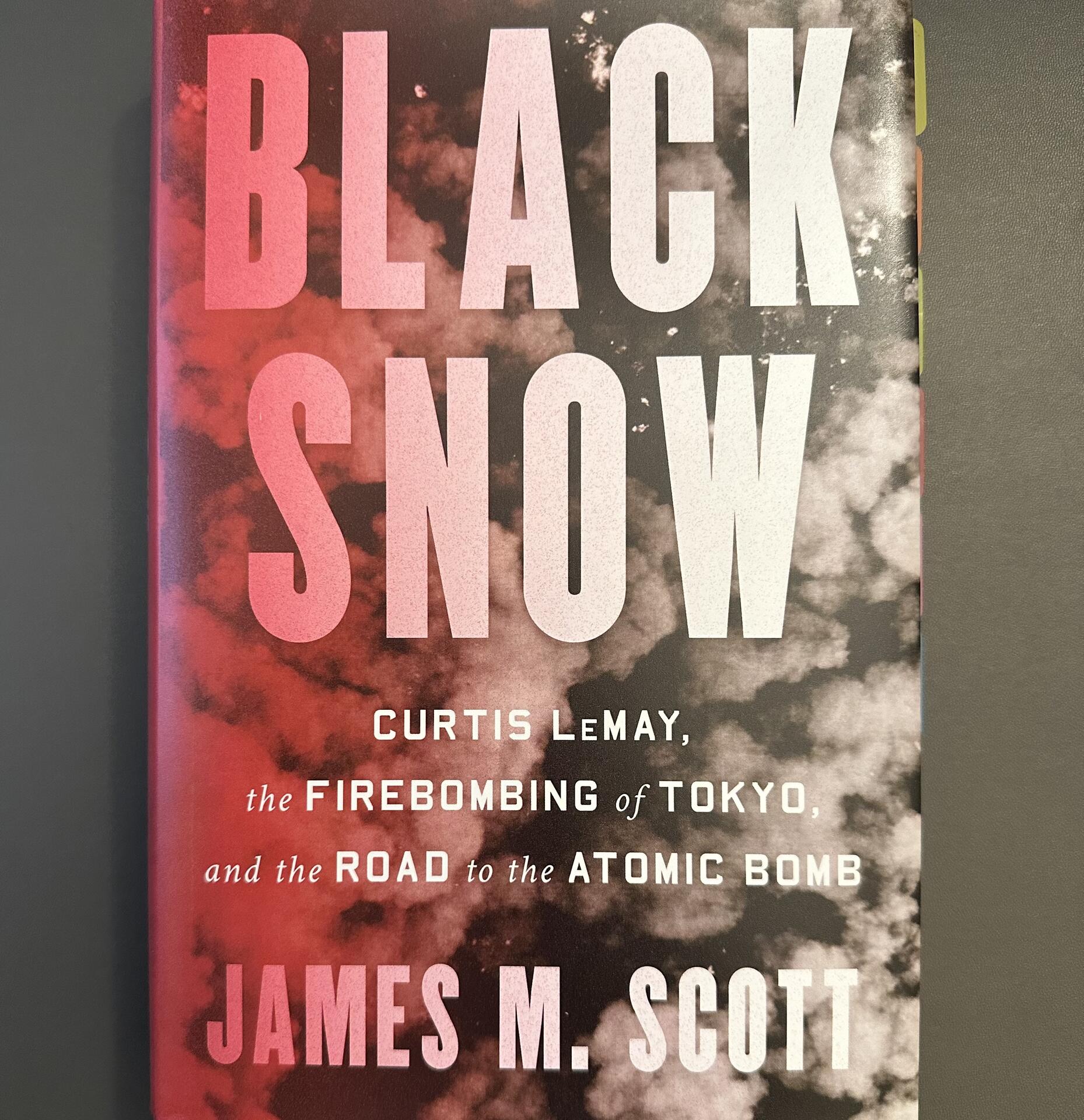
“Black Snow: Curtis LeMay, the Firebombing of Tokyo, and the Road to the Atomic Bomb” by James M. Scott ⭐️⭐️⭐️⭐️⭐️ It is often overlooked that the firebombing of Japan caused more widespread destruction and death than both atomic bombs dropped on Hiroshima and Nagasaki. Behind this decimation was a flawed theory that stretched back to the beginnings of air power: the strategic bombing of a population could force their government to capitulate. Scott explores these events and the theory behind them through the perspective of its champion during WWI, General Curtis Lemay. Having been reassigned from the European front to turn around a floundering 20th Bomber Command, Lemay took charge and turned the 20th into an efficient killing machine aimed at ending the war with Japan as soon as possible. Pressured from politicians in DC and facing heavy Allied casualties, Lemay pioneered the use of firebombing to reduce well over 100 square-miles of Japanese cityscape to ash (this of course, came before the nukes). This is a necessarily graphic story that highlights the depths of flawed strategic thinking that ties the reader from past to present. After reading this book, ask yourself: what would you do in the same situation? 🗾🔥 image
2023-12-05 02:40:37 from 1 relay(s) View Thread →
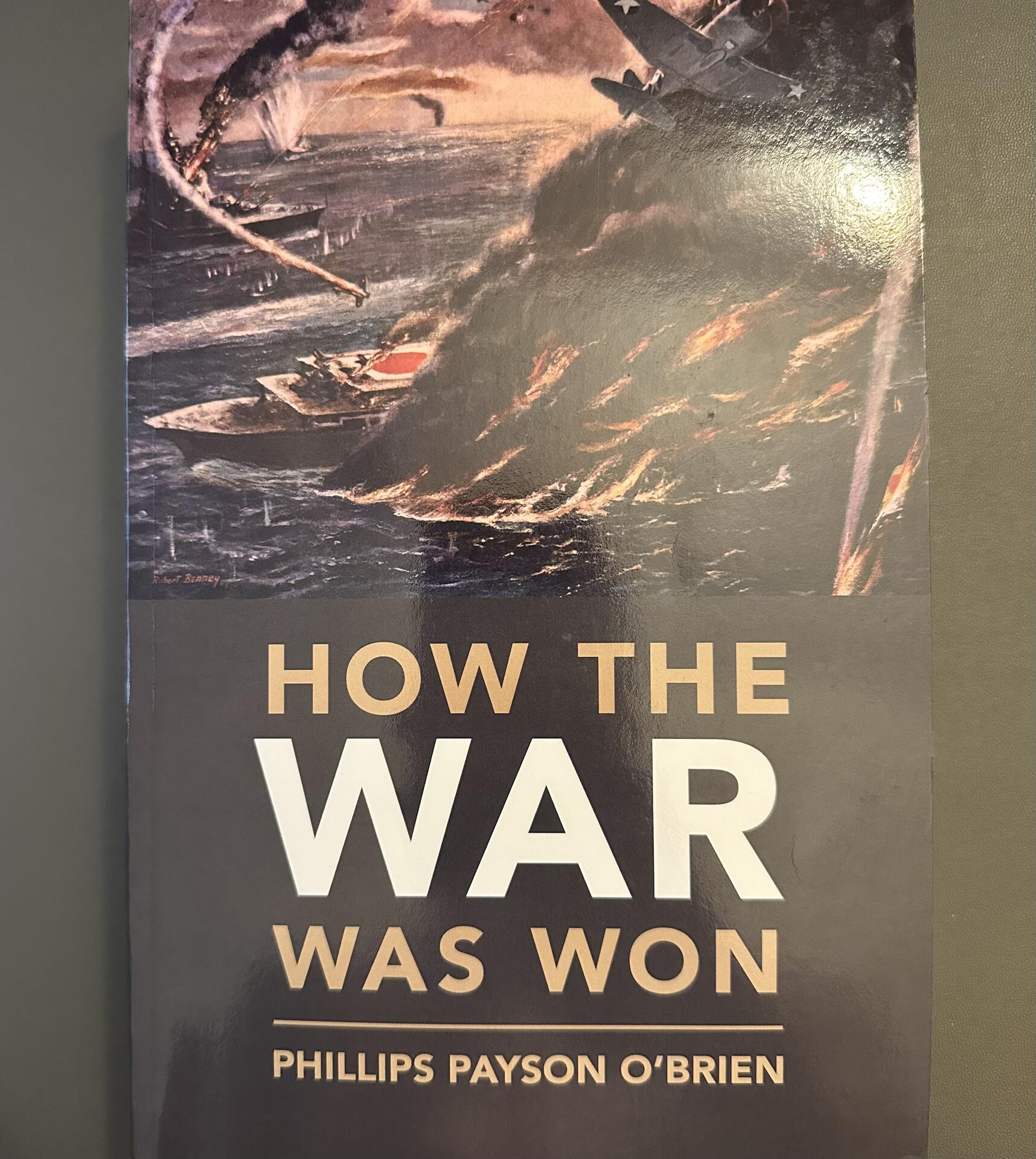
“How the War Was Won” by Phillips Paulson O’Brien ⭐️⭐️ O’Brien makes the case that materiel (equipment, weapons, munitions, etc) ultimately determine victory or defeat in war. Using WWII as a back drop, the author characterizes war as an attritional fight marked by battles of industrial capacity, less so people. O’Brien’s thesis is supported with a wealth of data that speaks well, however, his arguments ignore the importance of contingency during conflicts. Despite the fact that industrial capacity restrains a nation’s strategic reach, pivotal moments in history are often decided by the individuals living them. Nazi Germany wasn’t a rational actor making informed decisions based on the state of their industrial base… they were an authoritarian state poisoned by a deeply flawed ideology. Nonetheless, this book serves as an excellent case study if you can ignore the one-sided nature of the author’s argument. 🏭👨🏻‍🏭 image
2023-12-03 23:33:52 from 1 relay(s) View Thread →
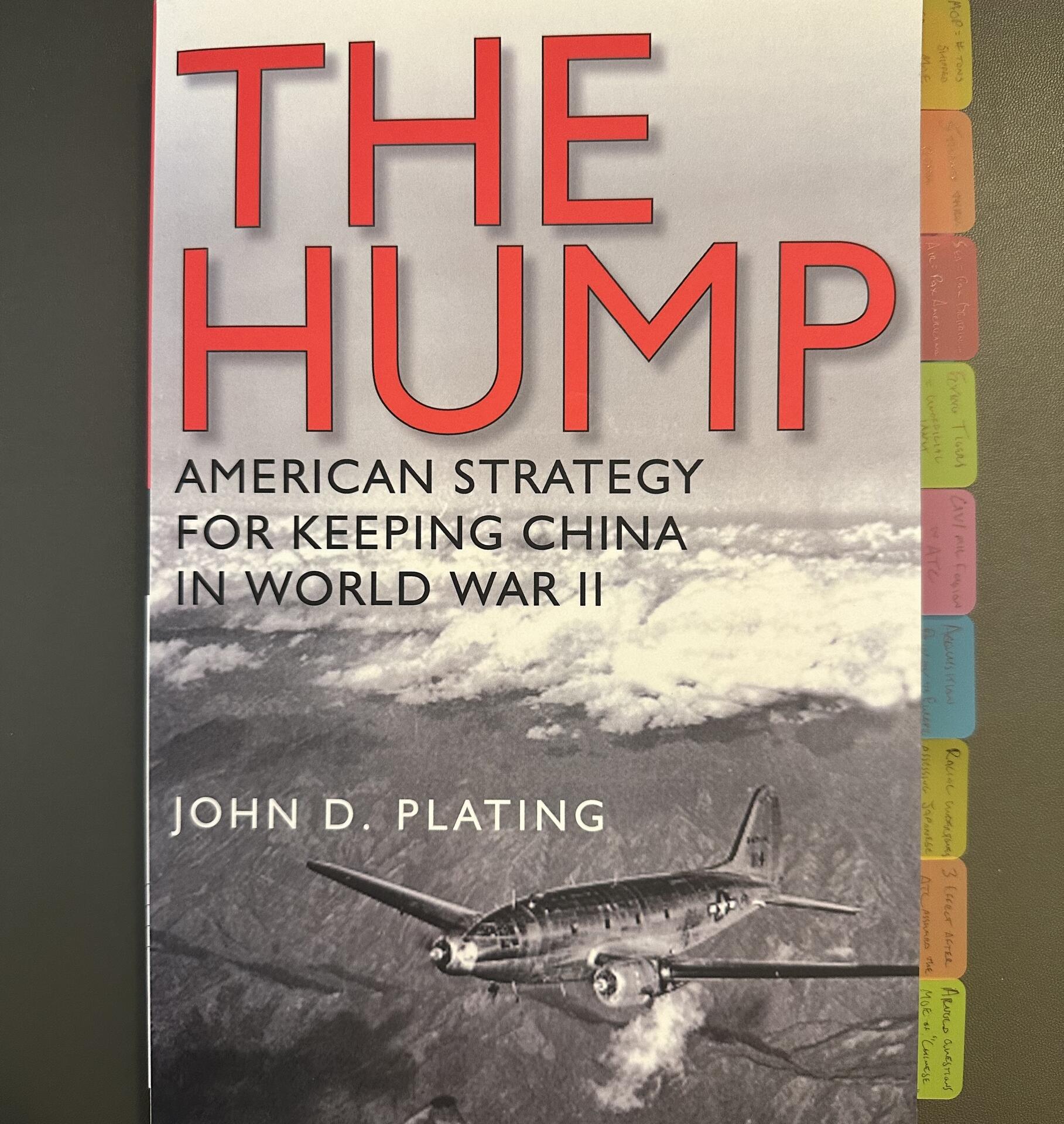
“The Hump: America’s Strategy for Keeping China in World War II” by John D. Plating ⭐️⭐️ Plating, a retired US Air Force colonel, wrote this book to fill a gap in the historical literature: no one had written a comprehensive account of the US airlift into China during WWII. At the time, China was under siege by nearly 1 million Japanese troops that the US was keen to keep in China (and therefore out of the rest of the Pacific). Accomplishing this feat meant resupplying Chinese forces from India. The airlift became known as “The Hump” thanks to its route over the Himalayas. Plating’s account shows how policy makers conflated metrics such as supplied tonnage with immeasurable effects like the Chinese morale. This mismatch of “means” with “ends” ultimately rendered the operation inconsequential. Despite this reality, Plating opines about the virtues of the airlift and how it paved the way for the Berlin Airlift and today’s logistical system. This book leaned a little heavy on the ideological aspects of the airlift and not enough it’s is actual lackluster effects. Plating’s bias as a mobility pilot is prevalent throughout, so reader beware. 📦🏔️ image
2023-12-02 22:20:48 from 1 relay(s) View Thread →
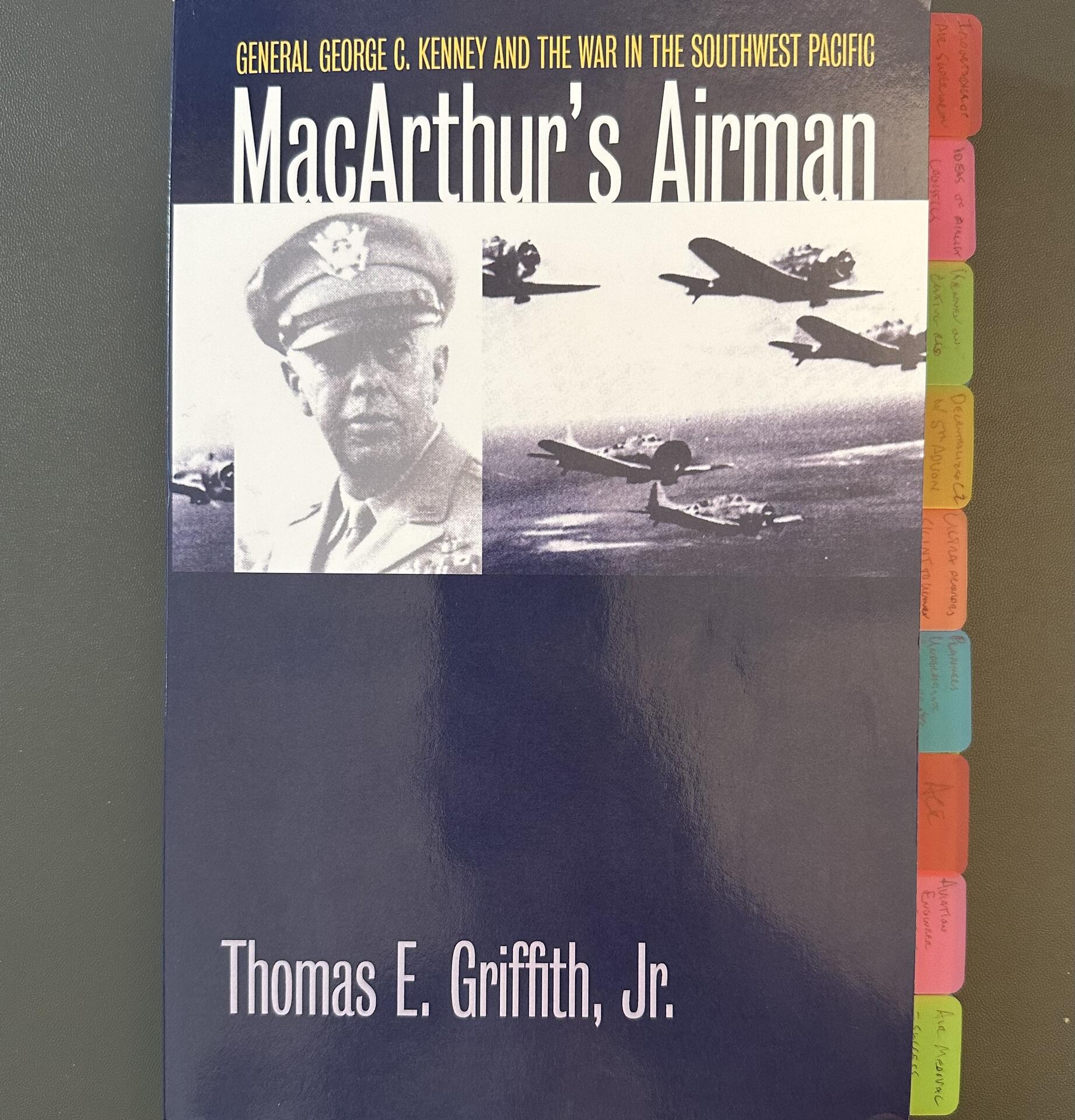
“MacArthur’s Airman: General George C. Kennedy and the War in the Southwest Pacific” by Thomas E. Griffith, Jr. ⭐️⭐️⭐️⭐️ Griffith, a 30-year veteran of the US Air Force, published this biopic on the ranking Airman in the Pacific theater during WWII to shed light on an aspect of the war that is usually dominated by Naval historians. General Kenney’s roots in the ACTS informed his perspectives on the employment of air power and made him perfectly suited for the island-hopping warfare of the Pacific. Kenney was quick to adapt and innovate as he re-organized air forces in the Pacific for MacArthur’s thrust from Papua New Guinea towards mainland Japan. By decentralizing decision-making and favoring deep interdiction against Japanese supply lines and airfields, Kenney was able to cripple Japan’s ability to resist the Allied offensive from the air. Of note, Griffith focuses much of the narrative on the aviation engineers who made the war in the Pacific possible—rapid airfield construction quite literally “paved the way” for shore-based aircraft to continue their march North towards Japan. This was an interesting read that offers lessons on organizational dynamics, innovation, and strategy for the curious reader. 🛫🛬 image
2023-11-30 19:56:46 from 1 relay(s) View Thread →
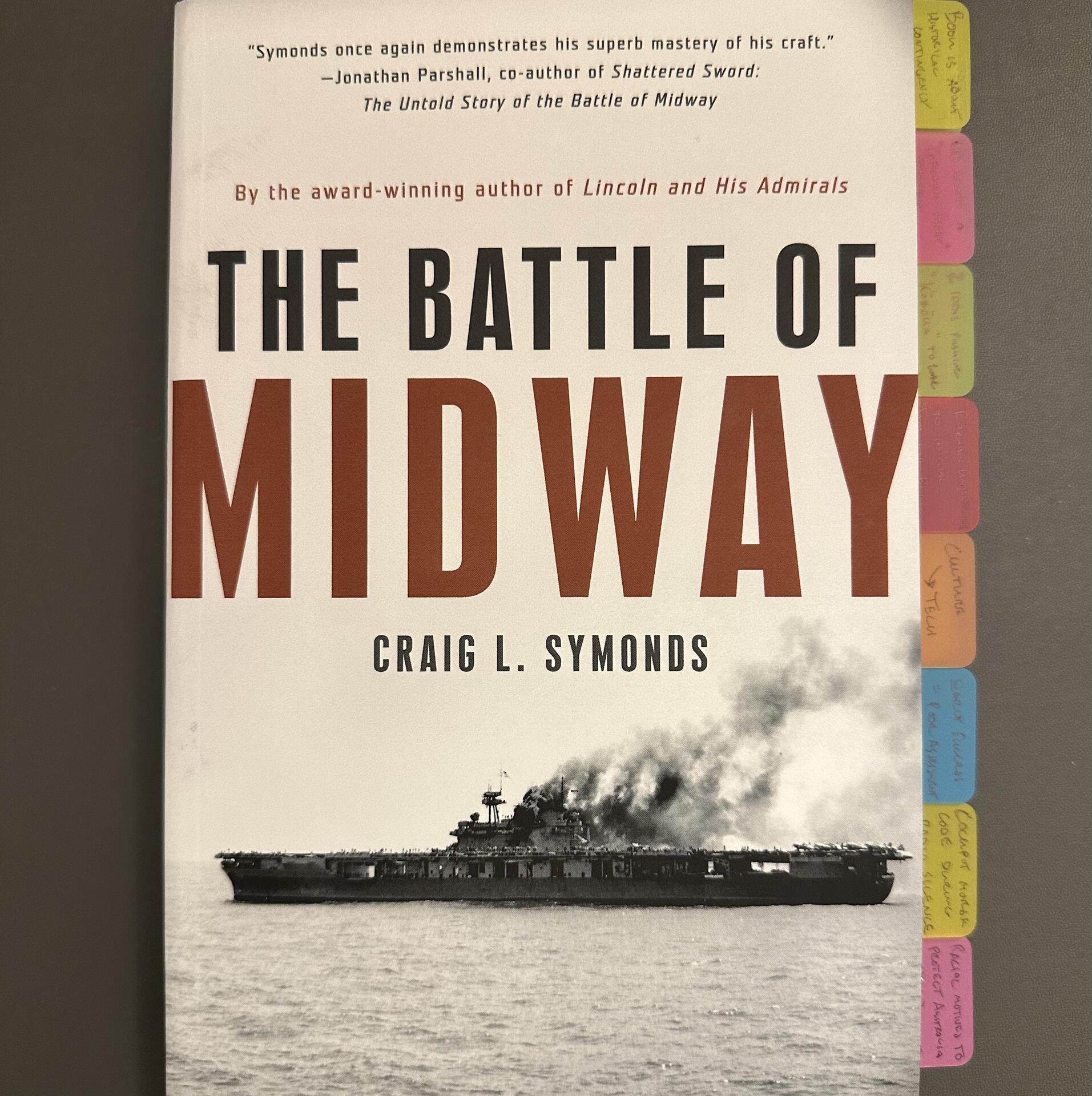
“The Battle of Midway” by Craig L. Symonds ⭐️⭐️⭐️⭐️⭐️ Having read this history as a summer reading assignment back in high school, I found this re-visit very enjoyable. Symonds is a contemporary military historian focused on naval warfare. His work on the Battle of Midway was incredibly well-researched and includes mirrored chronological accounts from both Japanese and American sides before, during, and after the battle. In doing so, Symonds demonstrates one theme above all in his work: contingency—the impact that individual decision-makers have on events—matters a great deal. This book highlighted that importance under a backdrop of the naval battle which turned the tide of the Pacific theater during WWII. Outgunned and outmanned, the US was severely disadvantaged yet emerged victorious thanks to a number of systemic factors… and a little luck. This is a highly entertaining history that would serve as a page-turner for the casual reader and avid historian, alike. 🌏⛴️ image
2023-11-27 15:32:28 from 1 relay(s) View Thread →
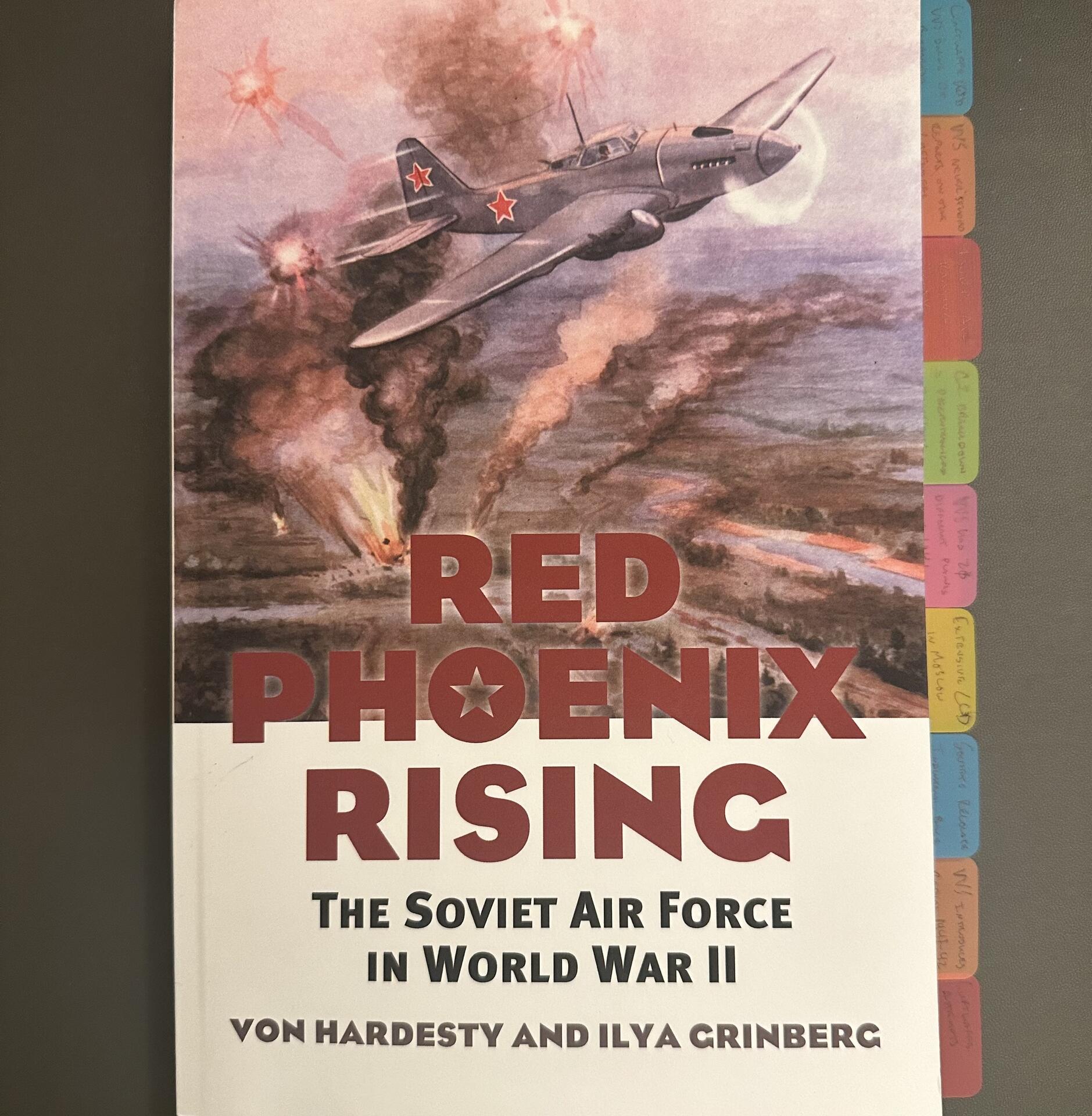
“Red Phoenix Rising: The Soviet Air Force in World War II” by on Von Hardesty & Ilya Grinberg ⭐️⭐️⭐️ A professor once called this book a “meat and potatoes” history and it’s hard to argue the idiom having read Hardesty & Grinberg’s work. The book’s lack of frills is made up for by its detail on an often forgotten subject. For every American casualty of WWII, the Soviets sacrificed 50 of their own people. In part due to their heavy casualties, a Soviet (and persistently Russian) trope has emerged that insinuates they don’t innovate and simply “throw bodies” at problems. This book handily dispels that myth in showing how despite being caught flat-footed by the Nazi invasion, the Soviet Air Force (or VVS) rapidly adapted and innovated its tactics and equipment to achieve battlefield success. This strategic adaptation often went against the grain of Communist ideology that favored centralized decision-making and resource controls. Also interesting was the comparison to Western air forces: while Anglo-American airmen pursued independent air arms tasked with strategic bombing, the VVS acted as a true auxiliary to the Army in support of ground maneuver. This was a natural byproduct of their geopolitical reality (its hard to worry about bombing Berlin when your airfield is being overrun), but had implications on the VVS’ effectiveness nonetheless. This was dry but interesting book that delivers an important message—don’t underestimate the Russian ability to adapt on the front lines. 🪆🛩️ image
2023-11-17 12:55:24 from 1 relay(s) View Thread →
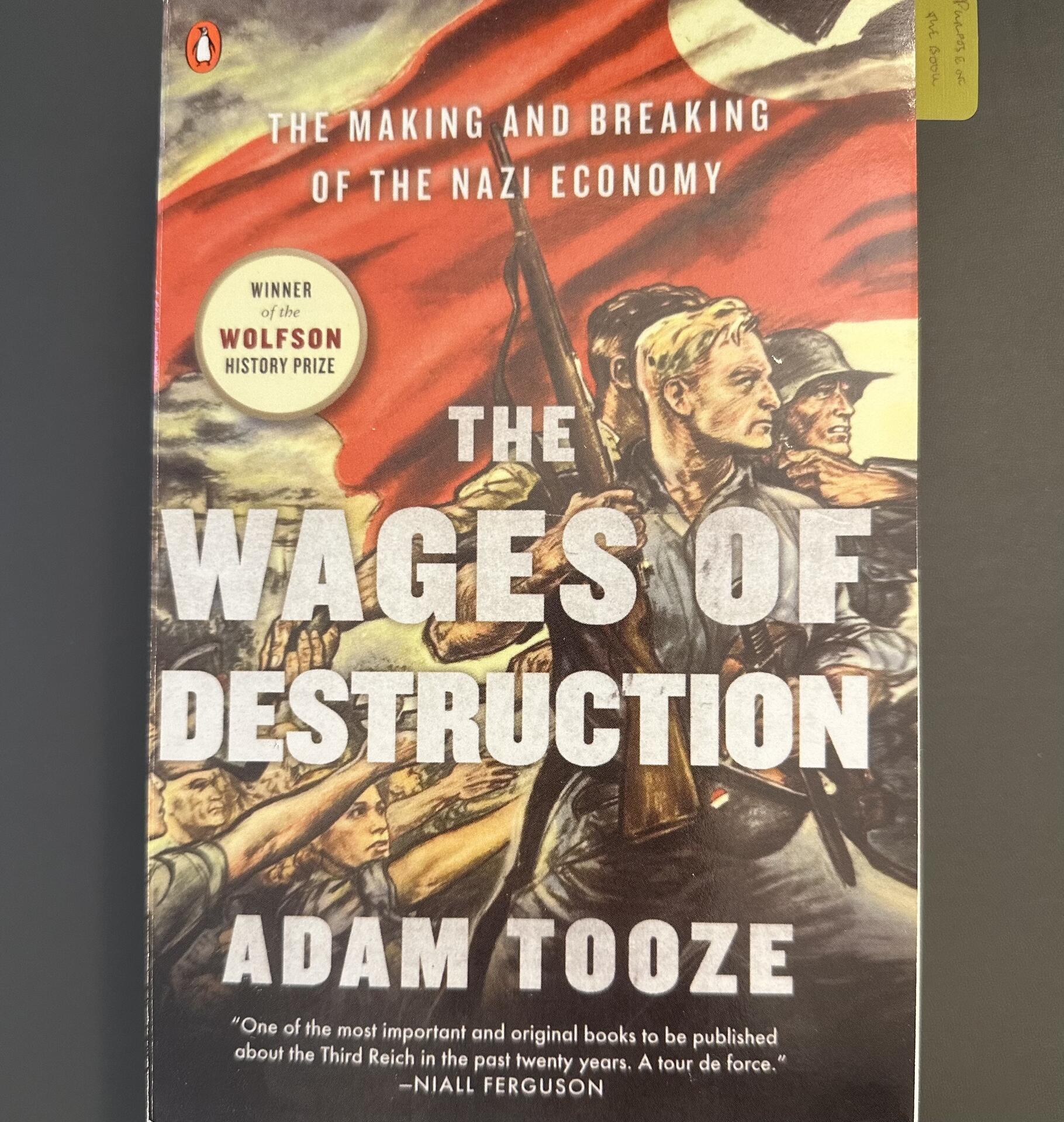
“The Wages of Destruction” by Adam Tooze ⭐️⭐️⭐️⭐️ There is a false perception that the industrial base that propelled the Nazi war machine was the pinnacle of efficiency and output. Tooze, a economic historian with Columbia, dispels this myth (among others) in this analysis of the German economy before and through WWII. In doing so, Tooze shows that the Nazi’s were doomed to fail as early 1936. Their economy simply could never support the type of mobilization required to challenge the economic output of the Allies. This book serves as a salient reminder that a nation’s economy is the fungible lifeblood for its other instruments of power—military or otherwise. Simply put, Germany’s engine could never support the conquering of Europe, if faced with opposition. Tooze also highlights how Nazi racist ideology colored their logic to the extent it appeared irrational to on-lookers. As flawed (and heinous) as Hitler’s ideology was, he was nonetheless making rational choices when viewed through his own cognitive biases. It just so happens that those flaws led to genocide and Germany’s ultimate defeat in the war. This book was weighty in its analysis and goals, but handily delivers on its promises. It gets a strong recommendation for anyone looking for a more nuanced understanding of the European front in WWII and how our ideas can shape our perceptions. image
2023-11-15 16:03:52 from 1 relay(s) View Thread →
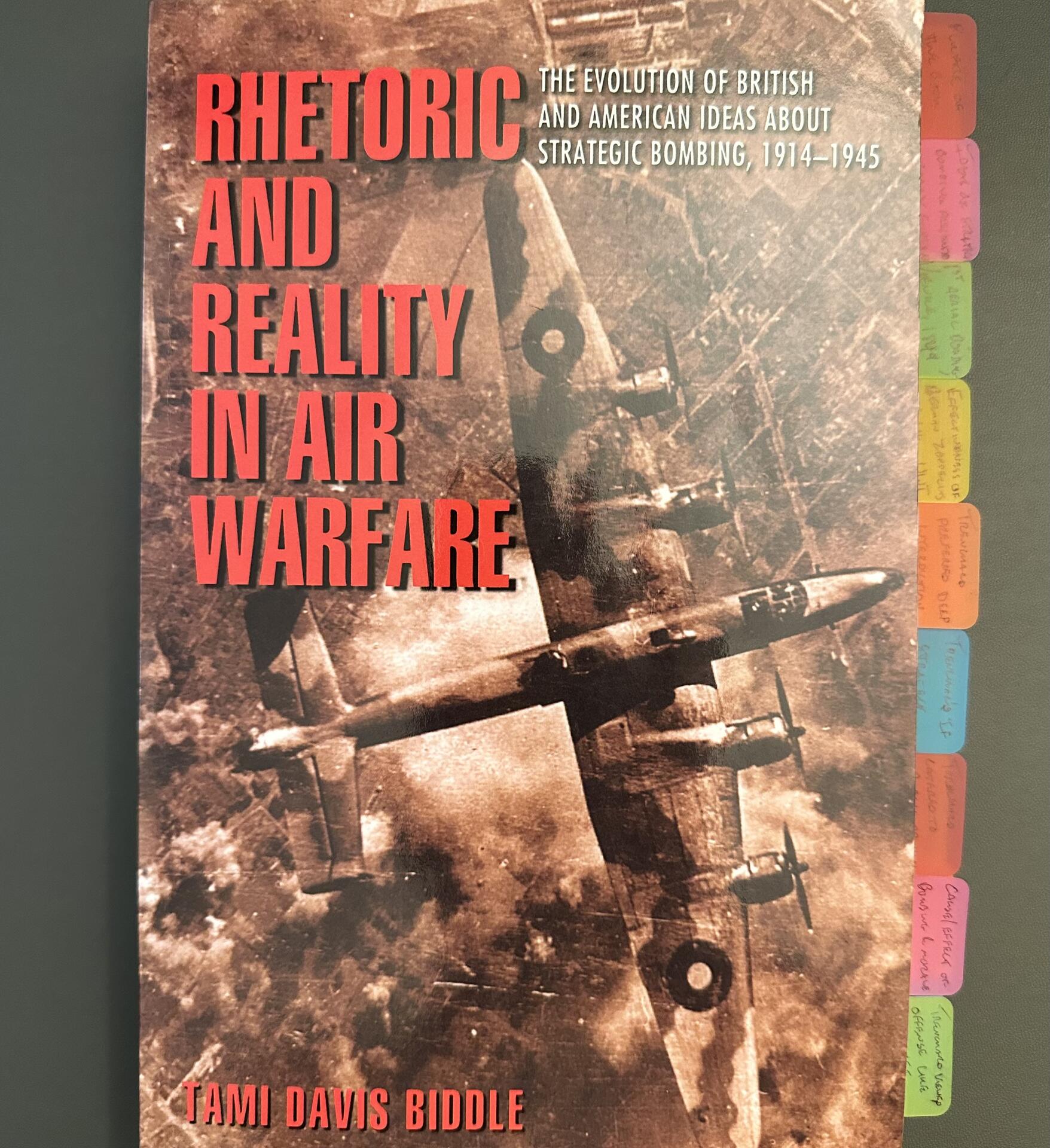
“Rhetoric and Reality in Air Warfare: the Evolution of British and American Ideas About Strategic Bombing, 1914-1945” by Tami Davis Biddle ⭐️⭐️⭐️⭐️ How much do our own ideas shape our perspectives? Can our own rhetoric become an insulating hubris, shielding us from the objective truth? Biddle tackles these questions through the case of Allied strategic bombing campaigns through both World Wars. Many speculated that the airplane would change warfare by holding entire populations at risk, bringing their governments to the negotiating table once enough pain had been endured. These theories grew into a religion as British & American airmen pushed for independent bombing campaigns against civilian and industrial targets. The true efficacy of these campaigns has been hotly debated but one thing is clear: no amount of bombs can kill an idea. An airplane can certainly degrade an industrial center or cripple a nation, but people are tougher stock than these early strategic bombing zealots gave them credit for. Despite this fact, the hubris carried through well after WWII and is still being debated today. While the battle for an independent Air Force was won long ago, airmen still grapple with the justifications used nearly a century ago. Does bombing compel people to submit in war? Ask the Germans, Japanese, or more specifically, the occupants of Dresden and Tokyo. Their stories may surprise you. 💣🔥☢️ image
2023-11-13 22:00:00 from 1 relay(s) View Thread →
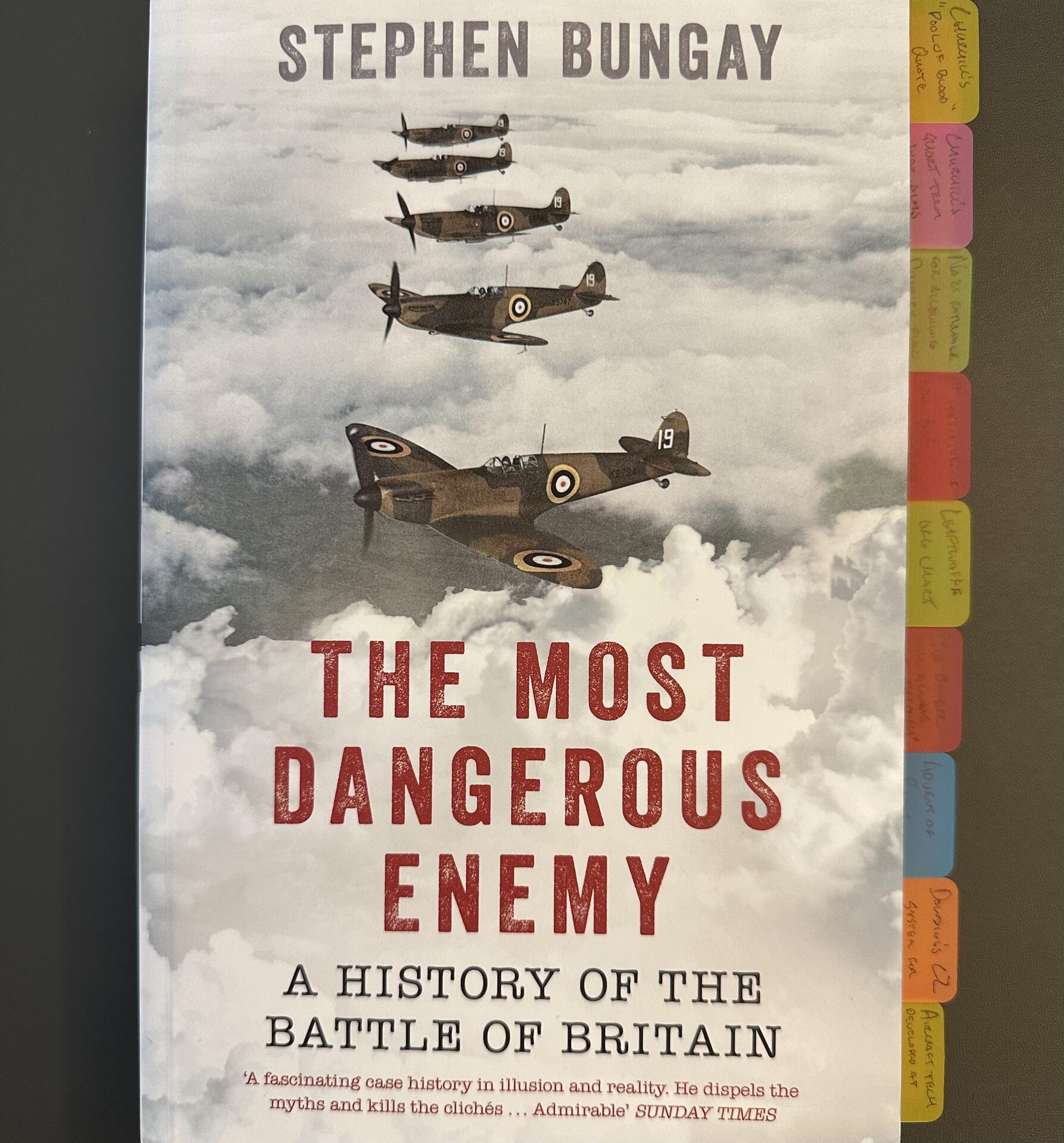
“The Most Dangerous Enemy: A History of the Battle of Britain” by Stephen Bungay ⭐️⭐️⭐️ Bungay, a British historian and author, wrote this work in 2015 that is quite possibly the definitive history on the air war over Britain during WWII. The author explores (in painstaking detail) the leadership and policy decisions both the Nazis and British made before the outbreak of war. How did they view air power? What platforms did they feel were pivotal to military success? How should those platforms be employed? As the first war where aircraft truly took center stage, WWII was a unique testing bed for the Allies and Axis to test their respective ideas. Over Britain, the Nazis ultimately were defeated not because they were wrongly equipped, but because they used their equipment improperly. Despite radar’s German origins, it was actually the British who devised a means of using it as an early-warning system that freed their fighters from flying patrols over the British Isles. This meant that despite being on the defensive, Churchill’s aviators could choose when and how to engage enemies overhead. This book is drenched in detail and provides a reminder that history is often shaped by individuals, not unseen forces guiding our hands. 🇬🇧✈️ image
2023-11-13 21:26:28 from 1 relay(s) View Thread →
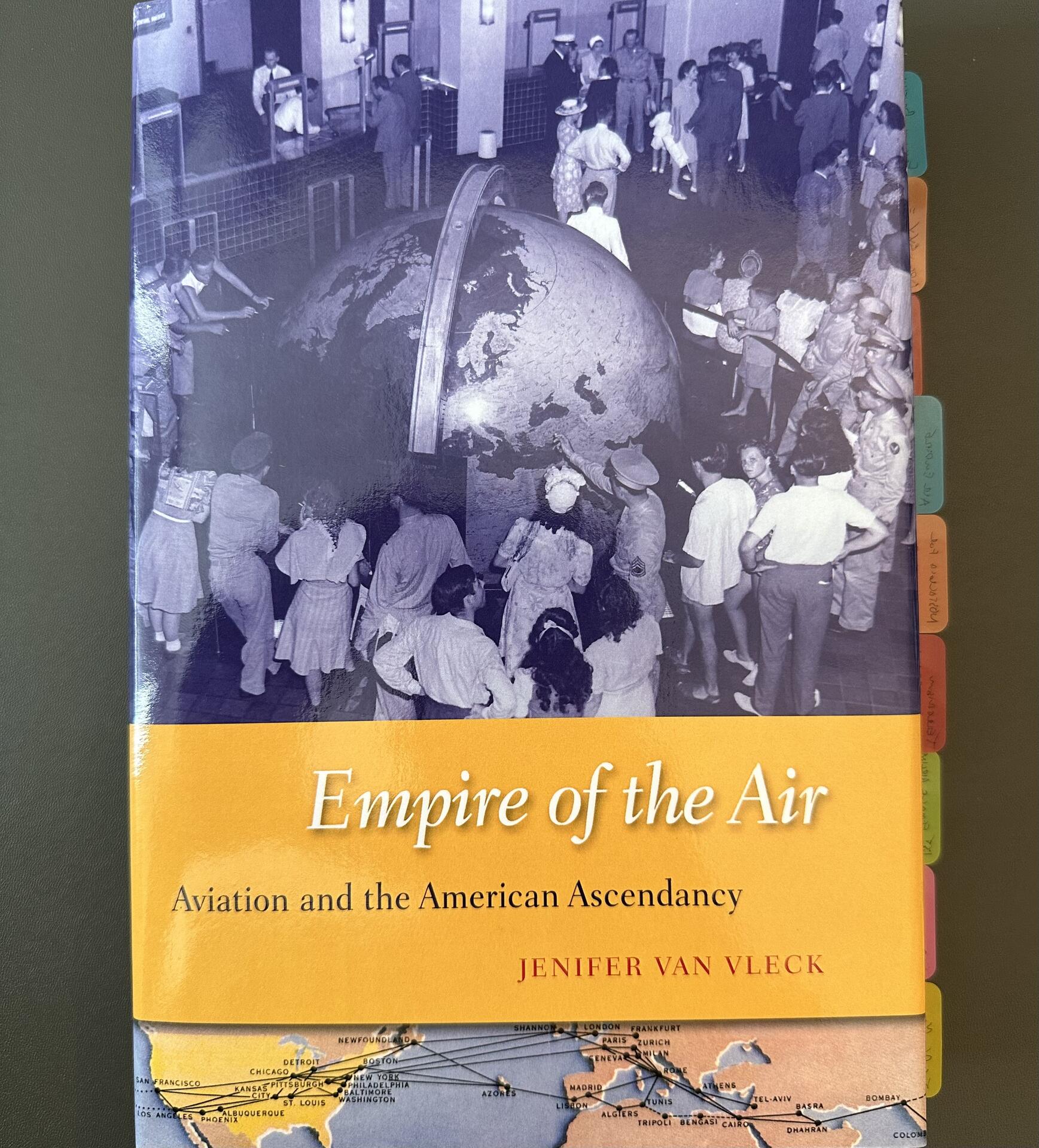
“Empire of the Air: Aviation and the American Ascendency” by Jenifer Van Vleck ⭐️⭐️⭐️⭐️ The advent of the airplane aligned perfectly with a unique moment in American history. The rising power of the nation following WWI led the US to begin experimenting with commercial aviation in it’s own backyard: Latin America. The founding of Pan Am airways during the interwar period was not a private venture, but a government-backed project aimed at exporting American culture, gaining market access, and most of all… providing vital access, basing, and overflight for potential military operations. Van Vleck uses historical records and cultural references to show how Pan Am was a proxy for the rise of American hegemony. Her narrative emphasizes the influence that “soft power” can have in shaping world events. The US shaped international norms and institutions to favor free market capitalism with policies like Open Skies and institutions such as the ICAO… both still in effect today. America’s efforts to shape the global commercial aviation industry had skewed it in her favor, similarly as it did at with the global monetary framework at Bretton Woods. In doing so, the US established itself as a “market empire” standing apart from previous hegemons such as Great Britain. This was an insightful book that resonated on all wide array of themes—it is well worth the read. 💵✈️ image
2023-11-08 21:10:56 from 1 relay(s) View Thread →
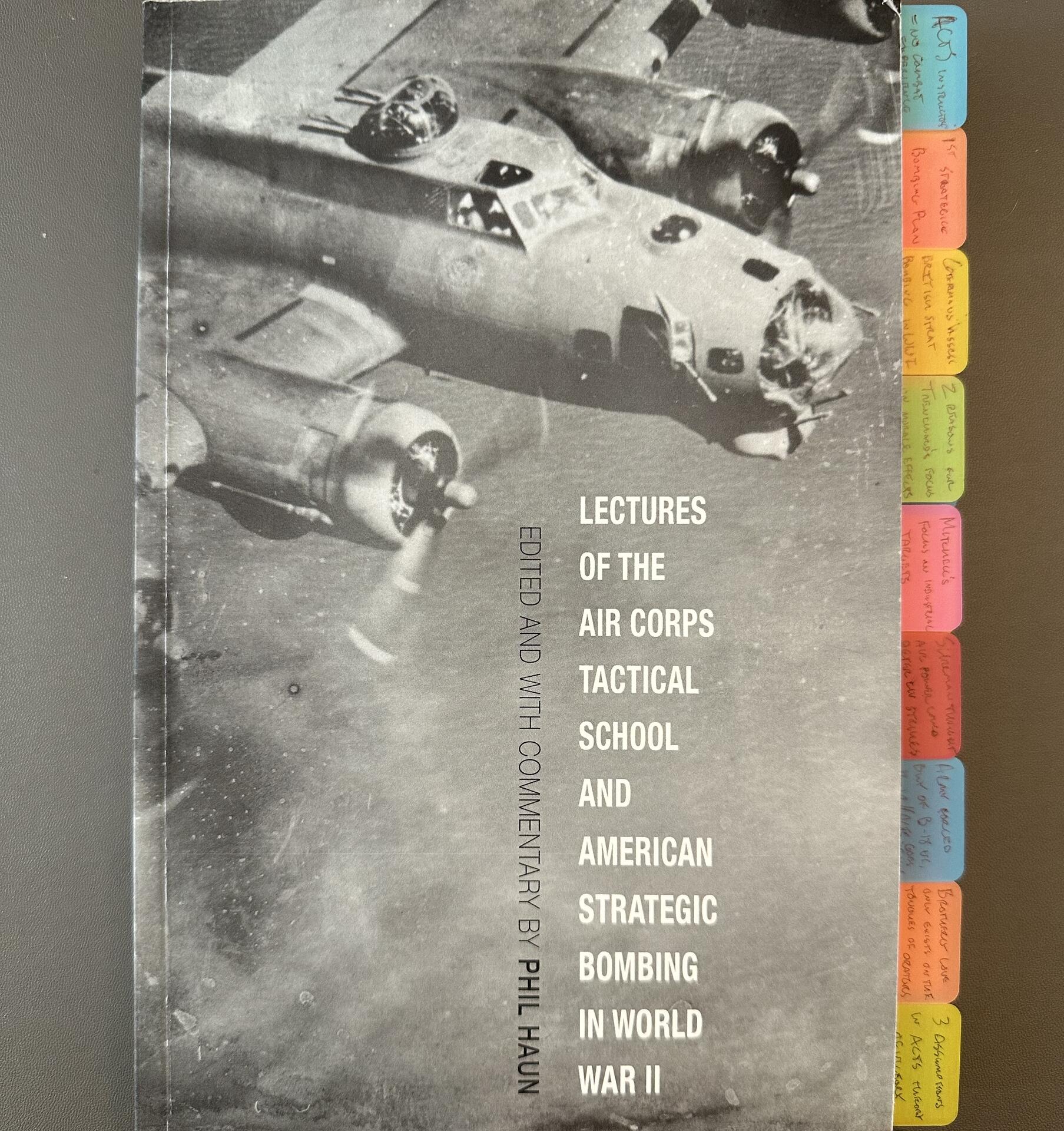
“Lectures of the Air Corps Tactical School” edited by Phil Haun ⭐️⭐️⭐️⭐️ Born from the emergent US Army Air Corps in the aftermath of WWI, the Air Corps Tactical School (ACTS, for short) was founded in 1920 to serve as the doctrinal and tactical development hub for the fledgling air service. The instructors, later coined by the moniker of the “Bomber Mafia”, took the ideas laid out by Giulio Douhet and Billy Mitchell to form their own theory of air power employment. The ACTS faculty pushed for high-altitude precision daylight bombing (HAPDB… what would a military school be without its acronyms). Instructors teached young American aviators that breaking the will of the opposing nation to fight remained the aim of war, but attacks on a nation’s economic infrastructure would have better effects compared to those against military or purely civilian targets. The ACTS was novel in their thinking and introduced several planning practices that are still prevalent today, such as systems analysis for targeting. The faculty’s HADPB theories were proven false, however, when it saw limited employment in WWII. It turns out populations are more resilient than theorists predicted and unlike democracies, not all governments are easily swayed by public opinion. This book gave an interesting insight into 1920s air power theory while synthesizing ideas from many of the other notable early military theorists. You’ve got to be an air power enthusiast to really enjoy this book, but if so, you’re in for a treat. 🛩️📚 image
2023-11-07 22:30:50 from 1 relay(s) View Thread →
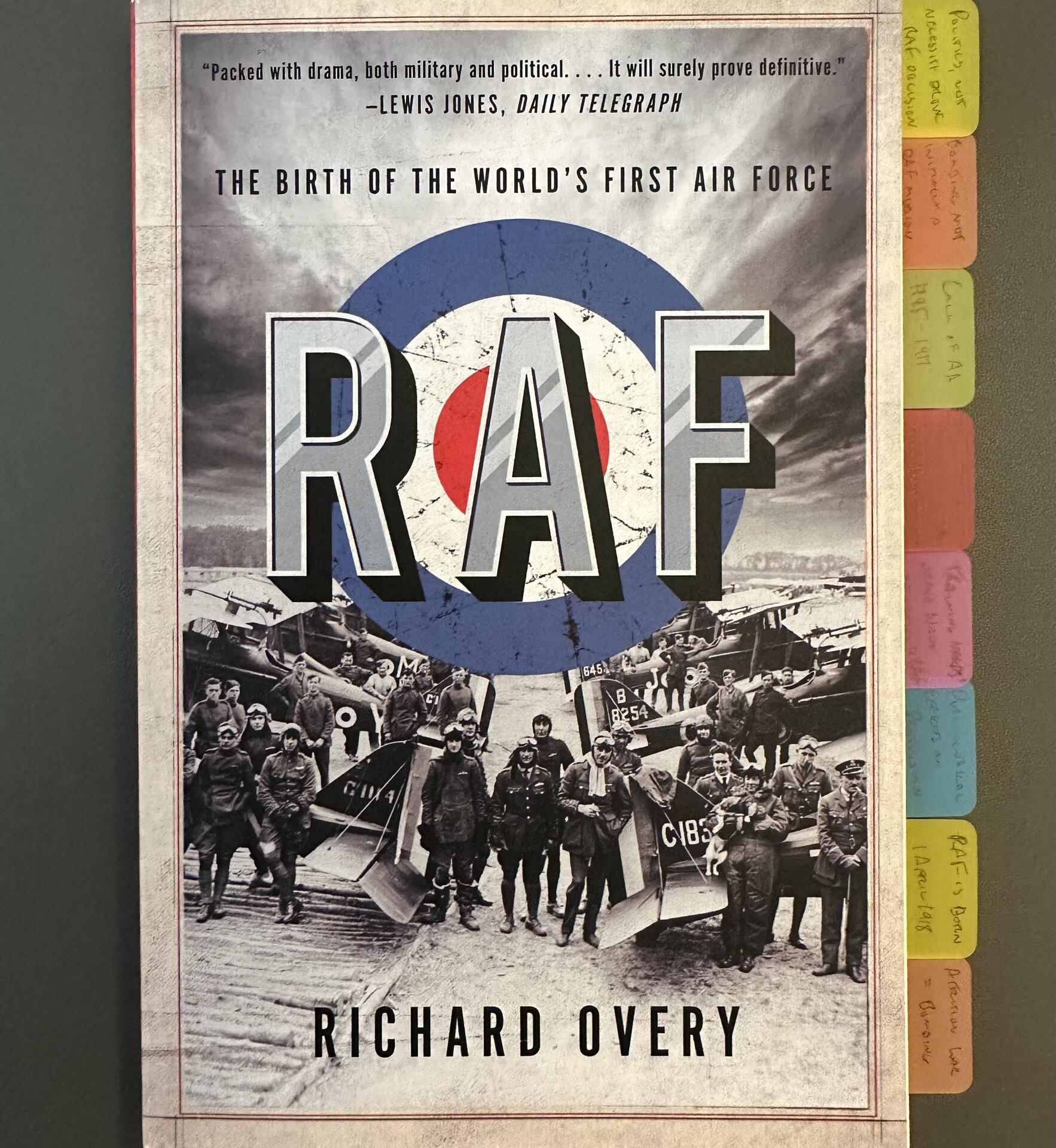
“RAF: The Birth of the World’s First Air Force” by Richard Overy ⭐️⭐️⭐️ Richard Overy, a British historian, wrote the origin story of the Royal Air Force in probably one of the most succinct histories I’ve read to date. Totaling just over 100 pages, this short history captures the birth of the RAF at the tail-end of WWI. Overy shows that the independent force was not born out of military necessity fighting the Germans, but rather a political process stemming from the limited bombings London succumbed to during the Great War. The psychological effect of the bombings, while negligible in relative terms, fueled the politics that produced the RAF. Despite the dubious efficacy that strategic bombing has on the psychology of civilian populations, Marshal Trenchard shaped the identity of the new force as it embraced strategic bombing as core to its ethos… and continued independence from the Royal Army & Navy. This book had interesting parallels for American air power, especially considering the RAF predates the USAF by nearly 30 years. This is a great short read that provides insights into military history, organizational theory, and government politics. 🎯🇬🇧 image
2023-11-06 21:29:19 from 1 relay(s) View Thread →
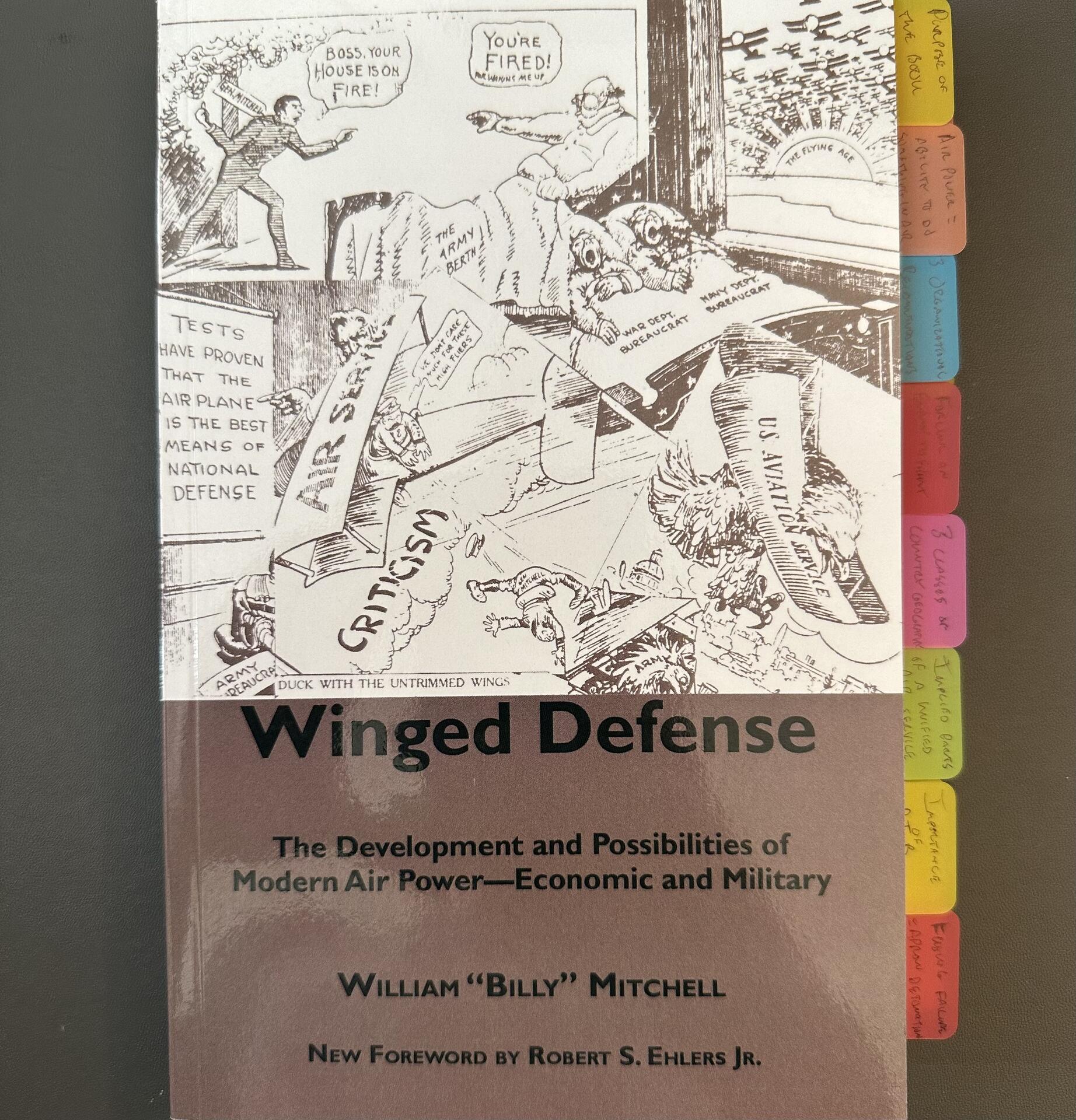
“Winged Defense” by William “Billy” Mitchell ⭐️⭐️⭐️ Billy Mitchell has gone down in history as one of air power’s most outspoken advocates—it even got him courtmartialed after WWI. His book, Winged Defense, lays out his vision for what air power can do for the United States in the 1920s. In an attempt to emulate A.T. Mahan’s naval advocacy a few decades prior, Mitchell’s “pitch” tells a tale of a country connected by airways, transporting mail at fractions of the cost of roads, and defended by scores of aircraft. Interestingly, much of Mitchell’s vision did come true. The USAF became an independent service in 1946 and the FAA coordinates civil aviation across the country. Despite his foresight, Mitchell’s message is muddied by hubris and an all-or-nothing approach that viewed airplanes has replacing the entirety of the navy (excluding submarines) and most of the army. This is certainly a period piece but one worth reading if you’re curious about what the early pioneers of a new domain were thinking. It’s particularly insightful considering we are now active in space; begging the question: who is today’s Billy Mitchell? 🛩️💣 image
2023-11-05 16:56:38 from 1 relay(s) View Thread →