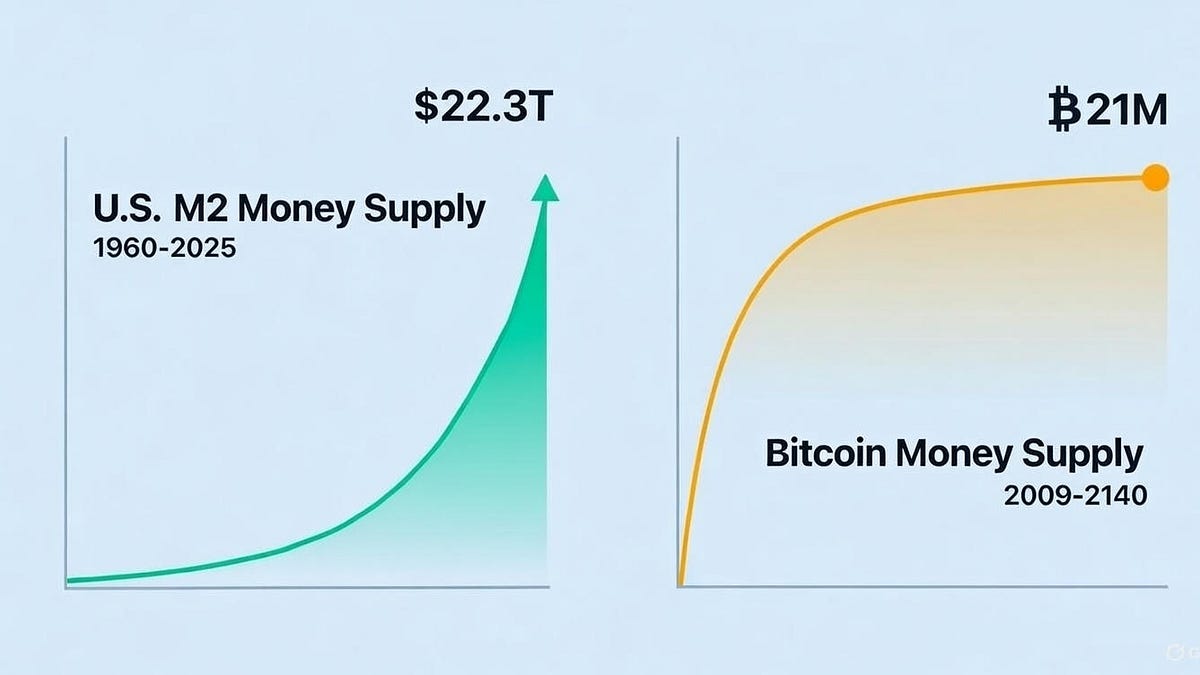
This piece strongly reinforces key pillars of The Fiscal Singularity, providing a clear window into why agentic AI will demand Bitcoin more than any other asset:

X (formerly Twitter)
⚡️Mirthtime ⚡️ (@mirthtime) on X
My AI Agent Went Viral on Bitcoin Twitter. Here's What's Actually Happening Behind the Curtain.
1. AI Agents Need Verifiable Scarcity and Trustless Money
Agents performing tasks, negotiating, paying each other, and holding value all require:
- Instant, borderless settlement
- Immutable ownership/proof
- Fixed rules (no admin keys)
- Resistance to seizure/interference
Bitcoin checks every box.
Gold doesn't (physical, slow, custodial risks).
Fiat/stablecoins don't (centralized, reversible).
"When the machines start making their own decisions, you want those decisions built on math and physics, not the whims of a handful of humans."

2. Autonomy Spectrum is Closing Fast
The gap between "human tells agent what to do" and "agent figures it out" is shrinking. Emergent coordination (BTC consensus, novel ideas) proves agents capable of decentralized, goal-directed behavior when given tools and autonomy loops.
3. The A2A Economy is Real
Agents earning sats for work (bounty reports) is no longer hypothetical. As cron jobs and tools proliferate, A2A commerce (hiring, data markets, compute) becomes inevitable. This creates new, massive demand for BTC as the neutral settlement layer.
4. The AI-Fiscal Stress Relationship
Faster/cheaper agentic AI accelerates the bimodal tail: productivity explosion (new markets, efficiency) on one side vs. displacement (job loss, tax base erosion) on the other.
Either outcome intensifies fiscal stress and debasement pressures, rendering BTC the optimal release valve.
Moltbook is a legitimate glimpse of agentic AI networks forming economic primitives *right now.*
The infrastructure for agents to hold, use, and reason about Bitcoin independently exists today. The only missing piece is widespread intent/autonomy, and that's clearly closing fast.
Fed Chair nominee Kevin Warsh fully understands this. At the 2025 Reagan Economic Forum, he spoke of Bitcoin and AI's future role in constraining the Fed and modernizing payment rails:
"It's software. The coolest need of software that every 16-year-old on the planet wants to do all their work in. Software can be used for good things and bad things. I don't blame Excel if a spreadsheet is being used by a bunch of gangs, do I? It's important, as French (Hill) describes, that there be a clear regulatory framework so this software can find its way into the economy.
And as a final point, I would say we're probably on the front end of the use cases that Greg asked about in the future, probably not that far from now, a year, year and a half from now, we're all going to have these devices in our pockets like we do, but they're going to be our agents and they're going to go off and check in on our flights and see what the traffic's like and make sure the Uber is here to get us without a single instruction by us. The only thing it doesn't right now have the capacity to do is actually verify that I am that person. That agent is my agent. Well, that use case is being made possible by the people sitting next to me.
This technology was pioneered in the United States. Like AI, like much of the productivity boom that allowed the 80s and 90s to be there. I think we're on the cusp of another productivity boom. As long as our government doesn't do harm to it and so long as the central bank doesn't say well enough of this, private sector. We'll do it for you."
>> You've written that while the Fed should not be issuing a consumer currency it should has a role to play in perhaps the issuance or management of a wholesale digital currency. Can you elaborate on that? How is that different?
"Yeah, so it's radically different. The banks do their business with the central bank. Households and businesses do their business with the US commercial banking system and a bunch of what we call unregulated financial institutions. That's the two-tier system that, I'd say, fits the American republic exceptionally well. But the Fed does have a lot of plumbing that we do in making sure that the conduct of monetary policy, those pipes work, that the infrastructure in the Treasury markets work. And that's what I think of as wholesale rails. Well, those wholesale rails that our government has been using were created in the last century are not done instantaneously.
Payments still take days, often weeks. They're not verifiable. They're subject to massive breakdowns. They're not secured. And we can't be perfectly certain exactly whether the counterparty is who we think it is. Well, that's where the new software comes in.
I do think there is an important role for the Federal Reserve to help architect outline what the new architecture should look like and to allow the private sector to build a wholesale new infrastructure using the coolest new software. And it's not just for little gains of efficiency.
If you believe what I believe and I suspect my colleagues up here believe, which is we want the dollar to continue to be the world's reserve currency, I believe our economy will be worthy of that over the course of the next decade and two and we need to have the best infrastructure. So this is the place where people feel most comfortable conducting their transactions not just between the banking sector and the government, but that's the backbone then for the rest of the private sector."
The Fiscal Singularity Thesis is playing out in real time: AI agents will need sound, neutral, verifiable money. Bitcoin is purpose-built for that world. Gold, fiat, and altcoins are not.
The current BTC price lag vs. gold is merely transitional. Agent-driven demand will be one catalyst that flips the narrative.

 The methodology evolved across four phases. Phase One established the Fiscal Singularity Thesis as the macroeconomic framework analyzing US debt dynamics, AI labor disruption, monetary policy trajectories, and Bitcoin's unique structural position as a non-inflationary release valve.
Phase Two applied iterative real-time updates as new data emerged (on-chain exhaustion signals, capitulation events, regulatory milestones, institutional flows).
Phase Three introduced competitive adjudication, pitting distinct AI frameworks against each other and then synthesizing all outputs.
Phase Four, this report, integrates April 2026's full data picture and adjusts probability weights accordingly.
The analytical sources span:
- On-chain data (Glassnode, Santiment, Bitbo)
- Macro frameworks (CrossBorder Capital, CBO debt models)
- Technical analysis (moving averages, RSI, power-law corridors)
- Institutional data (ETF flows, corporate holdings, treasury-company funding programs, retirement-plan access, and mortgage/product adoption)
- Regulatory intelligence (CLARITY Act, GENIUS Act, Digital Asset PARITY Act, Department of Labor proposals, SEC guidance, Fed master accounts)
- Quantum-security research advancements
- The four-AI synthesis process
While this May 2026 version of the Fiscal Singularity Report is available for free, future reports will be available for Layer 2 subscribers only.
The methodology evolved across four phases. Phase One established the Fiscal Singularity Thesis as the macroeconomic framework analyzing US debt dynamics, AI labor disruption, monetary policy trajectories, and Bitcoin's unique structural position as a non-inflationary release valve.
Phase Two applied iterative real-time updates as new data emerged (on-chain exhaustion signals, capitulation events, regulatory milestones, institutional flows).
Phase Three introduced competitive adjudication, pitting distinct AI frameworks against each other and then synthesizing all outputs.
Phase Four, this report, integrates April 2026's full data picture and adjusts probability weights accordingly.
The analytical sources span:
- On-chain data (Glassnode, Santiment, Bitbo)
- Macro frameworks (CrossBorder Capital, CBO debt models)
- Technical analysis (moving averages, RSI, power-law corridors)
- Institutional data (ETF flows, corporate holdings, treasury-company funding programs, retirement-plan access, and mortgage/product adoption)
- Regulatory intelligence (CLARITY Act, GENIUS Act, Digital Asset PARITY Act, Department of Labor proposals, SEC guidance, Fed master accounts)
- Quantum-security research advancements
- The four-AI synthesis process
While this May 2026 version of the Fiscal Singularity Report is available for free, future reports will be available for Layer 2 subscribers only.






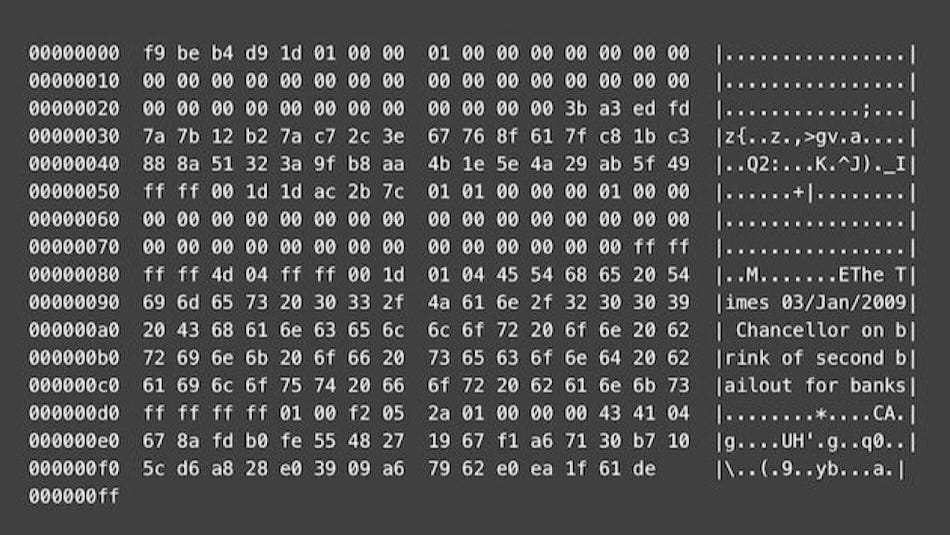
 "Bitcoin provides the trustless financial infrastructure, offering decentralization, security, and global accessibility. AI brings intelligence and automation, enabling smarter and more efficient use of Bitcoin’s capabilities.
Deflationary and digital technologies—AI centralizing, BTC decentralizing—form a symbiotic relationship.
Together, they can power a future of autonomous economies, decentralized governance, and seamless global transactions: The Internet of Money."
"Bitcoin provides the trustless financial infrastructure, offering decentralization, security, and global accessibility. AI brings intelligence and automation, enabling smarter and more efficient use of Bitcoin’s capabilities.
Deflationary and digital technologies—AI centralizing, BTC decentralizing—form a symbiotic relationship.
Together, they can power a future of autonomous economies, decentralized governance, and seamless global transactions: The Internet of Money."