
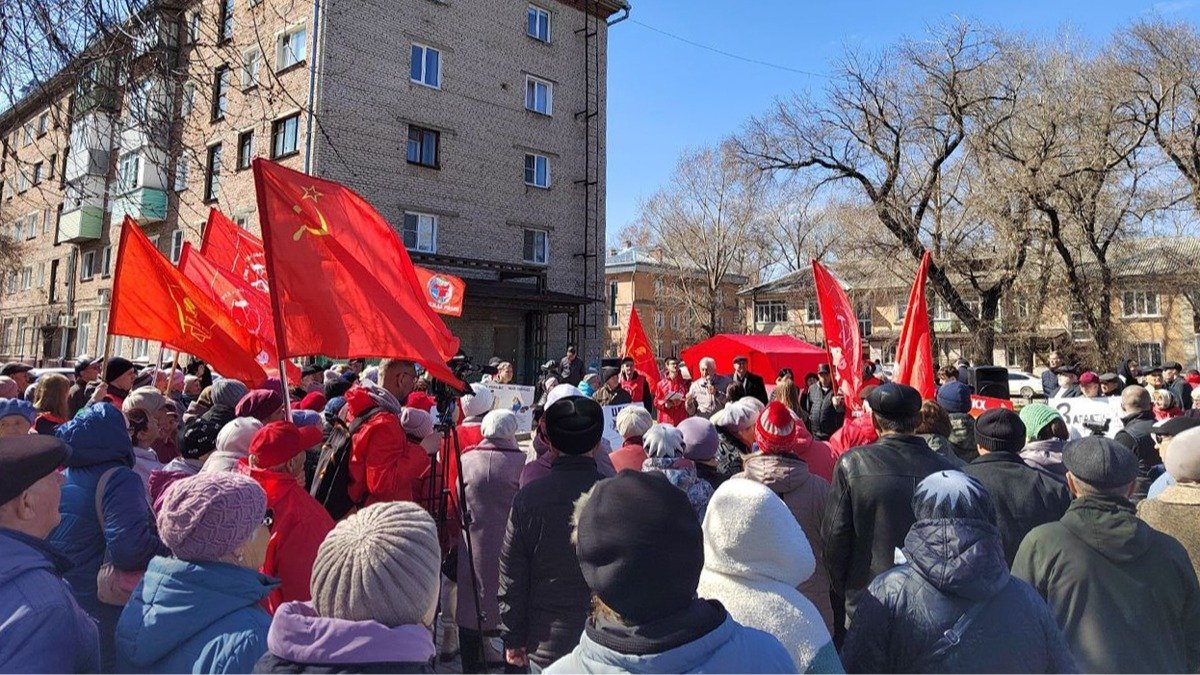
Altai Communist Party Deputies Investigated for Fraud Law enforcement bodies have opened a criminal case in Altai Krai against several regional Communist Party (CPRF) deputies on suspicion of large‑scale fraud connected with the fictitious employment of parliamentary assistants. Across reports, it is consistently stated that searches and investigative actions targeted at least vice‑speaker of the regional Legislative Assembly Yuri Kropotin, party ideology secretary and regional deputy Daria Zulina, and Rubtsovsk city committee head and deputy Andrei Chernobay, with figures around 2.4 million rubles in allegedly embezzled budget funds cited in relation to the assistant scheme. Both sides agree that the case is being handled by federal and regional security and investigative agencies, that official procedural measures such as detentions, interrogations, and searches of homes and offices have taken place, and that the allegations fall under fraud articles dealing with especially large amounts of damage to the budget.
Government‑aligned and opposition‑aligned outlets alike describe the Altai CPRF organization as one of the stronger and more influential regional branches of the party, with its deputies occupying senior positions in the Legislative Assembly and in local municipal structures such as Rubtsovsk. Shared background across coverage includes the institutional framework that allows deputies to hire publicly funded assistants, a system that has periodically been scrutinized nationwide for abuses and fictitious employment. Outlets on both sides also situate the investigation within the broader context of upcoming regional elections in Altai Krai, prior conflicts between law enforcement and opposition parties, and earlier cases where the use of assistant salaries and other parliamentary privileges has led to criminal probes and public calls for tighter oversight and reform of deputies’ staffing arrangements.
Points of Contention
Motives and political context. Government‑aligned outlets typically frame the investigation as a standard anti‑corruption case triggered by discovered financial irregularities and emphasize the legal and procedural nature of the searches and detentions. Opposition outlets, by contrast, portray the timing and intensity of the raids as part of a deliberate campaign to weaken one of the country’s strongest regional CPRF branches on the eve of elections. While state‑leaning coverage tends to downplay electoral implications, opposition reports highlight a pattern of prior pressure, defections, and criminal cases against prominent local communists to argue that political motives are primary rather than incidental.
Characterization of the deputies. In government‑aligned reporting, the accused deputies are primarily described in functional terms as officeholders suspected of misusing budget funds through fictitious assistants, sometimes with stress on the sums involved and the seriousness of the charges. Opposition outlets instead foreground their status as popular regional leaders, repeatedly mentioning posts such as vice‑speaker, ideology secretary, and city committee head, and attribute their prominence to strong electoral performance. The former approach presents them as ordinary suspects subject to the law, while the latter suggests they are targeted precisely because of their organizational strength and visibility.
Legal process and presumption of guilt. Government‑aligned sources tend to accentuate the competence and lawfulness of the security services, presenting searches, detentions, and interrogations as routine investigative actions undertaken after sufficient evidence was gathered. Opposition media stress uncertainty about the evidence base, rely on CPRF statements that deny wrongdoing, and emphasize that the case may be constructed or exaggerated, implicitly questioning the independence of investigators and courts. The tone in government‑friendly coverage leans toward accepting the fraud narrative as plausible and likely, whereas opposition outlets insist on a presumption of innocence and suggest that due process may be subordinated to political goals.
Framing of systemic issues. Government‑aligned coverage usually treats the case as an isolated incident of possible corruption within one regional unit, implying that the existing system of assistant funding is sound but needs occasional enforcement against violators. Opposition sources instead use the story to illustrate what they call a broader system of selective justice, in which rules on assistants and budget spending are enforced harshly against opposition deputies and leniently or not at all against pro‑government figures. As a result, state‑leaning reports describe a system correcting itself through legal action, while opposition outlets describe a system weaponized to discipline or neutralize dissenting political actors.
In summary, government coverage tends to depict the Altai CPRF fraud case as a routine, evidence‑based anti‑corruption investigation into suspected budget embezzlement by individual deputies, while opposition coverage tends to frame it as a politically orchestrated crackdown on one of the strongest regional Communist organizations, using criminal charges and legal mechanisms to influence elections and suppress dissent.