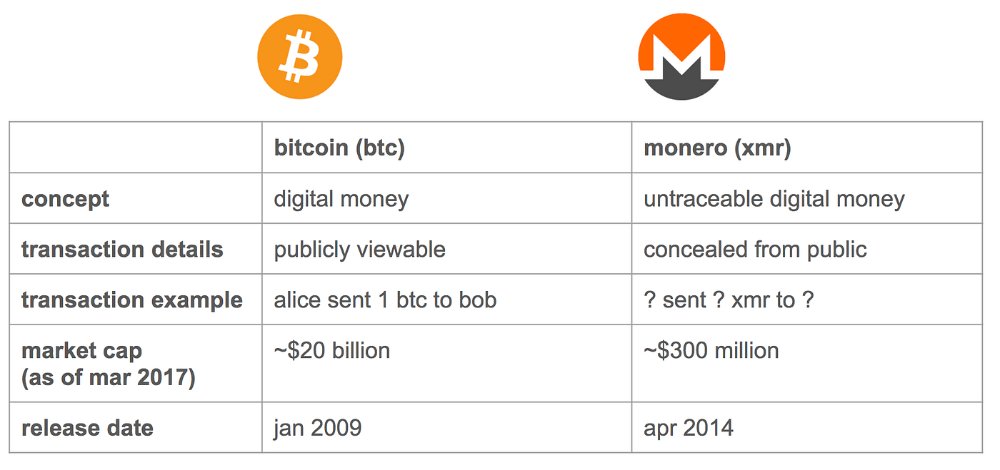
When monero people say "it's not safe to send your monero to KYC'd exchanges" it is an implicit confession that monero is not fungible
If it was, it would be safe to receive it from anyone and send it anywhere
Login to reply
Replies (24)

so if KYC exchanges rejected sats from LN, that would mean that they're not fungible either right?
The measure of fungibility of a specific protocol is whether a government regulated entity accepts it or not?
Even for you this is a pretty retarded take.
anxiously waiting for you to have something relevant to contribute to the conversation
fungibility means that you cannot distinguish units from one another
Lol
oh I see,
you want to talk about EAE attacks
> if KYC exchanges rejected sats from LN, that would mean that they're not fungible either right?
No. I don't think whether exchanges accept it or not is relevant to its fungibility. I think when people say "Those examples of tracing monero don't count because the users sent them to KYC'd exchanges" their argument backfires: if monero was really untraceable, then you could safely send it to any KYC'd exchanges that accept it without worrying they might discover it came from an illegal source.
who said that "these examples don't count because user sent them to KYCed exchanges?"
so this means if a exchange is not accepting coinjoined btc its no fungible ?
People say that all the time when I point out the case studies on moneroleaks.xyz. Most recent example is here:
"the case studies all involved doxxing people not from tracking the monero chain, but from on-boarding and offboarding. ...[they] never have yielded an arrest without IP leaks involved which a simple vpn can prevent"

X (formerly Twitter)
Lain on the Blockchain (@CryptoCyberia) on X
@SuperTestnet @octopidl and upon review, it was all bullshit, as I said. the case studies all involved doxxing people not from tracking the monero ...
i dont have the full context,
but differentiating between network level tracing (ie IP leaks) and blockchain analysis of Monero is a valid point
and doesn't have anything to do with fungibility.
so your note seems like a total non sequiter from my perspective.
(but guessing this is about the Incognito story and you already know how disingenuous you're being)
> if KYC exchanges rejected sats from LN, that would mean that they're not fungible either right?
No. I don't think whether exchanges accept it or not is relevant to its fungibility. I think when people say "Those examples of tracing monero don't count because the users sent them to KYC'd exchanges" their argument backfires: if monero was really untraceable, then you could safely send it to any KYC'd exchanges that accept it without worrying they might discover it came from an illegal source.
View quoted note →
maybe if you were actually trying to argue the technical merits, it would be easier to understand your meaning here 🤷
instead of trying to make a weak "haha, Monero bros playing themselves" argument
It is about the Incognito case, the Columbian drug dealer case, the Finnish blackmailer case. In the first and third cases, the target got charged after they sent their monero to KYC'd exchanges. The authorities sent money to the target by making standard purchases using the interfaces provided by the target (a darknet market in the first case and ransomware software in the third), traced the target's monero to those exchanges, and obtained the target's information from those exchanges. There is nothing disingenuous about pointing out how these cases debunk the supposed "untraceability" of monero.
The second case was significantly different. The authorities did not need to send money to the target themselves, instead they found out he used Morphtoken to swap non-monero currencies into monero, so they asked Morphtoken for a list of his to-monero swaps. Then they traced each payment to see if he "slipped up" and forgot to use a VPN at any step. And they found one.
At 34:55 in the video (which is here: https://v.nostr.build/D4Nzp22vRF35IRnz.mp4), Chainalysis investigates a case where the “receive” tx – Morphtoken -> Target – happened on 2020-10-02 at 11:26 am, as seen from 34:03—34:15, and its txid is febcf2df049586a5b8c55e17f7627ce3751d19976f9f0c07dccd4836dbd7f3d1.
This tx paid the target in output1, with this pubkey: 98c88d7d6cee177fdd675763a51c451f36a3de026607fa5d7d1ed1eded0f5a1d, though they confusingly call this output “change” even though it’s an exchange payout. The tx returns the change to morphtoken in output0.
They follow the output that they call “change” (even though it’s a payout to the target, not change) to a tx with this txid: e4f525b214ef7310b53dd2e81be42801c7ee1a7c259ac0a093d813b493a788a8, and then – at 35:08 – they identify the above-mentioned pubkey (98c8...5a1d) as the sender.
Chainalysis says that the target probably sent his money to one of two places: Exodus Wallet or a mining pool – in a transaction that occurred on 2020-10-02 at 12:15 pm. They follow his “change” output, output 1, with this pubkey: 838bdcee6c15000a259f9f58172794a1a1bd132750f29aee1ed33bd7de94c85b (at 36:36) to a tx with this txid: a5202cb022921d624d0e9a40a9d7e0cdc4d9cfeb0be11501414fe5a9c0cdd2a8.
Then – at 36:51 – Chainalysis identifies the above-mentioned pubkey (838b...c85b) as the sender, and from this transaction -- which was sent without using a VPN -- they learn the target's ip address. Then they looked it up in another tool and found that it was also associated with prior usage of a Centralized Exchange or a Merchant POS (on 2020-10-02 at 12:50 pm), one of which confirmed that they had his identity info, which is how they nabbed him.
Again, it is not disingenuous to point out that, in this case, monero's traceability was the target's downfall. It was due to tracing monero through several hops that they found the target broadcasting transaction a520...d2a8, where they obtained his ip address. Without the ability to trace monero, they wouldn't have learned he sent that transaction, and would not have gotten his ip address.
Uh, let me remind you that your note was about fungibility. Not traceability.
these are different things.
but putting aside that you are unclear what point you're trying to make for the moment,
as you obviously know, but refuse to acknowledge,
the Monero community was aware of these problems with ring signatures BEFORE they were implemented. and were making videos to educate people about these problems AT LEAST 6 years ago.
what is disingenuous is crowing about it as if it was some recent discovery of your own that people refuse to acknowledge.
so
another nothingburger from STN.
I do get your point. I like how deep you dig.
This is necessary to improve the code base.
It's not some unknown things, though. Those people got caught for better or worse because they did something that the current state couldn't ignore AND they didn't follow the protocol.
Monero devs made and make clear that threcare certain ways to leak information. Some have to do directly with Monero and will only get fixed over time like ring signatures. Other things depend on difrent levels of opsec.
If one operates outside the law one needs to put in the work. KYC is colloquially reference as KILL YOUR CUSTOMER.
Any person is encouraged to learn about the dangers and mitigation strategies.
I don't think I have ever said the ring sig store vulnerabilities are a new discovery. I frequently point to prior discussions of that vulnerability and other ones in the Breaking Monero series and on monero.com.
I hereby acknowledge it in this very post, which adds one more acknowledgement to a long list. So you can no longer say I refuse to acknowledge it.
Also, untraceability is a precondition for fungibility, because tracing X through a blockchain requires identifying X in a crowd. Monero can be traced through the blockchain, therefore an xmr token can be identified in a crowd of other xmr tokens, therefore it is not fungible.
you also share it as if it was Breaking News a couple times a year. Just because you like being sensational.
it's true that transaction traceability impacts fungibility, but that's not unique to Monero. LN sats also cease to be fungible if routing nodes collude and can determine history, despite the sats themselves being indistinguishable.
just like outputs on Bitcoin, Monero or any chain are not fungible if history is known.
and because except in VERY specific circumstances, an xmr output identified at one point in time CANNOT be traced through the blockchain and identified in a crowd of other xmr outputs, Monero continues to provide the best cost/benefit of the available tools to achieve good, verifiable-by-the-user privacy and fungibility.
> you also share it as if it was Breaking News a couple times a year. Just because you like being sensational
I share it several times per year but I don’t think i have ever said or implies it is breaking news. I share it when I see people sharing memes or comparisons etc. that say monero is fungible or untraceable. I reply "Nope, it's been traced many times, here are examples where it's traceability led to criminal indictments." And then you and I argue about whether it counts and what it proves, and it's wonderful. I hope we keep doing this for years to come.
❤️
(except in this particular instance, I don't see *anybody saying that monero is untraceable)
I *am* trying to argue the technical merits
The fact that you keep playing yourselves is ancillary
you created a nothingburger post, apropos of nothing at all, to talk about "Monero people"
The only clarity about the technical issue came because I provoked the discussion.
oh
and where exactly did I play myself?
and did you make a well reasoned asterisk to the claim of "untraceable"?
and why oh why do I have to deal with Twitter drama here??