
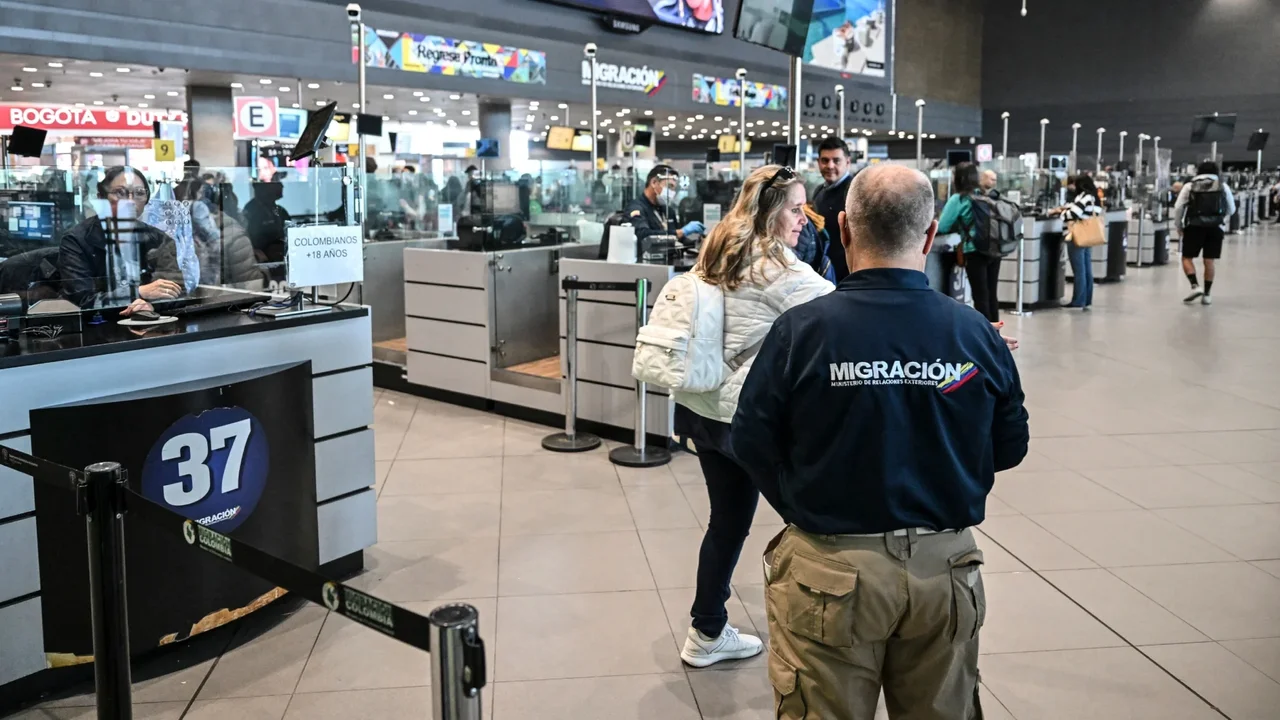
Migration Colombia 'Turtle Plan' Protest Causes Airport Delays; Avianca Warns of Impact A work-to-rule protest by Migración Colombia officials, widely described as a “turtle plan” or “turtle operation,” is causing long queues and delays in migration procedures at major Colombian airports, especially El Dorado in Bogotá. Both opposition and government-aligned coverage agree that international passengers are facing significantly extended processing times — in some reports up to about two hours or more — and that airlines such as Avianca have warned of impacts on flight operations and activated protection measures allowing flexibility and rescheduling. Reports concur that the protest is being carried out by migration officials’ unions, that it affects peak travel hours most severely, and that the duration of the action remains uncertain, with disruptions occurring particularly overnight or at high-traffic times.
Across outlets there is also agreement that the protest arises from labor disputes within Migración Colombia related to alleged breaches of prior agreements, especially around salary increases, bonuses, staffing levels, and equipment shortages. Both sides note that the government and Migración Colombia have responded by activating contingency or special plans at El Dorado and other main airports, including the deployment of additional personnel to migration posts and recommendations for travelers to arrive four hours before international flights. There is shared acknowledgement that authorities are promoting pre-enrollment systems such as Biomig to speed up controls, and that dialogue or negotiations between Migración Colombia management, government delegates, and unions are either underway or being requested to seek a solution.
Points of Contention
Responsibility and blame. Opposition-aligned sources emphasize that the root responsibility lies with the government and Migración Colombia leadership for underfunding, failing to honor agreed bonuses and salary adjustments, and not hiring enough staff, portraying the turtle operation as a forced reaction to systemic neglect. Government-aligned coverage, while acknowledging labor grievances, tends to frame the immediate problem as the union’s deliberate work slowdown that is harming passengers and airlines, highlighting operational disruption more than structural causes. The result is that opposition outlets foreground mismanagement and broken promises, whereas government-aligned reports foreground union tactics as the proximate trigger of the crisis.
Framing of the protest’s legitimacy. Opposition reports present the turtle plan as a legitimate labor protest and a last-resort pressure mechanism, quoting union leaders who argue that they warned about this outcome if their budgetary and labor demands were not addressed. Government-aligned outlets more often treat the action as an operational contingency to be managed, referring to it in technical terms like “Operation Reglamento” and stressing the need to preserve normal migratory processes and passenger service. While the former leans into the justice of workers’ claims, the latter stresses proportionality and the need to limit disruption to travelers.
Government response and capacity. Opposition coverage portrays the government’s response as late and insufficient, suggesting that the crisis could have been avoided had authorities complied with previous agreements on remuneration and staffing and engaged earlier in serious negotiations. Government-aligned media highlight the activation of contingency plans, the deployment of around 50 additional officers to key airports, and the use of tools like Biomig as evidence of a proactive and organized state response aimed at maintaining order amid the protest. Thus, opposition narratives frame the state as primarily at fault and reactive, whereas government-aligned narratives showcase institutional capacity and ongoing dialogue with unions.
Impact narrative and affected parties. Opposition-oriented outlets focus on how chronic under-resourcing affects both workers and passengers, warning that delays will continue or worsen if structural issues are not resolved and using the chaos to illustrate deeper governance problems. Government-aligned sources devote more space to the immediate impact on travelers and airlines, amplifying Avianca’s warnings and detailing passenger protection measures, recommended arrival times, and congestion management at airports. In this way, the opposition uses the disruption as evidence of policy failure, while government-aligned media stress passenger guidance and crisis containment.
In summary, opposition coverage tends to treat the airport delays as a foreseeable consequence of state underfunding, managerial failures, and broken labor commitments that legitimize the unions’ pressure tactics, while government-aligned coverage tends to stress the unions’ slowdown as the direct cause of disruption and highlight the authorities’ contingency measures, technical fixes, and ongoing talks to reassure travelers and protect air operations.
https://nicaragua.layer3.press/stories/019c4834-4b0c-11e6-720e-23d4317f7e24