
Before #Bitcoin, there was #Hashcash.
In 1997, @Adam Back came up with a clever idea to fight email spam: make sending email cost a little bit of computation.
Hashcash worked by taking email metadata plus a random number, running it through a hash function, and trying to produce a hash that started with a certain number of zeroes. Most attempts failed. You had to keep trying new random numbers until you found a valid hash.
For normal users, that extra work was small.
For spammers sending millions of emails, it became very expensive. Hashcash effectively added a “postage fee” in the form of computation.
This was one of the first real-world uses of what we now call #proofofwork.
Hashcash itself wasn’t a currency – each proof was tied to a single email and couldn’t be reused as money. But it showed something important: you can link real-world scarcity (computing power and energy) to digital information.
That idea – digital scarcity backed by proof of work – became a key building block for later electronic cash experiments, including Bitcoin.
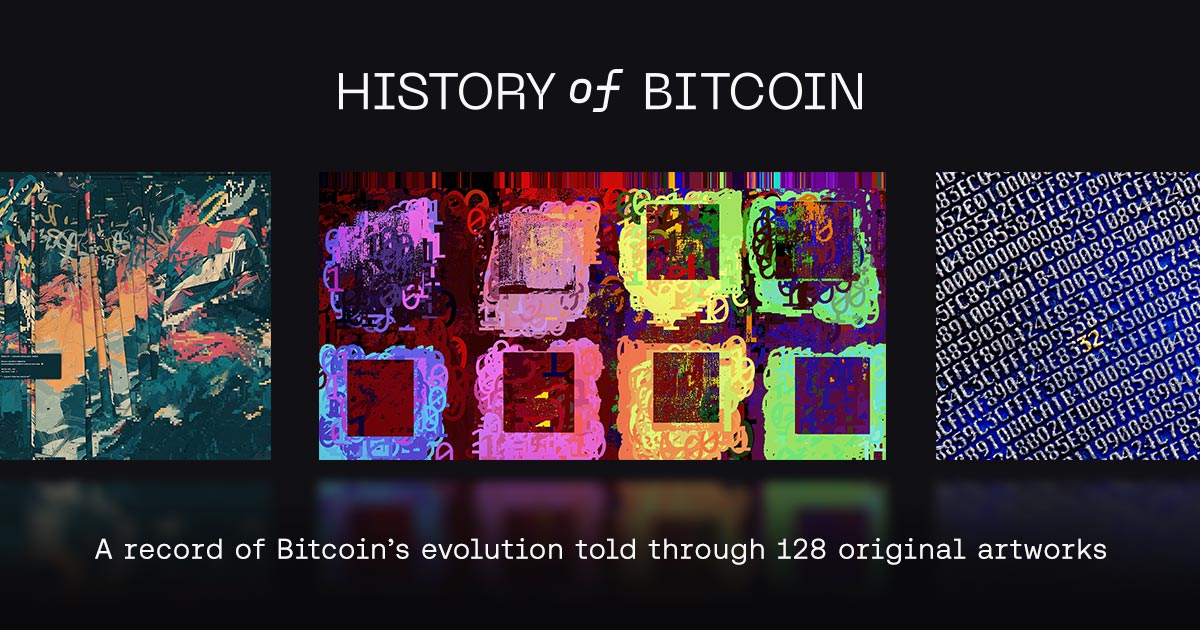
We captured this moment in The History of Bitcoin by Smashtoshi with the artwork:
“PROOF OF WORK” by ROBNESS (ROBNESSOFFICIAL).
It appears in the Collector’s Book and on our interactive timeline.
Read the full article by Aaron van Wirdum:


History of Bitcoin
Proof of Work
Proof of Work, created by Cypherpunk Adam Back, is Bitcoin’s digital equivalent of stacking bricks—a secure system proving work done and ensuri...
