
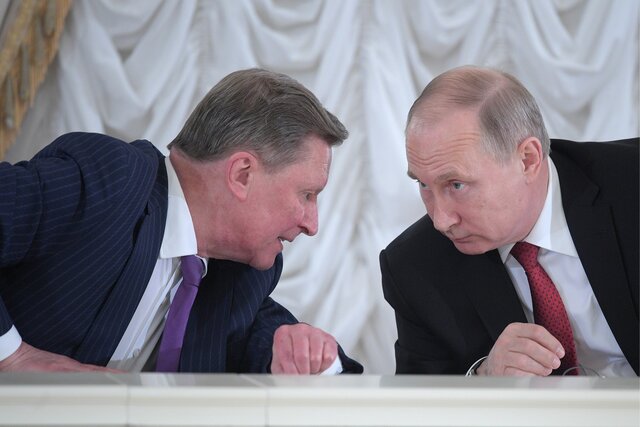
Putin Dismisses Long-Time Aide Sergey Ivanov Sergey Ivanov, a long‑time ally of Vladimir Putin since their shared KGB background, has been formally dismissed from his role as the president’s special representative for environmental activities, ecology, and transport. Both government‑leaning and opposition reporting agree that Ivanov previously held a series of top posts, including defense minister, Security Council official, and powerful presidential chief of staff, and that for many years he was publicly viewed as a possible successor to Putin. Coverage converges on the basic timeline: Ivanov’s career rose in parallel with Putin’s ascent, he was moved from the influential chief‑of‑staff position to the less prominent environmental envoy role in 2016, and he has now been relieved of that envoy post by presidential decree.
On the broader context, both sides describe Ivanov as part of the original core of Putin’s inner circle—trusted security‑service veterans who followed Putin from the security apparatus into top state positions. They agree that Ivanov’s trajectory reflects a wider pattern in which powerful early insiders are gradually shifted into more ceremonial or low‑impact roles as the political system matures and younger or more narrowly loyal figures are promoted. Reporting from both camps also notes that Ivanov’s exit from the envoy position fits into a longer‑running process of reshuffles around the presidency, sometimes framed as planned generational turnover or “controlled rejuvenation” of the elite rather than abrupt purges.
Points of Contention
Nature of the dismissal. Government‑aligned outlets typically depict Putin’s decree as a routine, orderly personnel change or a dignified retirement for a trusted veteran whose formal responsibilities in environmental and transport matters had run their course. Opposition sources, by contrast, emphasize the dismissive nature of Ivanov’s final posting, arguing that the low‑profile envoy job and now his removal from it underscore a steady marginalization that began years ago rather than a neutral bureaucratic rotation.
Significance for Putin’s inner circle. Government coverage tends to stress continuity, portraying Ivanov’s departure as part of a long‑planned refresh of cadres that leaves the core stability of Putin’s system intact and demonstrates institutional resilience. Opposition coverage interprets the move as another sign that early confidants are being eased out or sidelined, suggesting that Putin is narrowing his circle to even more dependent and less independently influential figures, which they present as evidence of personalist rule tightening rather than institutional renewal.
Assessment of Ivanov’s legacy. Government‑friendly narratives often highlight Ivanov’s long record of service in defense, security, and the presidency, presenting him as a competent, loyal official whose career culminated in honorable senior roles, with minimal focus on shortcomings in his environmental envoy post. Opposition reporting more starkly underlines that his environmental mandate produced few tangible achievements and argue that this marginal role was itself proof that a once powerful potential successor had been placed in a political “cage” where his influence was sharply curtailed.
Implications for succession and regime stability. Government‑aligned sources generally avoid framing Ivanov’s dismissal in terms of succession, implying that leadership questions are settled and that high‑profile reshuffles do not signal instability. Opposition outlets, however, recall that Ivanov was once widely seen as a plausible successor and interpret his long demotion and final removal as evidence that Putin has systematically eliminated any perceived alternatives, which they frame as contributing to a brittle, leader‑centric system that depends heavily on personal loyalty tests.
In summary, government coverage tends to portray Ivanov’s dismissal as a normal, even respectful stage in a veteran official’s career within a stable system, while opposition coverage tends to frame it as the culmination of a prolonged sidelining of a once‑powerful confidant that illustrates increasing personalization and contraction of Putin’s ruling circle.