
Before #Bitcoin, another peer-to-peer revolution quietly rewired the internet: #BitTorrent.
#BramCohen realised that splitting a big file into many tiny pieces was the most efficient way to move it online. Instead of one server sending everything, uploads became a cooperative effort: many peers, one task.
There’s a nice irony here.
Two of the most successful peer-to-peer networks in history – BitTorrent and Bitcoin – were both launched by solo developers who designed systems that only become unstoppable once everyone else joins.
Their first clients reflected that.
Bram’s original BitTorrent client, written in Python, was functional but not friendly. #Satoshi’s Bitcoin 0.1 client bootstrapped over #IRC and had plenty of hard-coded quirks. Rough edges. Strong ideas.
And yet, by 2004, more than 20 million people had downloaded BitTorrent.
Media companies tried to crush it.
The protocol survived.
The swarm reorganised.
The playbook was written.
BitTorrent proved that millions of strangers can form an ad-hoc network to reliably perform a task without any central coordinator.
Bitcoin uses the same model – but for money.
Where BitTorrent moves files and pieces, Bitcoin moves transactions and blocks. Each Bitcoin node joins a mesh the way a BitTorrent client joins a swarm. There is no central switch to flip. Turn off one node, and others route around it.
Bram Cohen would later put it simply:
“Bitcoin is like BitTorrent for money.”
We’ve captured this chapter in “The History of Bitcoin by Smashtoshi” with artwork by Robert Alice (@robertalice_21 on X), an artist whose work maps #blockchains and their histories into museum-grade objects and installations.
The piece appears in the History of Bitcoin Collector’s Book and on our interactive timeline.
You can explore the full story here:
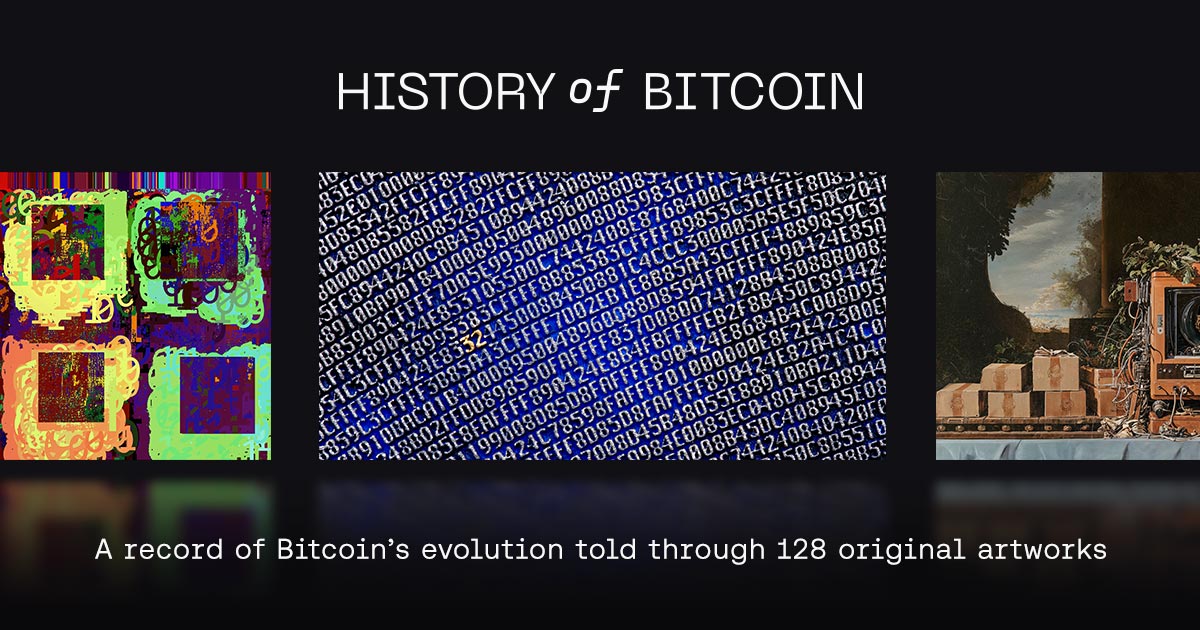


History of Bitcoin
Birth of Peer-to-Peer Networks
Bittorrent, created by Bram Cohen in 2001, pioneered peer-to-peer networks. Its decentralized design paved the way for Bitcoin’s resilient, unsto...