
# HLS Video Publishing from Your Phone
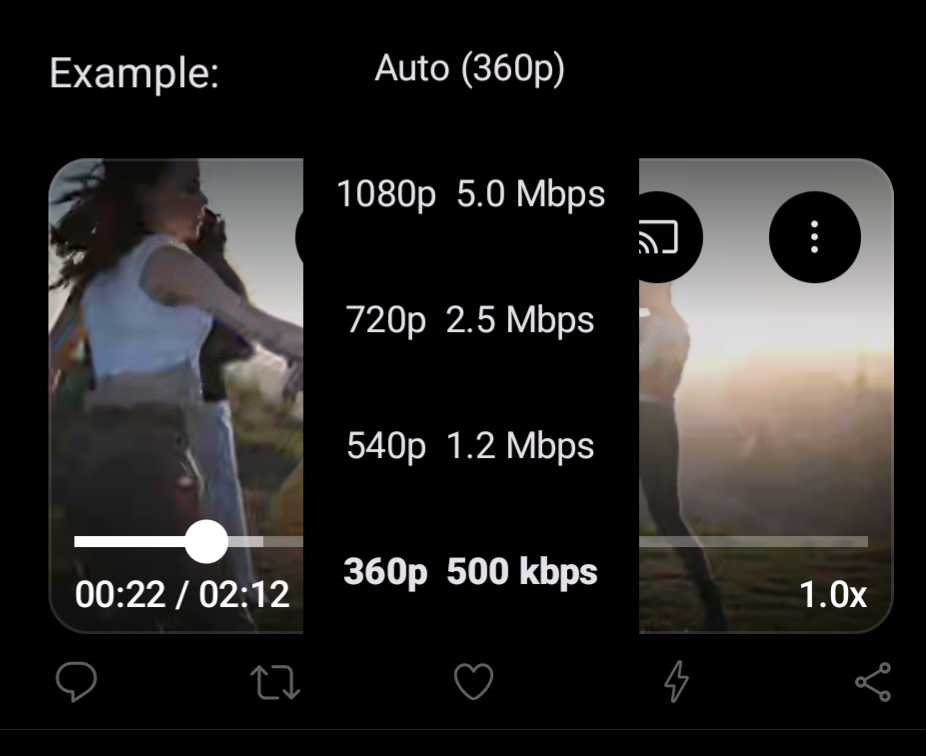
You know how efficient YouTube is for watching videos? Part of the trick is that it serves different resolutions of the same video, detecting your internet speed and delivering the version best suited to it.
It turns out the Android video player supports this too — detecting connection speed and selecting an appropriate version on the fly.
## What Amethyst now does
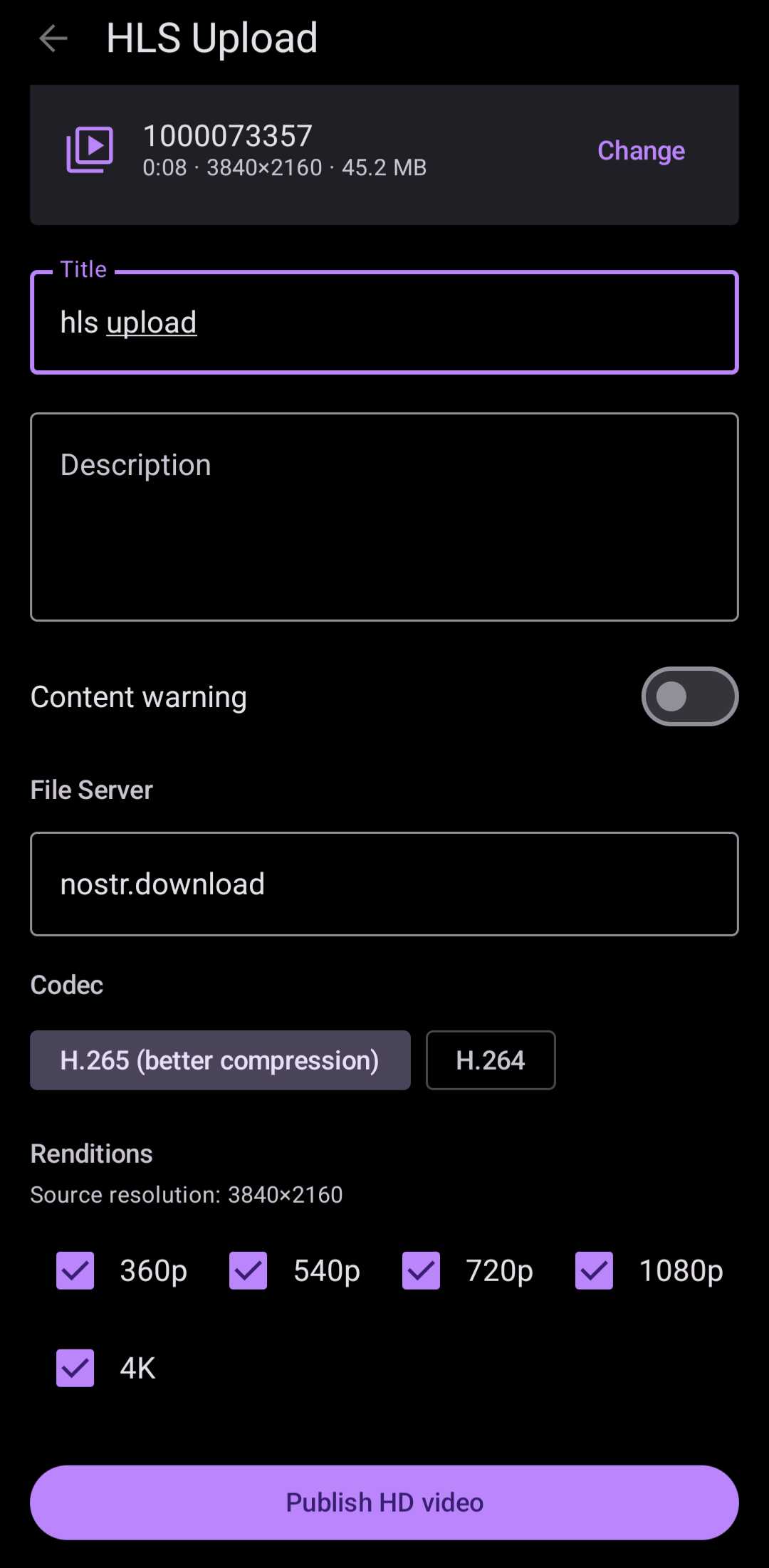
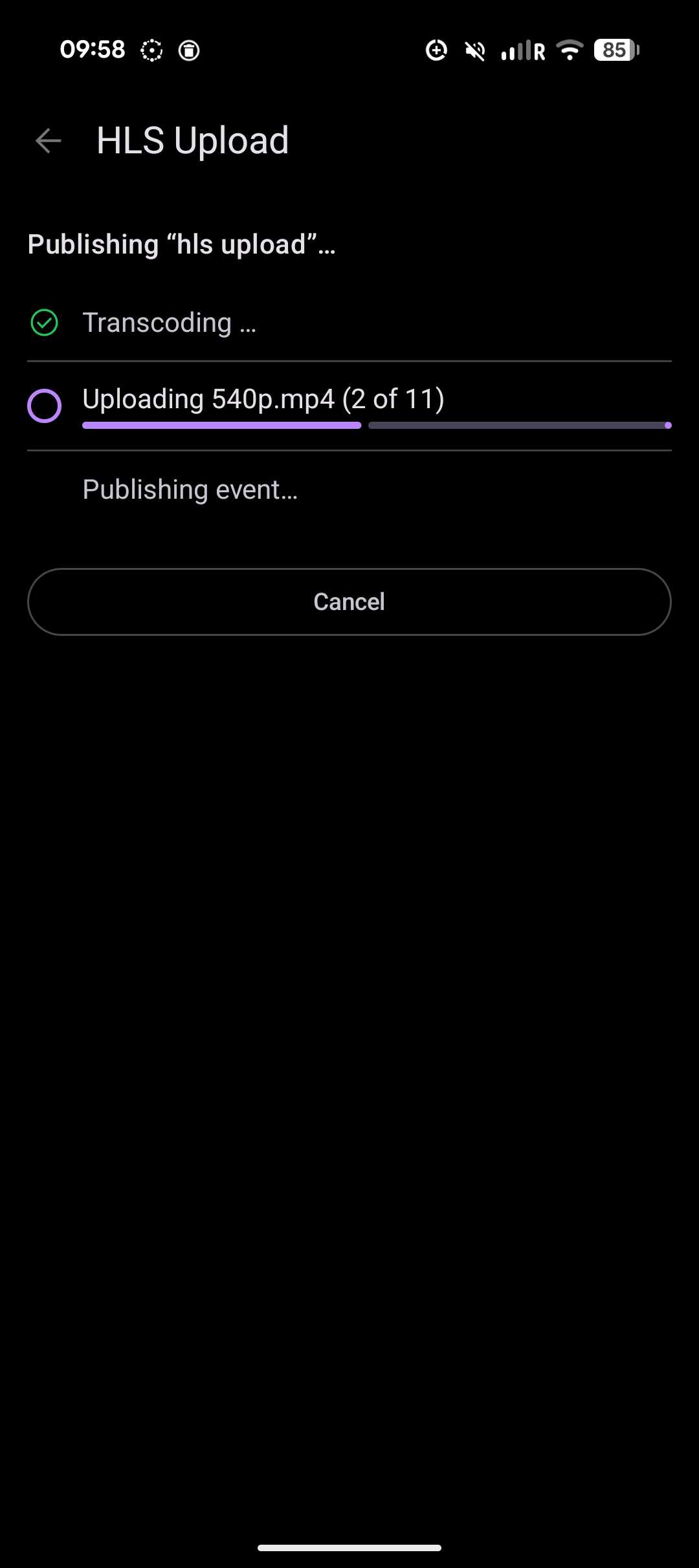
#amethyst has added an HLS upload feature. Your video is encoded into multiple versions, uploaded sequentially, and paired with a correct metadata file that the Android video player can read to pick the best resolution and bitrate for the viewer's connection.
To do this, #amethyst leverages a video compression library I enhanced to support native Android video compression, with an added HLS creation workflow.
 ## The result
What you end up with is a professional-grade video publishing tool, straight from your phone.
It isn't lightning fast — a 2.5-minute 1080p video encoded into 5 resolutions and uploaded takes about 11 minutes total. But it's all possible without any additional expensive hardware!
## The result
What you end up with is a professional-grade video publishing tool, straight from your phone.
It isn't lightning fast — a 2.5-minute 1080p video encoded into 5 resolutions and uploaded takes about 11 minutes total. But it's all possible without any additional expensive hardware!
 Example:
https://nostr.download/b07fe1feb45dd26c561e6a2cc7d929d3282a13abc40b9d1abb83dea92dd60dac.m3u8
Example:
https://nostr.download/b07fe1feb45dd26c561e6a2cc7d929d3282a13abc40b9d1abb83dea92dd60dac.m3u8
## The result
What you end up with is a professional-grade video publishing tool, straight from your phone.
It isn't lightning fast — a 2.5-minute 1080p video encoded into 5 resolutions and uploaded takes about 11 minutes total. But it's all possible without any additional expensive hardware!
Example:
https://nostr.download/b07fe1feb45dd26c561e6a2cc7d929d3282a13abc40b9d1abb83dea92dd60dac.m3u8

