🇺🇸🇯🇵 The US asked China to keep supplying rare earths to Japan. Beijing refused 🇨🇳
On Tuesday, China’s Foreign Ministry confirmed the rare earth export restrictions on Japanese military procurement will remain in place. Without exceptions and no silent reversals. After Tokyo’s firmer stance on Taiwan, Beijing’s January policy has remained unchanged.
Lin Jian was blunt” These materials are governed by export control law for a reason. They’re not ordinary commodities. They feed into advanced weapons systems, guidance technology and high-performance military components. The restrictions target Japanese government military end-use. Full stop!
He added that the measures aim to constrain Japan’s remilitarisation trajectory and slow any drift toward nuclear weapons capability. Instead of just diplomatic rhetoric, this reflects Beijing’s understanding of Japan’s plutonium stockpiles, reprocessing capabilities and the political situation in Tokyo due to the US security pact.
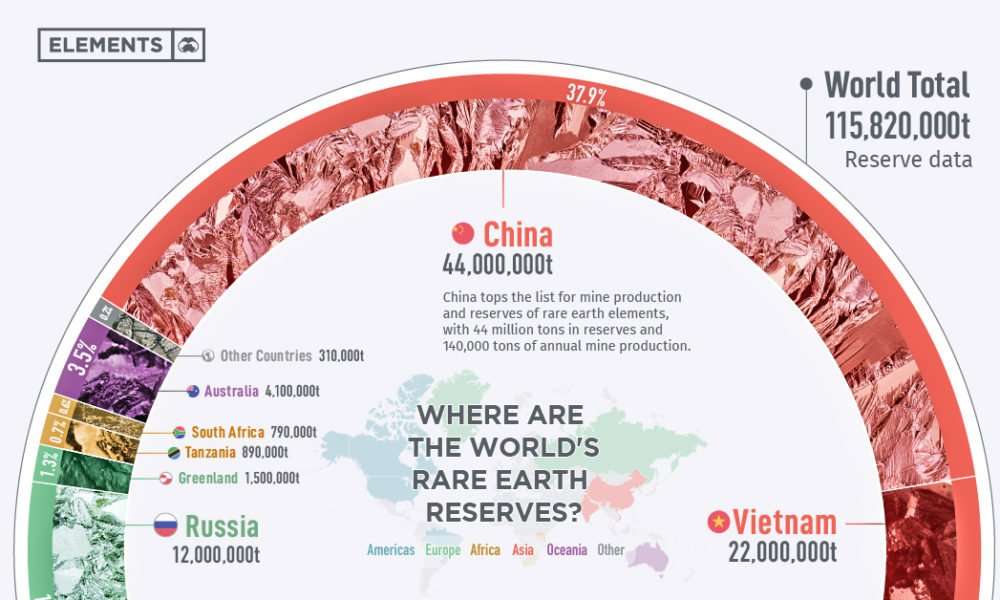
The data supports this assertion as well. China’s overall rare earth exports hit a four-month high in May, the Japan-specific squeeze is deliberate and narrow. Broader supply to the global market continues because China has zero interest in affecting industries that depend on these materials for civilian tech, EVs and renewables. The approach involves targeted pressure, not broad disruption.
The US request, pushed through diplomatic channels and flagged by Nikkei, then Bloomberg, changes nothing. Washington wants Beijing to keep feeding Japan’s tech and defence sectors even as it tightens containment, arms Taiwan and pressures allies to cut exposure to Chinese supply chains. The contradiction is hard to ignore.
Japan is following Washington’s script: diversify. It joined a trilateral “buyers club” with France and Canada. It signed a A$1.6 billion deal with Australia and even though these things sound reassuring in press releases, the physical reality is harder. Mining rare earths is relatively easy. Separating, refining them to battery, magnet grade and scaling production of neodymium-iron-boron magnets at the quality and cost China achieves? That took decades of state-directed investment, technical iteration and environmental trade-offs the West largely decided not to make.
The processing bottleneck is still overwhelmingly Chinese. No amount of G7 coordination or Australian mining deals erases that industrial fact overnight.
This looks like straightforward strategic resource management. Beijing is using leverage it actually possesses to raise the cost of actions that directly threaten core security interests, specifically Japan moving deeper into a US-led military posture aimed at Taiwan. That’s how great powers behave when they hold asymmetric advantages. They don’t hand strategic materials to countries actively aligning against them.
The US intervention only highlights the underlying weakness. If American strategy depends on China continuing to supply critical inputs to its key Asian ally while simultaneously trying to isolate Beijing economically, then the strategy has a structural flaw it can’t sanction or subsidise its way out of.
Washington can keep announcing “secure supply chain” initiatives. The era of open access to Chinese rare earth processing on Western political terms is over.
The question isn’t whether that’s fair. It’s whether anyone on the other side has actually understood it yet.

 🇮🇷 Navy of the Islamic Revolutionary Guard Corps:
Following repeated violations of the ceasefire conditions by the American enemy, the Strait of Hormuz will be closed until further notice.
We warn that no vessel should move from its anchorage in the Persian Gulf and the Sea of Oman. Approaching the Strait of Hormuz will be considered as cooperating with the enemy.
🇮🇷 Navy of the Islamic Revolutionary Guard Corps:
Following repeated violations of the ceasefire conditions by the American enemy, the Strait of Hormuz will be closed until further notice.
We warn that no vessel should move from its anchorage in the Persian Gulf and the Sea of Oman. Approaching the Strait of Hormuz will be considered as cooperating with the enemy. — Article 52 of the Vienna Convention on the Law of Treaties:
‘A treaty is void if its conclusion has been procured by the threat or use of force in violation of the principles of international law embodied in the Charter of the United Nations’
Pete Hegseth and Trump are openly bragging about a war crime. See video below:
🇺🇸/🇮🇷 U.S. Secretary of War, Pete Hegseth: ‘When we bomb Iran tonight, it’s not about restarting the war—it’s about getting them to accept our terms of the deal’
Pete Hegseth: ‘If we need to negotiate with bombs, we’ll negotiate with bombs’
— Article 52 of the Vienna Convention on the Law of Treaties:
‘A treaty is void if its conclusion has been procured by the threat or use of force in violation of the principles of international law embodied in the Charter of the United Nations’
Pete Hegseth and Trump are openly bragging about a war crime. See video below:
🇺🇸/🇮🇷 U.S. Secretary of War, Pete Hegseth: ‘When we bomb Iran tonight, it’s not about restarting the war—it’s about getting them to accept our terms of the deal’
Pete Hegseth: ‘If we need to negotiate with bombs, we’ll negotiate with bombs’ " We're not afraid of fighting American losers.
This time, we will not limit the battlefield to the West Asia. You'll see what will happen! "
— Head of National Security Committee in Parliament
" We're not afraid of fighting American losers.
This time, we will not limit the battlefield to the West Asia. You'll see what will happen! "
— Head of National Security Committee in Parliament Hezbollah’s successful use of FPV drones against the invading Israeli occupation army has notably held back their advance & inflicted retaliatory casualties.
The Lebanese regime, which is currently engaged in direct negotiations with Israel, are now attempting to prevent the fibre optic cables the FPV drones use from reaching Hezbollah. An open attempt to aid the Israelis as the death toll in Lebanon nears 4,000.
However, the move will not actually stop fibre optic cables from entering Lebanon. Some have even labelled the move a humiliation ritual.
Hezbollah’s successful use of FPV drones against the invading Israeli occupation army has notably held back their advance & inflicted retaliatory casualties.
The Lebanese regime, which is currently engaged in direct negotiations with Israel, are now attempting to prevent the fibre optic cables the FPV drones use from reaching Hezbollah. An open attempt to aid the Israelis as the death toll in Lebanon nears 4,000.
However, the move will not actually stop fibre optic cables from entering Lebanon. Some have even labelled the move a humiliation ritual.