🌊 SURF 'N TURF 🏝️
-THE BORACAY ISLAND LIFE-

The Picture of Dorian Gray: When Beauty Becomes a Prison
The final years of the nineteenth century were filled with contradictions. Across Britain, the Victorian world projected an image of moral certainty, discipline, and social respectability. Yet beneath the polished surface of elegant drawing rooms and strict social codes, another current was flowing. Artists, poets, and thinkers were beginning to question whether beauty itself might be more important than morality. The old certainties were trembling. Industrial cities expanded, scientific discoveries challenged religious beliefs, and a generation of intellectuals searched for new meanings in a rapidly changing world.
It was within this atmosphere that a young Irish writer named Oscar Wilde emerged as one of the most fascinating voices of his age. Wilde moved through London's artistic circles with wit, charm, and a flair for provocation. He celebrated art, beauty, and individual expression at a time when society often demanded conformity. To some, he was brilliant. To others, dangerous. His only novel, The Picture of Dorian Gray, would become the perfect reflection of these tensions.
The story begins not with violence or tragedy, but with a portrait.
In a quiet studio filled with sunlight and the scent of paint, the artist Basil Hallward gazes upon his greatest creation. Before him stands Dorian Gray, a young man of extraordinary beauty. His face seems untouched by worry, his youth untouched by time. Basil sees in Dorian something more than a subject. He sees perfection itself.
But beauty rarely remains untouched by influence.
Into Dorian's life enters Lord Henry Wotton, a man whose words move like silk and poison at the same time. Lord Henry believes that pleasure is life's highest goal. Why deny desires? Why sacrifice happiness for morality? Why fear consequences when youth is so brief?
For Dorian, these ideas arrive like a storm.
As he stands before Basil's portrait, he realizes a truth that terrifies him. The painting will remain forever young, while he will grow old. His beauty, the very thing that makes him remarkable, will eventually fade. In a moment of desperation and vanity, he utters a wish that changes everything. If only the portrait could age instead of him. If only the painting could bear the burden of time while he remained forever young.
And somehow, impossibly, the wish comes true.
At first, the miracle feels like freedom.
Dorian moves through London's glittering social world untouched by age. Years pass, yet his face remains as youthful as the day Basil painted him. But while his appearance never changes, something else begins to transform. Hidden away from the world, the portrait starts to shift. Small traces of cruelty appear. Lines of corruption emerge. Every selfish act, every betrayal, every moral compromise leaves its mark not on Dorian's face, but on the canvas.
The painting becomes a mirror of the soul.
What follows is not merely a story of sin but a descent into psychological darkness. Dorian begins to live without restraint because he believes he can escape consequences. He destroys lives with careless charm. He pursues pleasure wherever it leads. He becomes fascinated by sensation, beauty, luxury, and excess. Yet with every indulgence, the portrait grows more horrifying.
The tragedy is that Dorian never loses his beauty.
Had his face reflected his corruption, perhaps he might have changed. Perhaps shame would have forced reflection. Instead, his flawless appearance becomes a shield protecting him from accountability. Society sees innocence where corruption exists. People trust the face while remaining blind to the soul.
Is this not one of humanity's oldest weaknesses?
We often confuse appearance with character. We assume beauty reflects goodness, success reflects virtue, and confidence reflects wisdom. Wilde understood how dangerous such assumptions can be. Dorian becomes living proof that external perfection can conceal profound moral decay.
The relationship between the novel's three central characters creates its emotional depth. Basil represents conscience, sincerity, and the belief that beauty should inspire goodness. He loves art because it reveals truth. Lord Henry represents temptation, intellect, and the seductive power of ideas detached from responsibility. He treats life as an experiment and people as subjects within it. Between them stands Dorian, pulled by opposing forces.
Yet Dorian is not simply a victim.
This is what makes the novel so unsettling. Lord Henry may influence him, but Dorian ultimately chooses his path. Again and again, opportunities for redemption appear before him. Again and again, he turns away. The novel refuses to offer easy excuses. It asks a difficult question: At what point do influences stop being explanations and become choices?
The deeper Dorian falls, the more isolated he becomes. He surrounds himself with luxury but cannot find peace. He seeks pleasure but discovers only emptiness. The portrait hidden in his house becomes an object of obsession and terror. He fears it, yet cannot stop looking at it. It shows him the truth he spends his life trying to avoid.
Perhaps that is why the painting remains one of literature's most powerful symbols.
It represents conscience itself.
Human beings can hide many things from the world. We can conceal motives, disguise intentions, and carefully curate the image we present to others. But somewhere within us exists a private knowledge of who we truly are. The portrait gives physical form to that invisible reality. It becomes the embodiment of every guilt, every compromise, every unacknowledged truth.
At its philosophical core, The Picture of Dorian Gray explores the conflict between appearance and reality, pleasure and responsibility, freedom and consequence. Lord Henry argues that life should be devoted to experience. Morality, in his view, is merely a social construction that limits individual happiness. Yet the novel continually asks whether a life devoted entirely to pleasure can ever satisfy the human spirit.
Dorian's journey suggests that it cannot.
The pursuit of endless gratification eventually becomes a prison. Without principles, desires multiply endlessly. Without responsibility, freedom loses meaning. Dorian gains everything he thinks he wants and discovers that none of it can fill the growing emptiness within him.
As the years pass, his fear becomes unbearable. The portrait has transformed into a grotesque record of his soul. Every glance reminds him of what he has become. Desperate to escape judgment, he makes one final decision. He destroys the painting.
But the portrait and the man are no longer separate.
When servants enter the room afterward, they discover a shocking scene. Hanging on the wall is the beautiful portrait exactly as it appeared years before. On the floor lies the body of an old, disfigured man. Only by examining rings on his fingers can they recognize him as Dorian Gray.
The ending feels inevitable and tragic at the same time.
Dorian spends his life trying to separate actions from consequences, appearance from reality, soul from self. In the end, those divisions collapse. The truth returns. The burden he transferred to the portrait finally becomes his own once more.
More than a century later, the novel feels remarkably modern.
Today, people curate images of themselves through social media, public branding, and carefully managed identities. Never before has it been easier to present a beautiful version of oneself while hiding imperfections. The temptation to value appearance over authenticity remains as powerful as it was in Wilde's London.
The story speaks directly to a culture obsessed with youth, beauty, and external validation. It asks whether a perfect image is worth anything if it conceals a damaged inner life. It challenges the belief that consequences can be escaped simply because they are invisible.
That is why Dorian Gray continues to haunt readers.
His story is not merely about supernatural magic or Victorian decadence. It is about the human tendency to avoid self-examination. It is about the cost of choosing image over integrity. It is about the dangerous fantasy that we can enjoy the rewards of our actions while avoiding their moral weight.
In the end, Wilde leaves us with a question far more unsettling than any ghost story. If a portrait existed that revealed every hidden truth about our character—every kindness, every cruelty, every secret desire—would we dare to look at it? And perhaps more importantly, would we recognize the person staring back at us?
"Pure signal, no noise"
Credits Goes to the respective
Author ✍️/ Photographer📸
🐇 🕳️

 The Stadio dei Marmi, Rome
One of the most astonishing sculpture ensembles of the modern era is the marble army that surrounds the Stadio dei Marmi.
The Stadio dei Marmi, Rome
One of the most astonishing sculpture ensembles of the modern era is the marble army that surrounds the Stadio dei Marmi.
 Created between 1928 and 1932 as part of the Foro Mussolini (today the Foro Italico), the stadium was conceived during Italy's Fascist period as a celebration of athletic excellence, physical strength, and the ideals of classical antiquity.
 Encircling the stadium are sixty monumental Carrara marble athletes, each donated by a different Italian province.

 Though carved in the twentieth century, they deliberately evoke the heroic nude figures of ancient Greece and Rome. Discus throwers, wrestlers, runners, and warriors stand in disciplined ranks, transforming the stadium into a vast open-air sculpture gallery.

 For lovers of Grand Tour sculpture, the Stadio dei Marmi offers a fascinating paradox. It is unmistakably modern in date, yet deeply rooted in the classical tradition.
 The sculptors looked back to Polykleitos, Lysippos, and the Roman ideal of the perfected human form, creating figures whose powerful anatomy, calm expressions, and monumental scale recall the masterpieces that inspired generations of travelers on the Grand Tour.
 Whatever one's view of the political regime that commissioned them, the sculptures themselves remain an extraordinary achievement.


 Few places in the world present such an impressive display of monumental nude athletic sculpture gathered in a single setting—a reminder that the enduring language of classical beauty continued to inspire artists well into the twentieth century.
 Maison Palm Beach / Mark Lukas Fine Art
"Pure signal, no noise"
Credits Goes to the respective
Author ✍️/ Photographer📸
🐇 🕳️
Maison Palm Beach / Mark Lukas Fine Art
"Pure signal, no noise"
Credits Goes to the respective
Author ✍️/ Photographer📸
🐇 🕳️ 28 rock legends honored with statues...


 🎶
🎶
 🎶
🎶
 🎵
🎵


 "Pure signal, no noise"
Credits Goes to the respective
Author ✍️/ Photographer📸
🐇 🕳️
"Pure signal, no noise"
Credits Goes to the respective
Author ✍️/ Photographer📸
🐇 🕳️ Did you know? Jacques-Yves Cousteau was born June 11th, 1910! He is best known for helping to bring the wonders of the underwater world into millions of people’s homes with both his films and his role in creating the iconic “Aqualung.”
 Together with Emile Gagnan, Cousteau invented the modern scuba regulator and what would later be known as the Aqualung during the winter of 1942-1943. It revolutionized the diving world, enabling safer and more convenient dives.
Before the first scuba regulators, all diving needed to be done in contained air spaces such as a helmet or diving bell, which were supplied air from the surface. With scuba, which stands for “self-contained underwater breathing apparatus,” divers could carry their own air supply, unencumbered by heavy weights that dragged them to the seafloor. For the first time, divers were able to swim freely while breathing, something we may take for granted today. A new term was even popularized: “swim-diving”, to differentiate from the previous form of diving which was largely sinking and walking along the bottom.
Together with Emile Gagnan, Cousteau invented the modern scuba regulator and what would later be known as the Aqualung during the winter of 1942-1943. It revolutionized the diving world, enabling safer and more convenient dives.
Before the first scuba regulators, all diving needed to be done in contained air spaces such as a helmet or diving bell, which were supplied air from the surface. With scuba, which stands for “self-contained underwater breathing apparatus,” divers could carry their own air supply, unencumbered by heavy weights that dragged them to the seafloor. For the first time, divers were able to swim freely while breathing, something we may take for granted today. A new term was even popularized: “swim-diving”, to differentiate from the previous form of diving which was largely sinking and walking along the bottom.
 The Aqualung was adapted in part from an automobile component created by Emile Gagnan to regulate engine gas intake. It was officially put on the market, first in France, in 1946. In 1953, Cousteau would release his book The Silent World, with the movie version following three years later in 1956. His work showed the wonders of the ocean to millions of people, and was many people's first exposure to diving.
 He helped to inspired a generation of divers. Happy birthday, Jacques Cousteau!
#diving #history
"Pure signal, no noise"
Credits Goes to the respective
Author ✍️/ Photographer📸
🐇 🕳️
He helped to inspired a generation of divers. Happy birthday, Jacques Cousteau!
#diving #history
"Pure signal, no noise"
Credits Goes to the respective
Author ✍️/ Photographer📸
🐇 🕳️ This is Katz Castle (Burg Katz) in Germany, located above the town of St. Goarshausen.
It was originally constructed around 1371 by Count William II of Katzenelnbogen.
The castle was bombarded by Napoleon in 1806 and later rebuilt in the late 19th century.
It overlooks the Rhine River in the Rhineland-Palatinate region.
"Pure signal, no noise"
Credits Goes to the respective
Author ✍️/ Photographer📸
🐇 🕳️
This is Katz Castle (Burg Katz) in Germany, located above the town of St. Goarshausen.
It was originally constructed around 1371 by Count William II of Katzenelnbogen.
The castle was bombarded by Napoleon in 1806 and later rebuilt in the late 19th century.
It overlooks the Rhine River in the Rhineland-Palatinate region.
"Pure signal, no noise"
Credits Goes to the respective
Author ✍️/ Photographer📸
🐇 🕳️ First dive? Success! ✅ Big thanks to our Intro Divers for purchasing Divers Drop post-dive care. Protect those ears and come back for more soon! 🌊🤿
"It's a good day to dive". 🤿
First dive? Success! ✅ Big thanks to our Intro Divers for purchasing Divers Drop post-dive care. Protect those ears and come back for more soon! 🌊🤿
"It's a good day to dive". 🤿


 Noam Chomsky
"As long as the general population is passive, apathetic, diverted to consumerism or hatred of the vulnerable, then the powerful can do as they please, and those who survive will be left to contemplate the outcome."
"Avram Noam Chomsky is an American linguist, philosopher, cognitive scientist, historian, social critic, and political activist. Sometimes called "the father of modern linguistics", Chomsky is also a major figure in analytic philosophy and one of the founders of the field of cognitive science."
Born: Avram Noam Chomsky, December 7, 1928, Philadelphia, Pennsylvania, US
Institutions: University of Arizona (2017–present), Massachusetts Institute of Technology (1955–present), Institute for Advanced Study (1958–1959)
Education: University of Pennsylvania, (BA, 1949, MA, 1951, PhD, 1955)
Noam Chomsky (2016). “Who Rules the World?”, p.54, Metropolitan Books
"Pure signal, no noise"
Credits Goes to the respective
Author ✍️/ Photographer📸
🐇 🕳️
Noam Chomsky
"As long as the general population is passive, apathetic, diverted to consumerism or hatred of the vulnerable, then the powerful can do as they please, and those who survive will be left to contemplate the outcome."
"Avram Noam Chomsky is an American linguist, philosopher, cognitive scientist, historian, social critic, and political activist. Sometimes called "the father of modern linguistics", Chomsky is also a major figure in analytic philosophy and one of the founders of the field of cognitive science."
Born: Avram Noam Chomsky, December 7, 1928, Philadelphia, Pennsylvania, US
Institutions: University of Arizona (2017–present), Massachusetts Institute of Technology (1955–present), Institute for Advanced Study (1958–1959)
Education: University of Pennsylvania, (BA, 1949, MA, 1951, PhD, 1955)
Noam Chomsky (2016). “Who Rules the World?”, p.54, Metropolitan Books
"Pure signal, no noise"
Credits Goes to the respective
Author ✍️/ Photographer📸
🐇 🕳️ Federico Castelluccio is best known for playing Furio Giunta in The Sopranos, but he is also a trained painter and serious collector of Baroque art.
Around 2010, he spotted a painting of Saint Sebastian at a German auction that had been listed as an anonymous 18th-century Italian work.
Castelluccio believed it looked much older and suspected it might be a lost painting by the Italian master Guercino.
He and a co-investor reportedly bought the painting for about $70,000. Castelluccio then spent several years researching and restoring it.
Experts David Stone and Nicholas Turner examined the canvas using X-rays, pigment testing, and other methods before concluding that it was painted by Guercino around 1632 to 1634.
Including restoration, transportation, and other expenses, the total investment was reportedly around $140,000.
The rediscovered painting was later estimated to be worth several million dollars, with some reports placing its possible value as high as $10 million.
In 2015, it was exhibited at the Princeton University Art Museum, where it was officially listed as Guercino’s Saint Sebastian from the Federico Castelluccio Collection.
#history #WittyHistorian
"Pure signal, no noise"
Credits Goes to the respective
Author ✍️/ Photographer📸
🐇 🕳️
Federico Castelluccio is best known for playing Furio Giunta in The Sopranos, but he is also a trained painter and serious collector of Baroque art.
Around 2010, he spotted a painting of Saint Sebastian at a German auction that had been listed as an anonymous 18th-century Italian work.
Castelluccio believed it looked much older and suspected it might be a lost painting by the Italian master Guercino.
He and a co-investor reportedly bought the painting for about $70,000. Castelluccio then spent several years researching and restoring it.
Experts David Stone and Nicholas Turner examined the canvas using X-rays, pigment testing, and other methods before concluding that it was painted by Guercino around 1632 to 1634.
Including restoration, transportation, and other expenses, the total investment was reportedly around $140,000.
The rediscovered painting was later estimated to be worth several million dollars, with some reports placing its possible value as high as $10 million.
In 2015, it was exhibited at the Princeton University Art Museum, where it was officially listed as Guercino’s Saint Sebastian from the Federico Castelluccio Collection.
#history #WittyHistorian
"Pure signal, no noise"
Credits Goes to the respective
Author ✍️/ Photographer📸
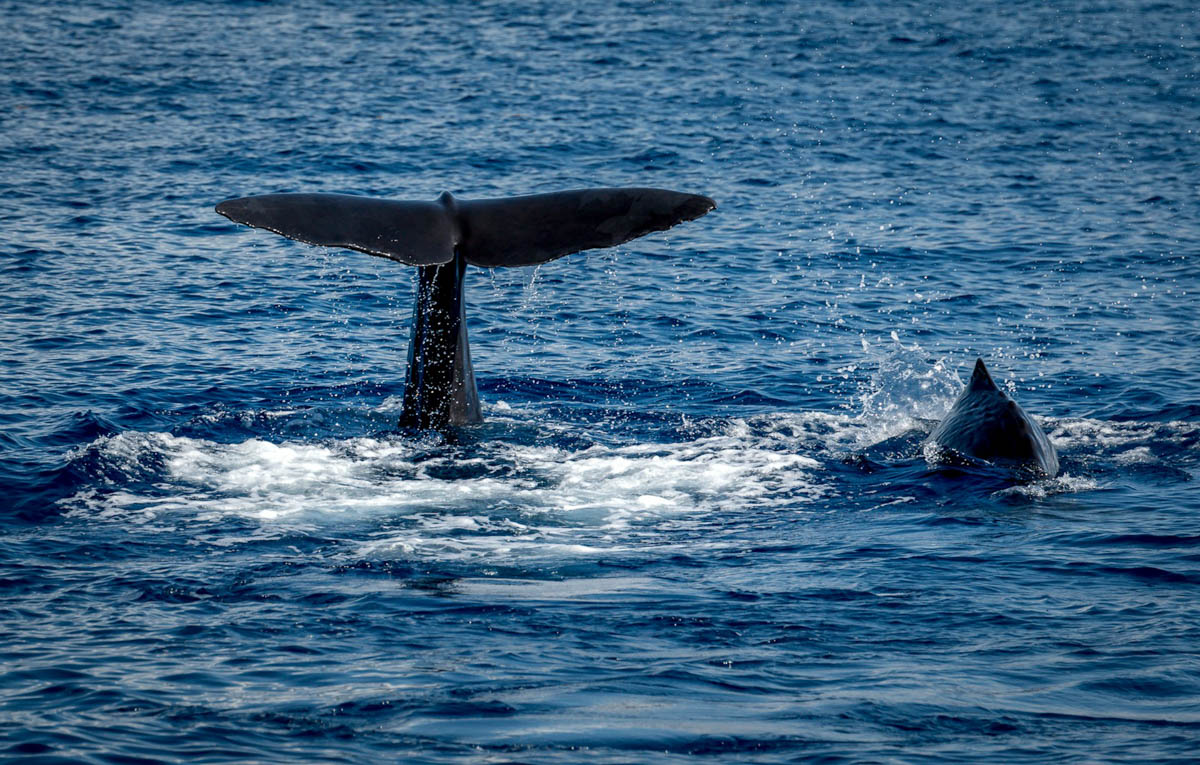
🐇 🕳️ What would you do if you were swallowed alive by a sperm whale with only an hour of air left?
That is the terrifying premise behind Whalefall, the upcoming film adaptation of Daniel Kraus' bestselling novel. The newly released trailer follows a scuba diver whose search for his late father takes a horrifying turn when he finds himself trapped inside a giant whale and fighting for survival.
Watch the trailer and see why this underwater thriller is already generating so much attention among divers and movie fans alike.
🤿 👉
What would you do if you were swallowed alive by a sperm whale with only an hour of air left?
That is the terrifying premise behind Whalefall, the upcoming film adaptation of Daniel Kraus' bestselling novel. The newly released trailer follows a scuba diver whose search for his late father takes a horrifying turn when he finds himself trapped inside a giant whale and fighting for survival.
Watch the trailer and see why this underwater thriller is already generating so much attention among divers and movie fans alike.
🤿 👉 
 Hand signals save dives.
Communication saves lives.🤿
"Pure signal, no noise"
Credits Goes to the respective
Author ✍️/ Photographer📸
🐇 🕳️
Hand signals save dives.
Communication saves lives.🤿
"Pure signal, no noise"
Credits Goes to the respective
Author ✍️/ Photographer📸
🐇 🕳️ The image shows Caminito del Rey in Málaga, Spain, a famous hiking trail renowned for its dramatic cliffside boardwalks.
Once known as one of the most dangerous hikes in the world, the path has been fully restored with secure wooden boardwalks and safety railings.
The trail spans approximately 7.7 km, offering spectacular views of the Gaitanes Gorge suspended nearly 100 meters above the canyon floor.
"Pure signal, no noise"
Credits Goes to the respective
Author ✍️/ Photographer📸
🐇 🕳️
The image shows Caminito del Rey in Málaga, Spain, a famous hiking trail renowned for its dramatic cliffside boardwalks.
Once known as one of the most dangerous hikes in the world, the path has been fully restored with secure wooden boardwalks and safety railings.
The trail spans approximately 7.7 km, offering spectacular views of the Gaitanes Gorge suspended nearly 100 meters above the canyon floor.
"Pure signal, no noise"
Credits Goes to the respective
Author ✍️/ Photographer📸
🐇 🕳️ At the gym this morning.
  Power on......


 Pura vida.
 'Pure signal,no noise'
Credits Goes to the respective
Author ✍️/ Photographer📸
🐇 🕳️
'Pure signal,no noise'
Credits Goes to the respective
Author ✍️/ Photographer📸
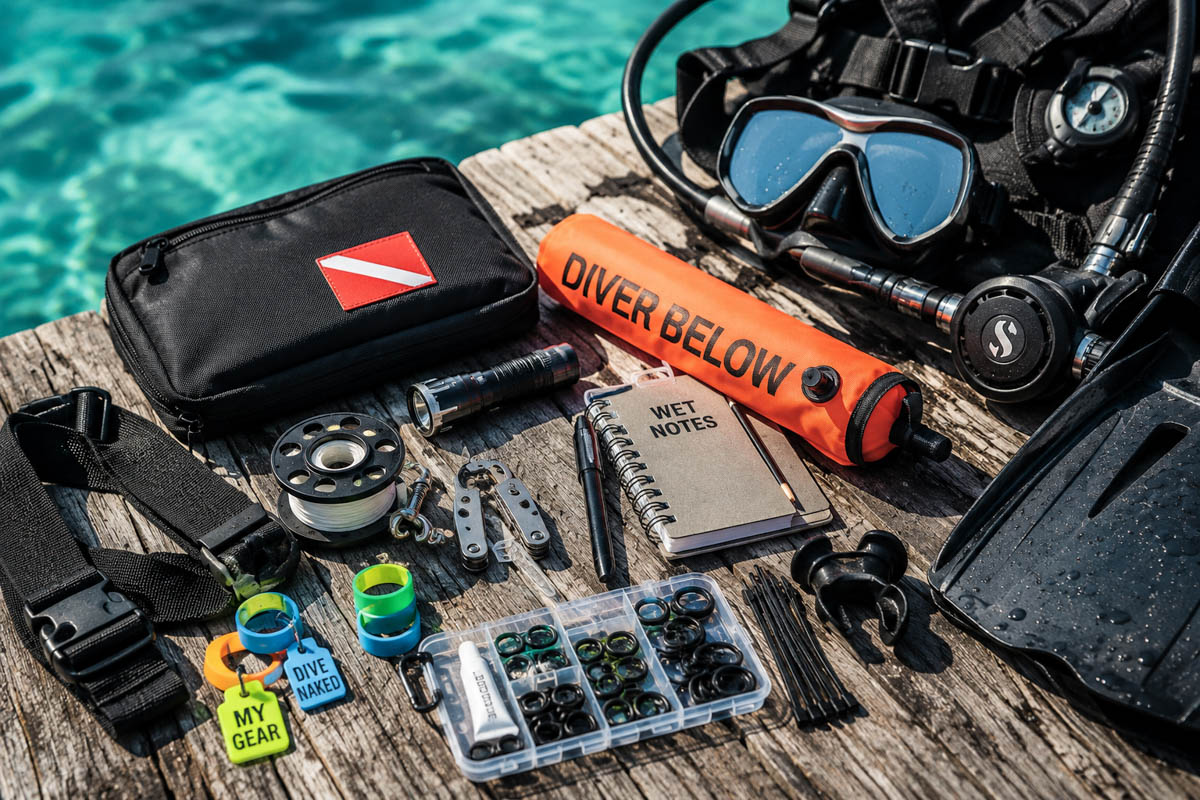
🐇 🕳️ Every diver remembers their regulator and dive computer.
It's the small accessories that get forgotten, and they're often the items that save the day.
From DSMBs and save-a-dive kits to wet notes and finger spools, we've rounded up the scuba accessories every diver should consider packing on their next trip.
What's the one piece of gear you've forgotten and regretted leaving behind?
🤿 👉
Every diver remembers their regulator and dive computer.
It's the small accessories that get forgotten, and they're often the items that save the day.
From DSMBs and save-a-dive kits to wet notes and finger spools, we've rounded up the scuba accessories every diver should consider packing on their next trip.
What's the one piece of gear you've forgotten and regretted leaving behind?
🤿 👉 
 Statue in Finland entitled:
"Read even if you're drowning"
"Pure signal, no noise"
Credits Goes to the respective
Author ✍️/ Photographer📸
🐇 🕳️
Statue in Finland entitled:
"Read even if you're drowning"
"Pure signal, no noise"
Credits Goes to the respective
Author ✍️/ Photographer📸
🐇 🕳️