🌊 SURF 'N TURF 🏝️
-THE BORACAY ISLAND LIFE-

The Zen of the Animal Kingdom: The Free-Spirit Art of Karl Mårtens ✨🇯🇵

👨🎨 Karl Mårtens was born in 1956 in San Francisco but grew up near Drottningholm, on the outskirts of Stockholm. He then lived in both Switzerland and Canada before returning to America for a time and then going back to Sweden to live.
The study of nature, with a particular passion for wildlife, has been his main interest since childhood. Having initially painted very exact, detailed pictures, he has more recently developed a freer and more fluid style, capturing the emotional essence of the subject rather than seeking a perfect depiction.
Mårtens says that he is influenced by both Western and Eastern philosophies and he is very interested in the forms of meditation found in Zen Buddhism. This discipline is clearly reflected in the approach to his painting: “The best result is achieved when no thought is given to it; when the mind rests in emptiness and intuition takes over,” he says. Working entirely from memory, he creates his striking, minimalist pieces using a masterful combination of watercolor and charcoal on hand-made paper.
🏹 The artist is also a very keen and successful practitioner of Japanese archery and he travels the world in his pursuit of excellence. This intense focus translates directly into his creative process, where complete stillness and sudden, fluid action must work in perfect harmony. In Japanese calligraphy one tries to create harmony between thick and thin brush strokes in the characters, looking for an anchor point from which other strokes emanate.
The result is a fluid harmony reminiscent of shapes in nature. Trying to capture these forms in his work turned out to be a good exercise in calligraphy as well as painting. Not all pieces in this collection are of active wildlife, but just as in calligraphically brushed text, the fluid motions of stretching cats, tiny mice, and forest badgers are beautifully enhanced by the sudden appearance of a static character here and there.

🌎 Through decades of dedication, his distinctive artistic style has earned widespread international acclaim, leading to prominent solo exhibitions across Europe and North America. Today, his deeply meditative wildlife pieces are highly sought after by fine art galleries and global collectors alike, while his renowned workshops continue to inspire artists worldwide by merging classical technique with spiritual discipline.

Karl Mårtens:

"When we paint from our true feelings, we all paint something beautiful."
"Pure signal, no noise"
Credits Goes to the respective
Author ✍️/ Photographer📸
🐇 🕳️

 Sculpture by- Orlando Basulto
"Pure signal, no noise"
Credits Goes to the respective
Author ✍️/ Photographer📸
🐇 🕳️
Sculpture by- Orlando Basulto
"Pure signal, no noise"
Credits Goes to the respective
Author ✍️/ Photographer📸
🐇 🕳️ On June 11, 1930, Gloria Hollister turned 30.
Instead of celebrating on land, she climbed into a small steel sphere called the Bathysphere.
Then she was lowered into the Atlantic Ocean off Bermuda.
The Bathysphere had been designed for deep-sea exploration. It had thick steel walls, small viewing windows, oxygen tanks and a telephone connection to the surface.
Hollister's first descent reached 410 feet.
Inside the sphere, she saw animals living in a world almost completely unknown to science.
She later described seeing colorless shrimp and fish moving through the cold, dim water.
But she didn't stop there.
In 1932, Hollister descended to 1,000 feet.
In 1934, she went down to 1,208 feet.
That descent set a women's world record for underwater depth—a record that remained for roughly three decades.
Her role was not limited to diving.
During many Bathysphere descents, Hollister remained on the surface with a telephone connected to the sphere.
William Beebe would describe what he could see in the darkness.
Hollister recorded his observations in real time.
If the telephone suddenly went silent, she had no way of immediately knowing whether the problem was communication—or something far worse.
She eventually became more than a Bathysphere researcher.
She led a zoological expedition into the interior of British Guiana, studied fish anatomy, published scientific work and later became deeply involved in conservation.
Her surviving papers contain journals, photographs, scientific notes and expedition records.
Gloria Hollister died in 1988.
But one photograph captures the strange reality of her early career better than almost anything else:
A woman sitting inside a metal sphere,
surrounded by the Atlantic,
hundreds of feet below the surface—
looking through a tiny window at a world humans had barely seen.
"Pure signal, no noise"
Credits Goes to the respective
Author ✍️/ Photographer📸
🐇 🕳️
On June 11, 1930, Gloria Hollister turned 30.
Instead of celebrating on land, she climbed into a small steel sphere called the Bathysphere.
Then she was lowered into the Atlantic Ocean off Bermuda.
The Bathysphere had been designed for deep-sea exploration. It had thick steel walls, small viewing windows, oxygen tanks and a telephone connection to the surface.
Hollister's first descent reached 410 feet.
Inside the sphere, she saw animals living in a world almost completely unknown to science.
She later described seeing colorless shrimp and fish moving through the cold, dim water.
But she didn't stop there.
In 1932, Hollister descended to 1,000 feet.
In 1934, she went down to 1,208 feet.
That descent set a women's world record for underwater depth—a record that remained for roughly three decades.
Her role was not limited to diving.
During many Bathysphere descents, Hollister remained on the surface with a telephone connected to the sphere.
William Beebe would describe what he could see in the darkness.
Hollister recorded his observations in real time.
If the telephone suddenly went silent, she had no way of immediately knowing whether the problem was communication—or something far worse.
She eventually became more than a Bathysphere researcher.
She led a zoological expedition into the interior of British Guiana, studied fish anatomy, published scientific work and later became deeply involved in conservation.
Her surviving papers contain journals, photographs, scientific notes and expedition records.
Gloria Hollister died in 1988.
But one photograph captures the strange reality of her early career better than almost anything else:
A woman sitting inside a metal sphere,
surrounded by the Atlantic,
hundreds of feet below the surface—
looking through a tiny window at a world humans had barely seen.
"Pure signal, no noise"
Credits Goes to the respective
Author ✍️/ Photographer📸
🐇 🕳️ “Sea Witch,”
Frank Frazetta’s cover painting for EERIE #7. Warren Publishing, 1967.
“Sea Witch,”
Frank Frazetta’s cover painting for EERIE #7. Warren Publishing, 1967.
 Following publication Frank changed the witch significantly so the first version shown here no longer exists.
"Pure signal, no noise"
Credits Goes to the respective
Author ✍️/ Photographer📸
🐇 🕳️
Following publication Frank changed the witch significantly so the first version shown here no longer exists.
"Pure signal, no noise"
Credits Goes to the respective
Author ✍️/ Photographer📸
🐇 🕳️ 22 October, 1965
On this day in 1965, English rock group the Rolling Stones released the single "Get Off My Cloud" in the UK.
The song was written by Mick Jagger and Keith Richards as a single to follow the successful "(I Can't Get No) Satisfaction."
Recorded in Hollywood, California, in early September 1965, the song was released in September in the United States.
Besides the UK, it also topped the charts in the US, Canada, and Germany and reached number 2 in several other countries.
Personnel: Mick Jagger (lead vocals), Keith Richards (rhythm guitar, backing vocals), Brian Jones (twelve-string guitar, lead guitar, electric piano), Bill Wyman (bass guitar, backing vocals), Charlie Watts (drums).
"Pure signal, no noise"
Credits Goes to the respective
Author ✍️/ Photographer📸
🐇 🕳️
22 October, 1965
On this day in 1965, English rock group the Rolling Stones released the single "Get Off My Cloud" in the UK.
The song was written by Mick Jagger and Keith Richards as a single to follow the successful "(I Can't Get No) Satisfaction."
Recorded in Hollywood, California, in early September 1965, the song was released in September in the United States.
Besides the UK, it also topped the charts in the US, Canada, and Germany and reached number 2 in several other countries.
Personnel: Mick Jagger (lead vocals), Keith Richards (rhythm guitar, backing vocals), Brian Jones (twelve-string guitar, lead guitar, electric piano), Bill Wyman (bass guitar, backing vocals), Charlie Watts (drums).
"Pure signal, no noise"
Credits Goes to the respective
Author ✍️/ Photographer📸
🐇 🕳️ Upper Austria is home to one of Austria’s most impressive baroque monastery libraries: the library of Stift St. Florian 📚
Around 150,000 historic books are preserved here – some several centuries old. A place where you can easily spend hours exploring the details and atmosphere
📸 Thanks @seplb and @stiftstflorian
"Pure signal, no noise"
Credits Goes to the respective
Author ✍️/ Photographer📸
🐇 🕳️
Upper Austria is home to one of Austria’s most impressive baroque monastery libraries: the library of Stift St. Florian 📚
Around 150,000 historic books are preserved here – some several centuries old. A place where you can easily spend hours exploring the details and atmosphere
📸 Thanks @seplb and @stiftstflorian
"Pure signal, no noise"
Credits Goes to the respective
Author ✍️/ Photographer📸
🐇 🕳️ The 1950 - 1951 Porsche 356.
 ‘Split-Window’ Cabriolet.
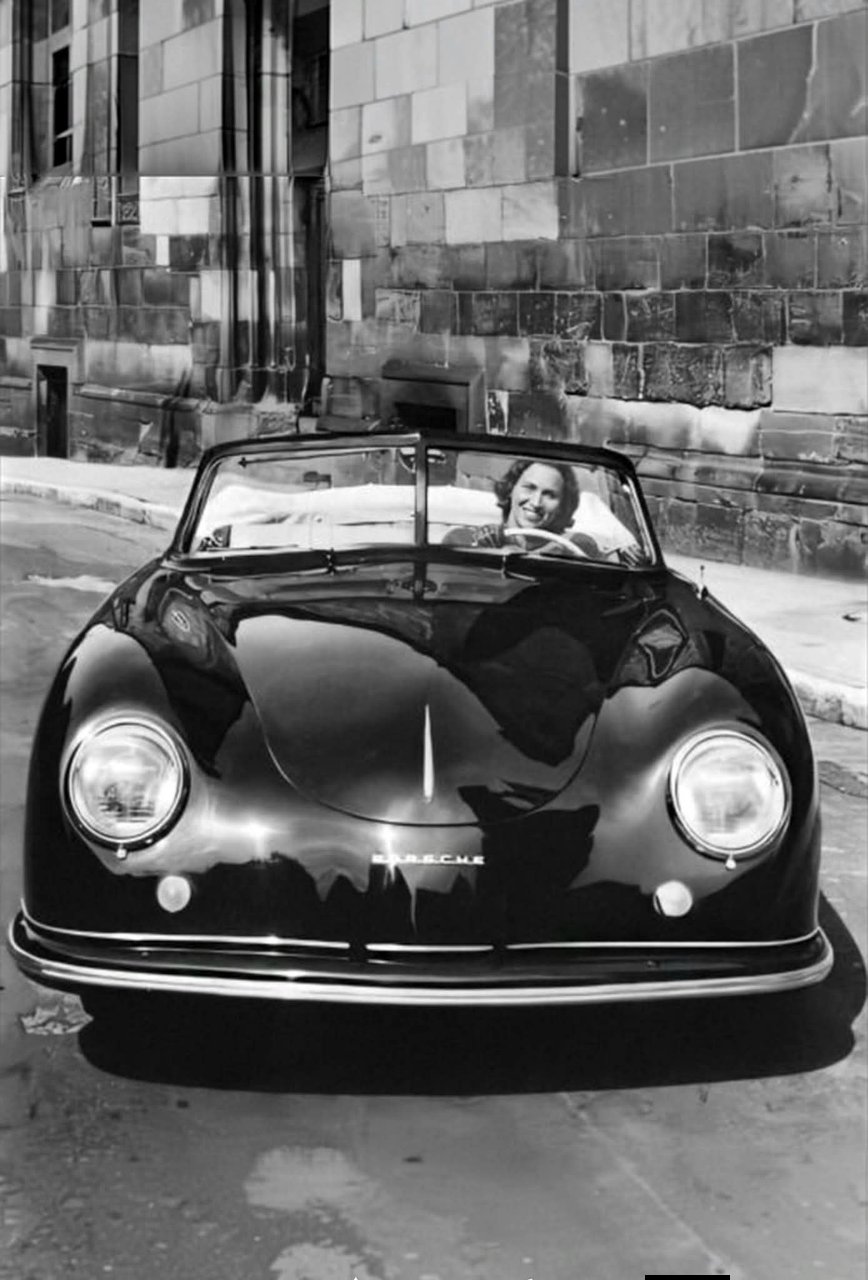 After producing the first German 356, a ‘Split-Window’ Coupé, Porsche produced a Cabriolet shortly there after which was built by Karrosseriewerk Reutter.
 Initial prodcutione output exceeded 30 cars a month with both Coupé and Cabriolet bodies.
 Both were loosely based off their equivalents made in Gmünd, Austria but had bodied made in steel instead of aluminum.
"Pure signal, no noise"
Credits Goes to the respective
Author ✍️/ Photographer📸
🐇 🕳️
Both were loosely based off their equivalents made in Gmünd, Austria but had bodied made in steel instead of aluminum.
"Pure signal, no noise"
Credits Goes to the respective
Author ✍️/ Photographer📸
🐇 🕳️ If you are having a hard time reading Neuromancer due to Gibson’s style
....you might want to try these shorter audio versions:
1. The BBC radio play version:
2. The abridged audio version read by the author himself.
"Pure signal, no noise"
Credits Goes to the respective
Author ✍️/ Photographer📸
🐇 🕳️
If you are having a hard time reading Neuromancer due to Gibson’s style
....you might want to try these shorter audio versions:
1. The BBC radio play version:
2. The abridged audio version read by the author himself.
"Pure signal, no noise"
Credits Goes to the respective
Author ✍️/ Photographer📸
🐇 🕳️ Few buildings embody the radical spirit of post-war Japanese architecture quite like Kisho Kurokawa’s Nakagin Capsule Tower, a landmark of the Metabolist movement.
 Completed in 1972, the tower comprised 140 prefabricated capsules attached to two central concrete cores. Each pod functioned as a self-contained micro-apartment, complete with a circular porthole window, built-in bed, bathroom and even a reel-to-reel tape deck – a futuristic vision of urban living.
 The design was rooted in Metabolism, a movement that emerged in Japan in the 1960s, advocating for buildings that could grow and adapt like living organisms. The capsules were intended to be replaced every 25 years, allowing the tower to evolve with changing needs and technologies. However, none were ever replaced, and the building gradually fell into disrepair.
 Despite campaigns to save it, the tower was demolished in 2022. Its legacy lives on through salvaged capsules now exhibited in museums and a 3D digital archive that preserves its visionary ideas for future generations.
📸 matthiasheiderich
"Pure signal, no noise"
Credits Goes to the respective
Author ✍️/ Photographer📸
🐇 🕳️
Despite campaigns to save it, the tower was demolished in 2022. Its legacy lives on through salvaged capsules now exhibited in museums and a 3D digital archive that preserves its visionary ideas for future generations.
📸 matthiasheiderich
"Pure signal, no noise"
Credits Goes to the respective
Author ✍️/ Photographer📸
🐇 🕳️ Fyodor Dostoyevsky
"People speak sometimes about the "bestial" cruelty of man, but that is terribly unjust and offensive to beasts, no animal could ever be so cruel as a man, so artfully, so artistically cruel."
"Fyodor Dostoyevsky, (born Nov. 11, 1821, Moscow, Russia—died Feb. 9, 1881, St. Petersburg), Russian novelist.
Dostoyevsky gave up an engineering career early in order to write. In 1849 he was arrested for belonging to a radical discussion group; sentenced to be shot, he was reprieved at the last moment and spent four years at hard labour in Siberia, where he developed epilepsy and experienced a deepening of his religious faith. Later he published and wrote for several periodicals while producing his best novels.
His novels are concerned especially with faith, suffering, and the meaning of life; they are famous for their psychological depth and insight and their near-prophetic treatment of issues in philosophy and politics. His first, Poor Folk (1846), was followed the same year by The Double.
The House of the Dead (1862) is based on his imprisonment and The Gambler (1866) on his own gambling addiction. Best known are the novella Notes from the Underground (1864) and the great novels Crime and Punishment (1866), The Idiot (1869), The Possessed (1872), and The Brothers Karamazov (1880), which focuses on the problem of evil, the nature of freedom, and the characters’ craving for some kind of faith. By the end of his life, he had been acclaimed one of his country’s greatest writers, and his works had a profound influence on 20th-century literature." (Britannica)
'The Brothers Karamazov'
"Pure signal, no noise"
Credits Goes to the respective
Author ✍️/ Photographer📸
🐇 🕳️
Fyodor Dostoyevsky
"People speak sometimes about the "bestial" cruelty of man, but that is terribly unjust and offensive to beasts, no animal could ever be so cruel as a man, so artfully, so artistically cruel."
"Fyodor Dostoyevsky, (born Nov. 11, 1821, Moscow, Russia—died Feb. 9, 1881, St. Petersburg), Russian novelist.
Dostoyevsky gave up an engineering career early in order to write. In 1849 he was arrested for belonging to a radical discussion group; sentenced to be shot, he was reprieved at the last moment and spent four years at hard labour in Siberia, where he developed epilepsy and experienced a deepening of his religious faith. Later he published and wrote for several periodicals while producing his best novels.
His novels are concerned especially with faith, suffering, and the meaning of life; they are famous for their psychological depth and insight and their near-prophetic treatment of issues in philosophy and politics. His first, Poor Folk (1846), was followed the same year by The Double.
The House of the Dead (1862) is based on his imprisonment and The Gambler (1866) on his own gambling addiction. Best known are the novella Notes from the Underground (1864) and the great novels Crime and Punishment (1866), The Idiot (1869), The Possessed (1872), and The Brothers Karamazov (1880), which focuses on the problem of evil, the nature of freedom, and the characters’ craving for some kind of faith. By the end of his life, he had been acclaimed one of his country’s greatest writers, and his works had a profound influence on 20th-century literature." (Britannica)
'The Brothers Karamazov'
"Pure signal, no noise"
Credits Goes to the respective
Author ✍️/ Photographer📸
🐇 🕳️ When Door Handles Become Sculptures.
A beautiful collection of authentic antique brass door handles found on historic doors across Europe and the Mediterranean.
These are not modern replicas; they are true witnesses of the past, standing the test of time for generations.
Nature, animals, and mythical creatures (like the sea dragon, seahorse, and lions) were the ultimate muses during the Belle Époque and the Art Nouveau movement.
The organic movement of the seahorse, the power of the lion, and the rich bronze patina left by decades of time transform a simple daily gesture—opening a door—into an act of art.
Photo source architecture hub
"Pure signal, no noise"
Credits Goes to the respective
Author ✍️/ Photographer📸
🐇 🕳️
When Door Handles Become Sculptures.
A beautiful collection of authentic antique brass door handles found on historic doors across Europe and the Mediterranean.
These are not modern replicas; they are true witnesses of the past, standing the test of time for generations.
Nature, animals, and mythical creatures (like the sea dragon, seahorse, and lions) were the ultimate muses during the Belle Époque and the Art Nouveau movement.
The organic movement of the seahorse, the power of the lion, and the rich bronze patina left by decades of time transform a simple daily gesture—opening a door—into an act of art.
Photo source architecture hub
"Pure signal, no noise"
Credits Goes to the respective
Author ✍️/ Photographer📸
🐇 🕳️


 " It’s the possibility of having a dream come true that makes life interesting."
- Paulo Coelho 'The Alchemist'
"Pure signal, no noise"
Credits Goes to the respective
Author ✍️/ Photographer📸
🐇 🕳️
" It’s the possibility of having a dream come true that makes life interesting."
- Paulo Coelho 'The Alchemist'
"Pure signal, no noise"
Credits Goes to the respective
Author ✍️/ Photographer📸
🐇 🕳️ Own it.
In a world where blame is shifted and excuses are the commonplace, stand apart.
Choose accountability.
Own your decisions.
Own your actions.
Take responsibility for where you fall short.
Don't make excuses.
Don't look for someone else to blame.
The modern samurai understands that honor begins with personal responsibility.
Your successes.
Your failures.
Your strengths.
Your shortcomings.
All of it. Good and bad.
Own it.
This is Spirit & Steel
"Pure signal, no noise"
Credits Goes to the respective
Author ✍️/ Photographer📸
🐇 🕳️
Own it.
In a world where blame is shifted and excuses are the commonplace, stand apart.
Choose accountability.
Own your decisions.
Own your actions.
Take responsibility for where you fall short.
Don't make excuses.
Don't look for someone else to blame.
The modern samurai understands that honor begins with personal responsibility.
Your successes.
Your failures.
Your strengths.
Your shortcomings.
All of it. Good and bad.
Own it.
This is Spirit & Steel
"Pure signal, no noise"
Credits Goes to the respective
Author ✍️/ Photographer📸
🐇 🕳️ The fountain ballerina, whose skirt is made of water, is a magic that is worth seeing with your own eyes.
Sculptor Malgoshata
Khodakowska (Poland)
This is not just a sculpture.....
This is ballet frozen in bronze and brought to life by water.
When the fountain is turned on, the water streams form a lush, light skirt, as if the ballerina is twirling in the air.
"Pure signal, no noise"
Credits Goes to the respective
Author ✍️/ Photographer📸
🐇 🕳️
The fountain ballerina, whose skirt is made of water, is a magic that is worth seeing with your own eyes.
Sculptor Malgoshata
Khodakowska (Poland)
This is not just a sculpture.....
This is ballet frozen in bronze and brought to life by water.
When the fountain is turned on, the water streams form a lush, light skirt, as if the ballerina is twirling in the air.
"Pure signal, no noise"
Credits Goes to the respective
Author ✍️/ Photographer📸
🐇 🕳️