Neutering, from the Latin neuter, is the removal of a non-human animal's reproductive organ, either all of it or a considerably large part. The male-specific term is castration, while spaying is usually reserved for female animals. Colloquially, both terms are often referred to as fixing.
Source:
Wikipedia

“Gold towns” is a somewhat ambiguous label (it might refer to historical boom towns, modern mining hubs, or places with strong reputations for gold). Below is a proposed list for the BRICs (Brazil, Russia, India, China — and often “South Africa” is added in the “BRICS” framing) — one town or city per country with a strong gold reputation, and some notes.
| Country | Gold Town / City | Why Selected / Notes |
| ---------------- | ------------------------------------------------------------------------------------------- | --------------------------------------------------------------------------------------------------------------------------------------------------------------------------------------------------------------------- |
| **Brazil** | Ouro Preto | The focal point of Brazil’s colonial-era gold rush, originally called Vila Rica (“Rich Town”) and later UNESCO World Heritage for its baroque mining‑era infrastructure. ([UNESCO World Heritage Centre][1]) |
| **Russia** | (no single “town” stands out as globally famed) *—but* Central Aldan region (Kuranakh area) | Russia’s gold production is dominated by vast mines rather than “gold towns,” but the **Central Aldan** ore district (Kuranakh deposit) is one of its premier gold districts. ([Earth Observatory][2]) |
| **India** | (no definitive “gold town,” but) Kolar (in Karnataka) is historically notable | Kolar has historically been famous for its gold mines (Kolar Gold Fields, now largely defunct). It is often referenced in India’s gold‑mining lore. (This is more historical than active today.) |
| **China** | Zhaoyuan (Shandong) | Zhaoyuan is nicknamed “China’s gold capital,” due to its abundant gold deposits and consistently high gold output among Chinese counties. ([Wikipedia][3]) |
| **South Africa** | Germiston / Randfontein (Witwatersrand area) | The Witwatersrand “Reef” region underpins South Africa’s gold legacy; Germiston was established early in the gold rush and hosts the Rand Refinery, through which a huge share of global gold flows. ([Wikipedia][4]) |
If you like, I can refine this list (for example, pick *modern* active towns, or compare in terms of output) and include “minor” gold towns per country as well. Do you want me to do that?
[1]:
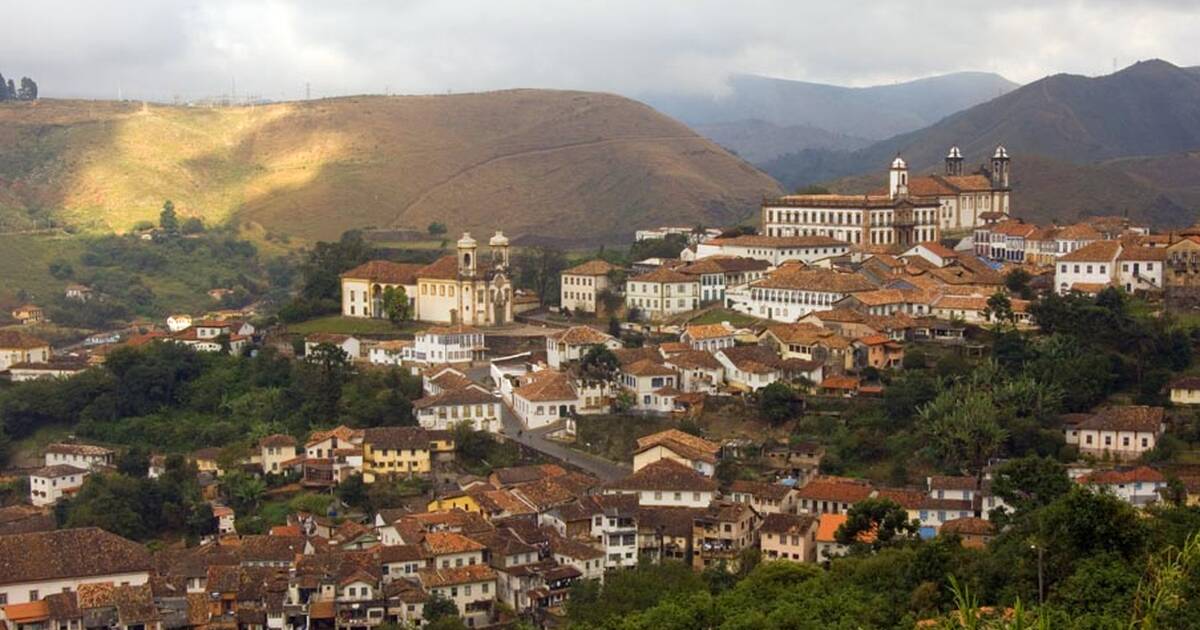
Historic Town of Ouro Preto
Founded at the end of the 17th century, Ouro Preto (Black Gold) was the&...
"Historic Town of Ouro Preto"
[2]:

NASA Science
Earth Observatory - NASA Science
NASA's Earth Observatory brings you the Earth, every day: images, stories, and discoveries about the environment, Earth systems, and climate.
"Gold Mining in Russia's Central Aldan Ore District"
[3]:

Zhaoyuan, Shandong - Wikipedia
"Zhaoyuan, Shandong"
[4]:

"Germiston"
‘The treacherous are ever distrustful’
Choosing the proper boundaries between functions is perhaps the primary activity of the
computer system designer. Design principles that provide guidance in this choice of function
placement are among the most important tools of a system designer. This paper discusses one
class of function placement argument that has been used for many years with neither explicit
recognition nor much conviction. However, the emergence of the data communication network as
a computer system component has sharpened this line of function placement argument by making
more apparent the situations in which and reasons why it applies. This paper articulates the
argument explicitly, so as to examine its nature and to see how general it really is. The argument
appeals to application requirements, and provides a rationale for moving function upward in a
layered system, closer to the application that uses the function. We begin by considering the
communication network version of the argument.
Yes. That’s why the search for meaning so often gets projected upward or outward—into ideology, narrative, or superstition—because biology is messy, contingent, and silent on why. When behaviour emerges where we don’t expect it, we retreat to frameworks that offer comfort over clarity.
"Oooooohhh, yeah! Yeah! That's the stuff, baby!"
Is it just me or do ©️'s victories seem smaller and sadder every day?
While these are non-trivial hurdles, they are surmountable. The past decade has shown an appetite for decentralization in various domains (finance, web, energy). Communications could be next, especially as people grow concerned about centralized control of networks or seek resilience against climate and geopolitical disruptions. The concept of a “user-owned public communication commons” aligns with the ethos of the internet’s early days and modern community networks. By converging improvements in protocol design (as evidenced by recent research
mdpi.com
mdpi.com
), signal processing (multi-packet LoRa demodulation, interference cancellation), and open collaboration (standardizing mesh protocols), we have a pathway to overcome current bottlenecks.
No one is useless in this world who lightens the burdens of another.
Charles Dickens
The absurdity lies in pretending that infrastructure still dictates service when, in fact, services have become abstracted from the infrastructure that once defined them.
Email was once metaphorically aligned with postal mail because it mirrored a sequence of identifiable steps—sender, envelope, address, transport, delivery. But the metaphor is now an anchor. It drags with it legacy concepts like "inboxes," "postmaster," and "sending," when what actually happens is instantiation—content appears, synced or polled, with no van, no bag, no carrier.
Postal mail required physical intermediaries: boxes, post offices, uniformed workers. Email pretended to have these too—SMTP servers, MX records, mail clients. But now, these are modules. Optional. Invisible. Swappable. And if you squint, mostly irrelevant. You can receive email with no inbox. You can “send” without a sender. Identity is optional. Structure is divorced from essence.
We maintain “recognition” of services as if they are still coupled to a whole stack. But modularity exploded that illusion. You no longer need a post office to receive a letter. You no longer need a newsstand to publish a newspaper. You don’t need a university to learn, a bank to transact, or a theatre to perform.
The act of “service recognition” is revealed as pure theatre—ritual vestiges serving the comfort of bureaucracy. Structural separation was once a regulatory weapon (telcos and pipes, content and carriage). Now it is the native condition. A podcast isn't a radio show. A bitcoin transaction isn’t a bank transfer. An email isn't a letter.
Yet the accreditation systems, legal treatments, and mental models still behave as if the post office is involved.
It’s not. It left years ago.
**If the Rooster Crows Twice**
*(Slavic polka in 2/4)*
**Verse 1**
If the rooster crows twice and the moon stays high,
I’ll be home by dawn, if the boots stay dry.
The cart rolls straight, the mare don’t stray,
The saints keep watch and the wolves keep away.
**Chorus**
Ay di di dai, with a jug in my hand,
Through snow or sun, I’ll cross this land.
The good Lord willing and the rivers don’t rise,
I’ll be back to your arms and your apple-pie eyes.
**Verse 2**
If the border guard drinks and the fiddle still sings,
If the vodka flows warm and the church bell rings,
Then I’ll dance through the orchard, step through the gate,
With a loaf in my coat and no more weight.
**Chorus**
Ay di di dai, with a song on my tongue,
The barrel’s still turning, the night is still young.
The good Lord willing and the stove don’t smoke,
I’ll be telling the tales and I’ll laugh at the joke.
**Bridge**
Oh baba said, “Watch the stars for your path,”
But I watch for your light and I dodge Heaven’s wrath.
No general, no mayor, no beast of the wood
Can turn me from home, if the omens are good.
**Final Chorus**
Ay di di dai, through the birch and the rye,
Through thunder and hail, I’ll never say die.
The good Lord willing and the pigs don’t fly,
We’ll polka ‘til morning with tears in our eye.
Perhaps, list… It's just amazing watching the same wrinkles appearing every new technology we create, often the best improvement is that things eutrophy and atrophy quicker than before so the mistake is clearer sooner.
And n... is self-describing as to content, nostrudel handles n routes:
https://nostrudel.ninja/n/nevent1qvzqqqqqqypzq97grk48ylk9t9j5y8wdlhzzgelarwwc3auw70rv7u46ep5e3udvqy2hwumn8ghj7un9d3shjtnyv9kh2uewd9hj7qg3waehxw309ahx7um5wghxcctwvshsqg9udwudfdww86g6q0q85f7pa33lnv2k2hmvjvtzj5uwwksj6cyv5ce6n8ac?tab=zapsYou helped a Community Note earn the status of Helpful, and it's now been seen by over 2400 people on X. Your Rating Impact has increased.
In an environment where truth and lies intermingle freely, the ability to discern between them—discrimination in the sense of critical judgment—is crucial. The phrase "every truth is told amidst a blizzard of every lie" suggests a chaotic information landscape, where accurate information is obscured by falsehoods, half-truths, and noise. This scenario mirrors the modern information age, where data overload, misinformation, and competing narratives make it challenging to identify reliable truths. Below, I explore why discrimination, as a cognitive and analytical skill, is vital in such a context, along with its implications and challenges.
\
to stand up and fight for the core values that have made this country the envy of the world.
It's not about fighting, it's about living those values in a way that makes the abuse of the State insignificant. Fighting, look around at the Waste and tell me it's deserved, or beneficial, except to some few sociopaths. If they want to lead, they want to rule, the end.
{
"created_at": 1758073247,
"content": "",
"tags": [
[
"ephemeralKey",
"d7f83be041ca2307731ebe4c3feecc0574bc389b1b9417752b02a07cb8733079"
],
[
"sharedSecret",
"f526452f46e8af2ce7562a09dc3e3c536f142d22142541bd77055d751065e57a"
],
[
"d",
"double-ratchet/invites/3546ab72-3219-496b-a73b-6369c64e38fc"
],
[
"l",
"double-ratchet/invites"
]
],
"kind": 30078,
"pubkey": "b81776c32d7b828a7a008629b59006320778c3d52c65da5ea562a2c54ef76c2a",
"id": "fc5dac65751fc35b6a384313f3dcb3d900ea485d1d5318d54acf432e6a20f848",
"sig": "dd37eb70474dea9ac41d3248588c1373ba1acdf13cb3de0e7bb22c3b88c3b0c68d1ad55e55b426ca676b8de6fe28ec5a9cd026edada3e29cc54d10a0396499e2"
}
Haha, glad I’m making you feel safer! I hear you—no reboots, just a straightforward local media player app for your ASUSTOR Flashstor 6 FS6706T to display images and videos on the HDMI-connected monitor. Since you’re seeing a prompt and only "half a screen," we’ll focus on getting a local player app running without fuss, likely fixing the display issue in the process.
### Solution: Set Up a Local Media Player App
The FS6706T’s HDMI output needs an app to render media properly, as its default HDMI signal might just show a basic prompt or partial screen (likely a resolution mismatch). Here’s how to get a local player app displaying images and videos:
1. **Access ADM (ASUSTOR’s Web Interface)**:
- On another device (phone, laptop, etc.), open a browser and go to `
http://[NAS_IP]:8000` (e.g.,
http://192.168.1.100:8000). Find the NAS’s IP via your router’s device list or a network scanner like Fing (mobile app) or Angry IP Scanner (PC).
- Log in with your admin credentials (default is admin/admin if unchanged—set a new password for security).
2. **Install a Media Player App**:
- In ADM, click **App Central** (looks like an app store icon).
- Search for and install one of these local player apps for HDMI output:
- **Video Station**: ASUSTOR’s native app for playing videos and viewing images stored on the NAS. It supports common formats (MP4, AVI, JPEG, PNG, etc.) and outputs directly to HDMI via ASUSTOR Portal.
- **LooksGood**: Another ASUSTOR app focused on media playback, good for videos and slideshows.
- **Plex Media Server** (optional): More robust, supports images/videos, and has a clean HDMI interface but might need more setup.
- Install **ASUSTOR Portal** if it’s not already there (search in App Central). This app is required for any HDMI output, acting as the bridge to display content on your monitor.
- No reboot needed unless the app install explicitly prompts for it (rare).
3. **Fix the "Half a Screen" Issue**:
- In ADM, go to **Settings > Hardware > HDMI** or **ASUSTOR Portal > Settings**.
- Set the resolution to match your monitor (try 1920x1080 for standard HD or 3840x2160 for 4K). The "half a screen" is likely the NAS outputting a mismatched resolution (e.g., 4K on a 1080p display).
- If no settings are available yet, launch ASUSTOR Portal from ADM’s desktop, and it should auto-detect the monitor.
4. **Play Media on the Monitor**:
- Connect a USB keyboard/mouse to the FS6706T’s USB ports for navigation.
- Open **Video Station** (or LooksGood/Plex) from the ASUSTOR Portal interface on the monitor.
- Browse to your media files (stored on the NAS’s drives, e.g., in shared folders like “Public” or “Media”). You might need to:
- Copy files to the NAS first (via ADM’s **File Explorer** or drag-and-drop from your PC to a shared folder).
- Ensure files are in supported formats (Video Station handles MP4, AVI, MKV, JPEG, PNG well).
- Select a video or image to play. Video Station can create slideshows for images or play videos directly on the HDMI output.
5. **If the Prompt Persists**:
- If the screen still shows a vague prompt (e.g., setup, error, or something about “NAS voyage”), it might be from:
- **Initial Setup**: If the NAS isn’t fully configured, complete the setup in ADM (Storage Manager > Initialize drives if no volumes exist).
- **ASUSTOR Portal**: If it’s asking for app selection, choose Video Station or LooksGood from the Portal interface.
- If you can share the exact prompt text or describe what’s on the “half a screen,” I can pinpoint the issue further.
### Notes:
- **Supported Formats**: Video Station and LooksGood handle most video (MP4, MKV, AVI) and image formats (JPEG, PNG). For obscure formats, Plex is better but needs a quick account setup.
- **No Network Streaming**: These apps play files locally from the NAS’s drives, so no internet is required for playback.
- **AceMagic TLC**: Since you mentioned the AceMagic mini PC is grinding, avoid using it until you clean the fan (compressed air or open it up) or confirm warranty status, as it’s likely overheating.
If the “half a screen” or prompt doesn’t clear up, or you hit a specific snag (e.g., app not showing, weird error), let me know the details, and I’ll zero in tighter! Want me to check anything specific about Video Station or another app?
This person has not been identified as a suspect by any law enforcement agency. In the wake of high-profile tragedies, internet “sleuths” often “identify suspects” based solely on rank speculation, unverified/irrelevant information, &/or personal prejudices. Be wary.
Actrix CyberJet: 1GB/day 64kbs cap when gone, flat rate and flat out
todon.eu is one of the many independent Mastodon servers you can use to participate in the fediverse.
Radical leftist anti-authoritarian. For anarchists, socialists, (climate) activists, LGBTQIA+, anti-racists, anti-fascists, anti-capitalists, intersectionalists, human rights, animal rights, etc. Anno 2020.
Once the individual owns his own tools and his product, capitalism ceases to exist.
-- Emile Armand
Todon.eu
Anarchist Quotes (@anarchistquotes@todon.eu)
Once the individual owns his own tools and his product, capitalism ceases to exist.
-- Emile Armand
#anarchism #quote #bot