GM. If you are excited about Trump's participation in a conference, something went wrong with your bitcoin learning curve.
Federico Rivi
federicorivi@nostrplebs.com
npub1rd0w...r3ys
#Bitcoin Journalist | ATLAS21 Editor-in-Chief - Learn your way out of fiat
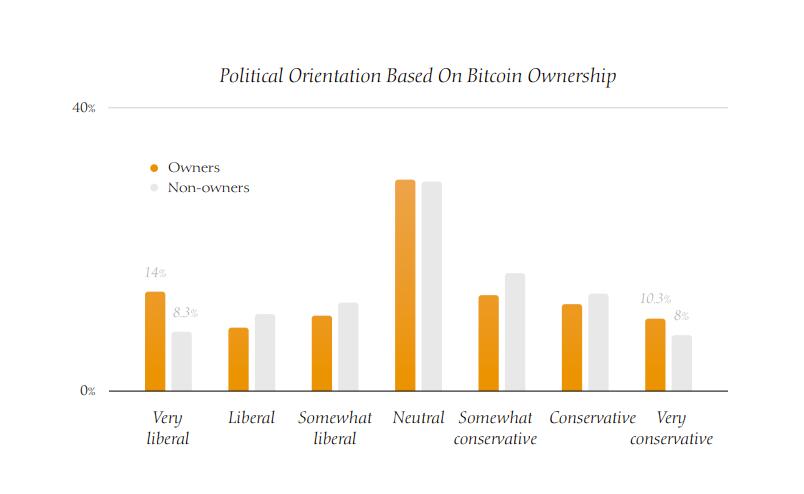
Incredible research by @Troy Cross proving a very interesting fact.
Activism in #Bitcoin is often influenced by very clear values, but ownership is not.
Bitcoin ownership is extremely heterogeneous and covers moderates, conservatives, liberals as well as different religions, races, social classes, economic classes, educational degrees, etc.
Find here the whole research by The Nakamoto Project: https://cdn.prod.website-files.com/6644db90e58a1fbeb1c70ddc/669f69702fa1b4b3bf09dbac_TNP%20Q3%202024%20Report%20(Digital).pdf


Bitcoin Magazine stands to #Bitcoin as the mainstream media stands to mainstream information.
Both represent reality in a distorted way and following logics of political interest far from the only interest that should matter: that of readers.
Until a few months ago, Bitcoin Magazine's line was clear: the “Bitcoin candidate” - literally defined as such - was Robert Kennedy Jr.
But then it was realized that Kennedy was going nowhere in the election. Especially when he withdrew from the Democratic primary to run as an independent presidential candidate next November.
Btc Inc. lobbying was then redirected to the favored candidate for eventual victory: Donald Trump. One who wrote in 2019, “I am not a fan of Bitcoin and other cryptocurrencies, which are not money and whose value is highly volatile and based on nothing.” Today he makes statements such as “Bitcoin mining could be our last line of defense against a CBDC.”
The result? Today in the United States the image of Bitcoin is associated with The Donald.
There is only one problem. Bitcoin is not compatible with Harris or Trump's values. Bitcoin is not compatible with the values of a political party. Bitcoin is not compatible with the values of representative democracy.
Bitcoin is an expression of the prevalence of the values of private property and individual freedom over all others. The rest is derived from pure logic. But this is too complex for the legacy media: which is why mass information is a cancer to be eradicated.
Everyone recognises the inefficiency and damage caused by monopolies.
Why do so many demand that fundamental sectors such as education, health and security be run as monopolies?
The postman arrived to deliver an envelope with a fine. I asked him if he had a Money Service Business licence and he gave me a strange look.
Clearly he’s not up to date. I should have refused the envelope because it did not comply with the new DOJ guidelines.
Just about to transmit a shit ton of money 

Then they fight you.
The aim of terrorists is to deny basic human freedoms through violent and intimidating actions.
The DOJ's move against Samourai is yet another proof that the US is a terrorist state.
🚨The source code of Chivo's ATM network has been leaked.
Does #ChivoWallet have anything to say about this?
Don't you find it at least suspicious that, after the leak of the personal data of 5.1 million people in El Salvador, the source code of Chivo’s ATM network gets also leaked?
No press release, no statement. Where are all of Bukele's cheerleaders?


Atlas21
El Salvador: group of hackers publishes Chivo wallet ATM code
After the leak of personal data of 5.1 million Salvadorans, the hacker group CiberInteligenciaSV has released part of the source
#Bitcoin is not a savings technology.
Bitcoin is the technology of salvation.
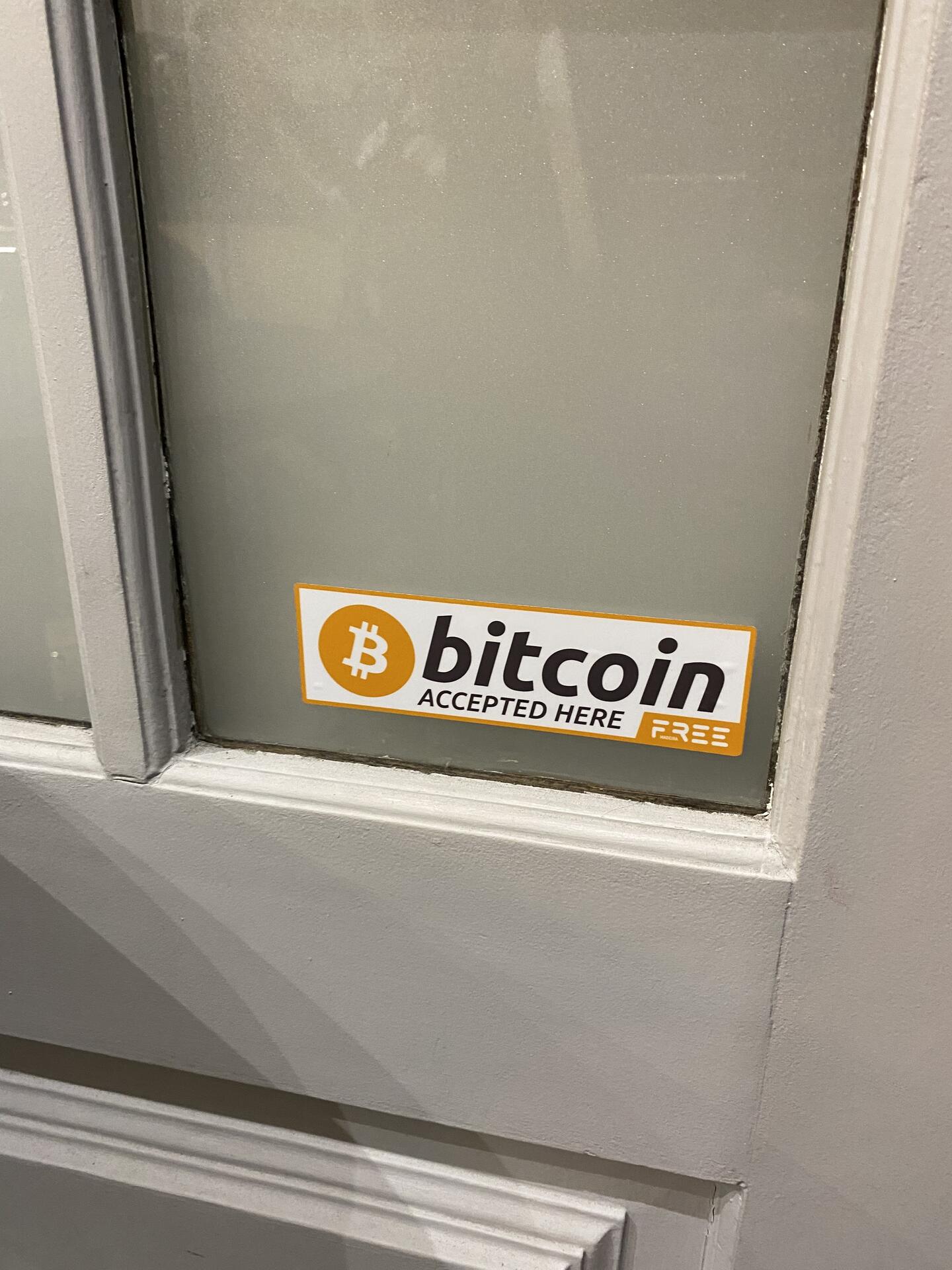
Just tried to orange pill a restaurant in Madeira. The owner told me: “I’ll buy #Bitcoin when it goes back to $25k.”
Yeah, HFSP I guess.
Maideira is definitely the place where I felt that #Bitcoin was perceived in the most *normal* way.
Without opening BTCMap once, simply wandering around Funchal, I found 5 places that accept bitcoin in just one day:
- 2 bars;
- 1 restaurant;
- 1 winery;
- 1 pharmacy.
I ended up buying sunscreen at the pharmacy, drinking a glass of red wine at the winery and having dinner in the city center, always paying in bitcoin.
The most impressive thing of all? In all three stores, when I asked to pay in bitcoin, everything seemed absolutely normal. No signs of panic, no signs of "damn I forgot how to do that," no signs of "I have to ask my boss." All the merchants took their POS and let me pay.
Bitcoin seemed normal not only to me, but also to normies outside our bubble. Congrats to @FREE Madeira for their amazing job.
This is EXTREMELY bullish. 

My 2 sats on Satoshi’s new emails.
The relationship between transaction fees and the economic sustainability of mining, as well as the connection between energy and the currency value, are aspects that Satoshi Nakamoto had carefully considered, as revealed by the largest archive of his writings ever published since he vanished from the public eye.
The Testimonies
The context is the British trial featuring the Crypto Open Patent Alliance (COPA) against Craig Wright, where the non-profit organization is attempting to prove in court that the Australian entrepreneur is not Satoshi Nakamoto.
Throughout the hearings, various testimonies have been presented for both sides, and, at the behest of COPA, Adam Back and Martti Malmi have also spoken. The former is the CEO of Blockstream and the inventor of Hashcash - the basis of Proof-of-Work -, the latter is a collaborator of Satoshi from when Bitcoin was taking its first steps, and also the only developer besides Satoshi to work on the second version of the Bitcoin software (Bitcoin 0.2).
In support of the testimonies, email correspondences between Satoshi and Adam Back as well as between Satoshi and Martti Malmi were released. From the six emails between Adam Back and Satoshi revealed in court - all sent between August 2008 and January 2009 - it emerges that the latter had contacted Back to ensure the correct citation of Hashcash in what would become the Bitcoin white paper. They also comment on B-money, one of the attempts to create a digital currency made by cypherpunk Wen Dai in 1998.
However, the most information is obtained from the entire history of conversations between Satoshi and his collaborator Martti Malmi, known also by the pseudonym Sirius. The latter has released over 250 pages of emails - available at this link - and below are the most significant parts.
Bitcoin according to Satoshi
Much of the most interesting content is reported in the first part of the mails, where Satoshi responds to the doubts Martti Malmi expresses about Bitcoin, in addition to giving him directions on the work to be carried out. This is May 2009, seven months after the publication of the white paper and just four months after the actual birth of Bitcoin.
The Fee Market
In writing, Satoshi does not distinguish between classic full-nodes and those that also mine, referring to miners also with the term nodes because at the time a simple laptop was enough to mine. Satoshi explains:
"I do not foresee transaction fees being necessary anytime soon, but if it becomes too burdensome to run a node, it will be possible to run a node that only processes transactions that include a fee. At the moment, such a node would not get anything, because no one includes a fee, but if a sufficient number of nodes did so, users would get a faster confirmation by including a fee. […] The transition, however, is not controlled by some person at the head of the system, but only by individuals reacting to market forces."
In short, Satoshi explains that if in 2009 the demand for block space was so low that transaction fees were not required - and managing a laptop for mining did not imply significant costs - the scenario could change in the future. And the change would not be dictated by "some person at the head of the system" - by a central authority - but by the simple reactions of the individuals involved to market dynamics.
Bitcoin as a Distributed Ledger
A reasoning easily linked to the fact that today Bitcoin is used not only for economic transactions but also as a distributed ledger for arbitrary files:
"Bitcoin is a distributed and secure server for transactions - writes Satoshi. A few lines of code can create a transaction with an additional hash of anything that needs a timestamp. I should add a command to timestamp a file in this way."
Then, if we think that criticisms related to the energy consumption of mining have only arrived in recent years, we are mistaken. Malmi himself tells Satoshi: "The last thing we need is to launch a system whose design involves the consumption of electricity and the emission of carbon dioxide."
“Unfortunately - explains Satoshi - Proof-of-Work is the only solution I have found to make peer-to-peer electronic cash work without a trusted third party. […] PoW is essential for coordinating the network and preventing double spending. If it were to grow to consume a lot of energy, I think it would still be less costly than conventional banking activity it would replace. The cost would be an order of magnitude lower compared to the billions in banking fees people pay for all those brick and mortar buildings, skyscrapers, and unsolicited credit card offers via mail.”
A relationship, that between Bitcoin and energy, which Satoshi had clear could represent the realization of what Henry Ford theorized in the '20s as "energy currency":
"The value of bitcoins - writes Satoshi - would be relative to the electricity consumed to produce them."
Explaining to Malmi the operation of the difficulty adjustment - addressed in this newsletter at stop #3 - Satoshi explains a concept as simple as it is fascinating that testifies to the independence of each individual node from all others. Trying to understand the mechanism of issuing new bitcoins at the time of approval of each new block, Malmi objects that, according to Moore's law, as more efficient hardware is developed, the supply of bitcoins risks increasing due to the increase in computing power available to people.
Satoshi, in introducing perhaps one of the most fascinating mechanisms of the entire protocol, writes very simply:
"Actually, this problem is handled."
There is a moving average that compensates for the total effort employed so that the total output is a constant. As computers become more powerful, the difficulty increases to compensate.
Malmi: "How is the difficulty of each block communicated across the network and how is it agreed upon?"
“It's not communicated. The formula is hard-coded into the program and every node performs the same calculation to know what difficulty is required for the next block. If someone were to deviate from the formula, their block would not be accepted by the majority." 

Hiking in Madeira 👀
@jack


#Nostr potrebbe rappresentare la seconda occasione di Internet.
A spiegarne i motivi a #BitcoinTrain è @JeffG, sviluppatore che lavora su client e applicazioni su Nostr.
Nell'intervista parliamo di:
- Funzionamento del protocollo;
- Portabilità dell'identità;
- Potenziali casi d'uso oltre a quello del social media;
- Scalabilità;
- Potenziali competitor.
Enjoy!
Got married at block 796722;
#Bitcoin is time. 

"Il modello pubblicitario attuale sui social media è completamente sbagliato". @CARLA⚡️ e @walker spiegano a #BitcoinTrain come Nostr possa rappresentare un'alternativa all'industria dell'advertising contemporanea: tutto grazie agli #Zap!
@Peter McCormack racconta la storia del suo #Bitcoin football club: il Real Bedford.
Interviste raccolte per voi alla @BTC Prague
--------------
"The current advertising model on social media is completely broken". Carla and Walker explain to #BitcoinTrain how Nostr can be an alternative to the contemporary advertising industry: all thanks to #Zaps!
Peter McCormack tells the story of his #Bitcoin football club: Real Bedford.
Interviews collected for you at BTCPrague!


Fermata #106 - BTCPrague: dallo Zapvertising al Real Bedford
Dalla conferenza di Praga le interviste a Carla&Walker sul nuovo modello di advertising social introdotto da Nostr e a Peter McCormack sulla sua sq...


Con l’affondo di #BlackRock la possibilità di approvazione del primo ETF spot su #Bitcoin negli USA è molto concreta.
Perché è così atteso e perché la SEC potrebbe evitare di opporsi questa volta?
The more you study #Bitcoin, the more you realize that Keynesian economics is a tool against human rights.