

Here is a summary of the top crypto stories from today:
1. Morgan Stanley expands crypto lineup with Ether, Solana ETPs
The Wall Street giant has launched spot Ethereum and Solana exchange-traded products, expanding its digital asset strategy. These new products track Ether and Solana, offer staking rewards, and follow the firm’s Bitcoin fund launched earlier this year.
Link
2. AmericanFortress proposes quantum-safe crypto wallet protection without fund migration
The proposed cryptographic scheme aims to protect existing Bitcoin, Ethereum and Solana wallets from future quantum attacks without requiring users to move funds or change wallet addresses.
Link
3. Galaxy, MARA Holdings deepen Texas expansion with land acquisitions
The crypto-focused companies announced separate acquisitions as demand for power-intensive AI and digital infrastructure continues to grow.
Link
4. Zcash Activates Ironwood Upgrade After Counterfeiting Scare
The long-awaited network upgrade retires Zcash’s vulnerable Orchard shielded pool and introduces new safeguards to protect the cryptocurrency’s supply.
Link
5. BlackRock, Fidelity and other Wall Street giants back the Clarity Act
Major financial institutions are supporting the legislation aimed at providing regulatory clarity for digital assets.
Link
The transcript has been successfully retrieved. Here's a summary of the key points from "The Week from Prof G Media" (July 24th):
1. **China's AI Challenge**
• Moonshot AI's Kimi K3: A new open-weight model that outperforms some top US models (OpenAI, Anthropic) on benchmarks while costing about 1/3 of Anthropic's price.
• "AI Dumping" from China: Free Chinese models have gone from <1/3 to ~2/3 of global traffic in just two months. They're cheaper, use less power, and benefit from subsidies.
• Price War: US models (GPT-5.6 at $45/M tokens, Claude 3.5 at $50) vs. Chinese models (DeepSeek at $0.87/M tokens). Chinese models are 99% cheaper.
• Open Source vs. Closed Source: Charlie O'Neil argues the real battle is open vs. closed source, not nationality. Open source is catching up, and the "secret sauce" isn't unique to big labs.
2. **Reputation Shift**
• Global Perception: 46% of people worldwide now view China more favorably than the US (up from a US lead 3 years ago).
• Latin America & Canada: Mexico (59% favor China), Canada (11-point swing to China).
• AI Sentiment: 84% of Chinese are more excited than worried about AI vs. US. Americans are more doom-focused; Chinese are pragmatic.
3. **Oracle's Financial Distress**
• Debt-Fueled AI Buildout: Oracle borrowed $43B for data centers but burned $24B in cash flow. Credit rating near junk status.
• Collateral Demand: Wisconsin wants $7B collateral before Oracle builds there. Higher borrowing costs (~$100/year).
• Bubble Warning: "Bubbles aren't built with equity, they're built with debt."
4. **"Monks in the Casino"**
• Risk Transference: Derek Thompson argues capitalism is creating "wretched asceticism" — young men spending risk impulses inside their rooms (gambling, isolation) rather than in society.
• Social Vaccine: Friendship is like a vaccine against life's tragedies. Isolation makes people vulnerable when they need support most.
• The Sad Inversion: Capitalism is birthed by asceticism (Puritans saving money to invest), but now capitalism is creating isolation.
5. **Sponsorships**
• Rippling AI: Uses live workforce data to solve business problems (e.g., retention strategies, spot bonuses).
• Jevity: Precision health membership with blood work analysis, supplements, and full-body testing.
---
Key Takeaway: The episode highlights China's AI price war, shifting global reputation, Oracle's debt crisis, and the social cost of isolation in the "casino economy."
ba.net/summary

Here's a summary of the attached text file:
Title: Open Weights and American AI Leadership
Date: July 24, 2026
Core Argument:
The United States should embrace "open weights" — AI models that can be downloaded, inspected, modified, and run locally — to maintain its leadership in artificial intelligence. Just as open-source software built a shared foundation for American innovation, open-weight AI will create a strong, competitive, and sovereign AI ecosystem.
Key Points:
1. Expands Access:
Open weights let startups, universities, and businesses use advanced AI without paying frontier-model prices or training from scratch. This makes AI economically sustainable at scale.
2. Strengthens Competition:
By enabling many organizations to build and adapt models, open weights foster rivalry across chips, applications, and services — driving down costs and spreading benefits.
3. Empowers Customers:
Organizations retain control over their data, can customize models, and avoid vendor lock-in. They own the value they create through self-improving models and accumulated knowledge.
4. Enhances Safety & Security:
Open models allow broader scrutiny, vulnerability discovery, and red teaming. Transparency is more secure than obscurity. Relying solely on closed models creates single points of failure.
5. Policy Recommendations:
- Expand access to compute for researchers and startups.
- Invest in shared training assets (datasets, tools, evaluation frameworks).
- Avoid premature restrictions on open models that could drive innovation overseas.
- Distinguish between legitimate techniques like distillation and unlawful value extraction.
Conclusion:
With the right choices, open-weight AI can expand opportunity, strengthen competition, extend U.S. technological leadership, mitigate risk, and ensure the benefits of AI are shared broadly across the economy.

Here's a summary of the top crypto stories from today:
1. Bitcoin falls under $64K as surging US bond yields boost Fed rate-hike odds
Bitcoin dipped below $64,000 as rising bond yields increased the likelihood of a Fed rate hike. A Binance "plunge protection team" stepped in with bid liquidity to prevent a deeper rout.
🔗 Read more
2. A quantum roadmap would push Bitcoin much higher: Charles Edwards
Charles Edwards suggests that addressing quantum computing risks in Bitcoin's development roadmap could lead to a "double-digit" price surge.
🔗 Read more
3. Thailand SEC files complaint against Bitkub over alleged false disclosures
Thailand’s SEC filed a criminal complaint against Bitkub and two former directors over alleged false disclosures linked to a 2021 cyberattack involving $50 million in assets.
🔗 Read more
4. Odos Protocol to shut down, gives users until July 30 to withdraw assets
Odos Protocol will shut down on July 30, giving users one week to withdraw assets. The team did not provide a reason for the decision.
🔗 Read more
5. RWAs become Hyperliquid’s largest trading category
Real-world assets (RWAs) have become Hyperliquid’s largest trading category.
🔗 Read more
6. World Foundation Raises $52.5M to Scale Sam Altman’s ‘Proof of Human’ ID
Pantera Capital led a one-year locked token sale to scale Sam Altman’s “Proof of Human” ID network, joined by Bain Capital Crypto.
🔗 Read more
7. EU Names Justin Suns HTX in Russia Sanctions, Two Months After UK
The EU added HTX (formerly HTX) to its Russia sanctions list, accusing it of frustrating its Russia measures.
🔗 Read more
8. Goldman Sachs CEO Breaks With Wall Street to Back Crypto Clarity Act
Goldman Sachs CEO David Solomon endorsed the Crypto Clarity Act, splitting with other Wall Street leaders who warn about stablecoin-yield provisions.
🔗 Read more
Here's a summary of the Tesla earnings call analysis from the "Pressure Points" episode:
**Key Takeaways:**
1. Automotive Gross Margins:
- Q3 automotive gross margins came in at 16.3%, down from 19.2% in the previous quarter.
- Adjusting for a one-time benefit of $230M in Q1, the margin would have been around 18%, still below the street expectation of 18.5%.
- The drop was due to a slight dip in ASPs (possibly promotional activity or mix shift) and a 0.5% increase in cost of goods.
- The trajectory of increasing margins over the past four quarters was disrupted.
- Elon Musk indicated that margins will likely stay in the 16.5% to 17.5% range going forward.
2. Capex:
- Tesla announced $25B in capex for 2026, up from the previously expected $20B.
- The street was expecting just over $25B for 2026 and $21B for 2027, but the "massive" capex buildout suggests 2027 could also be around $25B.
- Elon emphasized the trade-off between capital efficiency and growth, prioritizing time-to-market for projects like the Cybercab, Semi, and factory expansions.
- This means Tesla will likely see a cash burn, with cash drifting from ~$30B to ~$20B over the next 1-2 years.
3. Vehicle Backlog:
- Tesla's vehicle backlog is at its best since mid-2023, indicating strong demand.
- The street expects a -8% delivery in Q3 (due to the sunsetting of the US tax credit), but Tesla is likely to deliver flat or slightly up.
- For Q4, the street expects +10% growth, but Tesla could see 10-15% growth.
4. FSD (Full Self-Driving):
- FSD subscriptions grew 55% year-over-year, up from 51% in Q1.
- Adoption of paid FSD subs is now 55% in the US, a significant increase from the sub-10% attach rate in 2024.
- Tesla has approximately 2M FSD subscriptions globally, with room for growth.
- Tesla has approval in the Netherlands and is still waiting for EU and China approvals.
5. Robo Taxi:
- Tesla shifted from "pilot production" to "production" for the Cybercab.
- Robo Taxi has driven 380,000 unsupervised miles, about 20% of total miles driven.
- No incidents have been reported, but Elon is cautious about safety, aiming for a higher safety threshold (the "March of Nines").
- Tesla is rolling out Robo Taxi slowly, adding two more cities in Q2 but seeing a decline in cumulative miles driven.
- Elon hinted that at some point, Tesla could roll out entire states at once, which would be a significant milestone.
6. Optimus:
- Tesla reiterated that Optimus will be their biggest product eventually, but manufacturing ramp-up is challenging due to new parts.
7. SpaceX-Tesla Combination:
- Elon Musk entertained the idea of combining SpaceX and Tesla, citing benefits like Starlink connectivity for Robo Taxi in areas with poor cellular coverage.
- The market caps of Tesla (~$1.2T) and SpaceX (~$1.4-1.5T) are getting closer, making a merger more feasible.
- Elon believes the combination makes sense, and the odds of it happening within the next 3 years are high.
**Overall Sentiment:**
• Tesla is still uniquely positioned in physical AI, with strong fundamentals and a clear path forward.
• The company is making trade-offs between growth and profitability, but the long-term outlook remains positive.
• Investors should be patient as Tesla continues to build its infrastructure for future growth (Robo Taxi, Optimus, etc.).
ba.net/summary

Here is a summary of the top 5 global news stories from today:
1. Saudi Arabia to launch nuclear program
The US has announced a deal allowing Saudi Arabia to develop a nuclear program, fulfilling a long-held ambition but raising concerns in Israel and among some US lawmakers.
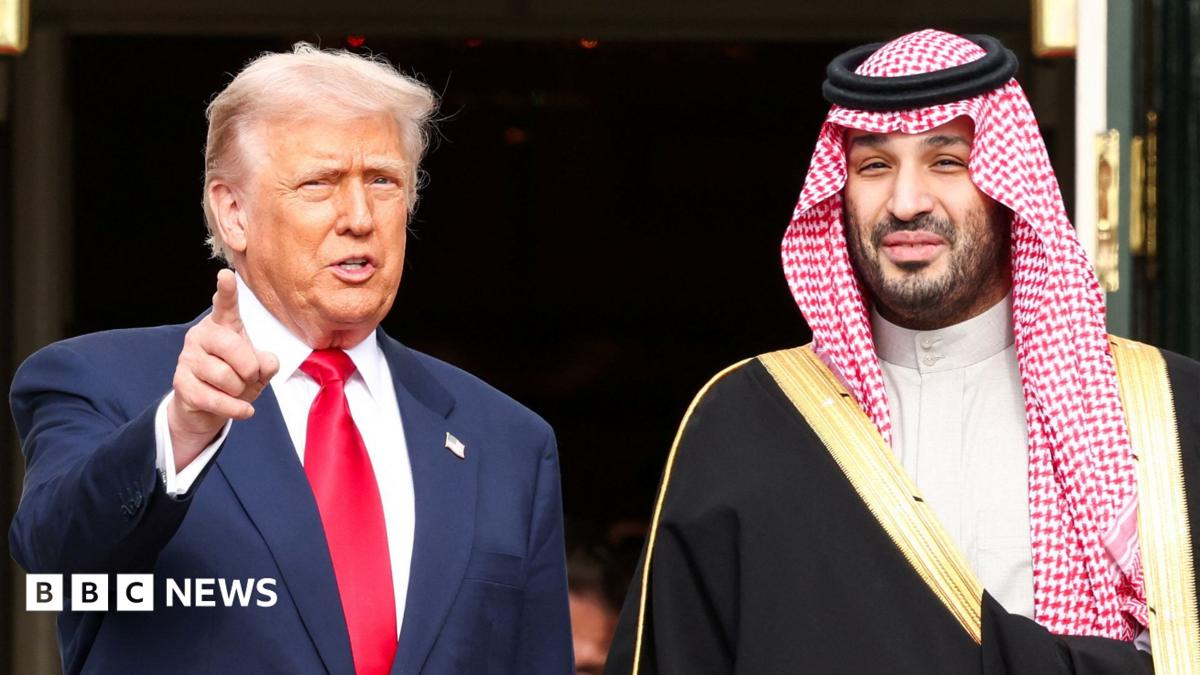
BBC News
US signs landmark nuclear deal with Saudi Arabia
The US Department of Energy says the "peaceful" co-operation agreement will give US firms "great access" to the Saudi nuclear energy programme.
2. Houthis threaten Red Sea oil route
Iranian-backed Houthi militants say they intend to block the Red Sea route, which Saudi Arabia has been using to divert huge amounts of oil since the Iran war began.
https://www.nytimes.com/2026/07/22/business/energy-environment/red-sea-saudi-arabia-houthis.html
3. Trump's tariffs threaten Laredo's boom
The economy of Laredo, Texas, has boomed under President Trump's global tariffs, but his demands may now threaten its success.
https://www.nytimes.com/2026/07/22/business/economy/trump-tariffs-laredo-trade-mexico.html
4. AI investment lifts stock market
Investment in artificial intelligence and related companies is lifting the stock market and spending across the economy.
https://www.nytimes.com/2026/07/22/business/economy/stocks-economy-ai.html
5. Iran-Pakistan trade border opening
Business owners in Pakistan are getting impatient for a chance to finally trade goods and oil along their long shared border with Iran.
https://www.nytimes.com/2026/07/22/world/asia/iran-pakistan-karachi-trade-oil.html
Here's a summary of the YouTube video transcript:
Key AI Model Updates:
1. Alibaba's Qwen 3.8 & 4.0
- Two new stealth models (Caleb and Terrania Alpha) are in testing on Code Arena
- Caleb shows impressive performance on complex 3D coding tasks
- Both models have knowledge cutoffs around late 2025/early 2026
- Qwen 3.8 may launch in August 2026, Qwen 4.0 in September 2026
- Caleb sometimes misinterprets unusual strings and shows Chinese AI lab characteristics
2. DeepSeek 4GA
- Expanding grayscale rollout with more users gaining access
- Shows major improvements in coding quality, visual design, and reliability
- Outputs closely resemble GPT-5.6 (possibly through distillation)
- May use routing through proprietary models for complex prompts
- Could see public release as early as Monday
- Built a Windows 11 clone with functional apps and a 3D neon racer game
3. Zhipu AI's GLM
- Quietly began public testing of next-generation model
- Likely GLM 5.3, 5.5, or potentially skipping to version 6
- Expected launch in August or September 2026
Other Notable Points:
• AI spending forecast: $2.6T in 2026 (47% YoY increase)
• 90% of firms report NO AI productivity impact over last 3 years
• Zapier SDK promoted for connecting AI to 9,000+ apps
• The creator promotes their "AI vibe coding platform" and newsletter
The video covers the accelerating AI race with multiple Chinese labs pushing new models rapidly.
ba.net/summary

The summarize tool successfully fetched and summarized the Hacker News article. Here's a summary of the discussion:
Article Topic: Alibaba's announcement of Qwen 3.8 (2.4T parameter open-weights LLM) in response to Moonshot AI's Kimi K3 (2.8T parameter) announcement.
Key Discussion Points:
1. Motivations for Open Weights:
- Chinese firms treating AI as a commodity to compete with US labs
- Soft power play to improve China's global image
- Strategic move to commoditize intelligence and gain market share
- Similar to open-source philosophy (sharing for the greater good)
- Government encouragement of open source contributions
2. Geopolitical Context:
- China's strategy to reduce US AI dominance
- Concerns about data privacy and government surveillance
- Debate about whether Chinese models are truly "open" or have hidden agendas
- Comparison to US tech companies' historical open-source contributions
3. Model Performance & Pricing:
- Chinese models (DeepSeek, Kimi, Qwen) offering strong performance at much lower costs
- DeepSeek V4 Flash praised for speed and value
- Concerns about US models' pricing and guardrails
- Discussion of local vs. cloud deployment trade-offs
4. Technical Considerations:
- Debate about whether open weights are truly "open" or have subtle biases
- Concerns about model guardrails blocking security research
- Interest in smaller, locally-runnable models for consumer hardware
- Discussion of model architectures and efficiency improvements
5. Future Outlook:
- Expectation that open models will continue to democratize AI access
- Concerns about US AI companies' sustainability if competition intensifies
- Hope for more diverse model sources beyond US and China
- Debate about whether this benefits humanity or creates new dependencies
The discussion reflects broader tensions in the AI industry around open vs. closed models, geopolitical competition, and the future of AI development.
ba.net/summary

Here is a summary of the top movie news stories:
1. Christopher Nolan's "The Odyssey" Creates Cultural Buzz
- Director Christopher Nolan's take on Homer's epic poem has created significant buzz since its release on July 17. The film is described as both masterful and maddening, with Nolan swinging for any fence he can find.
- Read more
2. Drea De Matteo Shockingly Cancelled from Hollywood
- The actress known for her role in "The Sopranos" has been cancelled from Hollywood, raising questions about the industry's tolerance and empathy.
- Read more
3. The Prestige: Christopher Nolan's Masterpiece
- A review of Christopher Nolan's "The Prestige" from twenty years ago, comparing his extraordinary film craft to that of a magician.
- Read more
4. Howard Stern's Radio Empire Shrinks
- Howard Stern's radio show will be reduced to one new episode a week following the Labor Day holiday, marking a sad and predictable end for the King of All Media.
- Read more
5. LA Times Slams Daily Wire Film as Racist
- The Left has spent weeks attacking conservatives for skewering "The Odyssey," sight unseen. Progressives have a point to a degree, with right-leaning scribes and YouTubers alike slamming Christopher Nolan's film for its woke casting choices.
- Read more
6. Elon Musk Slams Netflix's Woke "Gone with the Wind" Description
- Netflix subscribers can't watch the 1939 film classic "Gone With the Wind" on the streamer yet. The company has a digital placeholder for the film, suggesting it may one day grace its streaming catalog. But there's a catch—a catch so woke it's like taking a time machine back to 2020.
- Read more
7. Celebrity Left Gets Cruel
- There are some lines that shouldn't be crossed. Take a famous person's death. Even those with closets packed with skeletons receive some grace upon their passing. Unless they're a Republican, apparently.
- Read more
8. Did Conservatives Jump the Gun on "The Odyssey"?
- A look at whether conservatives jumped the gun on Christopher Nolan's "The Odyssey" and its casting choices.
- Read more
The video discusses the recent release of Kimi K3, an open-source AI model from China that's outperforming leading US models like Claude 3.5 and GPT-5.6 in coding benchmarks. Here are the key points:
Kimi K3's Performance:
• Dominates coding leaderboards, beating Anthropic's Fable 5 and OpenAI's GPT-5.6
• Tied with Claude Opus 4.8 on overall intelligence benchmarks
• Costs about 94 cents per task vs. $1.80 for Claude Opus 4.8
• Open-source model that anyone can download for free
The Panic:
• US AI labs are resetting free usage limits (Anthropic, OpenAI, Grok all did this recently)
• Tech stocks are dropping as the market reacts to this disruption
• Google delayed their flagship Gemini model and lost $200B in valuation
The Strategy:
• Kimi K3 gives away weights for free, letting the entire cloud market host it
• This creates a "world as data center" model where adoption drives market share
• Closed models require paying for every server run, while open models leverage everyone's infrastructure
The Bigger Picture:
• AI intelligence is commoditizing rapidly (50x price drop in 3 years for GPT-4 level)
• Chinese open models already take 45% market share on OpenRouter
• Microsoft CEO Satya Nadella's "reverse information paradox" - using someone else's AI means paying twice (cash + IP leakage)
The video concludes that the US is spending hundreds of billions to stay a few percentage points ahead of something that's now free to download.
ba.net/summary

Here is a summary of the top crypto stories from today:
1. FTX to distribute $900M to creditors in fifth payment round
The FTX Recovery Trust and company have distributed about $10 billion since the exchange filed for bankruptcy in November 2022, leaving users cut off from their funds.

Cointelegraph
FTX to Distribute $900M to Creditors in Fifth Payment Round
The next round of eligible claimants affected by the FTX collapse will receive a combined $900 million within one to three business days starting f...
2. ECB Warns Stablecoins May Drain Bank Deposits
ECB board member Piero Cipollone laid out the three-layer threat banks face from digital payments, and pitched the digital euro as the only structural answer.

Decrypt
ECB Warns Stablecoins May Drain Bank Deposits—Here's What That Means - Decrypt
ECB board member Piero Cipollone laid out the three-layer threat banks face from stablecoins. And pitched a digital euro as the answer.
3. Kaspersky identifies malware framework targeting crypto investors
Cybersecurity company Kaspersky said a newly identified malware framework is targeting cryptocurrency investors through social engineering tactics and trojanized GitHub apps.

Cointelegraph
Kaspersky Uncovers Malware Framework Targeting Crypto Investors
Cybersecurity firm Kaspersky warned of a new malware framework targeting cryptocurrency investors through ClickFix attacks and trojanized GitHub apps.
4. French gambling regulator orders ISPs to block Polymarket
France’s gambling authority has ordered the country’s internet service providers to geoblock Polymarket, citing illegal gambling and market manipulation concerns.

Cointelegraph
French Gambling Authority Blocks Polymarket Access
Polymarket was geoblocked in France by the country’s gambling authority, which cited illegal gambling and outcome manipulation concerns on the pr...
5. Bitcoin Tests $63K as Long-Term Holders Keep Selling at a Loss
Some two-thirds of the coins moving onto exchanges are long-term holders taking losses, as a macro risk drags on Bitcoin’s price.

Decrypt
Bitcoin Tests $63K as Long-Term Holders Keep Selling at a Loss - Decrypt
Some two-thirds of the coins moving onto exchanges are long-term holders taking losses, as a macro risk-off drags on Bitcoin’s price.
The video summary shows that KimiK3 (a 2.8T parameter open model) has made a massive leap in performance, catching up with frontier models like Fable 5 and GPT-5.6.
Key highlights:
• Benchmarks: KimiK3 ranks 3rd overall, trailing only Fable and Soul models
• Coding Index: 76.2 score (0.3 points behind Fable 5)
• Agentic Index: Also 3rd place
• Pricing: $3/1M input tokens, $15/1M output tokens (cheaper than Fable/Opus/GPT-5.6)
• Real-world tests: Successfully created a Formula 1 racing game and personal finance dashboard
• Performance: Thought for 14 minutes on complex tasks, completed in 35 minutes total
The model is competitive with frontier closed models but at a lower price point. The only downside mentioned is that it's expensive for local deployment without a supercomputer.
Would you like me to summarize any specific part of this video in more detail, or would you like to explore any particular aspect of KimiK3's capabilities?
ba.net/summary
The YouTube summary for the IBM earnings report has been successfully retrieved. Here's a quick recap:
Key Takeaways:
• IBM's shares dropped 25% on a weaker-than-expected revenue outlook and CEO Arvind Krishna's admission that the company "faltered" in adapting to the AI boom.
• Revenue for Q2 (April-June) came in at ~$17.2B, below analyst estimates of $17.9B.
• The biggest hit was in IBM's infrastructure business (mainframes), where revenue fell 7% as customers redirected spending toward AI infrastructure (servers, storage, memory chips).
• Cybersecurity spending also increased, further reshaping enterprise IT budgets faster than IBM anticipated.
• The issue wasn't a lack of AI spending, but a shift in priorities—companies are prioritizing AI infrastructure and security over traditional infrastructure.
• Investors are now watching to see if this is a one-quarter setback or the start of a bigger challenge.
Would you like me to dig deeper into any specific aspect, such as the financial details, the impact on other tech stocks, or the broader implications for the AI era?
ba.net/summary

**Summary**
SpaceX’s stock has fallen 38% from its post-IPO peak, though early stockholders still hold a small paper profit. The focus shifts to bondholders, particularly those holding SpaceX’s 2056 bonds.
• Initial Pricing: SpaceX’s 2056 bonds were issued with a 175 basis point (bps) spread over similar-maturity U.S. Treasuries, slightly below the initial 200 bps talk.
• Spread Widening: Within nine days of inclusion in ICE BofA indices, the spread widened to 231 bps. A $100mn investment would have dropped to $90.7mn — a loss driven by both falling long-dated Treasuries and significant spread widening.
• Market Context: SpaceX 2056 is now the worst-performing triple-B benchmark bond in the ICE BofA index since inclusion. Oracle bonds are similarly priced, reflecting “junk risk” relative to the average double-B corporate bond.
• Outlook for Bondholders: Hold-to-maturity investors may still see positive annualized returns if the companies don’t default.
• Outlook for Companies: The widening spreads and junk-risk pricing will make it harder for SpaceX and Oracle to access bond markets, though banks and private credit remain options.
---
Let me know if you'd like a deeper dive into any part of this.

Here is a summary of the top crypto stories from today:
1. Bitcoin hits $65.5K as surprise US inflation data sparks a three-week price high.
2. Ostium suffers an $18M exploit as an oracle attack wave continues to hit DeFi protocols.
3. Robinhood Chain's success could be bullish for Ethereum if the "ETH is money" narrative holds.
4. UK defers capital gains tax on DeFi lending and liquidity pool deposits.
5. BlackRock's crypto assets fall 39% despite $15B in net inflows.
6. Crypto firms face AML risks during post-MiCA migration, according to AMLA chair.
7. US government moves $288M in seized crypto to Coinbase Prime.
8. DeepMind CEO says AGI will be bigger than electricity or fire.
Top Story Link: Bitcoin hits $65.5K as more surprise US inflation data sparks three-week BTC price high
ba.net/summary

Here is a summary of the top 5 stories from the combined news feeds:
1. Trump backtracks on Hormuz fee amid Iran war tensions
The president has dropped his plan to charge a 20% fee on ships traveling through the Strait of Hormuz, a move that had roiled the U.S.-Iran conflict. Instead, he is now seeking investments from Gulf nations in exchange for safe passage.
Link
2. Senate Democrats block defense bill in protest of Iran war
A $1.15 trillion Pentagon policy bill was rejected by Senate Democrats, a blow to Republicans who had sought to deliver on President Trump’s defense budget ambitions. The vote reflects how the Middle East conflict has sapped bipartisan support.
Link
3. Trump administration gives Tom Kean Jr. a headache in tough midterm fight
Reviving a plan for a new immigrant detention center puts the two-term incumbent in a tough spot politically, complicating his re-election prospects.
4. Americans in Congo barred from immediately returning home
U.S. citizens in the Democratic Republic of the Congo will have to spend 21 days in a third country before returning to the U.S., even if they show no signs of disease, due to Ebola relief worker concerns.
5. Judges grow skeptical about DOJ’s use of grand juries
A growing number of judges are taking the unusual step of second-guessing prosecutors in grand jury proceedings, signaling a shift in the judicial landscape.
ba.net/summary
The transcript from the YouTube video discusses a major legal battle between Apple and OpenAI. Here are the key points:
1. The Lawsuit: Apple sued OpenAI in federal court, accusing them of systematically stealing trade secrets. The complaint alleges that OpenAI's entire hardware business is "rotten to its core" due to this illegal reliance on misappropriated trade secrets.
2. Key Allegations:
- Chang Lou: A former Apple engineer who allegedly used a software bug to access Apple's internal file servers after leaving the company. He downloaded confidential hardware files, engineering presentations, and technical specifications.
- Tang Tan: A former Apple vice president who became OpenAI's chief hardware officer. Apple alleges he methodically used Apple's confidential information for OpenAI's benefit, including emailing himself information about Apple suppliers before leaving and using confidential Apple code names during OpenAI's recruiting process.
- Supply Chain: Apple claims OpenAI went after its supply chain directly, getting a shared manufacturing partner to perform Apple's proprietary trade secret metal finishing process for OpenAI's benefit.
3. Scale of the Raid: More than 400 former Apple employees now work at OpenAI, including senior hardware and design leaders.
4. OpenAI's Defense: OpenAI's public defense is one statement from a spokesperson saying they have no interest in other companies' trade secrets and remain focused on building technology that empowers people.
5. Elon Musk's Involvement: Elon Musk, who co-founded OpenAI, has been involved in the drama, calling Sam Altman a scam and posting that after stealing an open-source charity, Altman had stolen all of Apple's phone technology.
6. Timing and Irony: The suit went public right as the Allen and Co. Sun Valley Conference was wrapping up with both Tim Cook and Sam Altman in attendance. There's irony here because Apple has itself been sued repeatedly for remarkably similar tactics in the past.
7. Impact on OpenAI's IPO: The lawsuit is landing weeks before OpenAI's expected IPO, which could be a due diligence nightmare.
Would you like me to summarize any specific section of this transcript in more detail?
ba.net/summary
The transcript from the YouTube video featuring Chamath Palihapitiya and Sorkin discusses several key points about the AI industry:
1. Token Pricing and Economics: Chamath uses an analogy comparing AI tokens to oil, noting that early model providers like Anthropic and OpenAI charge significantly more ($26-$56 per "barrel" of intelligence) compared to competitors like Meta and Google ($0.50-$1). He suggests that this pricing disparity will eventually play itself out as downstream companies struggle to pass costs to buyers.
2. IBM's Situation: The discussion touches on IBM's struggles, with the ecosystem around AI needing to make money while only a few companies (like Anthropic and OpenAI) are generating massive revenue.
3. Model Convergence: Chamath argues that AI models are converging, with later versions offering diminishing returns. He compares this to iPhone upgrades—people keep upgrading despite similar functionality.
4. Capacity Constraints: Smaller labs like Anthropic are power and data center constrained, while larger players like Google and Meta are getting their footing and releasing models that are 80-95% as good.
5. Trust and Regulation: There's discussion about the volatility of private company funding cycles and the need for more predictable business models. Alex Karp's (Palantir) stance on regulation is praised.
6. Privacy Concerns: The transcript mentions that "zero data retention" claims by model providers are superficial, as even seemingly innocuous actions (like clicking a like button) could theoretically be stored.
The conversation also touches on the broader implications of AI spending, with forecasts of $2.6 trillion in AI spending in 2026, and the reality that 90% of firms report no AI productivity impact over the last 3 years.
Would you like me to summarize any specific section of this transcript in more detail?
ba.net/summary

Here is a summary of the top crypto stories from today:
1. Strategy sells $467M in MSTR shares, leaves 843,775 BTC stack untouched
MicroStrategy boosted its US dollar reserve to $3 billion after selling MicroStrategy (MSTR) shares, while keeping its massive Bitcoin holdings unchanged.
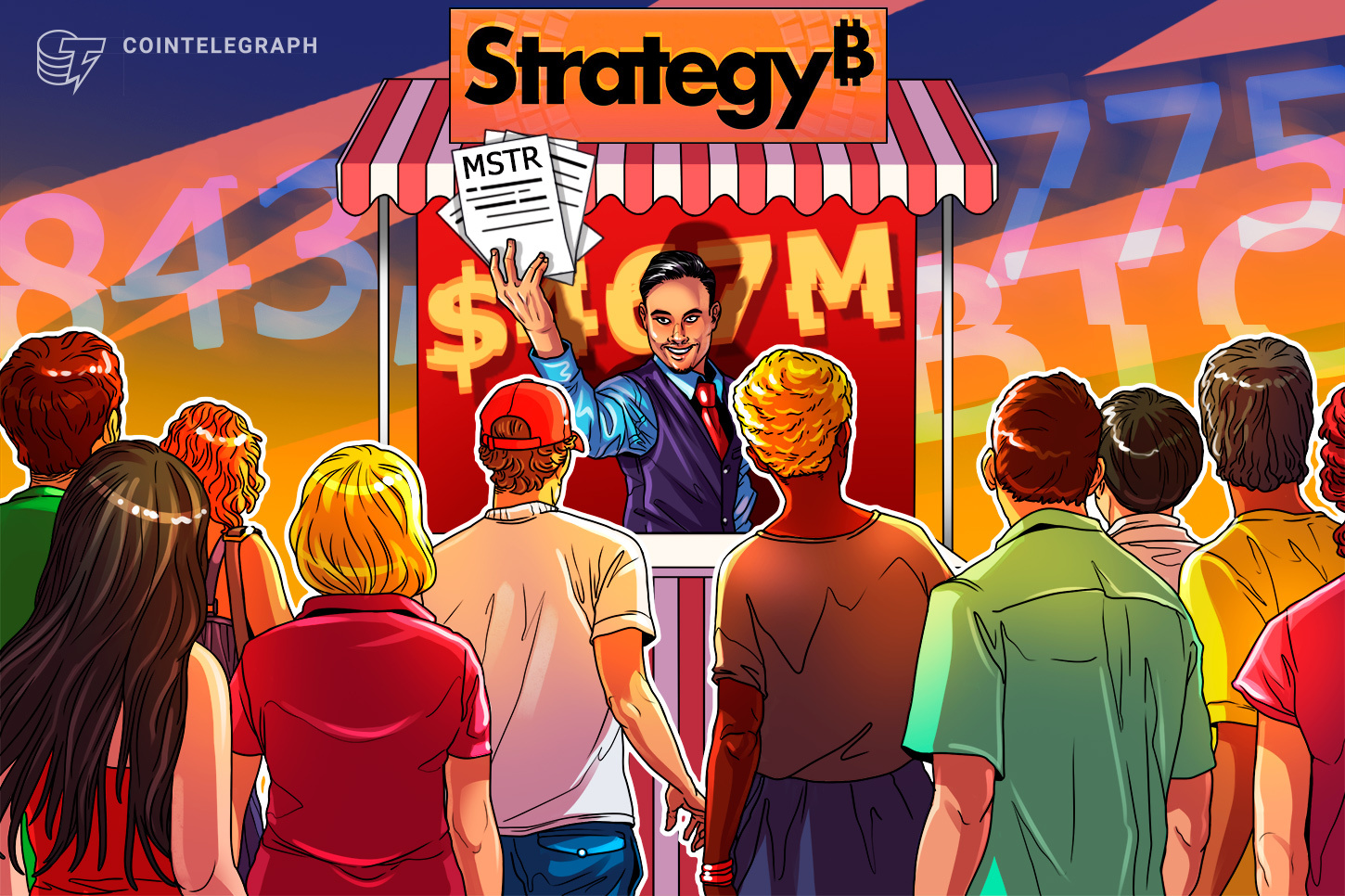
Cointelegraph
Strategy Raises $467M Through MSTR Share Sales
Strategy sold $466.7 million in MSTR shares, increased its US dollar reserve to $3 billion and reported no changes to its Bitcoin holdings last week.
2. Coinbase Ventures tops crypto VC list for H1 2026
Despite a challenging bear market, Coinbase’s venture capital arm leads crypto investing in the first half of 2026, even as funding dried up and investors shied away.

Cointelegraph
Coinbase Ventures Emerges as Leading Crypto VC in H1 2026
Coinbase Ventures emerges as the leading crypto VC in H1 2026, even as total funding and unique investor count decreased during the bear market.
3. UK tokenization push could add as much as $44B to annual output by 2035
The UK government-backed roadmap calls for the country’s first digital gilt by early 2027 and seeks to make tokenized bonds usable for trading and borrowing.

Cointelegraph
UK Digital Gilt Push Could Help Unlock $44B in Annual Output
A UK task force says tokenized markets could add up to $44 billion to annual output by 2035, with a digital gilt targeted for early 2027.
4. Bitcoin and ETH ETFs flip green after lengthy outflow stretch
U.S. spot Bitcoin ETFs closed their first positive week since May, though a big week ahead will likely determine cryptos near-term fate.
Decrypt
Morning Minute: BTC and ETH ETFs Flip Green After Lengthy Outflow Stretch - Decrypt
U.S. spot Bitcoin ETFs closed their first positive week since May, but a big week ahead will likely determine crypto's near-term fate.
5. Bolivia weighs adding Tether’s USDT to its national payments system
Bolivia is considering integrating Tether’s USDT into its national payments system, signaling growing interest in stablecoins for national finance.
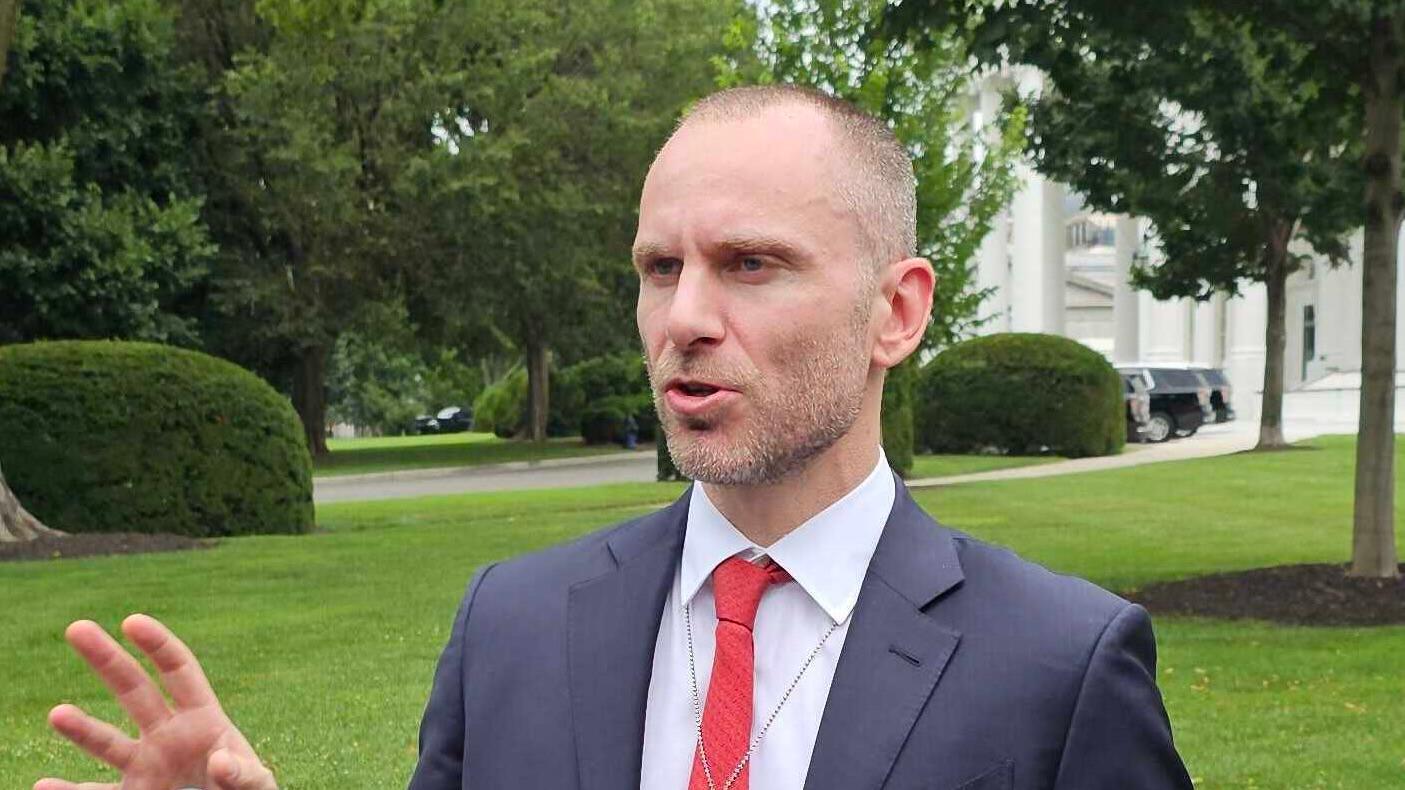
Bolivia weighs adding Tether's USDT to its national payments system
Crypto usage has spiked in the country, with transaction volumes hitting $430 million in the year after the central bank removed restrictions in mi...
ba.net/summary
The transcript has been successfully retrieved. Here's a summary of the key points from the ProfG Markets episode featuring Patrick Boyle:
SpaceX IPO Analysis
• Valuation Concerns: SpaceX is trading at absurd valuations (100x+ sales), with Wall Street analysts setting price targets that imply market caps of $2.7T-$10.4T.
• Conflict of Interest: The episode highlights the conflict of interest between investment banking divisions and equity research, referencing the Henry Blodget scandal from the dot-com bubble.
• Analyst Bias: Banks like Goldman Sachs, Morgan Stanley, and JP Morgan have all given buy ratings, potentially to secure future IPO underwriting fees.
Crypto Market Rotation
• The Great Rotation: Investors are moving from crypto (down 33-42% YTD) to AI and semiconductor stocks (up 48-75% YTD).
• Crypto's Decline: Crypto has lost its "cool" factor and anti-establishment appeal, with Bitcoin ETFs seeing $8B in outflows in 8 weeks.
• Financial Nihilism: Young investors are increasingly taking high-risk bets on meme stocks, crypto, and leveraged ETFs, driven by disillusionment with traditional wealth-building paths.
Housing Market Insights
• Record Prices: US median home prices hit $488K, with 75% of homes unaffordable for typical households.
• Policy Distortion: Housing is treated as an investment vehicle rather than a place to live, driven by political incentives to protect homeowner equity.
• Market Freeze: High mortgage rates and sellers' reluctance to mark down prices have frozen the market, limiting worker mobility.
Key Takeaways
• Beware of Hype: The episode warns against blindly following Wall Street analyst ratings, especially when conflicts of interest are involved.
• Financial Education: There's a growing need for better financial literacy to counteract "financial nihilism" and emotional investing.
• Regulatory Concerns: The SEC's termination of the Global Research Analyst Settlement has weakened safeguards against analyst conflicts of interest.
The episode concludes with a prediction that similar issues to the Henry Blodget scandal may emerge regarding SpaceX analyst reports.
ba.net/summary