Bitcoin Well's avatar
Bitcoin Well
bitcoinwell@btcw.app
npub19mf4...kfu2
Bitcoin Well is on a mission to enable independence. We do this by making it easy to use bitcoin in self-custody. Whether you’re looking to buy, sell or use bitcoin, we never hold on to your bitcoin. Bitcoin Well is automatic self-custody.
Bitcoin Well's avatar
bitcoinwell 2 days ago
Most wealth management starts by taking your money out of your hands. This one doesn't. A "family office" has traditionally meant a private team the ultra-wealthy use to run everything in one place: investments, taxes, estate, lawyers; all coordinated by people who actually talk to each other. For decades you had to be in the top 1% to get it. The Bitcoin Family Office Group changes that. Five independent, Bitcoin-native firms, covering wealth, tax, legal, mining, and us, working as one team for serious holders instead of only nine-figure dynasties. Bitcoin Well Infinite is the official Bitcoin partner. We handle the buying, selling, and settlement. Here's the part that matters: the bitcoin goes straight to your own wallet. Not an account we control. Not an IOU on our books. Your keys. That's the whole point. You can bring in the best advisors on earth and still hold your own coins. Serious help. Your keys. Finally in the same room. image
Bitcoin Well's avatar
bitcoinwell 2 days ago
Bitcoin just dropped under $60,000 and the prediction markets are giving roughly 80% odds it breaks $55,000. Open any timeline and you can feel it. Panic, anger, people picking sides and turning on each other. Here's the strange part. The data says this isn't capitulation. It's something quieter and weirder: apathy and anger, not fear and surrender. The opposite of euphoria. On June 30 we're sitting down with Michael Sullivan, @SullyMichaelvan to read the market's actual emotional state. Not through price. Through language. Michael measures what Bitcoiners are really feeling underneath the chart, and right now those feelings are splintering. We'll get into Bitcoin's identity crisis, why the community is fracturing into factions, why the same news makes one camp cheer and another rage. Saylor, MSTR, "paper Bitcoin," and what happens to conviction when the easy narratives break. Everyone's staring at the same red chart and feeling something completely different. Michael actually measures the difference. The Deep Dive: How is Bitcoin Feeling, with Michael Sullivan. June 30, 4:00 PM EST. Bring your questions. image
Bitcoin Well's avatar
bitcoinwell 3 days ago
Everyone is cheering the price of oil falling but the bigger story isn't about the oil, its about the money. As part of the deal to reopen the Strait of Hormuz, the US agreed to release billions in frozen Iranian funds. A reported $24 billion. The part worth understanding: that was Iran's money to begin with. Oil and gas revenue, earned from real sales, parked in foreign accounts that US sanctions then froze in place. Not a gift. Not aid. Their own earnings, locked by decree. And the "release" comes with a leash. The funds stay under US control and can only be spent buying corn and wheat from American farmers. A nation's own money, handed back on the condition that someone else decides what it buys. Now ask what the war actually changed. The strait reopens, with no charge for 60 days. Sanctions ease as soon as they "behave." We're roughly back where we started, because the missiles were never the real weapon. The real power of the US was never the bombs, it was the ability to control the rails of the global economy. The power to switch a country's money on and off. The war just provided the excuse and the bombs just provided the smoke screen to obfuscate what was really going on. And quietly Bitcoin continues to mint new blocks every 10 minutes without anyone's permission; continuing to win the ongoing war for freedom without any bombs or violence. Tick-Tock next block. image
Bitcoin Well's avatar
bitcoinwell 3 days ago
Apple almost killed a Bitcoin wallet on its platform last week. Not by hacking it, but by deleting a developer account. Craig Raw built Sparrow, one of the most trusted self-custody wallets on earth. Open source. Free. His mistake was trying to warn people about fake Sparrow clones scamming users on the App Store. For that, Apple flagged his developer account for termination. The stated reason was "dishonest activity." Set a deadline of June 30. After that, every new install of Sparrow on a Mac would have simply failed. Twenty-four hours of public pressure later, Apple reversed it. However, the scam clones stayed up. The honest developer nearly got cut. And a single company in Cupertino held a kill switch over how millions of people reach their own keys. That's the real lesson, and it cuts deeper than "not your keys, not your coins." These were people trying to do the right thing. They wanted their Bitcoin in their own hands, and a single gatekeeper nearly took away the tool they chose to do it with. Self-custody isn't only about holding keys. It's about reaching them through software no one can switch off. A closed app store can throttle the on-ramp. Slow you down, frustrate you, quietly push you back toward the custodian who never gets flagged. What it can't touch is open code. Sparrow is open source. You can build it, run it, and pass it on without Apple's blessing. That's why this ended in a reversal and not a dead wallet. Hold your own keys. And reach for the tools no gatekeeper gets to approve. image
Bitcoin Well's avatar
bitcoinwell 4 days ago
I worked for a bank. Then I protested one and I lost my house for it. That's where this starts. Where it ends is realizing the money is broken, and doing everything right still feels like falling behind because it is. My whole story, and how it led me to the one place left to save that no one can print away. — Zach 🧙‍♂️
Bitcoin Well's avatar
bitcoinwell 4 days ago
Try to move $50,000 out of your bank on a Friday afternoon. "We'll need to ask what it's for." "There's a hold." "That branch is closed." "This transaction has been flagged for review." Your money, and you're filling out forms for permission to touch it. Now move $50,000 of Bitcoin from your own wallet. No call. No form. No hours of operation. No one to ask. It settles whether the bank likes it or not, whether it's a holiday or not, whether you explained yourself or not. One of these is an account. The other is ownership. The test of whether you truly own something is simple: can someone else say no? With a bank, always. With your own keys, never. image
Bitcoin Well's avatar
bitcoinwell 5 days ago
"Don't trust, verify" sounds like a slogan until you realize most people can't verify anything they own. Your bank balance? You trust the number on the screen. Your gold ETF? You trust the custodian's word. Even most Bitcoiners trust an exchange or an app to tell them the coins are there. Running your own node is how you stop trusting and start checking. It's a laptop or small computer, often a $150 device on your shelf, that downloads the entire Bitcoin ledger and verifies every rule for itself. Did this transaction follow the rules? Is the supply still capped? Are these coins really yours? Your node answers, without asking anyone. It's the difference between being told you're rich and proving it. Between a promise and a fact. You don't have to run one to own Bitcoin. But the day you do, you stop taking anyone's word for your own money. image
Bitcoin Well's avatar
bitcoinwell 5 days ago
You never voted for inflation. You pay it every year anyway. It shows up as a tax that never lands on a ballot or a return. Your paycheck buys a little less. Your savings quietly shrink. The dollar in your pocket is worth more today than it will be next year, and that isn't a mistake. It's the policy. Since 1971, the dollar has lost more than 85% of its purchasing power. The people running the printer kept their jobs the whole time. Bitcoin runs on a different rule. Capped at 21 million, enforced by every node on the network, changeable by no one. No emergency, no committee, no election can dilute what you hold. The fiat system asks you to trust that they'll behave. Bitcoin doesn't ask you to trust anyone at all. That's not a price chart. That's an exit. image
Bitcoin Well's avatar
bitcoinwell 5 days ago
You can print a dollar. You cannot print a kilowatt. Every Bitcoin that exists is backed by real energy already spent. Work that actually happened. Electricity that was actually burned to secure the network. You can't fake it, fast-talk it, or vote more of it into existence. That's the quiet reason Bitcoin is different from every currency before it. Fiat is created by decree. Bitcoin is created by proof. One costs a keystroke. The other costs the one thing no government can conjure from thin air: real work in the physical world. Sound money was always money that cost something to make. We just forgot what that felt like. image
Bitcoin Well's avatar
bitcoinwell 6 days ago
Murray Rothbard had a word for what your bank does with your money. Fraud. Not as an insult. As a description. You deposit $1,000. The bank lends out most of it, keeps a sliver, and tells both you and the borrower that the money is there. Two claims, one set of dollars. Rothbard's point was simple: any other business that sold the same property to two people at once would be prosecuted. Banks get a license for it. It works right up until everyone shows up to withdraw at the same time. Then it's called a "bank run," as if the depositors did something wrong by wanting what they were told was theirs. This is the system every dollar lives inside. Your balance is a promise that the money is there, not proof that it is. Bitcoin in your own custody is the opposite. No fractional anything. The coins are either on the chain in your control or they aren't. One claim, one owner, verifiable by you. Rothbard described the disease decades ago. Self-custody is how you finally opt out of it. image
Bitcoin Well's avatar
bitcoinwell 6 days ago
In 1997, a British cryptographer named Adam Back was trying to solve something boring: email spam. His fix was called Hashcash. To send a message, your computer had to burn a tiny bit of real work first. Cheap if you sent a few emails. Ruinously expensive if you wanted to blast out a million. Proof, in math, that effort had actually been spent. No coin. No company. Just a way to make a digital action cost something real. Eleven years later a whitepaper appeared with a short citation list. Hashcash was on it. Satoshi had taken Back's anti-spam tool and made it the heartbeat of a monetary network. The same "work" that once filtered junk mail now secures every Bitcoin block, making the ledger astronomically expensive to rewrite or fake. Here's the lesson. The tools that end up protecting your freedom rarely show up dressed as freedom. They start small, practical, almost dull. Someone solving spam quietly built the engine of sound money. Adam Back @adam3us wasn't trying to change the world. He was trying to stop junk mail. That's usually how it starts. image
Bitcoin Well's avatar
bitcoinwell 6 days ago
"Bitcoin is too volatile to be real money." Fine. Let's look at the other side of that trade. The Argentine peso has lost over 90% of its value in the last decade. The Turkish lira, the Lebanese pound, the Venezuelan bolivar: each one a "real" currency that wiped out the savings of everyone forced to hold it. Even the U.S. dollar has quietly lost most of its purchasing power since 1971. Bitcoin is volatile up and down on its way up. Fiat is remarkably stable on its way to zero. Volatility you can ride out. A slow, guaranteed bleed you can't. Short-term noise is the cost of owning money they can't print. The "stable" option just takes everything, quietly, instead. — Zach 🧙‍♂️ image
Bitcoin Well's avatar
bitcoinwell 1 week ago
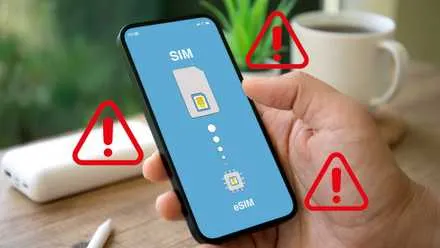
If a text message protects your accounts, so does a $15 an-hour employee at your phone company. Here's the attack nobody warns you about. A scammer calls your carrier, pretends to be you, and convinces them to move your number to their SIM. Now every "we texted you a code" login runs straight to their phone. Your password never mattered. It's called a SIM swap, and it has drained exchange accounts, email, everything tied to a number, in minutes. Fixing it is free and takes ten minutes. Turn off SMS two-factor on anything that holds value. Switch to an authenticator app or a hardware security key. Stop using your phone number as the master key to your life. And the assets that don't depend on any login at all? Bitcoin in your own wallet. No account to hijack, no number to steal, no support line to social-engineer. The weakest link in your security is usually the one you never chose. Go close it. image
Bitcoin Well's avatar
bitcoinwell 1 week ago
The first time you help someone set up their own wallet, watch their face. Not when they buy. When they send. That moment they move their own money, to their own keys, and realize no bank approved it, no app could freeze it, and nobody had to say yes. Something shifts. They stop seeing Bitcoin as a number that goes up and down. They start seeing it as theirs. We've watched grandparents do it. Teenagers do it. People who swore they were "not a tech person" do it in about ten minutes. That quiet click of understanding is the whole point. Money you actually own, that answers to you and no one else. You can't hand someone a feeling. But you can hand them the keys, and let them find it themselves. image
Bitcoin Well's avatar
bitcoinwell 1 week ago
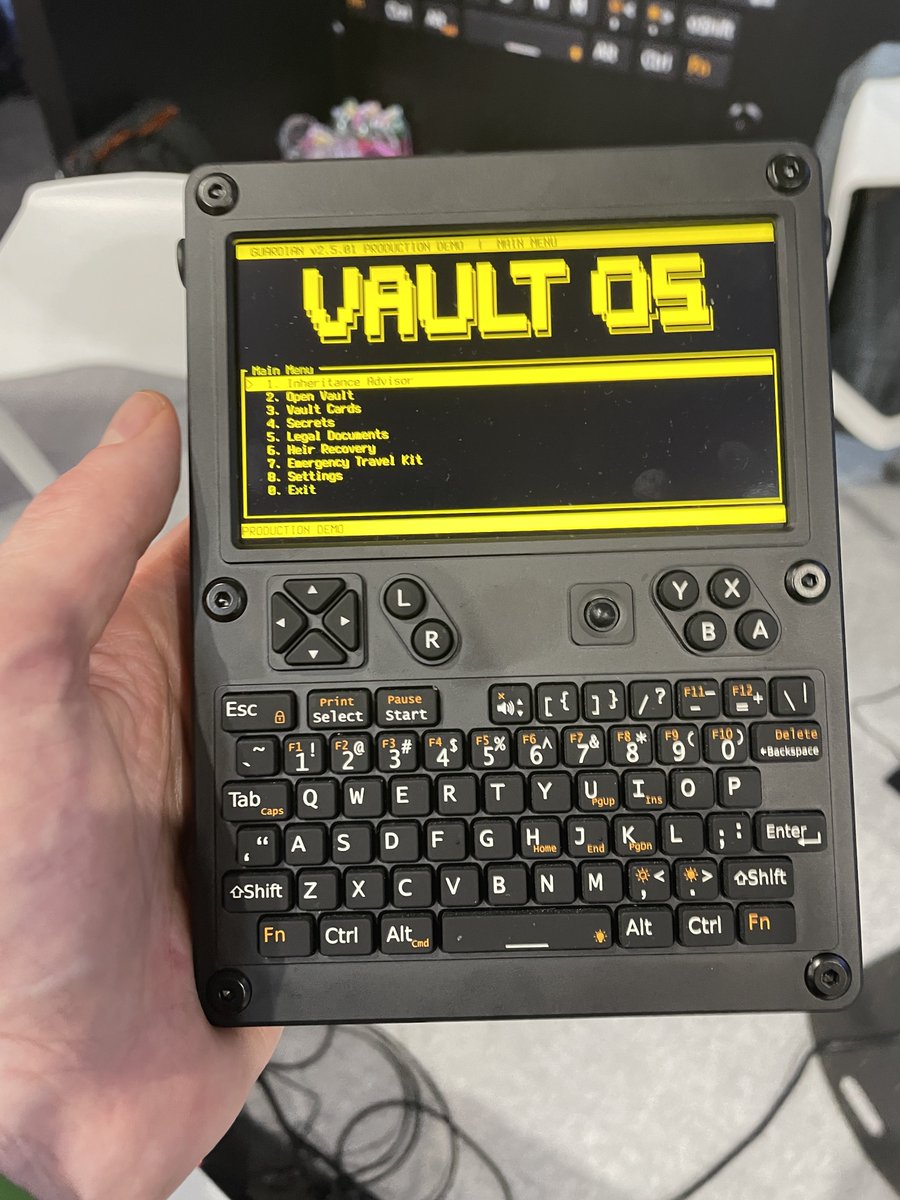
You did everything right. Hardware wallet. Seed phrase stamped in steel. A passphrase only you know. That is also exactly how Bitcoin can disappear for your family if something happens to YOU. By some estimates, 3 to 4 million coins are already gone for good. Close to a fifth of everything that will ever exist. Not hacked. Not sold. Abandoned, because the one person who held the keys was the only one who could reach them. Self-custody answers "who can take my Bitcoin." It says nothing about "who can reach it when I can't." A seed on a steel plate is a component, not a plan. Your family cannot inherit what they can't decode. A new device is built for exactly this gap. CitadelVault is an air-gapped inheritance computer that encrypts your keys and instructions offline, splits recovery across NFC cards you scatter across separate locations (any 2 of 3 rebuild access), and ships with the legal documents heirs actually need. No subscription. No custodian. No KYC. The recovery scripts are open source and run without the company in the loop. It is very new, still pre-order, and the third-party audit lands later this year, so verify before you trust it. But the problem it targets is as old as self-custody itself. Holding your own keys is half the work. Making sure your family can still hold them after you is the other half.
Bitcoin Well's avatar
bitcoinwell 1 week ago
One Man Just Repriced Every Dollar You Own. Bitcoin Didn't Notice.
Bitcoin Well's avatar
bitcoinwell 1 week ago
Gold fell almost 5% and silver close to 9% in a single day. More than $1.7 trillion in "hard money" market value gone before lunch. The goldbugs are stunned. They shouldn't be. Most of that $1.7 trillion was never metal in a vault. It was paper. Futures, unallocated accounts, ETF shares, claims on bars that several people think they own at once. When the Fed talks hawkish and a war premium drains out, the paper reprices in seconds, and the "safe haven" turns out to trade exactly like the risk it was supposed to hedge. Bitcoin dipped this week too, but price isn't the real point. The point is what you actually hold. You see, gold's scarcity is real, but your claim on it usually isn't. Bitcoin's scarcity is fixed at 21 million and you can hold the real asset yourself, verify it yourself, move it yourself, with no custodian standing between you and your savings. Gold can only dream about that functionality. Sound money was never just about supply. It was about whether the thing you own is the thing you hold, or a promise that can be repriced and recalled. Paper gold is someone else's IOU. Your keys are not. image
Bitcoin Well's avatar
bitcoinwell 1 week ago
Two days ago the Senate voted 89 to 10 to ban a government digital dollar. Today the Treasury proposed forcing every stablecoin company to file your ID with the federal government This is the first GENIUS Act rule out of FinCEN, and it does the exact job the CBDC was supposed to do. A "Permitted Payment Stablecoin Issuer Customer Identification Program" drops Circle and Tether under the Bank Secrecy Act and orders them to verify, log, and report who holds the digital dollar. No central bank coin required. The surveillance just arrives wearing a private logo. The dollar going digital was never the threat (its already mostly digital). The dollar becoming a permission slip was. Whether the form says Federal Reserve or USDC at the top changes nothing about who can freeze your balance or watch where it moves. There is one digital money that cannot run a customer identification program, because no company stands between you and it. You hold the keys. There is no issuer to subpoena, no account to flag, no balance anyone can switch off. Not your keys, not your coins was never a slogan. It is the only opt-out the rulebook forgot to close. image
Bitcoin Well's avatar
bitcoinwell 1 week ago
At 2:30 this afternoon Kevin Warsh runs his first Fed meeting. Trump picked him to cut rates. His own committee is now arguing about hiking them instead. Retail sales just came in hot, up 0.9% in May, so the inflation he was supposed to tame is not finished. One man, one room, one dot plot. It decides whether the dollar in your account buys more next year or less. Here is the part nobody at that podium will say out loud. The price of money is not discovered. It is decided. By people you did not elect. Your rent, your mortgage, your grocery bill all move on what Warsh hints at 2:30. Bitcoin has no chair. No first meeting. No man picked to deliver a number. Twenty-one million, whether he cuts, holds, or hikes. You cannot vote the Fed out, but you can stop keeping score in its money. image