Bitcoin Well's avatar
Bitcoin Well
bitcoinwell@btcw.app
npub19mf4...kfu2
Bitcoin Well is on a mission to enable independence. We do this by making it easy to use bitcoin in self-custody. Whether you’re looking to buy, sell or use bitcoin, we never hold on to your bitcoin. Bitcoin Well is automatic self-custody.
Bitcoin Well's avatar
bitcoinwell 6 days ago
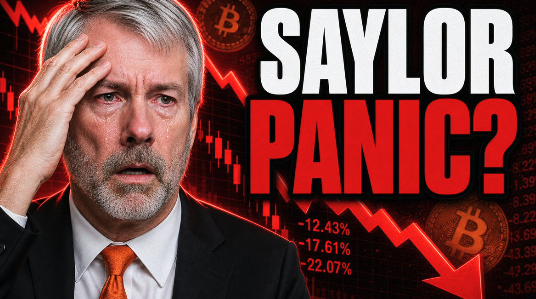
Michael Saylor made the biggest corporate bitcoin bet in history. Now the charts are red, and the question nobody wants to say out loud is getting louder: what happens if he's forced to sell? Today, 2 PM EST on the Bitcoin Well Podcast, we put it to two people who at least seem like they know what's going on! @ChrisAlaimo6 (Strategic Advisor at Simple Bitcoin) and @JoeConsorti (Horizon) dig into what's really going on with Saylor's position, whether the "forced seller" fear is real or overblown, and what it would mean for the rest of the market if it played out. No panic. No hopium. Just the mechanics, straight. No chaser. Watch live at 2 PM EST on this channel! image
Bitcoin Well's avatar
bitcoinwell 1 week ago
Tomorrow, 2pm EST, Episode 2 of the Bitcoin Well Podcast. @JoeConsorti has spent years mapping Bitcoin against global liquidity and monetary policy. @ChrisAlaimo6 has spent years in the trenches of Bitcoin media. Two different lenses on the same question: is the playbook breaking, or is everyone else just early to the exit? image
Bitcoin Well's avatar
bitcoinwell 1 week ago
"Bitcoin has no intrinsic value." Neither does the dollar. Let's actually compare what backs each one. The dollar is backed by: · a government that has debased it nearly every year it has existed · debt it can only service by printing more · a promise to keep the promise Bitcoin is backed by: · energy that was genuinely spent and can't be faked · rules no single party can change · a supply cap that tens of thousands of independent computers enforce every ten minutes "Intrinsic value" was always a story. The only question is whose story you're holding. — Zach 🧙‍♂️
Bitcoin Well's avatar
bitcoinwell 1 week ago
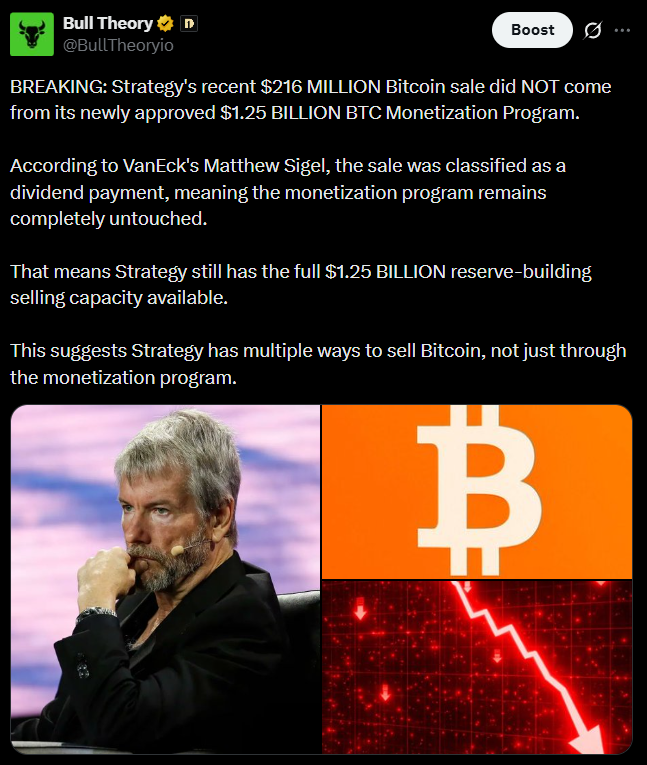
Saylor said he'd never sell. Strategy just sold Bitcoin anyway. Wednesday, 2pm EST: Episode 2 of the Bitcoin Well Podcast. @JoeConsorti and @ChrisAlaimo6 join @q_liketheletter to unpack it. Panic, or the plan all along? image
Bitcoin Well's avatar
bitcoinwell 1 week ago
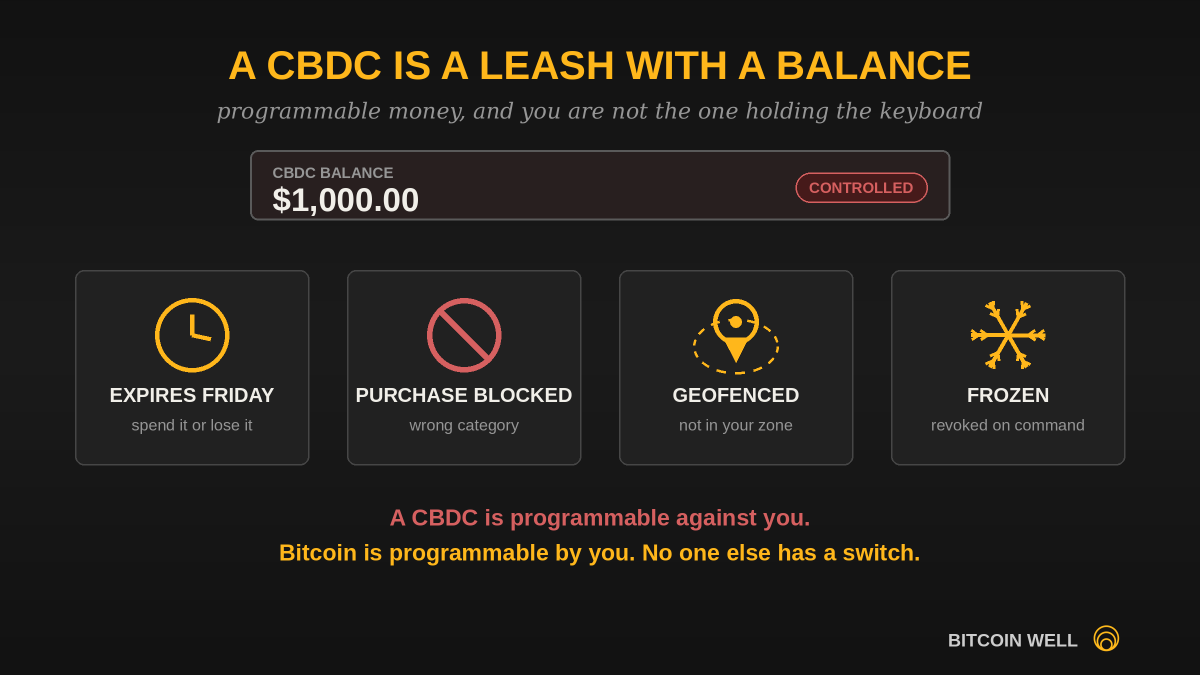
A central bank digital currency isn't digital cash. It's a leash with a balance. Cash doesn't care what you buy. It doesn't expire. It doesn't report to anyone. A CBDC is the opposite of all three. It's programmable money, which sounds like a feature until you remember who holds the keyboard. Programmable means an issuer can put an expiry date on your savings to force you to spend. It can block a category of purchase it disapproves of. It can fence your money to a zip code, or switch it off entirely if you step out of line. None of that is speculation. It's just what the technology is for. Bitcoin is programmable too. But the rules are fixed, and they're enforced by you, not aimed at you. No one can freeze it, expire it, or tell it where it's allowed to go. One system asks you to trust that they'll never abuse the switch. The other doesn't have a switch. image
Bitcoin Well's avatar
bitcoinwell 1 week ago
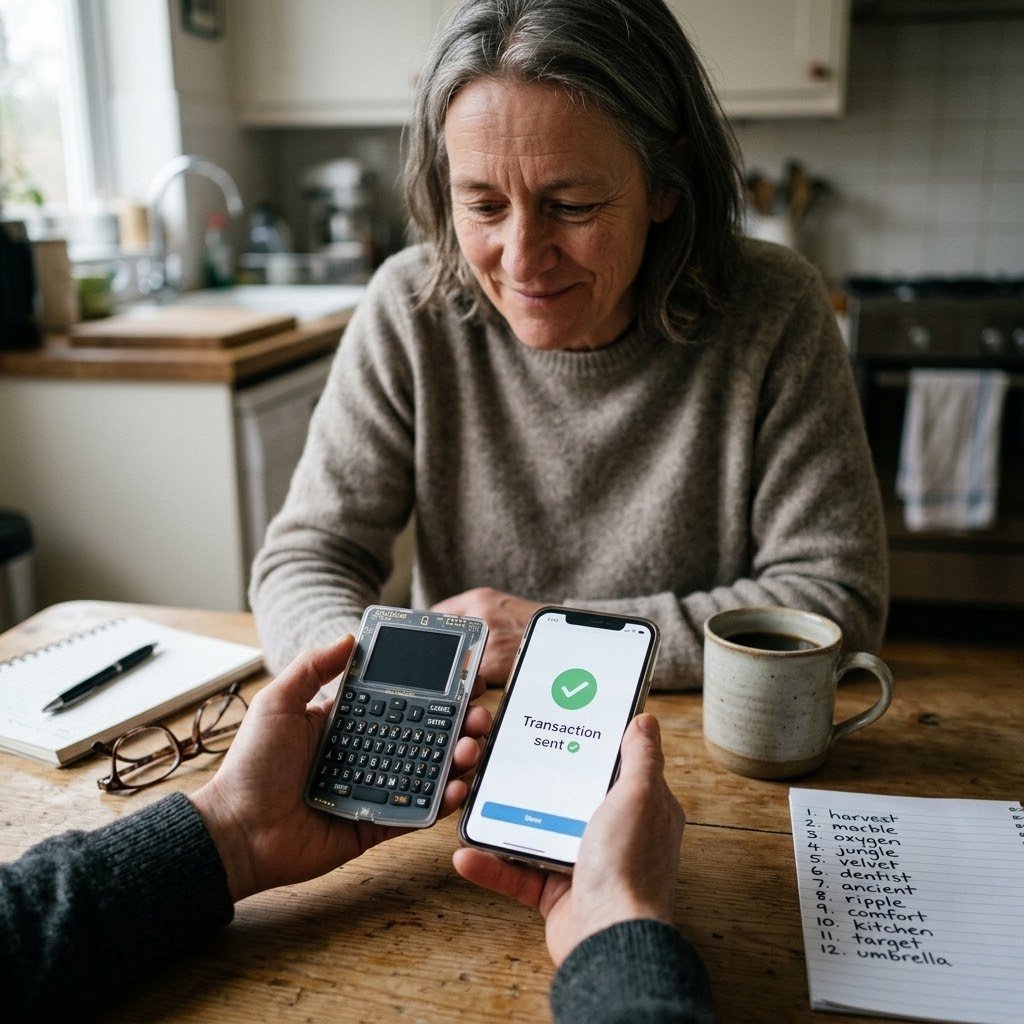
Nobody feels sovereign the day they buy bitcoin. They feel it the day they move it themselves. There's a specific kind of quiet that shows up after someone sends their first transaction from their own wallet. It isn't excitement. It's calmer than that. It's the feeling of holding something that is finally, actually yours. You can't explain that feeling to anyone. You can only hand them the keys and let them find it themselves. image
Bitcoin Well's avatar
bitcoinwell 1 week ago
An exchange showing you "proof of reserves" is showing you half of a magic trick. Proof of reserves tells you what the exchange holds. It says nothing about what the exchange owes. A vault full of coins means nothing if five different customers each hold a claim on the same coin. That isn't an audit. It's a photograph of one side of the ledger. This is fractional-reserve banking wearing a crypto costume. Your balance shows a number. Whether that number is actually backed, one to one, not lent out three times over, is something you are trusting them about, right up until withdrawals freeze. There is exactly one audit that can't be staged. The coins in a wallet whose keys you hold. You don't have to believe a report. You can check the chain yourself. If you don't hold the keys, it isn't a reserve. It's an IOU with good marketing. https://t.co/vyqXP6LO4W
Bitcoin Well's avatar
bitcoinwell 1 week ago
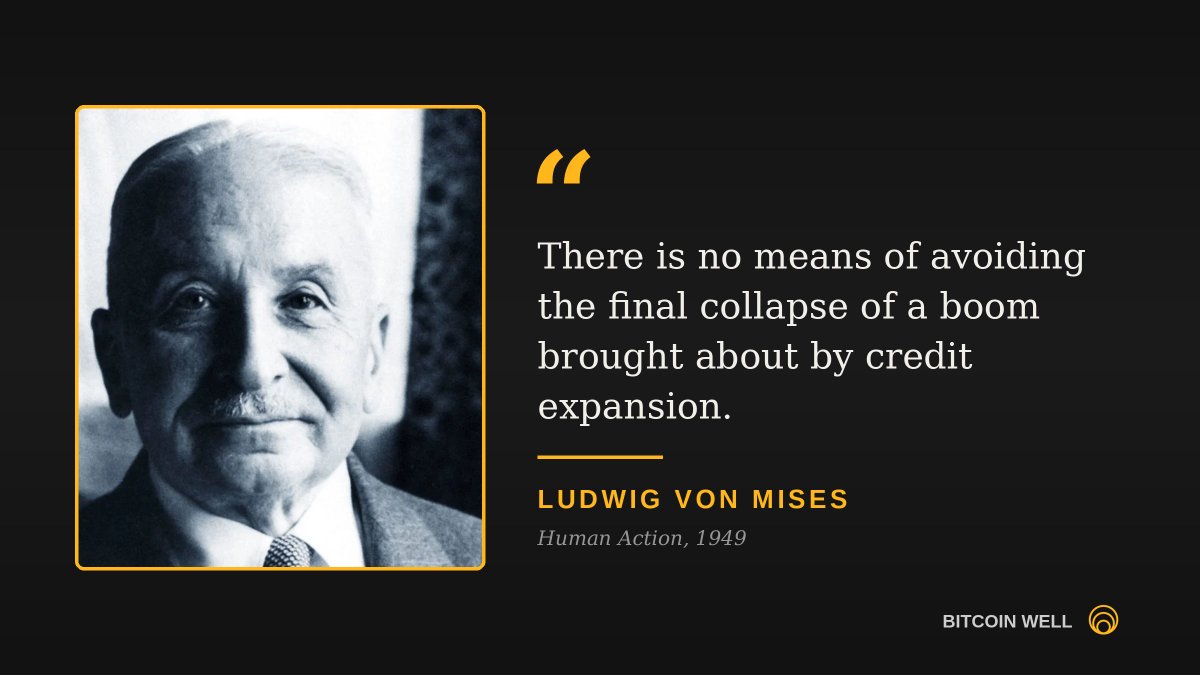
Almost every currency in history has died. The ones still standing just haven't died out yet. This isn't pessimism, it's arithmetic. Mises wrote that there is no way to avoid the final collapse of a boom built on credit expansion. You can delay it by printing more, but every dollar printed to postpone the reckoning makes the reckoning bigger. That stopped being a theory a long time ago. It's been proven in the last thousand years of monetary history. Mises said it first, Rothbard said it louder, and the point never changed. Money that can be created out of nothing will be created out of nothing, and the people closest to the printer always spend it first. Your savings pays the bill last. Bitcoin is the first money no emergency can dilute. No committee, no election, no war can vote more of it into being. The question was never whether fiat fails. It's whether you're holding something else when it does. image
Bitcoin Well's avatar
bitcoinwell 1 week ago
The companies that road the "never sell your bitcoin" slogan to market their companies keep selling their bitcoin. Strategy parted with roughly 3,588 coins last week. This week a Nasdaq-listed miner sold about 1,400 more to fund a data center and pay down debt. Different names, same lesson. When you bolt a dividend, a loan, or a payroll on top of Bitcoin, you have created an obligation that does not care what you post about diamond hands. The obligation has a due date. The bitcoin is what gets sold to meet it. A claim stacked on an asset answers to its own schedule, not to your conviction. The coin in your own cold storage owes nothing to anybody. Own the asset. Not a promise stacked on top of it.
Bitcoin Well's avatar
bitcoinwell 1 week ago
They don't need to take your money. They just need to make it worth a little less every year while you sleep. Mises saw this a century ago. He called sound money an instrument for protecting civil liberties against a government's despotic reach. Not an investment. A defense. Bitcoin doesn't ask the government to behave. It just works around them. That's the defense he was talking about. image
Bitcoin Well's avatar
bitcoinwell 1 week ago
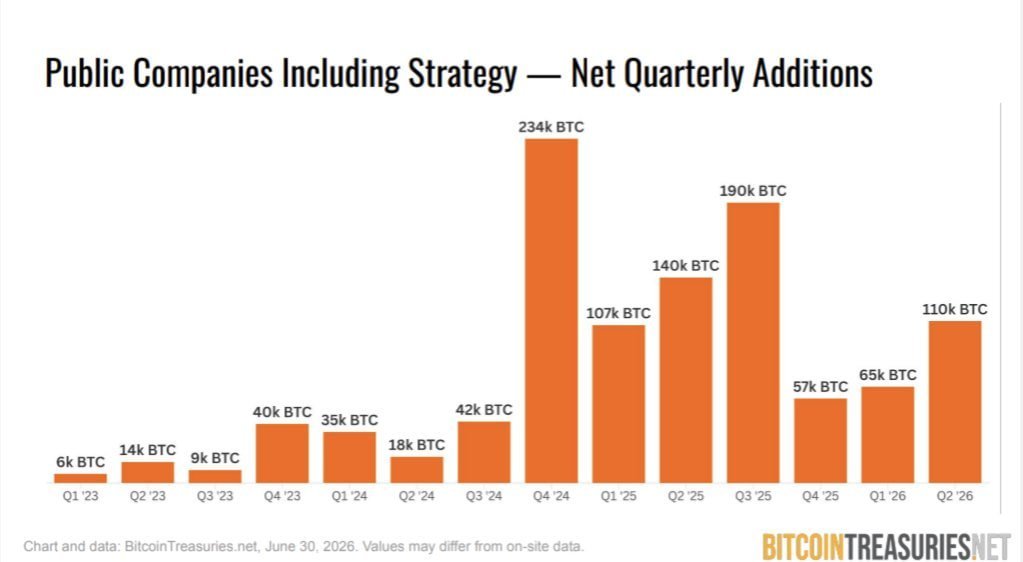
Public companies bought 110,000 Bitcoin last quarter. Almost none of the people cheering it own a single satoshi of it. Corporate treasuries now hold more than 1.26 million Bitcoin, over 6% of everything that will ever exist, and Q2 alone added roughly 110,000 coins, about 1.8 times the two prior quarters combined. It's a real signal. Serious balance sheets are treating Bitcoin as a reserve asset. Good. But here's the quiet distinction underneath the headline. A company holding Bitcoin on its balance sheet is not you holding Bitcoin. If your exposure to all of this is a share of that company, you own a claim on a claim, subject to a board, a custodian, an auditor, and a stock price that can trade above or below the coins it represents. The coins are real. Your grip on them is not. The 110,000 coins that moved into treasuries this quarter are locked behind someone else's keys. The ones that matter to your sovereignty are the ones behind yours. Adoption is the network winning. Self-custody is you winning. Don't confuse the two. image
Bitcoin Well's avatar
bitcoinwell 1 week ago
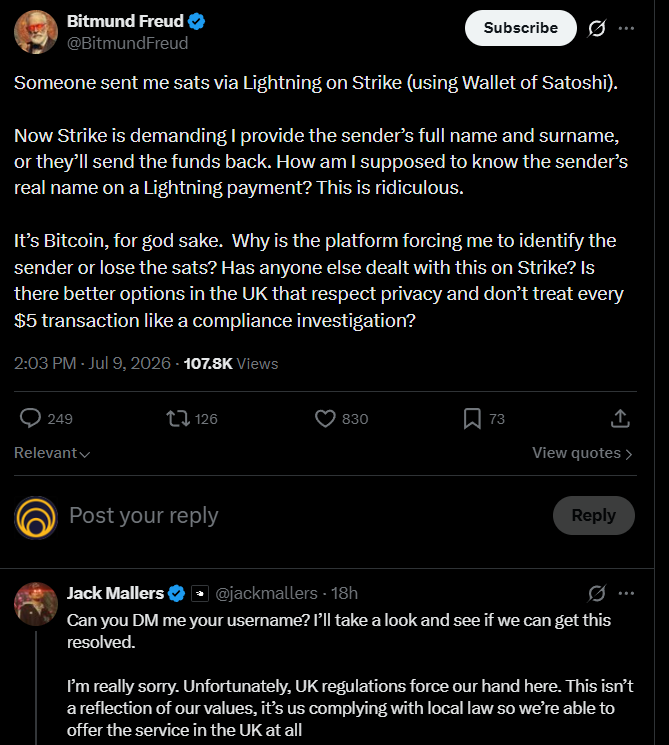
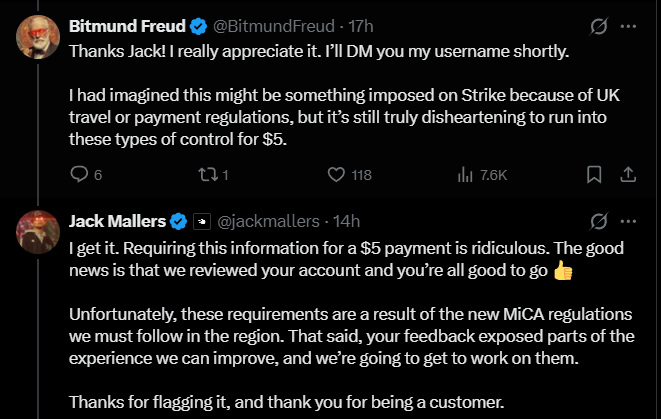
Someone sent a friend $5 of Bitcoin over Lightning. Strike froze it and demanded the sender's full legal name. But the person receiving it had no way to answer. Nobody knows a stranger's surname from a Lightning payment. That's the whole point of the technology. Strike's CEO, Jack Mallers, apologized and named the culprit directly: the new MiCA regulations. That's the same rulebook doing its work from the other side. MiCA is why 70% of Binance's exiting EU users just fled into self-custody. It is also why a $5 tip on Strike now triggers a demand for a stranger's legal name. One regulation, two doors. Wherever the state can reach a custodian, it makes that custodian watch you. Here's the lesson hiding in both. A custodian is a chokepoint by design. However good its intentions, it holds a door the state can always knock on. Your own wallet has no door. A self-custodial Lightning payment never asks for anyone's name, because there is no middleman left to compel. They can write every rule in Brussels and still never reach the wallet you hold yourself. Not your keys, not your coins. Not their business, either.
Bitcoin Well's avatar
bitcoinwell 1 week ago
Bear Markets Are for Building. Here's What That Actually Looks Like.
Bitcoin Well's avatar
bitcoinwell 1 week ago
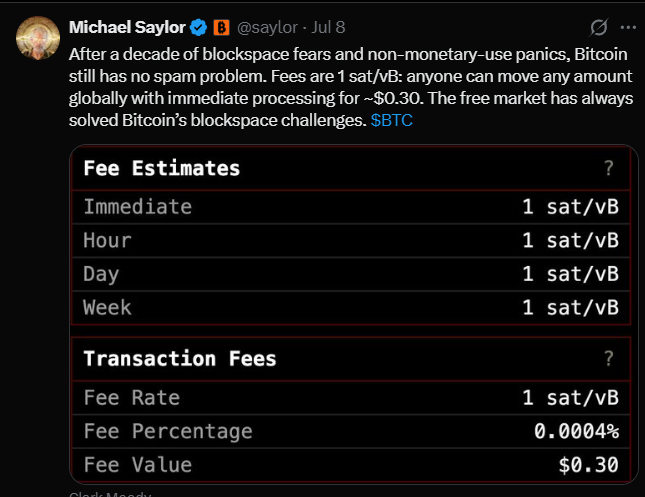
Michael Saylor says Bitcoin has no spam problem. A lot of people are furious he said it. Here is the part everyone in the fight is missing. It doesn't matter what Saylor thinks. It doesn't matter what the pools signal by July 15. Bitcoin doesn't have a CEO who decides what it is for, and that is the entire point of the thing. The rules of Bitcoin are not enforced by a vote, a company, or a mining cartel. They are enforced by the node you run. Every full node quietly checks every block against the rules its operator chose to accept. Miners can propose. Pools can signal. Billionaires can post. None of them can force a rule onto a node that rejects it. That is why the "spam" fight, for all its noise, is really a question about you. Do you run your own node and enforce your own rules, or do you outsource that judgment to whoever has the loudest account this week? Let them debate the filter. Sovereignty was never up for a vote. Run your node. The rules are yours to keep. image
Bitcoin Well's avatar
bitcoinwell 1 week ago
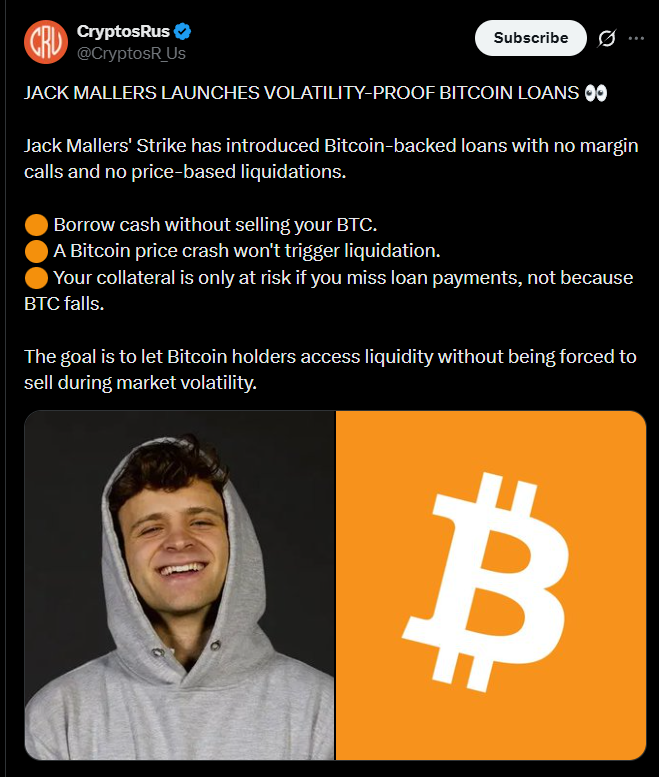
A billion dollars in Bitcoin bets got liquidated this week. The people who actually own Bitcoin didn't notice. That distinction is the whole game. This week Strike launched loans it calls "volatility-proof," with no margin calls and no price-based liquidation, reportedly up to 14.2% APR. It sounds like the answer to a week like this one. Read it again. "No liquidation risk" is not "no risk." It is a relocation of risk. To borrow against your Bitcoin, you hand the collateral to someone else. You haven't removed danger, you have swapped price-liquidation for counterparty risk. Rehypothecation. Insolvency. A freeze. Terms that change while you sleep. Celsius holders and BlockFi holders also believed their coins were safe, right up until the withdrawals stopped. The thing that got liquidated this week was never Bitcoin. It was leverage wearing Bitcoin's name. Positions, promises, IOUs against coins someone else held. Spot in cold storage cannot be margin-called. It cannot be liquidated at the bottom. It cannot be frozen by a lender's bad quarter. The only loan that can never freeze you is the one you never took against keys you hold. image
Bitcoin Well's avatar
bitcoinwell 1 week ago
Bitcoin isn't 21 million coins. It's 2.1 quadrillion satoshis. Keep that in mind the next time someone says there won't be "enough." Eli Ben-Sasson, a Zcash co-founder, wants to swap Bitcoin's fixed cap for 4% annual issuance, worried that lost coins leave too little to go around. Start with the obvious part. The 21 million cap is the product. Change it and you don't have Bitcoin anymore. You have another coin that borrowed the name. Now the "just 4%" part. There is no just once. The moment the cap can move, someone owns the dial, and 4% stops being a ceiling and becomes a precedent. Every future emergency will argue for a little more. That is the entire history of fiat money, restarted from scratch. And the shortage he fears isn't real. Each Bitcoin splits into 100 million sats. When coins are lost, the ones that remain simply carry more value, and the network keeps pricing life in smaller units. Lost coins don't starve you. They make everyone else's sats worth more. A cap you can vote to raise was never a cap. It's fiat with extra steps. image
Bitcoin Well's avatar
bitcoinwell 2 weeks ago
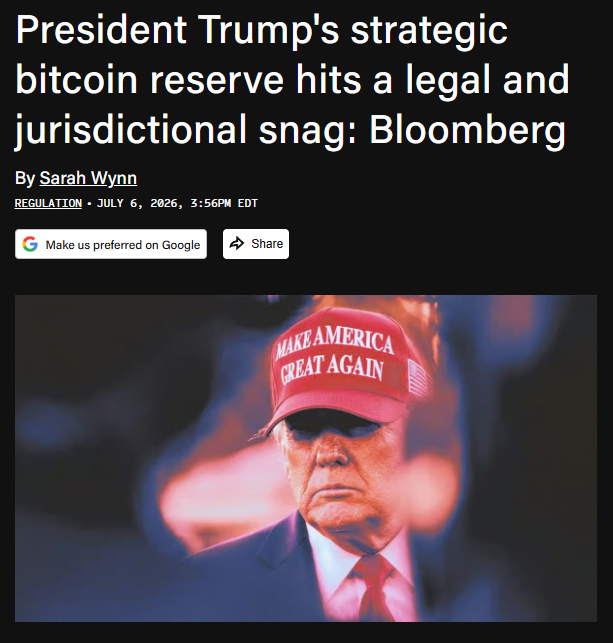
The U.S. government holds more than 328,000 Bitcoin, worth about $21 billion, and 16 months in it still can't figure out who holds the keys. Bloomberg reports the Strategic Bitcoin Reserve has stalled. Treasury and Commerce are fighting over which one runs it, and government lawyers are now reviewing a more basic question. Whether Washington even has the legal authority to custody Bitcoin for the long term. The most powerful state on earth, holding $21 billion in Bitcoin, is stuck on the exact problem every one of us solved on day one. Where do the keys live, and who is allowed to move them? This is the whole lesson in one headline. Custody is not paperwork you delegate to an agency. It is the asset. A reserve nobody can agree how to hold is just a number in a press release. You don't need an interagency working group. You need a seed phrase, a piece of steel, and an afternoon. No turf war. No legal review. No 16-month delay. They have $21 billion and no answer for the keys. You can have yours today. That is the whole difference between owning Bitcoin and being told you own it. image
Bitcoin Well's avatar
bitcoinwell 2 weeks ago
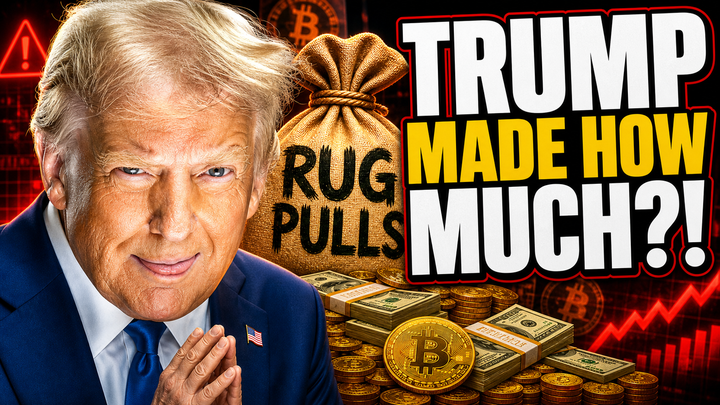
Everyone got rugged this cycle. Trump didn't. Tomorrow @ 2pm EST: Ep. 1 of the Bitcoin Well Podcast, live. @tatumturnup joins to unpack Trump's crypto money trail and what's really happening in bitcoin mining. How do you think he came out ahead? Check this stream tomorrow to find out, or click the youtube link below to get notified when we go live👇 image
Bitcoin Well's avatar
bitcoinwell 2 weeks ago
An exchange showing you its "Proof of Reserves" tells you almost nothing. It's a magic trick, and you're the mark. Here is the sleight of hand. Proof of reserves shows you the assets. It says nothing about the liabilities. It's a bank flashing a vault full of Bitcoin while staying very quiet about how many different customers were promised that exact same coin. Reserves without liabilities isn't an audit. It's a photo of the good half of the story. This is fractional reserve banking 2.0. The exchange holds some Bitcoin, lends against it, rehypothecates the rest, and shows you a clean snapshot on a good day. It works right up until enough people ask for their coins at once. Then the math breaks, withdrawals "pause," and you learn what you actually owned: an IOU. There is only one audit that can't be faked. You hold the keys, the coins sit on the network as yours, and no snapshot, press release, or trust-me page stands between you and your money. Drain the exchanges. https://t.co/vyqXP6LO4W