Default avatar
npub19mf4...kfu2
npub19mf4...kfu2
Self-custody shouldn't feel like defusing a bomb with the wires unlabeled. This week, Bitcoin Guidance is free. A private, one-on-one call with a real Bitcoin expert who walks you through it live: setting up your own wallet, moving your coins safely, and backing up your keys so a lost phone never means a lost fortune. No sales pitch. No jargon wall. Just a human who stays on the line until it's done and it actually makes sense to you. After the couple of weeks Bitcoin holders just had, nobody should be guessing with their savings. Free for a few more days. Book a call:
Heads up if you run a BTCPay Server. There's a critical bug being actively exploited right now, and it can put your funds at risk. This one needs action today. BTCPay is the open-source software thousands of merchants and plebs run to accept bitcoin themselves. No processor, no middleman, no one else holding the keys. If that's you: 1. Update to version 2.4.2 now (Server > Maintenance > Update). Can't patch yet? Take the server offline until you can. 2. Refresh your macaroons and any backend auth strings. 3. If you created a hot wallet inside BTCPay, move those funds and make a new one. Here's the part worth sitting with. Running your own infrastructure is real sovereignty, and real sovereignty comes with real responsibility. Nobody else is going to patch this for you, because nobody else is in control. The open-source upside showed up too. A volunteer security team found this, reported it, and shipped a fix in the open before attackers could run wild. Closed systems fail quietly. This one failed loud and got fixed fast. Patch now. Send this to a merchant who needs it.
The Coldcard bug has a lot of people scrambling to move their bitcoin to a safe setup. If that's you and you're not 100% sure how, don't rush it alone. This week, our Bitcoin Guidance is free. A private 1-on-1 call with a real Bitcoin expert who helps you set up a fresh wallet, move your coins, and confirm your backup actually works. Live, at your pace. We never ask for your seed phrase. We never touch your keys. You stay in control the whole time, we just make sure you do it right. Moving bitcoin under pressure is exactly when mistakes happen. You don't have to. image
๐ŸŸ  TODAY, 12PM EST on Spaces: The BIP-110 Debate Both sides. No filter. No stacked audience. Right now the Bitcoin community is blocking each other instead of talking. We want to change that. So we put strong voices from both sides in one room to make their case and actually hear the other out. FOR BIP-110: @hodlonaut & @knutsvanholm + more AGAINST: @DavidFBailey, @w_s_bitcoin + more Hosted by @bitcoinwell. Bring an open mind. ๐Ÿ‘‡ https://t.co/djc4LVnttg
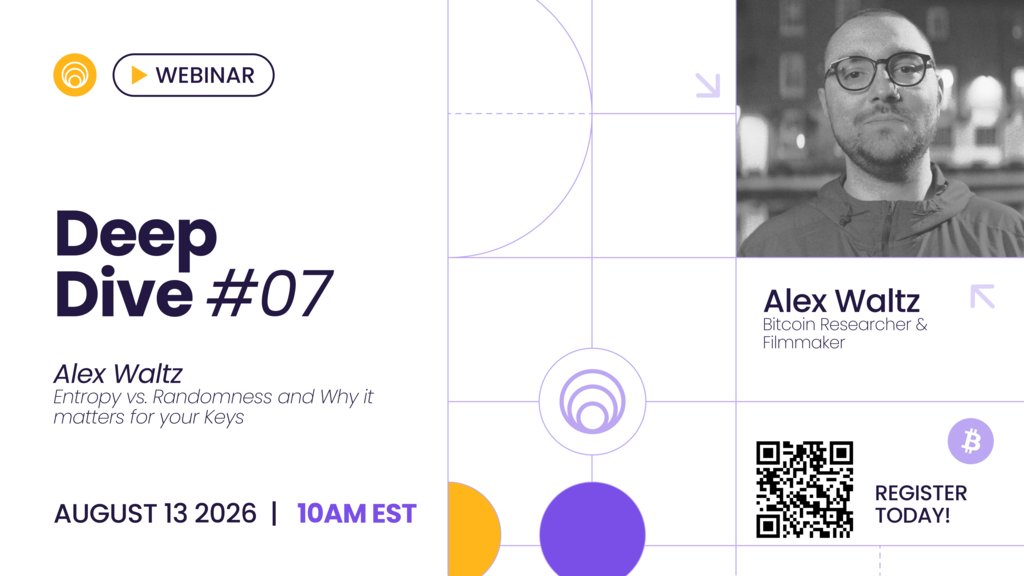
A firmware flaw allowed someone to drain $130 million from self-custody wallets. Days later, a volunteer red team audited 390 Bitcoin codebases in a weekend and filed thousands of findings. Strip away the headlines and both stories point at the same quiet thing: entropy. The randomness your Bitcoin keys are born from, the part you never see and never think about, right up until it fails. Most people use "entropy" and "randomness" as if they mean the same thing. In daily life, fine. In the code that generates your keys, that mistake is the difference between money only you can spend and money anyone can. On August 13 we go deep with Bitcoin researcher and filmmaker Alex Waltz (@raw_avocado). What entropy actually is, why "random enough" isn't, and what the Coldcard controversy revealed about the assumptions we all make when we trust a hardware wallet to make a key. It starts technical and ends personal. Because if your keys weren't born from genuine entropy, they aren't as secure as you think. The Deep Dive. August 13, 10:00 AM. Register Now: image
We're live. $130 million just vanished from "self-custody" wallets after the Coldcard firmware flaw. The custody crowd is calling it proof that holding your own keys doesn't work. It isn't. We sat down with Bitcoin historian @pete_rizzo_ to put this moment where it belongs: next to Mt. Gox, Celsius, and FTX. None of those disasters made custodians the answer. This one doesn't either. The real history of self-custody, who collaborative custody is actually for, and what needs to change. Watch now: https://youtube.com/live/24Vg1bcb9qE
Roll Your Own Bitcoin Seed: How to Create a Wallet You Don't Have to Trust
Gary Cardone looked at self-custody, saw a little friction, and said "GTFO, not scalable." That reflex is the entire reason Bitcoin had to exist. You see, the dice rolls aren't the point. They're a UX problem, and UX problems get solved. What doesn't get solved on its own is the mindset underneath the comment: the belief that doing the work yourself is beneath you, that "serious money" hands its keys to a suit and calls it control. It isn't control. The money an institution holds for you is the money that gets frozen, loaned out behind your back, and seized. Ask anyone whose account froze in 2022. Ask the Americans who lived through Executive Order 6102. The friction is temporary. The subservience is permanent, right up until the day you decide to hold your own keys. Serious money isn't the money a custodian guards. It's the money nobody can take. Not your keys, not your coins. Not your entropy, not your keys. image
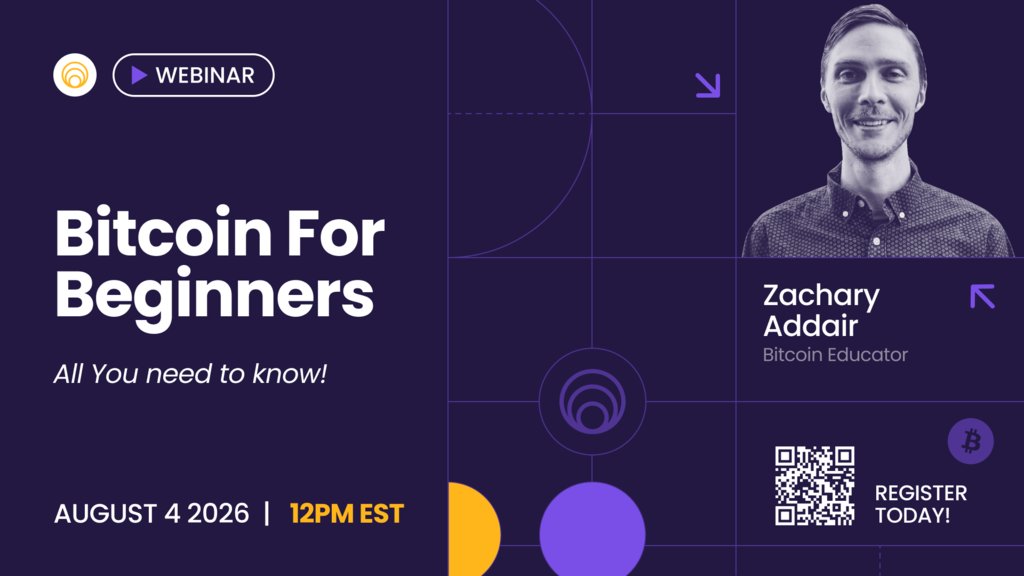
We're starting something tomorrow, and it's for anyone who's ever felt too late or too lost to get into Bitcoin. It's a beginner series. Every session I bring on a different member of the Bitcoin Well team to help me explain Bitcoin from the ground up, so you learn the basics and get to know the people actually building Bitcoin Well at the same time. First up: Halston (@halstonvalencia). She runs capital markets and marketing here, she's building Bitcoin Quant, and she doesn't do lukewarm takes on macro. Tomorrow we cover the fundamentals and walk you through how to set up a wallet and hold your own bitcoin safely. No jargon. All questions welcome. Come learn or share this with your friends and family that are just getting started! Tomorrow. 4PM EST. image
Normal people double-check the stove is off. I've verified the same receive address four times and I'm going back for a fifth. Self-custody comes with a little paranoia. I'll take it.
"This is why you should just leave it on an exchange." Every time self-custody has a bad day, the custodial crowd shows up to tell you the fix is handing your coins to a company. They said it this week about the Coldcard flaw. They're missing the forest for the trees. Here's the question that ends it. What if you had moved your Coldcard stack onto FTX the week before it collapsed? You'd have "solved" a firmware bug by handing everything to Sam Bankman-Fried. A risk you can inspect and patch, traded for one you never see coming until the withdrawals freeze for good. Funny thing. The company at the center of this week's story is the same one that told you, during the FTX collapse, to get your bitcoin off exchanges. They were right then. They're still right. The answer to a self-custody problem was never to give up self-custody. It's to make yours better. Verify your entropy. Roll your own dice. Spread the keys across vendors with multisig. Remove the risk you can find, and keep control of the rest. Sovereignty isn't believing nothing breaks. It's being the one who can fix it when it does. image
1/A hardware wallet spent years quietly generating guessable Bitcoin keys. Last week someone drained $38 million from them in about 25 minutes. The culprit wasn't a hacker. It was bad entropy. Here's what entropy actually is, why it's so important in self-custody, and how to make a wallet from scratch with nothing but dice. ๐Ÿงต image
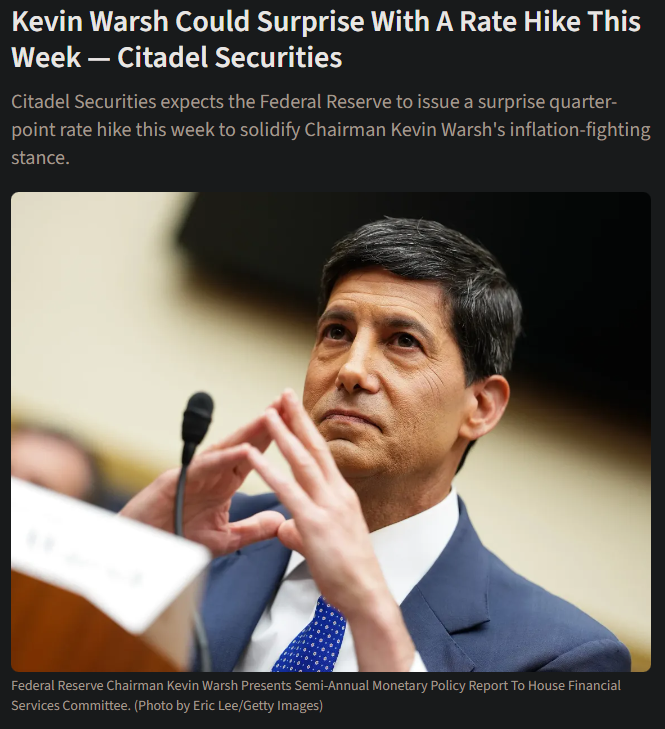
Everyone is watching whether Warsh raises rates a quarter point tomorrow. But that's the wrong number to be paying attention to. The only number that matters is $40 Trillion. And that number says, ultimately, this train only goes in one direction. image
The Last Analog Man: What John C. Dvorak Understood About Value That the Algorithm Never Will
Bitcoin mining difficulty is on track to finish 2026 lower than it started. That would be the first annual decline in Bitcoin's history. So is it the beginning of the end? Difficulty is just a thermostat. When too many miners pile in, it climbs and crushes margins. When the overbuilt and overleveraged operators tap out, it falls and the survivors breathe again. That's a build in balancing system meeting the free market. And there is nothing to fear on the security side. The hashpower behind Bitcoin is orders of magnitude past what the network needs to stay safe. A drop of roughly 13.8% off record highs still leaves it parked near the most secure it has ever been. "No miners left" was never on the table. Here's the part the doomers miss. Lower difficulty means fatter margins for everyone still plugged in. It quietly invites the small, nimble, efficient miners back online, the ones who got priced out while the giants were flexing. The network doesn't get weaker. It gets more distributed. Bitcoin doesn't get a bailout when its miners overbuild. It adjusts, in public, and hands the advantage back to whoever is left and paying attention. The miners compete so you never have to trust any single one of them. image
24 words. That's what stands between you and a lifetime of asking permission. People think a hardware wallet holds their bitcoin. It doesn't. Your coins never leave the network. What the device holds is a key, and that key is really just a very large number, one so large that guessing it is effectively impossible. Your twelve or twenty-four word phrase is that number, written in a form a human can back up. Whoever knows it controls the coins. Nobody else can, no matter what they threaten or promise. That is the whole game. Not a password you can reset. Not an account someone can restore for you. A secret only you hold. Guard the words. Everything else is noise. image
Normal people check the weather before the weekend. I check if my node is still synced. We are not the same, and I've made peace with it. image
We asked AI for a heartwarming photo of a dad teaching his kid self-custody. It melted the hardware wallet and engraved the backup plate "BITCOIM." We're not sure where the family went. Anyway. The point survives the slop. Most people inherit a bank account. A number someone else controls, that shrinks a little every year. You can leave your kids the money itself. Keys they hold, that no bank has to approve and no government can inflate away. Real inheritance isn't a balance. It's the ability to hold their own. (Still waiting on the version that can spell Bitcoin.) image
โ†‘