Two weeks ago the price of bitcoin was beyond boring.
VanEck's mid-August numbers, published August 18, showed realized volatility at 27.2% against a long-run average near 80%.
Spot volume in the 10th percentile of its entire history. Eight of twelve capitulation signals firing. Long-term holders had just sold 356,000 coins into the weakness.
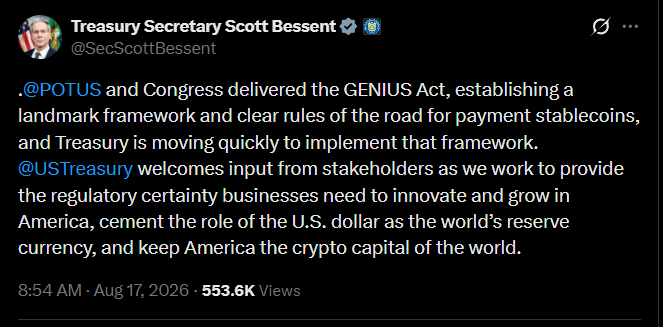
Then August 19. Treasury scales up its bond buybacks. $2.99 billion of positions get liquidated, $2.6 billion of them short. And in that same window spot ETFs take in $2.88 billion, which is 88% of the week's flow, per CoinMarketCap.
$63,549 on August 11. $81,235 on August 25.
When almost nothing is for sale, every dollar of buying has to climb further up the order book to find a seller. A thin market does not absorb demand. It reprices against it. That is why $2.88 billion took this one up 28% in two weeks.
Treasury liquidity policy. Forced buying from liquidated shorts. Voluntary spot demand through the ETFs. Three separate engines, and not one of them needed the other two to fire.
That is the part that's new. For most of bitcoin's history these showed up one at a time, with months in between for the market to digest each one.
And the amount available keeps shrinking. The mortgages Coinbase and Better switched on this morning lock $250,000 of pledged coins against a $100,000 down payment until the loan is repaid. Every one of those written is supply leaving the market for years.
More weeks are going to look like this one, and sharper than anything before the ETFs existed.
$2.6 billion of leverage got closed by somebody else last Wednesday. The best way to enjoy price action like we saw last week is with coins you hold in your own wallet.