Hmmm. Let's see... @grok Create a pie chart of what our X content consists of, but deliver it in the form of a video of a cabaret dance staring our CEO @adamobrien and make the pie chart in the video using our company's branding colors and style.
Bitcoin Well
bitcoinwell@btcw.app
npub19mf4...kfu2
Bitcoin Well is on a mission to enable independence. We do this by making it easy to use bitcoin in self-custody.
Whether you’re looking to buy, sell or use bitcoin, we never hold on to your bitcoin.
Bitcoin Well is automatic self-custody.
Judy Shelton, a longtime sound-money economist, just joined the Treasury as Counselor to the Secretary.
Her big idea, from a column last October: a U.S. Treasury bond you can convert to gold when it matures. Not the whole national debt backed by gold. One bond that pays in metal, so the dollar finally has a benchmark nobody can inflate away.
It's a good instinct. It's also been tried.
During World War I, the Treasury sold Liberty Bonds that promised repayment in gold coin. In April 1933, Americans were ordered to turn in their gold. That June, Congress voided every gold clause in the country, including the ones on its own bonds. The next year, gold was repriced from $20.67 to $35.
Then in 1971, the dollar's last link to gold was suspended. "Temporarily."
Now why would we trust the government to keep any of these promises?
Well, we shouldn't. Which is why we just keep stacking bitcoin.


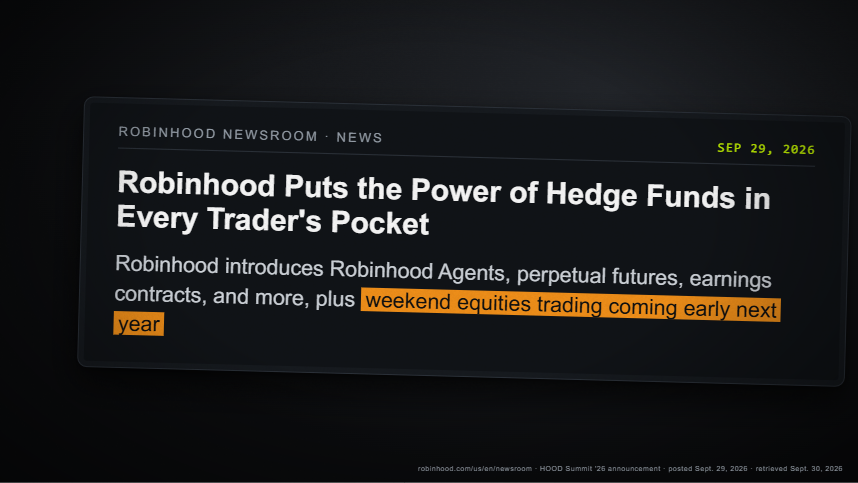
Robinhood just announced weekend stock trading. Coming early next year.
Bitcoin has traded every weekend since January 2009.


30 minutes.
@thekylehuber is about to argue that HODL is holding bitcoin back.
Drop your best case for never spending a single sat below. We'll put the best one to him live.
The Deep Dive, 2 PM ET. Link below.


When's the last time you actually spent bitcoin?
Not sold. Spent. A coffee, a hotel room, a haircut.
Today at 2 PM ET on The Deep Dive, @thekylehuber makes the case that HODL, the meme that carried us through 80% and 90% drawdowns, is now the biggest thing standing between bitcoin and its next wave of adoption.
He's spent bitcoin from Kenya to Bulgaria. Bring your best case for "never sell."
Link below.


Today Washington offered to release Iran's frozen funds in return for concrete nuclear steps, U.S. officials told Axios.
The same morning, Tether announced it has frozen about $550 million in Iran-linked USD₮ this year.
Two headlines. One lesson, and it isn't about Iran.
In 2023, $6 billion of Iran's oil money was unlocked as part of a prisoner swap. That October, after the Hamas attack, the U.S. and Qatar agreed to hold it back.
Frozen, unfrozen, frozen again.
A balance someone else can freeze isn't yours. It's a bargaining chip, and it belongs to whoever holds the switch. A treasury, a bank, a stablecoin issuer.
Bitcoin in your own wallet is the one balance nobody can put on the negotiating table.


what was the moment you decided to take your bitcoin off the exchange for the first time?
Even nation states can't use the gold they supposedly own.
Venezuela 'owns' 31 tonnes of gold. For almost eight years it couldn't have it.
The gold sat in the Bank of England while London's courts decided who the owner was. Today the FT reports it's moving to the New York Fed. Under the deal, Venezuela still can't sell it. It can borrow against it.
A country with an army, a central bank and a seat at the UN needed two governments' permission to touch its own gold, and got a loan instead.
Bitcoin collapses ownership and possession into one thing. Whoever holds the key has the coins, and there's no appeal.


What She Couldn't Freeze: Chrystia Freeland, the Rhodes Trust and the Money the State Couldn't Reach
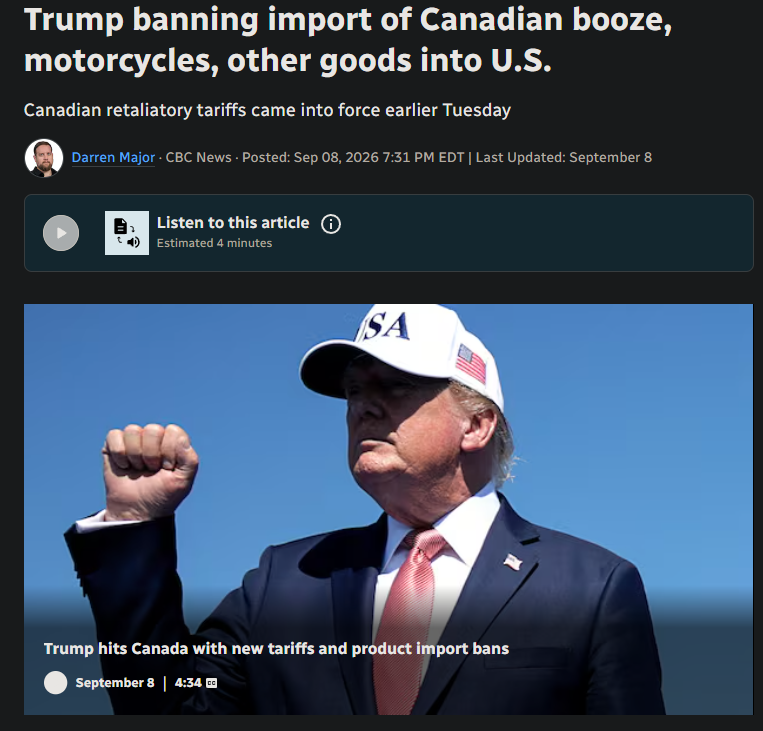
On September 8 Ottawa put a 50% tax on American cheese, appliances and clothing coming into Canada.
By that night Washington had answered. From September 29, Canadian whisky, wine, beer, whey and motorcycles may not enter the United States at all. Not taxed. Refused. The legal authority is a section of a 1930 tariff law that had never been used.
The Prime Minister says the goal is "ensuring that no country can hold us hostage."
Right goal. It applies to people too. Your dollar now buys what two governments allow, at prices two governments set, and the list changed twice in one day.
There is one thing on the shelf that neither capital gets a vote on. It crosses the border in your head.


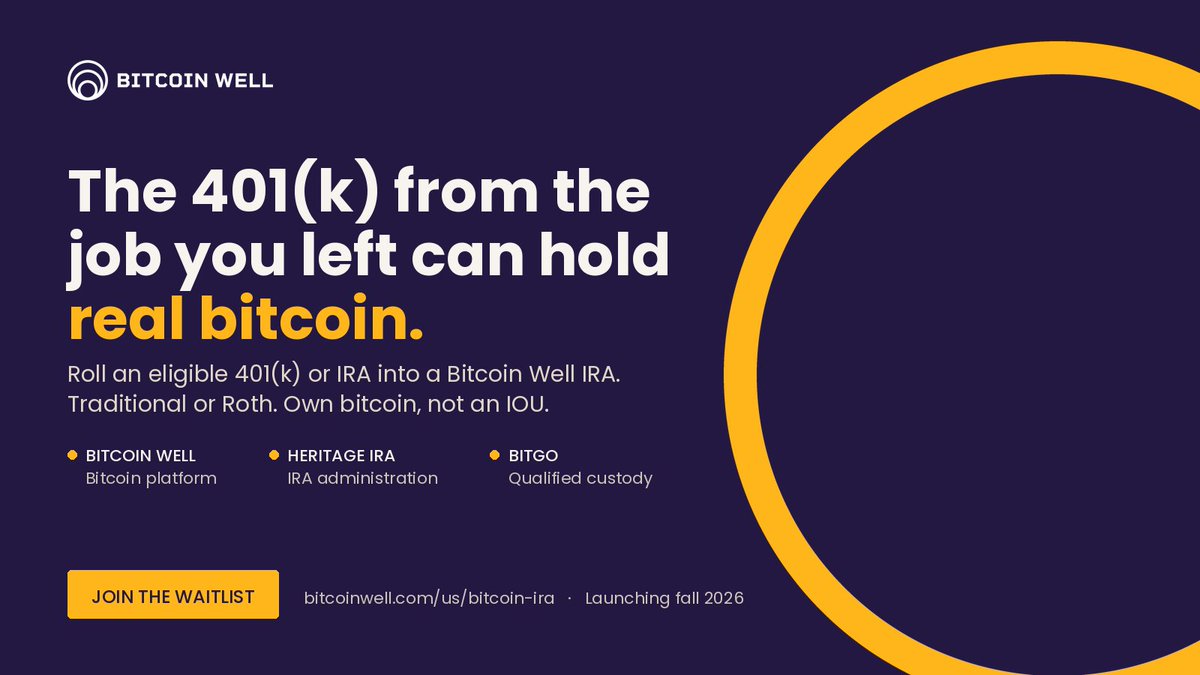
Labor Day question for our American readers: where is the 401(k) from the job you left?
It's still there. Sitting in your old employer's plan, in a fund lineup somebody in HR picked, earning whatever the market hands it. You didn't choose those funds. You can't put bitcoin in them.
An eligible 401(k) or IRA can be rolled over into a Bitcoin Well IRA, and rollovers don't have the annual cap contributions do. Money you already earned, moved into real bitcoin you can verify on-chain, inside the same tax-advantaged structure.
Not advice. Eligibility depends on your plan and your situation. But the money is yours, and "I haven't thought about it in years" is not a plan.
Launching this fall:


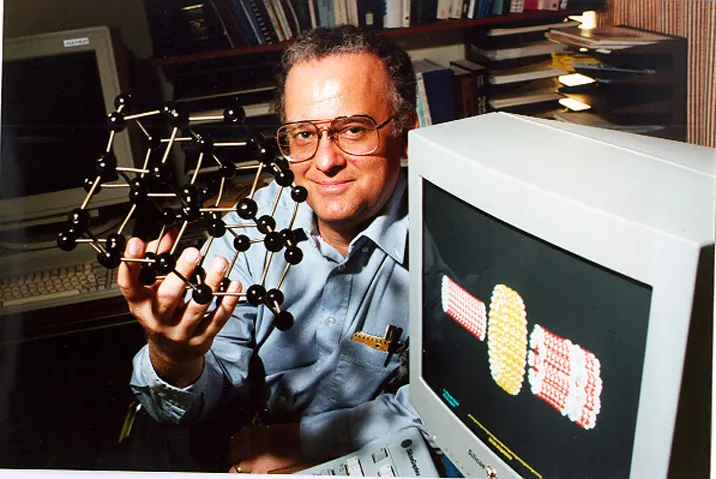
The idea behind every bitcoin key you own was rejected as a homework assignment.
Fall 1974. Ralph Merkle, an undergraduate at Berkeley, submits a project proposal for his computer security course: a way for two strangers to agree on a secret over a wire anyone can listen to. The professor turns it down. Merkle rewrites it shorter, resubmits, gets it back with notes in the margin, and drops the course.
He keeps working on it anyway. In August 1975 he sends the paper to the Communications of the ACM. The anonymous reviewer's verdict: "not in the main stream of present cryptography thinking." It took almost three years to get published. By then the world had named it: public key cryptography.
He wasn't done. In 1979 he worked out how to fold thousands of records into one fingerprint you can check in seconds. Bitcoin calls it the Merkle root. There is one in the header of every block.
You see, the experts weren't lying. They were describing the mainstream, accurately. The mainstream was wrong.
Bitcoin is built almost entirely out of ideas that were turned down first. That should make you more comfortable holding it, not less.


The list is a weapon
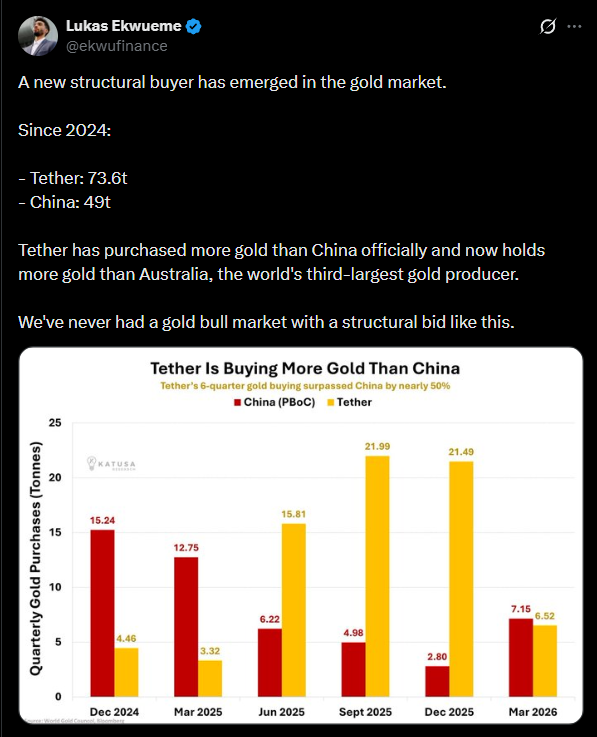
Gold just had its worst quarter since 2013.
Tether bought 14 more tonnes into it. The pile now runs past 146 tonnes, roughly double what Australia's central bank holds.
The largest issuer of digital dollars on earth spent a falling market accumulating the one money that has never had an issuer.
You can read that as a trade or as a tell. Either way, the version of it available to you needs no vault, no attestation and no quarterly report from an accounting firm. Buy spot bitcoin and take it off the exchange yourself.


I dug my old Ledger out of a drawer this morning. Hadn't touched it in years. The screen is so faded I could barely make out the characters.
So the thing going around yesterday is true. The screen on the Ledger Nano S fades with age. Nothing gets hacked and nothing gets tampered with, an old display just goes too faint to read. @janrothen posted about it and is past 189,000 views. Nick Neuman at Casa said the same thing five days earlier, and the two of them independently landed on the same workaround.
Point your phone camera at the device and read the screen off your phone instead. A camera sensor gathers far more light than your eye does and holds it longer, so a display that looks blank to you comes back sharp in your hand. Dim the room, get close, pinch to zoom.
Now notice what a faded screen is not. Your bitcoin was never on that device and could not have been. It is a record on Bitcoin's ledger, and thousands of machines are holding a copy of it right now. The device signs. It does not store.
A faded screen is not a lost balance so much as it is an annoyance if you backed up your seed phrase.
Go make sure you can still read your ledger and move your seed to a new device when you get a chance. No rush.


Saturday question.
What was the first thing you ever actually bought with bitcoin? Not traded. Bought.
Mine was a bottle of wine at the corner store using a Bitcoin debit card in 2018. Of course the person behind the counter had no idea.
Self-custody shouldn't feel like defusing a bomb with the wires unlabeled.
This week, Bitcoin Guidance is free. A private, one-on-one call with a real Bitcoin expert who walks you through it live: setting up your own wallet, moving your coins safely, and backing up your keys so a lost phone never means a lost fortune. No sales pitch. No jargon wall. Just a human who stays on the line until it's done and it actually makes sense to you.
After the couple of weeks Bitcoin holders just had, nobody should be guessing with their savings.
Free for a few more days. Book a call: 

Bitcoin Well
Bitcoin Guidance | Meet 1-on-1 with a Bitcoin Expert
Get personalized bitcoin guidance from our experts. Learn how to securely set up self-custody, understand bitcoin, and take control of your financi...
Self-custody is still the point
Gary Cardone looked at self-custody, saw a little friction, and said "GTFO, not scalable."
That reflex is the entire reason Bitcoin had to exist.
You see, the dice rolls aren't the point. They're a UX problem, and UX problems get solved. What doesn't get solved on its own is the mindset underneath the comment: the belief that doing the work yourself is beneath you, that "serious money" hands its keys to a suit and calls it control.
It isn't control. The money an institution holds for you is the money that gets frozen, loaned out behind your back, and seized. Ask anyone whose account froze in 2022. Ask the Americans who lived through Executive Order 6102.
The friction is temporary. The subservience is permanent, right up until the day you decide to hold your own keys.
Serious money isn't the money a custodian guards. It's the money nobody can take.
Not your keys, not your coins. Not your entropy, not your keys.


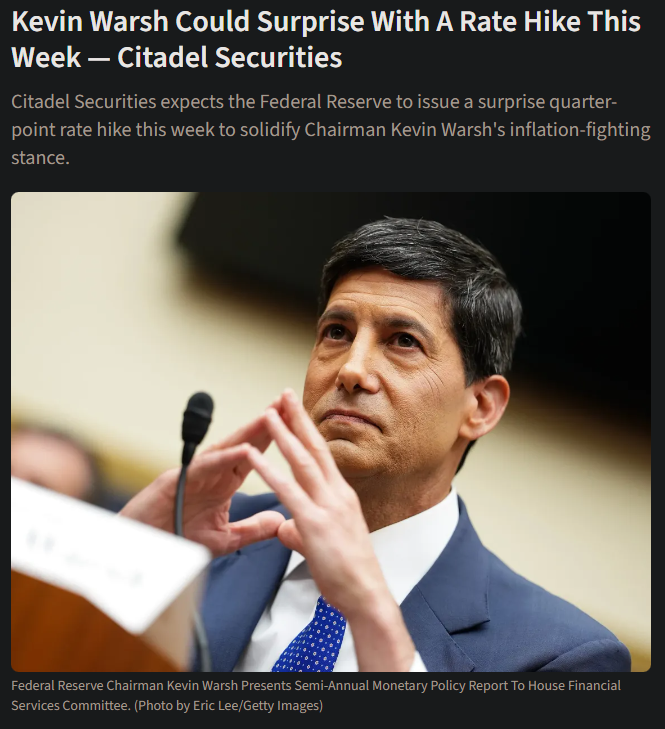
Everyone is watching whether Warsh raises rates a quarter point tomorrow. But that's the wrong number to be paying attention to.
The only number that matters is $40 Trillion.
And that number says, ultimately, this train only goes in one direction.