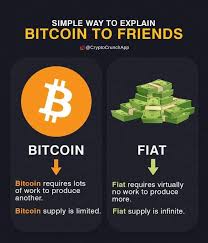
Bitcoin vs Fiat Currency, in a well-structured format:
1. Definition
- Bitcoin:
A decentralized digital currency that operates without a central authority. Created by Satoshi Nakamoto in 2009. Based on blockchain technology and limited in supply (21 million coins).
- Fiat Currency:
Government-issued currency (like Tanzanian Shilling, USD, EUR) not backed by a physical commodity like gold. Its value is maintained by trust in the issuing government.
2. Control & Authority
- Bitcoin:
No central authority. Controlled by code, math, and consensus rules. Maintained by miners and nodes across the world.
- Fiat Currency:
Centralized. Controlled by governments and central banks (e.g., Federal Reserve, Bank of Tanzania). They can print more at will.
3. Supply
- Bitcoin:
Fixed supply of 21 million coins. Cannot be increased. Designed to be deflationary.
- Fiat Currency:
Unlimited supply. Can be printed endlessly, leading to inflation or even hyperinflation.
4. Transparency
- Bitcoin:
100% transparent. Every transaction is recorded on a public blockchain. Anyone can verify.
- Fiat Currency:
Transactions are private but controlled by banks. Not fully auditable by the public.
5. Inflation
- Bitcoin:
Immune to inflation by design due to fixed supply. Predictable issuance schedule.
- Fiat Currency:
Prone to inflation. Governments often print more money to fund spending or stimulate the economy.
6. Accessibility
- Bitcoin:
Anyone with a smartphone and internet can use it. No need for a bank account. Ideal for the unbanked.
- Fiat Currency:
Requires access to banks, especially for digital use. Many people globally remain unbanked.
7. Censorship Resistance
- Bitcoin:
Peer-to-peer. Cannot be blocked, frozen, or reversed by authorities.
- Fiat Currency:
Bank accounts can be frozen. Payments can be blocked or reversed by institutions.
8. Storage & Transfer
- Bitcoin:*
Can be stored in wallets, accessed via keys. Fast and cheap to transfer globally 24/7.
- Fiat Currency:
Requires bank infrastructure. Cross-border transfers are expensive and slow.
9. Legal Status
- Bitcoin:
Legal in many countries, but regulations vary. Still emerging as a recognized form of money.
- Fiat Currency:
Legal tender in every country. Required by law to be accepted in transactions.
10. Trust
- Bitcoin:
Trustless system. You don’t need to trust a person or institution—just math and code.
- Fiat Currency:
Depends entirely on trust in the government and central banks.
Conclusion
Bitcoin offers a new financial model: open, borderless, and transparent. Fiat remains dominant today but faces challenges like inflation, control, and exclusion. Bitcoin is rising as a serious alternative, especially in regions facing currency devaluation or limited access to banking.