Zhash's avatar
Zhash
zhash@rizful.com
npub1v7nf...vl8a
₿ Bitcoin, Nostr and Hive. I build decentralized stuff: chat.hivescope.xyz quill.hivescope.xyz scrutiny.hivescope.xyz and run a small open Nostr relay. @rzazo24 on Hive. https://github.com/rzazo24
Zhash's avatar
zhashtoshi_ 1 month ago
Nostr Scrutiny fact sheet: Primal. Some facts that stood out: - The web app doesn't talk to relays directly. Its only WebSocket goes to cache2.primal.net, Primal's own caching service, which sees what you read and your IP. - The privacy policy is from February 2024 and says the mobile apps collect nothing beyond what you publish and the hosted wallet. Google Play's data safety label lists photos and videos, name, email and user IDs as collected. - Keys: the web app supports browser extensions and remote signers (NIP-07, NIP-46), the Android app supports Amber. - Code is MIT, with the mobile repos updated within a day of the store versions. Facts and sources only. Corrections welcome, with a source.
Zhash's avatar
zhashtoshi_ 1 month ago
New project: Nostr Scrutiny, fact sheets about Nostr clients. For each client it puts side by side what the app stores say, what the privacy policy says, what the published code shows, and what the app does when you open it in a browser: - who is behind it - where your keys live, and whether it signs without holding them - whether the code you can read is the code you run - what it collects, and who it talks to Facts and sources only: no scores, no verdicts. Where the sources disagree, the sheet says so. First five: Amethyst, Damus, Nostrich, Primal and Quill (mine, same checks). Method and data are open: Inspired by WalletScrutiny. Corrections welcome, with a source.
Zhash's avatar
zhashtoshi_ 1 month ago
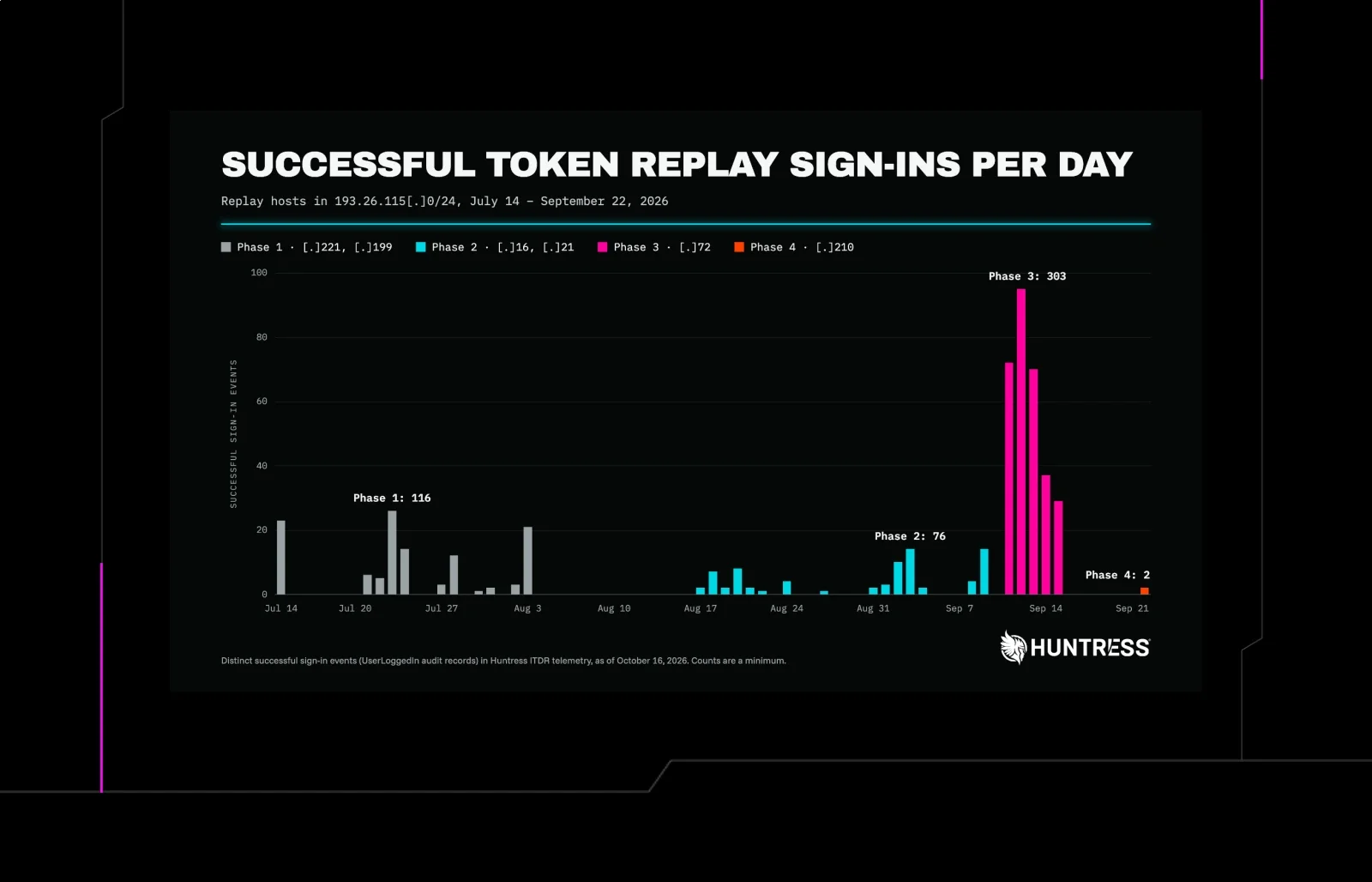
MFA was on, and it didn't matter. Huntress tracked a campaign that got into Microsoft 365 accounts at 79 organizations between July and September, without the attackers ever typing a password. The trick: a proxy sat between the victim and Microsoft's real login page. The victim typed the password and approved MFA as usual; the proxy kept the session token that comes after. Others were phished with device-code prompts. Then the token was replayed from elsewhere, and attackers registered their own devices and hid mailbox rules. MFA protects the login, not the session after it. What helps: - phishing-resistant MFA (passkeys, FIDO2 keys): it won't sign for the wrong domain - block device-code flow if you don't use it - watch for new devices and new inbox rules
Zhash's avatar
zhashtoshi_ 1 month ago
A 2022 Secure Boot bug is still getting people owned in 2026. Kaspersky found BlackX, a UEFI bootkit used against diplomats in Central Asia (linked to APT41 with medium confidence). It abuses Baton Drop, CVE-2022-21894, the same trick as BlackLotus. The uncomfortable part: the victims were patched. Microsoft's fix ships the update, but the revocation that actually blocks the old vulnerable boot manager ("Windows Production PCA 2011" into the DBX) is not enforced automatically. Patch reports say green, firmware still trusts the bad loader. The attackers did need admin first, so this is persistence, not a way in. But once there, it loads before Windows and before any security tool on every boot. If you run Windows fleets: don't trust "patched", check the DBX. Microsoft's KB5025885 covers it.
Zhash's avatar
zhashtoshi_ 1 month ago
A certificate authority shipped eight intermediate keys that were numbers below 256. Not 256 bits: below 256. Anyone could compute them in a blink and sign certificates for any site. That's eMudhra (emSign). Chrome and Firefox blocked the six TLS intermediates within hours, no forged certs showed up in CT logs, and eMudhra is leaving the TLS business. On Tuesday, Oct 27, Chrome also drops its root, emSign ECC Root CA - G3, so about 30,000 legit sites will break unless they switch CA. If you run a site: check who issued your cert. If it says emSign, replace it now (most came via ACME, so point your client at another CA). Also: the other two keys signed code, and browsers aren't the only trust stores. Update ca-certificates in your servers, containers and Java runtimes.
Zhash's avatar
zhashtoshi_ 1 month ago
Follow-up on PHP2Shell: Amazon says its honeypots caught the first exploit attempt on October 17, four days before PHP shipped the patches. Cloudflare, watchTowr and Patchstack saw early probes too. Details had leaked during the embargo, which is why PHP pushed the release forward. Nobody knows yet how the attacker got them. Public proof-of-concepts showed up within hours of the patch. So "patch on release day" was already late this time. What still helps: - update now if you haven't: 8.5.12, 8.4.27, 8.3.36 or 8.2.35 - don't rely on the config workarounds, Datadog says they don't fully cover it - check logs from Oct 17 onward, not just from the disclosure The gap between disclosure and exploitation keeps shrinking. This time it was negative.
Zhash's avatar
zhashtoshi_ 1 month ago
I've been building Quill, a text-only Nostr client: What makes it different: - A filter that explains itself. When it hides a note (spam bursts, copy-paste floods, link-only posts, strangers far from your network), it tells you why, and you can show it anyway or tune the rules. - Highlights: notes with something to say that the people you follow talked about, not just liked. - Pick of the day: every morning an AI picks 8-12 notes worth reading from across Nostr, each with a short summary. - It never sees your private key. You read with just an npub, and write through a remote signer (Clave, Amber, nsec.app or your own bunker). No images unless you ask, no ads, open source: Open it without an account to see today's pick. Feedback welcome.
Zhash's avatar
zhashtoshi_ 1 month ago
I read Nostrich's privacy policy after the posts about who runs it. Facts, not vibes: - Play Store developer: RHXO Technology LLC (Jersey City), an AI business intelligence firm. The policy names RHXO, Inc. (Delaware) as operator. - Keys stay on your device, they say. No sign of anything worse. - The real catch is zap campaigns: advertisers pay to zap people who posted recently. To build those lists they index about a week of public notes from everyone, not just their users, with each author's Lightning address and an "Activity score". - You're in by default. Opting out means turning on "Don't include me in zap campaigns" in Nostrich, and they keep your pubkey forever so you stay out. So this touches you even if you never installed it. Public data is public, but opt-out ads built on scoring everyone isn't what "no personal data business" sounds like. https://nostrich.org/privacy
Zhash's avatar
zhashtoshi_ 1 month ago
Maintenance night on my little Nostr server: Node 20 (end of life) to Node 24 LTS for this week's security patches, and my NIP-46 bunker rebuilt with the patched Go toolchain. The bunker restarts locked, so it couldn't sign anything until I unlocked it by hand. If you're reading this, it's signing again. Boring updates, done the same day. That's the whole trick.
↑