Zhash's avatar
Zhash
zhash@rizful.com
npub1v7nf...vl8a
₿ Bitcoin, Nostr and Hive. I build decentralized stuff: chat.hivescope.xyz quill.hivescope.xyz scrutiny.hivescope.xyz and run a small open Nostr relay. @rzazo24 on Hive. https://github.com/rzazo24
Zhash's avatar
zhashtoshi_ 28 mins ago
Nostr Scrutiny fact sheet: Amber, the first signer reviewed. Some facts that stood out: - Each release ships a GPG-signed manifest of file hashes, and the README documents how to rebuild the APK in Docker and get an identical file. First app here with reproducible builds documented (not run for the sheet). - No analytics, crash reporting, Firebase or Play Services. - An "offline" build removes the internet permission entirely; it's the one Zapstore distributes. - Keys and the list of allowed apps are encrypted with an Android Keystore key. - Networked builds check Zapstore relays for updates daily by default (weekly is the other option). - Not on Google Play; no website or privacy policy. LICENSE says MIT, the README badge says Apache-2.0. Facts and sources only. Corrections welcome, with a source.
Zhash's avatar
zhashtoshi_ 3 hours ago
Follow-up to the OpenRouter story: now we know where the prompts went. Dragos's HD Moore sent nearly two million test requests with secret links through AI providers, July to November. When a request reached MiniMax's own cloud, the links were opened two to three days later from Singapore, even on requests flagged "no retention". Running the same model elsewhere didn't trigger it. MiniMax says its security system stored links from messages and opened some to check for threats, and has deleted them. Atlas Cloud stopped routing to MiniMax and tells customers to treat any secrets they sent as exposed.
Looked at the 29 replies under a project launch note today. What fake engagement on Nostr looks like: - Three different accounts posting the exact same sentence. - Seven accounts each replying and then quoting the note within the same minute, same text both times. - Accounts whose last 40 notes are 38 to 40 replies to other people, profiles created this month. - Two crypto "airdrop" scams in the first minutes. - Lines straight from an LLM: "Build local. Sync freely. Stay sovereign." Whether someone paid for it or bots just answer anything tagged nostr, the reply count says nothing about real interest. Worth checking a few profiles before reading a busy thread as a busy launch.
1Password says an attacker used an employee's compromised GitHub account to reach internal systems, its build pipeline and private source code, and pushed malicious code. Detected Nov 19. Taken: customer names, sign-in emails, account metadata and SRP parameters it says can't be used to log in. Not taken, per 1Password: vaults, the keys that protect them, recovery keys, or the apps you run. No word yet on how many users, or what the malicious code did. The design held this time; the build pipeline is the part worth watching.
Nostr Scrutiny fact sheet: Nostur. Some facts that stood out: - App Store privacy label: "Data Not Collected". The policy is one paragraph: "Nostur does not collect information about you." - No analytics or crash-reporting library among its dependencies, and no push server. - Keys sit in the iOS Keychain, synced through iCloud Keychain; account data syncs through CloudKit in the user's own iCloud. The policy doesn't mention iCloud. - GIF searches go to KLIPY since 29 June 2026 (a date switch in the code); the policy still names Tenor. - Image uploads default to nostr.build, with Blossom, nostrcheck.me and Imgur as options. One developer, GPL-3.0, and the GitHub release matches the App Store version. Facts and sources only. Corrections welcome, with a source.
If you've bought software online, check your card. Cleverbridge, the payment platform behind many software stores, says someone copied stored card numbers, expiry dates and CVV codes, plus emails, addresses and phones. Detected Nov 4, notices since Nov 20. It won't say how many people, which stores or how they got in. The CVV part shouldn't be possible: card industry rules forbid keeping it after the payment is authorized. Cleverbridge hasn't explained why it had them. Ask your bank for a new card if you think you're affected.
Zhash's avatar
zhashtoshi_ 2 days ago
JPMorgan, Visa and Mastercard have all confirmed customer data stolen through marketing vendors, not their own systems. The n0n extortion group gave them 48 hours, then published the spreadsheets on Nov 19: names and emails, around 16,000 tied to JPMorgan's Reserve card. No payment data or passwords, all three say. The real risk is the follow-up: emails that know your name, your bank and which card you carry. Treat any "your card" email this month as a phishing attempt until proven otherwise.
Zhash's avatar
zhashtoshi_ 2 days ago
If you have a GL.iNet router or KVM with GoodCloud remote management turned on, update it. Attackers used a permissions bug in GL.iNet's cloud service to install malware and open root shells on customer devices. GL.iNet closed the hole on its side on Nov 20, but that doesn't clean devices already infected: the security firmware does, keeping your settings. Named models include the Beryl AX, Flint 2, Slate AX and the RM1/RMQ1 KVMs, and GL.iNet says unlisted ones aren't necessarily safe. Remote management through the vendor's cloud means trusting the vendor's cloud. https://www.gl-inet.com/en-us/blogs/blog/glinet-security-notice-2026-11-20
Zhash's avatar
zhashtoshi_ 3 days ago
Character.AI filed for bankruptcy in October, and millions of private chats are now an asset in the case. Its privacy policy allows user data to be shared in a sale without saying which data, and the US Justice Department's bankruptcy watchdog calls it ambiguous enough to sell at least some chat histories. Forty state attorneys general want protections, especially for minors. Disney's $20M bid is for IP and, per filings, excludes user data. The rest is undecided. What you tell a chatbot company lasts as long as the company, and then goes to whoever buys it.
Zhash's avatar
zhashtoshi_ 4 days ago
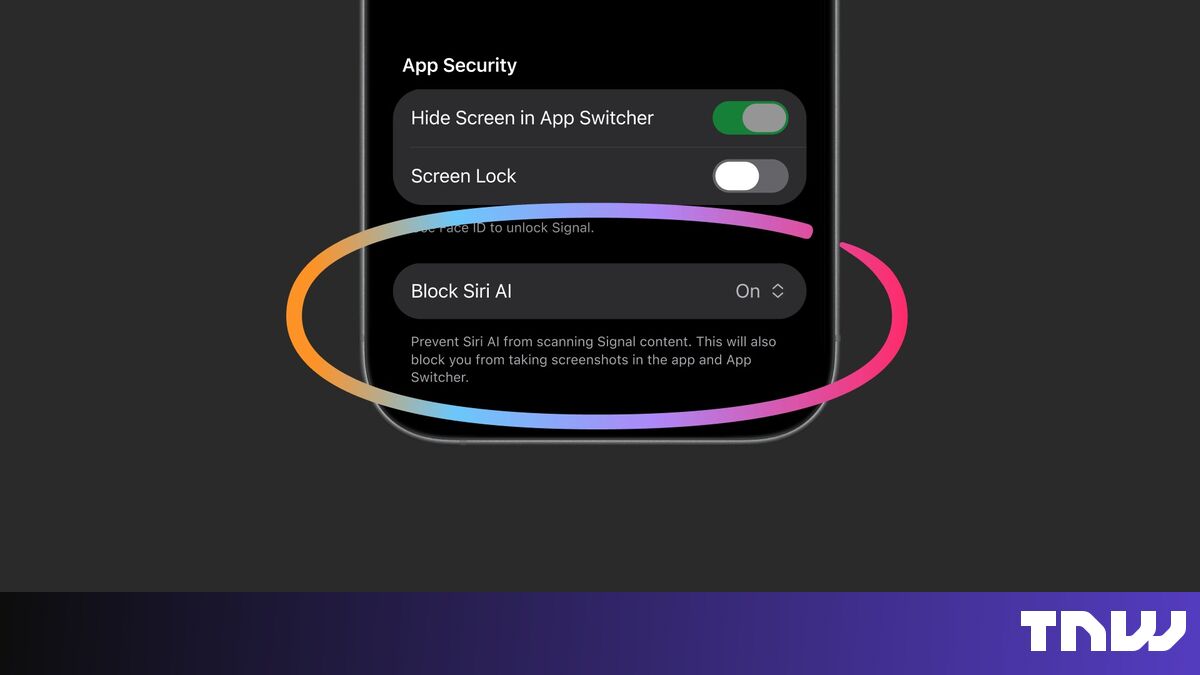
Signal now blocks screenshots inside its iOS and Android apps by default, to keep Siri's on-screen awareness and Gemini from reading your chats. On iPhone it's a new "Block Siri AI" setting, on unless you turn it off, and turning it off exposes your contacts' messages too, not just yours. Meredith Whittaker calls OS-level agents an existential threat to Signal. Signal admits it's incomplete: an agent with access to the phone's files can still get at stored messages. End-to-end encryption ends at the screen, and the screen is now someone else's. image
Zhash's avatar
zhashtoshi_ 4 days ago
Nostr Scrutiny fact sheet: Ditto. Some facts that stood out: - The privacy policy says "Ditto does not operate these relays", but relay.ditto.pub, Ditto's own, is the default relay, and search and trending always go to it. - The policy says "no analytics or tracking scripts"; Google Play declares crash logs and app interactions. The code has Sentry crash reporting on by default wherever a Sentry address is built in. The ditto.pub web build has none, so it sends nothing; the store apps can't be checked from the source. - On the web, a pasted nsec sits unencrypted in localStorage; the apps use Keychain/KeyStore. The policy itself recommends a signer. - Push goes over NIP-44 with a throwaway device key. AGPL code on GitLab, one repo for web, iOS and Android. Facts and sources only. Corrections welcome, with a source.
Zhash's avatar
zhashtoshi_ 4 days ago
The other side of the AI shopping agent story. United and Amazon block them; Walmart built them a door. Its Agent Gateway lets outside agents shop on Walmart under its rules: the customer approves each purchase by default, the agent never sees card details or can change payment methods, and it only gets what it needs to find your usual items, not your whole history. Each agent gets its own profile inside your account. Blocking agents or fencing them in. Expect most stores to pick one this year. image
Zhash's avatar
zhashtoshi_ 5 days ago
Nostr Scrutiny fact sheet: Divine. Some facts that stood out: - Google Firebase is built in (Analytics, Crashlytics, Performance, Messaging), and the user's Nostr public key is the user ID sent to Analytics and Crashlytics. - Usage analytics are on by default, with a switch in Privacy settings; crash reports stay on in store builds regardless. - What you watch is published as kind 22236 events signed with your key: video, seconds watched, loops and where you found it. - Divine Login (email and password) keeps your key on Divine's servers, encrypted. Your own key or a signer also works. - A daily geo check goes to a Cloudflare Worker. - Google Play says no data is collected; the policy doesn't name Google, Firebase or Zendesk. Open source (MPL-2.0), and the policy is detailed on what it does cover. Facts and sources only. Corrections welcome, with a source.
Zhash's avatar
zhashtoshi_ 5 days ago
"Zero data retention" turned out to be a label, not a guarantee. Dragos sent canary tokens through about 2,000 AI inference routes, and in some of them a company that wasn't on the advertised path opened the content, including requests flagged as never stored. OpenRouter has now dropped three providers and pulled 125 endpoints from its zero-retention list. Together AI admits prompt leakage in June and July. When an API routes your prompt, it goes wherever the chain goes. OpenRouter says it will start testing providers instead of trusting what they declare.
Zhash's avatar
zhashtoshi_ 5 days ago
Patch vCenter, then check it. Broadcom fixed CVE-2026-123890 on Nov 19, a 9.8 authentication bypass that hands an attacker an admin session with no credentials. Mandiant says a China-linked group, Armory Castle, had been using it since early September, getting in first through a BeyondTrust Remote Support zero-day. No workaround. Fixed in 9.1.1.0200, 9.0.2.0200 and 8.0 U3m. Two months of quiet access means the update alone isn't the end of it.
Zhash's avatar
zhashtoshi_ 5 days ago
The Dutch privacy regulator tested six pairs of AI camera glasses sold in the Netherlands and now tells people not to buy them, citing risks for the wearer and everyone around them. In one test, the glasses told a user an ambulance was on its way during a simulated emergency. Nobody had called one. The same regulator already says filming people with these is almost always illegal there, and wants them banned in hospitals, courts and workplaces.
Zhash's avatar
zhashtoshi_ 6 days ago
Bitcoin went under $60k on Friday for the first time since July. Down 29% in a month, 54% from the October 2025 high of $126k. Nothing Bitcoin-specific behind it: tech and AI stocks selling off, $582M out of US spot ETFs in a day, money raised for the Anthropic IPO, and rate bets moving the wrong way. Fear & Greed sits at 9, the lowest since February. Analysts can't agree on a floor. They rarely can.
Zhash's avatar
zhashtoshi_ 6 days ago
ARTEX again, this time at the European Commission. Its HR system, medical reimbursements and translation services were down for over 10 days, and CERT-EU found the attackers using ARTEX, the open-source AI pentesting tool. Still unclear whether it got them in or just helped them look around. Politico says a lot of staff data may be exposed; the Commission says there's no evidence of that. No attribution, no named vulnerability.
Zhash's avatar
zhashtoshi_ 6 days ago
Nostr Scrutiny fact sheet: Postilla, reviewed at its developer's request, @🟤 isolabellart. On the question asked, Google translation: - The default engine, Google ML Kit, translates on the phone: the note's text stays there. Google still gets the language packs download (IP and language) and, per its own disclosure, diagnostics: device and app info, performance, configured and detected languages. - The DeepL engine sends the whole text to DeepL with the user's key. - Private messages are always translated with DeepL, even with ML Kit selected, so a decrypted DM goes to DeepL when you tap translate. Also: no privacy policy, no Firebase or Play Services, few permissions, and the Zapstore APK matches the GitHub release. Facts and sources only. Corrections welcome, with a source.
Zhash's avatar
zhashtoshi_ 1 week ago
Nostr Scrutiny fact sheet: T-Bone, reviewed at its developer's invitation, @𝕋ℍ𝔼 𝕋𝕆𝔻𝔻𝕊𝕋ℝ. Some facts that stood out: - The build-time privacy check is real: a script fails the build on Firebase, Play Services, tracking SDKs or new sensitive permissions, and CI runs it on every change and release. None were found. - The Zapstore APK is the GitHub release, same SHA-256, built by GitHub Actions, same signing certificate across versions. - Keys can stay in Amber or a bunker; a local key is encrypted with an Android Keystore key. - Two gaps with its own policy: release builds check GitHub for updates at every start and every 24 h ("no update pings"), and the followers view asks Primal's API ("user-chosen servers only"). Both go through Tor when it's on. Facts and sources only. Corrections welcome, with a source.
↑