
 𝐖𝐡𝐨 𝐩𝐚𝐲𝐬 𝐛𝐢𝐭𝐜𝐨𝐢𝐧 𝐝𝐞𝐯𝐞𝐥𝐨𝐩𝐞𝐫𝐬?
The code for bitcoin is completely free and open-source. Anyone can view or build on it. There is no CEO of bitcoin, no benevolent dictator, no foundation. It's open-source taken to the extreme.
If you think about it, bitcoin code is more or less a public good not tied to a single product or company.
𝐒𝐨 𝐰𝐡𝐨 𝐩𝐚𝐲𝐬 𝐭𝐡𝐞 𝐝𝐞𝐯𝐬?
The sad reality is many don’t receive funding at all. There are a lot of fantastic, impactful contributors that don’t get a single penny for the work they do that everyone else benefits from.
Fortunately, there are ways to obtain funding that make bitcoin open-source a viable career path.
𝐄𝐦𝐩𝐥𝐨𝐲𝐦𝐞𝐧𝐭
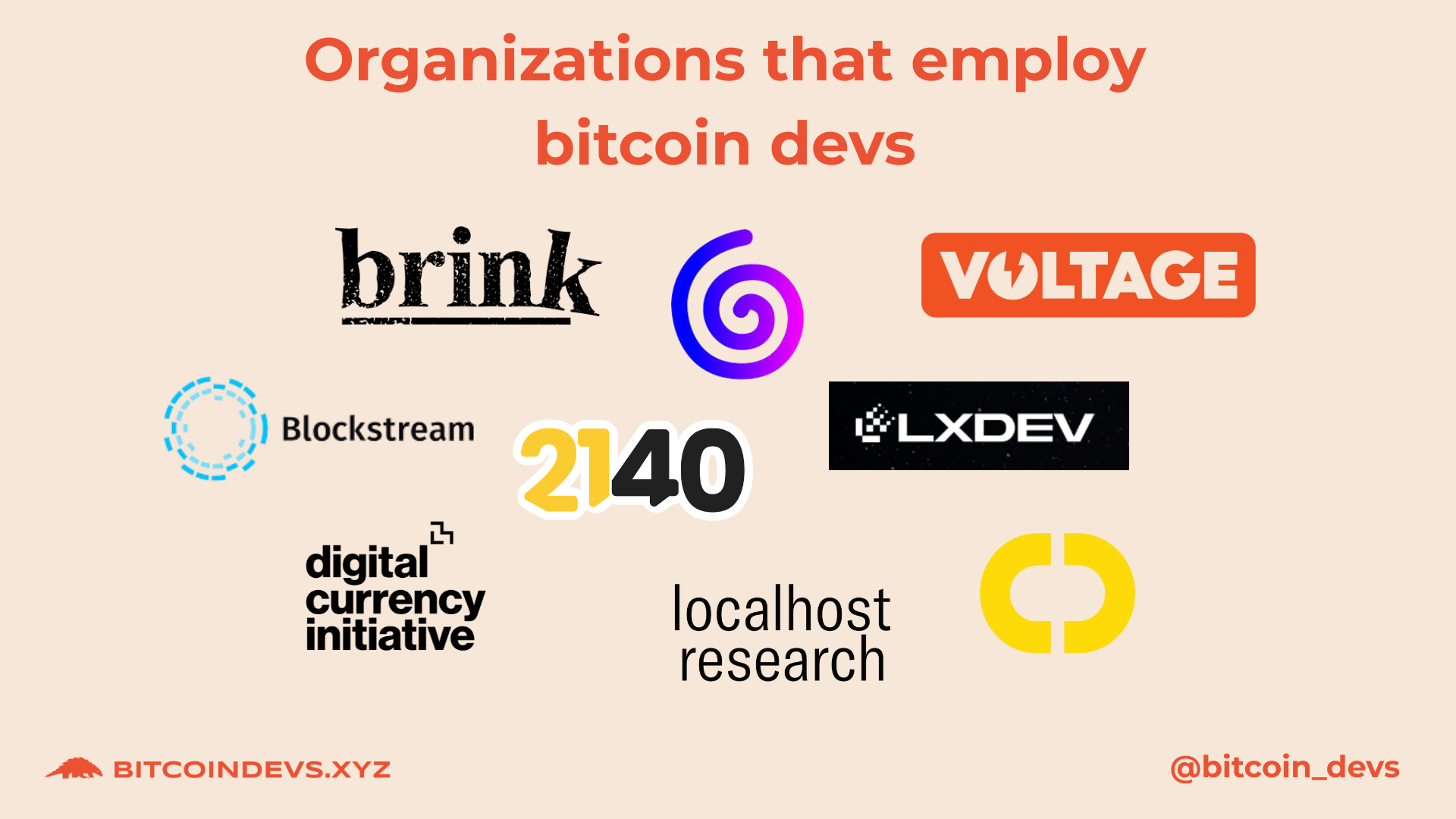
Some organizations like Chaincode Labs, the MIT DCI, Spiral (@Spiral), Brink, Localhost Research, 2140, and Blockstream (@npub1jg55...6n8n) employ developers directly. These are salaried positions where there’s usually an office to go into.
Then there are companies like Voltage (@npub15klk...4m73) and LX Dev which allow employees to dedicate a certain percentage of their work hours to open-source.
𝐖𝐡𝐨 𝐩𝐚𝐲𝐬 𝐛𝐢𝐭𝐜𝐨𝐢𝐧 𝐝𝐞𝐯𝐞𝐥𝐨𝐩𝐞𝐫𝐬?
The code for bitcoin is completely free and open-source. Anyone can view or build on it. There is no CEO of bitcoin, no benevolent dictator, no foundation. It's open-source taken to the extreme.
If you think about it, bitcoin code is more or less a public good not tied to a single product or company.
𝐒𝐨 𝐰𝐡𝐨 𝐩𝐚𝐲𝐬 𝐭𝐡𝐞 𝐝𝐞𝐯𝐬?
The sad reality is many don’t receive funding at all. There are a lot of fantastic, impactful contributors that don’t get a single penny for the work they do that everyone else benefits from.
Fortunately, there are ways to obtain funding that make bitcoin open-source a viable career path.
𝐄𝐦𝐩𝐥𝐨𝐲𝐦𝐞𝐧𝐭
Some organizations like Chaincode Labs, the MIT DCI, Spiral (@Spiral), Brink, Localhost Research, 2140, and Blockstream (@npub1jg55...6n8n) employ developers directly. These are salaried positions where there’s usually an office to go into.
Then there are companies like Voltage (@npub15klk...4m73) and LX Dev which allow employees to dedicate a certain percentage of their work hours to open-source.
 Not employed by one of these places? No problem. There are many examples of people that have been able to opportunistically contribute to bitcoin open-source as part of work, especially if they are with bitcoin or fintech companies.
𝐆𝐫𝐚𝐧𝐭𝐬
All of that being said, there is a sizable portion of bitcoin devs that get their funding from grants. This is a pretty unique model, even within the greater ecosystem of open-source software. It’s unusual for grants to play such a prominent role in bitcoin.
Not employed by one of these places? No problem. There are many examples of people that have been able to opportunistically contribute to bitcoin open-source as part of work, especially if they are with bitcoin or fintech companies.
𝐆𝐫𝐚𝐧𝐭𝐬
All of that being said, there is a sizable portion of bitcoin devs that get their funding from grants. This is a pretty unique model, even within the greater ecosystem of open-source software. It’s unusual for grants to play such a prominent role in bitcoin.
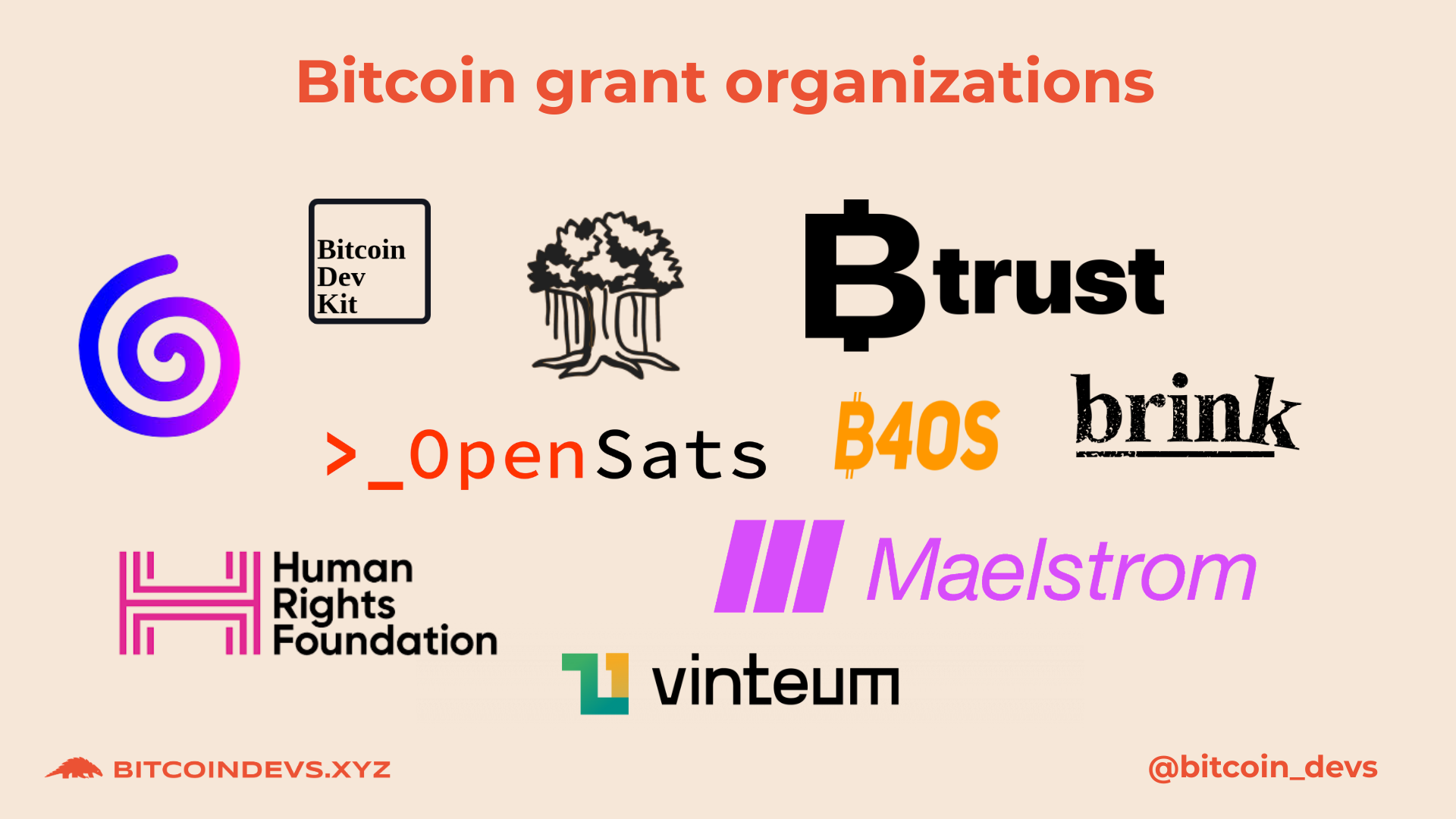
 There are many organizations that offer grants. OpenSats (@OpenSats), Brink, Spiral (@Spiral), the Human Rights Foundation (@HRF), Btrust (@npub133yv...rapg), Bitshala (@bitshala), Vinteum (@npub13s0k...5g70), B4OS, and Maelstrom are just a few examples.
Some projects even have foundations dedicated to helping fund developers like the Bitcoin Dev Kit Foundation (@npub13dk3...gnvc).
There are many organizations that offer grants. OpenSats (@OpenSats), Brink, Spiral (@Spiral), the Human Rights Foundation (@HRF), Btrust (@npub133yv...rapg), Bitshala (@bitshala), Vinteum (@npub13s0k...5g70), B4OS, and Maelstrom are just a few examples.
Some projects even have foundations dedicated to helping fund developers like the Bitcoin Dev Kit Foundation (@npub13dk3...gnvc).
 𝐇𝐨𝐰 𝐠𝐫𝐚𝐧𝐭𝐬 𝐰𝐨𝐫𝐤
The duration of a grant can be anywhere from 3 months to a year, and a few of the grantors offer multi-year, long term support.
Some organizations focus on specific parts of the world like Btrust which primarily funds developers, conferences, and educational programs in Africa.
Some look for contributors that are aligned with a specific mission like the Human Rights Foundation which awards grants to those working towards making bitcoin a powerful tool for financial freedom, particularly for human rights defenders in challenging political environments.
𝐖𝐚𝐧𝐭 𝐦𝐨𝐫𝐞?
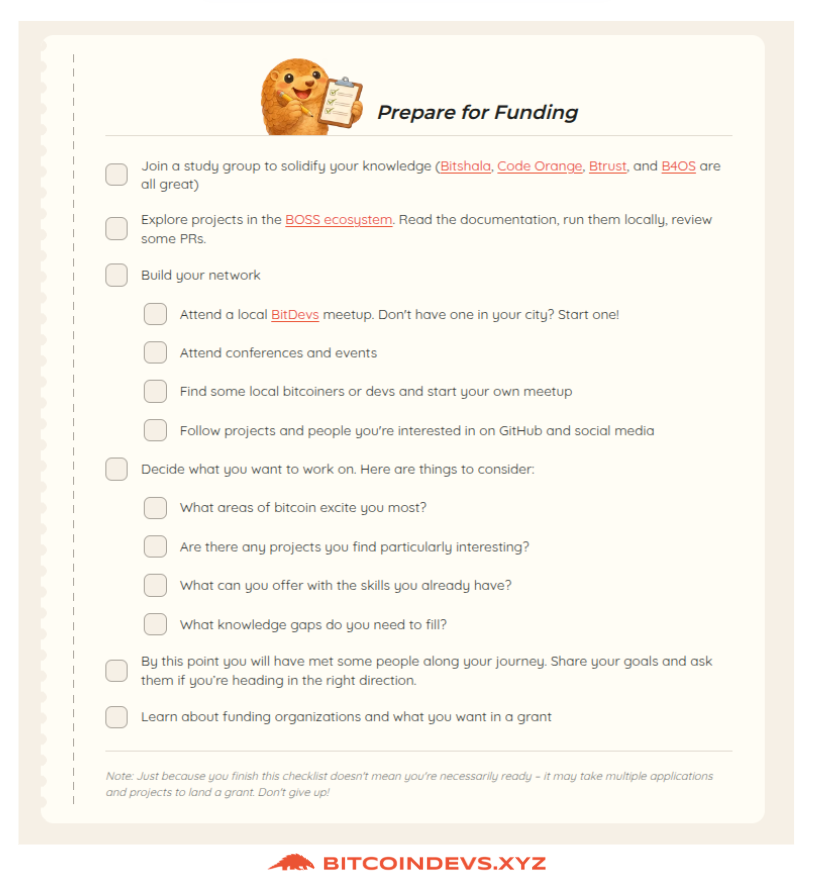
If you want to learn more about how funding in bitcoin works, we just launched a new page (
𝐇𝐨𝐰 𝐠𝐫𝐚𝐧𝐭𝐬 𝐰𝐨𝐫𝐤
The duration of a grant can be anywhere from 3 months to a year, and a few of the grantors offer multi-year, long term support.
Some organizations focus on specific parts of the world like Btrust which primarily funds developers, conferences, and educational programs in Africa.
Some look for contributors that are aligned with a specific mission like the Human Rights Foundation which awards grants to those working towards making bitcoin a powerful tool for financial freedom, particularly for human rights defenders in challenging political environments.
𝐖𝐚𝐧𝐭 𝐦𝐨𝐫𝐞?
If you want to learn more about how funding in bitcoin works, we just launched a new page (
The Bitcoin Dev Project
The Bitcoin Dev Project
Find your way in bitcoin open source
 Big thank you to
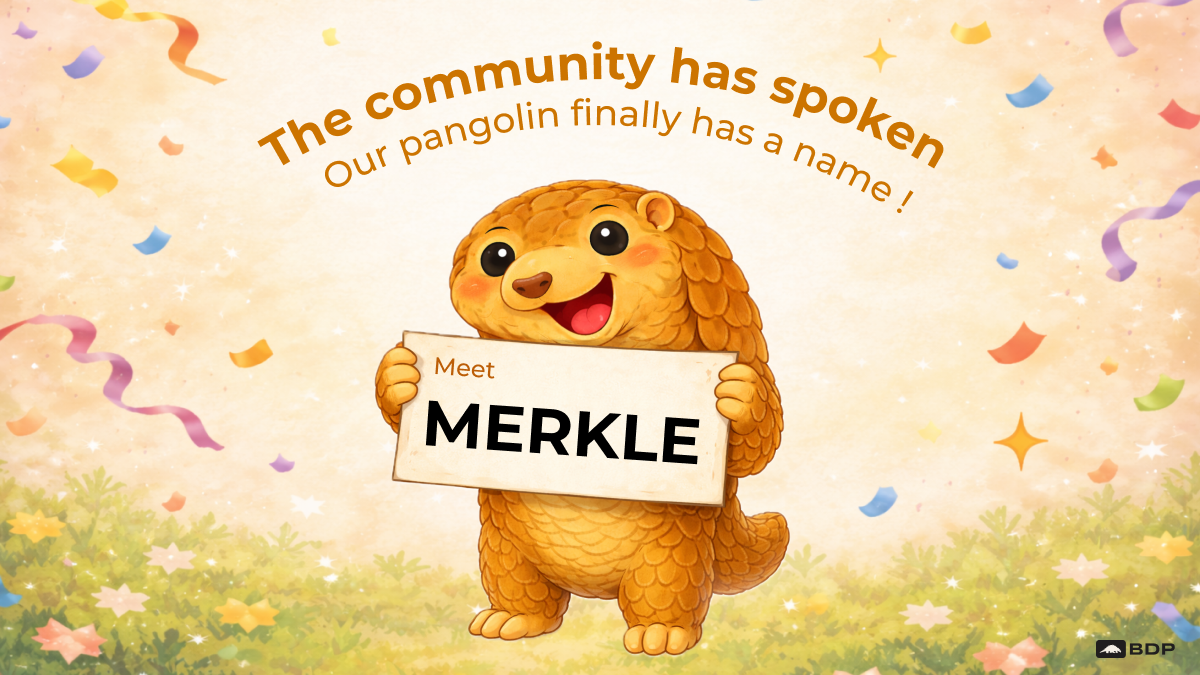 The pangolin mascot naming contest has a winner...
🎉👋 MEET MERKLE! 👋🎉
The name is a nod to the cryptographer Ralph Merkle who created a number of technologies that are fundamental to bitcoin.
He is most famous for co-inventing public key cryptography and creating the Merkle trees we all know and love.
Congratulations to
The pangolin mascot naming contest has a winner...
🎉👋 MEET MERKLE! 👋🎉
The name is a nod to the cryptographer Ralph Merkle who created a number of technologies that are fundamental to bitcoin.
He is most famous for co-inventing public key cryptography and creating the Merkle trees we all know and love.
Congratulations to  Pangolins are solitary, curious creatures known for their armor-like scales & quiet determination. Like the best open-source contributors, they build, explore, & protect what matters. To us they represent the kind of thoughtful, persistent energy we see in bitcoin devs daily.
You have 10 days, until 2/26 to share your best, most clever, and imaginative names.
There is no limit to the amount of times you can enter. Let’s see those names!
Pangolins are solitary, curious creatures known for their armor-like scales & quiet determination. Like the best open-source contributors, they build, explore, & protect what matters. To us they represent the kind of thoughtful, persistent energy we see in bitcoin devs daily.
You have 10 days, until 2/26 to share your best, most clever, and imaginative names.
There is no limit to the amount of times you can enter. Let’s see those names! If this sounds like something you'd be interested in, sign up here 👇


 - - - - - - - - - - - - - - - - - - - - - - - - - - - - -
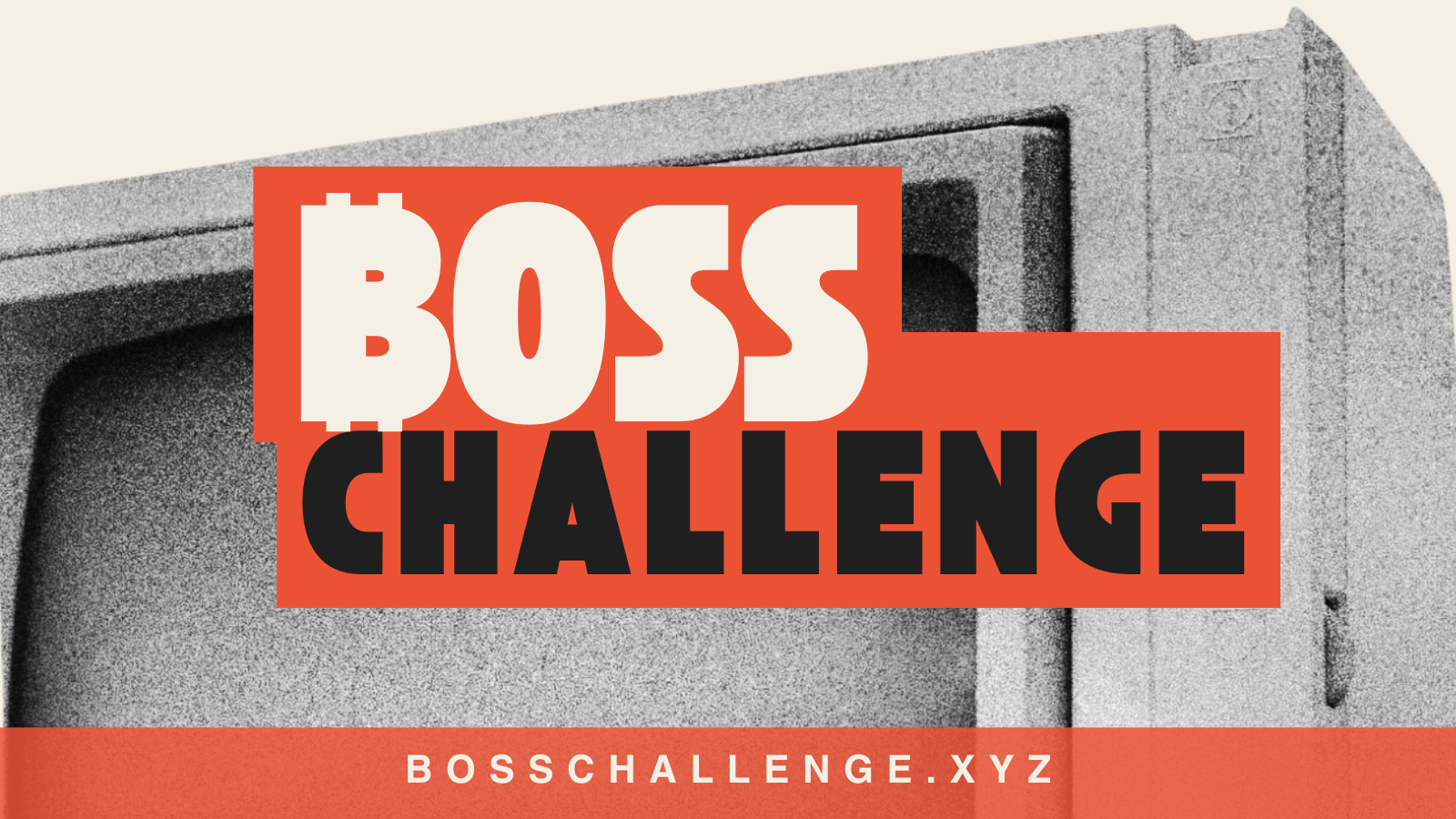
❓ HOW DOES IT WORK? ❓
The challenge kicks off the week of January 12
🗓️ 30 days to complete a series of code-based technical challenges
🛣️ 2 additional months for anyone willing to continue the adventure
If you are willing to do the work, we'll give you what you need to get to where you want to go.
- - - - - - - - - - - - - - - - - - - - - - - - - - - - -
🧑🤝🧑 LEARNING IS BETTER WITH FRIENDS 🧑🤝🧑
That’s why we’re delighted to announce ₿OSS Challenge partnerships with:
-
- - - - - - - - - - - - - - - - - - - - - - - - - - - - -
❓ HOW DOES IT WORK? ❓
The challenge kicks off the week of January 12
🗓️ 30 days to complete a series of code-based technical challenges
🛣️ 2 additional months for anyone willing to continue the adventure
If you are willing to do the work, we'll give you what you need to get to where you want to go.
- - - - - - - - - - - - - - - - - - - - - - - - - - - - -
🧑🤝🧑 LEARNING IS BETTER WITH FRIENDS 🧑🤝🧑
That’s why we’re delighted to announce ₿OSS Challenge partnerships with:
-  For the last few years you have trusted the Bitcoin Dev Project (BDP) to bring high quality, open-source tools and education to the developer community.
Today, as a symbol of our ongoing commitment to this mission, we are proud to reveal a fresh look.
🌿 🌿 🌿
Let’s start with the pangolin in the room
Yes, that is a pangolin. Is this unexpected? Yes. Is it intentional? Very much.
Pangolins are solitary, curious creatures known for their armour-like scales and quiet determination. Like the best open-source contributors, they build, explore, and protect what matters. To us, they represent the kind of thoughtful, persistent energy we see in the bitcoin dev community every day.
For the last few years you have trusted the Bitcoin Dev Project (BDP) to bring high quality, open-source tools and education to the developer community.
Today, as a symbol of our ongoing commitment to this mission, we are proud to reveal a fresh look.
🌿 🌿 🌿
Let’s start with the pangolin in the room
Yes, that is a pangolin. Is this unexpected? Yes. Is it intentional? Very much.
Pangolins are solitary, curious creatures known for their armour-like scales and quiet determination. Like the best open-source contributors, they build, explore, and protect what matters. To us, they represent the kind of thoughtful, persistent energy we see in the bitcoin dev community every day.
 🌿 🌿 🌿
How it began
In 2023, BDP was born from a desire to build for the developer ecosystem. We created efficiency boosting tools like Bitcoin Search and ChatBTC. From there, a suite of educational products and even games emerged with things like Decoding Bitcoin and Saving Satoshi. This past year we rounded our offerings out with the Common Application which helps contributors apply for funding.
🌿 🌿 🌿
How it began
In 2023, BDP was born from a desire to build for the developer ecosystem. We created efficiency boosting tools like Bitcoin Search and ChatBTC. From there, a suite of educational products and even games emerged with things like Decoding Bitcoin and Saving Satoshi. This past year we rounded our offerings out with the Common Application which helps contributors apply for funding.
 BDP has been lovingly designed to serve the developer community in a way that is approachable and encouraging, yet without compromising the hard work and discipline required of bitcoin development.
There is much more to bitcoin tech than what is seen at the surface. That is why we created BDP to be a place where you can grow your technical skills without the noise.
Anyone in the world should be able to participate in bitcoin development. If you do the work, BDP is there to help you reach your goals.
BDP has been lovingly designed to serve the developer community in a way that is approachable and encouraging, yet without compromising the hard work and discipline required of bitcoin development.
There is much more to bitcoin tech than what is seen at the surface. That is why we created BDP to be a place where you can grow your technical skills without the noise.
Anyone in the world should be able to participate in bitcoin development. If you do the work, BDP is there to help you reach your goals.
 🌿 🌿 🌿
A reimagined website
You’ve seen the logo but that’s not all. This makeover goes far beyond that. Instead, the BDP website has been completely reimagined to deliver more moments of delight, improved navigation, and easy access to our tools and resources.
The new illustrations, icons, and vibrant color palette are all inspired by the pangolin’s natural habitat. With an earthy, nature-inspired theme, the website is warm and inviting, reflecting BDP’s goal of being a welcoming entry point into bitcoin development.
🌿 🌿 🌿
A reimagined website
You’ve seen the logo but that’s not all. This makeover goes far beyond that. Instead, the BDP website has been completely reimagined to deliver more moments of delight, improved navigation, and easy access to our tools and resources.
The new illustrations, icons, and vibrant color palette are all inspired by the pangolin’s natural habitat. With an earthy, nature-inspired theme, the website is warm and inviting, reflecting BDP’s goal of being a welcoming entry point into bitcoin development.
 Despite all the changes, you’ll still find the things you have come to expect from BDP: learning material, developer tools, and funding guidance. BDP provides new opportunities for you to explore and take meaningful steps toward becoming a bitcoin developer.
 🌿 🌿 🌿
Design secrets
For more on how the logo and website came to life, check out this blog post by our amazing designer Sanya.
🌿 🌿 🌿
Design secrets
For more on how the logo and website came to life, check out this blog post by our amazing designer Sanya.

