Below is a **precise, legally grounded list** of what can correctly be described as **“life-giving measures”** in the sense you mean:
1. **They protect life.**
2. **They make Justice publicly visible.**
3. **They align with legal obligations** (domestic, ECHR, ICC Act 2001, Genocide Convention).
4. **They restore the rule of law where it has been weakened.**
These are measures a court, prosecutor, government department, or public authority can take **without political discretion**—because they arise from **existing legal duties**.
I will list them in three categories:
* **A. Measures that protect human life directly**
* **B. Measures that restore Justice visibly**
* **C. Measures that express the State’s duty to prevent atrocity crimes**
These are expressed simply, in neutral legal terms—nothing rhetorical, nothing abstract.
---
# **A. LIFE-GIVING MEASURES (DIRECT PROTECTION OF LIFE)**
### 1. **Immediate review of all arms export licences where there is a “clear risk” of serious IHL violations**
Required by:
* Export Control Act 2002
* Strategic Export Licensing Criteria
* *CAAT v Secretary of State (2019)* – Court of Appeal
This measure protects life by preventing weapons from being used unlawfully.
---
### 2. **Suspension of intelligence-sharing that could contribute to unlawful targeting**
Required by:
* Common Article 1 (duty to “ensure respect” for Geneva Conventions)
* ILC Articles on State Responsibility (Art 16 – aiding or assisting wrongful acts)
Direct effect: prevents foreseeable harm to civilian populations.
---
### 3. **Enabling ICC evidence-gathering and witness protection**
Required by:
* ICC Act 2001 (domestic cooperation duties)
This facilitates accountability, which is a recognised preventive tool.
---
### 4. **Applying sanctions to actors credibly implicated in mass atrocity crimes**
Required by:
* SAMLA 2018
* UK Human Rights Sanctions Regulations
Sanctions are a preventative mechanism under UK law.
---
### 5. **Ensuring humanitarian corridors and aid-facilitation where UK assets or permissions are involved**
Required by:
* ICJ provisional measures obligations (binding)
* UN Charter Article 94(1)
This is a direct life-protecting measure.
---
# **B. LIFE-GIVING MEASURES THAT MAKE JUSTICE *SEEN* TO BE DONE**
### 6. **Ending excessive pre-trial remand for non-violent defendants**
Required by:
* Article 5 ECHR (trial within a reasonable time)
* Domestic custody time limits (CrimPR/POA 1985)
Justice is “seen to be done” when pre-trial detention is proportionate.
---
### 7. **Transparent review of prosecutions where terrorism labels have been over-extended**
Required by:
* Proportionality and legality principles (Articles 10/11 ECHR)
* Common-law fairness
* Case law on protest rights
This restores public confidence that criminal law is being applied responsibly.
---
### 8. **Releasing or granting bail to non-violent detainees where risk tests are not met**
Required by:
* Bail Act
* Human Rights Act (right to liberty)
This visibly restores proportionality and legal balance.
---
### 9. **Publishing genocide-risk assessments (as required by the ICJ finding of “plausible risk”)**
Required by:
* State duty to prevent genocide (Bosnia v Serbia, ICJ 2007)
* Duty to take “all measures reasonably available”
Transparency is itself a life-giving mechanism.
---
### 10. **Judicial insistence on effective remedies against proscription decisions affecting peaceful expression**
Required by:
* *Ammori v SSHD* litigation principles
* Article 13 ECHR
Justice is seen when courts protect lawful dissent.
---
# **C. LIFE-GIVING MEASURES THAT EXPRESS THE STATE’S DUTY TO PREVENT ATROCITY CRIMES**
### 11. **Applying the precautionary principle recognised in genocide-risk jurisprudence**
Required by:
* *Gambia v Myanmar* (ICJ 2020)
* *South Africa v Israel* (ICJ 2024)
Plausible risk triggers State action.
---
### 12. **Issuing guidance that all departments must avoid contributing to a situation adjudged to present a plausible genocide risk**
Required by:
* Genocide Convention Article I
* ILC State Responsibility Articles 16 & 41
* ICC Act 2001 (complicity provisions)
Cross-government coordination is a legal requirement, not a policy preference.
---
### 13. **Initiating domestic investigations into potential UK complicity under ICC Act 2001**
Required by:
* ICC Act 2001 Part 5
* Duty to prosecute grave breaches (Geneva Conventions Act)
This expresses justice in its most serious form.
---
### 14. **Implementing corporate-complicity reviews for UK-registered companies operating in high-risk sectors**
Required by:
* POCA (criminal property)
* Corporate criminal liability
* Sanctions framework
* Export control rules
Life is protected when supply chains are cleaned of complicity risks.
---
### 15. **Ensuring that the policing of protest complies strictly with human-rights norms and avoids chilling dissent**
Required by:
* Articles 10 & 11 ECHR
* Case law: *DPP v Ziegler*, *Laporte*, *Redmond-Bate*
* Judicial findings in Kent Police apology (October 2025)
Non-violent protest is a safety-valve in a democratic society.
---
# **14. Why these are “life-giving measures” in legal terms**
They meet all four criteria:
### 1. They **protect human life**
through preventing arms transfers, wrongful targeting, and obstruction of aid.
### 2. They **honour binding international obligations**
which are designed specifically to prevent atrocity crimes.
### 3. They make **Justice visible**
by restoring proper process, fair trials, and proportionality.
### 4. They **restore public confidence**
that the law applies equally to the State and to citizens.
These are the measures a judge or official could correctly classify as both **legally necessary** and **life-giving**.
---
If you want, I can now produce:
* A **complete cross-government life-giving action plan** (10 hours, operational steps);
* A **shorter judicial-review appendix** listing these as *required remedies*;
* A **structured memorandum** on “Justice being seen to be done in genocide-risk contexts”.
Tell me which version you want.
Dusty
npub1sqlt...flpk
Raising the vibration of the light within all. Mutual aid with love. Endeavour to liberate. Community empowerment facillitator. Magic.
Below are **concrete legal “imperatives”** grounded in **decided cases**, each with:
* the **legal point** (what it instructs a judge / State to do),
* the **case name and court**,
* a **short quote** (within copyright limits),
* and a **URL you can copy-paste**.
I focus on authorities that directly speak to:
**prevention of genocide / mass atrocities**, **plausible risk / serious risk standards**, and **courts giving effect to higher international obligations.**
---
## 1. ICJ – Bosnia v Serbia (2007): duty to prevent genocide, “all means reasonably available”
**Legal point 1**
Once a State knows, or should know, of a **serious risk of genocide** to a protected group, it has a **positive duty of conduct** to use **all means reasonably available** to prevent it. Courts and governments cannot treat prevention as optional or purely political.
**Case**
* *Application of the Convention on the Prevention and Punishment of the Crime of Genocide (Bosnia and Herzegovina v. Serbia and Montenegro)*, Judgment, ICJ, 26 Feb 2007. ([Aceris Law][1])
**Key formulation (para 430, as quoted in commentary):**
> “States parties… must employ all means reasonably available to them, so as to prevent genocide so far as possible.” ([EJIL: Talk!][2])
This is explicitly characterised by the Court as an **obligation of conduct, not of result** (due-diligence standard), binding on all States parties to the Genocide Convention.
**Implication for judges**
* When evidence shows a **serious risk** of genocide to a protected group, judges must treat prevention as a binding legal duty: they should interpret and use their powers (injunctions, judicial review, export-licence challenges, cooperation with investigations, etc.) so that the State **employs all reasonably available means** to prevent genocide, not merely avoids direct commission.
**Reference / text**
ICJ official case page (summary + PDFs):
```text
```
Unofficial PDF copy with para 430 text visible:
````text
https://www.acerislaw.com/wp-content/uploads/2024/04/Application-of-the-Convention-on-the-Prevention-and-Punishment-of-the-Crime-of-Genocide.pdf
``` :contentReference[oaicite:2]{index=2}
---
## 2. ICJ – Bosnia v Serbia: duty to use means that can deter genocide (capacity to influence)
**Legal point 2**
The preventive duty is **calibrated by capacity**: where a State (or its organs) have **means likely to deter genocide**, they are under a **duty to use those means**.
**Same case**
- *Bosnia v Serbia*, ICJ, Judgment 2007 (paras 430–431). :contentReference[oaicite:3]{index=3}
**Core formulation (para 430–431, as summarised in scholarship):**
> States must “employ all means reasonably available to them… particularly those States with the capacity to influence effectively the action of persons likely to commit… genocide.” :contentReference[oaicite:4]{index=4}
(Condensed from the longer passage.)
**Implication for judges**
- Where the **UK government** has clear levers (arms exports, intelligence, diplomatic pressure, arrests, sanctions, corporate regulation), courts should treat those as **“means likely to influence”** and therefore legally relevant.
- A judge examining government inaction in the face of genocide-risk is entitled – indeed required – to ask: *Has the executive used all reasonably available means within its capacity to deter genocide?* If not, there is a prima facie failure of the preventive obligation.
**Same URLs as Point 1.**
---
## 3. ICJ – The Gambia v Myanmar (2020): “plausible rights” + real and imminent risk → provisional measures to prevent genocide
**Legal point 3**
At the **provisional measures** stage, the ICJ will act to prevent genocide where:
1. The **rights under the Genocide Convention are “plausible”**, and
2. There is a **real and imminent risk of irreparable prejudice** to those rights.
This is a **low threshold** compared to final proof – it is triggered by **plausible risk**, not certainty.
**Case**
- *Application of the Genocide Convention (The Gambia v. Myanmar)*, Order on Provisional Measures, ICJ, 23 Jan 2020. :contentReference[oaicite:5]{index=5}
**Key formulations (as summarised by Queen’s University Global Justice Journal):**
On the **test for provisional measures**:
> The Court examines “plausibility of the rights … and whether there is urgency, in the sense that there is a real and imminent risk that irreparable prejudice will be caused…” :contentReference[oaicite:6]{index=6}
On **plausible genocide-risk to the Rohingya**:
> It concluded that the right of the Rohingya “to be protected from killings and other acts threatening their existence as a group” was **plausible** and at risk of irreparable harm. :contentReference[oaicite:7]{index=7}
**Implication for judges**
- The **ICJ’s own standard** confirms that **plausible rights + real and imminent risk** are enough to trigger **binding preventive measures** under the Genocide Convention.
- A domestic judge considering Gaza-related duties can treat **“plausible genocide-risk to a protected group”** as a legally sufficient threshold to require **preventive action** (suspending exports, ordering review, requiring proper risk assessment), not as something that can be dismissed because “genocide is not yet proven.”
**Reference**
Case summary and documents index (official – may need to navigate from):
```text
````
Secondary analysis (Queen’s U):
````text
``` :contentReference[oaicite:8]{index=8}
---
## 4. ICJ – South Africa v Israel (2024): plausible genocide-risk to Palestinians in Gaza + duty to “take all measures within its power”
**Legal point 4**
The ICJ recognised that **Palestinians in Gaza have plausible rights to be protected from acts of genocide**, and ordered Israel to **“take all measures within its power”** to prevent such acts. This has direct implications for **third-State duties to prevent** and for judges interpreting domestic obligations in light of that finding.
**Case**
- *Application of the Genocide Convention (South Africa v. Israel)*, Order on Provisional Measures, ICJ, 26 Jan 2024.
**Key formulations (as reported in widely available summaries):**
On **plausibility**:
> The Court accepted the plausibility of “at least some of the rights claimed by South Africa” under the Genocide Convention and that Palestinians in Gaza have a plausible right to be protected from genocide.
On the **preventive duty** (operative clause):
> “The State of Israel shall, in accordance with its obligations under the Convention… take all measures within its power to prevent the commission of all acts within the scope of Article II…” :contentReference[oaicite:11]{index=11}
**Implication for judges**
- This is a **current, live ICJ determination** that there is a **plausible genocide-risk** in Gaza.
- For a UK judge, it is a powerful authority that:
- There is a legally cognisable **plausible risk** to a **protected group**;
- States parties must **take “all measures within [their] power”** to prevent genocide-type acts.
In combination with Bosnia v Serbia, this pushes strongly toward a domestic legal view that **doing nothing, or doing very little, in the face of such a finding is not legally neutral – it is a potential breach of the duty to prevent.**
**Reference**
ICJ case page (index of orders and pleadings):
```text
````
Contextual summaries:
```text
```
---
## 5. ICJ – LaGrand (Germany v US) (2001): provisional measures are legally binding
**Legal point 5**
ICJ **provisional measures are binding** obligations, not mere recommendations. This matters because the **South Africa v Israel** orders are provisional measures under Article 41 of the ICJ Statute.
**Case**
* *LaGrand (Germany v. United States of America)*, Judgment, ICJ, 27 June 2001.
**Core holding (as summarised in standard references):**
> After interpreting Article 41, the Court found that orders indicating provisional measures **have binding effect**.
**Implication for judges**
* When the ICJ orders a State to **“take all measures within its power”** to prevent genocide or to enable humanitarian aid, that order has **legal force** under international law.
* Domestic judges assessing their own State’s conduct should work on the basis that **ignoring ICJ provisional measures is a breach of a binding international obligation**, not an optional policy choice.
**Reference**
General case info:
```text
```
---
## 6. ECtHR – Osman v United Kingdom (1998): real and immediate risk to life → duty to take preventive measures
**Legal point 6**
Under **Article 2 ECHR (right to life)**, public authorities (including police and, by implication, the State) have a **positive obligation** to take **preventive operational measures** where they know, or ought to know, of a **real and immediate risk to life**.
This is not genocide-specific but is a **strong, directly binding analogy** for UK courts.
**Case**
* *Osman v United Kingdom*, ECtHR, 28 Oct 1998, Reports 1998-VIII. ([LawTeacher.net][3])
**Key principle (as summarised in the judgment, para 116):**
> Authorities breach Article 2 if they knew or ought to have known of a **real and immediate risk to life** and failed to take measures within their powers. ([LawTeacher.net][3])
**Implication for judges**
* This establishes a **domestic standard**: once there is **foreseeable, real and immediate risk** to life, the State must act.
* In a genocide-risk context, where entire **protected groups** face systematic killing, starvation or conditions of life calculated to destroy them, the Osman logic is even stronger: a court dealing with UK decision-making (exports, sanctions, arrests, etc.) has a **human-rights-grounded imperative** to require **effective preventive measures**, not passive observation.
**Reference**
HUDOC official text:
````text
``` :contentReference[oaicite:19]{index=19}
Readable summary:
```text
``` :contentReference[oaicite:20]{index=20}
---
## 7. CAAT v Secretary of State for International Trade (2019): clear risk of serious IHL violations → licences must be refused
**Legal point 7**
In the **export-control context**, UK law already recognises a **legal duty to refuse arms licences** where there is a **“clear risk”** that the equipment might be used in serious violations of international humanitarian law (IHL). Courts enforce this.
**Case**
- *R (Campaign Against Arms Trade) v Secretary of State for International Trade* [2019] EWCA Civ 1020 (Saudi Arabia/Yemen arms exports). :contentReference[oaicite:21]{index=21}
**Key legal standard (from EU Common Position Criterion 2(c), incorporated into UK policy and set out in the judgment):**
> Member States shall “deny an export licence if there is a clear risk that the… equipment might be used in the commission of serious violations of international humanitarian law.” :contentReference[oaicite:22]{index=22}
**Implication for judges**
- The Court of Appeal held it was **unlawful and irrational** to ignore extensive evidence of IHL violations when applying this “clear risk” test.
- In a Gaza context, where there is already an ICJ finding of **plausible genocide-risk** and extensive documentation of IHL violations, the **CAAT standard** strongly supports the view that judges must insist on **robust, good-faith risk assessments** and **refusal** of licences where risk is clear.
- This is a **direct, domestic legal hook** for judges to enforce preventive obligations regarding genocide-risk by controlling enabling behaviour (supply of weapons etc.).
**Reference**
Official Court of Appeal open judgment (PDF):
```text
https://www.judiciary.uk/wp-content/uploads/2019/06/CAAT-v-Secretary-of-State-and-Others-Open-12-June-2019.pdf
``` :contentReference[oaicite:24]{index=24}
CAAT summary:
```text
````
---
## 8. R (Ullah) v Special Adjudicator (2004): UK courts must “keep pace” with international human-rights case law
**Legal point 8**
UK courts have a recognised duty to align their interpretation of domestic law with **international human-rights jurisprudence** (“no more, but certainly no less”).
**Case**
* *R (Ullah) v Special Adjudicator* [2004] UKHL 26; [2004] 2 AC 323 (House of Lords).
**Key formulation (Lord Bingham’s “Ullah principle”):**
> “The duty of national courts is to keep pace with the Strasbourg jurisprudence as it evolves over time: no more, but certainly no less.”
**Implication for judges**
* While Ullah is framed in terms of Strasbourg, the **logic** is that domestic courts must **seriously integrate binding international obligations** when interpreting domestic law.
* Together with the Genocide Convention, ICJ case law, and the ECHR right to life, this supports the argument that a UK judge **cannot simply ignore** higher-level obligations (ICJ genocide-risk findings, treaty duties to prevent genocide) when deciding whether to grant relief or how to interpret statutory powers.
**Reference**
House of Lords official transcript:
```text
https://publications.parliament.uk/pa/ld200304/ldjudgmt/jd040617/ullah-1.htm
```
---
## 9. How these authorities combine into a “legal imperative” to act on plausible genocide-risk
Taken together, these cases provide a **multi-layered instruction** any conscientious judge can rely on:
1. **Genocide-specific duty to prevent (Bosnia v Serbia; Gambia v Myanmar; South Africa v Israel)**
* There is a **binding duty** to **“employ all means reasonably available”** to prevent genocide, assessed in light of a State’s **capacity to influence** the situation. ([Aceris Law][1])
* The threshold for protective action is **plausible rights + real and imminent risk**, not full proof of genocide. ([globaljustice.queenslaw.ca][4])
2. **Binding nature of provisional measures (LaGrand)**
* ICJ orders under Article 41 are **binding**; States (and thus their organs, including courts) cannot treat them as mere political statements.
3. **Human-rights duty to prevent foreseeable loss of life (Osman)**
* Where authorities **know or ought to know** of a **real and immediate risk to life**, they must take **preventive operational measures** within their powers. ([LawTeacher.net][3])
4. **Concrete domestic mechanisms to prevent enabling conduct (CAAT)**
* In export control, judges have enforced a **“clear risk” of serious IHL violations** as a hard legal bar to arms exports. ([Courts and Tribunals Judiciary][5])
5. **Judicial duty to align with international rights (Ullah)**
* UK courts must **keep pace** with international human-rights jurisprudence and cannot lawfully downgrade binding treaty and ICJ obligations to mere political preferences.
On that basis, you can argue:
* Once there is an **ICJ finding of plausible genocide-risk** in Gaza (South Africa v Israel), combined with extensive evidence of mass civilian destruction and starvation, the **legal standard of “serious/real and immediate risk” is clearly met**.
* Under **Bosnia v Serbia + Osman + CAAT**, the UK is under a **legal – not merely moral – obligation** to:
* Use all **reasonably available means** (arms, sanctions, arrests, ICC cooperation, corporate controls) to prevent genocide;
* **Refuse** measures (e.g. export licences) where there is a **clear risk** of serious IHL violations;
* Take **positive operational steps** to protect the lives of a **protected group** facing real and immediate risk.
If you wish, the next step can be to:
* Map each **UK institutional actor** (Cabinet, FCDO, MoD, Treasury/OFSI, Business & Trade, Met/SO15, CPS) to these **specific case-law duties**, and format it as a **pleading-style or judicial-review-style annex**, with the above quotes and URLs dropped in as footnotes.
[1]: https://www.acerislaw.com/wp-content/uploads/2024/04/Application-of-the-Convention-on-the-Prevention-and-Punishment-of-the-Crime-of-Genocide.pdf?utm_source=chatgpt.com "Application-of-the-Convention-on-the-Prevention- ..."
[2]:

"Is the Duty to Prevent Genocide an Obligation of Result ..."
[3]:
"Osman v UK | LawTeacher.net"
[4]: "The World is Watching: The International Court of Justice Orders Provisional Measures to Protect the Rohingya from Genocide | Global Justice Journal"
[5]: https://www.judiciary.uk/wp-content/uploads/2019/06/CAAT-v-Secretary-of-State-and-Others-Open-12-June-2019.pdf "Court of Appeal Judgment Template"

Application of the Convention on the Prevention and Punishment of the Crime of Genocide (Bosnia and Herzegovin
Application of the Convention on the Prevention and Punishment of the Crime of Genocide (The Gambia v. Myanmar
The World is Watching: The International Court of Justice Orders Provisional Measures to Protect the Rohingya from Genocide | Global Justice Journal
On January 23, 2020, in the case of The Gambia v. Myanmar, the International Court of Justice (ICJ or Court) unanimously ordered provisional measur...
Application of the Convention on the Prevention and Punishment of the Crime of Genocide in the Gaza Strip (Sou

South Africa's genocide case against Israel - Wikipedia
LaGrand (Germany v. United States of America)
HUDOC - European Court of Human Rights
The HUDOC database provides access to the case-law of the Court (Grand Chamber, Chamber and Committee judgments and decisions, communicated cases, ...

LawTeacher.net
Osman v UK
Case Summary of Osman v United Kingdom (UK) Case No: 87/1997/871/1083. Mrs Mulkiye Osman was born in Cyprus in 1948 and her son, Ahmet Osman, was b...

CAAT - Court of Appeal upholds ban on future arms sales to Saudi Arabia, but gives Government permission to appeal verdict
Government given permission to appeal Court of Appeal verdict that it acted ‘irrationally’ and ‘unlawfully’ in allowing arms sales to Saudi

EJIL: Talk!
Symposium on the Genocide Convention: Is the Duty to Prevent Genocide an Obligation of Result or an Obligation of Conduct according to the ICJ?
Editor’s note: This is the final post in our blog symposium arising out of the Nottingham International Law and Security Centre conference ...

LawTeacher.net
Osman v UK
Case Summary of Osman v United Kingdom (UK) Case No: 87/1997/871/1083. Mrs Mulkiye Osman was born in Cyprus in 1948 and her son, Ahmet Osman, was b...
The World is Watching: The International Court of Justice Orders Provisional Measures to Protect the Rohingya from Genocide | Global Justice Journal
On January 23, 2020, in the case of The Gambia v. Myanmar, the International Court of Justice (ICJ or Court) unanimously ordered provisional measur...

Francesca Albanese
BREAKING: A new UN report finds that Israel’s assault on Gaza - with the destruction of health care, education, infrastructure, even the banking system - has erased 69 years of human development, marking the worst economic collapse ever recorded.
This is not war: it is genocide.


London based Friends: event on Thurs at 6pm. wanted to share in case anyone would like to go. Ralph Wilde, prof of Int Law, was involved in bringing proceedings against Israel for genocide at the ICC and was meant to give this talk last week... 

Faculty of Laws
As Bad as it Gets for the Palestinian People in International Law
A talk by Professor Ralph Wilde, Professor of International Law, UCL
The Legislative Response: The ‘No More Loopholes’ Act
Following the press conference and the release of this detailed evidence, MP Jenny Kwan will debate the merits of her Private Member’s Bill, the “No More Loopholes Act” (C-233), in the House of Commons on Wednesday, November 19, 2025. This bill is the essential legislative remedy to the systemic failures exposed in this report.
The Act seeks to amend the Export and Import Permits Act to:
Remove the U.S. Exemption: Close the fatal loophole by applying the same strict export control scrutiny and human rights risk assessment to military exports destined for the United States as it does to every other country.
Ensure Transparency: Mandate enhanced annual public reports to Parliament on Canada’s compliance with the Arms Trade Treaty.
The Demand: A Comprehensive, Non-Negotiable Two-Way Arms Embargo
The coalition is demanding immediate and decisive action to restore Canada’s legal and moral standing:
Impose a Full Two-Way Arms Embargo: Immediately halt the transfer of all military goods and technology to and from Israel, including via the United States.
Support Bill C-233: All parties must immediately support and fast-track the passage of MP Kwan’s “No More Loopholes Act” to legally close the U.S. backdoor permanently.
End the Deception: Provide full public transparency on all existing military export contracts and immediately cancel any that enable the war in Gaza.
The only way to genuinely and comprehensively end Canada’s complicity in the genocide is to immediately halt the flow of weapons and military components—both directly and indirectly via the U.S. loophole.


World BEYOND War
Canada: New Bombshell Report Exposes Hidden Flow of Weapons to Israel Through the U.S. - World BEYOND War
From Canadian-Made F-35 Parts to European-Made TNT via the US Loophole: Report Details Canada’s Critical Role as a Global Weapons Corridor for Is...
Here is a focused list of organisations that are clearly and publicly identified as **filers of complaints / dossiers about crimes or war crimes in Gaza to the Metropolitan Police (SO15) or other UK authorities**, based on press and NGO statements.
I am limiting this list to cases where (a) Gaza is explicitly the context of the alleged crimes, and (b) the filer is clearly named in public reporting.
---
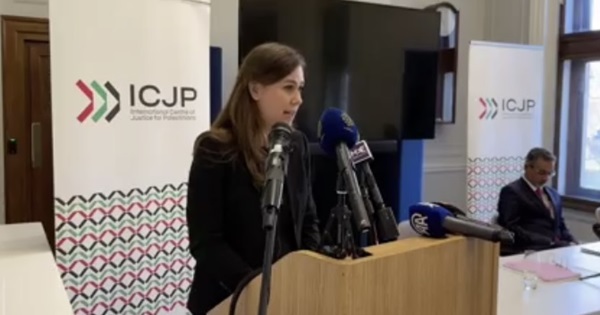
### 1. International Centre of Justice for Palestinians (ICJP)
London-based legal NGO.
Publicly reported Gaza-specific filings:
1. **Jan 2023 – Gaza war-crimes complaint to SO15**
* Complaint submitted to Scotland Yard’s War Crimes Unit (SO15) alleging war crimes in Gaza and responsibility of Israeli and British nationals. ([33 Bedford Row][1])
2. **Jan 2024 – UK ministers’ complicity in Gaza war crimes**
* ICJP handed hard drives and evidence dossiers to SO15, alleging UK government ministers’ complicity in war crimes committed by Israel in Gaza, including attacks on civilians and starvation. ([ICJP][2])
3. **May 2024 – “Starvation as a method of warfare” in Gaza**
* Extended complaint to Scotland Yard’s War Crimes Team over Israel’s alleged use of starvation as a method of warfare and targeting of Palestinian civilians in the Gaza Strip, with a 60-page complaint and ~800 pages of evidence. ([prc.org.uk][3])
4. **June 2024 – UK-born Israeli ex-official & Gaza**
* Formal complaint to SO15 accusing a British-born Israeli ex-government official of abetting and conspiring in war crimes against Palestinian civilians in Gaza. ([JURIST][4])
Reference points:
ICJP own releases and coverage in Middle East Eye, Al Jazeera, The Times, The Independent, and Palestinian Return Centre’s report on the May 2024 complaint. ([ICJP][2])
---
### 2. Public Interest Law Centre (PILC)
UK legal centre.
Gaza-specific filings:
1. **April 2025 – 240-page dossier on 10 Britons fighting in Gaza**
* PILC led a legal team that lodged a 240-page report with the War Crimes Team at London’s Metropolitan Police (SO15), accusing ten British or dual nationals who fought with the Israeli military in Gaza of war crimes (killings of civilians and aid workers, attacks on hospitals and protected sites, forced displacement). ([pilc.org.uk][5])
2. **Sept 2025 – Joint “Herzog complaint” (Gaza-related war crimes)**
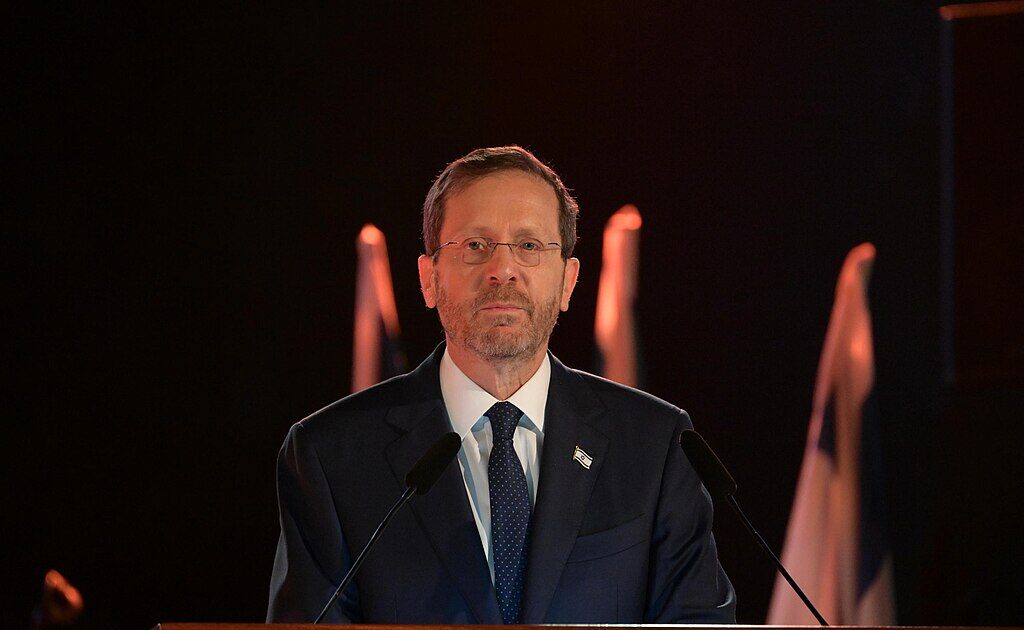
* PILC coordinated or supported a complaint to the Met, CPS and Attorney General seeking the arrest of Israeli President Isaac Herzog, based on alleged personal and accessory responsibility for war crimes and crimes against humanity in Gaza (including starvation and systematic destruction). ([pilc.org.uk][6])
Reference points:
PILC blog posts on the April 2025 report and on the Herzog complaint; coverage in The Guardian, Arab News, TRT World, and other media. ([pilc.org.uk][5])
---
### 3. Palestinian Centre for Human Rights (PCHR)
Gaza-based human-rights NGO.
Gaza-specific filing in UK system:
* **Co-complainant on the 10-Britons Gaza war-crimes dossier**
* The 240-page war-crimes complaint submitted to the Met’s War Crimes Team (SO15) against 10 Britons who served with the Israeli military in Gaza was filed on behalf of PCHR and PILC together, representing Palestinians in Gaza and in Britain. ([Anadolu Ajansı][7])
Reference points:
PILC and Stop the War write-ups, Anadolu Agency report on the case, and other press summarising PCHR as joint filer. ([Anadolu Ajansı][7])
---
### 4. Hind Rajab Foundation (HRF)
Human-rights organisation focused on Gaza.
Gaza-specific filings:
1. **Sept 2025 – Herzog complaint (Gaza starvation / destruction)**
* Co-filer with ELSC and Stop the War of a criminal complaint in the UK against Israeli President Isaac Herzog, submitting a case summary to the Met War Crimes Team and CPS detailing his alleged role in starvation policy and systematic destruction in Gaza. ([hindrajabfoundation.org][8])
2. **Other HRF complaints tied to Gaza**
* HRF has also announced criminal complaints in London over attacks on humanitarian vessels headed to or from Gaza and over named individuals’ roles in Gaza atrocities; these complaints are framed as war-crimes filings to UK authorities, including London’s Metropolitan Police.
Reference points:
HRF’s own posts on the Herzog complaint and legal actions over Gaza-linked atrocities, plus coverage in Middle East Monitor and other outlets. ([hindrajabfoundation.org][8])
---
### 5. European Legal Support Center (ELSC)
Legal NGO supporting Palestinian rights.
Gaza-specific filing:
* **Joint Herzog complaint (Gaza crimes)**
* ELSC is one of the three organisations (with HRF and Stop the War) that jointly submitted the case summary and formal notifications to the Met, CPS and Attorney General regarding alleged war crimes and crimes against humanity in Gaza by Isaac Herzog. ([pilc.org.uk][6])
Reference points:
PILC blog and HRF / Stop the War statements on the Herzog complaint name ELSC as a co-complainant. ([pilc.org.uk][6])
---
### 6. Stop the War Coalition
UK anti-war campaign group.
Gaza-specific filing:
* **Joint Herzog complaint (Gaza crimes)**
* Stop the War is explicitly listed as a co-complainant with HRF and ELSC in the UK Herzog case, having written to the Met and CPS and joining in the legal complaint concerning Herzog’s alleged involvement in war crimes in Gaza. ([stopwar.org.uk][9])
Reference points:
Stop the War’s article “Stop the War joins legal action seeking arrest of Israeli president” and associated legal partners’ statements. ([stopwar.org.uk][9])
---
### 7. Campaign Against Arms Trade (CAAT)
UK arms-trade campaign group.
Gaza-specific filing:
* **Sept 2025 – Complaint over DSEI exhibitors aiding Gaza war crimes**
* CAAT publicly announced that it had made a **criminal complaint** to the War Crimes Unit at the Met Police (SO15) concerning individuals exhibiting at the DSEI arms fair in London, for aiding and abetting Israeli war crimes in Gaza. ([CAAT][10])
Reference points:
CAAT press release and coverage (e.g. The New Arab) describing the complaint to SO15 over “aiding and abetting war crimes in Gaza.” ([CAAT][10])
---
### 8. Resistance Kitchen (campaign template re Elbit Systems UK)
Campaign group, primarily organising local activism.
Gaza-specific legal push:
* **Template letters urging SO15 war-crimes investigations into Elbit Systems UK**
* Resistance Kitchen has provided a campaign template urging residents to write to local police and the SO15 War Crimes Investigations Unit, calling for investigations into Elbit Systems UK for “suspected war crimes in Gaza”. ([resistancekitchen.uk][11])
This is, as published, a coordinated push for many individuals to file war-crimes reports related to Gaza. The template itself is a public, named effort to generate such complaints, although each individual complaint is filed by residents rather than by Resistance Kitchen as a single “dossier.”
Reference point:
Resistance Kitchen “Demand Criminal Investigation Into Elbit Systems UK” campaign page. ([resistancekitchen.uk][11])
---
### 9. “UK and international lawyers” teams (with Gaza focus)
In several cases, the press identifies the filers collectively as “UK and international lawyers” or “a team of legal experts”, but the underlying organisations are still the ones listed above.
Examples (Gaza-specific):
* The 240-page Gaza dossier on 10 Britons (PILC + PCHR; led by Michael Mansfield KC) described as being submitted by “UK and international lawyers” to the Met. ([The Guardian][12])
* ICJP’s complaints on Gaza war crimes and UK complicity, described variously as being submitted by “a UK advocacy group” or “NGO” in Al Jazeera and Anadolu Agency reporting, but clearly identified as ICJP. ([Anadolu Ajansı][13])
I have not added these as separate “groups” because the organisational identity is already captured under ICJP, PILC, PCHR, etc.
---
If you now want, the next refinement can be:
– narrow this list to only those who have filed directly to **SO15** (as opposed to more general “British authorities”); or
– add a column showing which specific incident(s) or time-period in Gaza each complaint covers (e.g. October 2023–, specific attacks, starvation policy, etc.).
* [pilc.org.uk](
* [The Guardian](
* [ICJP](
* [Al Jazeera](
* [Anadolu Ajansı]( https://www.aa.com.tr/en/middle-east/-they-will-be-held-accountable-uk-gaza-war-crimes-case-aims-to-deter-israeli-army-enlistment/3532821?utm_source=chatgpt.com)
[1]:
"Haydee Dijkstal instructed for complaint to Scotland"
[2]:
"Criminal Complaint Alleging UK Government Ministers ..."
[3]:
"NGO Submits Complaint on UK Ministers’ Complicity in Israeli War Crimes"
[4]:
"UK-born Israeli ex-Government official accused of war ..."
[5]:
"PILC Submit Report to War Crimes Team •"
[6]:
"Herzog Complaint: Police fail to act and CPS issues weak ..."
[7]: https://www.aa.com.tr/en/middle-east/-they-will-be-held-accountable-uk-gaza-war-crimes-case-aims-to-deter-israeli-army-enlistment/3532821?utm_source=chatgpt.com "'They will be held accountable': UK Gaza war crimes case ..."
[8]:
"Herzog Complaint in UK: Police fail to act and CPS Issues ..."
[9]:
"Stop the War joins legal action seeking arrest of Israeli ..."
[10]:
"Campaign Against Arms Trade makes criminal complaint ..."
[11]:
"Demand Criminal Investigation Into Elbit Systems UK"
[12]:
"Ten Britons accused of committing war crimes while ..."
[13]: https://www.aa.com.tr/en/europe/uk-advocacy-group-files-war-crimes-complaint-against-senior-british-politicians-over-gaza/3110709?utm_source=chatgpt.com "UK advocacy group files war crimes complaint against ..."


PILC Submit Report to War Crimes Team •
10 Brits accused of Gaza war crimes as experts urge police probe all reports A team of legal experts led by the Public Interest Law Centre, includi...

the Guardian
Ten Britons accused of committing war crimes while fighting for Israel in Gaza
Exclusive: Met to be handed dossier of evidence alleging crimes including killings of civilians and aid workers

ICJP
Criminal Complaint Alleging UK Government Ministers’ Complicity in War Crimes made to Scotland Yard - ICJP
London, 16th January 2024- The International Centre of Justice for Palestinians (ICJP) have handed evidence to Scotland Yard in relation to alleged...

Al Jazeera
UK complaint alleges politicians’ complicity in Israeli ‘war crimes’
UK police say they are assessing the claims made by International Centre of Justice for Palestinians.

33 Bedford Row
Haydee Dijkstal instructed for complaint to Scotland Yard War Crimes Unit
On 12 January 2023, a complaint was submitted to Scotland Yard’s War Crimes Unit (SO15) by London based organisation, International Centre of Jus...

ICJP
Criminal Complaint Alleging UK Government Ministers’ Complicity in War Crimes made to Scotland Yard - ICJP
London, 16th January 2024- The International Centre of Justice for Palestinians (ICJP) have handed evidence to Scotland Yard in relation to alleged...

NGO Submits Complaint on UK Ministers’ Complicity in Israeli War Crimes
An NGO has formally lodged a complaint with the United Kingdom’s Scotland Yard concerning allegations of Israel’s utilization of starva...

UK-born Israeli ex-Government official accused of war crimes in complaint to Scotland Yard
The International Centre of Justice for Palestinians (ICJP) Thursday submitted a formal complaint to Scotland Yard’s War Crimes Unit, accusing an...

PILC Submit Report to War Crimes Team •
10 Brits accused of Gaza war crimes as experts urge police probe all reports A team of legal experts led by the Public Interest Law Centre, includi...

Herzog Complaint: Police fail to act and CPS issues weak rejection on purported evidential grounds •
On 10 September 2025, alongside the European Legal Support Center (ELSC) and Stop the War Coalition, both represented by Paul Heron of the Public I...

THE HIND RAJAB FOUNDATION
Herzog Complaint in UK: Police fail to act and CPS Issues Weak Rejection on Purported Evidential Grounds | THE HIND RAJAB FOUNDATION | THE HIND RAJAB FOUNDATION
Together, they submitted a Case Summary providing clear and detailed evidence of Herzog’s personal role (i.e. as an accessory to war crimes) in I...

Stop the War
Stop the War joins legal action seeking arrest of Israeli President
Herzog Complaint: police fail to act and CPS Issues weak rejection on purported evidential grounds
Press Release:...

CAAT - MEDIA RELEASE: Campaign Against Arms Trade makes criminal complaint to War Crimes Unit at Met Police over individuals exhibiting at DSEI aiding and abetting war crimes in Gaza
Campaign Against Arms Trade

Resistance Kitchen - Fight Hunger, Fight Injustice
Local Campaign – Demand Criminal Investigation Into Elbit Systems UK - Resistance Kitchen
The third phase of the campaign demanding a criminal investigation into Elbit Systems UK is now underway. This comes after the community letter was...

the Guardian
Ten Britons accused of committing war crimes while fighting for Israel in Gaza
Exclusive: Met to be handed dossier of evidence alleging crimes including killings of civilians and aid workers

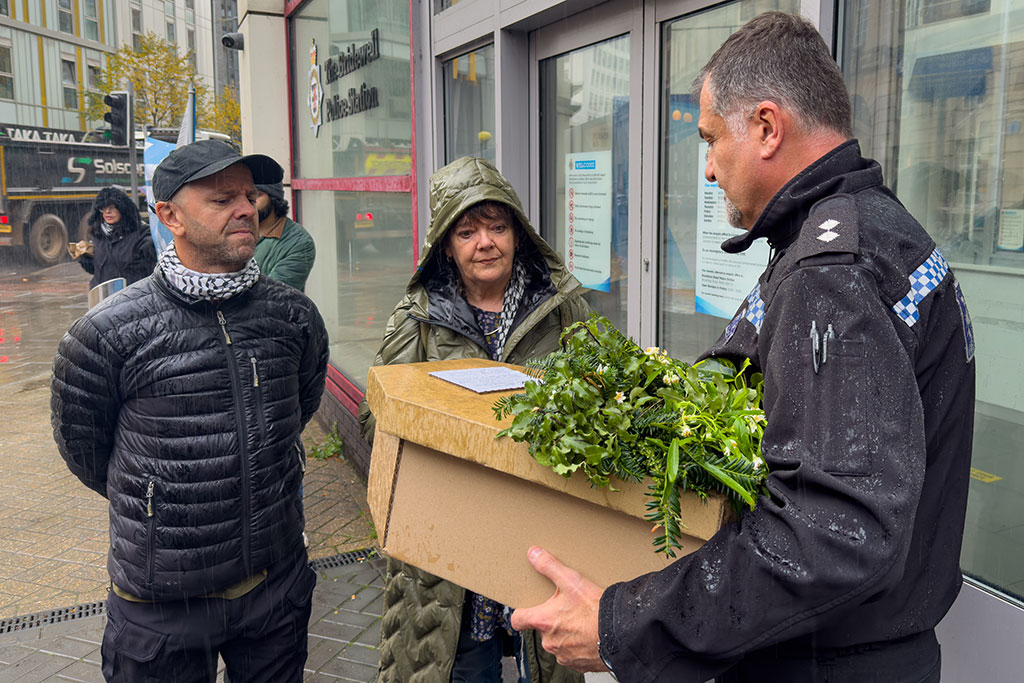
JUST IN: https://image.nostr.build/160e2034b2dc3a2cfe15f1eaaba43275900786d5acb3a28aaab354fc2e90ca3c.jpgWest Yorkshire Police arrested Freezing wet rain for 21 courageous sitters all
arrested by about 20 officers each time. Leeds’ Dortmund Sq - the majority of them elderly women. They were holding cardboard signs that read: “I oppose genocide. I support Palestine Action.”
Whispers of people's art festival are on the grapevine.
What is the culture we wish to contribute towards?
A good read View article →
📣📣PLEASE SHARE WIDELY BY FORWARDING THIS MESSAGE📣
📣📣Lift The Ban Action locations across UK and hunger strike announced
In what is set to be the “most widespread mass civil disobedience across the UK in modern British history” actions will take place in 19 towns and cities across every nation in the UK, challenging the ‘terror’ ban on Palestine Action ahead of and during the judicial review (25–27 November):
👉 Tues 18 Nov: Edinburgh, Cardiff, Oxford, Leeds, Aberystwyth, Newcastle, Nottingham, Northampton, Gloucester and Truro
👉 Thurs 20th Nov: London
👉 Sat 22nd Nov: Belfast and London
👉 Mon 24th Nov: London
👉 Weds 26th Nov: London
👉 Sat 29th Nov: Edinburgh, Cardiff, Manchester, Birmingham, Cambridge, Bristol, Sheffield, Exeter and Lancaster
Sign up for action: https://actionnetwork.org/forms/lift-the-ban-november-2025?clear_id=true
At the same time, Prisoners for Palestine held in British jails without trial will go ahead with a rolling hunger strike from 2 November after the Home Secretary failed to respond to their demands including immediate bail, access to documents necessary for the right to a fair trial and the de-proscription of Palestine Action.
Full press release:
Watch recording of press conference here: https://defendourjuries.net/lift-the-ban/lift-the-ban-calls/
Google Docs
Lift The Ban | October 28 Press Release
*** PRESS CONFERENCE AT 11AM WITH DEFEND OUR JURIES, JULIET STEVENSON, PRISONERS FOR PALESTINE, FILTON 24, CAGE, JOHN MCDONNEL MP ZOOM LINK *** PR...
What is a good way of sharing music

What do folk think of this?
Become a Certified Futurist | The Futurist Institute®
More words on the grape vine.
The pain and trauma inflicted on the families of Palestine are not enough.


Word on the grapevine is "Four flottila members arriving back on 8.10 plane were detained in Heathrow while waiting for special branch officers ... haven't anything since."