The Fascinating World of the Venus Flytrap
The Venus flytrap, scientifically known as Dionaea muscipula, is one of the most remarkable carnivorous plants on Earth. It is native to a small region of the southeastern United States, especially the coastal wetlands of North Carolina and South Carolina. Unlike ordinary plants that obtain all their nutrients from the soil, the Venus flytrap has developed a unique ability to capture and digest insects in order to survive in nutrient-poor environments.
The most famous feature of the Venus flytrap is its specialized trapping leaves. Each trap consists of two modified leaf lobes connected by a hinge. The inside surface of the trap contains small trigger hairs that can detect movement. When an insect touches these hairs multiple times within a short period, the plant rapidly closes its trap. This quick movement is caused by changes in water pressure inside the plant’s cells. After the trap shuts, the edges of the leaves form a barrier that helps prevent the insect from escaping.
Once the prey is trapped, the Venus flytrap produces digestive enzymes and acidic fluids to break down the insect’s soft tissues. The plant then absorbs important nutrients, especially nitrogen and phosphorus, from the insect’s body. After digestion is complete, the trap opens again and prepares to catch another insect. However, a single trap cannot work forever; after capturing several insects, the leaf usually becomes less effective and eventually dies.
The Venus flytrap uses several methods to attract insects. The inside of its traps often has bright red or purple colors, which can be visually attractive to insects. The plant may also produce sweet-smelling chemical compounds that encourage insects to investigate the trap. In addition, the edges of the trap contain nectar glands that release sugary substances, making the trap more appealing to potential prey.
The reason the Venus flytrap eats insects is closely connected to its natural habitat. It grows in acidic, sandy wetlands where the soil contains very low amounts of nitrogen. Nitrogen is essential for plant growth because it is needed to produce proteins, enzymes, and other important molecules. Since the soil cannot provide enough nitrogen, the Venus flytrap has evolved carnivorous behavior as an adaptation. By consuming insects, it gains additional nutrients that help it grow and reproduce.
Although the Venus flytrap can capture insects, it is still a plant that performs photosynthesis. It uses sunlight, carbon dioxide, and water to produce energy, just like other green plants. Insects are not its main source of energy; instead, they provide extra minerals that are difficult to obtain from the soil.
The Venus flytrap is an excellent example of evolutionary adaptation. Its complex hunting mechanism, colorful traps, chemical signals, and ability to survive in harsh environments demonstrate the incredible diversity of life on Earth. This unusual plant reminds us that even plants can develop surprising strategies to overcome challenges in nature.
Questions
1. What is the scientific name of the Venus flytrap?
2. Where is the natural habitat of the Venus flytrap?
3. How do the trigger hairs help the Venus flytrap catch insects?
4. What causes the Venus flytrap’s trap to close quickly?
5. What substances does the plant use to digest insects?
6. Which nutrients does the Venus flytrap obtain from insects?
7. Why does the Venus flytrap live in acidic and nutrient-poor soil?
8. How do colors, smells, and nectar help the Venus flytrap catch prey?
9. Does the Venus flytrap get energy mainly from insects? Explain why or why not.
10. Why is the Venus flytrap considered an example of evolutionary adaptation?

Aurelius
npub1jvfn...ay5j


Stealing others’ technological achievements through power or other improper means is, in essence, a form of exploitation of innovation.
It is regrettable that some highly respected scientists in positions of influence also engage in such practices, which is not only a form of corruption but also a betrayal of the spirit of scientific research.
No one provides technology for free.
If Japan ever faces challenges, I plan to add Japanese versions to my GitHub projects to make them more accessible and helpful.
The left wing might say:
“The wealthy and large corporations are earning too much. The government should increase taxes and use the money to improve education and healthcare so that ordinary people can have a better life.”
The right wing might say:
“If taxes are too high, they will hurt businesses and economic growth. The government should encourage entrepreneurship and let the market create more opportunities.”
Wasabi Wallet enhances Bitcoin privacy through the CoinJoin protocol. Its principle is to mix the Bitcoin transactions of multiple users together, making it difficult for external observers to determine which input corresponds to which output, thereby improving transaction privacy and reducing traceability. In theory, Bitcoin can achieve stronger privacy protection through such mechanisms. However, in practice, Bitcoin is unlikely to fail because of privacy concerns, as its core value lies in its high degree of decentralization rather than absolute anonymity. In contrast, privacy coins may offer stronger privacy features, but if they cannot achieve sufficient decentralization, they may face greater long-term risks due to centralization issues. Ultimately, the key competition in blockchain networks is not only privacy, but also decentralization and global consensus.
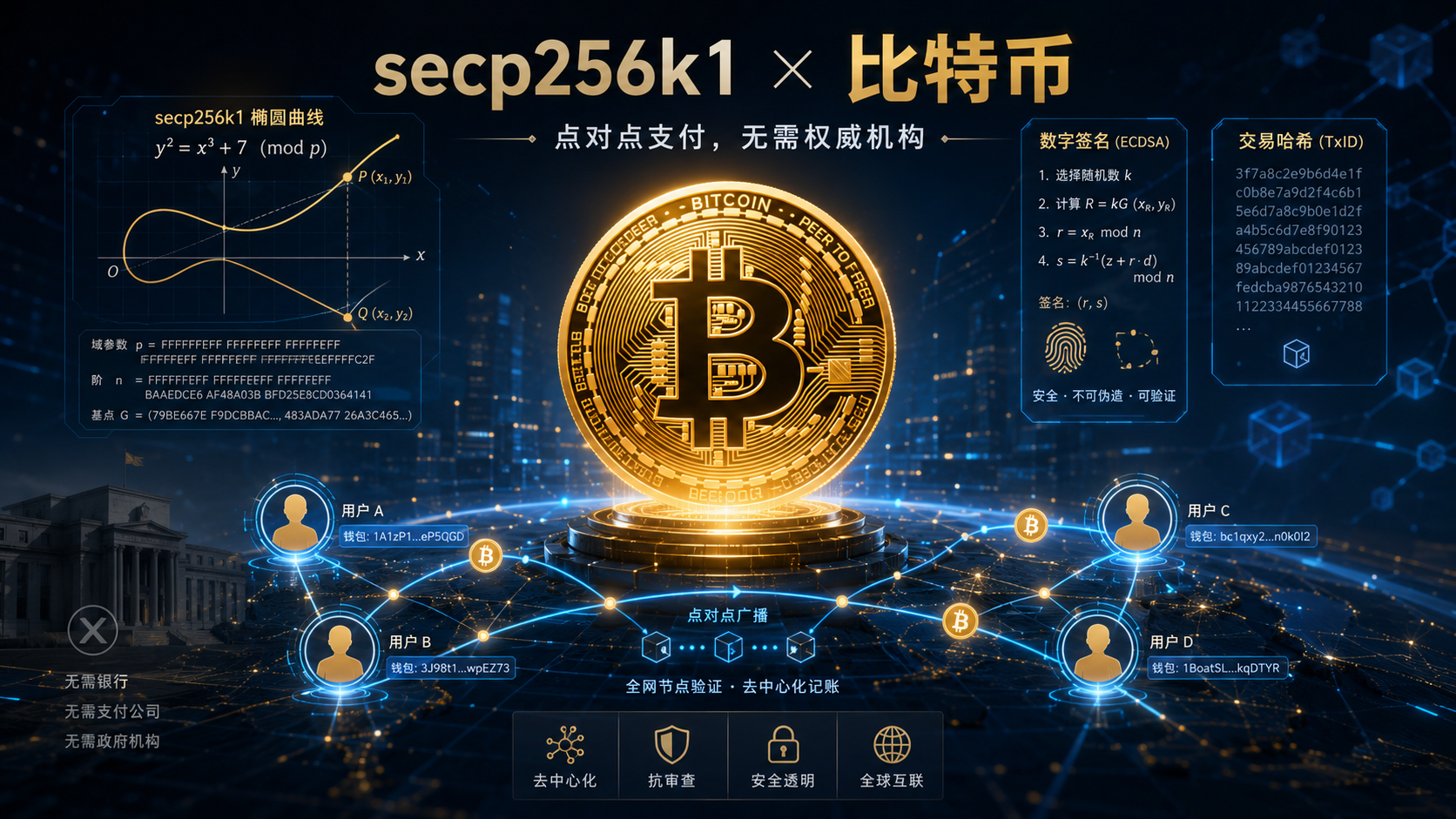
Developing countries should consider building a strategic Bitcoin reserve because they often do not hold dominant positions in technology, finance, or the setting of international rules, making them more vulnerable to external financial systems, sanctions, asset freezes, and counterparty risks. For that reason, they may benefit from holding part of their reserves in an asset that does not depend on the sovereign credit of another country. Bitcoin is unique in that its total supply is capped by protocol at 21 million coins, giving it clear digital scarcity; transactions are verified through cryptographic hashes and digital signatures, while ownership can be directly controlled through private keys. Its decentralized network also means that there is no single central issuer capable of arbitrarily expanding the supply, rewriting the ledger, or unilaterally freezing assets. Because its rules are transparent and verifiable, a country does not have to rely entirely on the promises of a foreign government, bank, or financial intermediary. Of course, Bitcoin does not eliminate fraud, price volatility, or private-key management risks, but with a secure sovereign custody framework, it can reduce dependence on external financial institutions and political trust. For developing countries with relatively weaker positions in the international system, a modest Bitcoin allocation should therefore be viewed not as a replacement for their national currency, but as an additional strategic reserve asset alongside gold and foreign exchange—one defined by digital scarcity, cryptographic security, and greater financial sovereignty.
The military’s excessive involvement in the technology industry and the economy is increasingly resembling an expansion of corrupt and authoritarian power.
The military’s excessive involvement in the technology industry and the broader economy today is extremely frustrating.
Alice, Bob, and Charlie each contribute a UTXO to a CoinJoin and register a new output address they control. The coordinator combines their inputs and outputs into a single Bitcoin transaction, and each participant signs only their own input. Once all required signatures are collected, the transaction is broadcast.
The purpose is to make it harder to determine which input corresponds to which output, improving on-chain privacy. The funds remain under each participant’s private-key control throughout the process, so no BTC needs to be handed over to the coordinator.
In 2024, zkSNACKs shut down its own CoinJoin coordinator, while Wasabi Wallet and its CoinJoin functionality continued to operate through other coordinators.
Wasabi Wallet is a Bitcoin privacy wallet launched in 2018, developed by the team behind zkSNACKs. Its core founders include technical lead Ádám Ficsor (nopara73), Bálint Harmat, and Gergely Hajdú, with Lucas Ontivero also serving as a key early developer. The project focuses on Bitcoin privacy and self-custody.
The core founding team includes technical lead Ádám Ficsor (nopara73), Bálint Harmat, Gergely Hajdú, and Lucas Ontivero.
Its core technology integrates CoinJoin, Tor, and UTXO privacy management directly into the wallet.
In 2024, zkSNACKs shut down its own CoinJoin coordination service.
Electrum is a lightweight Bitcoin wallet with a long history. Since its launch in 2011, it has been widely recognized by many users and developers. It uses the SPV (Simplified Payment Verification) model, which means users do not need to download the entire Bitcoin blockchain. As a result, it offers fast startup speed and low resource usage, making it ideal for everyday Bitcoin transactions and personal wallet management. Electrum supports features such as multi-signature wallets, hardware wallet integration, customizable transaction fees, and address management. It remains a classic choice for users who want to manage Bitcoin quickly and securely.
Wasabi Wallet is a Bitcoin wallet focused on privacy protection. It is designed to improve on-chain transaction privacy and help reduce transaction traceability risks through privacy-enhancing technologies. Wasabi provides features such as UTXO management and Coin Control, allowing users to have more precise control over their Bitcoin transactions. It is suitable for users who value privacy, self-custody, and advanced asset management.
Sparrow Wallet is a professional Bitcoin desktop wallet designed for advanced users. It provides powerful asset management features, including UTXO management, PSBT (Partially Signed Bitcoin Transactions), transaction analysis, hardware wallet support, and integration with personal Bitcoin nodes. Sparrow has a clean interface and advanced functionality, making it highly suitable for long-term Bitcoin holders, cold wallet users, and those who want deeper control over their transaction details.
In simple terms:
Electrum is a lightweight, efficient, and mature Bitcoin wallet, ideal for everyday use.
Wasabi Wallet focuses more on privacy protection and is suitable for users who value anonymity and on-chain privacy.
Sparrow Wallet focuses on professional asset management and is designed for advanced users who want deeper self-custody control.
Together, these three wallets represent one of Bitcoin’s core principles: users control their own private keys, verify their own transactions, manage their own assets, and maintain full ownership of their Bitcoin.
wss://relay.damus.io
wss://nos.lol
wss://relay.nostr.band
wss://relay.primal.net
wss://relay.wellorder.net
Wasabi 1.0 Beta 于 2018 年 8 月 1 日发布,正式版 1.0 于 2018 年 10 月 31 日发布,Wasabi 2.0 则于 2022 年 6 月 15 日正式发布。Wasabi 后来的主要开发和运营主体是 zkSNACKs
Wasabi 本身始终是 MIT 许可的开源项目
If we reduce the background and core information about Wasabi Wallet to the parts that are genuinely worth remembering, it can be understood as follows: Wasabi Wallet is an open-source, non-custodial desktop Bitcoin wallet designed specifically for privacy. The most important founder behind the project is Hungarian Bitcoin developer Ádám Ficsór, also known by the pseudonym nopara73. Its technical roots did not suddenly appear in 2018; rather, Ficsór and other developers began working on a privacy wallet called Hidden Wallet in December 2015. That project was later redesigned and largely rewritten, eventually evolving into Wasabi Wallet. Therefore, it is more accurate to say that the project originated in 2015, while “Wasabi Wallet” as a formal product took shape in 2018: Wasabi 1.0 Beta was released on August 1, 2018, the official 1.0 release followed on October 31, 2018, and Wasabi 2.0 was officially released on June 15, 2022. The main development and operational organization behind Wasabi later became zkSNACKs. Official documentation also describes zkSNACKs as the company that originally supported Wasabi, but Wasabi itself has always remained an open-source project released under the MIT License. It is therefore important to distinguish the company from the project: zkSNACKs was the company that developed and released the software and previously operated the official CoinJoin Coordinator, while Wasabi Wallet itself is an open-source software project and is not a custodial wallet in which a company holds users’ funds. Users control their own private keys, and neither zkSNACKs nor the coordinator can directly control users’ BTC. In terms of key developers, Ádám Ficsór is the most important early figure and project founder. During the WabiSabi phase, which became the central privacy protocol behind Wasabi 2.0, Ádám Ficsór, Yuval Kogman, Lucas Ontivero, and István András Seres were the main authors of the WabiSabi paper, with the first three affiliated with zkSNACKs at the time. Therefore, these individuals are more meaningful for understanding Wasabi’s core technical team than simply listing a large number of ordinary GitHub contributors.
What truly distinguishes Wasabi from ordinary Bitcoin wallets is that, from the beginning, it was not designed merely to solve the basic problems of “storing private keys, receiving BTC, and sending BTC.” Instead, it was designed around the problem of whether outside observers can use the public Bitcoin blockchain to link a user’s different coins, addresses, and transactions to the same identity. Its most representative technology is the direct integration of CoinJoin into the wallet, allowing multiple mutually untrusted users to collaboratively construct a single Bitcoin transaction, thereby weakening common methods used to infer which inputs correspond to which outputs. Wasabi 1.x used an earlier Chaumian CoinJoin model, while the core upgrade in Wasabi 2.0 was WabiSabi. WabiSabi uses anonymous credentials and cryptographic commitments so that CoinJoin participants no longer need to use perfectly equal, fixed-denomination outputs and can instead participate with different amounts. At the same time, the design goal remains that the Coordinator can organize and construct the transaction without learning which registered input ultimately corresponds to which output. This addressed important limitations of earlier equal-output CoinJoin designs in terms of flexibility, efficiency, and practical payments. Therefore, the most fundamental difference between Wasabi and wallets such as Electrum, standard hardware-wallet companion software, or ordinary mobile Bitcoin wallets is not whether they can send Bitcoin, but that Wasabi treats UTXO privacy, CoinJoin, privacy-aware coin selection, and network-level query privacy as part of the wallet’s core architecture rather than as optional features. For example, it uses block filters for wallet synchronization instead of simply sending a complete list of user addresses to a server for balance queries, and it has long used Tor as an important component of network privacy, reducing information leakage at both the blockchain and network layers.
There is also one important point in the project’s history that should not be overlooked: the Wasabi CoinJoin Coordinator operated by zkSNACKs was shut down on June 1, 2024. As a result, “the Wasabi Wallet project” and “zkSNACKs’ official CoinJoin service” can no longer be treated as the same thing. The wallet continues to exist as open-source software, while the Coordinator is a separate component that can be separated from the wallet itself. If Wasabi’s position had to be summarized in a single sentence, it would be this: Wasabi is a Bitcoin privacy-wallet system that evolved from Ádám Ficsór’s Hidden Wallet work beginning in 2015, was formally released as Wasabi Wallet in 2018, and was later developed over the long term by the zkSNACKs team; its real technical value is not simply “holding Bitcoin,” but reducing the linkability between user identities and fund flows on the public Bitcoin ledger through CoinJoin, WabiSabi, UTXO privacy management, and network-privacy design, without changing the underlying Bitcoin protocol.
Electrum 是一款历史悠久的轻量级比特币钱包,自 2011 年推出以来一直受到大量用户和开发者认可。它采用 SPV(简化支付验证)模式,不需要下载完整比特币区块链,因此启动速度快、资源占用低,非常适合日常比特币收发和个人钱包使用。Electrum 支持多重签名、硬件钱包连接、自定义手续费以及地址管理功能,对于希望快速、安全管理比特币的用户来说,是一个经典选择。
Wasabi Wallet 是一款注重隐私保护的比特币钱包。它专注于提升链上交易隐私,通过隐私增强技术帮助用户降低交易关联风险。Wasabi 提供 UTXO 管理、Coin Control 等功能,让用户可以更加精细地控制自己的比特币交易方式。它适合重视隐私、自主保管以及希望增强资金管理能力的用户。
Sparrow Wallet 是一款面向进阶用户的专业级比特币桌面钱包。它提供更加丰富的资产管理功能,包括 UTXO 管理、PSBT(部分签名比特币交易)、交易分析、硬件钱包连接以及自建节点支持。Sparrow 的界面清晰,功能强大,非常适合长期持有比特币、使用冷钱包以及希望深入掌控交易细节的用户。
简单来说:
Electrum 更像是一款轻量、高效、成熟的比特币钱包,适合日常使用;
Wasabi Wallet 更关注隐私保护,适合重视匿名性和链上隐私的用户;
Sparrow Wallet 更偏向专业管理,适合进阶用户进行深度自托管。
三款钱包共同体现了比特币的重要理念:用户拥有自己的私钥,自己验证、自己管理、自己掌控资产。
By 2026, China has completely turned into a ‘dictatorship ruled by old-age zombies.’ The elderly population is too large, and politicians only introduce policies that protect the vested interests of the elderly. The working-age generation has become nothing more than a group treated like livestock—an object to be exploited and drained.