Electrum: Electrum is a lightweight, self-custodial Bitcoin wallet built for speed, flexibility, and minimal reliance on third parties. Rather than downloading the full blockchain, it connects to Electrum servers and uses SPV to verify confirmed transactions; your private keys are never sent to those servers. It supports seed-based recovery, watch-only wallets, cold-storage setups, multisignature wallets, and a broad range of hardware wallets. The trade-off is worth understanding: the main Electrum server can learn information about the addresses your wallet queries and is trusted for some unconfirmed-transaction information, so users seeking stronger privacy can operate their own Electrum server. Electrum is not a guardian standing between you and your Bitcoin—it is a weapon placed directly in your hand. The keys are yours, the decisions are yours, and so are the consequences. Lose the seed, and no authority in this universe can simply reverse the outcome.
Sparrow Wallet: Sparrow is a desktop, self-custodial Bitcoin wallet designed for users who want unusually deep visibility and control over how their coins are stored and spent. It supports single-signature and multisignature wallets, BIP39 seeds, watch-only xpub wallets, output descriptors, PSBT workflows, common hardware wallets through USB or air-gapped methods, and several ways to obtain blockchain data—including public servers, private Electrum servers, and your own Bitcoin Core node. Its strength lies in transaction construction and UTXO management: Sparrow exposes inputs, outputs, fees and individual UTXOs, supports detailed labeling and coin selection, and includes a transaction editor for inspecting transactions before broadcast. It does not try to make Bitcoin look like a simple bank account; it shows you the machinery beneath the throne. Electrum gives you a proven blade. Sparrow gives you the battlefield, the map, and the authority to decide exactly which pieces move.
Wasabi Wallet: Wasabi is an open-source, non-custodial desktop Bitcoin wallet whose defining feature is integrated CoinJoin using the WabiSabi protocol. A CoinJoin combines inputs from multiple participants into one Bitcoin transaction and creates fresh outputs, weakening the simple assumption that a particular input directly paid a particular output. Wasabi uses a coordinator to organize the round, but the coordinator never receives custody of the participants’ private keys; WabiSabi credentials are designed so the coordinator can verify that valid amounts are being registered without learning the mapping between a participant’s inputs and outputs. The process moves through input registration, connection confirmation, output registration and signing; every participant verifies and signs the completed transaction with their own keys, and if participants disrupt the signing process, a “blame round” can rebuild the CoinJoin with the cooperative participants. In the current Wasabi model, a CoinJoin coordinator must first be configured, and the client can then run CoinJoins automatically according to a chosen privacy strategy and anonymity-score target; since Wasabi 2.8.0, a payment can even be scheduled directly inside a CoinJoin instead of mixing first and paying afterward. The current client only participates in rounds without a coordination fee, although normal Bitcoin mining fees still apply. One crucial limitation remains: hardware wallets can be used with Wasabi for ordinary storage and signing, including PSBT workflows, but their keys cannot currently participate directly in CoinJoin—the CoinJoin keys must reside in a hot Wasabi wallet on the online computer. Wasabi therefore does not make your history disappear; it attacks the certainty of the observer. On a public ledger where every movement can become evidence, uncertainty itself becomes armor—and CoinJoin is the forge in which that armor is made.

Aurelius
npub1jvfn...ay5j
**Status**
🌐  Status is a Web3 super app that brings **private messaging, decentralized identity, a self-custodial wallet, and DApp access** into one place.
No phone number.
No email required.
Your identity and assets stay in your control.
With Status, users can:
• Chat with end-to-end encryption
• Join and build communities
• Manage ETH, ERC-20 tokens, and assets across Ethereum L2s
• Send, swap, and bridge assets
• Connect directly with Web3 DApps
What makes Status interesting is the combination of **communication + identity + wallet + Web3** in a single application.
If you're exploring what a decentralized, crypto-native social experience could look like, Status is worth checking out.
🔗
Status is a Web3 super app that brings **private messaging, decentralized identity, a self-custodial wallet, and DApp access** into one place.
No phone number.
No email required.
Your identity and assets stay in your control.
With Status, users can:
• Chat with end-to-end encryption
• Join and build communities
• Manage ETH, ERC-20 tokens, and assets across Ethereum L2s
• Send, swap, and bridge assets
• Connect directly with Web3 DApps
What makes Status interesting is the combination of **communication + identity + wallet + Web3** in a single application.
If you're exploring what a decentralized, crypto-native social experience could look like, Status is worth checking out.
🔗
Status
Status App | Private Messenger, Web3 Wallet & Browser
Own cryptocurrency and chat privately without surveillance. Combine censorship resistant communications with decentralized finance tools in one sec...
Status
Status App | Private Messenger, Web3 Wallet & Browser
Own cryptocurrency and chat privately without surveillance. Combine censorship resistant communications with decentralized finance tools in one sec...
Pastebin is an online text-sharing platform mainly used for quickly publishing and sharing text content, such as code snippets, error logs, configuration files, and temporary notes. Users can upload content and generate a link that others can use to view it. It is simple to use and is widely used by developers for sharing debugging information and code examples.
PrivateBin is an open-source text-sharing tool focused on privacy protection, similar to an encrypted version of Pastebin. It typically encrypts content in the user's browser before uploading it, so the server cannot directly read the data. It is designed for securely sharing sensitive code, logs, or private information, with a focus on security, anonymity, and data privacy.
Status
Official website:
Introduction:
Status is one of the most representative “Web3 communication + wallet” integrated applications. It combines end-to-end encrypted messaging, communities, a self-custodial crypto wallet, and Web3/DApp functionality into a single application.
Users can create their own identity without requiring a phone number or email address. At the same time, they can manage ETH, ERC-20 tokens, and assets across multiple Ethereum Layer 2 networks, while directly performing transfers, swaps, cross-chain transactions, and interacting with DApps.
Simply put, if you are looking for an application that combines “messaging + Web3 identity + wallet + DApp” in one place, Status is one of the most noteworthy projects to explore.
Status
Status App | Private Messenger, Web3 Wallet & Browser
Own cryptocurrency and chat privately without surveillance. Combine censorship resistant communications with decentralized finance tools in one sec...
In the great leap toward economic inclusion, Bitcoin breaks down traditional barriers. In an era when fiat currencies can be issued without limit, Bitcoin stands as a beacon of digital scarcity, offering everyone on Earth an unprecedented gateway to financial freedom. It is a bold revolution that makes what was once unimaginable possible.
1inch 是一个去中心化金融(DeFi)交易聚合平台,由 Sergej Kunz 和 Anton Bukov 于 2019 年 5 月在纽约的一次 ETHGlobal 黑客松上创建。它的核心作用不是自己托管用户资产,而是连接多个去中心化交易所和流动性来源,自动寻找更优的兑换价格和交易路径,帮助用户直接用自己的钱包完成加密货币兑换,并尽量降低滑点和交易成本;
1inch is a decentralized finance (DeFi) trading aggregator founded by Sergej Kunz and Anton Bukov in May 2019 at an ETHGlobal hackathon in New York. Rather than holding users’ assets itself, 1inch connects multiple decentralized exchanges and liquidity sources to automatically find better prices and trading routes, helping users swap cryptocurrencies directly from their own wallets while reducing slippage and transaction costs.
准备少量 BTC 作为保证金和手续费 → 在 Bisq 选择卖家的 BTC 订单 → 买卖双方把 BTC 和保证金锁进 2-of-2 多签 → 你按照卖家提供的信息支付法币 → 点击“已付款” → 卖家确认收到法币 → 双方签名释放资金 → 你收到 BTC,双方保证金退回;如果卖家不配合 → 先调解 → 仍不解决就等时间锁到期 → 使用预签的兜底交易进入仲裁处理。
Prepare a small amount of BTC for the security deposit and fees → choose a BTC offer from a seller on Bisq → both parties lock the BTC and deposits in a 2-of-2 multisig → you send the fiat payment using the seller’s payment details → click “Payment Sent” → the seller confirms receipt → both parties sign to release the funds → you receive the BTC and both deposits are returned; if the seller refuses to cooperate → mediation first → if unresolved, wait for the timelock to expire → use the pre-signed fallback transaction and proceed to arbitration.
Bisq 1 uses a 2-of-2 multisig setup, so under normal circumstances both the buyer and seller must sign to release the funds. At the start of the trade, both parties also pre-sign a time-locked fallback transaction.
If a dispute cannot be resolved through mediation, after the timelock expires—typically around 20 days for fiat trades—either party can broadcast this transaction, which sends the multisig funds to the Burning Men mechanism. An arbitrator then reviews the payment evidence and determines who should be compensated and by how much. The arbitrator does not hold a third private key and cannot directly control the original multisig funds.
Cake Wallet makes digital assets accessible, secure, and private for everyone. With support for major cryptocurrencies like Bitcoin, Monero, Ethereum, and stablecoins, Cake Wallet provides seamless swaps, self-custody, and advanced privacy features, including Silent Payments and Tor integration.
Built for both crypto beginners and experienced users, Cake Wallet makes crypto accessible with an intuitive, modern interface built around the cryptocurrencies you know and love. Whether you’re securing savings, managing multiple assets, or enabling everyday spending, Cake Wallet is your all-in-one solution for digital finance.
Bitcoin Core

 One of the most important full-node implementations for Bitcoin. It can independently verify blocks and transactions, directly participate in the Bitcoin P2P network, and also provides wallet and RPC functionality. It is suitable for users who want to run their own Bitcoin node, build Bitcoin-related services, or verify BTC transactions without relying on third-party servers.
Electrum
One of the most important full-node implementations for Bitcoin. It can independently verify blocks and transactions, directly participate in the Bitcoin P2P network, and also provides wallet and RPC functionality. It is suitable for users who want to run their own Bitcoin node, build Bitcoin-related services, or verify BTC transactions without relying on third-party servers.
Electrum

 A long-established and highly mature open-source lightweight Bitcoin wallet focused exclusively on BTC. It does not require downloading the entire Bitcoin blockchain and supports hardware wallets, cold storage, watch-only wallets, multisig, PSBT, Lightning, and connections to your own Electrum Server. For security, downloads should only come from the official electrum.org website.
Sparrow Wallet
A long-established and highly mature open-source lightweight Bitcoin wallet focused exclusively on BTC. It does not require downloading the entire Bitcoin blockchain and supports hardware wallets, cold storage, watch-only wallets, multisig, PSBT, Lightning, and connections to your own Electrum Server. For security, downloads should only come from the official electrum.org website.
Sparrow Wallet
 An advanced desktop Bitcoin wallet, especially suitable for hardware wallets, cold storage, and experienced BTC users. It supports PSBT, multisig, watch-only wallets, detailed UTXO management, fee controls, and transaction inspection. It can also connect directly to Bitcoin Core or an Electrum Server. Compared with ordinary wallets, Sparrow provides much more detailed information about individual UTXOs and transaction structure.
Wasabi Wallet
An advanced desktop Bitcoin wallet, especially suitable for hardware wallets, cold storage, and experienced BTC users. It supports PSBT, multisig, watch-only wallets, detailed UTXO management, fee controls, and transaction inspection. It can also connect directly to Bitcoin Core or an Electrum Server. Compared with ordinary wallets, Sparrow provides much more detailed information about individual UTXOs and transaction structure.
Wasabi Wallet

 An open-source, non-custodial, privacy-focused desktop wallet dedicated to Bitcoin. It emphasizes on-chain privacy, UTXO management, and privacy-enhancing transactions. Wasabi has long been known for features and technologies related to CoinJoin, Tor, and reducing address-linking analysis on the Bitcoin blockchain. It is suitable for users who place particular importance on Bitcoin transaction privacy.
BlueWallet
An open-source, non-custodial, privacy-focused desktop wallet dedicated to Bitcoin. It emphasizes on-chain privacy, UTXO management, and privacy-enhancing transactions. Wasabi has long been known for features and technologies related to CoinJoin, Tor, and reducing address-linking analysis on the Bitcoin blockchain. It is suitable for users who place particular importance on Bitcoin transaction privacy.
BlueWallet

 A widely used open-source Bitcoin mobile wallet mainly designed for Android and iOS, with a strong focus on Bitcoin and the Lightning Network. It supports standard BTC wallets, watch-only wallets, RBF, Electrum backends, and other useful features. Its relatively simple interface makes it suitable for everyday mobile Bitcoin management.
Monero Core
A widely used open-source Bitcoin mobile wallet mainly designed for Android and iOS, with a strong focus on Bitcoin and the Lightning Network. It supports standard BTC wallets, watch-only wallets, RBF, Electrum backends, and other useful features. Its relatively simple interface makes it suitable for everyday mobile Bitcoin management.
Monero Core

 The official core implementation of Monero, including the Monero node software, command-line wallet, and related infrastructure components. Users can run their own full Monero node and connect wallets or services through RPC. It is one of the most important official projects in the XMR ecosystem.
Monero GUI Wallet
The official core implementation of Monero, including the Monero node software, command-line wallet, and related infrastructure components. Users can run their own full Monero node and connect wallets or services through RPC. It is one of the most important official projects in the XMR ecosystem.
Monero GUI Wallet
 The official graphical wallet for Monero. It is open-source and non-custodial, meaning users control their own wallet files, private keys, and recovery seed. It can connect to a remote node or work together with a locally running Monero node. Monero's privacy protections are built directly into the protocol, which differs from Bitcoin, where additional UTXO management and privacy techniques are often required.
MetaMask
The official graphical wallet for Monero. It is open-source and non-custodial, meaning users control their own wallet files, private keys, and recovery seed. It can connect to a remote node or work together with a locally running Monero node. Monero's privacy protections are built directly into the protocol, which differs from Bitcoin, where additional UTXO management and privacy techniques are often required.
MetaMask

 One of the most important wallets in the Ethereum and EVM ecosystems and one of the most widely supported wallets across DeFi, DEX, NFT, and Web3 applications. It can manage ETH and ERC-20 assets and connect to Ethereum, Arbitrum, Optimism, Polygon, BNB Smart Chain, and many other EVM-compatible networks. Its biggest advantage is its extremely broad compatibility throughout the Web3 ecosystem.
Rabby Wallet
One of the most important wallets in the Ethereum and EVM ecosystems and one of the most widely supported wallets across DeFi, DEX, NFT, and Web3 applications. It can manage ETH and ERC-20 assets and connect to Ethereum, Arbitrum, Optimism, Polygon, BNB Smart Chain, and many other EVM-compatible networks. Its biggest advantage is its extremely broad compatibility throughout the Web3 ecosystem.
Rabby Wallet
 An open-source Ethereum/EVM wallet developed by the DeBank team, particularly suitable for users who frequently interact with DeFi protocols and multiple EVM networks. It emphasizes transaction simulation, risk detection, token approval visibility, and clearer interpretation of signing requests, helping users better understand what a smart-contract interaction may do before they approve it.
Trust Wallet
An open-source Ethereum/EVM wallet developed by the DeBank team, particularly suitable for users who frequently interact with DeFi protocols and multiple EVM networks. It emphasizes transaction simulation, risk detection, token approval visibility, and clearer interpretation of signing requests, helping users better understand what a smart-contract interaction may do before they approve it.
Trust Wallet


 A mainstream multi-chain self-custodial wallet supporting Bitcoin, Ethereum, Solana, BNB Chain, Cosmos, and many other blockchain networks. It also supports tokens, NFTs, DApps, swaps, staking, mobile applications, and browser extensions. Note that wallet-core is Trust Wallet's official open-source wallet core library, mainly responsible for keys, addresses, transaction signing, and multi-chain protocol support. It does not represent the complete source code of the entire Trust Wallet application. Ordinary users should download Trust Wallet through the official download page.
Trezor
A mainstream multi-chain self-custodial wallet supporting Bitcoin, Ethereum, Solana, BNB Chain, Cosmos, and many other blockchain networks. It also supports tokens, NFTs, DApps, swaps, staking, mobile applications, and browser extensions. Note that wallet-core is Trust Wallet's official open-source wallet core library, mainly responsible for keys, addresses, transaction signing, and multi-chain protocol support. It does not represent the complete source code of the entire Trust Wallet application. Ordinary users should download Trust Wallet through the official download page.
Trezor

 A highly important open-source hardware wallet ecosystem. Trezor Firmware is the official firmware running on Trezor hardware devices, while Trezor Suite is the software used to manage devices, accounts, and crypto assets. Hardware wallets keep private keys on a separate physical device and require transactions to be confirmed and signed on the device itself, making them particularly suitable for long-term storage of larger amounts of BTC, ETH, and other supported assets.
Bisq
A highly important open-source hardware wallet ecosystem. Trezor Firmware is the official firmware running on Trezor hardware devices, while Trezor Suite is the software used to manage devices, accounts, and crypto assets. Hardware wallets keep private keys on a separate physical device and require transactions to be confirmed and signed on the device itself, making them particularly suitable for long-term storage of larger amounts of BTC, ETH, and other supported assets.
Bisq

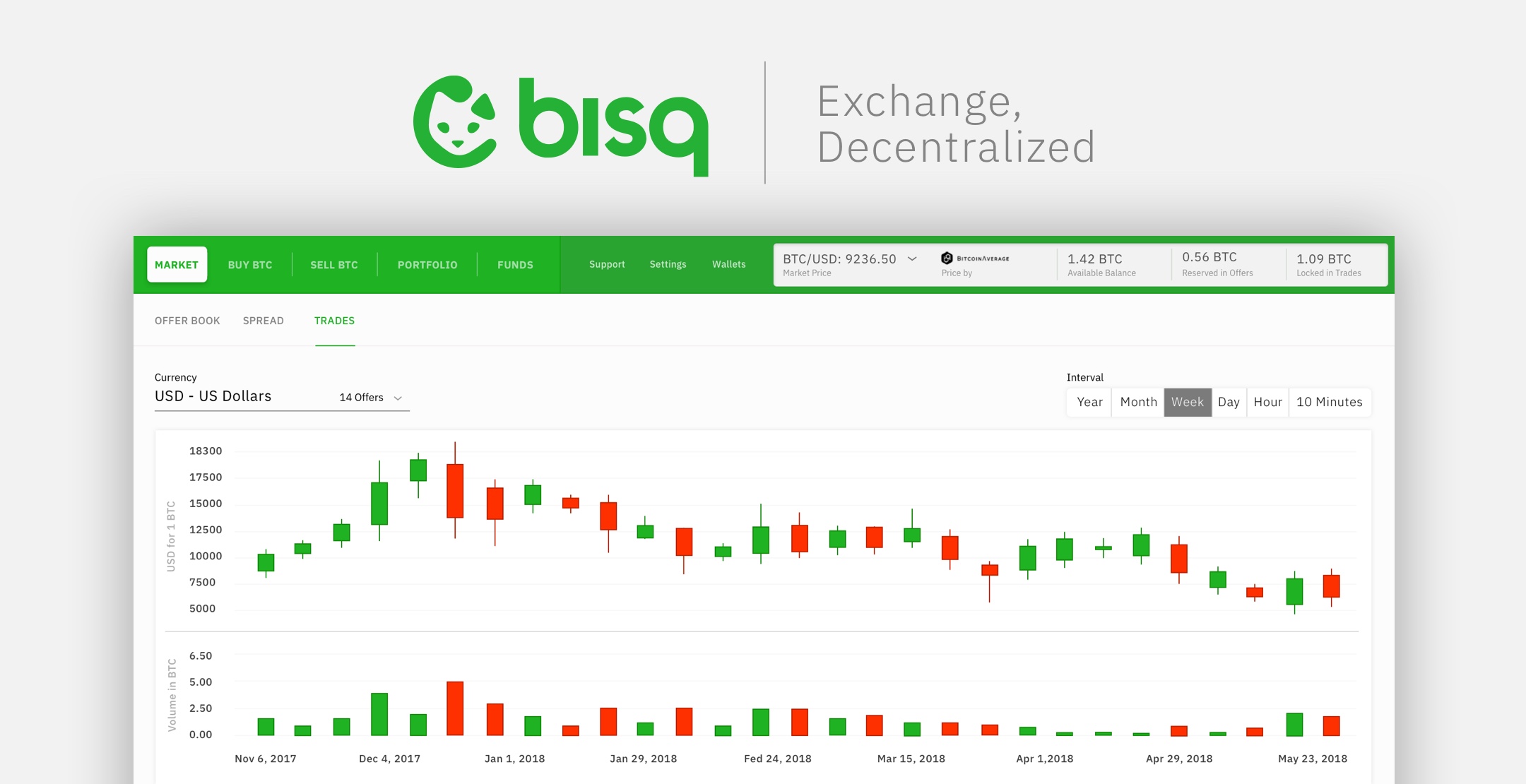 A long-established decentralized Bitcoin P2P trading application that does not rely on a traditional centralized exchange to custody user funds. Buyers and sellers trade BTC, fiat currencies, and other supported assets directly through a peer-to-peer network, with an emphasis on reducing dependence on centralized custody and account control.
Uniswap
A long-established decentralized Bitcoin P2P trading application that does not rely on a traditional centralized exchange to custody user funds. Buyers and sellers trade BTC, fiat currencies, and other supported assets directly through a peer-to-peer network, with an emphasis on reducing dependence on centralized custody and account control.
Uniswap
 One of the most important decentralized trading protocols in the Ethereum and EVM ecosystems. Users can exchange tokens directly through smart contracts and liquidity pools instead of first depositing their assets into a centralized exchange. It is also one of the most representative foundational protocols in the AMM and DeFi ecosystems.
If you only want to keep the most important projects, I recommend:
Bitcoin Core
Electrum
Sparrow Wallet
Wasabi Wallet
Monero Core
Monero GUI Wallet
MetaMask
Rabby Wallet
Trust Wallet
Trezor
Bisq
Uniswap
The wallet list can be reduced even further to:
Bitcoin: Electrum, Sparrow Wallet, Wasabi Wallet
Monero: Monero GUI Wallet
Ethereum/EVM: MetaMask, Rabby Wallet
Multi-chain: Trust Wallet
Hardware Wallet: Trezor
One of the most important decentralized trading protocols in the Ethereum and EVM ecosystems. Users can exchange tokens directly through smart contracts and liquidity pools instead of first depositing their assets into a centralized exchange. It is also one of the most representative foundational protocols in the AMM and DeFi ecosystems.
If you only want to keep the most important projects, I recommend:
Bitcoin Core
Electrum
Sparrow Wallet
Wasabi Wallet
Monero Core
Monero GUI Wallet
MetaMask
Rabby Wallet
Trust Wallet
Trezor
Bisq
Uniswap
The wallet list can be reduced even further to:
Bitcoin: Electrum, Sparrow Wallet, Wasabi Wallet
Monero: Monero GUI Wallet
Ethereum/EVM: MetaMask, Rabby Wallet
Multi-chain: Trust Wallet
Hardware Wallet: Trezor
GitHub
GitHub - bitcoin/bitcoin: Bitcoin Core integration/staging tree
Bitcoin Core integration/staging tree. Contribute to bitcoin/bitcoin development by creating an account on GitHub.
Bitcoin Core
Bitcoin
Bitcoin
GitHub
GitHub - spesmilo/electrum: Electrum Bitcoin Wallet
Electrum Bitcoin Wallet. Contribute to spesmilo/electrum development by creating an account on GitHub.
Electrum
Electrum Bitcoin Wallet
Electrum is one of the most popular Bitcoin wallets, in continuous development since 2011. Fast, secure and open source, for Windows, macOS, Linux ...
GitHub
GitHub - sparrowwallet/sparrow: Desktop Bitcoin Wallet focused on security and privacy. Free and open source.
Desktop Bitcoin Wallet focused on security and privacy. Free and open source. - sparrowwallet/sparrow
Sparrow Wallet
Sparrow Bitcoin Wallet
Sparrow is a modern desktop Bitcoin wallet application supporting most hardware wallets and built on common standards such as PSBT, with an emphasi...
GitHub
GitHub - WalletWasabi/WalletWasabi: Open-source, non-custodial, privacy preserving Bitcoin wallet for Windows, Linux, and Mac.
Open-source, non-custodial, privacy preserving Bitcoin wallet for Windows, Linux, and Mac. - WalletWasabi/WalletWasabi
Wasabi Wallet: The Privacy focused Bitcoin Wallet
Wasabi is an open-source, non-custodial, privacy-focused Bitcoin wallet for desktop, that implements trustless multi-party transactions over the To...
GitHub
GitHub - BlueWallet/BlueWallet: Bitcoin wallet for iOS & Android. Built with React Native
Bitcoin wallet for iOS & Android. Built with React Native - BlueWallet/BlueWallet
BlueWallet - Bitcoin Wallet for iOS and Android
BlueWallet - Bitcoin wallet and Lightning wallet for iOS and Android
Bitcoin wallet and Lightning wallet for iOS and Android focus on security and UX. Open source, Segwit and HD wallets, lightning network, plausible ...
GitHub
GitHub - monero-project/monero: Monero: the secure, private, untraceable cryptocurrency
Monero: the secure, private, untraceable cryptocurrency - monero-project/monero
getmonero.org, The Monero Project
The Monero Project
Monero, a digital currency that is secure, private, and untraceable
GitHub
GitHub - monero-project/monero-gui: Monero: the secure, private, untraceable cryptocurrency
Monero: the secure, private, untraceable cryptocurrency - monero-project/monero-gui
getmonero.org, The Monero Project
Downloads
On this page you can find and download the latest version available of the Monero software, as well as hardware, light and mobile wallets.
GitHub
GitHub - MetaMask/metamask-extension: :globe_with_meridians: The MetaMask browser extension enables browsing Ethereum blockchain enabled websites
:globe_with_meridians: :electric_plug: The MetaMask browser extension enables browsing Ethereum blockchain enabled websites - MetaMask/metamask-ext...
MetaMask: Where your money lives
Buy, trade, earn, and spend, all from one app you control.
GitHub
GitHub - RabbyHub/Rabby: The game-changing wallet for Ethereum and all EVM chains
The game-changing wallet for Ethereum and all EVM chains - RabbyHub/Rabby
Rabby Wallet | Your Go-to Wallet for Ethereum and EVM
The game-changing wallet for Ethereum and all EVM chains
Trust Wallet
Get the Trust Wallet App Now | Trust Wallet
Explore the world of Web3 in your pocket. The Trust Wallet is available as a mobile app and desktop browser extension. Download the app now!
GitHub
Trust Wallet
True crypto ownership. Powerful Web3 experiences. Trust Wallet has 74 repositories available. Follow their code on GitHub.
GitHub
GitHub - trustwallet/wallet-core: Cross-platform, cross-blockchain wallet library.
Cross-platform, cross-blockchain wallet library. Contribute to trustwallet/wallet-core development by creating an account on GitHub.
Trezor Hardware Wallet (Official) | Bitcoin & Crypto Security | Trezor
The safest cold storage wallets for crypto security and financial independence. Easily use, store, and protect Bitcoins.
GitHub
GitHub - trezor/trezor-suite: Trezor Suite Monorepo
Trezor Suite Monorepo. Contribute to trezor/trezor-suite development by creating an account on GitHub.
GitHub
GitHub - trezor/trezor-firmware: :lock: Trezor Firmware Monorepo
:lock: Trezor Firmware Monorepo. Contribute to trezor/trezor-firmware development by creating an account on GitHub.
GitHub
GitHub - bisq-network/bisq: A decentralized bitcoin exchange network
A decentralized bitcoin exchange network. Contribute to bisq-network/bisq development by creating an account on GitHub.
Bisq - A decentralized bitcoin exchange network
Bisq - A decentralized bitcoin exchange network
Bisq is an open-source desktop application that allows you to buy and sell bitcoin in exchange for national currencies, or alternative cryptocurren...
GitHub
Uniswap Labs
Web3 infrastructure and products. Uniswap Labs has 172 repositories available. Follow their code on GitHub.
Uniswap Interface
Cake Wallet
Official Website:  Download:
GitHub:
Download:
GitHub:  Introduction: Cake Wallet is an open-source, non-custodial, multi-currency wallet with particularly mature support for Monero (XMR). Monero is a privacy-focused cryptocurrency designed to protect information such as the sender, receiver, and transaction amount. With Cake Wallet, users control their own private keys and recovery seed, so the platform does not directly control their assets. It also supports other cryptocurrencies such as Bitcoin, Litecoin, and Ethereum. If you mainly use Monero but also want to manage several other cryptocurrencies in one wallet, Cake Wallet is a popular choice.
YWallet
Official Website:
GitHub:
Introduction: Cake Wallet is an open-source, non-custodial, multi-currency wallet with particularly mature support for Monero (XMR). Monero is a privacy-focused cryptocurrency designed to protect information such as the sender, receiver, and transaction amount. With Cake Wallet, users control their own private keys and recovery seed, so the platform does not directly control their assets. It also supports other cryptocurrencies such as Bitcoin, Litecoin, and Ethereum. If you mainly use Monero but also want to manage several other cryptocurrencies in one wallet, Cake Wallet is a popular choice.
YWallet
Official Website:
GitHub:  Zcash Official Website: https://z.cash/
Introduction: YWallet is a non-custodial wallet primarily designed for Zcash (ZEC) and also supports Ycash. It focuses heavily on Zcash privacy features. Zcash is a cryptocurrency that uses zero-knowledge proof technology to protect transaction privacy. When shielded addresses and shielded transactions are used, information such as addresses and transaction amounts can be hidden on-chain. YWallet supports shielded addresses, watch-only wallets, cold wallets, and other advanced features, making it suitable for users who want to make use of Zcash's privacy capabilities.
Zcash Official Website: https://z.cash/
Introduction: YWallet is a non-custodial wallet primarily designed for Zcash (ZEC) and also supports Ycash. It focuses heavily on Zcash privacy features. Zcash is a cryptocurrency that uses zero-knowledge proof technology to protect transaction privacy. When shielded addresses and shielded transactions are used, information such as addresses and transaction amounts can be hidden on-chain. YWallet supports shielded addresses, watch-only wallets, cold wallets, and other advanced features, making it suitable for users who want to make use of Zcash's privacy capabilities.
Cake Wallet
Cake Wallet: Payments Made Easy
Since 2018, Cake Wallet has provided a secure, seamless, and reliable way to store, send, and exchange cryptocurrency with confidence.
Cake Wallet
Cake Wallet: Payments Made Easy
Since 2018, Cake Wallet has provided a secure, seamless, and reliable way to store, send, and exchange cryptocurrency with confidence.
GitHub
GitHub - cake-tech/cake_wallet: The open source repository for Cake Wallet, a noncustodial multi-currency wallet, and Monero.com, a noncustodial Monero-only wallet. Need help? Check out https://docs.cakewallet.com
The open source repository for Cake Wallet, a noncustodial multi-currency wallet, and Monero.com, a noncustodial Monero-only wallet. Need help? Che...
Index - YWallet
YWallet documentation
GitHub
GitHub - hhanh00/zwallet: Zcash and Ycash light shielded wallet
Zcash and Ycash light shielded wallet. Contribute to hhanh00/zwallet development by creating an account on GitHub.
1inch
Official Website: https://1inch.com/
Swap: https://1inch.com/swap
GitHub:  Introduction: 1inch is a highly important DEX aggregator. Its main value is not in creating a single liquidity pool, but in searching liquidity and prices across multiple decentralized exchange protocols and automatically finding more efficient swap routes. For example, if a user wants to swap ETH for USDC, 1inch can compare different DEXs and trading paths, and may split a single transaction across multiple liquidity sources to reduce slippage or improve the final execution price. 1inch now also supports multiple blockchains and cross-chain swap functionality. For users who frequently trade EVM-based tokens, 1inch is a very useful tool to keep.
Curve
Official Website:
Introduction: 1inch is a highly important DEX aggregator. Its main value is not in creating a single liquidity pool, but in searching liquidity and prices across multiple decentralized exchange protocols and automatically finding more efficient swap routes. For example, if a user wants to swap ETH for USDC, 1inch can compare different DEXs and trading paths, and may split a single transaction across multiple liquidity sources to reduce slippage or improve the final execution price. 1inch now also supports multiple blockchains and cross-chain swap functionality. For users who frequently trade EVM-based tokens, 1inch is a very useful tool to keep.
Curve
Official Website:  GitHub:
  Introduction: Curve is a major AMM and decentralized exchange protocol in the Ethereum and DeFi ecosystems. It is especially well known for swaps between assets with similar prices, such as stablecoins like USDC and USDT, as well as ETH and various ETH-related assets. Its design focuses on reducing slippage when exchanging closely priced assets, making Curve an important source of stablecoin and related asset liquidity. For ordinary users who frequently swap stablecoins, Curve is especially worth understanding.
Jupiter
Official Website:
Introduction: Curve is a major AMM and decentralized exchange protocol in the Ethereum and DeFi ecosystems. It is especially well known for swaps between assets with similar prices, such as stablecoins like USDC and USDT, as well as ETH and various ETH-related assets. Its design focuses on reducing slippage when exchanging closely priced assets, making Curve an important source of stablecoin and related asset liquidity. For ordinary users who frequently swap stablecoins, Curve is especially worth understanding.
Jupiter
Official Website:  GitHub:
  Introduction: Jupiter is one of the most important decentralized exchange aggregators in the Solana ecosystem. If 1inch is a representative aggregator in the EVM ecosystem, Jupiter plays a similar role on Solana. It searches multiple Solana liquidity sources and DEXs to find efficient trading routes and better swap quotes for SOL, USDC, and various SPL tokens. Jupiter has expanded beyond basic swaps and now also offers products such as limit orders, perpetual trading, and lending. For Solana users, Jupiter is one of the most important trading platforms to keep.
Raydium
Official Website:
Introduction: Jupiter is one of the most important decentralized exchange aggregators in the Solana ecosystem. If 1inch is a representative aggregator in the EVM ecosystem, Jupiter plays a similar role on Solana. It searches multiple Solana liquidity sources and DEXs to find efficient trading routes and better swap quotes for SOL, USDC, and various SPL tokens. Jupiter has expanded beyond basic swaps and now also offers products such as limit orders, perpetual trading, and lending. For Solana users, Jupiter is one of the most important trading platforms to keep.
Raydium
Official Website:  GitHub:
  Introduction: Raydium is an important AMM, DEX, and liquidity infrastructure platform in the Solana ecosystem. Its role is different from Jupiter: Jupiter mainly aggregates liquidity and finds better trading routes, while Raydium itself provides on-chain liquidity pools, including traditional AMMs and concentrated liquidity mechanisms such as CLMM. A large amount of Solana token trading and liquidity is connected to Raydium. If you use Solana regularly, both Jupiter and Raydium are worth keeping: Jupiter for aggregated swaps and Raydium as an important underlying liquidity provider.
PancakeSwap
Official Website:
Introduction: Raydium is an important AMM, DEX, and liquidity infrastructure platform in the Solana ecosystem. Its role is different from Jupiter: Jupiter mainly aggregates liquidity and finds better trading routes, while Raydium itself provides on-chain liquidity pools, including traditional AMMs and concentrated liquidity mechanisms such as CLMM. A large amount of Solana token trading and liquidity is connected to Raydium. If you use Solana regularly, both Jupiter and Raydium are worth keeping: Jupiter for aggregated swaps and Raydium as an important underlying liquidity provider.
PancakeSwap
Official Website:  Swap:
GitHub:
Swap:
GitHub:  Introduction: PancakeSwap is one of the most representative decentralized exchange protocols in the BNB Chain ecosystem and has also expanded to multiple other blockchains. Its basic model is similar to Uniswap: users connect their own wallets and exchange tokens directly through smart contracts and liquidity pools without having to keep their assets on a centralized exchange. For BNB, USDT, USDC, and many tokens on BNB Chain, PancakeSwap is an important trading platform. If you mainly use Ethereum, Uniswap is more important; if you frequently use BNB Chain, PancakeSwap is essential to know.
Osmosis
Official Website:
Introduction: PancakeSwap is one of the most representative decentralized exchange protocols in the BNB Chain ecosystem and has also expanded to multiple other blockchains. Its basic model is similar to Uniswap: users connect their own wallets and exchange tokens directly through smart contracts and liquidity pools without having to keep their assets on a centralized exchange. For BNB, USDT, USDC, and many tokens on BNB Chain, PancakeSwap is an important trading platform. If you mainly use Ethereum, Uniswap is more important; if you frequently use BNB Chain, PancakeSwap is essential to know.
Osmosis
Official Website:  Trading: https://app.osmosis.zone/
GitHub:
Trading: https://app.osmosis.zone/
GitHub:  Introduction: Osmosis is one of the most important decentralized trading and liquidity hubs in the Cosmos ecosystem, especially for exchanging assets across Cosmos and IBC-compatible networks. Many blockchains in the Cosmos ecosystem can communicate through IBC, and Osmosis functions as a major trading center for those interconnected assets. Users can maintain self-custody and directly exchange assets on-chain. For ATOM, OSMO, and many Cosmos/IBC assets, Osmosis plays a role similar to Uniswap in the Ethereum ecosystem.
CoW Swap
Official Website:
Introduction: Osmosis is one of the most important decentralized trading and liquidity hubs in the Cosmos ecosystem, especially for exchanging assets across Cosmos and IBC-compatible networks. Many blockchains in the Cosmos ecosystem can communicate through IBC, and Osmosis functions as a major trading center for those interconnected assets. Users can maintain self-custody and directly exchange assets on-chain. For ATOM, OSMO, and many Cosmos/IBC assets, Osmosis plays a role similar to Uniswap in the Ethereum ecosystem.
CoW Swap
Official Website:  Swap:
Swap:  GitHub:
  Introduction: CoW Swap is a distinctive decentralized trading tool in the Ethereum and EVM ecosystems. Instead of simply sending user trades directly to a single AMM, it uses batch auctions and competition between Solvers to find efficient ways to execute transactions. It can also take advantage of Coincidence of Wants, where two users have matching opposite trading needs. CoW Swap places strong emphasis on MEV protection, helping reduce problems such as front-running and sandwich attacks. It is particularly useful for larger ETH, USDC, and other EVM-based swaps, or for users who care about execution quality and MEV protection.
dYdX
Official Website:
Introduction: CoW Swap is a distinctive decentralized trading tool in the Ethereum and EVM ecosystems. Instead of simply sending user trades directly to a single AMM, it uses batch auctions and competition between Solvers to find efficient ways to execute transactions. It can also take advantage of Coincidence of Wants, where two users have matching opposite trading needs. CoW Swap places strong emphasis on MEV protection, helping reduce problems such as front-running and sandwich attacks. It is particularly useful for larger ETH, USDC, and other EVM-based swaps, or for users who care about execution quality and MEV protection.
dYdX
Official Website:  GitHub:
  Core Code:
  Introduction: dYdX is a highly important decentralized trading protocol, but it is important to distinguish it from ordinary spot swap platforms. It is primarily focused on decentralized perpetual contracts and derivatives trading rather than simple spot swaps such as ETH to USDC. dYdX Chain is an independent blockchain built using technologies including the Cosmos SDK and provides a decentralized order book and perpetual markets. For ordinary spot swaps, platforms such as Uniswap, 1inch, and Jupiter are more suitable. For decentralized perpetual and derivatives trading, dYdX is one of the most important projects to know.
Most important decentralized exchange tools to keep:
Uniswap:
1inch: https://1inch.com/swap
Curve:
THORChain:
Introduction: dYdX is a highly important decentralized trading protocol, but it is important to distinguish it from ordinary spot swap platforms. It is primarily focused on decentralized perpetual contracts and derivatives trading rather than simple spot swaps such as ETH to USDC. dYdX Chain is an independent blockchain built using technologies including the Cosmos SDK and provides a decentralized order book and perpetual markets. For ordinary spot swaps, platforms such as Uniswap, 1inch, and Jupiter are more suitable. For decentralized perpetual and derivatives trading, dYdX is one of the most important projects to know.
Most important decentralized exchange tools to keep:
Uniswap:
1inch: https://1inch.com/swap
Curve:
THORChain:  Jupiter:
Raydium:
PancakeSwap:
Osmosis: https://app.osmosis.zone/
CoW Swap:
Bisq:
Haveno:
Jupiter:
Raydium:
PancakeSwap:
Osmosis: https://app.osmosis.zone/
CoW Swap:
Bisq:
Haveno:  Simple choices by use case:
Ethereum/EVM general swaps: Uniswap
Automatically find better EVM swap routes: 1inch
Stablecoin and closely related asset swaps: Curve
Cross-chain swaps between native blockchain assets: THORChain
Solana aggregated swaps: Jupiter
Solana liquidity and AMM infrastructure: Raydium
BNB Chain: PancakeSwap
Cosmos/IBC: Osmosis
EVM swaps with stronger MEV protection: CoW Swap
BTC peer-to-peer trading: Bisq
XMR privacy-focused peer-to-peer trading: Haveno
Decentralized perpetual contracts: dYdX
Simple choices by use case:
Ethereum/EVM general swaps: Uniswap
Automatically find better EVM swap routes: 1inch
Stablecoin and closely related asset swaps: Curve
Cross-chain swaps between native blockchain assets: THORChain
Solana aggregated swaps: Jupiter
Solana liquidity and AMM infrastructure: Raydium
BNB Chain: PancakeSwap
Cosmos/IBC: Osmosis
EVM swaps with stronger MEV protection: CoW Swap
BTC peer-to-peer trading: Bisq
XMR privacy-focused peer-to-peer trading: Haveno
Decentralized perpetual contracts: dYdX
GitHub
1inch
1inch is the DeFi ecosystem building financial freedom for everyone. - 1inch
Curve.finance
Curve-frontend is a user interface application designed to connect to Curve
GitHub
Curve
Effective on-chain market-making 🦙. Curve has 104 repositories available. Follow their code on GitHub.
Jupiter
Jupiter: The Home of Onchain Finance
Swap, Borrow, Lend, Predict, Perps, Wallets, and More. For everything DeFi, just Use Jupiter
GitHub
Jupiter
Jupiter has 199 repositories available. Follow their code on GitHub.
Raydium
Swap | Raydium
An on-chain order book AMM powering the evolution of DeFi
GitHub
Raydium Protocol
Raydium Protocol. Raydium Protocol has 30 repositories available. Follow their code on GitHub.
🥞 PancakeSwap - Everyone's Favorite DEX
Trade, earn, and own crypto on the all-in-one multichain DEX
🥞 PancakeSwap - Everyone's Favorite DEX
Trade, earn, and own crypto on the all-in-one multichain DEX
GitHub
PancakeSwap
Decentralized trading protocol on BNB Smart Chain. PancakeSwap has 53 repositories available. Follow their code on GitHub.
Osmosis
Osmosis
Swap, earn, and build on the leading decentralized Cosmos exchange.
GitHub
GitHub - osmosis-labs/osmosis: The AMM Laboratory
The AMM Laboratory. Contribute to osmosis-labs/osmosis development by creating an account on GitHub.
CoW DAO - CoW DAO develops the most user-protective products in Ethereum - so you can do more with less worry.
CoW DAO develops the most user-protective products in Ethereum - so you can do more with less worry.
CoW Swap | The smartest way to trade cryptocurrencies
CoW Swap finds the lowest prices from all decentralized exchanges and DEX aggregators & saves you more with p2p trading and protection from MEV
GitHub
CoW Protocol
Development of the Cow Suite. CoW Protocol has 138 repositories available. Follow their code on GitHub.
dYdX: DeFi's Pro Trading Platform
dYdX offers a decentralized trading platform designed for perpetual contracts, combining deep liquidity, advanced trading tools, and low fees. The ...
GitHub
dydxprotocol
An open protocol for decentralized derivatives. dydxprotocol has 67 repositories available. Follow their code on GitHub.
GitHub
GitHub - dydxprotocol/v4-chain: dydx v4 protocol
dydx v4 protocol. Contribute to dydxprotocol/v4-chain development by creating an account on GitHub.
Uniswap Interface
Curve.finance
Curve-frontend is a user interface application designed to connect to Curve
THORChain Swap
THORChain Swap | Cross-Chain BTC, ETH & Crypto Swaps
Swap Bitcoin to Ethereum and other cryptocurrencies instantly with THORChain. Native BTC swaps with no bridges, wrapping, or centralized exchanges.
Jupiter
Jupiter: The Home of Onchain Finance
Swap, Borrow, Lend, Predict, Perps, Wallets, and More. For everything DeFi, just Use Jupiter
Raydium
Swap | Raydium
An on-chain order book AMM powering the evolution of DeFi
🥞 PancakeSwap - Everyone's Favorite DEX
Trade, earn, and own crypto on the all-in-one multichain DEX
CoW Swap | The smartest way to trade cryptocurrencies
CoW Swap finds the lowest prices from all decentralized exchanges and DEX aggregators & saves you more with p2p trading and protection from MEV
Bisq - A decentralized bitcoin exchange network
Bisq - A decentralized bitcoin exchange network
Bisq is an open-source desktop application that allows you to buy and sell bitcoin in exchange for national currencies, or alternative cryptocurren...
Haveno
| Home
Decentralized P2P exchange based on Monero and Tor
Uniswap
Official Website:
Swap:
GitHub:
Introduction: Uniswap is one of the most important decentralized exchange protocols in the Ethereum and EVM ecosystems. You can connect your own wallet, such as MetaMask or Rabby, and swap ETH, USDC, USDT, and other tokens without first depositing funds into a centralized exchange. Trades are executed by smart contracts on the blockchain, while your assets remain under your own control. In simple terms, if you mainly use Ethereum or other EVM networks and want to exchange one token for another, Uniswap is one of the most fundamental DEXs to know. It is mainly suitable for token swaps within the same blockchain or the broader EVM ecosystem, and is not designed for directly swapping native BTC for native XMR.
1inch
Official Website: https://1inch.com/
Swap: https://1inch.com/swap
GitHub:
Introduction: 1inch is a DEX aggregator. Beginners can think of it as a tool that compares prices across multiple decentralized exchanges for you. For example, if you want to swap ETH for USDC, 1inch searches different DEXs and liquidity pools for available prices and tries to find a better trading route. It may even split one trade across several routes to reduce slippage or improve the final amount you receive. It is especially useful for Ethereum and other EVM network users who do not want to manually compare prices across Uniswap, Curve, and other DEXs.
Curve
Official Website:
GitHub:
Introduction: Curve is an important decentralized exchange protocol that specializes in swapping assets with similar prices, especially stablecoins such as USDC and USDT. It is also commonly used for exchanges between ETH and various ETH-related assets. One of its main design goals is to reduce slippage when exchanging closely priced assets. In simple terms, if you frequently swap between stablecoins such as USDC and USDT, Curve is one of the most important platforms to know. For general ETH and token swaps, Uniswap is usually more straightforward.
THORChain
Official Website:  Swap:
GitHub:
Swap:
GitHub:  Swap Interface Source Code:
  Introduction: THORChain's biggest feature is its ability to exchange native assets across different blockchains. For example, BTC and ETH exist on completely separate blockchains, so a normal Uniswap swap cannot directly exchange native BTC for native ETH. THORChain is specifically designed to solve this type of problem. It does not require BTC to first be converted into a wrapped token such as WBTC. In simple terms, Uniswap is mainly for swapping assets within the same blockchain ecosystem, while THORChain is designed for directly exchanging native assets across different blockchains. If you need to swap assets such as BTC, ETH, or LTC across chains, THORChain is an important protocol to know.
Jupiter
Official Website:
GitHub:
Introduction: Jupiter is one of the most important decentralized exchange aggregators in the Solana ecosystem. It automatically searches multiple Solana DEXs and liquidity sources to find better swap routes. For example, if you have SOL and want to exchange it for USDC or another Solana token, you can connect your Solana wallet and use Jupiter directly. In simple terms, Jupiter plays a role on Solana somewhat similar to 1inch in the EVM ecosystem. For ordinary Solana users, Jupiter is one of the most important swap platforms to know.
Raydium
Official Website:
GitHub:
Introduction: Raydium is an important AMM, DEX, and liquidity protocol on Solana. It directly provides liquidity pools where users can exchange SOL, USDC, and many Solana-based tokens. The difference between Raydium and Jupiter is that Jupiter mainly compares prices and finds efficient trading routes, while Raydium itself provides much of the underlying liquidity used for actual trading. Many Solana tokens depend on Raydium for trading and liquidity. A beginner can remember it this way: use Jupiter for convenient Solana swaps, and understand Raydium as one of the important underlying DEX and liquidity platforms in the Solana ecosystem.
PancakeSwap
Official Website:
Swap:
GitHub:
Introduction: PancakeSwap is one of the most important decentralized exchange protocols in the BNB Chain ecosystem and now also supports several other blockchains. It works similarly to Uniswap: you connect your own wallet and exchange one token for another through smart contracts and liquidity pools without depositing funds into a centralized exchange. In simple terms, if you mainly use Ethereum, Uniswap is a key platform to know; if you frequently use BNB Chain, BNB, USDT, and tokens on BNB Chain, PancakeSwap is one of the most important DEXs to understand.
Osmosis
Official Website:
Trading: https://app.osmosis.zone/
GitHub:
Introduction: Osmosis is an important decentralized trading platform in the Cosmos and IBC ecosystems. The Cosmos ecosystem contains many independent blockchains, while IBC allows assets and data to move between compatible chains. Osmosis serves as an important marketplace where users can trade ATOM, OSMO, and many other Cosmos ecosystem assets using their own wallets. In simple terms, if Uniswap is one of the major DEXs in the Ethereum ecosystem, Osmosis plays a similar role as a major trading hub in the Cosmos/IBC ecosystem.
CoW Swap
Official Website:
Swap:
GitHub:
Introduction: CoW Swap is a distinctive decentralized trading tool in the Ethereum and EVM ecosystems. Instead of simply sending every trade directly to one AMM, it allows different Solvers to compete to find better ways to execute trades and can also match users with opposite trading needs. It places strong emphasis on reducing problems caused by MEV, such as front-running and sandwich attacks. Beginners can think of it as another way to swap assets such as ETH and USDC, but with greater focus on execution quality and protection from harmful transaction-ordering strategies. It is especially worth understanding for larger EVM trades or users who care about execution quality.
Bisq
Official Website:
Download:
GitHub:
Introduction: Bisq is quite different from DEXs such as Uniswap. It is primarily a decentralized, peer-to-peer Bitcoin trading network. One of its main purposes is to allow users to trade BTC directly with other people, including buying and selling BTC with fiat currencies, without having to deposit Bitcoin into a traditional centralized exchange. It uses a P2P network and various trade-security mechanisms to help both parties complete transactions. In simple terms, if you only want to swap ETH for USDC, use something like Uniswap; if you want to buy or sell Bitcoin in a more peer-to-peer way, especially when fiat currency is involved, Bisq is much more relevant.
Haveno
Official Website:
GitHub:
Introduction: THORChain's biggest feature is its ability to exchange native assets across different blockchains. For example, BTC and ETH exist on completely separate blockchains, so a normal Uniswap swap cannot directly exchange native BTC for native ETH. THORChain is specifically designed to solve this type of problem. It does not require BTC to first be converted into a wrapped token such as WBTC. In simple terms, Uniswap is mainly for swapping assets within the same blockchain ecosystem, while THORChain is designed for directly exchanging native assets across different blockchains. If you need to swap assets such as BTC, ETH, or LTC across chains, THORChain is an important protocol to know.
Jupiter
Official Website:
GitHub:
Introduction: Jupiter is one of the most important decentralized exchange aggregators in the Solana ecosystem. It automatically searches multiple Solana DEXs and liquidity sources to find better swap routes. For example, if you have SOL and want to exchange it for USDC or another Solana token, you can connect your Solana wallet and use Jupiter directly. In simple terms, Jupiter plays a role on Solana somewhat similar to 1inch in the EVM ecosystem. For ordinary Solana users, Jupiter is one of the most important swap platforms to know.
Raydium
Official Website:
GitHub:
Introduction: Raydium is an important AMM, DEX, and liquidity protocol on Solana. It directly provides liquidity pools where users can exchange SOL, USDC, and many Solana-based tokens. The difference between Raydium and Jupiter is that Jupiter mainly compares prices and finds efficient trading routes, while Raydium itself provides much of the underlying liquidity used for actual trading. Many Solana tokens depend on Raydium for trading and liquidity. A beginner can remember it this way: use Jupiter for convenient Solana swaps, and understand Raydium as one of the important underlying DEX and liquidity platforms in the Solana ecosystem.
PancakeSwap
Official Website:
Swap:
GitHub:
Introduction: PancakeSwap is one of the most important decentralized exchange protocols in the BNB Chain ecosystem and now also supports several other blockchains. It works similarly to Uniswap: you connect your own wallet and exchange one token for another through smart contracts and liquidity pools without depositing funds into a centralized exchange. In simple terms, if you mainly use Ethereum, Uniswap is a key platform to know; if you frequently use BNB Chain, BNB, USDT, and tokens on BNB Chain, PancakeSwap is one of the most important DEXs to understand.
Osmosis
Official Website:
Trading: https://app.osmosis.zone/
GitHub:
Introduction: Osmosis is an important decentralized trading platform in the Cosmos and IBC ecosystems. The Cosmos ecosystem contains many independent blockchains, while IBC allows assets and data to move between compatible chains. Osmosis serves as an important marketplace where users can trade ATOM, OSMO, and many other Cosmos ecosystem assets using their own wallets. In simple terms, if Uniswap is one of the major DEXs in the Ethereum ecosystem, Osmosis plays a similar role as a major trading hub in the Cosmos/IBC ecosystem.
CoW Swap
Official Website:
Swap:
GitHub:
Introduction: CoW Swap is a distinctive decentralized trading tool in the Ethereum and EVM ecosystems. Instead of simply sending every trade directly to one AMM, it allows different Solvers to compete to find better ways to execute trades and can also match users with opposite trading needs. It places strong emphasis on reducing problems caused by MEV, such as front-running and sandwich attacks. Beginners can think of it as another way to swap assets such as ETH and USDC, but with greater focus on execution quality and protection from harmful transaction-ordering strategies. It is especially worth understanding for larger EVM trades or users who care about execution quality.
Bisq
Official Website:
Download:
GitHub:
Introduction: Bisq is quite different from DEXs such as Uniswap. It is primarily a decentralized, peer-to-peer Bitcoin trading network. One of its main purposes is to allow users to trade BTC directly with other people, including buying and selling BTC with fiat currencies, without having to deposit Bitcoin into a traditional centralized exchange. It uses a P2P network and various trade-security mechanisms to help both parties complete transactions. In simple terms, if you only want to swap ETH for USDC, use something like Uniswap; if you want to buy or sell Bitcoin in a more peer-to-peer way, especially when fiat currency is involved, Bisq is much more relevant.
Haveno
Official Website:
GitHub:  Documentation:
Introduction: Haveno is an open-source, non-custodial P2P decentralized trading application built around Monero (XMR). It can be used for peer-to-peer trading between XMR, fiat currencies, and other crypto assets. Privacy is a major focus, with communications typically routed through Tor and Monero multisignature mechanisms used to help secure trades. In simple terms, Bisq is mainly centered around Bitcoin, while Haveno is centered around Monero. If you care about XMR and privacy-focused peer-to-peer trading, Haveno is an important project to know. One important point is that Haveno itself is open-source software and a protocol; actual mainnet trading generally requires choosing a third-party Haveno Network, so users should carefully verify which network they are connecting to.
dYdX
Official Website:
GitHub:
Core Code:
Introduction: dYdX is also a very important decentralized trading project, but it is not the same type of tool as the ordinary token-swap platforms listed above. It mainly focuses on perpetual contracts and cryptocurrency derivatives rather than simple spot swaps such as ETH to USDC. Perpetual contracts allow traders to take long or short positions and use leverage, which makes them significantly riskier than normal spot swaps. For beginners who simply want to exchange one cryptocurrency for another, dYdX is usually unnecessary. However, if you later want to understand decentralized derivatives and perpetual trading, dYdX is one of the most important representative projects.
Simple choices for beginners:
Ethereum / EVM token swaps: Uniswap
Automatically compare multiple EVM DEX prices: 1inch
Stablecoin swaps: Curve
Native cross-chain swaps such as BTC and ETH: THORChain
Solana token swaps: Jupiter
Important underlying Solana DEX and liquidity platform: Raydium
BNB Chain token swaps: PancakeSwap
Cosmos / IBC asset swaps: Osmosis
EVM swaps with stronger MEV protection: CoW Swap
Peer-to-peer Bitcoin trading: Bisq
Privacy-focused XMR peer-to-peer trading: Haveno
Decentralized perpetual contracts: dYdX
If you only want to keep the most important ones:
Uniswap:
1inch: https://1inch.com/swap
THORChain:
Jupiter:
PancakeSwap:
Osmosis: https://app.osmosis.zone/
Bisq:
Haveno:
Documentation:
Introduction: Haveno is an open-source, non-custodial P2P decentralized trading application built around Monero (XMR). It can be used for peer-to-peer trading between XMR, fiat currencies, and other crypto assets. Privacy is a major focus, with communications typically routed through Tor and Monero multisignature mechanisms used to help secure trades. In simple terms, Bisq is mainly centered around Bitcoin, while Haveno is centered around Monero. If you care about XMR and privacy-focused peer-to-peer trading, Haveno is an important project to know. One important point is that Haveno itself is open-source software and a protocol; actual mainnet trading generally requires choosing a third-party Haveno Network, so users should carefully verify which network they are connecting to.
dYdX
Official Website:
GitHub:
Core Code:
Introduction: dYdX is also a very important decentralized trading project, but it is not the same type of tool as the ordinary token-swap platforms listed above. It mainly focuses on perpetual contracts and cryptocurrency derivatives rather than simple spot swaps such as ETH to USDC. Perpetual contracts allow traders to take long or short positions and use leverage, which makes them significantly riskier than normal spot swaps. For beginners who simply want to exchange one cryptocurrency for another, dYdX is usually unnecessary. However, if you later want to understand decentralized derivatives and perpetual trading, dYdX is one of the most important representative projects.
Simple choices for beginners:
Ethereum / EVM token swaps: Uniswap
Automatically compare multiple EVM DEX prices: 1inch
Stablecoin swaps: Curve
Native cross-chain swaps such as BTC and ETH: THORChain
Solana token swaps: Jupiter
Important underlying Solana DEX and liquidity platform: Raydium
BNB Chain token swaps: PancakeSwap
Cosmos / IBC asset swaps: Osmosis
EVM swaps with stronger MEV protection: CoW Swap
Peer-to-peer Bitcoin trading: Bisq
Privacy-focused XMR peer-to-peer trading: Haveno
Decentralized perpetual contracts: dYdX
If you only want to keep the most important ones:
Uniswap:
1inch: https://1inch.com/swap
THORChain:
Jupiter:
PancakeSwap:
Osmosis: https://app.osmosis.zone/
Bisq:
Haveno:
Uniswap Interface
Uniswap Interface
GitHub
Uniswap Labs
Web3 infrastructure and products. Uniswap Labs has 172 repositories available. Follow their code on GitHub.
GitHub
1inch
1inch is the DeFi ecosystem building financial freedom for everyone. - 1inch
Curve.finance
Curve-frontend is a user interface application designed to connect to Curve
GitHub
Curve
Effective on-chain market-making 🦙. Curve has 104 repositories available. Follow their code on GitHub.
THORChain
Crypto DEX | Swap BTC, ETH, & XMR | No KYC | THORChain
THORChain is the leading decentralized exchange for Bitcoin. Swap Ethereum, Monero, and more without KYC, bridges, wrapped tokens, or off-chain tra...
THORChain Swap
THORChain Swap | Cross-Chain BTC, ETH & Crypto Swaps
Swap Bitcoin to Ethereum and other cryptocurrencies instantly with THORChain. Native BTC swaps with no bridges, wrapping, or centralized exchanges.
GitHub
THORChain
Decentralised L1 liquidity protocol. THORChain has 18 repositories available. Follow their code on GitHub.
GitHub
GitHub - thorchain/swap.thorchain: swap.thorchain.org
swap.thorchain.org. Contribute to thorchain/swap.thorchain development by creating an account on GitHub.
Jupiter
Jupiter: The Home of Onchain Finance
Swap, Borrow, Lend, Predict, Perps, Wallets, and More. For everything DeFi, just Use Jupiter
GitHub
Jupiter
Jupiter has 199 repositories available. Follow their code on GitHub.
Raydium
Swap | Raydium
An on-chain order book AMM powering the evolution of DeFi
GitHub
Raydium Protocol
Raydium Protocol. Raydium Protocol has 30 repositories available. Follow their code on GitHub.
🥞 PancakeSwap - Everyone's Favorite DEX
Trade, earn, and own crypto on the all-in-one multichain DEX
🥞 PancakeSwap - Everyone's Favorite DEX
Trade, earn, and own crypto on the all-in-one multichain DEX
GitHub
PancakeSwap
Decentralized trading protocol on BNB Smart Chain. PancakeSwap has 53 repositories available. Follow their code on GitHub.
Osmosis
Osmosis
Swap, earn, and build on the leading decentralized Cosmos exchange.
GitHub
GitHub - osmosis-labs/osmosis: The AMM Laboratory
The AMM Laboratory. Contribute to osmosis-labs/osmosis development by creating an account on GitHub.
CoW DAO - CoW DAO develops the most user-protective products in Ethereum - so you can do more with less worry.
CoW DAO develops the most user-protective products in Ethereum - so you can do more with less worry.
CoW Swap | The smartest way to trade cryptocurrencies
CoW Swap finds the lowest prices from all decentralized exchanges and DEX aggregators & saves you more with p2p trading and protection from MEV
GitHub
CoW Protocol
Development of the Cow Suite. CoW Protocol has 138 repositories available. Follow their code on GitHub.
Bisq - A decentralized bitcoin exchange network
Bisq - A decentralized bitcoin exchange network
Bisq is an open-source desktop application that allows you to buy and sell bitcoin in exchange for national currencies, or alternative cryptocurren...
Bisq - A decentralized bitcoin exchange network
Bisq Downloads ‹ Bisq - A decentralized bitcoin exchange network
Bisq is an open-source desktop application that allows you to buy and sell bitcoin in exchange for national currencies, or alternative cryptocurren...
GitHub
GitHub - bisq-network/bisq: A decentralized bitcoin exchange network
A decentralized bitcoin exchange network. Contribute to bisq-network/bisq development by creating an account on GitHub.
Haveno
| Home
Decentralized P2P exchange based on Monero and Tor
GitHub
GitHub - haveno-dex/haveno: Decentralized P2P exchange platform built on Monero and Tor
Decentralized P2P exchange platform built on Monero and Tor - haveno-dex/haveno
Haveno Documentation
dYdX: DeFi's Pro Trading Platform
dYdX offers a decentralized trading platform designed for perpetual contracts, combining deep liquidity, advanced trading tools, and low fees. The ...
GitHub
dydxprotocol
An open protocol for decentralized derivatives. dydxprotocol has 67 repositories available. Follow their code on GitHub.
GitHub
GitHub - dydxprotocol/v4-chain: dydx v4 protocol
dydx v4 protocol. Contribute to dydxprotocol/v4-chain development by creating an account on GitHub.
Uniswap Interface
THORChain Swap
THORChain Swap | Cross-Chain BTC, ETH & Crypto Swaps
Swap Bitcoin to Ethereum and other cryptocurrencies instantly with THORChain. Native BTC swaps with no bridges, wrapping, or centralized exchanges.
Jupiter
Jupiter: The Home of Onchain Finance
Swap, Borrow, Lend, Predict, Perps, Wallets, and More. For everything DeFi, just Use Jupiter
🥞 PancakeSwap - Everyone's Favorite DEX
Trade, earn, and own crypto on the all-in-one multichain DEX
Bisq - A decentralized bitcoin exchange network
Bisq - A decentralized bitcoin exchange network
Bisq is an open-source desktop application that allows you to buy and sell bitcoin in exchange for national currencies, or alternative cryptocurren...
Haveno
| Home
Decentralized P2P exchange based on Monero and Tor
Status
Official Website:
Introduction: Status is one of the clearest examples of an all-in-one “Web3 communication + wallet” application. It combines end-to-end encrypted messaging, communities, a self-custodial crypto wallet, and Web3/DApp features in one app. Users can create an identity without a phone number or email address, manage ETH, ERC-20 tokens, and assets on multiple Ethereum Layer 2 networks, and interact with DApps directly. In simple terms, if you want one application for messaging, Web3 identity, wallet management, and DApp access, Status is one of the most important projects to know.
Session
Official Website:  Download:
  Introduction: Session is an open-source, decentralized, end-to-end encrypted private messaging application. It does not require a phone number or email address for registration and uses a distributed network to route and temporarily store encrypted messages. Session Network also uses blockchain and node infrastructure and has the SESH token. However, Session is primarily a privacy-focused communication tool, not a full multi-cryptocurrency wallet like Trust Wallet or Status. In simple terms, Session is closer to a decentralized, privacy-oriented messenger than a cryptocurrency wallet.
XMTP
Official Website:
Introduction: Session is an open-source, decentralized, end-to-end encrypted private messaging application. It does not require a phone number or email address for registration and uses a distributed network to route and temporarily store encrypted messages. Session Network also uses blockchain and node infrastructure and has the SESH token. However, Session is primarily a privacy-focused communication tool, not a full multi-cryptocurrency wallet like Trust Wallet or Status. In simple terms, Session is closer to a decentralized, privacy-oriented messenger than a cryptocurrency wallet.
XMTP
Official Website:  Documentation:
  Introduction: XMTP is an open communication protocol designed for Web3 rather than a traditional messenger or wallet. It allows wallet addresses and blockchain identities to communicate through encrypted messaging. For example, two Ethereum wallet users can send private messages through applications that support XMTP. Developers can also integrate payments, token-gated communities, bots, and other Web3 features into conversations. In simple terms, wallets manage assets, while XMTP gives wallet addresses a messaging and communication layer.
Waku
Documentation:
Introduction: XMTP is an open communication protocol designed for Web3 rather than a traditional messenger or wallet. It allows wallet addresses and blockchain identities to communicate through encrypted messaging. For example, two Ethereum wallet users can send private messages through applications that support XMTP. Developers can also integrate payments, token-gated communities, bots, and other Web3 features into conversations. In simple terms, wallets manage assets, while XMTP gives wallet addresses a messaging and communication layer.
Waku
Documentation:  Introduction: Waku is a decentralized, peer-to-peer, privacy-oriented communication protocol for Web3 applications and is an important part of the messaging infrastructure used by projects such as Status. Waku itself is not a wallet or a normal chat application that ordinary users need to install separately. Instead, it provides the underlying decentralized messaging infrastructure for Web3 applications. In simple terms, Status is the application users interact with, while Waku is part of the decentralized communication network operating underneath it.
WalletConnect
Official Website:
Introduction: Waku is a decentralized, peer-to-peer, privacy-oriented communication protocol for Web3 applications and is an important part of the messaging infrastructure used by projects such as Status. Waku itself is not a wallet or a normal chat application that ordinary users need to install separately. Instead, it provides the underlying decentralized messaging infrastructure for Web3 applications. In simple terms, Status is the application users interact with, while Waku is part of the decentralized communication network operating underneath it.
WalletConnect
Official Website:  Documentation:
  Introduction: WalletConnect is not a person-to-person messaging service. It is an important communication and connection protocol between cryptocurrency wallets and Web3 applications. For example, when a website displays a QR code, users can connect wallets such as Trust Wallet or MetaMask through WalletConnect and approve logins, signatures, or transactions directly inside their own wallet without giving the website their private keys. It supports multiple blockchain ecosystems and is one of the most important pieces of infrastructure connecting wallets with DApps.
Simple summary:
Communication + wallet in one application: Status
Decentralized private messaging: Session
Web3 messaging between wallet identities: XMTP
Decentralized Web3 messaging infrastructure: Waku
Connecting wallets to DApps: WalletConnect
If you only keep the three most important:
Status:
Session:
WalletConnect:
Introduction: WalletConnect is not a person-to-person messaging service. It is an important communication and connection protocol between cryptocurrency wallets and Web3 applications. For example, when a website displays a QR code, users can connect wallets such as Trust Wallet or MetaMask through WalletConnect and approve logins, signatures, or transactions directly inside their own wallet without giving the website their private keys. It supports multiple blockchain ecosystems and is one of the most important pieces of infrastructure connecting wallets with DApps.
Simple summary:
Communication + wallet in one application: Status
Decentralized private messaging: Session
Web3 messaging between wallet identities: XMTP
Decentralized Web3 messaging infrastructure: Waku
Connecting wallets to DApps: WalletConnect
If you only keep the three most important:
Status:
Session:
WalletConnect:
Status
Status App | Private Messenger, Web3 Wallet & Browser
Own cryptocurrency and chat privately without surveillance. Combine censorship resistant communications with decentralized finance tools in one sec...
Session
Session | Send Messages, Not Metadata. | Private Messenger
Session is a private messenger that aims to remove any chance of metadata collection by routing all messages through an onion routing network.
Session
Download - Session Private Messenger
Download Session Today | Session is an end-to-end encrypted messenger that removes sensitive metadata collection for all operating systems.
XMTP
XMTP is securing the world's freedom to communicate
XMTP is a decentralized and quantum-resistant messaging protocol for builders.
Build with XMTP
XMTP is a secure and decentralized protocol for building communication platforms for the next phase of the internet.
Introduction to Waku | Waku Documentation
Waku is a family of robust, censorship-resistant, peer-to-peer communication protocols that enable privacy-focused messaging for Web3 applications,...
WalletConnect
WalletConnect: The Connectivity Layer for the Financial Internet
Essential decentralized infrastructure moving billions in value monthly. Powered by 20+ world-class node operators, 700+ wallets, 70K+ apps, and mi...
WalletConnect Docs
WalletConnect Documentation - WalletConnect Docs
The Connectivity Layer for the Financial Internet
Status
Status App | Private Messenger, Web3 Wallet & Browser
Own cryptocurrency and chat privately without surveillance. Combine censorship resistant communications with decentralized finance tools in one sec...
Session
Session | Send Messages, Not Metadata. | Private Messenger
Session is a private messenger that aims to remove any chance of metadata collection by routing all messages through an onion routing network.
WalletConnect
WalletConnect: The Connectivity Layer for the Financial Internet
Essential decentralized infrastructure moving billions in value monthly. Powered by 20+ world-class node operators, 700+ wallets, 70K+ apps, and mi...
あなたを尊重してくれるか、きちんとコミュニケーションが取れるか、約束や信用を守るか、価値観が合うかどうかで判断すべきであって、国籍で判断するべきではありません。
In a complex competitive and security environment, using certain forces to counterbalance opponents that threaten one’s interests is a common strategy of power balancing. Its purpose is not to create new enemies, but to adjust the balance of power, reduce immediate risks, and create room for one’s own development. However, the strategy of “using one adversary against another” also carries risks; without long-term planning and effective constraints, the forces being utilized may eventually become new threats themselves.
Some organizations have alleged that, during Xi Jinping’s leadership, the Chinese government has intensified its control over religious activities, requiring religions to “adapt to the socialist society” and promoting the so-called policy of “Sinicization of religion.”
Highly centralized leaders often strengthen control over information, civil society, and individual behavior in order to maintain their power, and surveillance and intimidation may become important tools for suppressing dissenting voices.
Electronic Frontier Foundation(电子前哨基金会,EFF)
Privacy International
Access Now
Freedom House
Human Rights Watch(人权观察,HRW)
Amnesty International(国际特赦组织)
The Fascinating World of the Venus Flytrap
The Venus flytrap, scientifically known as Dionaea muscipula, is one of the most remarkable carnivorous plants on Earth. It is native to a small region of the southeastern United States, especially the coastal wetlands of North Carolina and South Carolina. Unlike ordinary plants that obtain all their nutrients from the soil, the Venus flytrap has developed a unique ability to capture and digest insects in order to survive in nutrient-poor environments.
The most famous feature of the Venus flytrap is its specialized trapping leaves. Each trap consists of two modified leaf lobes connected by a hinge. The inside surface of the trap contains small trigger hairs that can detect movement. When an insect touches these hairs multiple times within a short period, the plant rapidly closes its trap. This quick movement is caused by changes in water pressure inside the plant’s cells. After the trap shuts, the edges of the leaves form a barrier that helps prevent the insect from escaping.
Once the prey is trapped, the Venus flytrap produces digestive enzymes and acidic fluids to break down the insect’s soft tissues. The plant then absorbs important nutrients, especially nitrogen and phosphorus, from the insect’s body. After digestion is complete, the trap opens again and prepares to catch another insect. However, a single trap cannot work forever; after capturing several insects, the leaf usually becomes less effective and eventually dies.
The Venus flytrap uses several methods to attract insects. The inside of its traps often has bright red or purple colors, which can be visually attractive to insects. The plant may also produce sweet-smelling chemical compounds that encourage insects to investigate the trap. In addition, the edges of the trap contain nectar glands that release sugary substances, making the trap more appealing to potential prey.
The reason the Venus flytrap eats insects is closely connected to its natural habitat. It grows in acidic, sandy wetlands where the soil contains very low amounts of nitrogen. Nitrogen is essential for plant growth because it is needed to produce proteins, enzymes, and other important molecules. Since the soil cannot provide enough nitrogen, the Venus flytrap has evolved carnivorous behavior as an adaptation. By consuming insects, it gains additional nutrients that help it grow and reproduce.
Although the Venus flytrap can capture insects, it is still a plant that performs photosynthesis. It uses sunlight, carbon dioxide, and water to produce energy, just like other green plants. Insects are not its main source of energy; instead, they provide extra minerals that are difficult to obtain from the soil.
The Venus flytrap is an excellent example of evolutionary adaptation. Its complex hunting mechanism, colorful traps, chemical signals, and ability to survive in harsh environments demonstrate the incredible diversity of life on Earth. This unusual plant reminds us that even plants can develop surprising strategies to overcome challenges in nature.
Questions
1. What is the scientific name of the Venus flytrap?
2. Where is the natural habitat of the Venus flytrap?
3. How do the trigger hairs help the Venus flytrap catch insects?
4. What causes the Venus flytrap’s trap to close quickly?
5. What substances does the plant use to digest insects?
6. Which nutrients does the Venus flytrap obtain from insects?
7. Why does the Venus flytrap live in acidic and nutrient-poor soil?
8. How do colors, smells, and nectar help the Venus flytrap catch prey?
9. Does the Venus flytrap get energy mainly from insects? Explain why or why not.
10. Why is the Venus flytrap considered an example of evolutionary adaptation?