We've all seen Brian Armstrong set the record straight at the World Economic Forum when the Banque de France governor said he doesn't trust the company running bitcoin.
But did you know that's not the only thing the governor got wrong?
https://www.cato.org/blog/french-central-bank-wrong
Villeroy de Galhau also tried to appeal to history by pointing to the experience of free banking in the United States. He described this era as suffering from “many crises of confidence.”
He did so in an attempt to undermine trust in private money, but the only trust undermined here should be that in governments.
What he didn’t say is that crises occurred during this period in large part because of the laws and regulations in place that made banks unstable.
My colleague, George Selgin, has gone to great lengths to correct this record. The general public may be forgiven for not knowing this history, but central bankers have no excuse.
Villeroy de Galhau then said gold was a “sovereign asset” governed by the state. However, this claim is similarly misleading. The use of gold as money predates legal tender laws.
Villeroy de Galhau took this opportunity to also say that CBDCs are the next evolution of money. If CBDCs are an “evolution” of anything, they reflect the evolution of state control over monetary systems—not a natural progression arising from the market.
Turning away from the forum, Villeroy de Galhau also mentioned his support for CBDCs in his “New Year’s address.”
Curiously, he said, “2026 will see the first central bank digital currency.” Taken as written, this statement is wrong.
The first CBDC was arguably created in 1992. That project died, but CBDCs have seen a resurgence.
China, India, Jamaica, Kazakhstan, Nigeria, Russia, The Bahamas, and others have all launched CBDCs in one form or another.
So, in the first 21 days of 2026, the Banque de France governor managed to get it wrong on Bitcoin, US history, gold, and CBDCs.
That track record is almost as bad as central banks managing inflation.
Nick Anthony
EconWithNick@verified-nostr.com
npub1n2m8...gflr
Policy Analyst at the Cato Institute's Center for Monetary and Financial Alternatives and Fellow at the Human Rights Foundation. Covering CBDCs, financial privacy, and cryptocurrency. Opinions are my own.
Banque de France Governor François Villeroy de Galhau: Central banks are more democratic and independent than "private issuers of bitcoin."
Brian Armstrong: "In the sense that central banks have independence, Bitcoin is even more independent. There's [no one] who controls it."
68 economists have come out of the woodwork calling for the ECB to launch a CBDC.
I guess this is a good reminder that just because a lot of people say something doesn’t mean it’s right.
This letter is particularly troubling, though. I say that because their argument lacks an understanding of both central bank digital currencies (CBDCs) and economic history.
The economists claim that a CBDC like the digital euro would be “an essential safeguard of European sovereignty, stability, and resilience.” https://sustainablefinancelab.nl/wp-content/uploads/sites/506/2026/01/The-Digital-Euro-Let-te-public-interest-prevail.pdf
Setting aside their lack of evidence to back the claim, where has this been true in practice?
It certainly isn’t true in The Bahamas.
https://www.cato.org/commentary/bahamians-didnt-want-cbdcs-so-now-theyre-being-forced-use-them
It certainly isn’t true in Jamaica.
https://www.cato.org/briefing-paper/cbdc-lessons-caribbean
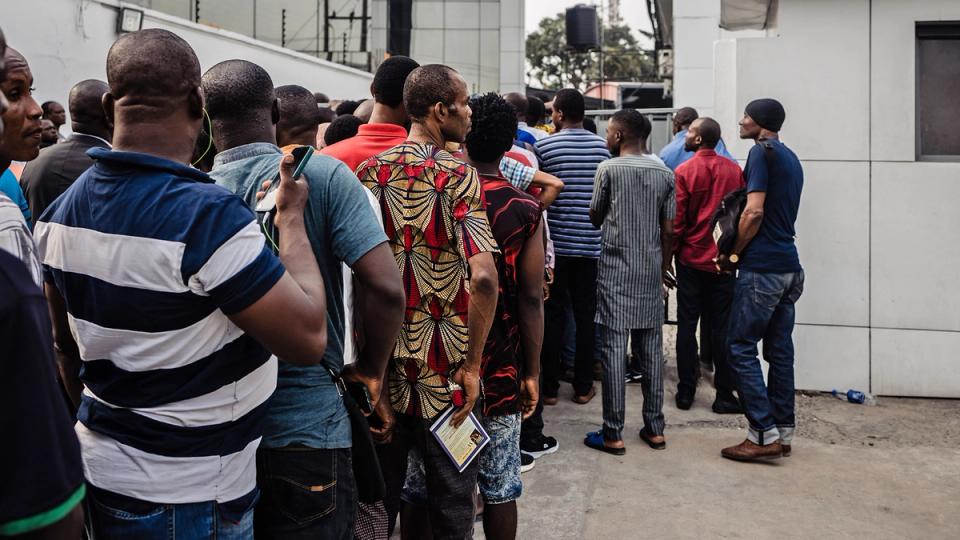
It certainly isn’t true in Nigeria.
Do I need to go on?
The CBDC experience varies country to country, but no CBDC has been “essential” in any sense of the word.
Yet, even within Europe’s borders, the economists appear to misunderstand economic history.
Pointing to the dominance of non-European financial institutions, the authors say the only defense is for the European government to intervene. Yet, interventions by the European government are partly why European businesses have struggled to gain ground.
https://www.cato.org/blog/europe-blames-america-its-payment-problems-digital-euro-wont-help
Rather than being free to serve customers, European businesses must navigate a maze of red tape: customer-surveillance mandates, extensive reporting rules, and regulatory fragmentation.
Making matters worse, price controls—such as caps on interchange fees—prevent new entrants from generating the revenue needed to manage these compliance burdens. It’s not a market failure if the source of the issue is government intervention.
If the economists are right about one thing, it’s that the European Parliament should be careful about who it takes advice from.
This letter is particularly troubling, though. I say that because their argument lacks an understanding of both central bank digital currencies (CBDCs) and economic history.
The economists claim that a CBDC like the digital euro would be “an essential safeguard of European sovereignty, stability, and resilience.” https://sustainablefinancelab.nl/wp-content/uploads/sites/506/2026/01/The-Digital-Euro-Let-te-public-interest-prevail.pdf
Setting aside their lack of evidence to back the claim, where has this been true in practice?
It certainly isn’t true in The Bahamas.
https://www.cato.org/commentary/bahamians-didnt-want-cbdcs-so-now-theyre-being-forced-use-them
It certainly isn’t true in Jamaica.
https://www.cato.org/briefing-paper/cbdc-lessons-caribbean
It certainly isn’t true in Nigeria.

Nigerians’ Rejection of Their CBDC Is a Cautionary Tale for Other Countries
Nigerians are protesting their country's CBDC and demanding renewed access to paper money, despite government incentives to use the digital currency.
CBDC Tracker
A CBDC is a digital national currency. In the case of the United States, a CBDC would be a digital form of the U.S. dollar whereas, in Nigeria, the...
It took two years, but the Reserve Bank of Malawi has selected eCurrency to build its CBDC. 

For the crime of calling out corruption in Russia, Anna Chekhovich has seen the financial system weaponized against her time and again.
However, that hasn't stopped her.
Tune in to the Cato Institute podcast below to hear her story. https://www.cato.org/multimedia/cato-podcast/debanked-dissent-how-putins-reach-extends-abroad
Secretary Scott Bessent is building a legacy of financial surveillance and control. The announcement that he is stopping Americans from sending their money abroad and increasing surveillance under the Bank Secrecy Act should be condemned.
Yet, it should be no surprise.
Yet, it should be no surprise. It was only just last year that Secretary Bessent increased financial surveillance to target transactions as little as $200. After being sued for this violation of fundamental freedoms, he responded by expanding surveillance to cover even more Americans.
This playbook has been used time after time. When the Bank Secrecy Act was first passed, Congress claimed Americans were hiding money in Swiss bank accounts. Then it was expanded to fight the war on drugs. Then it was expanded again for the war on terror. Now it seems it’s the war on fraud.
Fighting crime is a worthy endeavor. However, we cannot sacrifice the freedoms that make America great in the process.
With my new report on debanking out, I decided to sit down with @Anna Chekhovich to talk about her experience being debanked.
Anna's case serves as a cautionary tale about how authoritarians can reach beyond their borders.
https://www.cato.org/multimedia/cato-podcast/debanked-dissent-how-putins-reach-extends-abroad
My newest Cato Institute report is out now and breaks down what you (and Congress) need to know about debanking.
https://www.cato.org/policy-analysis/understanding-debanking-evaluating-governmental-operational-political-religious
This is your reminder that you can just do things.
Bulgaria is officially part of the Eurozone. With the end of the lev, Bulgaria now falls under the ECB when it comes to CBDC developments.

CBDC Tracker
A CBDC is a digital national currency. In the case of the United States, a CBDC would be a digital form of the U.S. dollar whereas, in Nigeria, the...
@HRF asked me to share one of my favorite freedom tech projects. Here's what I had to say about @vexl 😎
While I was limited to just one, I also have to give shout-outs to Skot building Bitaxe, @calle building Cashu, and many more.

The policy front may be depressing at times, but the people building solutions on the ground give me hope.
See what everyone else on the HRF Freedom Tech Team had to say here. 
While I was limited to just one, I also have to give shout-outs to Skot building Bitaxe, @calle building Cashu, and many more.
The policy front may be depressing at times, but the people building solutions on the ground give me hope.
See what everyone else on the HRF Freedom Tech Team had to say here. Human Rights Foundation
Top 15 Freedom Tech Projects of 2025
Looking back on 2025, financial and digital repression under authoritarian regimes continued to grow. But so did the innovation pushing back agains...
I guess there are no days off. The latest in ECB CBDC marketing is a Christmas post from president Christine Lagarde.
To be honest, I would have preferred coal, but here we are... so let me put down the eggnog and break down what's happening here.
As she noted, the EU Governing Council has given the green light for the digital euro (the ECB's CBDC). In short, the Council said that the digital euro should work both online and offline, have holding limits, allow a "high degree of privacy" while still being AML/KYC compliant, and be free for consumers to use.
This green light from the council does not mean, however, that the digital euro will be launched. Now it's up to the European Parliament to weigh in.
Sadly, though, this process might appear democratic from the outside, but it's really just a formality. It's unlikely that Parliament will alter the course.
As @Efrat Fenigson noted on X, the ECB is just waiting for the Parliament's rubber stamp to move forward.
As CBDC marketing ramps up, it's important to be vigiliant (even on holidays).
As I've noted repeatedly, the ECB's marketing campaign borders on false advertising when it comes to claims about competition and freedom.
https://www.cato.org/blog/digital-euro-isnt-about-freedom
2026 is going to be an eventful year on the CBDC front. And as always, you can find out everything you need to know in the @HRF CBDC Tracker.

As she noted, the EU Governing Council has given the green light for the digital euro (the ECB's CBDC). In short, the Council said that the digital euro should work both online and offline, have holding limits, allow a "high degree of privacy" while still being AML/KYC compliant, and be free for consumers to use.
This green light from the council does not mean, however, that the digital euro will be launched. Now it's up to the European Parliament to weigh in.
Sadly, though, this process might appear democratic from the outside, but it's really just a formality. It's unlikely that Parliament will alter the course.
As @Efrat Fenigson noted on X, the ECB is just waiting for the Parliament's rubber stamp to move forward.
As CBDC marketing ramps up, it's important to be vigiliant (even on holidays).
As I've noted repeatedly, the ECB's marketing campaign borders on false advertising when it comes to claims about competition and freedom.
https://www.cato.org/blog/digital-euro-isnt-about-freedom
2026 is going to be an eventful year on the CBDC front. And as always, you can find out everything you need to know in the @HRF CBDC Tracker.
CBDC Tracker
A CBDC is a digital national currency. In the case of the United States, a CBDC would be a digital form of the U.S. dollar whereas, in Nigeria, the...
Ironically, "CBDCs do not serve a purpose" is what I've been saying for years.


Maybe I'm old-fashioned, but saying "anyone who opposes the digital euro" is effectively an enemy of the state does not exactly inspire confidence that the CBDC won't be abused. 

Some good news on the CBDC front!
Norway has joined the growing list of countries saying no to CBDC. 
CBDC Tracker
A CBDC is a digital national currency. In the case of the United States, a CBDC would be a digital form of the U.S. dollar whereas, in Nigeria, the...
After reading more than 300 pages of congressional transcripts from 1968-1970, I finally found the first instance in which someone said the Bank Secrecy Act would harm financial privacy.
Clifford Sommer (American Bankers Association) urged Congress to reconsider what it was doing. Not a single witness before him (albeit, all government officials) seemed to be concerned about the Fourth Amendment or people's privacy. 

The New York Times points to the absence of interest payments on stablecoins as a negative. Yet, what it doesn't point out here is that it was _Congress_ that prohibited stablecoins from doing that.


Congratulations to @Ayelen, @ZacG, @ck, @gladstein, and the whole @HRF team on 100 editions of the Financial Freedom Report.
If you're not signed up, this is one of the few newsletters I read from top to bottom.

Human Rights Foundation
Financial Freedom Reports
HRF’s Financial Freedom Report is a weekly newsletter that exposes how authoritarian regimes weaponize money—and how Bitcoin and other freedom ...
Finally, on the last day of the Africa Bitcoin Conference, I've saved the worst CBDC experience in Africa for last: Nigeria.
In the words of the Central Bank of Nigeria, the CBDC experience has not been a "rosy story."
The central bank launched the eNaira in 2021, and it's basically been downhill since then.
Initial adoption was stuck at just 0.5 percent. The central bank lowered the requirements for access and introduced discounts in response, but people still preferred cash over the CBDC.
With adoption still struggling, Central Bank of Nigeria deputy governor Kingsley Obiora said that all the eNaira needs is a “a little push from the government.”
That's when the central bank suddenly announced it was taking cash out of circulation. After lines turned to protests and then riots, the central bank described the eNaira as a "success" after adoption went from 0.5% to 6%.
Even the IMF admit the CBDC has largely been a failure. In a 2023 study, the IMF found that 98.5 percent of the wallets issued have never been used.
And that's to say nothing of all the complaints on the app stores.
The eNaira has largely fallen apart at this point. Speaking in Ghana a few weeks ago, one Central Bank of Nigeria official said that Nigerians were not interested in the CBDC, the central bank was not prepared to be a retail bank, and the market was already providing solutions.
I've only just skimmed the surface, so be sure to check out the @HRF CBDC Tracker to learn more about what's happening in Africa, Europe, Asia, and elsewhere. 
Initial adoption was stuck at just 0.5 percent. The central bank lowered the requirements for access and introduced discounts in response, but people still preferred cash over the CBDC.
With adoption still struggling, Central Bank of Nigeria deputy governor Kingsley Obiora said that all the eNaira needs is a “a little push from the government.”
That's when the central bank suddenly announced it was taking cash out of circulation. After lines turned to protests and then riots, the central bank described the eNaira as a "success" after adoption went from 0.5% to 6%. 
Nigerians’ Rejection of Their CBDC Is a Cautionary Tale for Other Countries
Nigerians are protesting their country's CBDC and demanding renewed access to paper money, despite government incentives to use the digital currency.
X (formerly Twitter)
Nick Anthony (@EconWithNick) on X
Just look at the state of the negative reviews on the wallet app for Nigeria's CBDC...
CBDC Tracker
A CBDC is a digital national currency. In the case of the United States, a CBDC would be a digital form of the U.S. dollar whereas, in Nigeria, the...