Cameron Vaské's avatar
Cameron Vaské
npub1n3nx...m3x6
Zillenial reflecting on sound money, legitimacy, trust, and democracy. Sound money is institutional honesty. Sometimes I think I know things. Stay curious and stack sats.
Cameron Vaské's avatar
cameronvaske 1 month ago
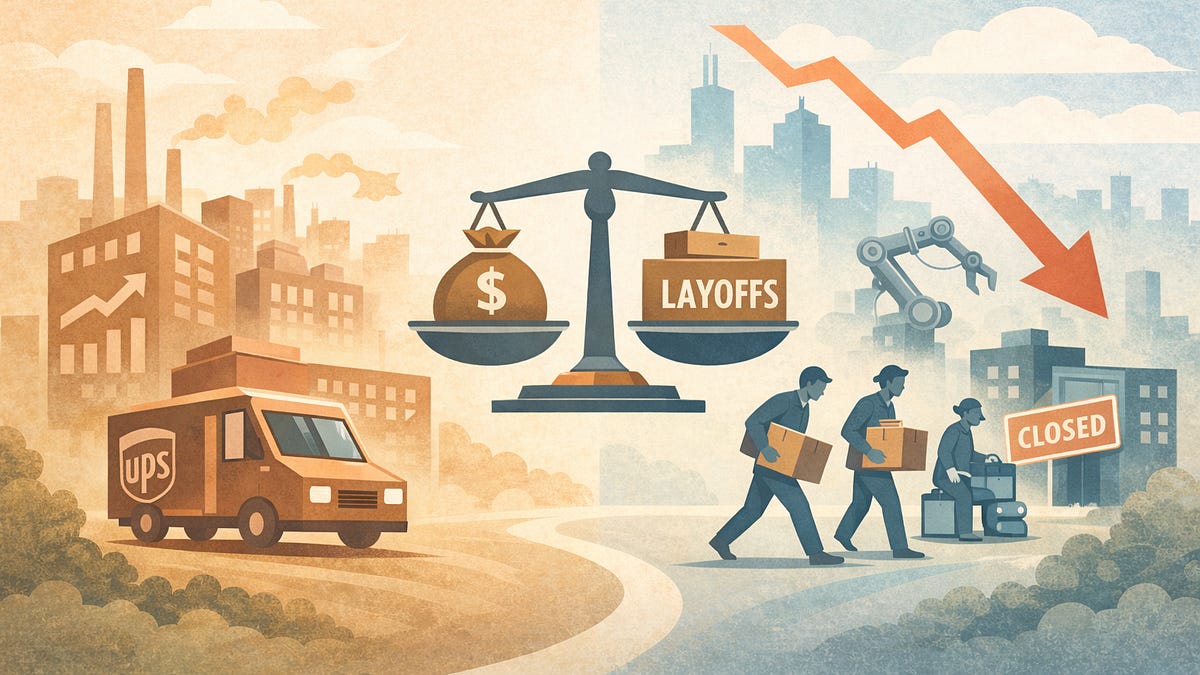
AI industry looks to me like it’s heavily over-leveraged and about to crash out in a big way. We’ve seen since at least: - OpenAI invested heavily nvidia, which is invested in OpenAI - Sam Altman float being “too big to fail” and being rebuffed on “this echoes too much like 2008 - Numerous AI-led corporate and even government embarrassments and task failures, if you will - Studies like those the AI Now Institute has conducted that credibly question whether AI usage has meaningfully increased labor productivity - About a gazillion fearmongering takes that ‘AI is replacing white collar jobs, probably tomorrow’ - And now, this. image
Cameron Vaské's avatar
cameronvaske 1 month ago
Sound money is institutional honesty. It is also inherently part of America’s democratic republican tradition. - It requires the state to hold itself to account (literally) and keep its word in real time rather than defer its costs indefinitely into the future. - It aligns public spending with visible trade-offs instead of obfuscating the part of the true cost in inflation; it tells the story of what things actually cost. - It protects the value of work, savings, and contracts from quiet dilution; it’s how we keep our promises about tomorrow to ourselves and our fellow citizens. Sound money is part of institutional truth-telling and accountability. Put simply, when money tells the truth, governance must as well. Stay curious and stack sats, y’all.
Cameron Vaské's avatar
cameronvaske 1 month ago
Reshared here— So much to like in terms of questioning, line of argumentation, and ideas being posed here from John Avlon and the usual suspects at The Fifth Column. A few key things really stood out to me and got me excited: - There is a genuine opportunity here to distance from the illiberal extremes in favor of a common-sense politics that’s not “centrist” for centrism’s sake or “split the difference,” but by addressing the institutional and incentive structures that are repeatedly delivering poor results; - Voting systems are one part of this problem, because they force us to the extremes and push out representation for many Americans (just look at the latest Gallup poll from January showing only 27% of Americans identify as Republican, 27% as Democrats, and 45% as independents); - Overspending is the other half of this problem—constant fiscal deficits that blind the real trade-offs and incentives structures to governance driven by (in many cases well-intentioned, many not) instincts to solve everything through the state from both parties (implicitly through fiat currency debt financing); - A through-line I don’t think got as much play and I don’t recall explicitly stated: the crisis is about trust, legitimacy, legibility, and incentive misalignment. Definitely worth a listen. Got my attention immediately. This is more of the conversation I think we need to be having.
Cameron Vaské's avatar
cameronvaske 2 months ago
I’m just getting to the part of fiat currency secondary effects in @LynAlden's Broken Money book where we’re talking about the politics of fiat currency. So pleased to find I’m in good company with what I’ve been hammering home (to anybody who’ll listen—sorry @poorbaldmonkey) about democratic decision-making and fiat currency. Here’s a great excerpt, and one I urge pro-democracy reform folks to take heed of: “The goal for this whole process is for the money supply to grow at a smooth and moderate pace, without big contractions or big accelerations that destructively feed on themselves. The peaks and troughs of the private sector are dulled, and external shocks are smoothed over—or at least, that’s the plan. This theory works well on paper, assuming that government and central bank officials are more detached, intelligent, and/or long-term in their thinking than people in the private sector in aggregate, or at least that their incentives are more aligned with long-term planning. A problem obviously arises if they are not, and realistically, that’s usually the case. Authoritarian governments often have a clear lack of incentive alignment with their subjects. Democratically elected officials, meanwhile, are focused on winning the next election. None of these lawmakers have an incentive to run a surplus now and slow down the economy to create a reserve of capital from which they could backstop a weak economy later. And if they were to try, they’d likely get voted out of office because people in aggregate always want less taxes and more services in the present.” What’s clear here is that, beyond the question of being able to manage fiat currency and Keynesian economics well, incentive structures in democracies—in large part by the *way* that elections are held—lead to short-termism in planning as much as the externalities of fiat currency systems themselves do. In other words, the incentive structures of our voting systems (I’m talking first past the post, mostly here) discourage long-term planning by electoral logic by pushing long-term interest past the electoral cycle. (And it doesn’t have to be that way—and can be far better—under better and more representative voting systems.) Fiat currencies further enable economic, and therefore political costs to be offset from present decision-making to the future, which also obscures accountability. “Is this inflation or slump all, partly, or none of the fault of X Fed/Presidential/Congressional policy?” And even then, most voters won’t (and I’d argue, fairly can’t be reliably expected) to connect all the dots there. The two reinforce each other. In my mind, the sound money movement is therefore just one half of the solution to perhaps the biggest challenge for free societies and liberal democracies in the 21st century. Institutional reform and renewal is the other. Neither fixes the entire equation alone—both are necessary. What do you think? Stay curious and stack sats.
Cameron Vaské's avatar
cameronvaske 2 months ago
Controversial take: For those that want to explain to others the problems with fiat currency, don’t start with Bitcoin. I know it’s tempting to give “the solution” first, but it’s confusing and triggers an instant mental “immune response.” Start with fiat currency vs. sound money. Most people don’t realize what either of those terms mean in principle or in practice. In fact, I’d go as far as to say most people have never even heard the terms. Con: This is totally new to them, so they don’t know the background. Pro: This is totally new to them, so it doesn’t map onto preexisting biases. Explain how money used to be backed by gold, how we got off of that, and what that means. Explain how money is no longer backed by assets. Then explain how money can effectively be created “out of thin air.” Tie that to inflation and debt. Take your time. Be patient. This is all new to them. And now it’s starting to gel. You may even get the question: “Wait, so, money can just be created out of thin air, and that causes inflation? How does anyone save, then?” Now you can start to talk about Bitcoin. Explain it as sound money—because it is one. Explain its benefits. Explain it as a new, not-yet-fully adopted money system. Patience. Let them argue and question it. Give calm answers. This is how you reach people who dismiss this as a fad, a gimmick, or a Ponzi scheme. If fiat is all you know—which is most people—and you think money must be backed by a centralized institution with authority to be money, then yeah. Bitcoin sounds pretty fad-like, gimmicky, and Ponzi scheme–like. It doesn’t help that bad actors have used it, either (even though bad actors have used Dollars, Euros, and whatever else, too), or that there are genuine scam cryptocurrencies out there. It all looks the same to people who don’t know the difference. It’s almost a problem of being too aware of a complex thing—it’s so known to you, you don’t necessarily remember what it was like to not understand this and be learning about it. My guess is it took some time. It took curiosity. That’s what you need to engender in others for them to want to understand. Curiosity. And then they need time to develop understanding. If you don’t think this works—I’m here because of exactly that process. Curiosity. Time. Patience. Asking questions. Seeking answers. I didn’t get Bitcoin because of the blockchain technology, or out of a desire to speculate, or out of a distrust in other currencies per se. It all looked like *just* a digital fandom and technological nerdiness. I did it once I understood enough to know *why* it was a good investment. Because I now understood what sound money and fiat currency were, and why Bitcoin is a sound money. It made logical sense. I could see how it would help me. I could defend that decision. If Bitcoin is going to be *the* sound money in the future, it needs more adoption *as* a sound money. It only makes sense that it needs to be explained that way to people in terms they already understand from a perspective they already agree with. They need to be able to be curious about it, not defensive about it. And you can help with that. Stay curious and stack sats, y’all.
Cameron Vaské's avatar
cameronvaske 2 months ago
Sound money is institutional honesty—what things actually cost. image
Cameron Vaské's avatar
cameronvaske 2 months ago
Just wrote a full 38-page dissent memo on democracy, representation, and institutional realism for a pro-democracy / reform group, with counterproposals. Some early takeaways from the process and early discussion: - Citizens’ Assemblies are good for showing a snapshot of public sentiment, but can’t replace deliberative policymaking in a republic; - Especially in today’s America, any findings and/or policies from even a fully unbiased and good faith Citizens Assembly (and any supporting policy commission) will be polarizing, because enactment relies on existing legislative and executive, and therefore electoral incentive structures; - Because of this, elected officials—both “good” and “bad” ones—are incentivized to make decisions that appeal to the base that can get them elected, anyway. - As a result, the findings and any policy recommendations—whether good representations and solutions or not—instead become a new argumentative cudgel for politicians and parties to argue against each other. - Citizens’ Assemblies are, however, crucial tools for a public to rewrite the incentive structures behind elections and social choice by demonstrating preference in expressing that choice. The key is then to approach that assembly with a coalition of good faith actors, incentive- and institutional-level problems, and get feedback on a better system. In essence, good intentions that don’t address incentives and decision-making flows can do more harm than good. What do you think?
Cameron Vaské's avatar
cameronvaske 2 months ago
Thoroughly enjoyed this article—and especially loved this passage. image
Cameron Vaské's avatar
cameronvaske 2 months ago
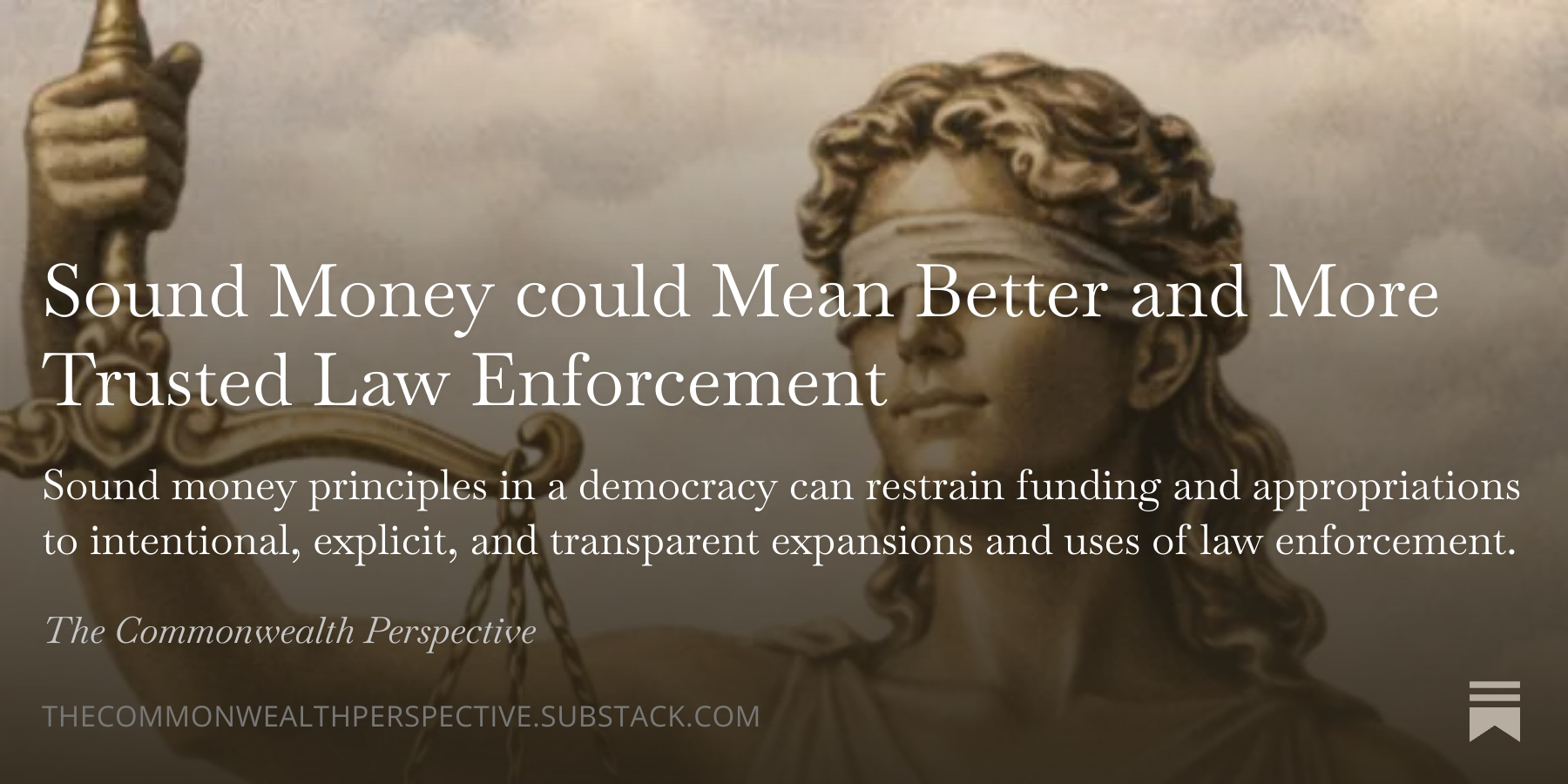
Wrote a thing. Come check it out and tell me what you think and where you think I’m wrong—or right. “If the state can fund coercive capacity without visible cost, it will expand it. If cost is visible, it must justify it. […] How can you expect a polity to tell the truth about its governance if it cannot tell the truth about its finances?”
Cameron Vaské's avatar
cameronvaske 2 months ago
Just got done with Dave Walker’s “America in 2040: Still a Superpower?” A really good and authoritative read on America’s fiscal future, oversight challenges, and an inside perspective on reform efforts. Below is a link to the author’s webpage for the book. A few takeaways: - Durably reforming and improving fiscal policy (and governance, generally) requires careful needle-threading and broad-based popular support built on common understanding in good faith; - When presented with the actual problem sets (including in fiscal terms), Americans are not only willing, but eager to undertake hardship to achieve sound governance and a better future; and - The existing ‘tools’ to course correct from within the oversight, Congressional, and civil service have become tangled up in political quagmire such that solving through small d democratic or small r republican methods individually seems unlikely—a combined approach seems necessary.
Cameron Vaské's avatar
cameronvaske 2 months ago
Curious what the Nostr community thinks: What is one principle or value you think America promises that it doesn’t fulfill (or fulfill well), and why? What’s important about that to you? How do you think we can or should recover that?