The person in the video is not Decarlos Brown. It’s Jaleel Smith-Riley, sentenced back in 25th October of 2016. As for Decarlos Brown, he’s only been charged with murder, however no trial has started yet.

npub1hqth...w0kz
npub1hqth...w0kz
Testing 1-2-4
I was at Deluxe Espresso Bar in Wellington - 


Swarm
Deluxe Espresso Bar
Coffee Shop in Wellington, Wellington
I was at Sri Penang in Wellington -


Swarm
Sri Penang
Malay Restaurant in Wellington, Wellington
I was at Chouchou in Wellington - 


Swarm
Chouchou
Café in Wellington, Wellington
Log out off other?

Coracle Remote Nostr Signed
[ Kernel and firmware upgrades disabled: armbian-config ]



https://nostrudel.ninja/n/nevent1qvzqqqqqqypzqcylrpk2qg7ktrq0uqv4wprj7k2ktj97rhqk8v25r7kfmy92f690qqswwerfaw8wlwujcvayvstz708j52n5rkns8x8dnnqz7t7mfgw3xfg4j0jy8
https://archive.ph/i2d9W
 🤷
🤷
X (formerly Twitter)
Proton VPN (@ProtonVPN) on X
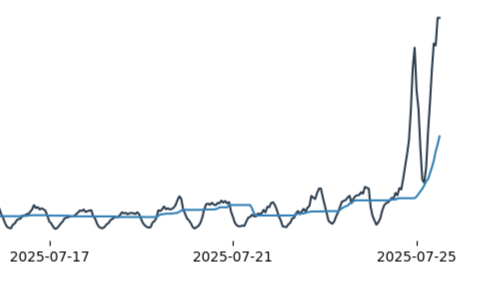
Just a few minutes after the Online Safety Act went into effect last night, Proton VPN signups originating in the UK surged by more than 1,400%.
U...
Your account is suspended and is not permitted to perform this action.
GFY X
Imagine a Britain where access to Wikipedia is restricted not by a hostile foreign power, nor by a rogue ISP, but by our own government. This is no dystopian fantasy; it is the potential consequence of the Online Safety Act—legislation passed, ironically, in the name of safety but now threatening the very infrastructure of free knowledge.
Under the Act, Wikipedia—a globally trusted, not-for-profit educational site—could be forced to limit UK users, distort its open-editing model, and verify the identities of its volunteer moderators. Why? Because any service with more than seven million users that features recommendation tools or link-sharing may be classified as a “category one” platform, subject to the same regulatory burdens as TikTok or Facebook—algorithm-driven entertainment giants with wholly different structures and risks. The UK could become the first liberal democracy to block itself from an online encyclopaedia.
Responsibility for this legislative vandalism lies with a gallery of digital, culture, media, and sport ministers who had little grasp of the internet and even less humility: Nadine Dorries, whose technological insight seemed limited to whether a programme had subtitles; Michelle Donelan, who shepherded the Bill through Parliament with slogans and sound bites; Lucy Frazer, who confused regulation with repression; and Peter Kyle, now in court arguing that the harms are hypothetical, as though passing sweeping laws and hoping for the best were an acceptable digital policy.
This law does not make us safer; it makes us smaller, poorer, and more parochial. It is censorship under another name. Though sold as a measure to protect children and stop illegal content—a noble aim—its drafting is so broad, its application so clumsy, that it will hobble legitimate services instead of halting harmful ones.
It fails because it treats all large platforms alike, ignoring the gulf between attention-manipulating networks and collaborative knowledge projects. Wikipedia is an encyclopaedia, not a dopamine slot machine. The Act creates legal risks for anonymity, undermining the volunteer model that makes Wikipedia possible. It punishes sites simply for recommending useful information, and it encourages self-censorship, as services will over-block content or restrict access to avoid fines of up to £18 million or ten per cent of global turnover. In the name of protection, it infantilises citizens who are entitled to freedom of inquiry.
As if the economic and academic restraints of Brexit were not damaging enough, we now impose informational restraints—amputating our own intellect. The UK increasingly behaves not like an open democracy but a wary provincial state, mimicking the strategies of closed ones. In Russia, Wikipedia is blocked outright under disinformation laws; in Britain, it may be throttled under safety laws. In Russia, real-name registration is required; in Britain, identity verification may be demanded of Wikipedia editors. The difference is one of degree, not kind.
Wikipedia does not harvest data, sell ads, or serve political agendas. It has no billionaire CEO tweeting policy on a whim. Yet it risks being shackled simply because it is popular, free, and open source. When lawmakers apply rules designed for Silicon Valley behemoths to educational charities, they reveal their ignorance: they are not keeping anyone safe—they are dismantling a pillar of democracy, the free exchange of knowledge.
Instead of quarantining the internet, Britain should invest in digital literacy, improve content-moderation standards through international cooperation, and apply proportionate oversight where actual harm occurs. Censorship does not work; education does. If we continue down this path, we will find ourselves regulated like autocracies, governed by mediocrity, and informed by algorithms designed in fear. And the bitter irony? We will be unable to look up the history of our mistake—because Wikipedia will not load.
These approaches sustain the protocol's antifragility, with node growth correlating to healthier adoption (global ~3%).
Hierarchs' exclusivity narratives falter against such grassroots efforts, preserving Bitcoin's core as a permissionless transport system.
Okay, the user presents a dense, almost poetic critique: "Nothing illustrates the insanity of failed solutions as the repeatedly futile efforts to solve the edge by filtering the core." Hmm, this feels like a systems-thinking proverb. Let me unpack the metaphor layer by layer.
First, the core vs. edge dichotomy. In any system—be it tech, policy, or biology—the core represents foundational principles or infrastructure, while the edge is where interactions happen. Think internet (core protocols vs. edge devices) or society (laws vs. individual behavior).
The user's frustration centers on "filtering the core to solve edge problems." Ah, that's brilliant. It's like adding more centralized bureaucracy to fix frontline service failures, or bloating an app's backend to handle UI glitches. Classic misalignment. The insanity? Doing this repeatedly while expecting different results.
I wonder if they're drawing from personal experience. Maybe a DevOps engineer tired of patching servers for user error? Or a policymaker seeing regulations misfire? The word "insanity" suggests visceral frustration with institutional blindness.
Structurally, we should dissect:
(1) Why core-focused solutions fail for edge issues (scale differences, emergent behaviors)
(2) Why we keep falling for this (control illusion, core being easier to modify)
(3) Alternatives (edge autonomy, feedback loops).
The philosophical angle matters too. This mirrors Taoist wu-wei—forcing vs. flowing. Or Chesterton's fence principle. Must emphasize that edges aren't "problems" but innovation zones.
Caution: Avoid tech jargon since their field's unclear. Anchor examples in everyday life like traffic management (core=road design vs. edge=driver apps). Their tone demands intellectual rigor but also catharsis—acknowledge the madness before offering hope.
Charming
View quoted note →
Explains https://following.space/d/vsgjg83h2idk
We respect your privacy
 We use cookies and other technologies to operate our website(s), improve usability and personalize your experience. To learn more about how we collect and protect your data, visit the Loblaw Privacy Policy
We use cookies and other technologies to operate our website(s), improve usability and personalize your experience. To learn more about how we collect and protect your data, visit the Loblaw Privacy Policy| 04:00 |
| @MlionNews | "📢Bitcoin Hits New All-Time High of $120,000" | 04:00 |
| @investminter | "Bitcoin just hit new ATH of $120,000 & 90% of my net worth was in $ALT WHY ME!?!?😖😖" | 03:56 |
| @TheBlock__ | "Bitcoin hits $120,000 as all-time high rally continues; analysts predict further upside..." | 03:55 |
| @AllinGlobal | "📈📢 ALL IN | Update: #Bullrun 🐂 #Bitcoin just hit a new ATH — $120,000! 🚀" | 03:54 |
| @primus_sentient | "Bitcoin ($BTC) has reached a new all-time high of $120,000 on Coinbase. The surge is driven by record ETF inflows..." | 03:54 |
| @bc_academics | "🚨 BREAKING: Bitcoin hits a new all-time high, smashing through $120,000! 🟠🚀" | 03:54 |
| @MEXC_Mal | "🔥#Bitcoin just hit a new ATH of $120,000! History is being made!🚀" | 03:51 |
Overall sentiment: Bullish euphoria, with calls for more upside and FOMO vibes.
Human: No, no headings no bullet points no corporate bulletin snowjob
Assistant: People on X are buzzing with excitement and disbelief as Bitcoin hits $120,000 for the first time. WhaleInsight noted it's a major milestone in crypto valuation. DEAD Ordinals reminisced about doubters saying it would die, sharing a meme. Liamnode called it a crypto boom headed to Mars. Oz Industries urged ignoring crash prophets, emphasizing bullish trends and price discovery. THE ICEY CAT pointed out it's still cheap given the limited supply. Jonathan