
I see the problem that v30 is trying to address, but I completely disagree with the solution they chose.
The concern is understandable: if users can bypass node relay rules by sending large OP_RETURN transactions directly to miners, that creates centralization pressure. Miners could start offering private submission channels for large data transactions. Over time, that weakens the public mempool and gives mining pools more gatekeeping power.
After recognizing this issue, Core likely looked at different ways to handle it. In the end, they decided to align relay policy with consensus and completely remove the OP_RETURN size limit at the policy level.
The idea was straightforward: if the standard relay path allows what consensus already allows, there is no incentive to route transactions around the network.
Up to that point, I can follow the reasoning. But that is not the only possible solution.
Why not go in the opposite direction?
Instead of loosening relay rules, why not tighten consensus to 80 bytes?
That would have:
• Closed the bypass vector completely
• Removed the incentive for direct miner submission
• Kept the attack surface smaller
• Avoided normalizing larger data embedding
• Reduced legal and reputational risks
• Made large-scale spam more expensive, since it would need to be split into multiple transactions
In short, instead of expanding what is permitted at the policy layer, consensus could have been made stricter.
So the real question is:
Why was this option not seriously debated? Were there strong technical reasons against it, or was it simply not the direction they wanted to take?
Mischa
Mischa@primal.net
npub1htpl...axzv
Working in Switzerland as an automation technician with a passion for studying Bitcoin
Most nodes oppose the change in v30. Most nodes also oppose the change proposed in BIP110.
So why not roll back both and slow down?
Take the time to develop serious solutions. Let different teams propose different approaches. Evaluate them openly. Test them thoroughly. Compare the trade-offs honestly. Then, in one or two years, decide which path truly makes sense for Bitcoin.
As long as Core refuses to reverse its change, I feel pushed toward supporting the fork. We clearly have a spam problem and spam harms Bitcoin in multiple ways. Ignoring it is not a strategy. Pretending it has no meaningful impact is the wrong approach. If the change were rolled back, I would be willing to give the process more time.
I do not see this as an immediate emergency. But failing to address the issue and signaling that spam will simply be tolerated will only accelerate the problem. That is not a direction Bitcoin should move toward.
History is usually written by the winners. Those who prevail, gain power, or occupy key positions decide how events are later interpreted. They shape the narrative and define what is considered “right.” This often creates a black-and-white view: the winners were right, the losers were wrong. Reality, however, is rarely that simple. Good arguments do not disappear just because one side won politically or structurally.
The same pattern can be seen in Bitcoin. During the Blocksize Wars, certain groups won. Today, these groups are deeply embedded in Bitcoin’s structures and strongly influence both its technical direction and its ideology. The system that emerged from this has clear strengths, but also increasingly visible weaknesses.
Some of these effects are easy to observe. Scaling mainly happens off-chain, often with centralising tendencies. The mempool is increasingly used for non-monetary data. The SegWit discount makes some forms of spam cheaper than normal on-chain payment transactions. Transactions are not private, and miner fee revenue remains low.
This does not mean that the chosen path was wrong. But it does show that Bitcoin is not perfect, and that some arguments from the other side of the conflict had real merit. The bigger issue is not that these arguments exist, but that many of the original winners are unwilling to acknowledge them in hindsight or consider adjusting direction.
One of Bitcoin’s greatest strengths is that there is no permanent authority and no single group that can decide its direction forever. Developers, miners, companies, and users all influence Bitcoin, but none of them fully control it. Change emerges slowly through use, economic pressure, and real incentives. It is messy and chaotic, but unavoidable.
These recurring conflicts in Bitcoin are not a weakness. They are the direct result of having no central authority. They force existing structures to confront reality again and again. That is exactly what keeps Bitcoin flexible, resistant to capture, and alive. Turbulent times are necessary to realign Bitcoin with reality until it finds its best path. Do not fear these conflicts: stand for change, and Bitcoin will do the rest.
This post is inspired by the newest video from @Bitcoin Mechanic
Best regards, I appreciate your content.
As competition in mining intensifies, inefficient actors are pushed out. While this is usually seen as healthy, in a world of centralized financial markets it can actually accelerate centralization. When Bitcoin’s price growth is limited and transaction fees stay low, the key efficiency advantage shifts to access to cheap capital and credit. Under pressure, miners are forced to turn to these centralized funding sources. Capital always comes with conditions and long-term influence. This creates dependency on existing power structures and makes genuine decentralization economically difficult. The result is a mining sector that is more centralized, and more reliant on centralized structures, than many are willing to admit.
It is correct that before Core v30, miners could also include large OP_RETURN transactions in blocks, but that choice was made by clearly identifiable actors. Miners are public-facing companies. Deliberately mining large OP_RETURN data could lead to reputational damage, loss of hashrate, and in extreme cases legal consequences. That acted as a natural social and economic brake.
With the opening of OP_RETURN, responsibility shifts from individual miners to the network as a whole. Every node now relays these transactions, regardless of their content. This removes clear attribution to a responsible actor. What used to be a conscious choice by a few miners becomes a structural property of the protocol.
Large OP_RETURN data and inscriptions increase storage, bandwidth, and computational requirements. That raises the cost of running a node. Over time, fewer people can afford to operate their own nodes, which weakens decentralization and concentrates influence among large operators.
In the long run, this can alter Bitcoin’s level of decentralization and change the balance of power within the network.
I really like the idea behind Fanfares.
I tested the reward-sharing mechanism with a second account, but it didn’t work as expected.
Here’s what I noticed:
I was using the Brave browser, and I’m wondering if having cookies disabled prevents rewards from working.
When I logged in with my second account, the public key was correct, but the Lightning address shown was different from the one in Primal. I tried logging in twice and got the same result.
Also, when I first clicked the link, I was automatically logged in with a new account. In the browser. After that, I switched to my real one. Could that have confused the reward-sharing mechanism or caused it to link the wrong account?
@Short Fiat
I’ve often heard that the true potential of Nostr hasn’t appeared yet, that its revolutionary use case still doesn’t exist. I think I’ve found one and the name is fanfares.
Create a new incentive system where valuable content is stored encrypted on Nostr and unlocked through Lightning payments.
Sounds very simple, but give it a listen..


Fanfares
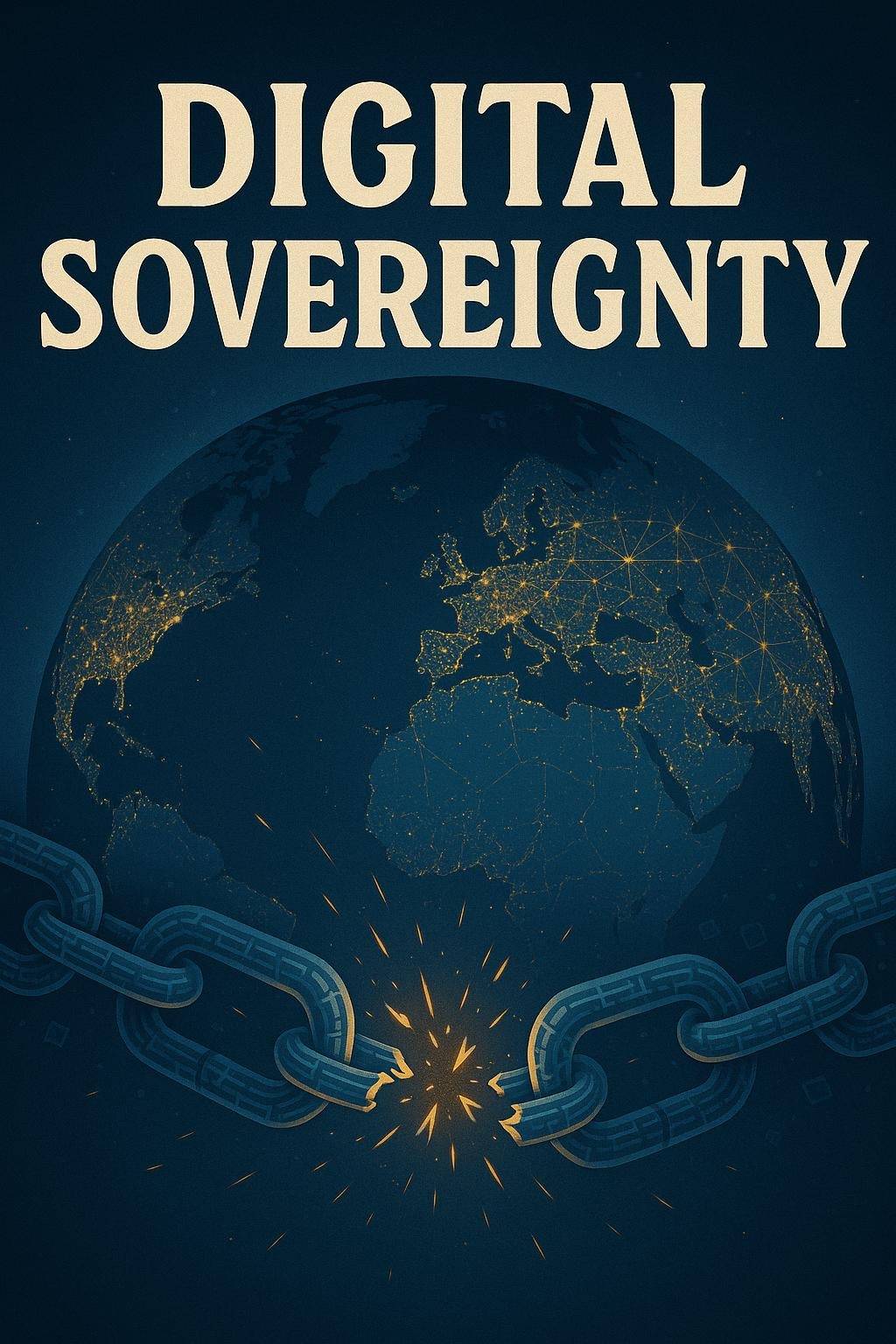
Digital Sovereignty
8,000 sats - The book that fixes the internet ⚡
A good beginner video for people who have not yet deeply looked into the fundamental reasons why some want to create a fork of Bitcoin.
@Matthew Kratter
Strong interview with very interesting points.The fact that financial service providers must always chase higher returns just to keep capital, otherwise it moves to competitors, makes you question whether this system has any real winners. In the end, it feels like there are only two options: no money at all, or money based on debt and controlled through debt. Bitcoin finally offers a way out of this.
Thank you, Peter. It’s clear that you truly want to make things better and that you are actively working toward change.
View quoted note →

Fountain: Podcasts & Music
The Peter McCormack Show • #139 - Simon Dixon - How the Financial-Industrial Complex Runs the World • Listen on Fountain
Western politics appears chaotic - broken states, endless debt and permanent crisis. Simon Dixon argues it isn't chaos at all, it's structure. In t...
Strong interview with very interesting points.The fact that financial service providers must always chase higher returns just to keep capital, otherwise it moves to competitors, makes you question whether this system has any real winners. In the end, it feels like there are only two options: no money at all, or money based on debt and controlled through debt. Bitcoin finally offers a way out of this.
Thank you, Peter. It’s clear that you truly want to make things better and that you are actively working toward change.
https://fountain.fm/episode/WYtgYKympvqyFMyARErc
View quoted note →