Susie Violet Ward's avatar
Susie Violet Ward
npub1hwgw...03sg
Journalist
Susie Violet Ward's avatar
Susie 3 weeks ago
Jeremy Grantham’s latest CNBC comments are a perfect example of what happens when traditional finance tries to judge Bitcoin using an old framework. Had these comments been about crypto, I would have nodded along. Much of that market has proved to be speculative and altcoin season is not coming back. This was not a discussion about the crypto casino. He was speaking in front of a Bitcoin chart, while the segment drifted between 'crypto' and Bitcoin as though they were the same thing, which tells you how little precision sat behind the critique. Bitcoin deserves a more serious discussion than recycled talking points about crooks, dividends and supermarket payments. He called it a 'useless speculative mechanism' and said it would 'dwindle away' over decades, 'not with a bang but a whimper.' He asked why people do not use it to buy dinner or pay at the supermarket. Then came the line: “What it does is allows crooks to move money around without leaving a trace.” That is not dismissive… it’s wrong. It is not a stock, a company, or a bond. It does not have earnings, dividends, cash flow, a management team, or a board of directors, because it was not designed to be valued like those things. It is a decentralised monetary network with: - no CEO - no central bank - no political control - no bailouts - no off switch - a fixed 21 million supply that cannot be inflated on demand. The 'without leaving a trace' claim really misunderstands the system. Bitcoin is a public ledger and every base layer transaction is recorded. It is far more traceable than cash, which is why law enforcement, analytics firms and exchanges have spent years building tools around that transparency. The 'people don’t buy dinner with it' argument is also wrong and lazy. Gold is not judged by how often it is used at the supermarket. Bitcoin allows people to store and transfer value across borders, outside a system suffering from inflation, surveillance, debanking, capital controls and political discretion. Then there is proof of work, which Grantham dismissed as 'proof of unnecessary work.' That 'work' is what secures the network. It is what makes Bitcoin expensive to attack, impossible to rewrite and different from the thousands of tokens that can be changed, paused, printed or controlled by insiders. That is a stock market framework being applied to an open monetary protocol. Bitcoin has already survived bans, crashes, exchange failures, media attacks, regulatory assaults, energy panic, criminality narratives and repeated predictions of its death. That is not dwindling away. Grantham is not watching Bitcoin disappear, he is watching the old framework fail to explain it. So if the price worries you, remember what this actually is... A 17 year old monetary network separating money from state and challenging some of the oldest assumptions in finance. We are still early! Full article:
Susie Violet Ward's avatar
Susie 3 weeks ago
Hollywood loves a whistleblower story once the danger has passed. Eugene Jarecki’s The Six Billion Dollar Man arrives while the danger is still attached. Major platforms privately praised it … then said no. Now it’s bypassing them with Bitcoin and Nostr on June 27. My latest in Forbes featuring @Eugene Jarecki @jack Julian Assange @BTC Prague. Full article: image
Susie Violet Ward's avatar
Susie 1 month ago
This is another great advert for bitcoin, Nostr and separating money and state. Nobody serious thinks social media is creating a happy, healthy environment for children. The harms from addictive apps, algorithmic feeds, cyberbullying, adult content, predators, body image pressure, endless scrolling and destroyed attention spans are obvious. The problem is that banning things rarely works, especially when technology is moving faster than the digitally illiterate policy class trying to control it. This will push children onto VPNs, fake accounts, encrypted groups, offshore platforms, unregulated apps and darker corners of the internet where parents have even less visibility. It risks turning a difficult parenting problem into a surveillance and identity checking regime for everyone, while giving families the false comfort that the state has 'solved' something it barely understands. We have already seen this pattern with online age checks. The rules come in, VPN use surges, people route around the system, privacy gets weaker, and the children most at risk are driven further underground. Australia’s under 16 ban has already shown enforcement problems, with children learning how to evade the controls rather than becoming meaningfully safer. The really depressing part is how familiar this all feels. We have seen it in bitcoin policy for years. The people with the worst incentives, the least technical understanding and the biggest lobbying budgets somehow end up with the ear of government, while people who actually understand the technology are ignored. It is a total shit show. The answer is not more state control over speech, money, identity and childhood. The answer is better parenting, better tools, better communities, better education, and less blind faith in governments with a proven track record of making problems worse. Handing more power to the state every time society gets scared is how we sleepwalk into something far more dangerous. Critics have already warned about enforcement, privacy and children moving to less regulated spaces.  Research on age verification and the UK Online Safety Act also points to VPN spikes and privacy concerns after age checks. At the same time, early analysis of Australia's ban suggests children often learn to evade controls rather than comply. When governments use 'protecting children' as the justification for sweeping digital control, the question is no longer whether they mean well. It’s whether they are building the infrastructure for something far more dangerous. #ForTheKids 🤔
Susie Violet Ward's avatar
Susie 1 month ago
Hal Finney understood early that Bitcoin could serve two worlds. It could become ‘a reserve currency for banks’ while still remaining permissionless money anyone can hold and use without intermediaries. As Eric Balchunas said, Bitcoin has two major advantages. It is censorship resistant and a debasement hedge because of its scarcity. The important thing is preserving access to both uses, so it can integrate without surrender and scale without ceasing to be freedom money. This is the most elegant monetary achievement in history.
Susie Violet Ward's avatar
Susie 1 month ago
Digital control is expanding through surveillance, debanking, KYC databases, internet shutdowns and financial repression. Builders and activists are creating an emerging freedom tech stack of private payments, resilient communication, spyware research, peer to peer funding and practical education. My latest article in Forbes featuring @npub17fzk...9yxv @npub1fpyy...2jcw @Hodl Hodl @npub17xvf...c9as Bitchat, Agora, Nostr and Bitcoin. With insights from @npub1etqx...klqn @calle @npub1vfh4...yej5 and @Anna Chekhovich. Read the full article:
Susie Violet Ward's avatar
Susie 1 month ago
Bitcoin is often called the best performing asset of the decade. So I created this 10 year chart to show how big the gap really is. Orange = Bitcoin Purple = S&P 500 Yellow = Gold image
Susie Violet Ward's avatar
Susie 1 month ago
Excessive KYC + Data Leaks = Kidnapping & Extortion Global Gart stats right now: - 340 reported attacks - across 59 countries - 26 fatalities - +84% YoY - correlating with Bitcoin price rallies Regulation and data collection are not protecting people. They're instead building target lists for violent criminals. Privacy & opsec are going to become survival skills. Thanks for the wake up call @Joe Nakamoto.
Susie Violet Ward's avatar
Susie 2 months ago
Interesting comments from Andrew Bailey on stablecoins, dollar dominance and the growing risk of regulatory fragmentation between the US and the rest of the world. “We know what would happen if there was a run on a stablecoin - they'd all turn up here,” Bailey warned. If privately issued dollar backed stablecoins become globally systemic payment rails, questions around sovereignty, convertibility, financial stability and political influence become impossible to ignore. Article:
Susie Violet Ward's avatar
Susie 2 months ago
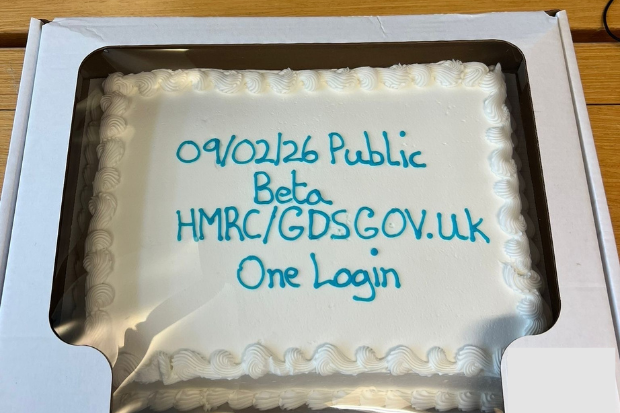
GOV.UK One Login is now the standard route for every new HMRC user. “HMRC services are among the largest and most-used digital services in government.” - Lucy Leonard, HMRC onboarding lead at GDS. This is creeping full centralisation of your taxes, wealth, assets and address into one single login. One profile and one MASSIVE honeypot. This will create a single point of failure for huge data breaches (which happen regularly), enables total tracking across government services, and paves the way for biometric requirements next. On top of that, centralised data like this creates real physical danger, turning people into targets for wrench attacks and coercion (see article below). All of this for 'easier login'? It’s pointless and dangergerious. Centralisation doesn’t make us safer, it makes us easier targets. Full article: Official GDS announcement:
Susie Violet Ward's avatar
Susie 2 months ago
Holy Buckazoids Batman! I met Guy Malone at @npub1rwh3...7avv . He told me about this piece he wrote for the Roswell Daily Record back on June 22 2025. It's a fun column asking whether Satoshi Nakamoto’s origins could connect back to the 1991 video game Space Quest IV. In the game players collect Buckazoids. The in game coin looks surprisingly similar to Bitcoin’s ₿ logo today. The story even includes names like Satoshi Uesaka and Rod Nakamoto. Coincidence or something more? It’s a great mix of Bitcoin history, retro gaming and that classic Roswell energy! Worth checking out if you enjoy these kinds of mysteries.
Susie Violet Ward's avatar
Susie 2 months ago
Vegas 2026 had it all from Saylor’s insane financial engineering to powerful reminders of why Bitcoin is important and a way to opt out of this corrosive system. The message from the Freedom Go Up stage was ‘The system is not broken, its working as designed’ Thank you to @npub1rwh3...7avv team for putting on an outstanding variety of panels and topics. There was something for everyone and it displayed the vast array of things Bitcoin touches from politics and tradfi thought to decentralized systems and human rights. I spoke on two panels on the Energy Stage covering emerging markets and the local impact of bitcoin mining. The message was consistent across discussions. Mining has to deliver real value on the ground through jobs, infrastructure and long term alignment with communities. In emerging markets that is already happening. Stranded and underused energy is being turned into genuine economic growth. Running underneath it all was an unease around the expansion of permissioned systems the normalisation of KYC and an internet that has made the individual the product instead of the owner. Also, loved bumping into Kent from Sazmining and my favourite Conjoin Chris. Bitcoin doesnt fix everything but it does reveals the system for what it is and offers an alternative. Whether that becomes real freedom or another layer depends entirely on what we choose to build next.
Susie Violet Ward's avatar
Susie 2 months ago
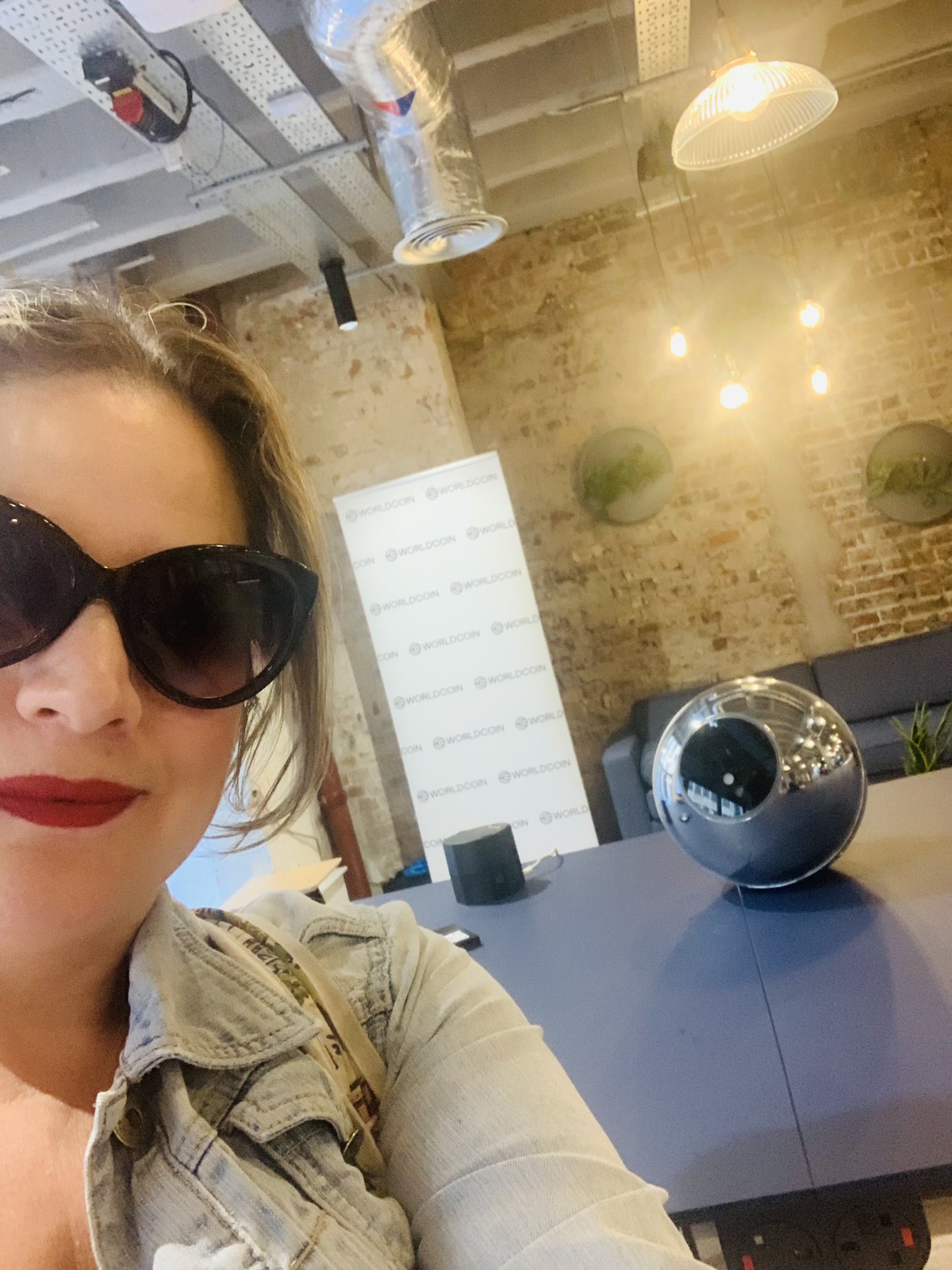
Sam Altman just explained the entire World ID agenda. Years ago they started working on how to prove someone is human, because they were building a world where AI would generate more content than people. The solution they built is World ID. Biometric iris scanning for the internet, framed as privacy preserving. The same people who are driving the coming wave of synthetic content are now selling the solution. A system that verifies you are human using your biometric data. One global system that registers every humans biometric ID forever ... and you will have to comply if you want access to the internet. This is another red flag for anyone who cares about privacy and sovereignty.
Susie Violet Ward's avatar
Susie 2 months ago
Today the FCA raided eight London sites in its first ever coordinated crackdown on peer to peer crypto trading. Enforcement has now moved onto ordinary individuals operating outside the regulated system. The UK is trying to position itself as a global centre for digital assets centred around stablecoins, tokenisation and institutional adoption. At the same time, the most direct form of decentralised exchange is being pushed into a legal grey area. Individuals trading with one another can find everyday activity interpreted as unlawful once it reaches meaningful scale. There are effectively no P2P traders registered under current AML rules. This creates a tension in UK policy where: - privacy is treated as opacity - self custody is viewed as risk - decentralised systems are judged against rules designed for intermediaries. When there is no realistic route to compliance, enforcement dictates behaviour by default, not by design. These same regulatory and data collection approaches are creating real physical security risks by linking identities to holdings and turning oversight into surveillance. The implications for safety, privacy and surveillance are unprecedented. These regulators will also have to live in the world they create... image
Susie Violet Ward's avatar
Susie 3 months ago
Great chat on @npub15h5n...tl4k with Archie. Always love hanging out. A good friend of mine once said to me, “how do you operate in an adult world, you are so small?” …well, here’s the answer. Thanks to Charlie for finding me a footstool, aka a box. image
Susie Violet Ward's avatar
Susie 3 months ago
The UK spends billions not producing energy, then allows people to freeze. The conversation is about cutting energy use. Almost no one is talking about creating energy abundance. That's the difference between decline and prosperity. The U.K. government are solving the wrong problem. Great conversation with @Luke de Wolf on @npub18uap...2m3g about this.
Susie Violet Ward's avatar
Susie 3 months ago
Officers would ‘no longer be policing perfectly legal tweets,’ the UK Home Secretary said. If you needed one sentence to sum up the madness of UK politics and policing, this is it. In 2023 alone they made 12,183 arrests for online 'communications offences'. Around 33 a day with fewer than 10% resulting in a sentence. Meanwhile detection rates for real crime collapsed. Police made over 65,000 arrests since 2017 for 'offensive or menacing' messages sent via phone, email and social media, while real crime went unsolved. It's a relief they're finally admitting it was a waste but why was this allowed to continue for so long? The irony is that it’s this that feels criminal. image
Susie Violet Ward's avatar
Susie 4 months ago
Wall Street w*nkers chasing ETFs, treasury plays and number go up should probably skip this video. Bitcoin was never built for their game. It exists as freedom money, the uncensorable tool no government or bank can seize when they weaponise traditional finance. Digital IDs, CBDCs, surveillance states and online controls are already closing in, deciding who gets economic access. When accounts freeze and dissent gets shut down, your shares and institutional products will not save you. Only self custody Bitcoin does. I've interviewed people who escaped dictatorships while on government wanted lists with every conventional door locked and Bitcoin let them move value, survive and rebuild. We must separate real Bitcoin freedom from the Wall Street grift. When things break, self custodied Bitcoin is the lifeline. As @alana said on @npub18uap...2m3g: “Why do we keep pretending we can carry on with the same structures that led us into this hell hole? We need to move forward and we have the right tools to do it.”
Susie Violet Ward's avatar
Susie 6 months ago
Digital ID was debated in Parliament, in a Westminster Hall debate opened by Robbie Moore MP on behalf of the Petitions Committee and triggered by a petition signed by nearly three million people. The response from MPs across parties was overwhelmingly NO. Across all parties, Conservatives, Labour backbenchers, Liberal Democrats, Greens, the SNP, Reform and Independents raised the same core concerns: • Moves Britain toward a surveillance state • Irreversible centralisation of personal data • Major cyber security risk • Serious risk of mission creep• Not in the manifesto and no democratic mandate • Constituents do not want it • Would become mandatory in practice • Harms the most vulnerable and the digitally excluded • Creates a two tier society Reading from a constituent's message, Jeremy Corbyn, an independent MP, said: "Digital ID is a deeply illiberal idea that threatens privacy, autonomy and the open access we should be standing for. It risks creating a two tier Britain where access to basic services, healthcare, housing, employment, even voting, depends on whether someone has the right app, paperwork or digital trail." Reflecting the vast cross party consensus in the debate, Corbyn endorsed an intervention from Andrew Griffith MP warning about civil liberties, the presumption of innocence and surveillance concerns, saying "he's making an important point," before going on to warn that digital ID is "being pushed by commercial interests" and urging Parliament to "say no to the government, as we have said no before." In the debate, opposition to the proposals spanned both the political right and left. Speaker after speaker warned that once this infrastructure exists, it will expand into work, housing, banking, benefits and public services, regardless of today's assurances. What this debate showed very clearly is that left versus right is no longer the most meaningful divide. The real divide is libertarian versus authoritarian. MPs from across the political spectrum lined up on the liberty side. That matters, particularly in a country with a growing reputation for restricting free speech and quietly sleepwalking into authoritarianism. It also raises uncomfortable questions ... If no one wants this, and Parliament agrees it is dangerous, why is it being pushed so hard? Jeremy Corbyn was clear about the role of commercial interests, a concern reinforced by policy advocacy from groups such as the Tony Blair Institute and Visa, which has openly argued for the introduction of digital ID's. Others also raised concerns about lobbying, infrastructure vendors, payments firms, and ID adjacent technology providers. This petition and debate offered a rare moment of reassurance in our parliamentary system. MPs listened, understood the risks, and spoke up.
Susie Violet Ward's avatar
Susie 7 months ago
Is Saylor building his own central bank? His Bitcoin MENA keynote mapped out something far bigger than balance sheet accumulation. He described a full monetary engine built on bitcoin reserves, corporate credit and synthetic digital dollars. Here is how it works and why it matters in my latest Forbes piece.
Susie Violet Ward's avatar
Susie 7 months ago
One year ago today, I became CEO of Bitcoin Policy UK. Since then, our small team of volunteers has achieved what most well funded organisations struggle to do, in one of the toughest environments for UK businesses. Individuals and companies are leaving the country at a record pace, and the policy space is dominated by pay to play dynamics and crypto lobbying money. Despite that, we have delivered. What we have accomplished together: - Helped secure Bitcoin’s recognition as property in UK law. - Responded to government consultations, submitted detailed policy papers, and held constructive conversations with MPs, Lords, regulators, and civil-service teams. - Launched our new website - Distributed our 2025 Manifesto to all 650 MPs and expanded our research across energy, tax, financial inclusion, and infrastructure. - Hosted events on Human Rights, Bitcoin in Business, and Bitcoin for Institutions. - Had a presence and a main hall stall at the 2025 Labour Party Conference, opening new Bitcoin conversations. - Partnered with 11 organisations and hosted multiple BPUK events that connected the bitcoin industry with policymakers, energy experts, and regulators. - Appeared in multiple podcasts, interviews, and media articles -Set up mining proof of concepts -Launch our 'On the Record' podcast. - Spoke at industry events around the world. - Designed and delivered the ‘Contact My MP’ App, helping supporters reach their representatives directly and raising the bar for political engagement in the Bitcoin space. All of this has been achieved by a team of outstanding volunteers with no full time staff, very modest funding, and no compromise to our values. We have been pushing uphill in a system where influence is usually bought. We have moved the dial and proven that the UK does have a place in Bitcoin’s future, provided we continue to fight for it. Year one was foundations. Year two is where we build strength and momentum. Thank you to everyone who has supported us, shared our work, and contributed time, expertise, or energy. BPUK exists because the community wants it to. Here’s to the next chapter. A special thanks to my amazing team: Freddie New Dr Cristina Llamas-Rey Russell Rukin Nick Bowick Jeremy Cline Juniper Jason Jason Sami Shams and others who prefer to stay behind the scenes. @Bitcoin Policy UK @npub1wl39...znlx @Jace @npub1lxue...0rj8