Time changes what a key compromise can actually do.
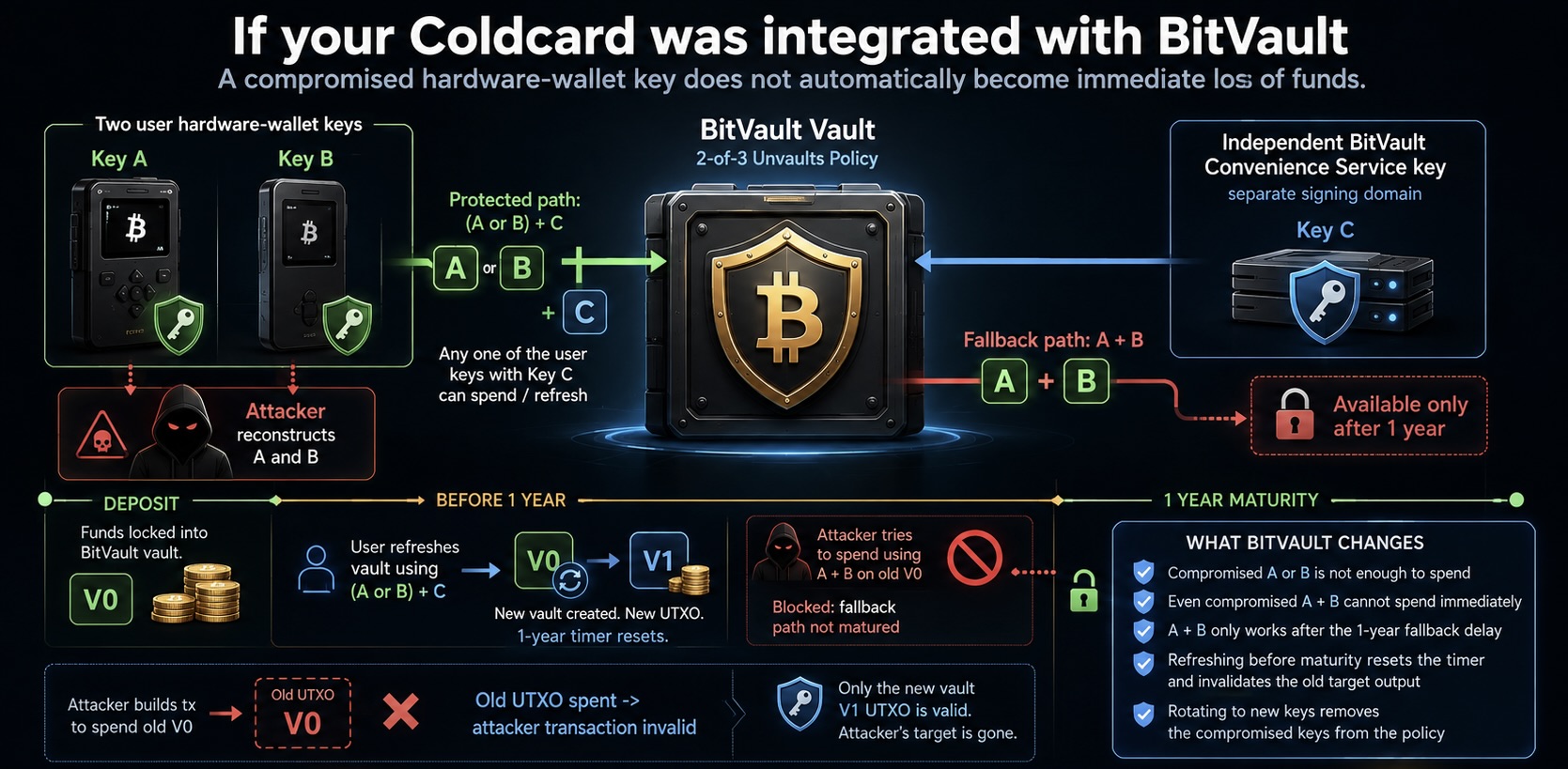
Even if an attacker reconstructs both user keys A and B, the delayed fallback cannot be used until its CSV condition matures.
Before then, the legitimate owner can use (A or B) + C to spend the current vault output V0 into a new output V1.
Once V0 is spent:
• transactions prepared against V0 become invalid
• V1 becomes the active vault output
• the fallback delay starts again on V1
The keys remain A, B and C.
BitVault does not remove the key compromise. It creates a response window in which the legitimate owner can refresh the UTXO before the attacker’s delayed path becomes available.
Read the full analysis:
BitVault Blog
If your Coldcard was integrated with BitVault -
If your Coldcard was integrated with BitVault, reconstructing its defective private key would not, by itself, have given the attacker immediate con...




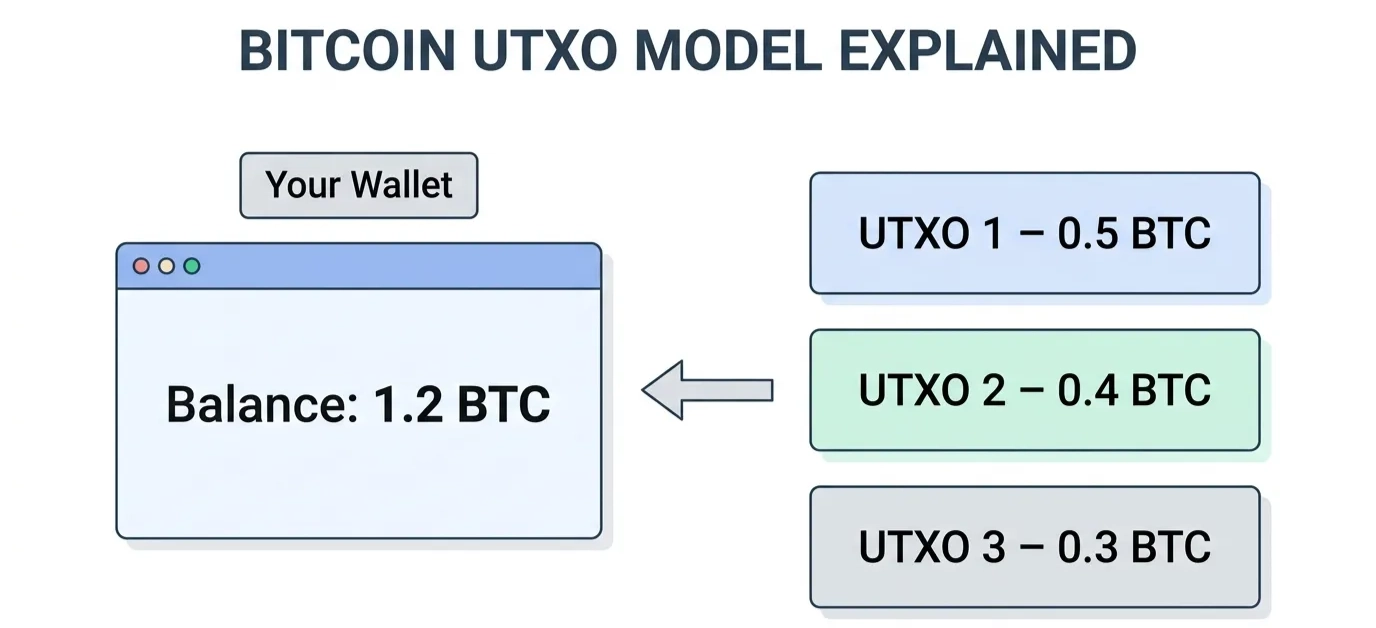
 Once you internalize the UTXO model, Bitcoin stops looking like a bank account system and starts looking like a distributed ledger of spendable outputs.
👉️
Once you internalize the UTXO model, Bitcoin stops looking like a bank account system and starts looking like a distributed ledger of spendable outputs.
👉️ 
 Your mnemonic isn’t “a backup.” It’s a deterministic key generator encoded as words.
Entropy → seed → derivation path → address.
If you don’t understand that chain, you don’t understand custody.
Full breakdown:
Your mnemonic isn’t “a backup.” It’s a deterministic key generator encoded as words.
Entropy → seed → derivation path → address.
If you don’t understand that chain, you don’t understand custody.
Full breakdown: