The urge to drink on a Sunday and rebalance channels
Rodrigo
npub1m7hs...tvh9
This could possibly be the best news (since CBDCs would be the end of financial privacy, not to mention CTRL + D kind of money) and yet Bloomberg finds a way to put a negative spin to it.
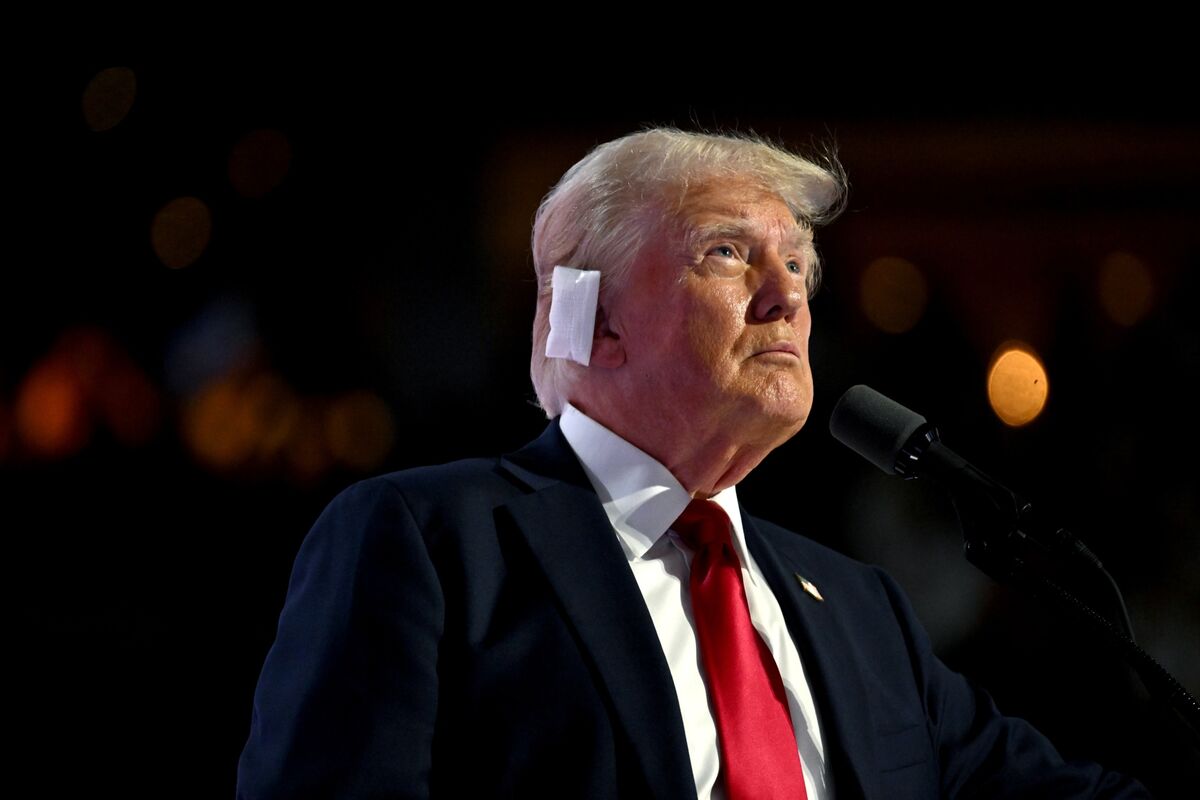
Trump’s Disdain for Digital Dollar Risks ‘Cold War Era’ in Money 

Bloomberg.com
Trump’s Disdain for Digital Dollar Risks ‘Cold War Era’ in Money
Central bank digital currencies were once looked upon as nothing short of the future of money around the world. Yet at least in the US, that sunny ...
Thinking about the recent Microsoft outage. What would happen if for one hour, Google Workspaces, AWS and Microsoft Azure went offline?
Centralization of digital services will only keep consolidating more, leading to worse outcomes in the future.
Not your keys, not your coins.
Not your server, not your data.
Self-host.
@Start9
All he did was take his time to study bitcoin and understand its value instead of just sticking with the "it's used by criminals and money launderers" rhetoric.
Any fiat currency can be used for good or for bad, just like bitcoin and other cryptocurrencies. The difference is that bitcoin runs on a public, shared ledger where all transactions can be seen by anybody; a suitcase full of cash is not reported in a public, shared ledger.
In the past, a well diversified portfolio was considered to be around 60% equity and 40% fixed income. Time has shown that this has not really been the best allocation as there is a missing component of alternative investments.
Today, a well diversified portfolio must also include bitcoin as a hedge to fiat exposure and its continuing debasement. A “rule of thumb” should be to have enough exposure to bitcoin that when the fiat-based portion eventually loses its value, the bitcoin allocation will make up for that and more.
Also, here is another version of a well diversified portfolio, highly recommend:


Another one for the list, @L0la L33tz
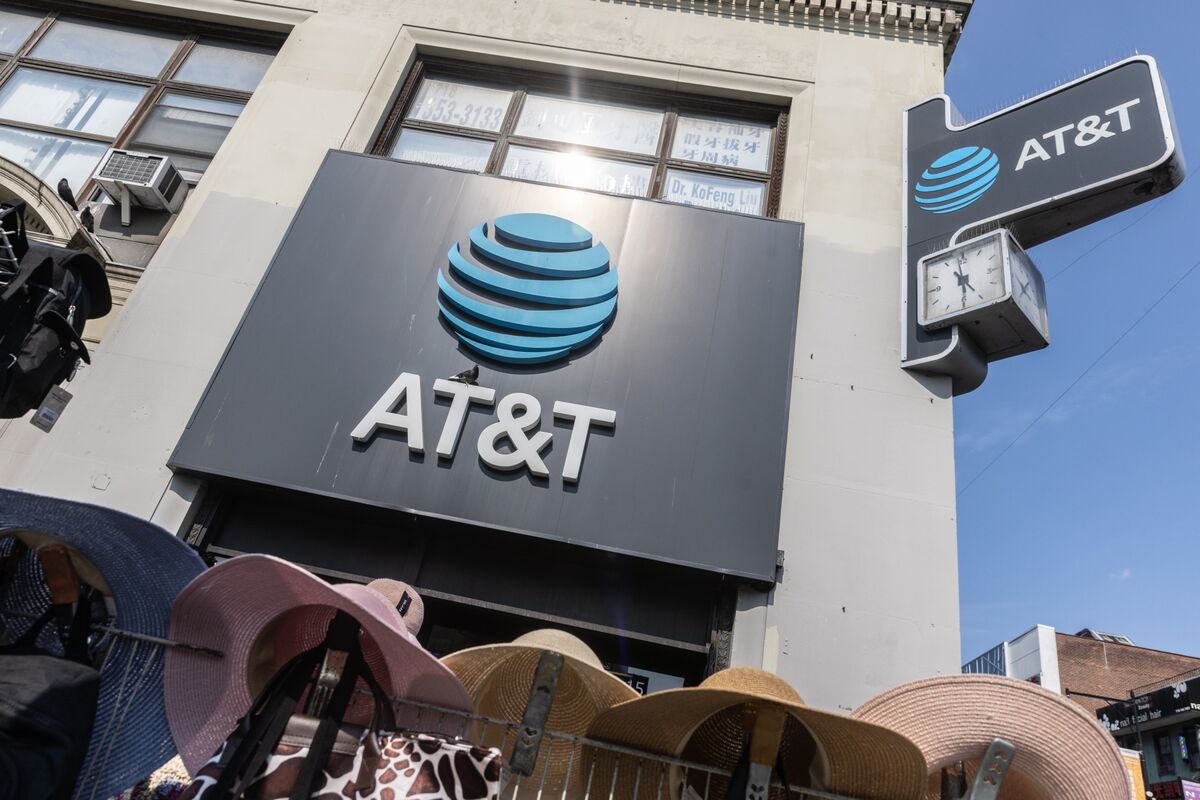
AT&T Hack Undermines US National Security, Experts Say 

Bloomberg.com
AT&T Hack Undermines US National Security, Experts Say
A hack that has compromised millions of AT&T Inc. customers’ communication and location records undermines US national security and represent...
I truly believe that the traditional financial world has slowly been moving from a T+3 settlement window to a T+1 (with some exceptions) to get as close to cryptocurrency settlement speeds as possible. Ironically, the only way they will get to T+0 is by adopting some form of blockchain, hopefully they understand that the answer to this is Bitcoin + Lightning Network.
It would be pretty nice to say that the settlement window is B+LN instead of T+1.


Bloomberg.com
Europe Could Follow US Move to T+1 in Late 2027, Officials Say
European financial markets look primed to follow the US example of switching to a one-day settlement cycle, with officials considering a move in th...
Coincidence of Wants vs Coincidence of Banks
In the past, people would exchange one good for another, such as wheat for salt. The problem with this extremely siloed transaction was that both parties had to run into the coincidence that they both needed what the other had at that precise moment in time. No intermediaries and no delays, it was an analog peer-to-peer transaction where commodities were the ultimate form of money.
Money has improved since then in terms of how it’s transacted and how it moves, but it’s not even close to what it could be. Today, in order for money to move faster and more efficiently, financial institutions come together to credit and debit money for their clients. The best coincidence to move money is when both parties work with the same bank. This however is not the norm, leading to intermediation, higher costs, delays and plenty of other inefficiencies that we all have come to accept as normal.
By leveraging the Bitcoin and Lightning Network protocols, institutions can remove these inefficiencies and transform the coincidence into certainty. An institution in Europe denominated in Euros would be able to interact with an institution in Latin America denominated in Pesos as if they were one and the same. Their end users would retain the traditional fiat experience they are used to but would benefit from a better, cheaper and instant service. Finally, credit risk would be removed from the system as every transaction would be sent and settled simultaneously and instantly.
@PUBKEY feels like home. Thank you for existing.
Anybody knows the Amethyst nostr relay address?
Fake News on the End of The Petrodollar System?
There has been some news that the 1974 petrodollar system, or as officially known “The U.S. - Saudi Arabia Joint Commission on Economic Cooperation” has come to an end.
As a quick recap: The petrodollar system is a mutually beneficial agreement between the US and Saudi Arabia, where the US agreed to provide military aid and protection and in exchange, Saudi Arabia would sell its barrels of oil in US dollars and invest all of that money into US government bonds. It has not confirmed if the agreement actually ended or not or if it’s somewhere in between. Below are some important highlights:
- Nixon removed the dollar’s convertibility to gold in 1971. The US supported Israel in the Yom Kipur War of 1973 and then experienced an oil embargo which put it into a dark economical path. With the US dollar’s future at risk, the smart decision was to make a somewhat behind the scenes deal to ensure that the commodity that economies needed to grow and develop (oil) was priced in US dollars.
- According to the US Treasury data, Saudi Arabia is the 17th largest holder of US Treasuries, although some sources say that this could be much more. They might not have the incentive to move away so abruptly from the US dollar as doing so would only hurt their sovereign reserves.
- Their purchases of US Treasuries were also made via add-on auctions, which are excluded from official auction totals. It took the The Freedom-of-Information Act in 2016 to get the Treasury department to disclose Saudi Arabia’s holdings.
- The Saudi Arabian Riyal is pegged to the US dollar. Picking a fight with the US dollar might only hurt them more.
- The petrodollar agreement has no stated end date, rather it would remain in effect for 5 years (starting in June 1974) and renewed by mutual agreement and could be terminated by either government with 180 day written notice. No official written notice has surfaced, yet.
- Saudi Arabia was invited to join BRICS, but this still has not been confirmed. If they do, it could be another step to reduce their reliance on the US and its currency; TBD.
The petrodollar system is what made the US dollar the global reserve currency and ending it could potentially affect its value over time. It went from being backed by gold to nothing, to a proxy-backing by oil and a money printer.
It's not only the financial sector embracing bitcoin, but also telecom. Slowly, institutions are realizing that bitcoin is here to stay and it's better to embrace it now than when it becomes too late. Same thought goes for any investor considering adding bitcoin as part of a well diversified portfolio.


Watcher Guru
T-Mobile Parent Company Deutsche Telekom to Mine Bitcoin
T-Mobile
A Reminder Why You Must Hedge Fiat Exposure
I try to watch this video at least once a year to remind me how money printing works and why it will never stop. Bitcoin is a way to protect against money printing which translates to our money being worth less until it eventually is worth nothing.
It’s 30 minutes of your time, narrated by a very smart and successful individual, which will put things into perspective very quickly:
Really enjoyed the podcast with Blockfuel Group where we discussed Bitcoin's industrial use cases and how it's being leveraged in Latin America to bring Bitcoin closer to institutional adoption for real-world, business purposes.

X (formerly Twitter)
21Rates (@21RatesHQ) on X
A fresh LATAM perspective from a native Salvadoran living in the US 🎙️
Tune in to our latest podcast with Rodrigo Argüello (@rod_arguello), ...
Teach 'em young: