On-chain payments on Bark no longer happen in rounds. They're now instant, kind of like Ark-to-onchain swaps. This makes them more expensive than before, but the upside is that they're now broadcast immediately (more intuitive UX).
Second
_@nostr.second.tech
npub1ake0...pfwt
Simple solutions for integrating Ark and Lightning payments into your apps. Painlessly deliver fast, low-cost, self-custodial payments to your users.
Generating Ark addresses offline is now feasible with persisted server pubkeys. No need to be connected to the Ark server just to produce a receive address.
Payments on Bark currently use a single input. Instead of multi-input txs, large txs bundle independent arkoor txs into a "package" sent to the receiver in one go. Wallet history shows it as a single incoming payment.
Small Rust API design lesson from Bark development: if your top-level functions are just thin wrappers around methods on a struct, they shouldn't exist. Put the logic where it belongs.
If you're building on the Bark library, Lightning payments are now `wallet.pay_lnaddr(..)` instead of standalone functions that take a wallet reference. Smaller surface, fewer surprises.
We're building a shared corpus repository for our fuzz targets. Every time the fuzzer runs, it builds up optimized inputs that make future runs more efficient—it doesn't start from zero each time. Over time this becomes an automatically growing collection of edge cases that doubles as regression testing.
1/ Getting honggfuzz running inside a Nix development shell was its own adventure. Nix's hardening flags conflict with how honggfuzz instruments binaries, and glibc version mismatches between NixOS and honggfuzz added another layer.
Fuzz testing throws massive volumes of random and malformed data at your code to find crashes that normal testing misses. @lucad70's been adding it to our QA process and it's already caught arithmetic overflows and unwrap panics that could crash the server. Fuzzing is pretty much a requirement when you're building protocol-level software.
Bitcoin scaling has two sides: transactions in blocks and UTXOs. Lightning scales transactions. Ark scales both.
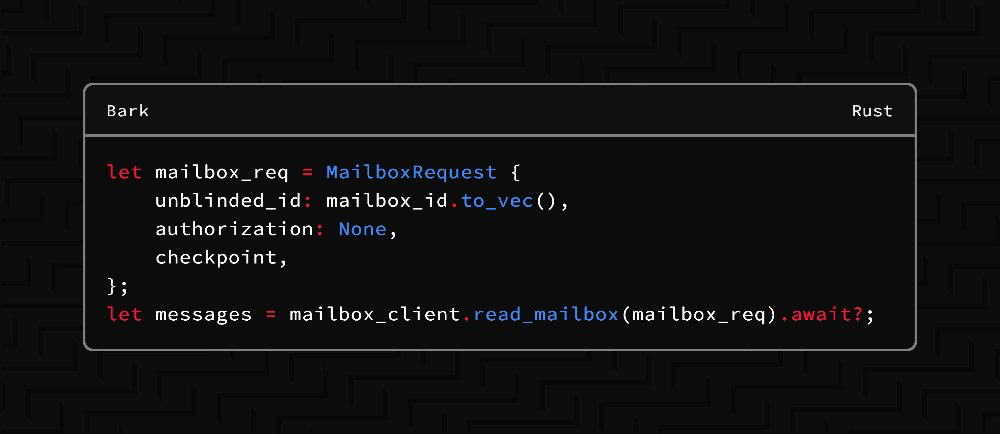
We've redesigned how Bark-based wallets sync with the Ark server. The new unified mailbox replaces per-address polling with a single feed for all wallet notifications (Ark and Lightning payments, refreshes, and more) with support for real-time push subscriptions. One endpoint, checkpoint-based sync, and delegated notification auth for mobile. Available now in Bark.


Refreshes on Bark no longer use connectors for atomicity, that's now handled by good ol' hash-locks. Confusingly, on-chains payments now use connectors instead, which are no longer handled alongside refreshes!
Bark's new unified mailbox consolidates all wallet notifications into a single feed: Ark payments, Lightning preimages, BOLT-12 offers, and refresh completions. Checkpoint-based sync fetches only what's changed.


Taproot happened because Lightning proved the need for it. The best way to get covenants is for Ark to prove the need for them too.
We chose honggfuzz over libfuzzer for fuzz testing bark. libfuzzer is simpler to set up, but honggfuzz gives us more flexibility for complex targets down the road. And it's what rust-bitcoin uses, so we can borrow from their what they're doing!
The Ark protocol is not constrained by the need to standardize across implementations like Lightning. This means that each implementation is react fast to users' needs.
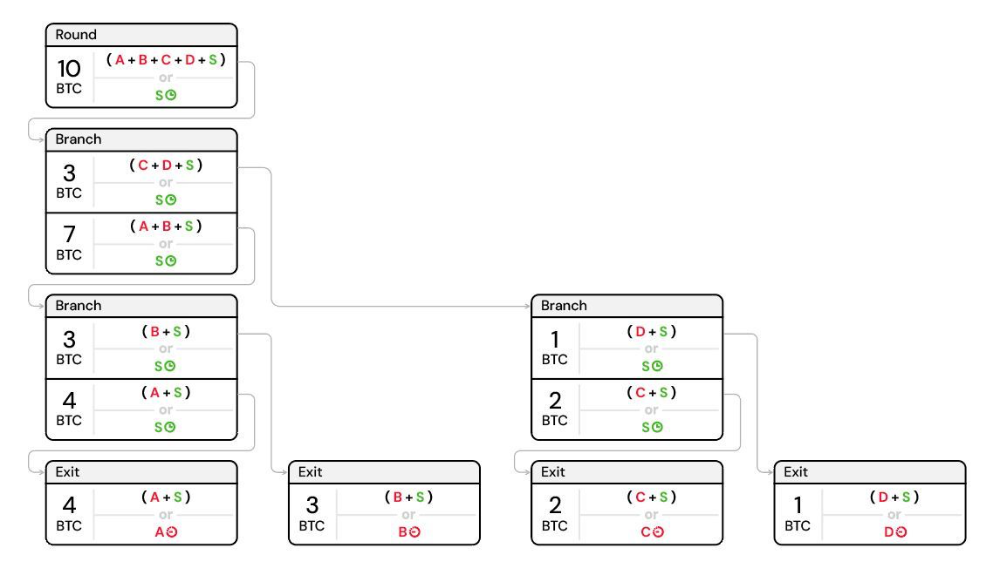
Ark's transaction trees feel exotic until you realize they're just cleverly arranged standard bitcoin transactions. No special opcodes needed. Just signatures, timelocks, and multisigs held off-chain.


We've released bark-0.1.0-beta.6 featuring hArk (Hash-lock Ark), a major protocol evolution that eliminates synchronous interactivity during rounds. Previously, all round participants had to be online simultaneously to sign intermediate transactions. hArk removes this requirement—the server generates a unique secret for each VTXO, and participants can claim asynchronously after signing a forfeit transaction.
This also enables efficient consolidation of multiple VTXOs into a single output and reduces server costs during malicious exit scenarios.
Note: Wallets created before this release require migration due to security upgrades with hardened key derivations. Create a new wallet and transfer funds before upgrading.
Lots more updates on the changelog:

Second Docs
Changelog - Second Docs
Updates to Bark, our implementation of the Ark protocol. Including the SDK, wallet, server, and developer tools.

The Ark model of Lightning: Users hold "funds at rest" in VTXOs, then swap into Lightning channels via HTLCs to make payments.
Latest changelog for bark 0.1.0-beta.3 to beta.5 is out!
The biggest addition is barkd—a wallet daemon with RESTful API for node runners and businesses wanting simple automation. We've also made ark-lib WASM-compatible for web environments, replaced the arkoor-depth limitation with checkpoints, and improved Lightning payment reliability.
Full changelog: docs.second.tech/changelog/changelogAdded @Carlos Marques to the team for DevRel. He showed up, immediately fixed up our faucet, and is already close to shipping a Bark web wallet. Also runs bitcoin education content in Portuguese and contributed to @satsigner + @Medusa🪼 - Maxfy. Welcome Carlos (follow him for updates!)