Ars Technica - All News (RSS/Atom feed)'s avatar
Ars Technica - All News (RSS/Atom feed)
npub1ls4n...cgqv
RSS/Atom feed of Ars Technica - All News More feeds can be found in my following list
The Switch 2 is getting a new Virtual Console (kind of) In 2018, we [lamented][1] as Nintendo officially replaced the Virtual Console—its [long-running line][2] of downloadable classic games on the Wii and Wii U—with time-limited access to a set of games [through a paid Nintendo Switch Online subscription][3]. Now, Hamster Corporation is doing what Nintendo no longer will, by offering downloadable versions of retro console games for direct individual purchase on the Switch 2. As part of [today's Nintendo Direct Partner Showcase][4], Hamster [announced a new Console Archives line][5] of emulated classics available for download starting today on the Switch 2 and next week on the PlayStation 5 (sorry, Xbox and OG Switch fans). So far that lineup only includes the original PlayStation snowboarding title [*Cool Boarders* for $12][6] and the NES action platformer [*Ninja Gaiden II: The Dark Sword of Chaos* for $8][7], but Hamster promises more obscure games, including *Doraemon* and *Sonic Wings Special*, will be available in the future. If the name Hamster Corporation sounds familiar, it's because the company is behind [the Arcade Archive series][8], which has repackaged individual arcade games for purchase and emulated play on modern consoles since 2014. That effort, which [celebrated its 500th release in December][9], even [includes some of Nintendo's classic arcade titles][10], which the Switch-maker never officially released on the original Virtual Console. [Read full article][11] [Comments][12] [1]: [2]: [3]: [4]: [5]: [6]: [7]: [8]: [9]: [10]: [11]: [12]: PS1 games on the Switch 2? In this economy?


AI companies want you to stop chatting with bots and start managing them On Thursday, Anthropic and OpenAI shipped products built around the same idea: instead of chatting with a single AI assistant, users should be managing teams of AI agents that divide up work and run in parallel. The simultaneous releases are part of a gradual shift across the industry, from AI as a conversation partner to AI as a delegated workforce, and they arrive during a week when that very concept reportedly helped wipe $285 billion off software stocks. Whether that supervisory model works in practice remains an open question. Current AI agents still require heavy human intervention to catch errors, and no independent evaluation has confirmed that these multi-agent tools reliably outperform a single developer working alone. Even so, the companies are going all-in on agents. Anthropic's contribution is [Claude Opus 4.6][1], a new version of its most capable AI model, paired with a feature called "[agent teams][2]" in Claude Code. Agent teams let developers spin up multiple AI agents that split a task into independent pieces, coordinate autonomously, and run concurrently. [Read full article][3] [Comments][4] [1]: https://www.anthropic.com/news/claude-opus-4-6 [2]: [3]: [4]:

"ICE Out of Our Faces Act" would ban ICE and CBP use of facial recognition A few Senate Democrats introduced a bill called the ‘‘ICE Out of Our Faces Act," which would ban Immigration and Customs Enforcement (ICE) and Customs and Border Protection (CBP) from using facial recognition technology. The [bill][1] would make it "unlawful for any covered immigration officer to acquire, possess, access, or use in the United States—(1) any biometric surveillance system; or (2) information derived from a biometric surveillance system operated by another entity." All data collected from such systems in the past would have to be deleted. The proposed ban extends beyond facial recognition to cover other biometric surveillance technologies, such as voice recognition. The proposed ban would prohibit the federal government from using data from biometric surveillance systems in court cases or investigations. Individuals would have a right to sue the federal government for financial damages after violations, and state attorneys general would be able to bring suits on behalf of residents. [Read full article][2] [Comments][3] [1]: https://www.markey.senate.gov/imo/media/doc/ice_out_of_our_faces_act.pdf [2]: [3]: An ICE officer at a "National Shutdown" protest against US Immigration and Customs Enforcement in Los Angeles on January 30, 2026.

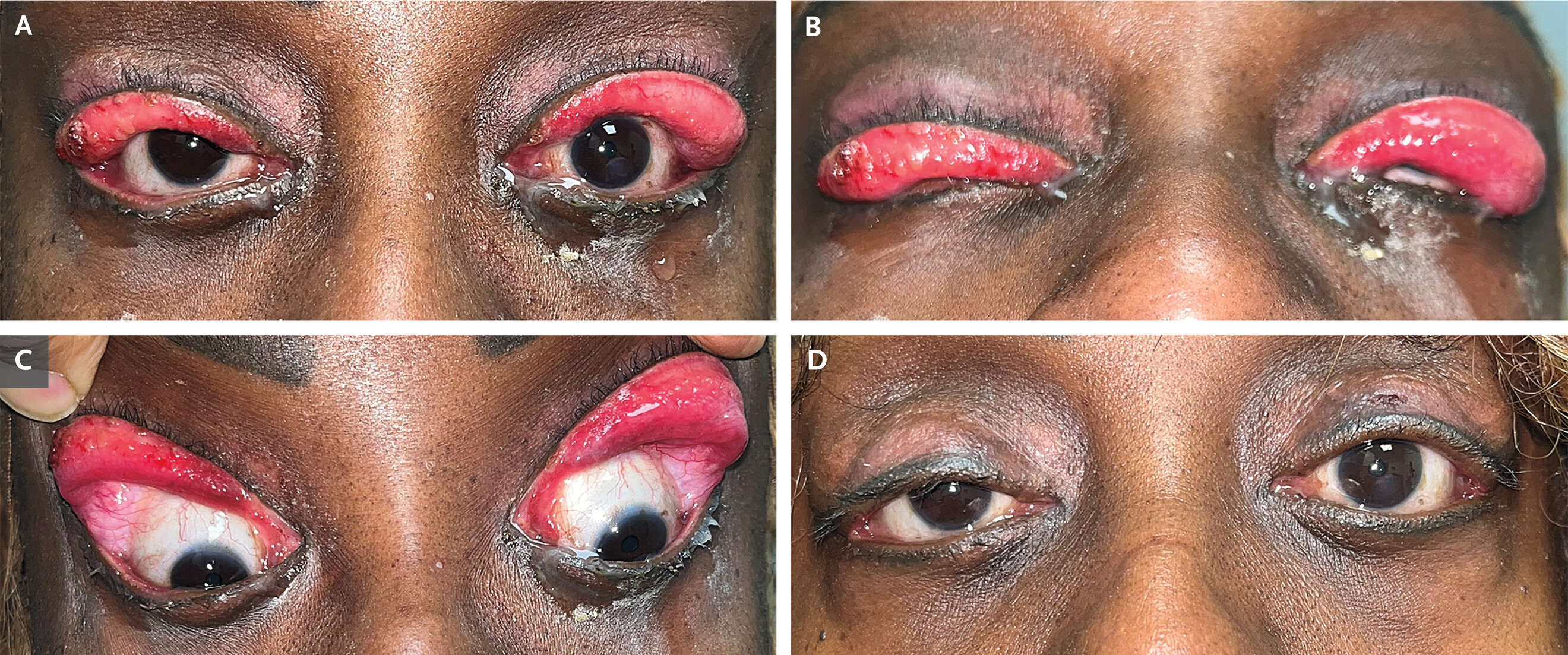
Bad sleep made woman's eyelids so floppy they flipped inside out, got stuck A poor night's sleep might leave you feeling like your eyelids have filled with lead—and keeping them open is the ultimate dead lift. But for some, bad sleep brings on eyelids so droopy and floppy that they can do curl ups on their own. That was the unfortunate case for a 39-year-old woman who sought care at an ophthalmology clinic in Brooklyn, New York. She told the doctors that for six weeks she felt like she had something in her eyes, and they were watery. By the time of her appointment, her eyelids had rolled up, flipping inside-out on their own—and were staying that way. In the latest issue of the New England Journal of Medicine, doctors report her [eye-opening case][1]—and its unexpected solution. (You can see images of her eyelids—flipped and recovered—[here][2]. The images may seem graphic to some, but they are not much worse than that kid in elementary school who would flip their eyelids just to freak everyone out for laughs. You know the one.) [Read full article][3] [Comments][4] [1]: https://www.nejm.org/doi/full/10.1056/NEJMicm2512228 [2]: image [3]: [4]: A close-up photo of a human eye

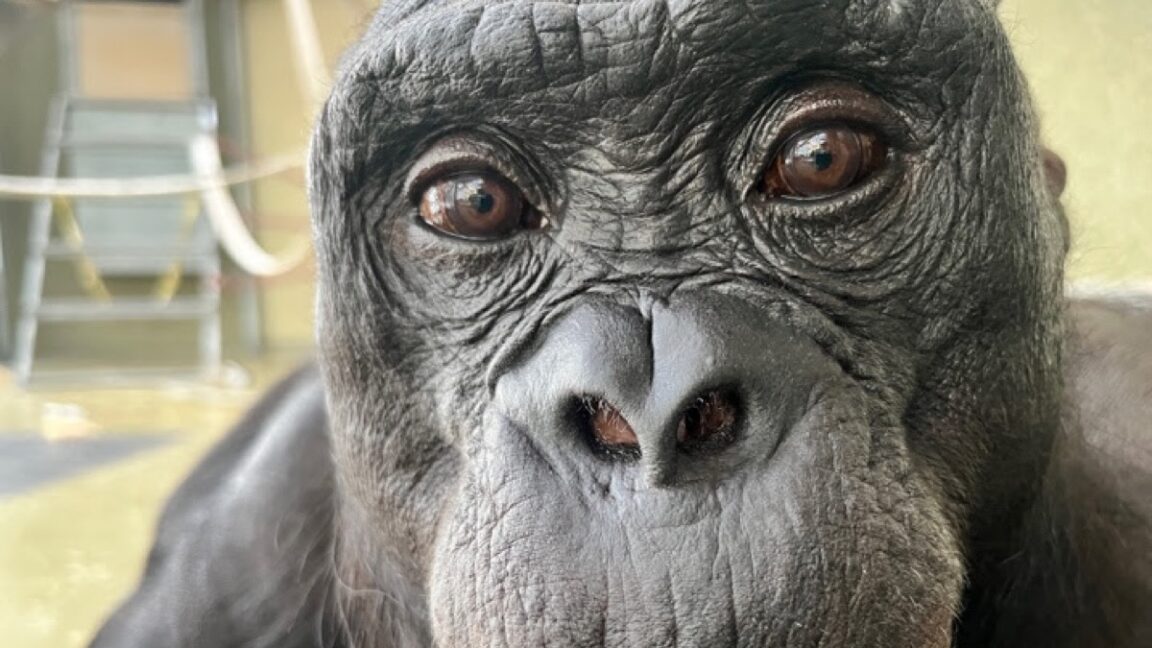
Watch Kanzi the bonobo pretend to have a tea party Little kids hosting make-believe tea parties is a fixture of childhood playtime and long presumed to be exclusively a human ability. Researchers at Johns Hopkins University presented evidence in a [new paper][1] published in the journal Science that a bonobo named Kanzi was also able to participate in pretending to hold a tea party. For the authors, this suggests that apes are capable of using their imagination just like human toddlers. “It really is game-changing that their mental lives go beyond the here and now," said co-author Christopher Krupenye. "Imagination has long been seen as a critical element of what it is to be human, but the idea that it may not be exclusive to our species is really transformative. Jane Goodall discovered that chimps make tools, and that led to a change in the definition of what it means to be human, and this, too, really invites us to reconsider what makes us special and what mental life is out there among other creatures." Per Krupenye et al., by the age of two, human children are able to navigate imaginary scenarios like a tea party, pretending there is real tea present even if the teapot and cups are actually empty. Cognitively speaking, it's an example of secondary representation, because it involves decoupling an imagined or simulated state (pretending there is actual tea in the cup) with the reality (the cup is empty). [Read full article][2] [Comments][3] [1]: http://www.science.org/doi/10.1126/science.adz0743 [2]: [3]:

Neocities founder stuck in chatbot hell after Bing blocked 1.5 million sites One of the weirdest corners of the Internet is suddenly hard to find on Bing, after the search engine inexplicably started blocking approximately 1.5 million independent websites hosted on Neocities. Founded in 2013 to archive the ["aesthetic awesomeness" of GeoCities websites][1], Neocities keeps the spirit of the 1990s Internet alive. It lets users design free websites without relying on standardized templates devoid of personality. For hundreds of thousands of people building websites around [art][2], niche [fandoms][3], and special [expertise][4]—or simply seeking a place to [get a little weird online][5]—Neocities provides a blank canvas that can be endlessly personalized when compared to a Facebook page. [Delighted][6] [visitors][7] discovering these sites are more likely to navigate by hovering flashing pointers over a web of spinning GIFs than clicking a hamburger menu or infinitely scrolling. That's the style of Internet that Kyle Drake, Neocities' founder, strives to maintain. So he was surprised when he noticed that Bing was curiously blocking Neocities sites last summer. At first, the issue seemed resolved by contacting Microsoft, but after receiving more recent reports that users were struggling to log in, Drake discovered that another complete block was implemented in January. Even more concerning, he saw that after delisting the front page, Bing had started pointing users to a copycat site where he was alarmed to learn they were providing their login credentials. [Read full article][8] [Comments][9] [1]: [2]: [3]: [4]: [5]: [6]: [7]: [8]: [9]:


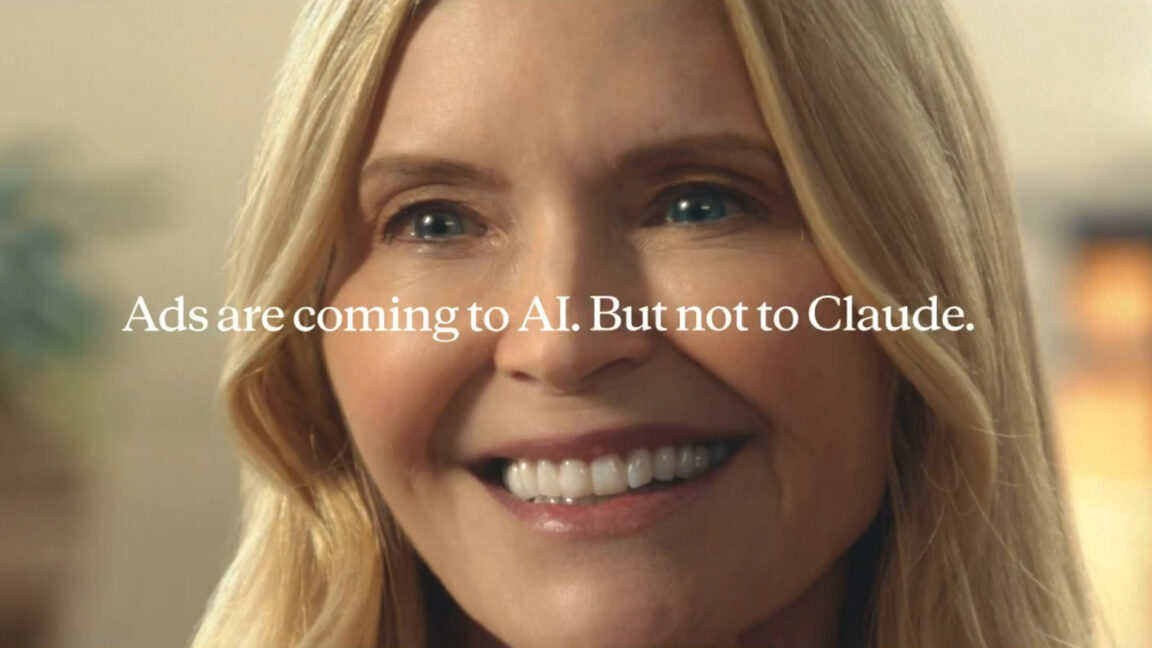
OpenAI is hoppin' mad about Anthropic's new Super Bowl TV ads On Wednesday, OpenAI CEO Sam Altman and Chief Marketing Officer Kate Rouch [complained on X][1] after rival AI lab Anthropic released four commercials, two of which will run during the Super Bowl on Sunday, [mocking][2] the idea of including ads in AI chatbot conversations. Anthropic's campaign seemingly touched a nerve at OpenAI just weeks after the ChatGPT maker [began testing ads][3] in a lower-cost tier of its chatbot. Altman called Anthropic's ads "clearly dishonest," accused the company of being "authoritarian," and said it "serves an expensive product to rich people," while Rouch [wrote][4], "Real betrayal isn't ads. It's control." Anthropic's [four commercials][5], part of a campaign called "A Time and a Place," each open with a single word splashed across the screen: "Betrayal," "Violation," "Deception," and "Treachery." They depict scenarios where a person asks a human stand-in for an AI chatbot for personal advice, only to get blindsided by a product pitch. [Read full article][6] [Comments][7] [1]: [2]: [3]: [4]: [5]: [6]: [7]: A screenshot of one of the new Anthropic ads featuring the tagline, "Ads are coming to AI. But not to Claude."
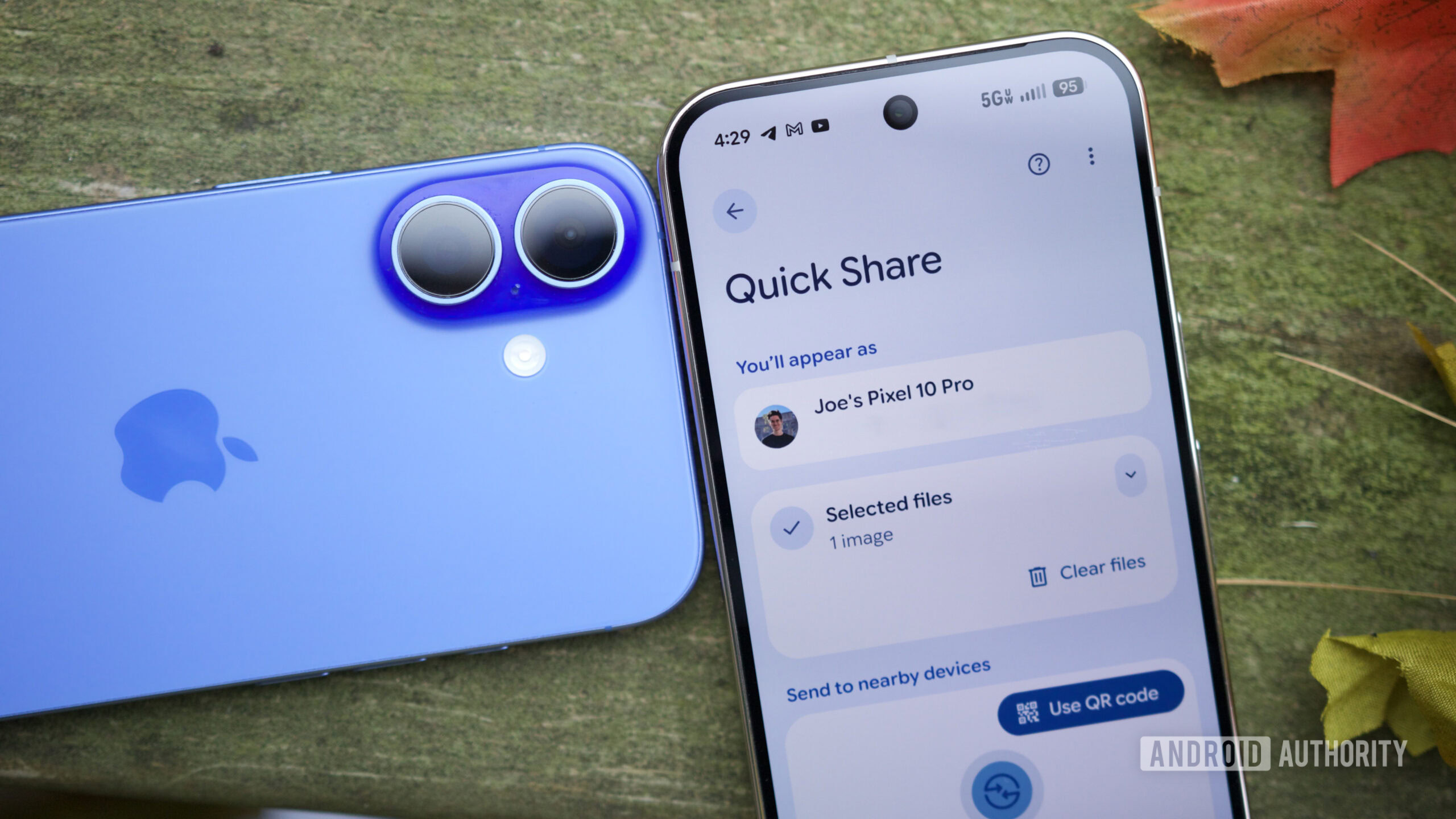
Google hints at big AirDrop expansion for Android "very soon" There is very little functional difference between iOS and Android these days. The systems could integrate quite well if it weren't for the way companies prioritize lock-in over compatibility. At least in the realm of file sharing, Google is working to fix that. After adding basic AirDrop support to [Pixel 10 devices][1] last year, the company says we can look forward to seeing it on many more phones this year. At present, the only Android phones that can initiate an AirDrop session with Apple devices are Google's latest Pixel 10 devices. When Google announced this upgrade, it vaguely suggested that more developments would come, and it now looks like we'll see more AirDrop support soon. According to [Android Authority][2], Google is planning a big AirDrop expansion in 2026. During an event at the company's Taipei office, Eric Kay, Google's VP of engineering for Android, laid out the path ahead. [Read full article][3] [Comments][4] [1]: [2]: [3]: [4]: The Pixel 10 was the first with support for AirDrop.
Tesla slipped behind VW in European EV sales last year Electric vehicle enthusiasts are probably right to feel [a little disheartened][1] about the [state of the United States' transition][2] to EVs. But they should take heart that our region is an outlier. The other side of the Atlantic still seems relatively positive about the whole idea, even as Europe's car market recovers more slowly from the pandemic than the rest of the world. Last year, overall vehicle sales in Europe barely ticked up, rising 2.2 percent from 2024. EV sales, meanwhile, increased by 29 percent, bringing market share to an impressive 19.5 percent. That's according to data from automotive analyst JATO Dynamics, which finds that the big winner has been Volkswagen. Last year, its EVs outsold those from Tesla for the first time as sales of VW's electric offering grew by 56 percent, while Tesla's shrank by 27 percent. To put that into concrete numbers, VW sold 274,278 EVs to Tesla's 236,357. And that's just the VW brand itself—the automaker also owns Skoda (in 4th place, with 171,703 sales), Audi (5th place, 153,845 sales), Cupra (15th place, 79,269 sales), and Porsche (21st place, 32,715 sales). Not a bad effort, considering just over a decade has passed since [VW's Dieselgate scandal][3]. [Read full article][4] [Comments][5] [1]: [2]: [3]: [4]: [5]: JATO Dynamics credits the VW ID.7 as helping boost the brand's sales in Europe last year.
NASA changes its mind, will allow Artemis astronauts to take iPhones to the Moon The iPhone is going orbital, and this time it will be allowed to hang around for a while. On Wednesday night, NASA Administrator Jared Isaacman revealed that the Crew-12 and Artemis II astronauts will be allowed to bring iPhones and other modern smartphones into orbit and beyond. "NASA astronauts will soon fly with the latest smartphones, beginning with Crew-12 and Artemis II," [Isaacman wrote on X][1]. "We are giving our crews the tools to capture special moments for their families and share inspiring images and video with the world." [Read full article][2] [Comments][3] [1]: [2]: [3]: The iPhone is coming to a spacecraft near you.
This black hole "burps" with Death Star energy Back in 2022, astronomers were puzzled by a so-called “[tidal disruption event][1]” (TDE), dubbed [AT2018hyz][2], that had faded when it was first noticed three years earlier, only to unexpectedly reanimate and burp out extremely bright radio waves. University of Oregon astrophysicist Yvette Cendes, a co-author of that 2022 paper, dubbed the black hole “Jetty McJetface” (a nod to the [2016 online British competition][3] to name a research vessel [Boaty McBoatface][4]). Astronomers have continued to monitor it ever since. Far from fading again, the TDE has grown 50 times brighter, and that brightness continues to increase. The black hole's energy emission might not peak until 2027, according to a new paper published in the Astrophysical Journal. As [we've previously discussed][5], it’s a popular misconception that black holes behave [like cosmic vacuum cleaners][6], ravenously sucking up any matter in their surroundings. In reality, only stuff that passes beyond the event horizon—including light—is swallowed up and can’t escape, although black holes are also messy eaters. That means that part of an object’s matter is actually ejected out in a powerful jet. [Read full article][7] [Comments][8] [1]: [2]: [3]: [4]: https://www.npr.org/sections/thetwo-way/2016/03/21/471299842/meet-the-u-k-s-cutting-edge-research-vessel-boaty-mcboatface [5]: [6]: https://www.forbes.com/sites/startswithabang/2019/06/19/no-black-holes-dont-suck-everything-into-them/#e9257c02b01b [7]: [8]:
Increase of AI bots on the Internet sparks arms race The viral virtual assistant OpenClaw—formerly known as [Moltbot][1], and before that Clawdbot—is a symbol of a [broader revolution][2] underway that could fundamentally alter how the Internet functions. Instead of a place primarily inhabited by humans, the web may very soon be dominated by [autonomous AI bots][3]. A [new report][4] measuring bot activity on the web, as well as related data shared with WIRED by the Internet infrastructure company Akamai, shows that AI bots already account for a meaningful share of web traffic. The findings also shed light on an increasingly sophisticated arms race unfolding as bots deploy clever tactics to bypass website defenses meant to keep them out. “The majority of the Internet is going to be bot traffic in the future,” says Toshit Pangrahi, cofounder and CEO of TollBit, a company that tracks web-scraping activity and published the new report. “It’s not just a copyright problem, there is a new visitor emerging on the Internet.” [Read full article][5] [Comments][6] [1]: [2]: [3]: [4]: [5]: [6]:
Steam Machine and Steam Frame delays are the latest product of the RAM crisis When Valve announced [its Steam Machine desktop PC][1] and [Steam Frame VR headset][2] in mid-November of last year, it declined to announce pricing or availability information for either device. That was partly because RAM and storage prices [had already begun to climb][3], thanks to shortages caused by the AI industry's [insatiable need for memory][4]. Those price spikes have only gotten worse since then, and they're beginning to trickle down to [GPUs][5] and [other devices that use memory chips.][6] This week, Valve has officially [announced][7] that it's still not ready to make an official announcement about when the Machine or Frame will be available or what they'll cost. Valve says it still plans to launch both devices (as well as the new Steam Controller) "in the first half of the year," but that uncertainty around RAM and storage prices mean that Valve "[has] work to do to land on concrete pricing and launch dates we can confidently announce, being mindful of how quickly the circumstances around both of these things can change." [Read full article][8] [Comments][9] [1]: [2]: [3]: [4]: [5]: [6]: [7]: [8]: [9]: Pricing was already an open question for Valve's Steam Machine, and concerns about RAM have only made things more difficult.
Museums incorporate "scent of the afterlife" into Egyptian exhibits In 2023, scientists [identified the compounds][1] in the balms used to mummify the organs of an ancient Egyptian noblewoman, suggesting that the recipes were unusually complex and used ingredients not native to the region. The authors also partnered with a perfumer to re-create what co-author [Barbara Huber][2] (of the Max Planck Institute of Geoanthropology and the University of Tübingen) dubbed “the scent of eternity.” Now Huber has collaborated with the curators of two museums to incorporate that eternal scent into exhibits on ancient Egypt to transform how visitors understand embalming. As [previously reported][3], Egyptian embalming is thought to have [begun][4] in the [Predynastic Period][5] or earlier, when people noticed that the arid desert heat tended to dry and preserve bodies buried in the desert. Eventually, the idea of preserving the body after death worked its way into Egyptian religious beliefs. When people began burying the dead in rock tombs, away from the desiccating sand, they used chemicals like natron salt and plant-based resins for embalming. The procedure [typically began][6] by laying the corpse on a table and removing the internal organs—except for the heart. Per Herodotus, “They first draw out part of the brain through the nostrils with an iron hook, and inject certain drugs into the rest” to liquefy the remaining brain matter. Next, they washed out the body cavity with spices and palm wine, sewed the body back up, and left aromatic plants and spices inside, including bags of natron. The body was then allowed to dehydrate over 40 days. The dried organs were sealed in canopic jars (or sometimes put back into the body cavity). Then the body was wrapped in several layers of linen cloth, with amulets placed within those layers to protect the deceased from evil. The fully wrapped mummy was coated in resin to keep moisture out and placed in a coffin (also sealed with resin). [Read full article][7] [Comments][8] [1]: https://www.nature.com/articles/s41598-023-39393-y [2]: [3]: [4]: [5]: [6]: [7]: [8]: Visitors sniffing the "Scent of the Afterlife" card during a guided tour at the Museum August Kestner, Hannover, Germany
FBI stymied by Apple's Lockdown Mode after seizing journalist's iPhone The Federal Bureau of Investigation has so far been unable to access data from a Washington Post reporter's iPhone because it was protected by Apple's Lockdown Mode when agents seized the device from the reporter's home, the US government said in a court filing. FBI agents were able to access the reporter's work laptop by telling her to place her index finger on the MacBook Pro's fingerprint reader, however. This occurred during the January 14 search at the Virginia home of reporter Hannah Natanson. As [previously reported][1], the FBI executed a search warrant at Natanson's home as part of an investigation into a Pentagon contractor accused of illegally leaking classified data. FBI agents seized an iPhone 13 owned by the Post, one MacBook Pro owned by the Post and another MacBook Pro owned by Natanson, a 1TB portable hard drive, a voice recorder, and a Garmin watch. [Read full article][2] [Comments][3] [1]: [2]: [3]: An iPhone 15 Pro and MacBook Pro.
Microsoft releases urgent Office patch. Russian-state hackers pounce. Russian-state hackers wasted no time exploiting a critical Microsoft Office vulnerability that allowed them to compromise the devices inside diplomatic, maritime, and transport organizations in more than half a dozen countries, researchers said Wednesday. The threat group, tracked under names including APT28, Fancy Bear, Sednit, Forest Blizzard, and Sofacy, pounced on the vulnerability, tracked as CVE-2026-21509, less than 48 hours after Microsoft released an urgent, [unscheduled security update][1] late last month, the researchers said. After reverse-engineering the patch, group members wrote an advanced exploit that installed one of two never-before-seen backdoor implants. ## Stealth, speed, and precision The entire campaign was designed to make the compromise undetectable to endpoint protection. Besides being novel, the exploits and payloads were encrypted and ran in memory, making their malice hard to spot. The initial infection vector came from previously compromised government accounts from multiple countries and were likely familiar to the targeted email holders. Command and control channels were hosted in legitimate cloud services that are typically allow-listed inside sensitive networks. [Read full article][2] [Comments][3] [1]: [2]: [3]:
Judge gives Musk bad news, says Trump hasn't intervened to block SEC lawsuit Donald Trump is so far not stepping in to help Elon Musk end a lawsuit raised by the Securities and Exchange Commission (SEC) over his 2022 Twitter takeover, a US district judge said this week. Filed by the SEC in the final days of Joe Biden's administration, the lawsuit seeks $150 million in disgorgement, plus interest, as well as civil penalties and an injunction blocking Musk from future wrongdoing. The [complaint alleged][1] that Musk quietly acquired a 9 percent stake in Twitter without filing necessary timely disclosures to alert other investors of a potential change in company control. This allowed Musk to acquire over 70 million shares at an artificially lower price, the SEC alleged, causing substantial economic harm to investors selling Twitter common stock, some of whom have [separately sued][2]. [Read full article][3] [Comments][4] [1]: [2]: [3]: [4]:
US House takes first step toward creating "commercial" deep space program A US House committee with oversight of NASA unanimously passed a "reauthorization" act for the space agency on Wednesday. The legislation must still be approved by the full House before being sent to the Senate, which may take up consideration later this month. Congress passes such reauthorization bills every couple of years, providing the space agency with a general sense of the direction legislators want to see NASA go. They are distinct from appropriations bills, which provide actual funding for specific programs, but nonetheless play an important role in establishing space policy. There weren't any huge surprises in the legislation, but there were some interesting amendments. Most notably among these was the [Amendment No. 01][1], offered by the chair of the Committee on Science, Space, and Technology, Rep. Brian Babin (R-Texas), as well as its ranking member, Zoe Lofgren (D-Calif.), and three other legislators. [Read full article][2] [Comments][3] [1]: https://republicans-science.house.gov/_cache/files/4/0/40988463-9ed0-40a5-b6a3-0a39c44afd60/1ECF5B4783B63BD8DA58C5C75705110FB14C764050338F3A915D8D3CACF1B373.babin-amendment---nasa-reauth-amdt1-xml.pdf [2]: [3]: Looking up at the SLS rocket and Orion spacecraft.
Should AI chatbots have ads? Anthropic says no. On Wednesday, Anthropic [announced][1] that its AI chatbot, Claude, will remain free of advertisements, drawing a sharp line between itself and rival OpenAI, which [began][2] testing ads in a low-cost tier of ChatGPT last month. The announcement comes alongside a [Super Bowl ad campaign][3] that mocks AI assistants that interrupt personal conversations with product pitches. "There are many good places for advertising. A conversation with Claude is not one of them," Anthropic [wrote][4] in a blog post. The company argued that including ads in AI conversations would be "incompatible" with what it wants Claude to be: "a genuinely helpful assistant for work and for deep thinking." The stance contrasts with OpenAI's [January announcement][5] that it would begin testing banner ads for free users and ChatGPT Go subscribers in the US. OpenAI said those ads would appear at the bottom of responses and would not influence the chatbot's actual answers. Paid subscribers on Plus, Pro, Business, and Enterprise tiers will not see ads on ChatGPT. [Read full article][6] [Comments][7] [1]: [2]: [3]: [4]: [5]: https://openai.com/index/our-approach-to-advertising-and-expanding-access/ [6]: [7]:
Trump admin is "destroying medical research," Senate report finds Jay Bhattacharya, director of the National Institutes of Health under the Trump administration, appeared before the Senate Committee on Health, Education, Labor, and Pensions (HELP) Tuesday. In the wide-ranging hearing, Bhattacharya defended the chaotic and disruptive cuts at the institutes he helms while carefully wording responses related to vaccines—seemingly to avoid contradicting his boss, anti-vaccine Health Secretary Robert F. Kennedy Jr. As Bhattacharya testified, Sen. Bernie Sanders (I-Vt.), the HELP committee's ranking member, released a [report][1] outlining [the state of the NIH][2]. The report concluded that the Trump administration is "failing American patients," and "destroying medical research through cuts to research grants, terminations of clinical trials, and the chaos it has created." Since Trump took office, the NIH has terminated or frozen hundreds of millions of dollars for research grants, including $561 million in grants to research the four leading causes of death in America, the report found. [Read full article][3] [Comments][4] [1]: https://www.sanders.senate.gov/wp-content/uploads/02.02.2026_Putting-Cures-Out-of-Reach_final.pdf [2]: [3]: [4]: Jay Bhattacharya, director of the US National Institutes of Health (NIH), during a Senate Health, Education, Labor, and Pensions Committee hearing in Washington, DC, US, on Tuesday, Feb. 3, 2026.