Ars Technica - All News (RSS/Atom feed)'s avatar
Ars Technica - All News (RSS/Atom feed)
npub1ls4n...cgqv
RSS/Atom feed of Ars Technica - All News More feeds can be found in my following list
Under Trump, EPA’s enforcement of environmental laws collapses, report finds Enforcement against polluters in the United States plunged in the first year of President Donald Trump’s second term, a far bigger drop than in the same period of his first term, according to a [new report][1] from a watchdog group. By analyzing a range of federal court and administrative data, the nonprofit Environmental Integrity Project found that civil lawsuits filed by the US Department of Justice in cases referred by the Environmental Protection Agency dropped to just 16 in the first 12 months after Trump’s inauguration on Jan. 20, 2025. That is 76 percent less than in the first year of the Biden administration. Trump’s first administration filed 86 such cases in its first year, which was in turn a drop from the Obama administration’s 127 four years earlier. [Read full article][2] [Comments][3] [1]: https://environmentalintegrity.org/wp-content/uploads/2026/02/EPA-Enforcement-Report-EMBARGOED-for-2.5.26.pdf [2]: [3]: Steam rises from one of the plants near the Houston Ship Channel in Deer Park, on Jan. 26, 2026.
Penisgate erupts at Olympics; scandal exposes risks of bulking your bulge As the 2026 Olympic Winter Games begin today, news articles are swelling with juicy claims that male ski jumpers have injected their penises with fillers to gain a flight advantage. As the rumor goes, having a bigger bulge on a required 3D body scan taken in the pre-season could earn jumpers extra centimeters of material in their jumpsuits—and a suit's larger nether regions provide more surface area to glide to the gold. Even a small increase can make a satisfying difference in this sport. A [2025 simulation-based][1] study published in the journal Frontiers in Sports and Active Living suggested that every 2 cm of extra fabric in a ski jumpsuit could increase drag by about 4 percent and increase lift by about 5 percent. On a jump, that extra 2 cm of fabric amounts to an extra 5.8 meters, the simulations found. Elite ski jumpers are aware of the advantage and have already crotch-rocketed to [scandal][2] with related schemes. Last year, two Norwegian Olympic medalists, Marius Lindvik and Johann Andre Forfang, and three of their team officials were charged with cheating after an anonymous video showed the head coach and suit technician illegally restitching the crotch area of the two jumpers' suits to make them larger. The jumpers received [a three-month suspension][3], while the head coach, an assistant coach, and the technician faced a [harsher 18-month ban][4]. [Read full article][5] [Comments][6] [1]: [2]: [3]: [4]: [5]: [6]: Qiwu Song of Team China in action during the Men’s Ski Jumping training day of the Milano Cortina 2026 Winter Olympic Games on February 5, 2026.
Sixteen Claude AI agents working together created a new C compiler Amid a [push toward AI agents][1], with both Anthropic and OpenAI shipping multi-agent tools this week, Anthropic is more than ready to show off some of its more daring AI coding experiments. But as usual with claims of AI-related achievement, you'll find some key caveats ahead. On Thursday, Anthropic researcher Nicholas Carlini [published a blog post][2] describing how he set 16 instances of the company's Claude Opus 4.6 AI model loose on a shared codebase with minimal supervision, tasking them with building a C compiler from scratch. Over two weeks and nearly 2,000 Claude Code sessions costing about $20,000 in API fees, the AI model agents reportedly produced a 100,000-line Rust-based compiler capable of building a bootable Linux 6.9 kernel on x86, ARM, and RISC-V architectures. [Read full article][3] [Comments][4] [1]: [2]: https://www.anthropic.com/engineering/building-c-compiler [3]: [4]:
Why $700 could be a "death sentence" for the Steam Machine After writing [two][1] November [stories][2] analyzing price expectations for Valve's upcoming Steam Machine, I really didn't think we'd be offering more informed speculation before the official price was revealed. Then Valve [wrote a blog post this week][3] noting that the "growing price of... critical components" like RAM and storage meant that "we must revisit our exact shipping schedule and pricing" for the living room-focused PC gaming box. We don't know exactly what form that "revisiting" will take at the moment. Analysts who spoke to Ars were somewhat divided on how much of its [quickly increasing component costs][4] Valve would be willing (or forced) to pass on to consumers. "We knew the component issue was bad," DFC Intelligence analyst David Cole told Ars. "It has just gotten worse. " [Read full article][5] [Comments][6] [1]: [2]: [3]: [4]: [5]: [6]: I know my Steam Machine is in here somewhere...
Malicious packages for dYdX cryptocurrency exchange empties user wallets Open source packages published on the npm and PyPI repositories were laced with code that stole wallet credentials from dYdX developers and backend systems and, in some cases, backdoored devices, researchers said. “Every application using the compromised npm versions is at risk ….” the researchers, from security firm Socket, [said Friday][1]. “Direct impact includes complete wallet compromise and irreversible cryptocurrency theft. The attack scope includes all applications depending on the compromised versions and both developers testing with real credentials and production end-users." Packages that were infected were: [Read full article][2] [Comments][3] [1]: [2]: [3]:
Randomly quoting Ray Bradbury did not save lawyer from losing case over AI errors Frustrated by fake citations and flowery prose packed with "out-of-left-field" references to ancient libraries and Ray Bradbury’s *Fahrenheit 451*, a New York federal judge took the rare step of terminating a case this week due to a lawyer's repeated misuse of AI when drafting filings. In an [order][1] on Thursday, district judge Katherine Polk Failla ruled that the extraordinary sanctions were warranted after an attorney, Steven Feldman, kept responding to requests to correct his filings with documents containing fake citations. One of those filings was "noteworthy," Failla said, "for its conspicuously florid prose." Where some of Feldman's filings contained grammatical errors and run-on sentences, this filing seemed glaringly different stylistically. [Read full article][2] [Comments][3] [1]: https://cdn.arstechnica.net/wp-content/uploads/2026/02/Flycatcher-v-Affable-Avenue-Opinion-and-Order-2-5-26.pdf [2]: [3]:

Waymo leverages Genie 3 to create a world model for self-driving cars Google-spinoff Waymo is in the midst of expanding its self-driving car fleet into new regions. Waymo touts more than 200 million miles of driving that informs how the vehicles navigate roads, but the company's AI has also driven billions of miles virtually, and there's a lot more to come with the new Waymo World Model. Based on Google DeepMind's Genie 3, [Waymo says][1] the model can create "hyper-realistic" simulated environments that train the AI on situations that are rarely (or never) encountered in real life—like snow on the Golden Gate Bridge. Until recently, the autonomous driving industry relied entirely on training data collected from real cars and real situations. That means rare, potentially dangerous events are not well represented in training data. The Waymo World Model aims to address that by allowing engineers to create simulations with simple prompts and driving inputs. Google [revealed Genie 3][2] last year, positioning it as a significant upgrade over other world models by virtue of its long-horizon memory. In Google's world model, you can wander away from a given object, and when you look back, the model will still "remember" how that object is supposed to look. In earlier attempts at world models, the simulation would lose that context almost immediately. With Genie 3, the model can remember details for several minutes. [Read full article][3] [Comments][4] [1]: [2]: [3]: [4]: A Waymo self-driving car at Google I/O.
COVID-19 cleared the skies but also supercharged methane emissions In the spring of 2020, as the COVID-19 pandemic brought global industry and travel nearly to a halt, satellite sensors recorded a dramatic plunge in nitrogen dioxide, a byproduct of internal combustion engines and heavy industry. For a moment, the world’s air was cleaner than it had been in decades. But then something strange started happening: methane, the second most important anthropogenic greenhouse gas after carbon dioxide, was surging. Its growth rate hit 16.2 parts per billion that year, the highest since systematic records began in the early 1980s. A new study published in the journal Science looked at the complex chemistry of the troposphere (the lowest region of the atmosphere) and found that the two changes are likely connected. ## An atmospheric cleaner Since the late 1960s, we knew that atmospheric methane doesn’t just vanish. It is actively scrubbed from the sky by the hydroxyl radical, a highly reactive molecule that breaks down methane, turning it into water vapor and carbon dioxide. “The problem is that the lifetime of the hydroxyl radical is very short—its lifespan is less than a second" says Shushi Peng, a professor at Peking University, China, and a co-author of the study. To do its job as an atmospheric methane clearing agent, a hydroxyl radical must be constantly replenished through a series of chemical reactions triggered by sunlight. The key ingredients in these reactions are nitrogen oxides, the very pollutants that were drastically reduced when cars stayed in garages and factories went dark in 2020. [Read full article][1] [Comments][2] [1]: [2]: By chance, the reduced destruction of methane was coupled with enhanced production in tropical areas.
To reuse or not reuse—the eternal debate of New Glenn's second stage reignites Engineers at Blue Origin have been grappling with a seemingly eternal debate that involves the New Glenn rocket and the economics of flying it. The debate goes back at least 15 years, to the early discussions around the design of the heavy lift rocket. The first stage, of course, would be fully reusable. But what about the upper stage of New Glenn, powered by two large BE-3U engines? Around the same time, in the early 2010s, SpaceX was also trading the economics of reusing the second stage of its Falcon 9 rocket. Eventually SpaceX founder Elon Musk abandoned his goal of a fully reusable Falcon 9, choosing instead to recover payload fairings and push down manufacturing costs of the upper stage as much as possible. This strategy worked, as SpaceX has lowered its internal launch costs of a Falcon 9, even with a new second stage, to about $15 million. The company is now focused on making the larger Starship rocket fully reusable. [Read full article][1] [Comments][2] [1]: [2]: Blue Origin test fires the second stage of its New Glenn rocket.
Driven: The 2026 Lamborghini Temerario raises the bar for supercars While mainstream vehicles usually get comprehensive updates every few years, low-volume exotics tend evolve more gradually. Supercar platforms often remain unchanged for a decade or more, with manufacturers instead focusing on what can be tuned, massaged, added, or subtracted to keep their lineups fresh. Every once in a while, though, a performance car debuts that truly earns the label “all-new,” and the Lamborghini Temerario is one of them. As the replacement for the Huracán, Lamborghini’s best-selling sports car to date, the Temerario has big shoes to fill. At first glance, it might seem like a more subdued affair than its predecessor, but the Huracán debuted in a similar fashion before wilder iterations like the STO and Sterrato were introduced to the lineup. During a technical briefing late last year, Lamborghini sales chief Frederick Foschini noted that the Temerario’s streamlined look is intentional. The team sought to increase downforce by more than 100 percent compared with the Huracán Evo through the car's core design, rather than relying on big wings, splitters, and other racy aerodynamic bits. Designers were also tasked with creating an all-new car that was distinctive yet instantly recognizable as a Lamborghini. Judging by the number of heads this car turned during my time with it, I’d say the company was successful. [Read full article][1] [Comments][2] [1]: [2]: Does this feel like an unusually restrained color for a Lamborghini? The car is the new Temerario.
NASA stage show explores "outer" outer space with Henson's Fraggles Move over Snoopy, because NASA has a new character helping to promote its deep space exploration plans. His name is Uncle Traveling Matt. No really, move over. *Fraggle Rock: A Space-y Adventure* has taken over the same theater the Kennedy Space Center Visitor Complex in Florida [previously used for "All Systems Are Go,"][1] featuring the comic strip beagle. The new stage show stars the Jim Henson Company's subterranean Muppets as they discover outer (outer) space for the first time. [Read full article][2] [Comments][3] [1]: [2]: [3]: Red, Gobo, and Uncle Traveling Matt encounter the "silly creatures" at NASA's Kennedy Space Center and discover outer outer space in the stage show *Fraggle Rock: A Space-y Adventure*.
Lawmakers ask what it would take to "store" the International Space Station Members of the House Science, Space, and Technology Committee voted to approve a NASA authorization bill this week, advancing legislation chock full of policy guidelines meant to give lawmakers a voice in the space agency's strategic direction. The committee met to "mark up" the NASA Reauthorization Act of 2026, adding [more than 40 amendments][1] to the bill before a unanimous vote to refer the legislation to the full House of Representatives. Wednesday's committee vote was just one of several steps needed for the bill to become law. It must pass a vote on the House floor, win approval from the Senate, and then go to the White House for President Donald Trump's signature. [Ars has reported][2] on one of the amendments, which would authorize NASA to take steps toward a "commercial" deep space program using privately owned rockets and spacecraft rather than vehicles owned by the government. [Read full article][3] [Comments][4] [1]: [2]: [3]: [4]: The International Space Station, with a crew of six onboard, is seen in silhouette as it transits the Moon at roughly five miles per second on Saturday, December 2, 2017, in Manchester Township, York County, Pennsylvania.
Stellantis swallows $26 billion costs as it rethinks its EV strategy The automotive industry's big bet on a rapid adoption of electric vehicles—at least here in the United States—continues to unwind. Today, Stellantis, which owns brands like Jeep and Dodge, as well as Fiat, Peugeot, and others, announced that it has "reset" its business to adapt to reality, which comes with a rather painful $26.2 billion (22.2 billion euro) write-down. It wasn't that long ago that everyone was more bullish on electrification. Even the US had relatively ambitious plans to boost EV adoption into the next decade, including a big commitment to charging infrastructure. Ten new [battery factories][1] were announced, and the future looked bright. Not everyone agreed. Some automakers, having been left behind by the push toward battery EVs and away from simple hybrids that offered little in the way of true decarbonization, [lobbied hard to relax fuel efficiency standards][2]. Car dealers, [uncomfortable][3] with the prospect of investing in and learning about new technology, [did so, too][4]. When the Republican Party won the 2024 election, the revanchists got their wish. [Read full article][5] [Comments][6] [1]: [2]: [3]: [4]: [5]: [6]:
New critique debunks claim that trees can sense a solar eclipse Last year, a team of scientists presented evidence that spruce trees in Italy's Dolomite mountains synchronized their bioelectrical activity in anticipation of a partial solar eclipse—a potentially exciting new insight into the complexities of plant communication. The [findings][1] naturally generated media interest and even [inspired a documentary][2]. But the claims drew sharp criticism from other researchers in the field, with [some questioning][3] whether the paper should even have been published. Those initial misgivings are outlined in more detail in [a new critique][4] published in the journal Trends in Plant Science. For the original paper, Alessandro Chiolerio, a physicist at the Italian Institute of Technology, collaborated with plant ecologist Monica Gagliano of Southern Cross University and several others conducting field work in the Costa Bocche forest in the Dolomites. They essentially [created an EKG][5] for trees, attaching electrodes to three spruce trees (ranging in age from 20 to 70 years) and five tree stumps in the forest. Those sensors recorded a marked increase in bioelectrical activity during a partial solar eclipse on October 22, 2022. The activity peaked mid-eclipse and faded away in its aftermath. Chiolerio et al. interpreted this spike in activity as a coordinated response among the trees to the darkened conditions brought on by the eclipse. And older trees' electrical activity spiked earlier and more strongly than the younger trees, which Chiolerio et al. felt was suggestive of trees developing response mechanisms—a kind of memory captured in associated gravitational effects. Older trees might even transmit this knowledge to younger trees, the authors suggested, based on the detection of bioelectrical waves traveling between the trees. [Read full article][6] [Comments][7] [1]: https://royalsocietypublishing.org/rsos/article/12/4/241786/235602/Bioelectrical-synchronization-of-Picea-abies [2]: [3]: [4]: http://cell.com/trends/plant-science/fulltext/S1360-1385(25)00355-3 [5]: [6]: [7]:
EU says TikTok needs to drop "addictive design" Brussels has warned TikTok that its endlessly scrolling feeds may breach Europe’s new content rules, as regulators press ahead with efforts to rein in the social effects of big online platforms. In preliminary findings issued on Friday, the European Commission said it believed the group had failed to adequately assess and mitigate the risks posed by addictive design features that could harm users’ physical and mental wellbeing, particularly children and other vulnerable groups. The warning marks one of the most advanced tests yet of the EU’s Digital Services Act, which requires large online platforms to identify and curb systemic risks linked to their products. [Read full article][1] [Comments][2] [1]: [2]:
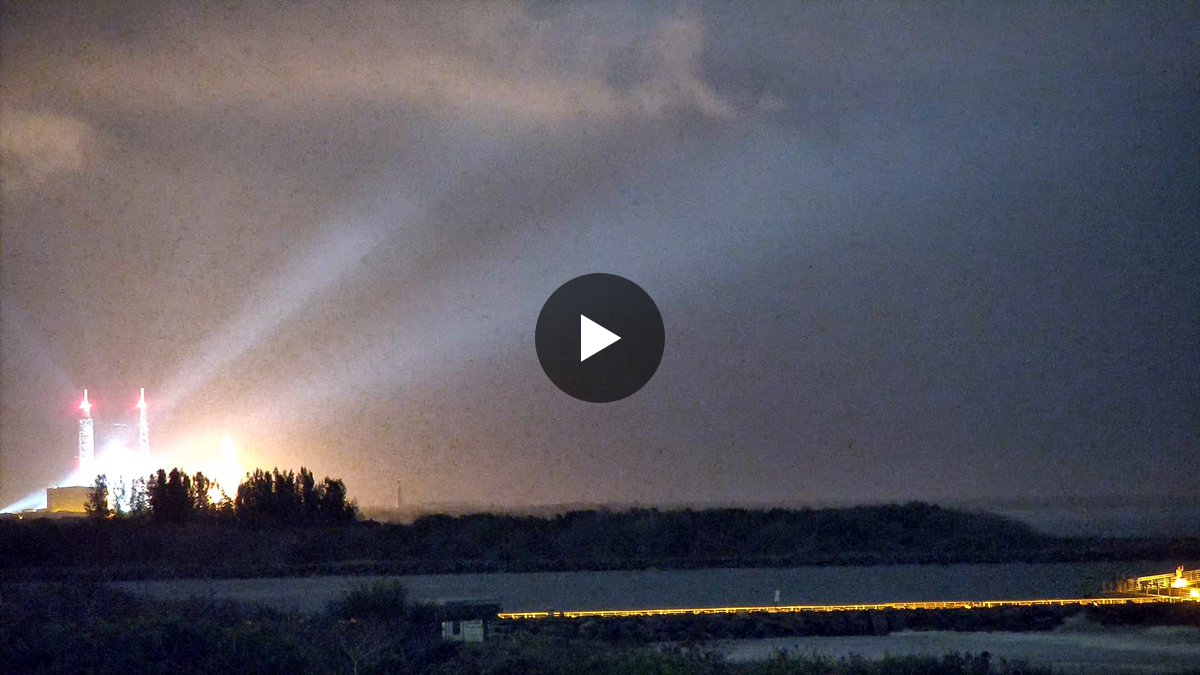
Rocket Report: SpaceX probes upper stage malfunction; Starship testing resumes Welcome to Edition 8.28 of the Rocket Report! The big news in rocketry this week was that NASA still hasn't solved the problem with hydrogen leaks on the Space Launch System. The problem caused months of delays before the first SLS launch in 2022, and the fuel leaks cropped up again Monday during a fueling test on NASA's second SLS rocket. It is a continuing problem, and NASA's sparse SLS launch rate makes every countdown an experiment, as my colleague Eric Berger wrote this week. NASA will conduct another fueling test in the coming weeks after troubleshooting the rocket's leaky fueling line, but the launch of the Artemis II mission is off until March. As always, we [welcome reader submissions][1]. If you don't want to miss an issue, please subscribe using the box below (the form will not appear on AMP-enabled versions of the site). Each report will include information on small-, medium-, and heavy-lift rockets, as well as a quick look ahead at the next three launches on the calendar. Blue Origin "pauses" New Shepard flights. Blue Origin has "paused" its New Shepard program for the next two years, a move that likely signals a permanent end to the suborbital space tourism initiative, [Ars reports][2]. The small rocket and capsule have been flying since April 2015 and have combined to make 38 launches, all but one of which were successful, and 36 landings. In its existence, the New Shepard program flew 98 people to space, however briefly, and launched more than 200 scientific and research payloads into the microgravity environment. [Read full article][3] [Comments][4] [1]: [2]: [3]: [4]: The top of SpaceX's next Super Heavy booster, designated Booster 19, as the rocket undergoes testing at Starbase, Texas. The Rio Grande River is visible in the background.
Why Darren Aronofsky thought an AI-generated historical docudrama was a good idea Last week, filmmaker Darren Aronofsky's AI studio [Primordial Soup][1] and Time magazine released the first [two][2] [episodes][3] of [*On This Day... 1776*.][4] The year-long series of short-form videos features short vignettes describing what happened on that day of the American Revolution 250 years ago, but it does so using “a variety of AI tools” to produce photorealistic scenes containing avatars of historical figures like George Washington, Thomas Paine, and Benjamin Franklin. In [announcing][5] the series, Time Studios President Ben Bitonti said the project provides "a glimpse at what thoughtful, creative, artist-led use of AI can look like—not replacing craft but expanding what’s possible and allowing storytellers to go places they simply couldn’t before." The trailer for "On This Day... 1776." Outside critics were decidedly less excited about the effort. [The AV Club][6] took the introductory episodes to task for "repetitive camera movements [and] waxen characters" that make for "an ugly look at American history." CNET [said][7] that this "AI slop is ruining American history," calling the videos a "hellish broth of machine-driven AI slop and bad human choices." [The Guardian][8] lamented that the "once-lauded director of *Black Swan* and *The Wrestler* has drowned himself in AI slop," calling the series "embarrassing," "terrible," and "ugly as sin." I could go on. [Read full article][9] [Comments][10] [1]: [2]: [3]: [4]: https://www.youtube.com/playlist?list=PLYOGLpQQfhNIzsiXxPLUMwhBEunGH9bem [5]: [6]: [7]: [8]: [9]: [10]: Artist's conception of critics reacting to the first episodes of "On This Day... 1776"


With GPT-5.3-Codex, OpenAI pitches Codex for more than just writing code Today, OpenAI announced GPT-5.3-Codex, a new version of its frontier coding model that will be available via the command line, IDE extension, web interface, and the new [macOS desktop app][1]. (No API access yet, but it's coming.) GPT-5.3-Codex outperforms GPT-5.2-Codex and GPT-5.2 in SWE-Bench Pro, Terminal-Bench 2.0, and other benchmarks, according to the company's testing. There are already a few headlines out there saying "Codex built itself," but let's reality-check that, as that's an overstatement. The domains OpenAI described using it for here are similar to the ones you see in some other enterprise software development firms now: managing deployments, debugging, and handling test results and evaluations. There is no claim here that GPT-5.3-Codex built itself. [Read full article][2] [Comments][3] [1]: [2]: [3]: The Codex macOS app.
The Switch 2 is getting a new Virtual Console (kind of) In 2018, we [lamented][1] as Nintendo officially replaced the Virtual Console—its [long-running line][2] of downloadable classic games on the Wii and Wii U—with time-limited access to a set of games [through a paid Nintendo Switch Online subscription][3]. Now, Hamster Corporation is doing what Nintendo no longer will, by offering downloadable versions of retro console games for direct individual purchase on the Switch 2. As part of [today's Nintendo Direct Partner Showcase][4], Hamster [announced a new Console Archives line][5] of emulated classics available for download starting today on the Switch 2 and next week on the PlayStation 5 (sorry, Xbox and OG Switch fans). So far that lineup only includes the original PlayStation snowboarding title [*Cool Boarders* for $12][6] and the NES action platformer [*Ninja Gaiden II: The Dark Sword of Chaos* for $8][7], but Hamster promises more obscure games, including *Doraemon* and *Sonic Wings Special*, will be available in the future. If the name Hamster Corporation sounds familiar, it's because the company is behind [the Arcade Archive series][8], which has repackaged individual arcade games for purchase and emulated play on modern consoles since 2014. That effort, which [celebrated its 500th release in December][9], even [includes some of Nintendo's classic arcade titles][10], which the Switch-maker never officially released on the original Virtual Console. [Read full article][11] [Comments][12] [1]: [2]: [3]: [4]: [5]: [6]: [7]: [8]: [9]: [10]: [11]: [12]: PS1 games on the Switch 2? In this economy?