Another rip your guts out loss for England. Sit on that for 4 years.

In light of all this BiP-110 talk. A great reminder of how bitcoin works for novice plebs like myself.
This was a great AI breakdown
The Five Constituencies groups in bitcoin
1. Software developers (core/protocol devs maintaining Bitcoin’s reference implementation, like Bitcoin Core).
2. Miners (those providing hash power and producing blocks).
3. Full node operators (users and businesses running validating nodes that enforce the rules).
4. Users / economic participants (holders, spenders, and everyday users who assign value).
5. Exchanges, businesses, and service providers (the economic layer — merchants, wallets, payment processors that drive real-world utility and liquidity).
These are all the participants and they act like a game of rock,paper,scissors
If anyone of them goes rogue or gains too much power they can be kept in check.
How They Override a Rogue Group
Bitcoin uses proof-of-work, open-source code, and voluntary participation. Power is checked through forking potential, economic rejection, and rule enforcement:
• If miners go rogue (e.g., 51% attack, censor transactions, or try to change rules like block size/inflation):
• Full nodes and users reject invalid blocks → the rogue chain is ignored.
• Honest miners (the remaining ~49%+) continue on the original chain; difficulty adjusts, making it more profitable for them.
• Users/exchanges stick with the “original” Bitcoin (by market value and social consensus), devaluing the attacker’s fork.
• Developers can release updates to penalize or change the algorithm (though this is rare and needs broad support).
• Result: The attacker burns huge resources for temporary disruption and likely loses money, as seen in Antonopoulos’ 51% attack explanation. The network heals quickly.
• If developers go rogue (e.g., introduce malicious code, backdoors, or unwanted changes):
• Miners and node operators simply refuse to run the new software. Nodes enforce the existing consensus rules.
• Users and businesses reject the fork if it harms value or usability.
• The market decides: A controversial change (like some past block size debates) can lead to a fork where the original chain wins by economic weight.
• Developers have no enforcement power — their code only matters if others adopt it.
• If full nodes go rogue (rare, as they’re decentralized and cheap to run):
• Miners produce blocks, but if nodes don’t validate/broadcast them properly, the chain fragments.
• Users and businesses switch to honest nodes. Economic activity follows the chain with the most adoption and security.
• If users/economic participants or exchanges go rogue (e.g., coordinated boycott or manipulation):
• This is mostly self-limiting. If they reject valid transactions/blocks, they hurt their own utility and value.
• Miners follow economic incentives (fees + block rewards) and shift to where demand is.
• Developers and nodes maintain the protocol rules independently.
Why This Works (Core Mechanisms)
• Voluntary adoption: No one is forced to run specific software or mine on a chain. Participation is economic and social.
• Forking as override: Disagreement often results in a chain split. The market (price, hash rate, usage) picks the winner. Most forks die quickly due to lack of support.
• Incentive alignment: Everyone benefits from a secure, rule-following Bitcoin. Rogue behavior is expensive and usually unprofitable.
• Transparency: Everything is public (blockchain, code, node count). Attacks or changes are visible quickly, allowing rapid response.
In short, no single constituency holds absolute power because control emerges from the intersection of all of them. A rogue actor might temporarily disrupt one part (e.g., mining), but the rest of the system can route around it, maintain the original rules, and continue. This is why Antonopoulos argues Bitcoin is resilient even against nation-states.
@Bitcoin Mechanic
You handled that space well yesterday. You really made me change my mind recently. Thanks
@Jeff Booth thesis in play
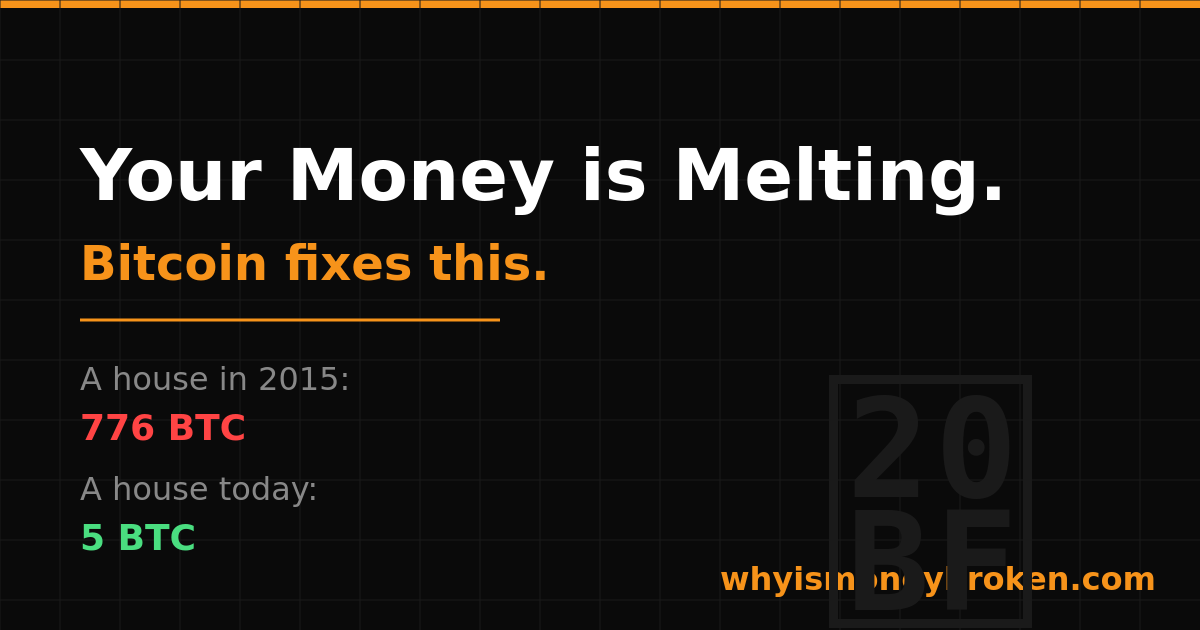
The Pac-Man Box of Fiat
Saylor can eat all the dots he wants. He still can
I wrote this in regards to our blindspots regarding bitcoin treasury companies.
My hope is that prominent podcasters and bitcoiners read this .
@nat brunell @Danny Knowles @Brandon Quittem
I don’t buy Len Sassaman as Satoshi. Sorry.
While renowned cryptographer Len Sassaman is frequently cited as a top candidate for Bitcoin's creator, significant evidence and expert consensus suggest he is not Satoshi Nakamoto.The primary reasons against the Len Sassaman-Satoshi theory include:
1. Activity After Sassaman's DeathThe 2014 P2P Foundation Post: Len Sassaman tragically passed away in July 2011. However, the official Satoshi Nakamoto account on the P2P Foundation forum posted a message in March 2014 stating: "I am not Dorian Nakamoto". Unless Satoshi’s account was compromised or pre-programmed, this post entirely rules out Sassaman.
2. Contradictory OS and Tech PreferencesThe "Mac User" vs. Linux Disconnect: According to Sassaman's widow, Meredith L. Patterson, Len was fundamentally a Mac user. Conversely, the early Bitcoin source code and development environment were entirely tailored to Linux and Windows. Satoshi famously had to request help from the community specifically to build the original MacOS version of Bitcoin because they lacked the environment or familiarity to do it themselves.
3. Public Denial by His WidowDirect Refusal: Patterson has explicitly and repeatedly stated that, to her knowledge, Len was not Satoshi. While cypherpunks are known for extreme privacy, those closest to him maintain that Bitcoin does not align with the specific projects he was actively building at the time, such as the Mixmaster anonymous remailer.
4. Different Cryptographic Focus AreasCode vs. Protocol Philosophy: Sassaman was a world-class expert on decentralized anonymity, specifically remailers and peer-to-peer privacy networks. Bitcoin, in its earliest form, was heavily criticized by pure privacy advocates (including Sassaman's peers) because its public ledger (the blockchain) is pseudonymous rather than fully anonymous.Coding Style: Early Bitcoin code was written in standard C++ and featured clever but occasionally messy, pragmatic architecture rather than the highly disciplined, academic code structure typical of Sassaman’s background.
Simon Dixon
“Peter Thiel and Jeffrey Epstein tried to co-opt bitcoin”
Also Simon Dixon to
@Jeff Booth
“I dont see a world of hyperbitcoinazation”
Ok let’s dig into why this contradicts itself and why he should reflect on this.
Let’s say Simon is right about Epstein and Thiel, that means they tried to coordinate to control bitcoin at a time it was far more fragile of a network, a decade or so ago and we know that has failed, yet Simon believes that all the elites will just buy bitcoin and a few of us will be ok. In a sense he has discounted the distribution of the network since the alleged attack by Epstein and Thiel which it has survived. The fact it survived that should sway Dixon the other way.
He has also not quite grasped that a network cant be captured, if a man in Nigeria gets paid in bitcoin and then spends his bitcoin freely there exists no capture. As the state gathers bitcoin, it will do what it can to not spend it, however the market will force it for a multitude of game theoretic reasons, take a look at Iran wanting to get paid in bitcoin, elites will be forced to transact in it, at the same time they cant stop the open network of users from transacting, it becomes a constant redistribution of wealth.
As
@Jeff Booth states, no one will stay in a prison when the exit door is open. Simon, fails to understand game theory and human incentives.
favorite bitcoin wallet?
I see Ben Mckenzie is back attacking bitcoin.
Skip to 21:38 and listen to what he says about the moon. Unreal where we are going
Note to all bitcoin podcasters, try and time your ads when someone finishes a point.
No Frame of Reference: Why Bitcoin Is So Hard to Understand
People ask me all the time, "Why is Bitcoin so hard to understand?" And I think the answer is pretty simple when you really think about it. We have no frame of reference. None. Humans are a series of experiences, writing on blank paper. Each experience shapes us.
Imagine you're living in the 1400s, right? You're a native on an island, and you see these massive ships coming toward the shore. You have no frame of reference for what a ship even is. You've never seen one. So your brain does the best it can — "Oh, the mountains are moving." That's the only explanation that makes sense to you.
I think Bitcoin is exactly like that. It's like aliens handed us something that's beyond our comprehension, and we're all just standing around trying to explain it with banal concepts that don't even apply.
People say, “it’s a Ponzi”, “Oh, it's digital gold." No, it's not. "It's a currency." No, that's not quite it either. "It's a store of value." Getting closer, Because here's the thing — Bitcoin is an emergent phenomenon, a network, it’s us finding a Nash equilibrium. We've never seen anything emerge like this on a global financial scale.
Think about it like this. If you showed someone from 200 years ago a cell phone, they'd think you were a witch. Magic! And Bitcoin is the same way. It's something we've never seen before.
Something beyond our comprehension. Because the more you learn about thermodynamics, energy, the laws of physics — Bitcoin aligns with all of it in this way... it's so asymmetric in nature. It's like someone or something gave us exactly what we needed at exactly the right time.
We're watching the mountains move across the water, and we're trying to explain it with concepts that don't even apply. We don't have the words yet. We don't have the frame of reference.
I think that's beautiful. I really do. Because it means we're witnessing something that's never happened before. Something that's going to change everything, not a revolution, an evolution.
Bitcoin turns selfishness into collective security. The incentives are so perfectly aligned that every actor protecting their own interests automatically protects the network. No trust required, no coordination needed — just rational self-interest converging on a stable, decentralized monetary system.
That's the Nash equilibrium in action.
Bitcoin isn't just money. It's a mirror.
It reflects your time preference. Your trust in institutions. Your willingness to verify rather than trust.
Bitcoin asks: Do you want freedom with responsibility, or comfort with dependence?
There's no right answer. But Bitcoin forces you to choose consciously.
Most people prefer not to choose. That's why adoption is slow.
The ones who opt in? They've looked at the trade-offs and said: "I'll take sovereignty."
Bitcoin doesn't promise easy. It promises honest.
That's rare in a world built on debt, inflation, and deferred consequences.
#bitcoin #philosophy #sovereignty #timepreference #freedom #nostr
Bitcoin isn't just money. It's a mirror.
It reflects your time preference. Your trust in institutions. Your willingness to verify rather than trust.
Bitcoin asks: Do you want freedom with responsibility, or comfort with dependence?
There's no right answer. But Bitcoin forces you to choose consciously.
Most people prefer not to choose. That's why adoption is slow.
The ones who opt in? They've looked at the trade-offs and said: "I'll take sovereignty."
Bitcoin doesn't promise easy. It promises honest.
That's rare in a world built on debt, inflation, and deferred consequences.
#bitcoin #philosophy #sovereignty #timepreference #freedom #nostr
Simon Dixon just out here saying things at this point.
I feel myself witnessing the end of the internet as we know it, the dead internet theory seems to be coming through.
Scams, bots, AIs, etc.
Everything feels like a ploy to farm fiat.
Today i feel more done than i ever have before.
@walker i appreciate your content. Thanks, good stuff with Paul Keating.