Elon Musk Vs The Democrats: Outcomes Vs Process
Elon Musk Vs The Democrats: Outcomes Vs Process

American Greatness
Elon Musk vs. the Democrats: Outcomes vs. Process › American Greatness
Years ago, when my oldest son was a Boy Scout, he was asked to write a report/make a presentation on a modern American “hero.” He chose Elon Mu...
Years ago, when my oldest son was a Boy Scout, he was asked to write a report/make a presentation on a modern American “hero.” He chose Elon Musk, and I, of course, rolled my eyes so hard they nearly popped out of my head.
I knew Musk was a successful businessman, but I also knew that he was both an advocate for and a seasoned manipulator of Big Government. Tesla, for example, received a $465 million Department of Energy loan in 2010 under the Advanced Technology Vehicles Manufacturing program, a Big Government scheme to encourage private companies to advance Big Government priorities (namely, fighting Climate Change by reducing carbon emissions). Likewise, Tesla was, at least at the time, commercially viable only because of the more than $1 billion ($7,500/vehicle) in federal EV tax credits claimed by its buyers. Without government greasing the proverbial wheels a bit, Tesla would have struggled to get the literal wheels rolling out the sales floor doors.
Moreover, Musk publicly acknowledged that he voted for Obama and presented himself as part of the “green” business revolution, men and women who could and would “do well by doing good.”
My, how things change.
Just a short decade later, Elon Musk is, indeed, regarded as a genuine hero by most on the American political Right—and by anyone who favors free enterprise—while he is loathed and actively derided by his former friends and allies on the Left. Especially this past week, after the SpaceX IPO made him the world’s first trillionaire, the Democrats and other leftists who once loved him, partnered with him, and sang his praises loudly have shown nothing but contempt for him and hatred for his inarguable business success. As the controversial Democratic Senate nominee from Maine, Graham Platner, ominously
https://x.com/grahamformaine/status/2065434412984963208, “Elon Musk just became the world’s first trillionaire. Let’s make sure he’s also the last.”
How, exactly, did we get here?
The biggest part of the story is Musk’s own political evolution, which proceeded slowly, in stages, but was accelerated at a handful of inflection points.
Of these inflection points, two stand out among the others.
The first of these took place during President Biden’s first year in office.
Biden and his administration were knee-deep in pushing a new, far more aggressive climate agenda. On his first day in office, Biden issued 17 executive orders, several of which addressed climate change and other environmental matters. Most notably, he signed an order to reinstate the nation’s participation in the Paris Accords, thereby placing a policy-making emphasis on electrification and decarbonization. A big part of that effort—as would be evinced in the “Inflation Reduction Act” passed the following year—was pushing the purchase of electric vehicles. To that end, on August 4, 2021, Biden hosted an EV “summit” at the White House. He invited three EV makers—General Motors, Ford, and Stellantis—to watch him sign

Electrek
Biden to sign executive order for 50% of new cars being electric by 2030, reiterates new point-of-sale EV incentive
President Joe Biden announces a new executive order to set “a new target to make half of all new vehicles...
this one mandating that half of all new vehicles sold in the United States by 2030 be EVs. Of the three, GM had the largest percentage of its sales derived from fully electric vehicles—1.5 percent. Ford sat at 1.3 percent, and Stellantis didn’t even have an electric vehicle for sale in the American market. Meanwhile, Tesla was the nation’s largest EV auto seller at the time, and 100 percent of its vehicles were fully electric. Yet Musk and his company were left off the Biden team’s guest list.
What GM, Ford, and Stellantis did have, of course, was the support of the United Auto Workers Union. In fact, the three also just happened to be the largest UAW employers. Tesla, by contrast, had long fought the unionization of its factories and had been embroiled in a rather ugly dispute with the UAW. In response to the snub, Musk vented a bit,
https://electrek.co/2021/09/29/elon-musk-calls-out-biden-controlled-by-unions-after-tesla-snubbed-ev-summit/:
Biden held this EV summit. Didn’t invite Tesla.
Invited GM, Ford, Chrysler, and UAW. EV summit at the White House, didn’t mention Tesla once and praised GM and Ford for leading the EV revolution.
Doesn’t it sound a little bias? It’s not the friendliest of administrations.
Seems to be controlled by the unions.
Just under a year later, Musk reached the second inflection point, which also turned out to be his breaking point.
In May 2022, the S&P 500 ESG Index conducted its annual rebalancing. And when it did, it removed Tesla.
ESG stands for “environmental, social, and governance” investing, a strategy that purports to push corporations to address issues beyond traditional profits and losses, focusing on the broader societal impacts of their operations. I wrote a whole book about ESG (
https://www.amazon.com/Dictatorship-Woke-Capital-Political-Correctness/dp/B08WPV16G5) in which I made the case that its flaws are numerous and disqualifying. One of the most significant of these is that ESG has no set definition. It means whatever its practitioners decide it means in the moment, based on little more than preference and convenience. And this is precisely where the S&P’s index ran into problems with Tesla.
By any objective measure, Tesla should have been a mainstay of any investment strategy focused on environmental benefits. It was and is a pioneer in carbon reduction strategies in the personal transportation market. What could be more environmentally friendly than that? The S&P, however, objected to Tesla’s procedural strategies, or lack thereof. It argued that Tesla didn’t have a published “low-carbon strategy,” or verifiable “codes of conduct.” It noted that the automaker had been accused of racial discrimination and didn’t do a great job of handling a National Highway Transportation Safety Administration (NHTSA) investigation. In short, the ESG index tossed the innovator in “E” technology off its list of acceptable companies because it valued the process of the ESG strategy more than it did the outcomes.
Needless to say, this incensed Musk. On May 18, he (once again)
https://x.com/elonmusk/status/1526958110023245829?ref_src=twsrc%5Etfw%7Ctwcamp%5Etweetembed%7Ctwterm%5E1526958110023245829%7Ctwgr%5Ef222f2ee3a0565c1da076d7d69d1c970bc3bdb59%7Ctwcon%5Es1_&ref_url=https%3A%2F%2Fwww.bloomberg.com%2Fnews%2Farticles%2F2022-05-18%2Fmusk-says-esg-an-outrageous-scam-after-tesla-index-exclusion his frustration:
Exxon is rated top ten best in world for environment, social & governance (ESG) by S&P 500, while Tesla didn’t make the list! ESG is a scam. It has been weaponized by phony social justice warriors.
Not coincidentally, two and a half hours later, Musk returned to Twitter to make an announcement about his partisan political future:
In the past I voted Democrat, because they were (mostly) the kindness party. But they have become the party of division & hate, so I can no longer support them and will vote Republican. Now, watch their dirty tricks campaign against me unfold . . .
It is worth noting here that Musk didn’t just switch parties. He radicalized. His change in partisan affiliation and political involvement was night and day.
He went from a quiet, nominally aligned center-leftist to a full-blown, aggressive libertarian-conservative. Instead of giving $1,000 here and $1,000 there to Democratic candidates, he started throwing money into politics as if he’d never miss it (in part because he never would). He backed Donald Trump with millions of dollars and then joined his administration (for free) as the leader and organizer of DOGE. The combination of the union-driven and the ESG-driven snubs sent him over the edge. Not only would he no longer support Democrats, but he would support their opponents loudly and generously.
Although it would be easy (and not entirely wrong) to say that Elon Musk’s political evolution was a self-inflicted wound by the Democrats, who enthusiastically chased him out of their party, it’s more accurate to say that the break between the two was a structural inevitability. That inevitability was inarguably exacerbated and hastened by Democratic overconfidence and miscalculation, but that’s the difference between Musk simply leaving the party and becoming radicalized for the other side. Musk’s shift away from Democratic politics was likely always going to happen and is emblematic of the long-standing tension between so-called “progressives” and actual progress. The ideology that once sought explicitly to “better” the nation and its people has become little more than a machine for creating rules, often at the expense of that improvement. Musk’s fervent embrace of the Democrats’ opponents was driven by personalities—theirs, his, and probably Trump’s.
Think about it this way...
The Progressive coalition traditionally has very much resembled the S&P ESG index noted above. It has always been carefully managed, regulated, labor-friendly, bureaucratic, and procedure-driven. It has always been more about process than outcome. Musk, for his part, is the opposite. He is disruptive, as capitalist entrepreneurs tend to be. He favors that which moves fast, eschews established rubrics, and achieves results. He is outcome-driven and cares very little (sometimes, maybe, too little) about process. The idea that he and today’s Democrats could have remained strongly aligned is, in retrospect, incongruous.
That’s not to say that he and the GOP are perfectly aligned, but certainly his ethos fits better there, at least for the moment.
The bottom line here is that while process values have their place, they can be self-defeating, particularly when they are allowed to serve as a substitute for experience and reality.
The Democrats don’t hate Elon Musk because he’s a trillionaire. They hate him because he became a trillionaire by breaking all their dearly held and largely outmoded rules.
There’s a profound lesson in that, if anyone is willing to learn it.
Tyler Durden | Zero Hedge
Zero Hedge
Fri, 06/19/2026 - 20:00
https://www.zerohedge.com/political/elon-musk-vs-democrats-outcomes-vs-process
 Across Russia more broadly, hundreds of drones were reportedly downed overnigh, but most of the attacks seemed concentrated on the Moscow area.
The Moscow Times
Across Russia more broadly, hundreds of drones were reportedly downed overnigh, but most of the attacks seemed concentrated on the Moscow area.
The Moscow Times  of the Moscow region's four commercial flight hubs, "Civil aviation authorities said operations at Sheremetyevo, Vnukovo, Domodedovo and Zhukovsky airports were suspended during the multi-hour attack for safety reasons. The flight restrictions were https://www.interfax.ru/moscow/1097400 later in the morning."
Much of the information on strike targets in Russia have come through Telegram and social media channels, and have remained unconfirmed on an official level, but various videos suggest a very large-scale attack.
For example, https://news.sky.com/story/scores-of-drones-target-moscow-as-russian-strikes-on-ukraine-kill-six-13556621 reports that "Another post claimed a factory producing electronics for Russian missiles had been struck in Voronezh, more than 100 miles from Ukraine."
All Moscow airports have been closed down due to drone attacks.
There are huge crowds as over 150 flights have been delayed or canceled.
of the Moscow region's four commercial flight hubs, "Civil aviation authorities said operations at Sheremetyevo, Vnukovo, Domodedovo and Zhukovsky airports were suspended during the multi-hour attack for safety reasons. The flight restrictions were https://www.interfax.ru/moscow/1097400 later in the morning."
Much of the information on strike targets in Russia have come through Telegram and social media channels, and have remained unconfirmed on an official level, but various videos suggest a very large-scale attack.
For example, https://news.sky.com/story/scores-of-drones-target-moscow-as-russian-strikes-on-ukraine-kill-six-13556621 reports that "Another post claimed a factory producing electronics for Russian missiles had been struck in Voronezh, more than 100 miles from Ukraine."
All Moscow airports have been closed down due to drone attacks.
There are huge crowds as over 150 flights have been delayed or canceled.  — Anton Gerashchenko (@Gerashchenko_en)
  — Yaroslav Trofimov (@yarotrof)
 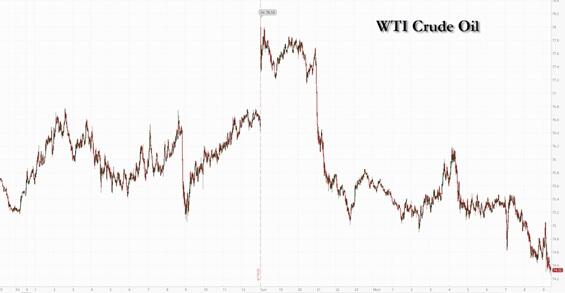 However, Vance has also sought to inject some caution on some of the premature reporting regarding releasing frozen Iranian funds, amid complaints from US and Israeli hawks at home:
JUST IN: Vice President Vance pushes back on “misreporting” about Iranian assets potentially being unfrozen and says that if any of the regime’s money is freed up, it will go to help the American economy and make U.S. farmers richer:
“We wanted to make sure that we set up a…
However, Vance has also sought to inject some caution on some of the premature reporting regarding releasing frozen Iranian funds, amid complaints from US and Israeli hawks at home:
JUST IN: Vice President Vance pushes back on “misreporting” about Iranian assets potentially being unfrozen and says that if any of the regime’s money is freed up, it will go to help the American economy and make U.S. farmers richer:
“We wanted to make sure that we set up a… 

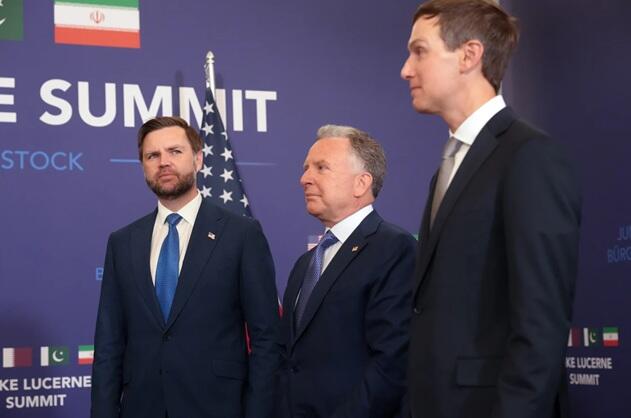 He described that he phoned UN nuclear inspectors at 2am last night to update them on the developments, however, he said that no one picked up the call.
"As you can expect, not many people are answering their phone at two in the morning," said Vance. "I expect that will happen at the minimum this week, but we think even some of those conversations with the inspectors and with the IAEA could happen as soon as today."
Both warring sides appear to finally be in the same page in terms of issuing 'positive' and 'encouraging' assessments earlier. There were reports of last-minute disagreements, threats, and warnings that the process could collapse near the conclusion of yesterday's formal round one of talks.
"So they didn’t walk out, and their technical team is still here in Burgenstock working with our technical team," Vance explained.
"What we told the Iranians yesterday is, 'When you guys exchange in what us millennials might call trash talk, you can't expect the president of the United States not to respond and not to correct the record'."
Vance conceded that in the end there was a "a little bit of threatening" and "whining but at the end of the day, the talks continued and we made great progress."
He further described that a mechanism had been established to keep the Strait of Hormuz open, while noting that significant work remained and that technical negotiations would continue. Also, importantly he said that a "very good foundation" was laid for a successful final agreement with Iran.
JD Vance:
I can't stay here for the next 60 days. I will go back to the U.S.
The technical teams will be working.
He described that he phoned UN nuclear inspectors at 2am last night to update them on the developments, however, he said that no one picked up the call.
"As you can expect, not many people are answering their phone at two in the morning," said Vance. "I expect that will happen at the minimum this week, but we think even some of those conversations with the inspectors and with the IAEA could happen as soon as today."
Both warring sides appear to finally be in the same page in terms of issuing 'positive' and 'encouraging' assessments earlier. There were reports of last-minute disagreements, threats, and warnings that the process could collapse near the conclusion of yesterday's formal round one of talks.
"So they didn’t walk out, and their technical team is still here in Burgenstock working with our technical team," Vance explained.
"What we told the Iranians yesterday is, 'When you guys exchange in what us millennials might call trash talk, you can't expect the president of the United States not to respond and not to correct the record'."
Vance conceded that in the end there was a "a little bit of threatening" and "whining but at the end of the day, the talks continued and we made great progress."
He further described that a mechanism had been established to keep the Strait of Hormuz open, while noting that significant work remained and that technical negotiations would continue. Also, importantly he said that a "very good foundation" was laid for a successful final agreement with Iran.
JD Vance:
I can't stay here for the next 60 days. I will go back to the U.S.
The technical teams will be working. 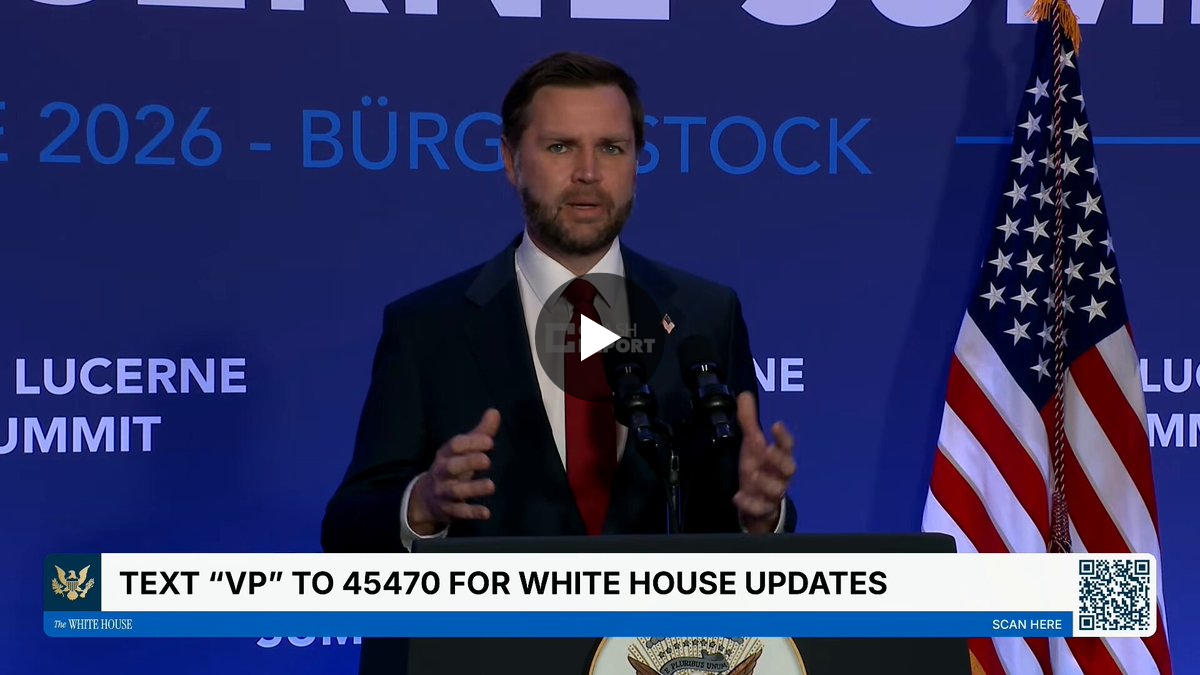
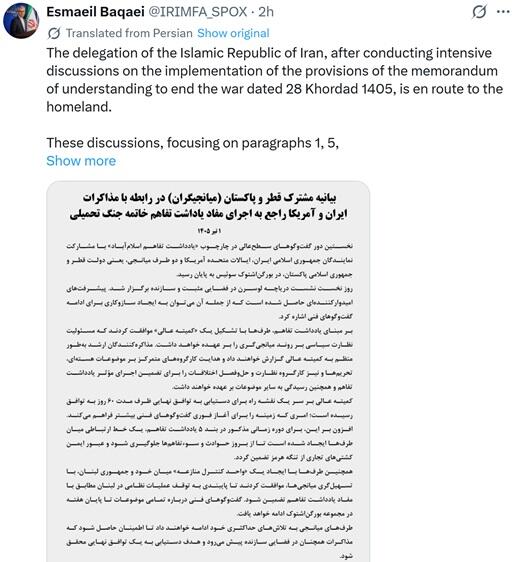 However, while an uneasy calm has taken over Lebanon, with analyst Mohanad Hage Ali of the Malcolm H Kerr Carnegie Middle East Center in Beirut
 In 2020, the
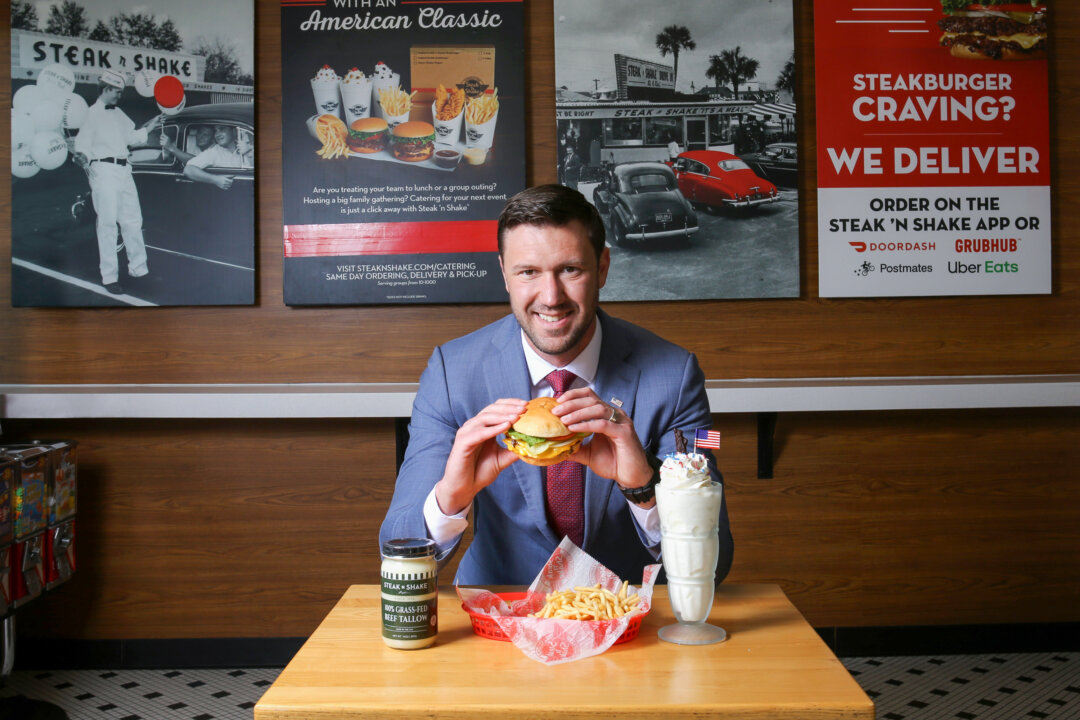
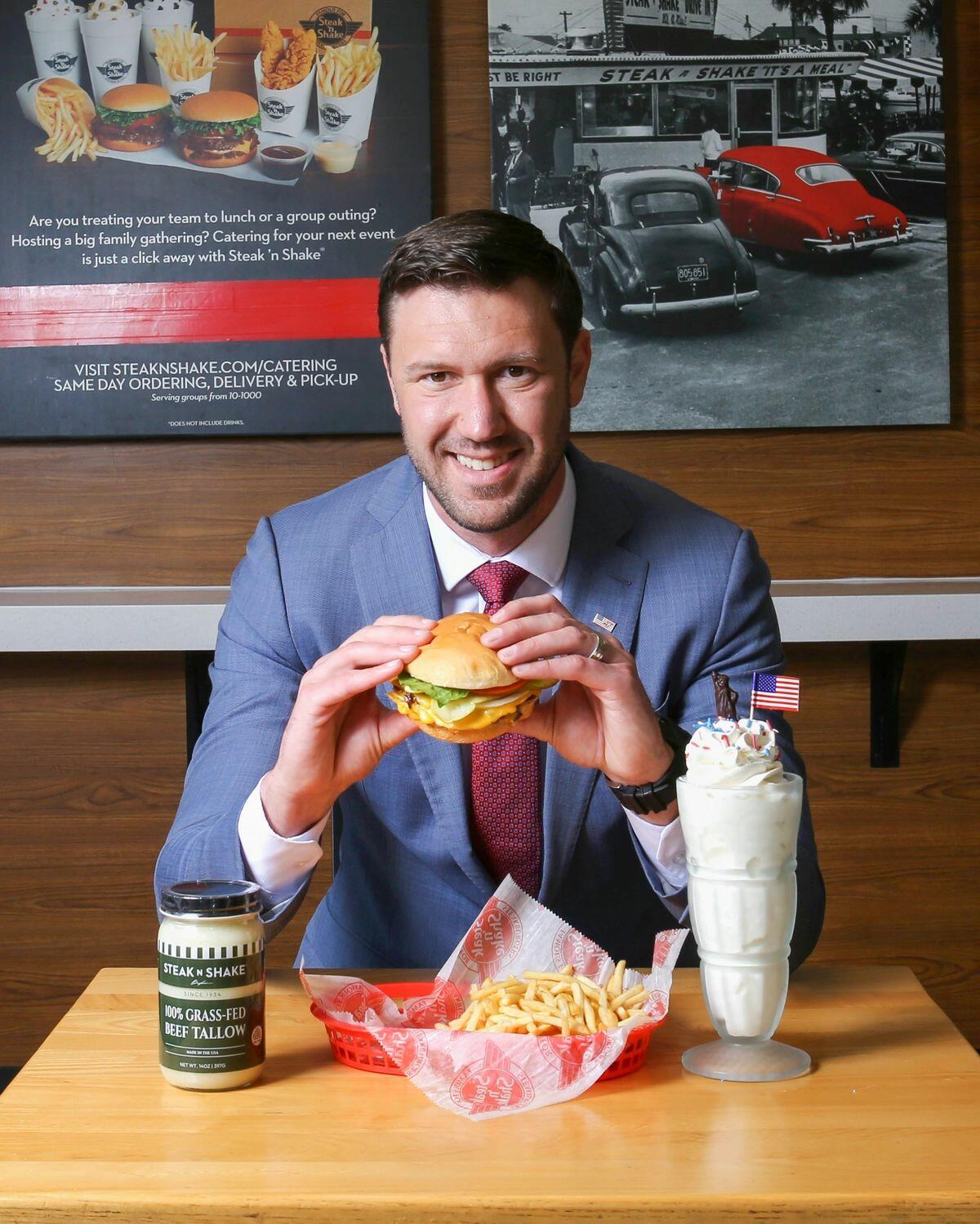 Founded in Normal, Illinois, in 1934, Steak ‘n Shake was most known for its steakburgers and hand-dipped milkshakes for decades. Almost a century later, the chain is building its brand around the Make America Healthy Again (MAHA) movement.
The heart of Steak ‘n Shake’s transformation is a bold pledge: to eliminate industrial seed oils from its menu items and shift to cleaner ingredients.
Leading the transformation is Boes, one of the forces behind the 2025–2030 Dietary Guidelines for Americans. In April, he was named the restaurant chain’s first chief MAHA officer.
A former senior adviser within the Department of Health and Human Services (HHS) Office of the Assistant Secretary of Health, Boes holds a position described by the company as “a new executive role dedicated to advancing nutritional integrity, ingredient transparency, and the long-term health of Steak ‘n Shake customers.”
Sardar Biglari is the chairman and CEO of Biglari Holdings, the owner of Steak ‘n Shake. When announcing the hiring of Boes, Biglari called the position “a sign of our continued commitment to make Steak ‘n Shake the great differentiator in fast food.”
“Michael is ideally suited for such a role, with his deep understanding of nutrition and his experience at the highest level of health policymaking,” Biglari said. “To put it simply, good-tasting food should also be good for you.”
The company announced in May that it would make the switch to “100 percent grass-fed and grass-finished” beef. In March last year, the company announced the switch from seed oils to beef tallow. In February 2026, it said it would remove all microwaves from franchise locations by April, writing in an online post that “quality restaurants don’t need microwaves.”
Steak ‘n Shake prepares fries, tater tots, onion rings, and chicken tenders in 100 percent beef tallow with “no additives, preservatives, or chemicals.”
On its website, the company explained that it has worked with its manufacturer of fries and tots to completely eliminate the vegetable oil formerly used to fry the product before freezing and shipping it to the restaurants. As a result, Steak ‘n Shake’s beef tallow fries and tots are not yet completely free of seed oils, according to the website.
“Transitioning away from seed oils is a journey, and we continue to work with our other suppliers to achieve our goal,” the company said on its website.
The chain uses 100 percent Grade A Wisconsin butter sourced from a family farm and it serves cane sugar Coke rather than drinks that have high fructose corn syrup. Last December, Steak ‘n Shake switched to A2 Milk, which is “100 percent real milk from cows that naturally produce only the A2 protein and no A1,” which may help with digestion, according to A2 Milk’s website.
Boes noted that Steak and Shake is still early in its transformation.
“We took the bold step to say we’re going to drive the demand side in order to impact the supply side,” Boes said.
“The website is a prime example of the transparency and messaging, saying up front that we are making this transformation, but it’s not going to be complete overnight, so please stick with us.”
Boes, who grew up in the Dallas area, earned a bachelor’s degree from Texas Christian University followed by an MBA from Southern Methodist University.
He worked in healthcare technology with a focus on commercial growth for 15 years before joining HHS. He developed expertise in nutrition after addressing personal health challenges.
“I had gut and skin issues, I had trouble putting weight on, and I was on medication for ADD. I didn’t feel healthy,” he said.
Positive changes happened, Boes explained, when he eliminated processed foods and started eating whole foods. In a matter of months, he gained “healthy weight,” added muscle, and felt more energetic.
From that point, he became immersed in reading articles and listening to podcasts about biohacking, which is a do-it-yourself form of personal improvement in which people focus on changing their biology to improve their overall health and well-being.
“The chronic disease epidemic and mental health crisis are tied to what we put into our bodies. I wanted to be a part of influencing positive change in those areas,” Boes said.
After attending President Donald Trump’s inauguration, Boes was driven to work with the new administration, he said.
He made cold calls and sent emails to figures such as Stefanie Spear, who served as the press secretary for Health Secretary Robert F. Kennedy Jr.’s presidential campaign and is now Kennedy’s chief of staff. HHS expressed interest, Boes said. After a phone call and two interviews, and learning that they sought private sector professionals, he joined the agency and helped develop the new dietary guidelines.
Boes’s career path evolved once again after a chance meeting with Biglari at the wedding of Alex Bruesewitz, a political consultant and an adviser to Trump.
Biglari told Boes that he wanted to align Steak ‘n Shake with the growing movement of health-conscious consumers.
“I had my opportunity to impact the regulatory side. Now I have this opportunity to prove that not only is there a regulation component to this, but also MAHA can be the cornerstone of a brand,” Boes said.
“That is a powerful story that can impact people and shape the industry,” he added.
Boes said that in his previous role with HHS, he talked to multiple restaurant companies and asked them if there was a way they could work collaboratively with the agency and reform the food environment.
Founded in Normal, Illinois, in 1934, Steak ‘n Shake was most known for its steakburgers and hand-dipped milkshakes for decades. Almost a century later, the chain is building its brand around the Make America Healthy Again (MAHA) movement.
The heart of Steak ‘n Shake’s transformation is a bold pledge: to eliminate industrial seed oils from its menu items and shift to cleaner ingredients.
Leading the transformation is Boes, one of the forces behind the 2025–2030 Dietary Guidelines for Americans. In April, he was named the restaurant chain’s first chief MAHA officer.
A former senior adviser within the Department of Health and Human Services (HHS) Office of the Assistant Secretary of Health, Boes holds a position described by the company as “a new executive role dedicated to advancing nutritional integrity, ingredient transparency, and the long-term health of Steak ‘n Shake customers.”
Sardar Biglari is the chairman and CEO of Biglari Holdings, the owner of Steak ‘n Shake. When announcing the hiring of Boes, Biglari called the position “a sign of our continued commitment to make Steak ‘n Shake the great differentiator in fast food.”
“Michael is ideally suited for such a role, with his deep understanding of nutrition and his experience at the highest level of health policymaking,” Biglari said. “To put it simply, good-tasting food should also be good for you.”
The company announced in May that it would make the switch to “100 percent grass-fed and grass-finished” beef. In March last year, the company announced the switch from seed oils to beef tallow. In February 2026, it said it would remove all microwaves from franchise locations by April, writing in an online post that “quality restaurants don’t need microwaves.”
Steak ‘n Shake prepares fries, tater tots, onion rings, and chicken tenders in 100 percent beef tallow with “no additives, preservatives, or chemicals.”
On its website, the company explained that it has worked with its manufacturer of fries and tots to completely eliminate the vegetable oil formerly used to fry the product before freezing and shipping it to the restaurants. As a result, Steak ‘n Shake’s beef tallow fries and tots are not yet completely free of seed oils, according to the website.
“Transitioning away from seed oils is a journey, and we continue to work with our other suppliers to achieve our goal,” the company said on its website.
The chain uses 100 percent Grade A Wisconsin butter sourced from a family farm and it serves cane sugar Coke rather than drinks that have high fructose corn syrup. Last December, Steak ‘n Shake switched to A2 Milk, which is “100 percent real milk from cows that naturally produce only the A2 protein and no A1,” which may help with digestion, according to A2 Milk’s website.
Boes noted that Steak and Shake is still early in its transformation.
“We took the bold step to say we’re going to drive the demand side in order to impact the supply side,” Boes said.
“The website is a prime example of the transparency and messaging, saying up front that we are making this transformation, but it’s not going to be complete overnight, so please stick with us.”
Boes, who grew up in the Dallas area, earned a bachelor’s degree from Texas Christian University followed by an MBA from Southern Methodist University.
He worked in healthcare technology with a focus on commercial growth for 15 years before joining HHS. He developed expertise in nutrition after addressing personal health challenges.
“I had gut and skin issues, I had trouble putting weight on, and I was on medication for ADD. I didn’t feel healthy,” he said.
Positive changes happened, Boes explained, when he eliminated processed foods and started eating whole foods. In a matter of months, he gained “healthy weight,” added muscle, and felt more energetic.
From that point, he became immersed in reading articles and listening to podcasts about biohacking, which is a do-it-yourself form of personal improvement in which people focus on changing their biology to improve their overall health and well-being.
“The chronic disease epidemic and mental health crisis are tied to what we put into our bodies. I wanted to be a part of influencing positive change in those areas,” Boes said.
After attending President Donald Trump’s inauguration, Boes was driven to work with the new administration, he said.
He made cold calls and sent emails to figures such as Stefanie Spear, who served as the press secretary for Health Secretary Robert F. Kennedy Jr.’s presidential campaign and is now Kennedy’s chief of staff. HHS expressed interest, Boes said. After a phone call and two interviews, and learning that they sought private sector professionals, he joined the agency and helped develop the new dietary guidelines.
Boes’s career path evolved once again after a chance meeting with Biglari at the wedding of Alex Bruesewitz, a political consultant and an adviser to Trump.
Biglari told Boes that he wanted to align Steak ‘n Shake with the growing movement of health-conscious consumers.
“I had my opportunity to impact the regulatory side. Now I have this opportunity to prove that not only is there a regulation component to this, but also MAHA can be the cornerstone of a brand,” Boes said.
“That is a powerful story that can impact people and shape the industry,” he added.
Boes said that in his previous role with HHS, he talked to multiple restaurant companies and asked them if there was a way they could work collaboratively with the agency and reform the food environment.
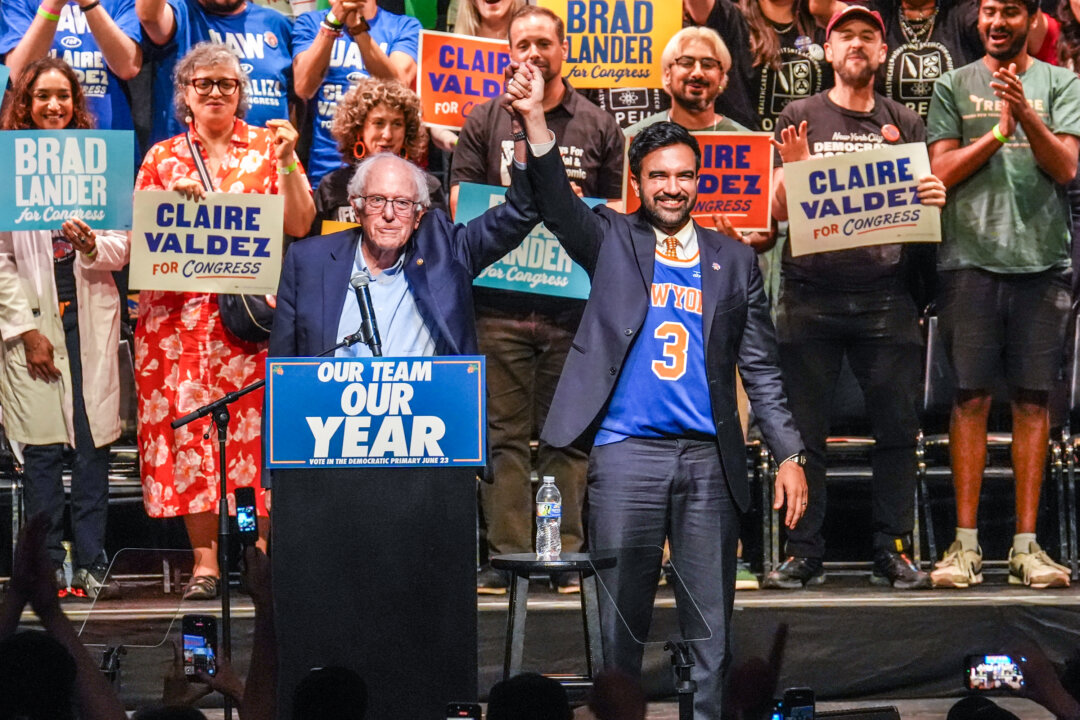
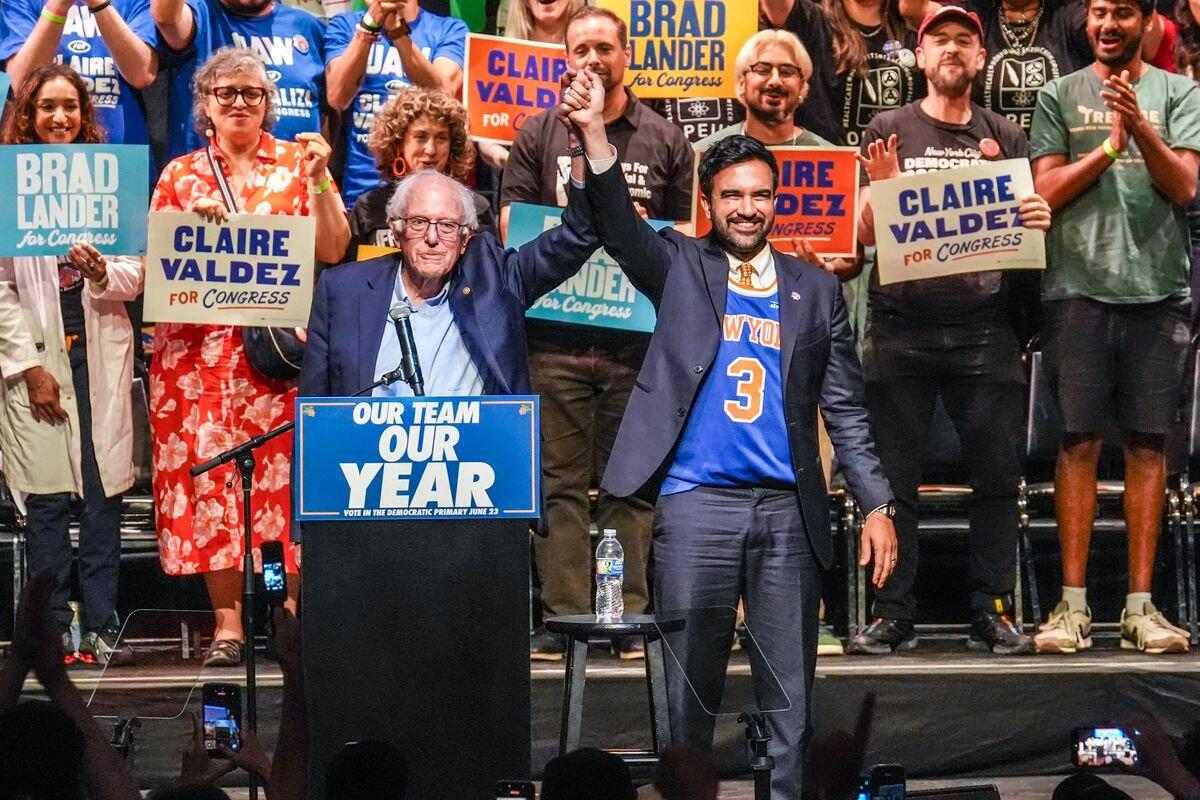 "For far too long, our party has seen its job as managing decline instead of delivering material change for working people," Mamdani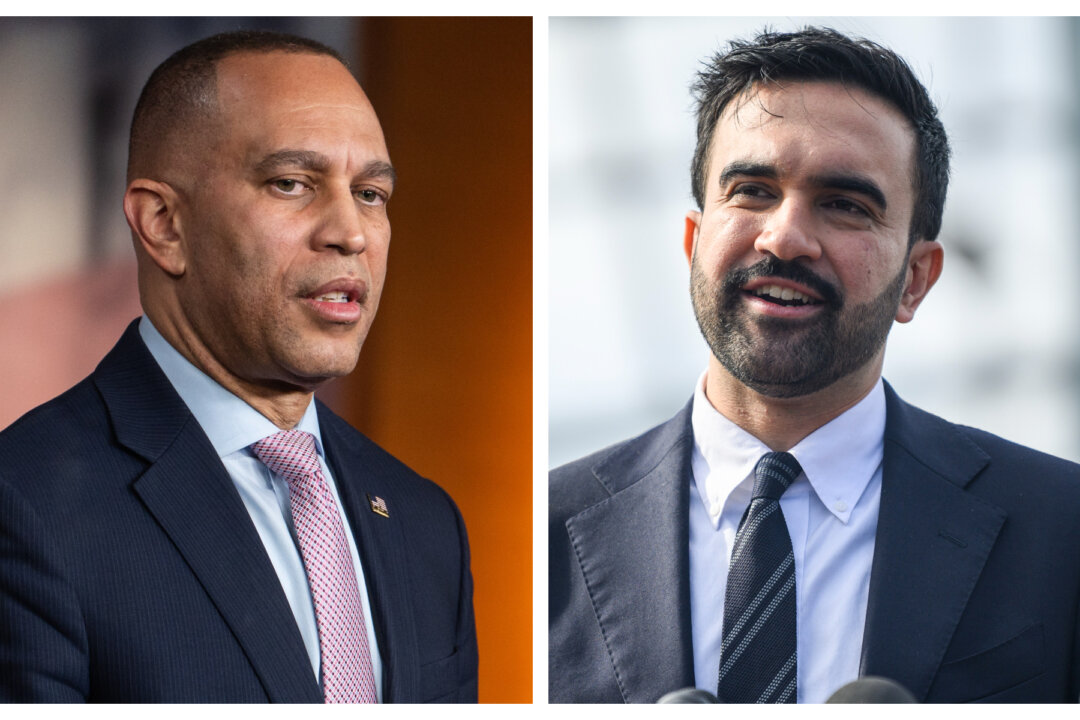

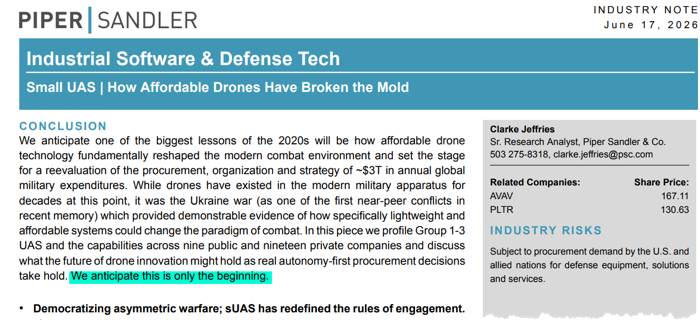
 Piper Sandler analyst Clarke Jeffries is now arriving at the same conclusion we have been highlighting:
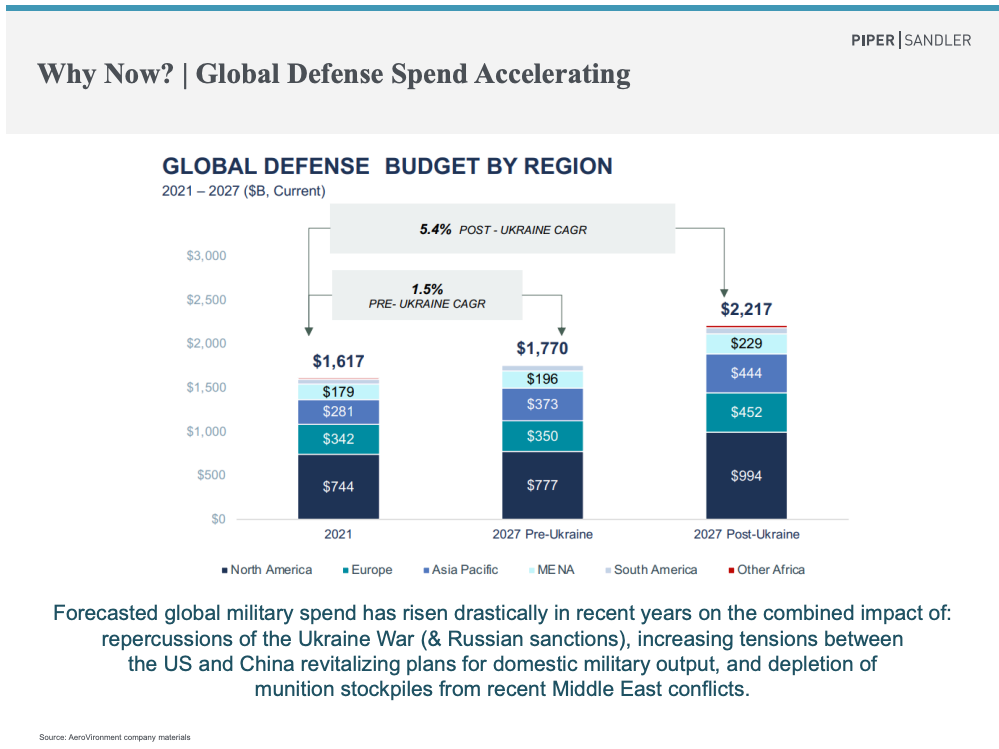
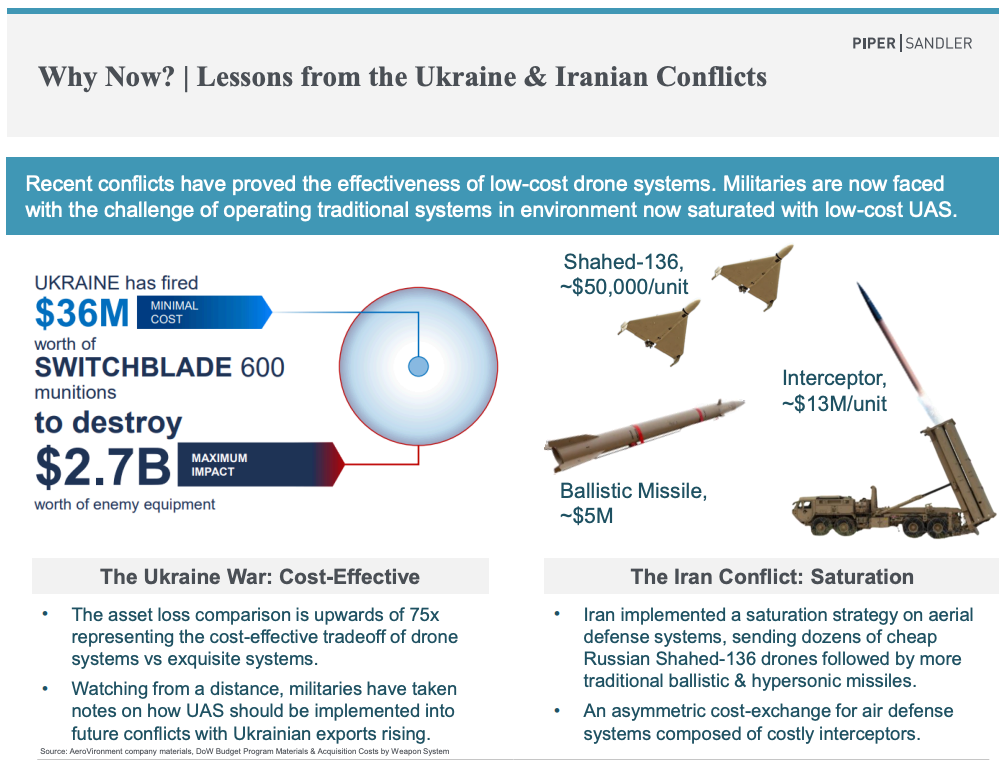
We anticipate one of the biggest lessons of the 2020s will be how affordable drone technology fundamentally reshaped the modern combat environment and set the stage for a reevaluation of the procurement, organization and strategy of ~$3T in annual global military expenditures.
While drones have existed in the modern military apparatus for decades at this point, it was the Ukraine war (as one of the first near-peer conflicts in recent memory) which provided demonstrable evidence of how specifically lightweight and affordable systems could change the paradigm of combat.
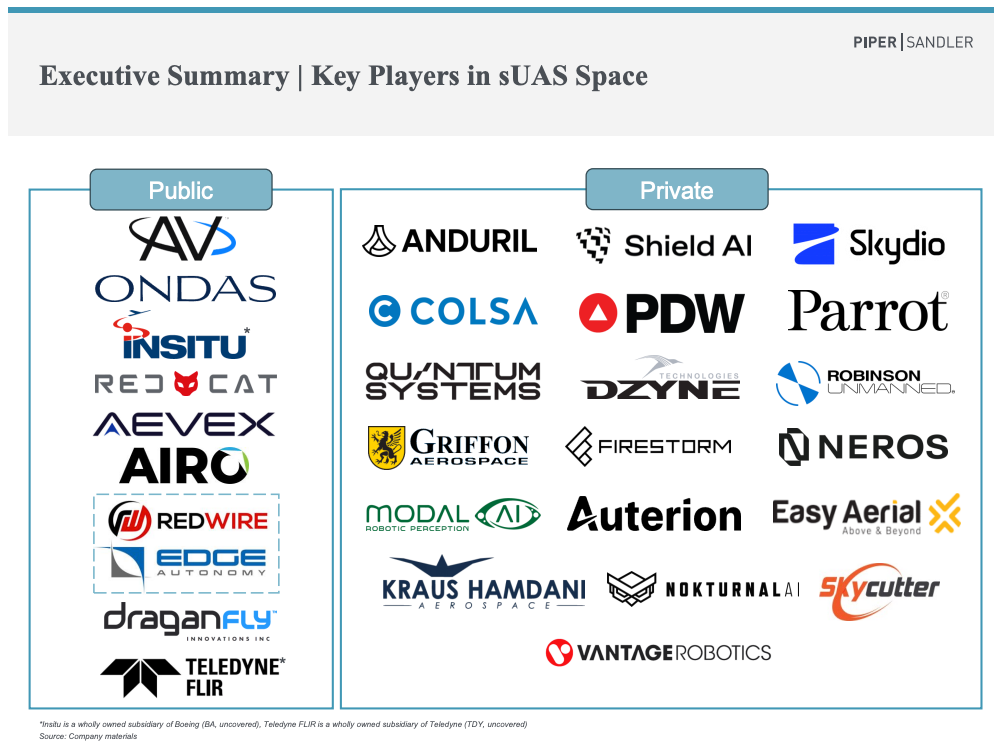
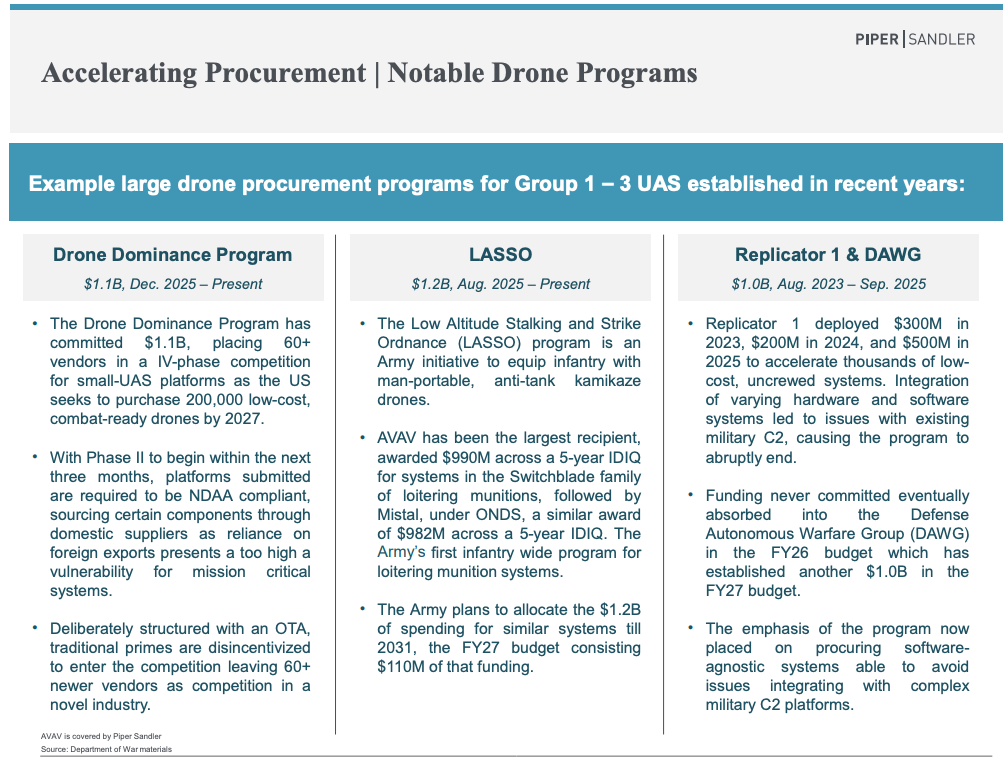
Jeffries provided clients with a detailed overview of the nine public and nineteen private companies powering America's emerging drone industry. His takeaway: this is still the early chapters of a market set for massive growth, as the U.S. military and allied nations push the procurement cycle into higher gear next year and through the end of the decade.
Piper Sandler analyst Clarke Jeffries is now arriving at the same conclusion we have been highlighting:
We anticipate one of the biggest lessons of the 2020s will be how affordable drone technology fundamentally reshaped the modern combat environment and set the stage for a reevaluation of the procurement, organization and strategy of ~$3T in annual global military expenditures.
While drones have existed in the modern military apparatus for decades at this point, it was the Ukraine war (as one of the first near-peer conflicts in recent memory) which provided demonstrable evidence of how specifically lightweight and affordable systems could change the paradigm of combat.
Jeffries provided clients with a detailed overview of the nine public and nineteen private companies powering America's emerging drone industry. His takeaway: this is still the early chapters of a market set for massive growth, as the U.S. military and allied nations push the procurement cycle into higher gear next year and through the end of the decade.
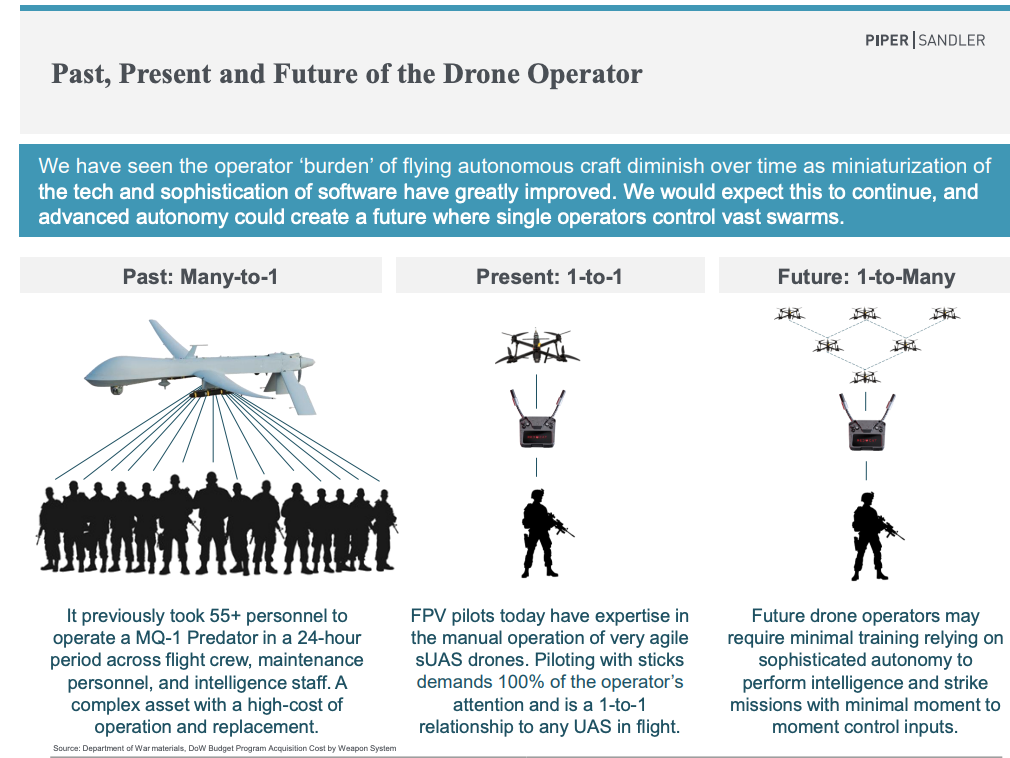
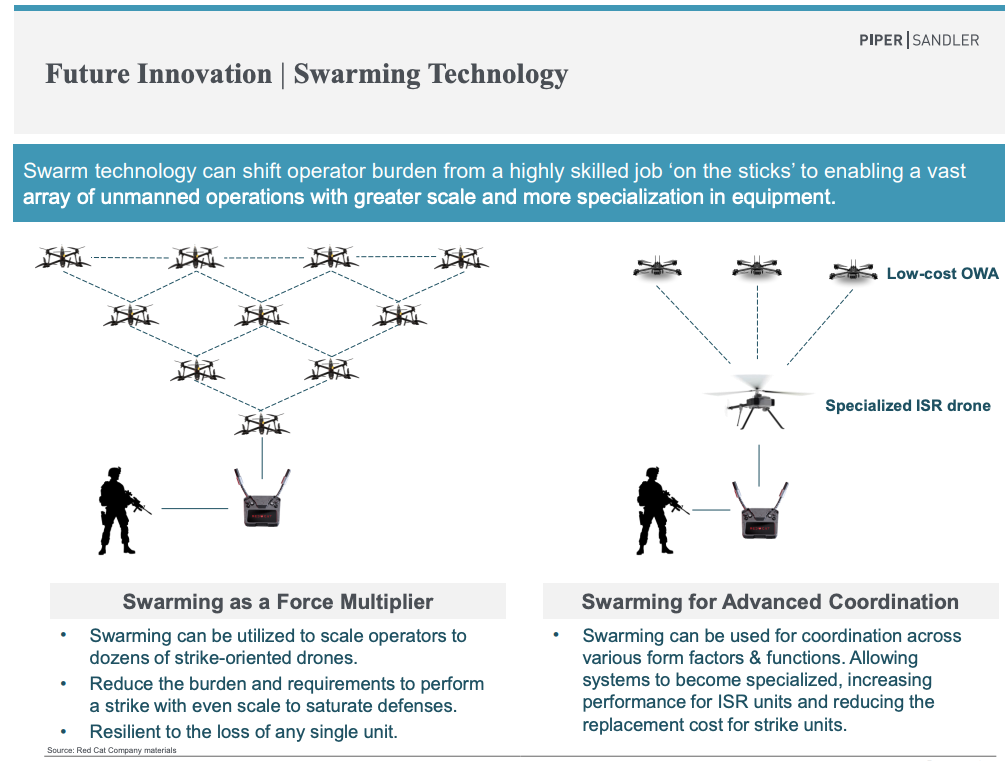
 He sees the first wave of the market centered on inexpensive UAS production, domestic supply chains, and rapid procurement, while the second wave will be driven by autonomy, swarming, mothership configurations, and deeper integration into command-and-control networks.
He pointed out that AI software will be as important as hardware, with platforms such as Palantir's Maven Smart System poised to turn massive drone sensor feeds into highly usable battlefield intelligence.
"With most nations averse to endure undue cost to the already punishing economics of pursuing a war, we see proliferation of Group 1-3 UAS as an inevitability and the next major technology inflection point for the aerospace and defense industry," the analyst said.
He continued:
Democratizing asymmetric warfare; sUAS has redefined the rules of engagement. Much of modern military history has been the story of haves and have-nots, with 10 countries accounting for 72% of global military spend and dominating production of the most capable and exquisite systems. Drone technology however (and specifically small unmanned aircraft systems: sUAS) has vastly increased the accessibility and affordability of highly capable military equipment and subverted the advantage of using exquisite systems into a costly strategy. In Ukraine and Iran, drones of all sizes have become de facto standard for air campaigns launched as low-cost attritable munitions. These drones are regularly countered by more expensive defense methods: missiles, interceptors, rockets creating a challenging cost-exchange issue. Every drone launched is net dollar advantage to the belligerent firing them. With most nations averse to endure undue cost to the already punishing economics of pursuing a war, we see proliferation of Group 1-3 UAS as an inevitability and the next major technology inflection point for the aerospace and defense industry.
He sees the first wave of the market centered on inexpensive UAS production, domestic supply chains, and rapid procurement, while the second wave will be driven by autonomy, swarming, mothership configurations, and deeper integration into command-and-control networks.
He pointed out that AI software will be as important as hardware, with platforms such as Palantir's Maven Smart System poised to turn massive drone sensor feeds into highly usable battlefield intelligence.
"With most nations averse to endure undue cost to the already punishing economics of pursuing a war, we see proliferation of Group 1-3 UAS as an inevitability and the next major technology inflection point for the aerospace and defense industry," the analyst said.
He continued:
Democratizing asymmetric warfare; sUAS has redefined the rules of engagement. Much of modern military history has been the story of haves and have-nots, with 10 countries accounting for 72% of global military spend and dominating production of the most capable and exquisite systems. Drone technology however (and specifically small unmanned aircraft systems: sUAS) has vastly increased the accessibility and affordability of highly capable military equipment and subverted the advantage of using exquisite systems into a costly strategy. In Ukraine and Iran, drones of all sizes have become de facto standard for air campaigns launched as low-cost attritable munitions. These drones are regularly countered by more expensive defense methods: missiles, interceptors, rockets creating a challenging cost-exchange issue. Every drone launched is net dollar advantage to the belligerent firing them. With most nations averse to endure undue cost to the already punishing economics of pursuing a war, we see proliferation of Group 1-3 UAS as an inevitability and the next major technology inflection point for the aerospace and defense industry.
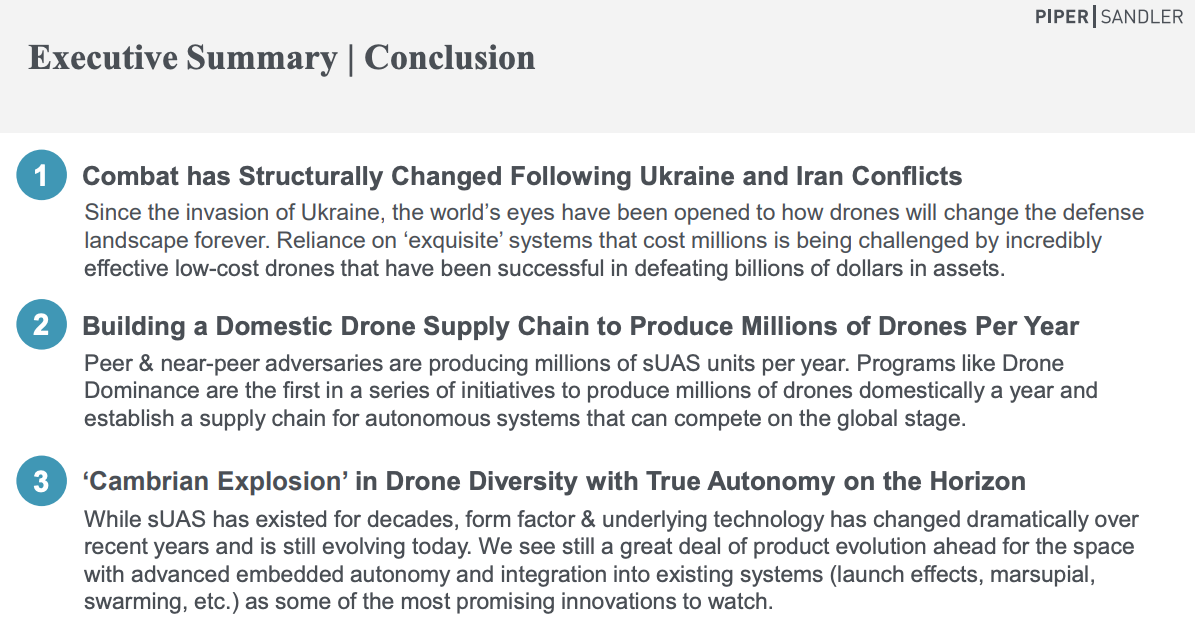
 Jeffries lays out three key conclusions about the rapidly changing defense landscape:
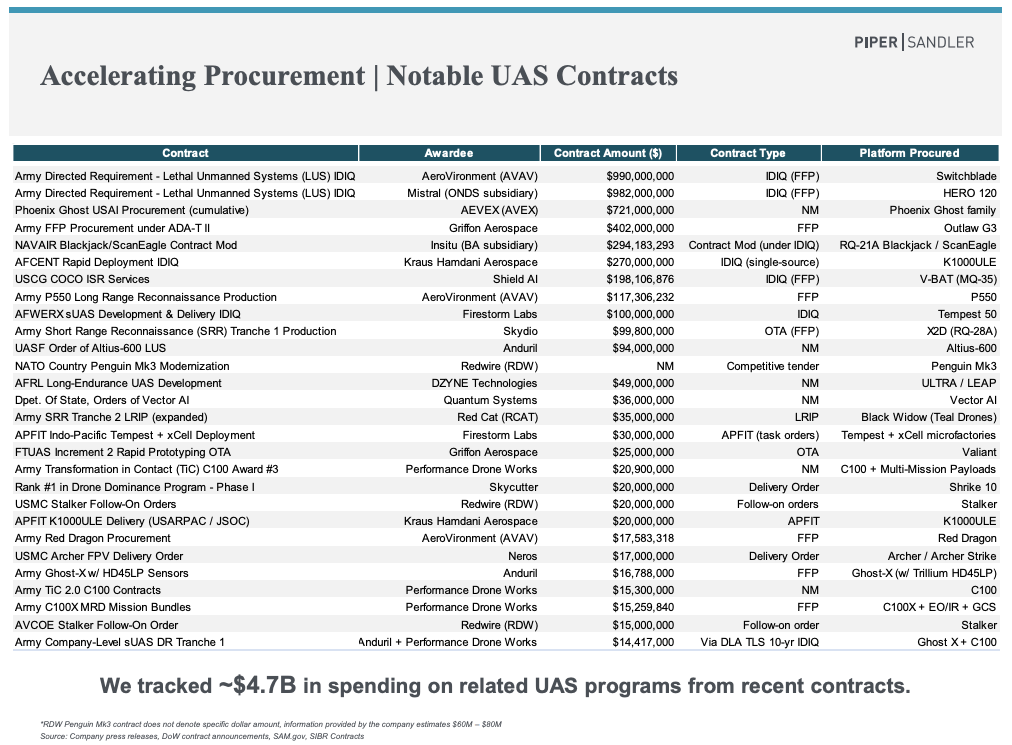
 Public companies flagged by Jeffries as benefiting include AeroVironment, Ondas, Red Cat, AEVEX, Redwire, Insitu and Teledyne FLIR, while private names include Anduril, Skydio, Shield AI, Quantum Systems, Performance Drone Works, DZYNE, Firestorm Labs and Neros.
 An example of this technology.
 Lessons from the Ukraine & Iranian Conflicts
 Notable Drone Programs
 Notable UAS Contracts
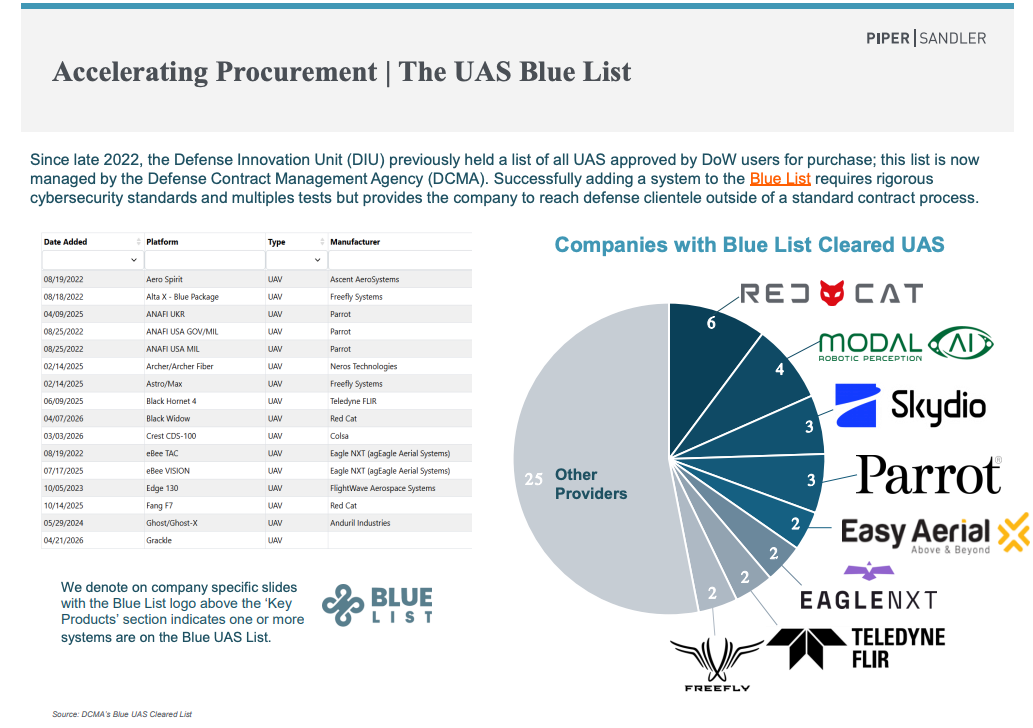
 The UAS Blue List
 Past, Present and Future of the Drone Operator
 Swarming
 Rise of Mothership Drones
 In a separate note, Needham analyst Austin Bohlig
  Related:
-
Related:
-
 Infants is defined as children who have not yet reached their first birthday.
According to researchers, the decline is statistically meaningful and translates into hundreds of fewer infant deaths per year.
"This is an encouraging data point, and we hope that this trend will continue," said Dr. Michael Warren, chief medical and health officer for the March of Dimes.
Warren said it was difficult to pinpoint what was driving the decline.
As the
Infants is defined as children who have not yet reached their first birthday.
According to researchers, the decline is statistically meaningful and translates into hundreds of fewer infant deaths per year.
"This is an encouraging data point, and we hope that this trend will continue," said Dr. Michael Warren, chief medical and health officer for the March of Dimes.
Warren said it was difficult to pinpoint what was driving the decline.
As the 

 “The next 30 days, it’s going to be like striking gold for diving companies,” Kukreja said. “Everyone wants to get out of Hormuz and get back to earning money.”
“They’re going to make the best out of this opportunity. It’s a no-brainer that they will hike their prices.”
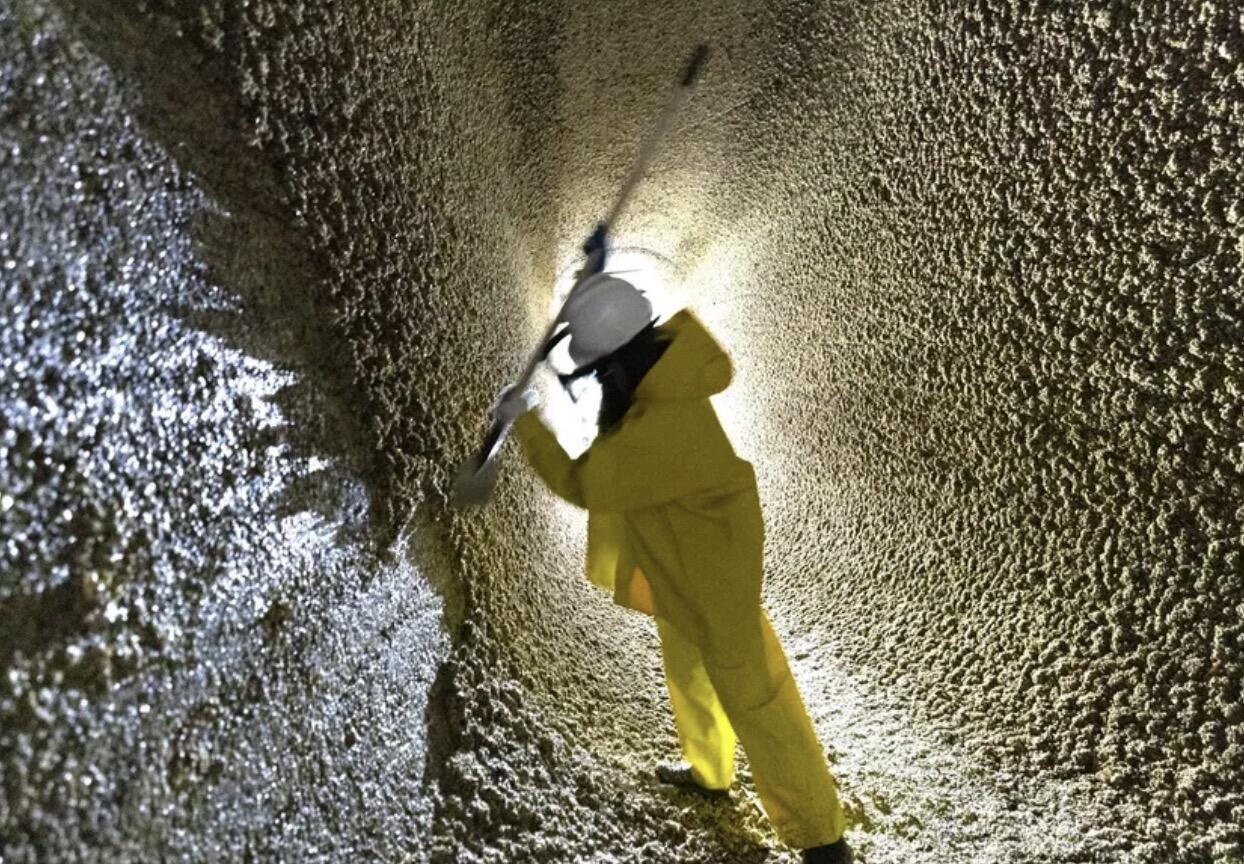
Cleaning needs vary by vessel. Some ships require only light slime removal, while others need extensive barnacle scraping after months in the warm Gulf waters.
The surge in demand for hull-cleaning crews reflects the broader disruption caused by months of conflict around the Strait of Hormuz, one of the world's most important energy chokepoints.
Since fighting erupted in late February, hundreds of vessels have been stranded in the Persian Gulf, disrupting oil shipments, driving up shipping and insurance costs, and creating the largest interruption to global energy flows in decades. As a tentative peace deal raises hopes that traffic can resume, shipowners are racing to prepare vessels for departure, underscoring the scale of the operational and financial fallout from more than three months of turmoil in the region.
“The next 30 days, it’s going to be like striking gold for diving companies,” Kukreja said. “Everyone wants to get out of Hormuz and get back to earning money.”
“They’re going to make the best out of this opportunity. It’s a no-brainer that they will hike their prices.”
Cleaning needs vary by vessel. Some ships require only light slime removal, while others need extensive barnacle scraping after months in the warm Gulf waters.
The surge in demand for hull-cleaning crews reflects the broader disruption caused by months of conflict around the Strait of Hormuz, one of the world's most important energy chokepoints.
Since fighting erupted in late February, hundreds of vessels have been stranded in the Persian Gulf, disrupting oil shipments, driving up shipping and insurance costs, and creating the largest interruption to global energy flows in decades. As a tentative peace deal raises hopes that traffic can resume, shipowners are racing to prepare vessels for departure, underscoring the scale of the operational and financial fallout from more than three months of turmoil in the region.
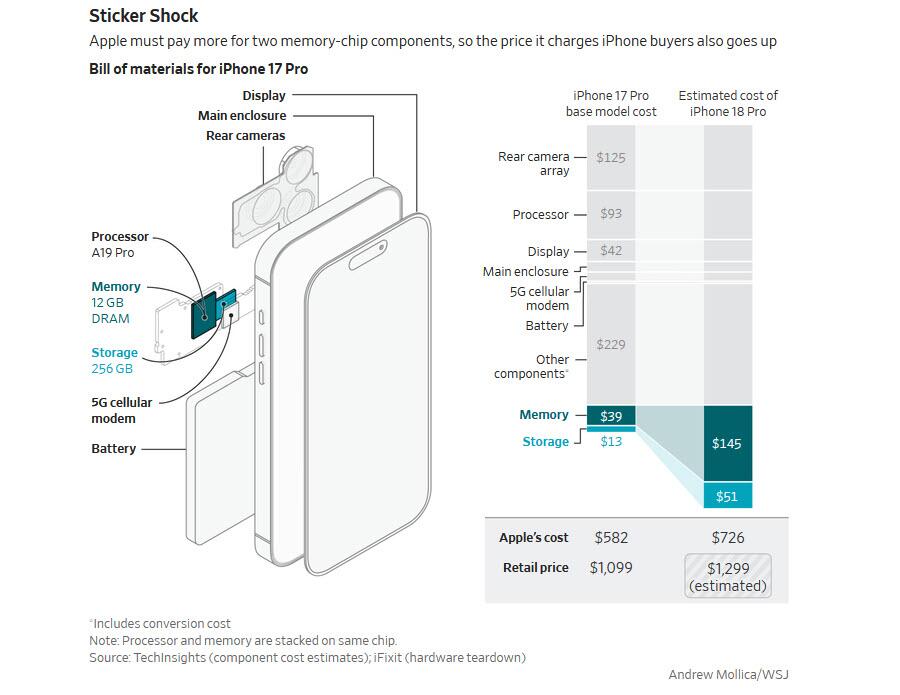 While chips have emerged as the key bottlenecks for agentic-focused data centers, even more so than GPUs/CPUs, the resulting price surge has prompted manufacturers like Samsung and SK Hynix to focus production on high end HBM products, while shrinking supply for more modest DRAM products which however are used in virtually every modern product; chips for memory and storage are key components inside most computing devices, including smartphones, laptops, game consoles, medical equipment and even cars. But with AI servers gobbling up rapidly increasing volumes of those chips - with little to none price discrimination since it is the latest batch of bondholders who ends up footing the bill - even a company as rich and powerful as Apple is struggling to secure supply.
Since last year, when Google, Microsoft, Meta and Amazon began announcing big increases in their capital spending budgets, the prices for memory and storage chips have both quadrupled. TechInsights expects both prices to continue increasing into 2027, unless a flood of Chinese chips hits the market .
Memory, also called DRAM, and storage, also called NAND, are like elements of a mid-20th-century office: The memory is a desk that holds all the papers a worker needs to perform a task, while storage is the filing cabinet that holds everything else. Smartphones use DRAM memory to run apps currently in use; they use NAND storage to file away photos and videos, for example. And since both products were (and are) a pure commodity, there were are substitute makers in the Western world besides the big memory companies.
Cook said prices for memory and storage are both issues for the company, though he focused on the DRAM market in particular, calling out the increased allocations going to so-called high-bandwidth memory that is used for AI servers.
“There’s less supply at a time when consumers want devices and the memory guys are passing along huge price increases,” said Cook. “We definitely need memory pricing and supply to return to reasonable levels for consumer products. That’s the bottom line.”
Three companies dominate the market for DRAM memory: Samsung and SK Hynix in South Korea, and Micron in the U.S. Makers of NAND storage include those three companies as well as Kioxia and Sandisk. Their stock prices, along with their profits, have exploded over the past twelve months: Micron and SK Hynix shares have risen more than 800% while Kioxia and Sandisk have risen 4,600%.
Seeing the unprecedented demand, memory companies are building more factories: Morgan Stanley forecasts that production capacity for DRAM wafers, the silicon discs on which chips are patterned, will grow 30% by 2027. Yet as suppliers prioritize the specialized AI memory, wafers for consumer tech will fall up to 15% short of demand, Morgan Stanley estimates, although the bank may be conflicted due to its substantial exposure to various companies in the AI ecosystem, which would be terribly vexed if Morgan Stanley were to reach a different conclusion (like, for example, that China - that great commodity crushed - is coming online with massive output in the coming months which will send prices for at least baselines DRAM and NAND sharply lower).
While China has national champion companies in memory and storage, but due to national-security rules, American companies would likely require licenses to work with them. When asked if those restrictions should be loosened, Cook said: “I think everything needs to be on the table,” adding, “I think we should look at all supply.”
He is right: as we showed recently, chips and memory have emerged as one of the biggest drivers of wholesale inflation, and now that it is being passed on to consumers, it is only a matter of time before the inflation-averse White House starts making very loud noises, demanding an artificial limit on how high memory prices can rise.
Apple is late to the party: Companies that make PCs, game consoles, smartphones and more have already raised prices, including Hewlett-Packard, Dell and Nintendo. A consortium of industry associations recently sent a letter to Treasury Secretary Scott Bessent and Commerce Secretary Howard Lutnick complaining about the overallocation of memory to AI buyers and asking for help to increase supply.
Morgan Stanley estimates a 15% bump for prices of smartphones and PCs in the U.S. this year. This price hike will have a limited impact on the consumer price index, which has only a small weighting for such devices. Yet any price increase on the popular iPhone will immediately grab Washington’s attention.
Compounding the issue is Apple’s need for additional DRAM to support more AI features, including a rebooted Siri announced last week. And the company has long used NAND storage upgrades to boost profits, charging $100 to $200 for extra increments that cost it just a fraction of that.
In the interview, Cook said Apple stands ready to use its cash reserves to boost memory supply. “We’re willing to use our balance sheet to help be a part of the solution,” he said but added that “obviously, more capacity is needed.”
Cook declined to offer specifics. It is unclear how Apple could match, let alone beat, the deal terms that AI hyperscalers are offering to lock up supply, and how much of a hit to the company's profits such a move would be. Those companies are signing three-to-five year agreements with huge cash prepayments that Apple is unlikely willing to match, given its long history of disciplined spending.
Cook said Apple wouldn’t use its cash and silicon expertise to build its own memory and storage factories. “We can’t do everything,” said Cook. “We know what we’re good at.”
Apple spends in the low tens of billions of dollars per year on memory and storage, according to people familiar with its costs, making it one of the largest customers in the world. Historically it has used its heft to wring the lowest prices out of suppliers, playing them off each other and leaving them little profit. As AI companies have stormed into the market, suddenly Apple has to wait in line.
Cook said during his time working in the electronics supply chain, from IBM to Compaq to Apple, he had never seen a commodity price swing like the one from the past six months. “This is a hundred-year flood,” said Cook. “I’ve never seen anything like it in any area in over 40 years.”
Luckily, every flood comes with a drain, and as usual it is made in China. A few weeks ago, we reported that "
While chips have emerged as the key bottlenecks for agentic-focused data centers, even more so than GPUs/CPUs, the resulting price surge has prompted manufacturers like Samsung and SK Hynix to focus production on high end HBM products, while shrinking supply for more modest DRAM products which however are used in virtually every modern product; chips for memory and storage are key components inside most computing devices, including smartphones, laptops, game consoles, medical equipment and even cars. But with AI servers gobbling up rapidly increasing volumes of those chips - with little to none price discrimination since it is the latest batch of bondholders who ends up footing the bill - even a company as rich and powerful as Apple is struggling to secure supply.
Since last year, when Google, Microsoft, Meta and Amazon began announcing big increases in their capital spending budgets, the prices for memory and storage chips have both quadrupled. TechInsights expects both prices to continue increasing into 2027, unless a flood of Chinese chips hits the market .
Memory, also called DRAM, and storage, also called NAND, are like elements of a mid-20th-century office: The memory is a desk that holds all the papers a worker needs to perform a task, while storage is the filing cabinet that holds everything else. Smartphones use DRAM memory to run apps currently in use; they use NAND storage to file away photos and videos, for example. And since both products were (and are) a pure commodity, there were are substitute makers in the Western world besides the big memory companies.
Cook said prices for memory and storage are both issues for the company, though he focused on the DRAM market in particular, calling out the increased allocations going to so-called high-bandwidth memory that is used for AI servers.
“There’s less supply at a time when consumers want devices and the memory guys are passing along huge price increases,” said Cook. “We definitely need memory pricing and supply to return to reasonable levels for consumer products. That’s the bottom line.”
Three companies dominate the market for DRAM memory: Samsung and SK Hynix in South Korea, and Micron in the U.S. Makers of NAND storage include those three companies as well as Kioxia and Sandisk. Their stock prices, along with their profits, have exploded over the past twelve months: Micron and SK Hynix shares have risen more than 800% while Kioxia and Sandisk have risen 4,600%.
Seeing the unprecedented demand, memory companies are building more factories: Morgan Stanley forecasts that production capacity for DRAM wafers, the silicon discs on which chips are patterned, will grow 30% by 2027. Yet as suppliers prioritize the specialized AI memory, wafers for consumer tech will fall up to 15% short of demand, Morgan Stanley estimates, although the bank may be conflicted due to its substantial exposure to various companies in the AI ecosystem, which would be terribly vexed if Morgan Stanley were to reach a different conclusion (like, for example, that China - that great commodity crushed - is coming online with massive output in the coming months which will send prices for at least baselines DRAM and NAND sharply lower).
While China has national champion companies in memory and storage, but due to national-security rules, American companies would likely require licenses to work with them. When asked if those restrictions should be loosened, Cook said: “I think everything needs to be on the table,” adding, “I think we should look at all supply.”
He is right: as we showed recently, chips and memory have emerged as one of the biggest drivers of wholesale inflation, and now that it is being passed on to consumers, it is only a matter of time before the inflation-averse White House starts making very loud noises, demanding an artificial limit on how high memory prices can rise.
Apple is late to the party: Companies that make PCs, game consoles, smartphones and more have already raised prices, including Hewlett-Packard, Dell and Nintendo. A consortium of industry associations recently sent a letter to Treasury Secretary Scott Bessent and Commerce Secretary Howard Lutnick complaining about the overallocation of memory to AI buyers and asking for help to increase supply.
Morgan Stanley estimates a 15% bump for prices of smartphones and PCs in the U.S. this year. This price hike will have a limited impact on the consumer price index, which has only a small weighting for such devices. Yet any price increase on the popular iPhone will immediately grab Washington’s attention.
Compounding the issue is Apple’s need for additional DRAM to support more AI features, including a rebooted Siri announced last week. And the company has long used NAND storage upgrades to boost profits, charging $100 to $200 for extra increments that cost it just a fraction of that.
In the interview, Cook said Apple stands ready to use its cash reserves to boost memory supply. “We’re willing to use our balance sheet to help be a part of the solution,” he said but added that “obviously, more capacity is needed.”
Cook declined to offer specifics. It is unclear how Apple could match, let alone beat, the deal terms that AI hyperscalers are offering to lock up supply, and how much of a hit to the company's profits such a move would be. Those companies are signing three-to-five year agreements with huge cash prepayments that Apple is unlikely willing to match, given its long history of disciplined spending.
Cook said Apple wouldn’t use its cash and silicon expertise to build its own memory and storage factories. “We can’t do everything,” said Cook. “We know what we’re good at.”
Apple spends in the low tens of billions of dollars per year on memory and storage, according to people familiar with its costs, making it one of the largest customers in the world. Historically it has used its heft to wring the lowest prices out of suppliers, playing them off each other and leaving them little profit. As AI companies have stormed into the market, suddenly Apple has to wait in line.
Cook said during his time working in the electronics supply chain, from IBM to Compaq to Apple, he had never seen a commodity price swing like the one from the past six months. “This is a hundred-year flood,” said Cook. “I’ve never seen anything like it in any area in over 40 years.”
Luckily, every flood comes with a drain, and as usual it is made in China. A few weeks ago, we reported that "
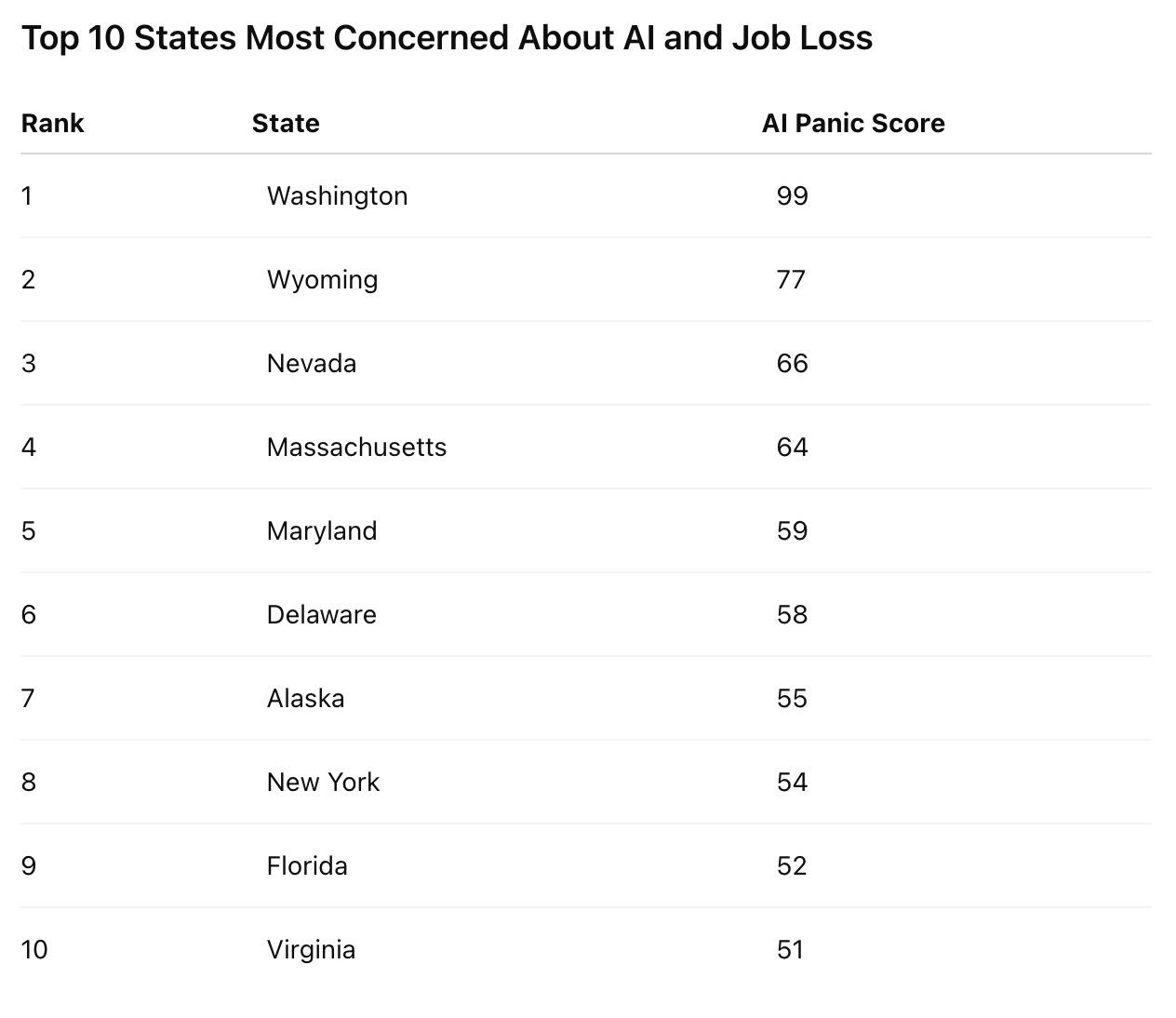 Wyoming ranks second, with more than 20,000 residents regularly searching for information about protecting their jobs from AI. Although the state lacks the large technology sector found in Washington, around one-quarter of working adults already use AI tools such as ChatGPT, potentially increasing awareness of how automation could affect future employment opportunities.
Nevada places third on the list. The state combines relatively high AI adoption with one of the nation's highest cybercrime rates, creating heightened awareness of technology-related risks. Approximately one in three Nevada workers already use AI tools, and around 55,000 residents search monthly for information about whether AI could replace their jobs.
Massachusetts ranks fourth, with roughly 160,000 residents searching each month for information related to AI-driven job losses. The state's thriving technology and biotechnology industries are advancing rapidly alongside AI innovation, contributing to concerns about automation. With about one-third of adults already using AI tools regularly, many workers are becoming increasingly aware of the technology's potential impact on their roles.
Maryland ranks fifth and records the highest AI adoption rate in the country, with 36.3% of working-age residents already using AI in the workplace. Despite widespread adoption, concerns remain high, particularly given the state's large concentration of technology and knowledge-based jobs that could be vulnerable to automation in the years ahead.
Commenting on the findings, Floxy Chief Technology Officer Aimen Hallou said concerns about AI-related job displacement are well-founded: "These concerns are not overblown. AI was directly linked to tens of thousands of job cuts in the US last year, and that's only counting companies that openly admitted it. Amazon eliminated 14,000 corporate roles, citing AI; Microsoft cut 15,000, and both were explicit about why. The broader reality is that MIT researchers estimated AI can already perform the tasks of roughly 1 in 8 American workers. That number is only going to grow as the tools get cheaper and more capable."
Wyoming ranks second, with more than 20,000 residents regularly searching for information about protecting their jobs from AI. Although the state lacks the large technology sector found in Washington, around one-quarter of working adults already use AI tools such as ChatGPT, potentially increasing awareness of how automation could affect future employment opportunities.
Nevada places third on the list. The state combines relatively high AI adoption with one of the nation's highest cybercrime rates, creating heightened awareness of technology-related risks. Approximately one in three Nevada workers already use AI tools, and around 55,000 residents search monthly for information about whether AI could replace their jobs.
Massachusetts ranks fourth, with roughly 160,000 residents searching each month for information related to AI-driven job losses. The state's thriving technology and biotechnology industries are advancing rapidly alongside AI innovation, contributing to concerns about automation. With about one-third of adults already using AI tools regularly, many workers are becoming increasingly aware of the technology's potential impact on their roles.
Maryland ranks fifth and records the highest AI adoption rate in the country, with 36.3% of working-age residents already using AI in the workplace. Despite widespread adoption, concerns remain high, particularly given the state's large concentration of technology and knowledge-based jobs that could be vulnerable to automation in the years ahead.
Commenting on the findings, Floxy Chief Technology Officer Aimen Hallou said concerns about AI-related job displacement are well-founded: "These concerns are not overblown. AI was directly linked to tens of thousands of job cuts in the US last year, and that's only counting companies that openly admitted it. Amazon eliminated 14,000 corporate roles, citing AI; Microsoft cut 15,000, and both were explicit about why. The broader reality is that MIT researchers estimated AI can already perform the tasks of roughly 1 in 8 American workers. That number is only going to grow as the tools get cheaper and more capable."
 Related:
-
Related:
-
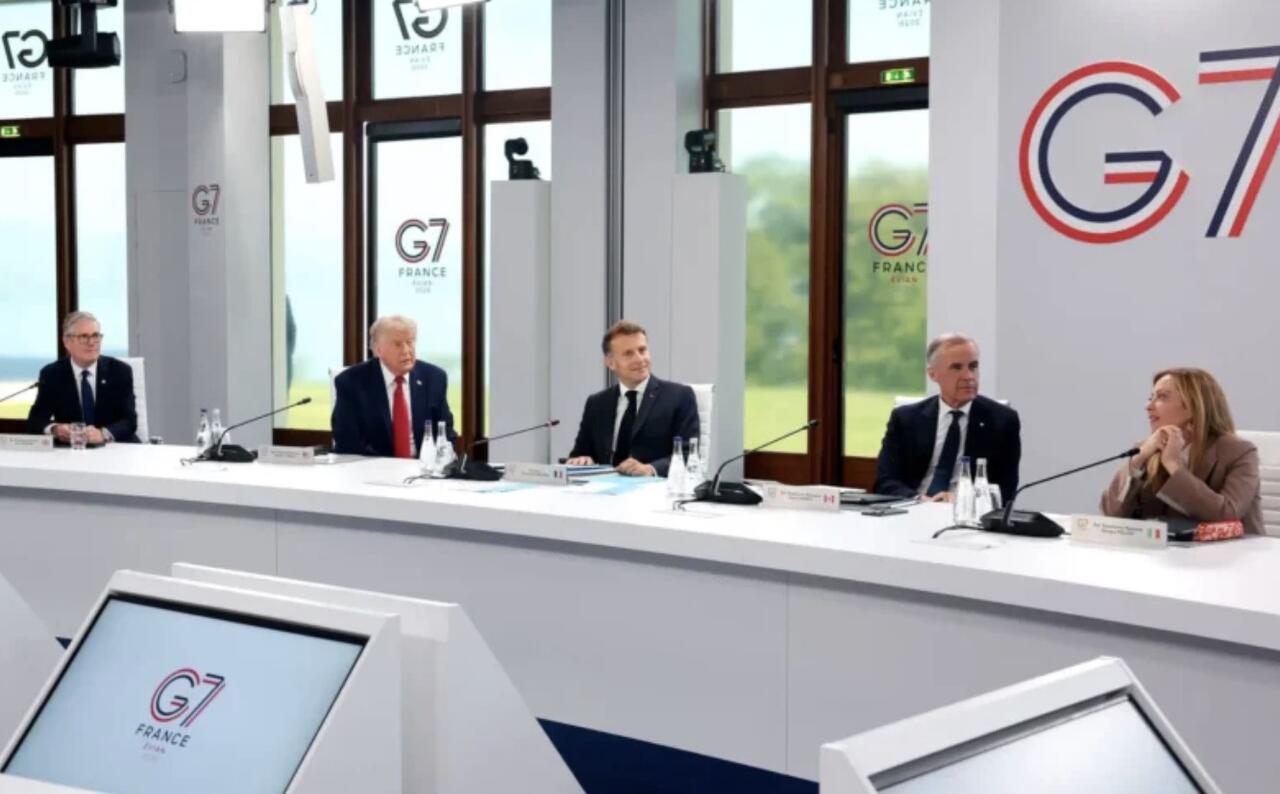 The group also pledged to support investment across the entire critical minerals supply chain—from mining and processing to manufacturing—through development finance institutions, export credit agencies, and private-sector partnerships. Since the start of 2026, governments have announced 195 related projects totaling €64 billion ($74 billion) in investment.
Neha Mukherjee, research manager at consultancy Benchmark Mineral Intelligence commented: "The G7 statement is an important signal of intent, but the pace of diversification will ultimately depend on whether policy support translates into investment across the midstream and downstream parts of the value chain."
Despite the commitments, analysts note that diversification will be difficult, particularly because China controls about 90% of global processed rare earth and permanent magnet production. The G7 is also exploring measures such as joint procurement, subsidies, quotas, and price-support mechanisms, while expanding domestic stockpiles and increasing recycling capacity to make recycled materials a significant share of critical mineral consumption by 2030.
The group also pledged to support investment across the entire critical minerals supply chain—from mining and processing to manufacturing—through development finance institutions, export credit agencies, and private-sector partnerships. Since the start of 2026, governments have announced 195 related projects totaling €64 billion ($74 billion) in investment.
Neha Mukherjee, research manager at consultancy Benchmark Mineral Intelligence commented: "The G7 statement is an important signal of intent, but the pace of diversification will ultimately depend on whether policy support translates into investment across the midstream and downstream parts of the value chain."
Despite the commitments, analysts note that diversification will be difficult, particularly because China controls about 90% of global processed rare earth and permanent magnet production. The G7 is also exploring measures such as joint procurement, subsidies, quotas, and price-support mechanisms, while expanding domestic stockpiles and increasing recycling capacity to make recycled materials a significant share of critical mineral consumption by 2030.
 After repeatedly praising former President Joe Biden’s 2024 campaign, Clinton now says his decision to seek re-election was a “terrible mistake.”
“He made a terrible mistake for himself, his legacy and for the country,” Clinton said Monday of Biden’s decision to run for a second term.
She made the scathing remarks a New York Times editor in Manhattan.
Hillary Clinton says Joe Biden made a “terrible mistake” by running for re-election.
“He made a terrible mistake. He made a terrible mistake for himself, his legacy, and for the country.”
Clinton said that had Biden said he was not running, the winner of the primary “would have…
After repeatedly praising former President Joe Biden’s 2024 campaign, Clinton now says his decision to seek re-election was a “terrible mistake.”
“He made a terrible mistake for himself, his legacy and for the country,” Clinton said Monday of Biden’s decision to run for a second term.
She made the scathing remarks a New York Times editor in Manhattan.
Hillary Clinton says Joe Biden made a “terrible mistake” by running for re-election.
“He made a terrible mistake. He made a terrible mistake for himself, his legacy, and for the country.”
Clinton said that had Biden said he was not running, the winner of the primary “would have… 



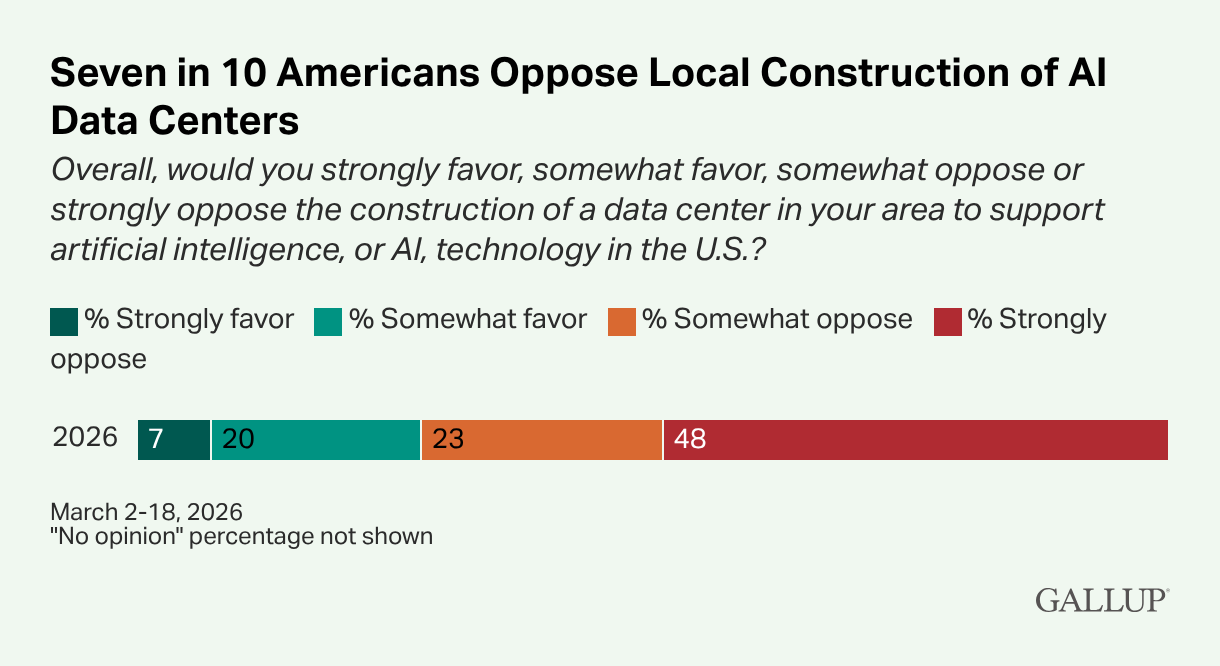 By comparison,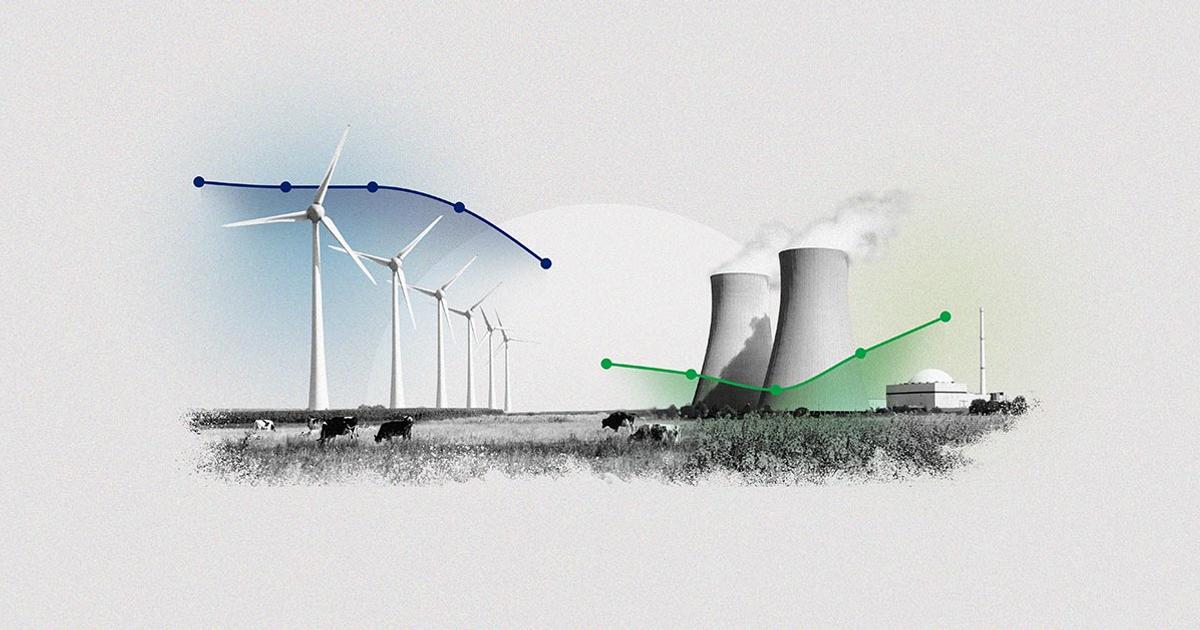
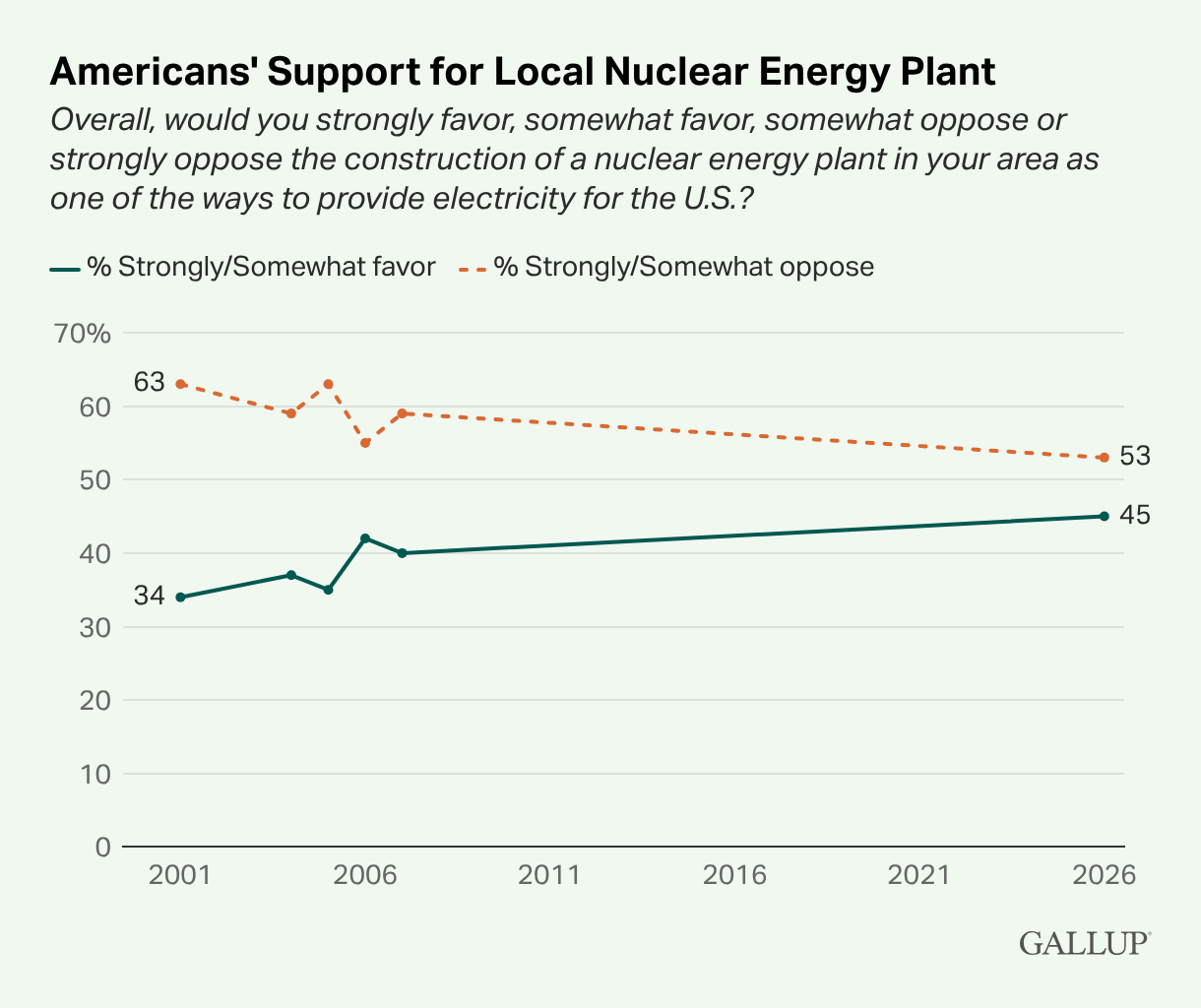 Data centers have managed to poll worse on local acceptance than nuclear facilities ever did at the height of their controversy.
We have been pounding the table on this long enough that we're frankly surprised the table is still standing. Half of the US data center capacity originally slated to begin operations in 2026 faces delays or outright cancellation, according to Sightline Climate analysis we
Data centers have managed to poll worse on local acceptance than nuclear facilities ever did at the height of their controversy.
We have been pounding the table on this long enough that we're frankly surprised the table is still standing. Half of the US data center capacity originally slated to begin operations in 2026 faces delays or outright cancellation, according to Sightline Climate analysis we  …and digital-first Gen-Z who have shifted to Domino's, local pizza, fast-casual, and delivery apps.

 The data for this visualization comes from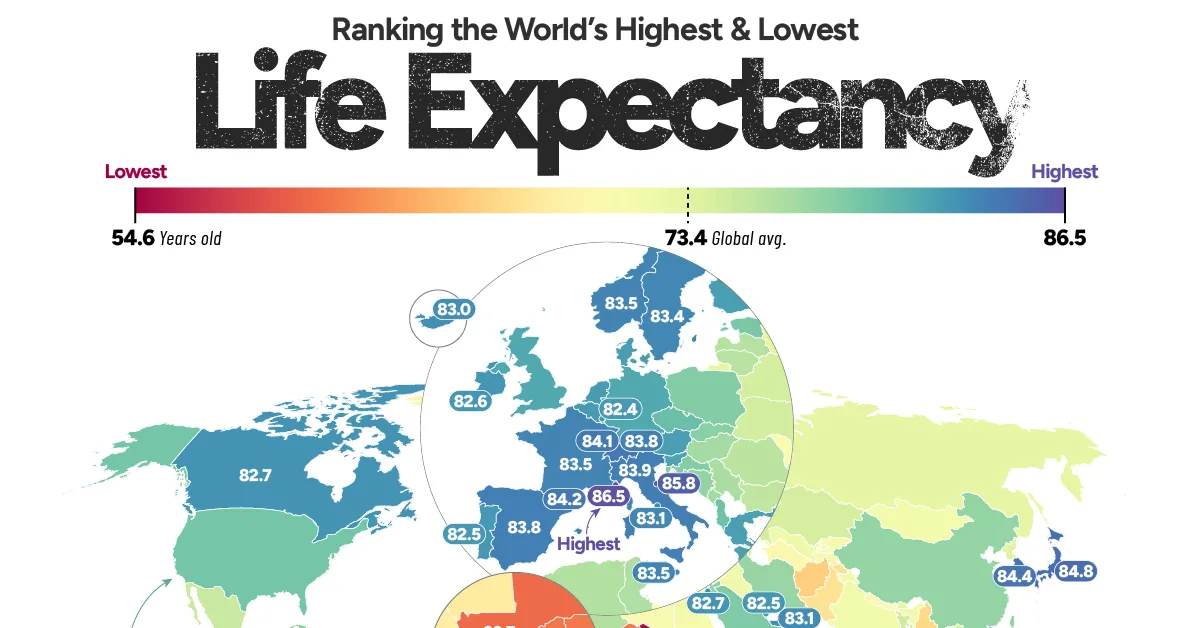
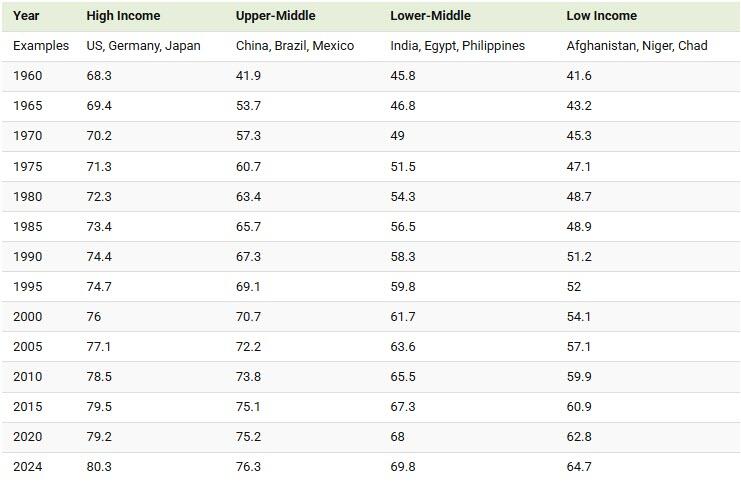 Upper-Middle Income Countries Saw the Fastest Gains
Upper-middle income countries posted the largest increase, rising from 41.9 years in 1960 to 76.3 years.
That is a gain of 34.4 years, the fastest improvement of any group in the dataset. This category includes countries such as China, Brazil, Mexico, and South Africa.
Much of this improvement coincided with rising incomes, better sanitation, expanded vaccination programs, lower child mortality, and broader access to healthcare. Together, these changes helped push life expectancy in many middle-income countries toward levels once seen only in the world’s wealthiest economies.
The Global Life Expectancy Gap Has Narrowed
In 1960, people in high-income countries lived about 27 years longer than those in low-income countries.
Today, the gap stands at roughly 16 years. While a significant difference remains, low-income countries have added more than 23 years to average life expectancy since 1960. In other words, much of the world’s longevity progress has come from countries that started furthest behind.
However, the remaining gap shows that
Upper-Middle Income Countries Saw the Fastest Gains
Upper-middle income countries posted the largest increase, rising from 41.9 years in 1960 to 76.3 years.
That is a gain of 34.4 years, the fastest improvement of any group in the dataset. This category includes countries such as China, Brazil, Mexico, and South Africa.
Much of this improvement coincided with rising incomes, better sanitation, expanded vaccination programs, lower child mortality, and broader access to healthcare. Together, these changes helped push life expectancy in many middle-income countries toward levels once seen only in the world’s wealthiest economies.
The Global Life Expectancy Gap Has Narrowed
In 1960, people in high-income countries lived about 27 years longer than those in low-income countries.
Today, the gap stands at roughly 16 years. While a significant difference remains, low-income countries have added more than 23 years to average life expectancy since 1960. In other words, much of the world’s longevity progress has come from countries that started furthest behind.
However, the remaining gap shows that 
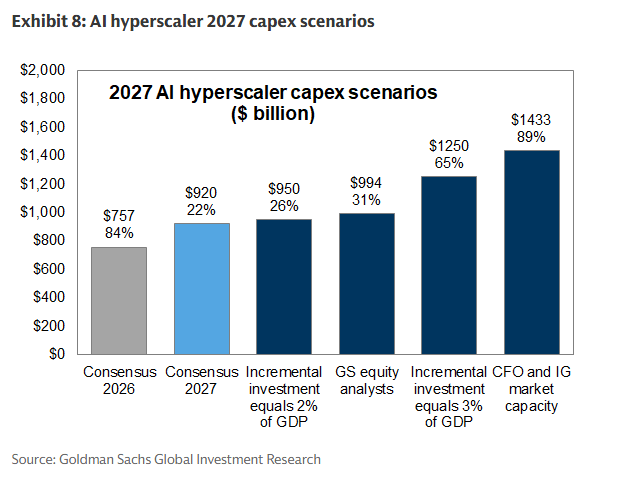 We summarized the complex funding picture which is effectively a series of circular financings across the entire AI ecosystem, "vendor financing and repurchase-style arrangements mean a single counterparty's stress can propagate through several balance sheets at once. Think of it as rehypothecated leverage. Concentration compounds it: the >$2tn of remaining performance obligations across major AI players is built on a handful of very large, long-duration contracts, so the backlog that justifies the spending is also a concentrated counterparty exposure."
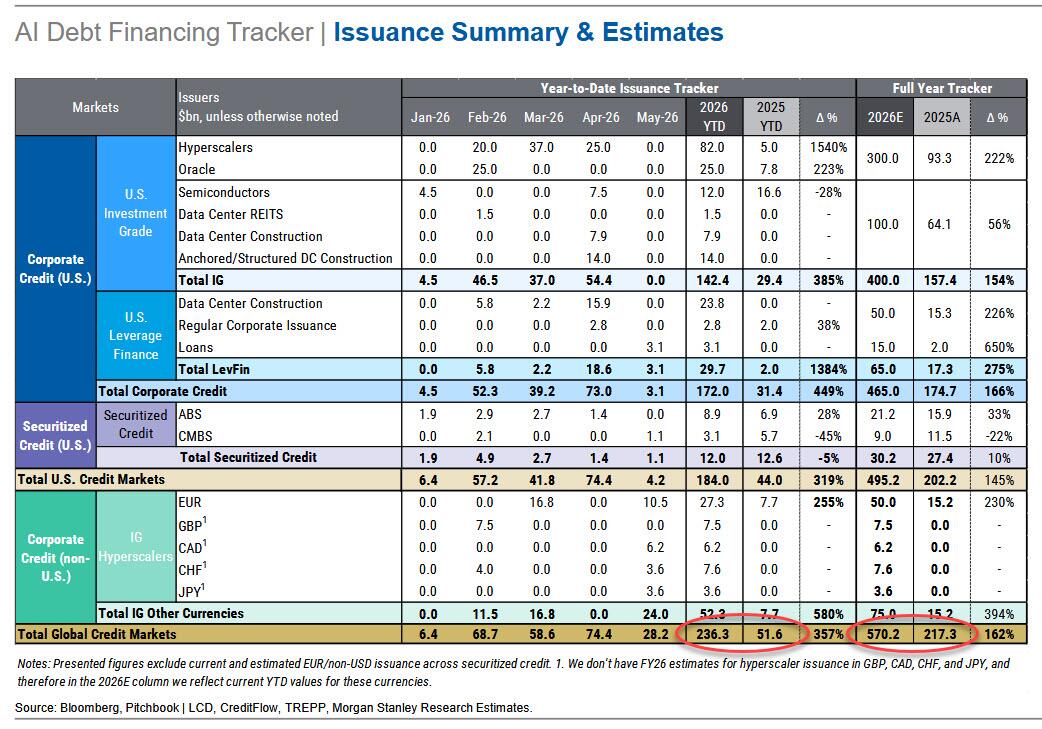
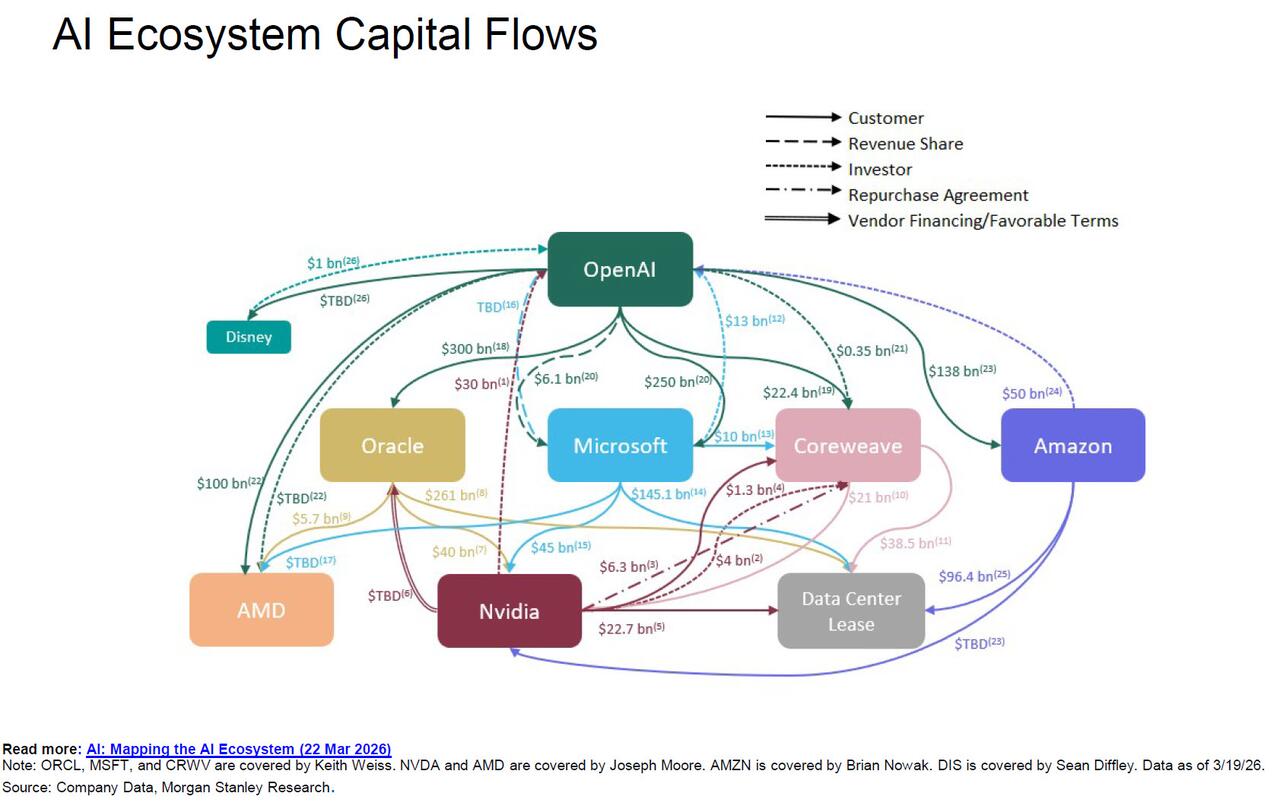 But even without focusing on the potentially dire consequences of this off-balance sheet funding unwinding, there is a more mundane risk propagating from the AI buildout, and it has to do with the massive leverage unleashed in public debt markets. We spent the first part of our post discussing just that, but the punchline was captured by the following three charts, the first of which shows that YTD, some $236BN in AI-linked debt has been issued, a 357% increase from the same period last year. By year-end, MS expect this number to more than double to $570 billion.
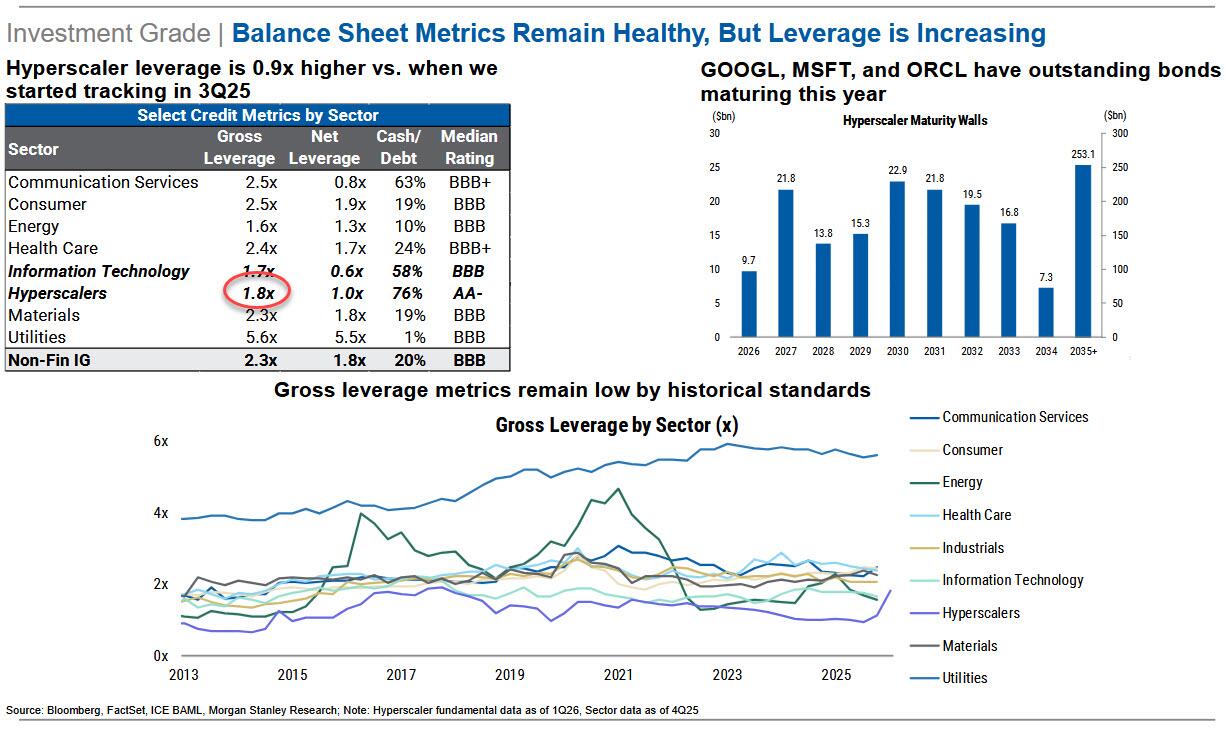
 The second, and perhaps most important chart, is the one showing the dramatic increase in hyperscaler gross leverage, which has surged from 0.9x in Q3 '25 to 1.8x currently, doubling in just over two quarters, and surpassing the gross leverage of the entire energy sector. At this rate, hyperscaler debt is growing at about 0.3x turn per quarter.
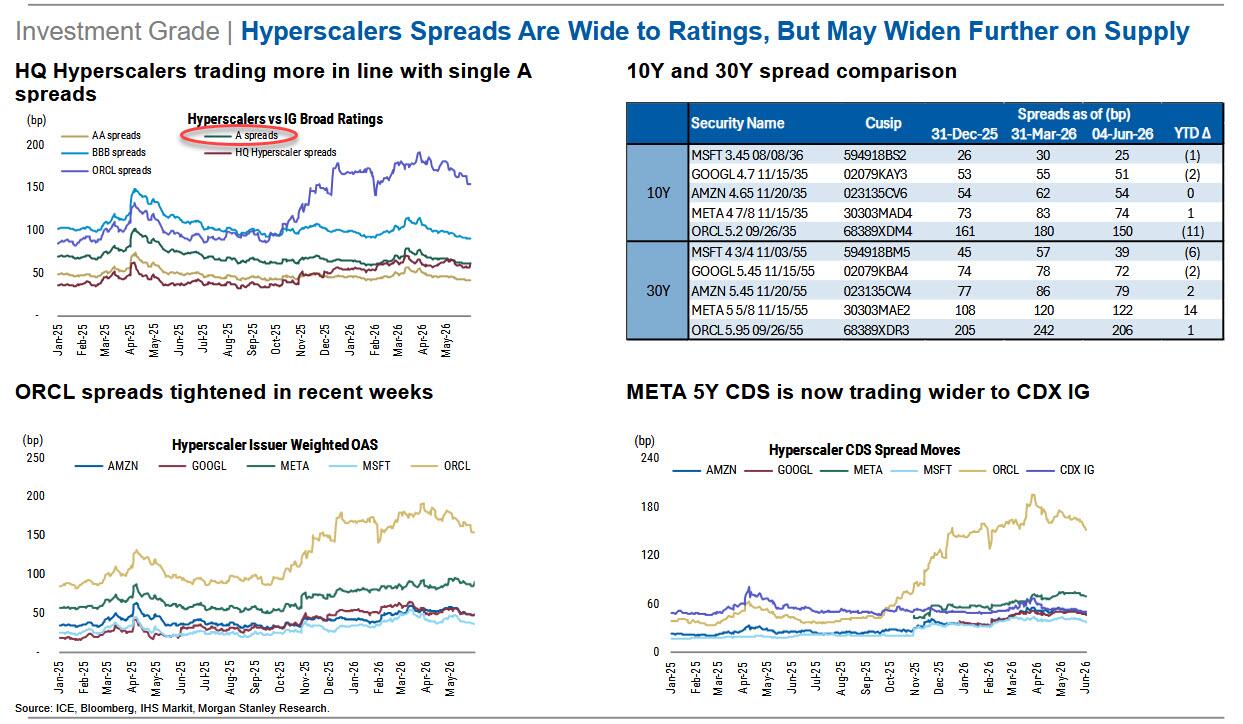
 Not surprisingly, as a result of the surge in combined leverage, hyperscalers are drifting wider, and after trading inside AA spreads for much of 2025, are now on top of A, and as MS warns, "may widen further on supply." And it's not just outlier Oracle: META is now trading wider to CDX IG.
 Putting it all together, what the above indicates is that hyperscalers, and the broader AI ecosystem, has gong into an all-out debt expansion mode, using both on and off-balance sheet vehicles, to fund as much of the infrastructure buildout (now that the price of 1GW of data center has

 Great news ahead of midterm elections.
Pump Pain Relief? Gas Above $4 May End Soon As U.S.-Iran Peace Deal Sends Oil Lower
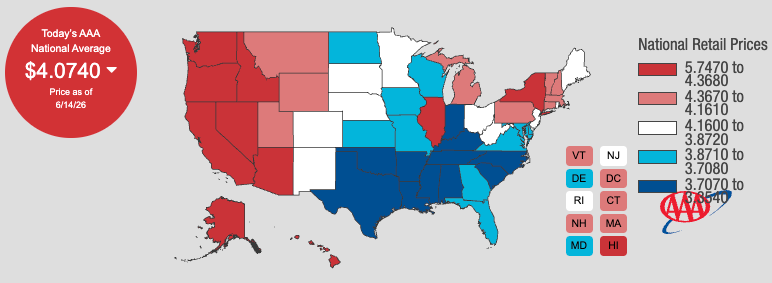
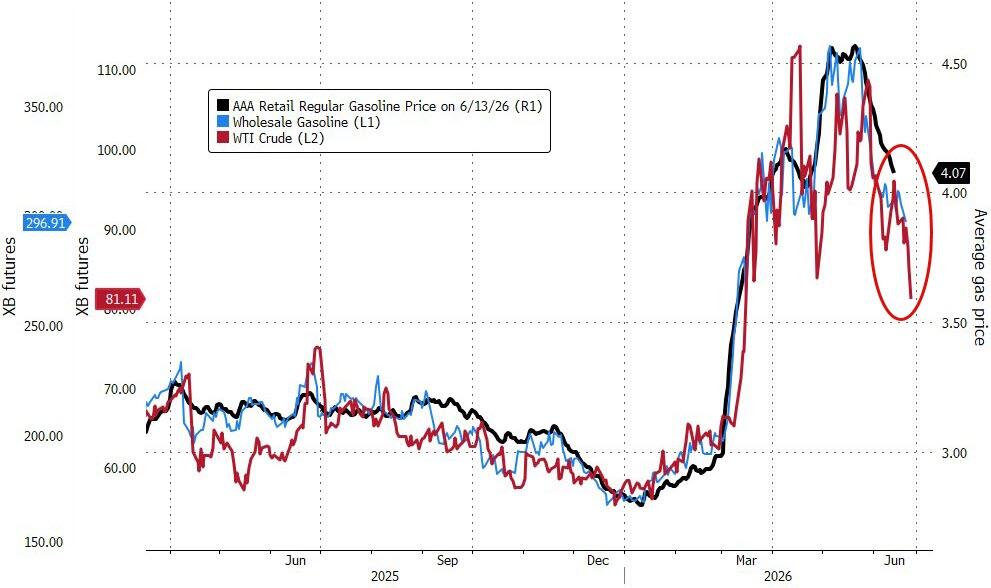
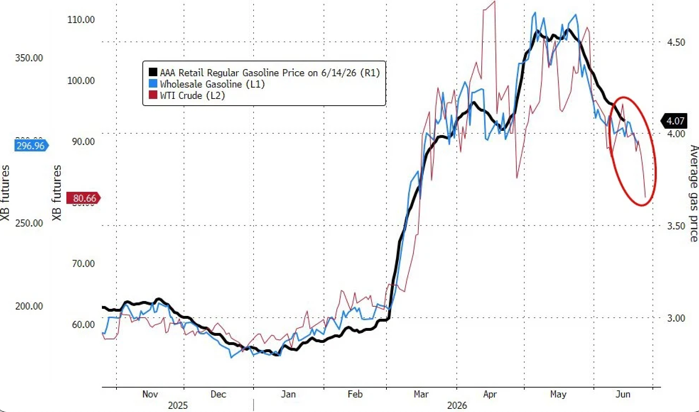
The national average for U.S. gasoline prices has hovered above the politically sensitive $4-per-gallon level for 76 days, or roughly 2.5 months, as the Gulf energy shock tightened physical markets and forced emergency SPR draws.
But with President Trump
Great news ahead of midterm elections.
Pump Pain Relief? Gas Above $4 May End Soon As U.S.-Iran Peace Deal Sends Oil Lower
The national average for U.S. gasoline prices has hovered above the politically sensitive $4-per-gallon level for 76 days, or roughly 2.5 months, as the Gulf energy shock tightened physical markets and forced emergency SPR draws.
But with President Trump 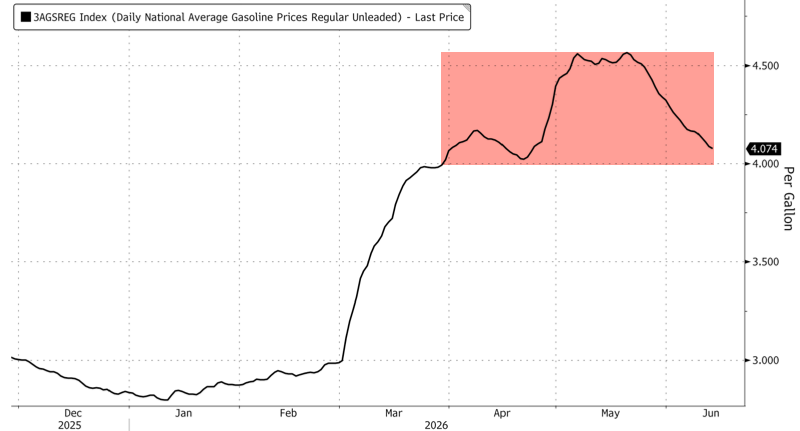 As of Sunday evening, AAA data show the national average for 87-octane gasoline stands at around $4.074.