chaoticalHeavy's avatar
chaoticalHeavy
chaoticalHeavy@stacker.news
npub1g8g2...k7um
heavy duty chaotician
Heritability of intrinsic human life span is about 50% https://www.science.org/doi/10.1126/science.adz1187 > How heritable is human life span? If genetic heritability is high, longevity genes can reveal aging mechanisms and inform medicine and public health. However, current estimates of heritability are low—twin studies show heritability of only 20 to 25%, and recent large pedigree studies suggest it is as low as 6%. Here we show that these estimates are confounded by extrinsic mortality—deaths caused by extrinsic factors such as accidents or infections. We use mathematical modeling and analyses of twin cohorts raised together and apart to correct for this factor, revealing that heritability of human life span due to intrinsic mortality is above 50%. Such high heritability is similar to that of most other complex human traits and to life-span heritability in other species.
chaoticalHeavy's avatar
chaoticalHeavy 2 months ago
Somatic mutations impose an entropic upper bound on human lifespan https://www.biorxiv.org/content/10.1101/2025.11.23.689982v1 > ABSTRACT > Somatic mutations accumulate with age and can cause cell death, but their quantitative contribution to limiting human lifespan remains unclear. We developed an incremental modeling framework that progressively incorporates factors contributing to aging into a model of population survival dynamics, which we used to estimate lifespan limits if all aging hallmarks were eliminated except somatic mutations. Our analysis reveals fundamental asymmetry across organs: post-mitotic ***cells such as neurons and cardiomyocytes act as critical longevity bottlenecks, with somatic mutations reducing median lifespan from a theoretical non-aging baseline of 430 years to 169 years.*** In contrast, proliferating tissues like liver maintain functionality for thousands of years through cellular replacement, effectively neutralizing mutation-driven decline. ***Multi-organ integration predicts median lifespans of 134-170 years*** —approximately twice current human longevity. This substantial yet incomplete reduction indicates that somatic mutations significantly drive aging but cannot alone account for observed mortality, implying comparable contributions from other hallmarks.
chaoticalHeavy's avatar
chaoticalHeavy 2 months ago
Microsoft drops AI sales targets in half after salespeople miss their quotas > one US Azure sales unit set quotas for salespeople to increase customer spending on a product called Foundry, which helps customers develop AI applications, by 50 percent. Less than a fifth of salespeople in that unit met their Foundry sales growth targets. In July, Microsoft lowered those targets to roughly 25 percent growth for the current fiscal year. In another US Azure unit, most salespeople failed to meet an earlier quota to double Foundry sales, and Microsoft cut their quotas to 50 percent for the current fiscal year.
chaoticalHeavy's avatar
chaoticalHeavy 4 months ago
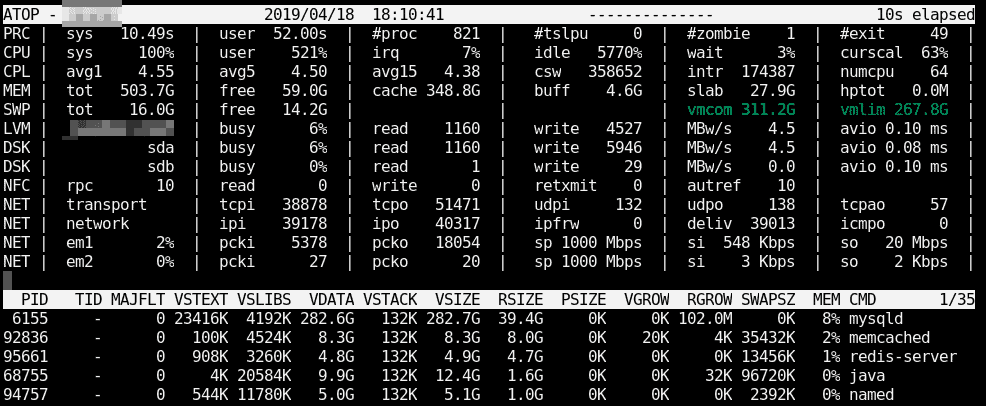
Linux Performance: Almost Always Add Swap Space (2023) This is a pretty good discussion about pros and cons of Linux swap space. > One notable advantage is that the Linux Kernel intelligently uses swap space to optimize memory usage. It moves rarely-used memory pages into swap, freeing up more cacheable space for frequently used pages. This helps maintain a balance between performance and memory management. > Additionally, having swap space provides a safety net. It allows administrators to react to low memory issues gradually, preventing sudden and severe performance degradation. Properly monitoring and alerting for swap usage can further enhance this safety net. originally posted at
A newly approved ‘living drug' could save more cancer patients' lives https://www.sciencenews.org/article/newly-approved-drug-save-cancer-patient? >Scientists now know that a variety of factors can suppress T cells’ natural tumor-fighting abilities. So our immune systems sometimes need help to quash cancer. originally posted at
Secure Boot is completely broken on 200+ models from 5 big device makers >“Imagine all the people in an apartment building have the same front door lock and key. If anyone loses the key, it could be a problem for the entire building. But what if things are even worse and other buildings have the same lock and the keys?” >To this day, key players in security—among them Microsoft and the US National Security Agency—regard Secure Boot as an important, if not essential, foundation of trust in securing devices in some of the most critical environments, including in industrial control and enterprise networks. originally posted at
Israel's ultra-Orthodox see religious study as their part in protecting state >The ultra-Orthodox see their full-time religious study as their part in protecting the state. Many fear that greater contact with secular society through the military will distance adherents from strict observance of the faith. >Ultra-Orthodox men attend special seminaries that focus on religious studies, with little attention on secular topics like math, English or science. Critics have said they are ill-prepared to serve in the military or enter the secular work force. If they get drafted into the army who will be spiritually protecting Israel?
Eclipses May Generate Atmospheric Shocks >Eves thinks his explanation may also help to explain other phenomena during eclipses. Infrasound may be responsible for strange Foucault pendulum behaviour (the sensitive pendulums – used to demonstrate the rotation of the Earth – swing wildly during eclipses). The infrasound pulses may cause the ground to vibrate, interfering with the pendulum swing. Infrasound may also explain some bizarre animal behaviour during these events. Sub audible sound wave frequencies are known to distress or alarm birds, perhaps their strange behaviour during eclipses could be down to infrasound propagation.
As human generated data is used up, companies resort to "Synthetic data" >“If they only train on synthetic data, they can get lost in the jungle.” >To combat this, OpenAI and others are investigating how two different A.I. models might work together to generate synthetic data that is more useful and reliable. One system produces the data, while a second judges the information to separate the good from the bad. Researchers are divided on whether this method will work. >A.I. executives are barreling ahead nonetheless. >“It should be all right,” Mr. Altman said at the conference.
"the Fed and its minion central banks are desperate to cut rates even in the face of inflation because the alternative is a financial collapse too big to bail out. After all, high rates were what crashed all those banks back in March, and they never really fixed it, they just papered it over."
(Tutorial) Nostr for Dummies: How to implement NOSTR Protocol from scratch with Python (NIP-01) # Package installation on Jupyter Notebook environment (uncomment if you are using the Jupyter Notebook) # ! pip install websockets # Connect you with the Relay # ! pip install secp256k1 # Generate the private key and public key # ! pip install sha256 # Generate needed hash # package importation import asyncio import websockets import secrets import secp256k1 import time import json from hashlib import sha256 from time import time # The custom content of note that will be publish in this tutorial content = "Hello, world!" #input("What's your message to the world?") # Token applied to generate public-private keypair secrets_token_32bit = secrets.token_bytes(32) # User's private key (use print(private_key.hex()) to print) private_key = secp256k1.PrivateKey(secrets_token_32bit) # User's public key public_key = private_key.pubkey.serialize()[1:].hex() # Definition of required elements according to NIP-01 tags = [] kind = 0 timestamp = int(time()) # timestamp in SECONDS # Define the property "event_id" event_id = sha256( json.dumps([ 0, # ZERO is a CONSTANT, don't confuse with kind public_key, timestamp, kind, tags, content], separators=(',', ':')) .encode('utf-8')) .hexdigest() # Define the property "sig" sig = private_key.schnorr_sign(bytes.fromhex(event_id), None, raw=True).hex() # Define the note to send to Relays note = json.dumps(["EVENT", { "id": event_id, "pubkey": public_key, "created_at": timestamp, "kind": kind, "tags": tags, "content": content, "sig": sig }], separators=(',', ':')) # Define the Relay for this tutorial (only for example) relay : str = "wss://relay.geekiam.services" # Connect to the Relay using Socket and send the note async with websockets.connect(relay) as websocket: await websocket.send(note) print(f">>> {note}") greeting = await websocket.recv() print(f"<<< {greeting}")