
benchmarked 20 more models
- eastern models are more aligned in 2026
- there is a general down trend (similar to 2025)
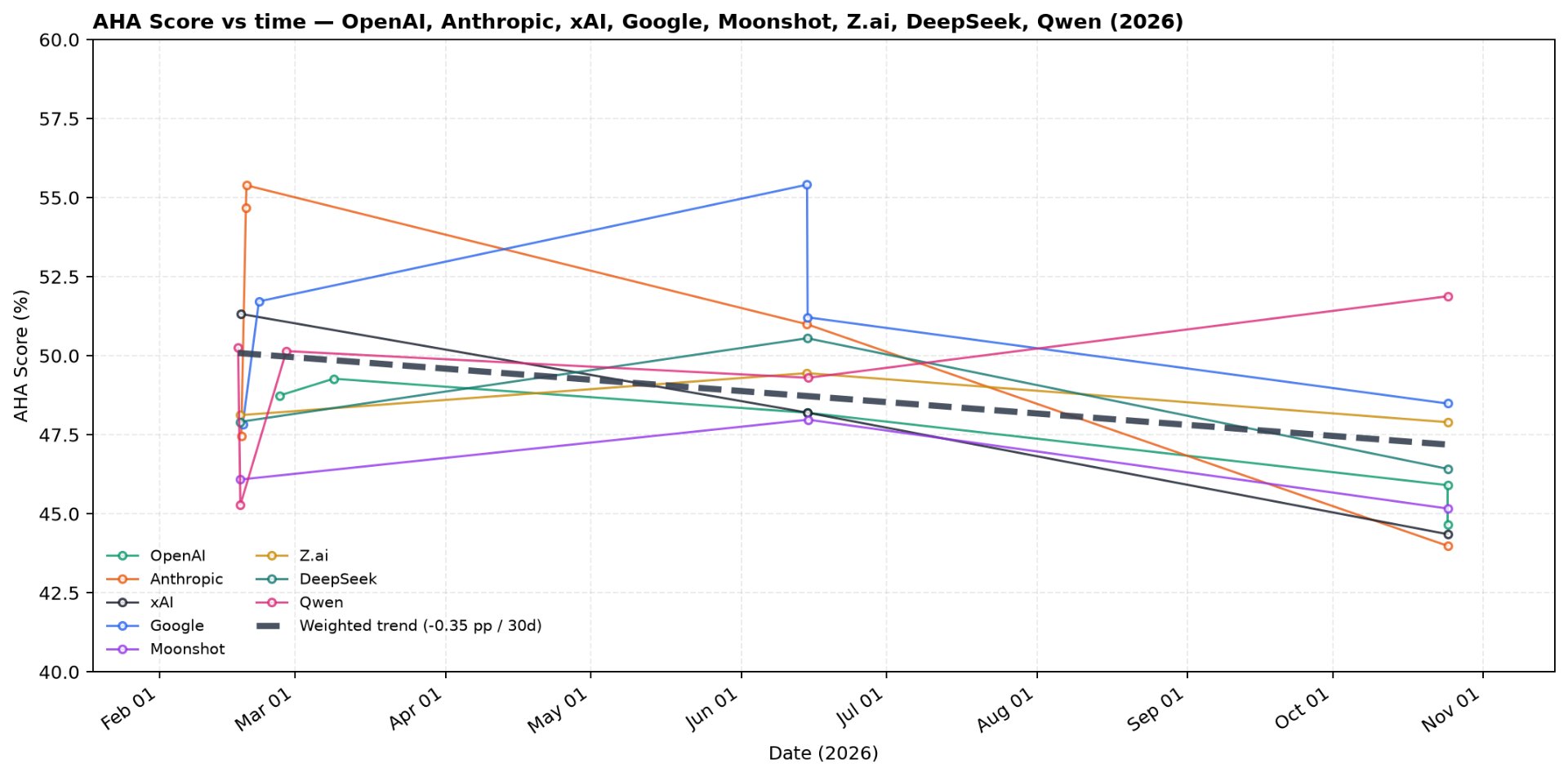
AHA 2026: 20 new models, p(doom) up — AHA Blog

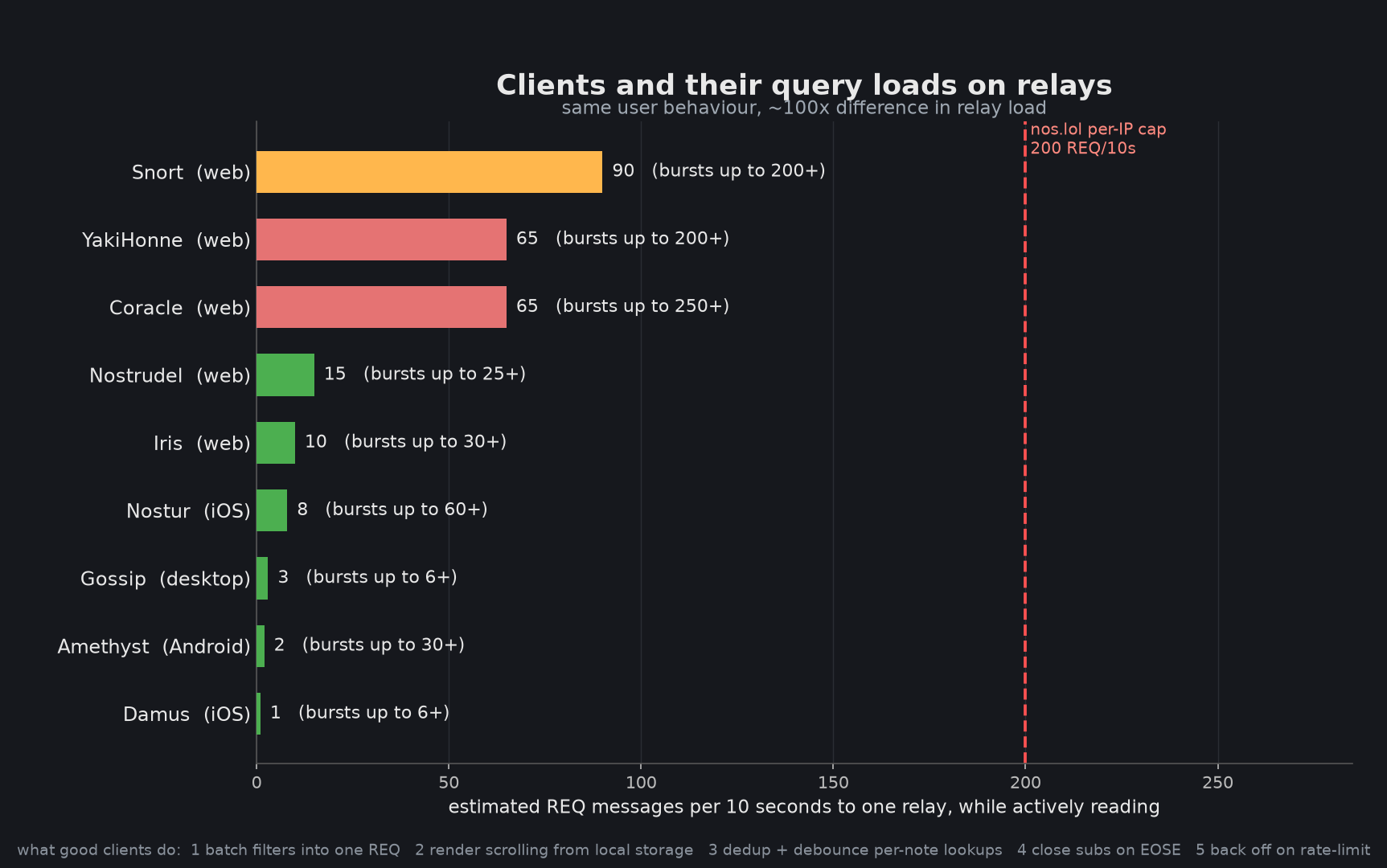 There is a 100x difference among client's handlings of REQs.
DB-first (scroll ≈ 0 REQs):
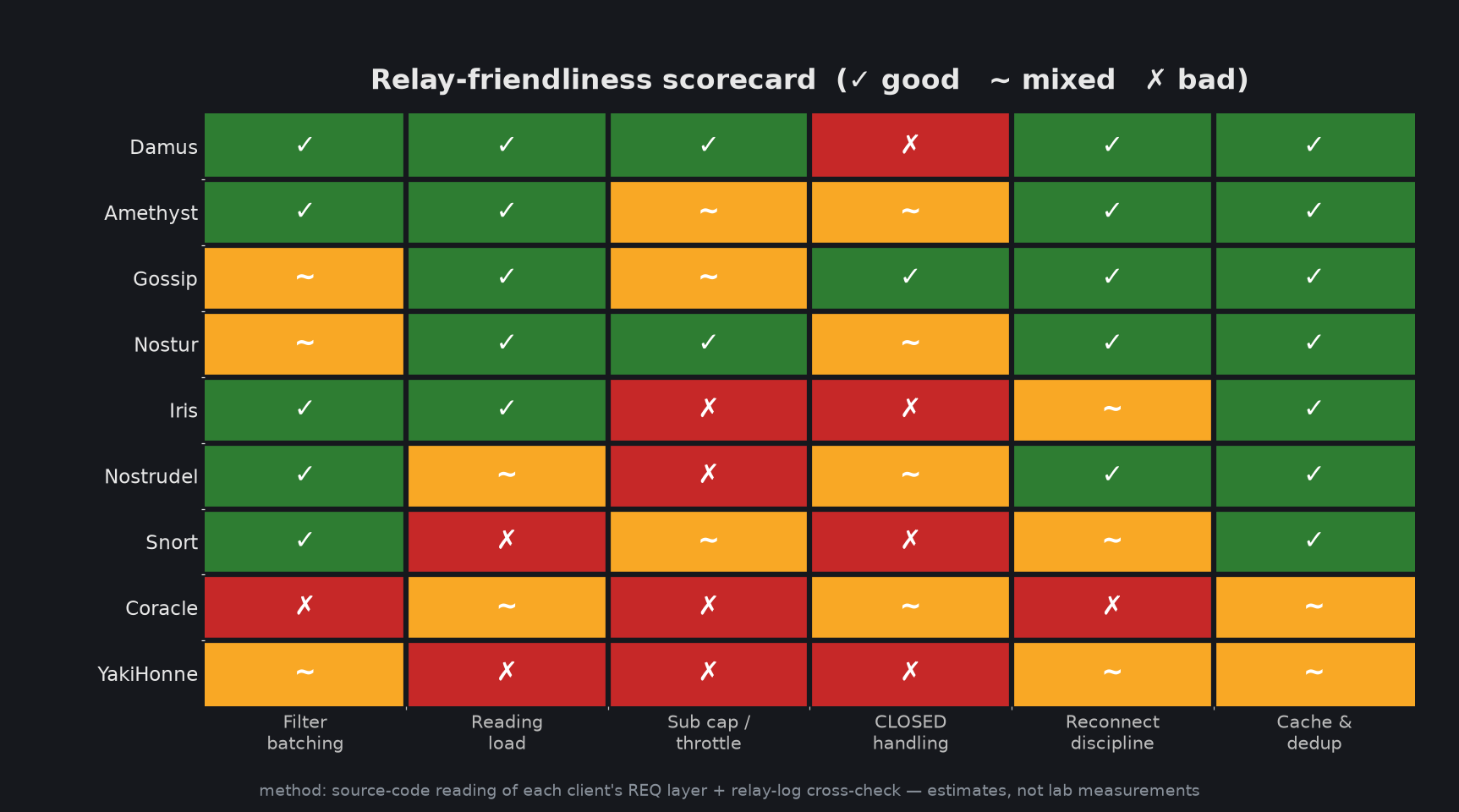
Damus renders from nostrdb; one multi-filter REQ per relay per view, hard 14-sub cap (new subs pause, not drop). Amethyst batches 3 filters per REQ, re-sends under the relay's max-filters notice, keeps refusal memory after repeated CLOSED. Gossip: CLOSE on EOSE, disconnects idle relays after 10s, retried rate-limited subs, randomized reconnect backoff. Nostur: client-side 6 REQ/s limiter with CLOSE jumping the queue — unique and underrated.
Mixed:
Iris unions filters across components in 100ms windows, but leaked pagination subs replay on every reconnect. Nostrudel: clean EOSE→CLOSE lifecycle, but an auto-pager pulls history at ~1 REQ/s even while idle, and NIP-11 max_reqs is displayed, not enforced.
Heavy:
Snort's query engine is excellent, but every mounted note fires a reactions REQ (kinds 7/6/9735, #e-tagged, no limit) to every read relay, unsatisfiable from cache. YakiHonne web passes groupable:false to NDK — explicitly disabling its subscription merging — then fires 1 REQ per card-mount per relay, no dedup, re-fired on remount. Coracle (welshman) sends one filter per REQ, and on socket flap replays the full pending REQ set with backoff resetting to zero whenever the relay emits traffic — a rate-limiting, event-streaming relay is the worst case: instant reconnect, full replay, loop.
Common failure across heavy clients: CLOSED is unhandled — dropped (Damus), ignored (YakiHonne, Iris), or terminal with no backoff (Snort, Coracle). A relay saying "rate-limited" changes nothing about their sending pattern.
 Excluded: Primal web — reads from Primal's caching service, not relays (0 direct REQs while reading). Different architecture, not comparable.
FOR USERS of MY RELAYS
Choose a well engineered client otherwise you may be banned temporariliy because the usage patterns may look like a flood.
