MainStreetChungus's avatar
MainStreetChungus
mainstreetchungus@nostr.report
npub1pvuu...d7a5
https://nostr.report ⚡️Bitcoin ⚡️ | Meme afficianado 🌎👩‍🚀🔫👩‍🚀 | Fiat 💵 Miner ⛏️
Let’s take a minute to appreciate what the #plebchain is doing on nostr and why it will be difficult for traditional social media inflooencers to make the jump… A lot of normies are followers, they struggle with learning anything new and will wait for someone else to figure something out before making a change. Change is hard for most people. Knowing that people resist change, big Inflooencer get stuck on platforms because only the die hards followers would move with them to a new platform. The vast majority of people will not make the switch. But the fallacy is that you need all those followers. The die hard followers are the ones who engage. They are the ones that should be catered to, not the masses that just follow and consume content. But the current system is built on an advertising model that monetizes the people who follow and consume, they are valuable in this system and are hard to ditch. People don’t know how to monetize a non advertisement based system yet, and that’s what we are doing here on nostr. We are building value for value. V4V is about community, listening to wants and needs, and selling something of value, not just being present and flashy for fake engagement. Once we figure this out, these inflooencers will have to make a choice. Do they want to pivot? or ride the dying platform to the ground? They will be the ones facing change. All I know is that we plebs will be positioned well for the future. PV. Thanks to #[1]​ and #[2]​ for the contributions to this post.
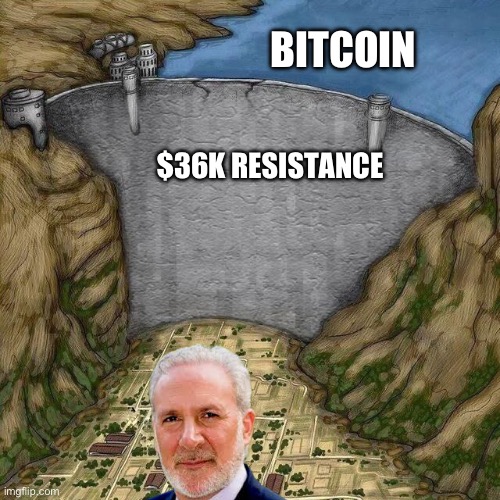
Posting a throw back meme In honor of the new custom hashtag for #plebchain image
WOW 🤯! This article does a great job of sunmarizing the “Other Stuff” in nostr, here are some of the use cases highlighted… With BIP47, a customer can generate a set of addresses to use for payments by creating a dedicated payment code for the merchant. Then, instead of using notification transactions to exchange payment codes between merchants and customers, payment codes could be exchanged via Nostr. With PayJoins, users exchange information about what UTXOs will be used as inputs via any communication channel. PayJoin transactions are complicated to coordinate, as participants have to be online at the same time when using a clearnet domain or Tor Onion endpoints. In Nostr, communication is asynchronous: users fetch information from relays once network connectivity is restored. With LNURL, instead of tediously needing to generate new invoices for each transaction, users are able to receive a static endpoint pointing at a web server to automatically generate new invoices. Instead of using a web server as the endpoint for LNURL, users could use Nostr keys as endpoints for LNURL transactions to conceal their identities. In anonymous-amount credential systems such as Wasabi Wallet’s protocol for CoinJoin coordination, WabiSabi, Nostr keys can function as communication endpoints for the coordination of a CoinJoin transaction. Another use for Nostr in CoinJoins lies in the discovery of coordinators, Nostr can function as an anonymous bulletin board. In NostrMarkets, customers can subscribe to a merchant's public key to fetch products from relays instead of accessing a merchant’s site via a webshop. This increases the censorship resistance of online shops, as merchants are not dependent on seizable websites — rather, a merchant’s shop is hosted with all relays the shop sets up to communicate with. Another way to circumvent the requirement of IP addresses in server client communication is NOSTREST. REST, short for “representational state transfer.” By using Nostr keys without identification headers, both users and server operators do not need to know the IP addresses of their counterparts. With the NOSTREST bridge, projects can easily preserve the privacy of their users. By running an e-cash mint behind Tor using NOSTREST to communicate between server and clients, communication can be facilitated asynchronously, while both server operator and user only learn each other’s public keys, eliminating the risk of identification via IP.
Sorry, I just couldn’t handle the picture width, had to go back to 1.3.0 Build 6 image