He won't be getting any of my energy!
I know that's how many of the better off think, but the basic thesis is we are all here together and history says it doesn't end well when inequality gets out of hand.
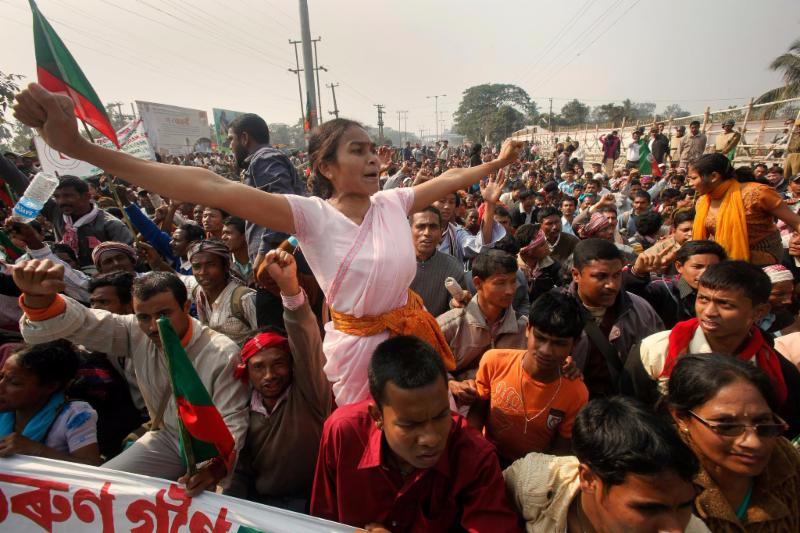
You know better than me about conflict.org, I understand there was often decades of violent outbursts leading up to the oppressive regimes being ousted by people power coming together peacefully in huge numbers.

The current direction of travel does not need to either continue or end badly.
CNCR
Poland’s Solidarity Movement (1980-1989) | CNCR
Summary of the political history, nonviolent strategic actions, and ensuing events of Poland's Solidarity Movement from 1980-89.
Will It require hard and brave decisions from plebs, sure, but just look at the recent history...
Portugal,, Phillipines, Poland, all threw out authoritarianism in the 70's and 80's. I remember Lech Walensca, an electrician, leading the Polish people out of the dark.
"by the end of the 1970s, people’s self-organization and a broad coalition of workers, intellectuals, students, members of the Catholic church and peasants became a potent force for change in Polish society. "
Key point...
"Their mass nonviolent mobilization was characterized by the establishment of a covert parallel polis alongside the existing authoritarian system in order to liberate society from the control of the ruling party without overtly challenging its dominance."
Statistically, it only needs 3.5% of a population to provoke fundamental change. It would appear that bitcoin is on track to usher in change – once it is adopted as a true parallel alternative. But only when the bitcoin economy hits 3.5% of global trade can we expect an awakening. As long as exchanges and banks are in the middle, no way will it be taken seriously.
Poverty is both a physical and a psychological oppression – a hand‑cuff, a head‑cuff, the same debilitating sensation. Inflation is widening global poverty. Who is responsible for inflation? Putin, broken supply chains, wars, viruses? The list of distracting “BS” goes on, pulling our attention toward fleeting (though sometimes genuinely impactful) glitches. Those glitches are used to distract from the chronic glitch: governments—more precisely, the civil service and corporate lobbyists behind them—continually flood the economy with more money.
Good people in public‑sector jobs end up doing harmful things because they are forced to follow the rules of a terrible system that only knows how to grow. To grow, the state takes more. Oppression is baked into the pie. For the majority, poverty has become a given at this stage of the cycle, a system that transfers everyone’s energy and wealth creation to a tiny elite.
When will both the benefactors and the losers realize that this cannot continue? No one can afford to shrug off the obvious direction of travel. If a corporation relies on 99 % of its customers to generate its billions, and one day it discovers that its system has left 80 % of those customers mired in poverty…
We are all in this together. We all have to pressure government to rein in the momentum that is ruining society. Communities have to come together, individuals are too easy to pick off, to make examples of. We have to vote with our wallets and buy local, and vigorously challenge the next tax rise or service rate increase.
It's absolutely ridiculous that the most successful societies in history are on their knees because leaders don't read history books. And we have finally found the hardest form of money, an anti-inflation money, the first of its kind since the Big Bang. History won't judge our leaders or the citizens kindly if we ignore this incredible get-out-of-jail card aka Bitcoin. Will we change systems or continue to sleepwalk into a brick wall? I'm one of millions who see the chance BTC offers, and I don't want to be part of an historically consistent human failure!
Spain’s “Strong Economy”: The Monetary Illusion
👉 Nostr The euro-only path 2022-2024 left the average Spanish household with 12 % less food, whereas converting the same €1 600 into Bitcoin would have given roughly €6 000–€7 000 extra food-budget value by the end of 2024. Got your attention?
Spain’s “Strong Economy”: The Monetary Illusion – RT Crenville Writings
you need $2900 at the border to volunteer to work for nothing in Denmark. great values 😡
try again...how today's nonsensical society came to be – through illusion.
how today's obvious nonsensical society came to be an illusion...
Firefox nav bar above the tab and bookmar bar
👉 Nostr Not too much to ask, is it? Apparently it is. Took ages to set up as I envisaged, so thought I’d share it in case anyone else wants a quick fix. This works on Mac version 115.32. It should be fine on newer versions...
Firefox nav bar above the tab and bookmar bar – RT Crenville Writings
All paid with bitcoin.. domain name, hosting, proton email, vouchers for food, gas, fuel, recharge mobile with100gbdata, Ordering online
Trespassing on this property is prohibited. Sounds like a double negative.
Any business accepting BTC gets my custom. Legacy billing systems are absolute junk, invasive, slow-coaching commerce, and some computer or security admin or low level clerk can get in the way of the simplest transaction.
I think the greatest flaw in bitcoin is how it was always valued versus fiat. The valuation is like a parlour game, sticking a tail on a bucking bronco. Meanwhile the bitcoin system just ploughs on steady.
My novella is being scrutinised by a super talented noir writer with a 6- book series under their belt. Writing is a lifetime study best started as a youth, not a last minute dot com idea.
Short book #review of a superb #Scandinoir novel, Silent John, a Shark detective story from Alice Myrskystäkoira

The main character, DCI Aliisa Tuulikki Ykspetäjä, or Shark for short, is a Finn working for the police in Bradford, UK. She is as smart as they come, but with a complex, asocial personality ranging from extremely witty to cold and callous. She can be as nasty and evil as some of the criminals she arrests, truth be told. Her work colleagues are a mixed bunch too. The interactions and dialogue are very entertaining.
The scene-setting drops you straight into the depths of a Yorkshire town and surrounding rural area. By about half way, I started to put clues together, but there's always a twist and turn in the Shark series. The finale makes perfect sense, but not what I expected. Check it out. Well worth the price of admission.
btw, I'm not much of a reader, very little grabs my attention enough to sit down for a long read. But the Shark series draws me in very fast.
Public holiday, banks closed, can't find my bank card, out of cash, places to Drive, nobody takes Bitcoin, what you going to do?
Buy a gift card online vía bitrefill with Lightning and a burner email. Seamless, so simple, using #Bitcoin lightning to buy fuel.
Yet another example of the power of this incredible Payment system.
We tend, as humans, to complain about change rather than examine the reasons behind it. The rise of AI is a perfect example. Much of the public reaction assumes that automation is inherently destructive—as though removing jobs automatically removes meaning, dignity, and social stability. But that assumption deserves scrutiny.
If David Graeber had written a book called *Meaningful Jobs*, then the prospect of AI dismantling large sectors of work—especially those involving words and numbers—would indeed be alarming. It would suggest a direct assault on human purpose. But he didn’t. He wrote *Bullshit Jobs*—a critique of the vast number of roles that exist without meaningful contribution to society.
If Graeber’s thesis holds even partially true, then eliminating a significant portion of so-called “productive” jobs might not lead to societal collapse. Many essential functions—food production, logistics, healthcare, infrastructure—would continue. Life, at least at the level of basic needs, would go on.
History offers small-scale examples of this. Entire categories of work have disappeared before: milk delivery routes replaced by supermarkets, paper rounds eroded by digital media. These changes disrupted livelihoods, yes—but they did not destroy society. Where is the nice lady at the telephone exchange putting you through working now? Typing pools? People adapted. Often, they were quietly relieved to leave behind low-paid, monotonous work.
A more recent case often cited is when Elon Musk drastically reduced staff at Twitter. Predictions of immediate collapse were widespread. Yet the platform persisted—imperfectly, perhaps, but recognizably intact. The gap between expectation and outcome raises an uncomfortable question: how many roles were truly essential?
Similarly, layoffs at Block Inc. (formerly Square), co-founded by Jack Dorsey, were initially framed as technological cruelty—AI displacing workers. But a closer look suggests a more complicated story: pandemic-era policies inflated payrolls to preserve employment during extraordinary conditions. What followed may have been less about AI “destroying” jobs and more about correcting an unsustainable expansion.
All of this points back to Graeber’s argument: a substantial share of modern employment may exist not because it is necessary, but because the system requires people to appear economically active. If we applied a strict standard of meaningful productivity, many roles—across management, administration, finance, media, and beyond—might struggle to justify themselves.
This leads to a deeper economic question. If large portions of the global workforce earn extremely low wages, while others perform work of questionable necessity, what exactly is the system optimizing for? The fear that “the economy would collapse if people stopped working” assumes that current structures are both natural and indispensable. But modern fiat economies are constructed systems, not laws of nature. Their stability depends as much on belief and coordination as on material output.
Technologies like Bitcoin are sometimes proposed as alternatives—systems designed to operate with transparent, fixed rules rather than discretionary policy. Whether or not such systems can fully replace existing financial structures remains an open question, but their appeal reflects dissatisfaction with the current model, particularly its inefficiencies and inequalities.
The larger point is this: AI is being blamed for disrupting society, but the disruption reveals pre-existing weaknesses. If millions of jobs can disappear without catastrophic consequences, then perhaps those jobs were never as essential as we believed. And if losing them creates despair, that suggests we have tied human worth too tightly to employment rather than to contribution, creativity, or well-being. What do you do?
In that sense, automation may be less a destroyer than a mirror. It forces us to confront why we work, which work truly matters, and how we distribute resources in a world where less human labour may be required.
The real failure, then, is not that AI might be changing the system—it’s that we built a system so dependent on questionable forms of work in the first place.
Semana Santa in Spain, a time for reflection and a perfect setting for a murder-mystery.
No mystery when one of millions of city folks Who descend on small villages and dusrupt Life beyond all recognition ends up pinned to one of the many crosses traipsed around town on elaborate processions of religious scenes carried on the shoulders of shuffling pious-for-a-day bank managers, industrialists and other purveyors of unholy daily doom.
Chaucer's Pardoner's Tale nailed It right 1000 years ago. A highly recommended read for all children before enduring communion classes.
And oh, literally breaking main headline on the #Spain news: clerics apologise for systemic sexual abuse of children by the church.
You really couldnt write this level of depravity and hypocrisy – although I have a jolly good try in the #OlgaSejeHansen thrillers. Download a sample few chapters from my bio, and let your hair down.
And remenber, It would be so much harder for people in positions of power – bankers, churches, elite hangers-on and their dressed-in-blue enforcers – to get away with what they do, if we were on a Bitcoin Standard.
Happy Easter
. #writers #authors
I've turned into a lurker. Not a good sign for a creator.
Apart from build quality, not much good to say about iPhones. Returning to Android such a relief, not pummeled for signing in and justifying my existence.
I guess It Will get as restrictive as Apple at some point. What's the free world producing by way of phones? #asknostr