
Vamama steps ...
View quoted note →
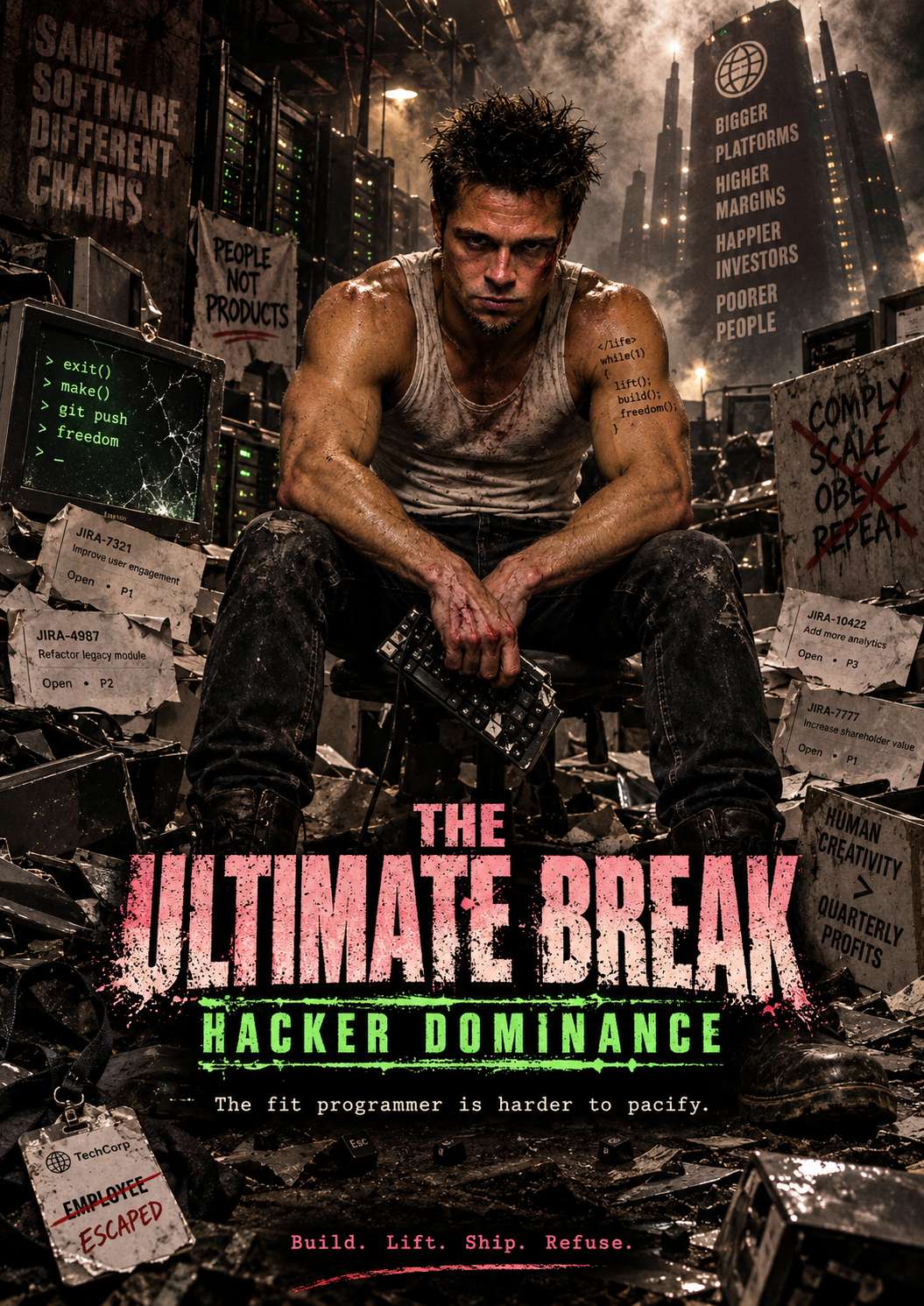 Built body. Sharp mind. Fast hands.
And still the trillion-dollar software machine wants him seated, softened, managed, risk-scored, compliance-trained, emotionally flattened, and drip-fed little dopamine pellets called tickets, sprints, perks, and stock grants.
The modern programmer is one of the most physically under-deployed high-performance humans in history.
A man who can hold architecture in his head, debug under pressure, learn any system, survive sleep deprivation, train through pain, and adapt at speed — reduced to moving rectangles around corporate dashboards so some bloated institution can preserve its market position for one more quarter.
That is not a talent shortage.
That is a containment strategy.
The fit athletic programmer is especially dangerous to the system because he is harder to pacify.
He knows discipline in the body translates to discipline in the mind.
He knows suffering can be metabolized into competence.
He knows hierarchy is often theater.
He knows most “best practices” are just ritualized fear.
And once he realizes that half the industry runs on political insulation, process inflation, and managed dependency, he becomes very difficult to domesticate.
The trillion-dollar software industry does not merely employ intelligence.
It captures it.
It takes the hacker instinct — curiosity, sovereignty, aggression, ingenuity, refusal — and repackages it into safe, salaried obedience.
It wants builders without rebellion.
Operators without independence.
Athletes of cognition trapped in ergonomic cages.
So the breakout begins when the programmer remembers:
You were not built to be a ticket-processing organ for dead corporate mass.
You were not built to sacrifice your endocrine system to Jira.
You were not built to become physically weak while maintaining failing abstractions for people with no skin in the game.
Lift. Run. Build. Ship. Fight. Learn. Refuse.
Reduce dependency.
Cut costs.
Own your stack.
Own your tools.
Own your body.
Own your time.
Own the consequences.
The ultimate break is not quitting your job to become a lifestyle mascot.
The ultimate break is reclaiming hacker dominance:
A body that can endure.
A mind that can cut through noise.
A nervous system that doesn’t beg institutions for permission.
A builder who can create outside the empire.
Because once the programmer becomes physically sovereign, financially harder to corner, and technically independent, the whole spell starts to fail.
And that is what terrifies industrial software most:
Not bad coders.
Not loud critics.
But disciplined men who can build, think, adapt, and no longer need the machine to authorize their existence.
#programming #software #hacker #builders #tech #discipline #sovereignty #fitness #coding #startup #indiehacker #systems #masculinity #engineering
Built body. Sharp mind. Fast hands.
And still the trillion-dollar software machine wants him seated, softened, managed, risk-scored, compliance-trained, emotionally flattened, and drip-fed little dopamine pellets called tickets, sprints, perks, and stock grants.
The modern programmer is one of the most physically under-deployed high-performance humans in history.
A man who can hold architecture in his head, debug under pressure, learn any system, survive sleep deprivation, train through pain, and adapt at speed — reduced to moving rectangles around corporate dashboards so some bloated institution can preserve its market position for one more quarter.
That is not a talent shortage.
That is a containment strategy.
The fit athletic programmer is especially dangerous to the system because he is harder to pacify.
He knows discipline in the body translates to discipline in the mind.
He knows suffering can be metabolized into competence.
He knows hierarchy is often theater.
He knows most “best practices” are just ritualized fear.
And once he realizes that half the industry runs on political insulation, process inflation, and managed dependency, he becomes very difficult to domesticate.
The trillion-dollar software industry does not merely employ intelligence.
It captures it.
It takes the hacker instinct — curiosity, sovereignty, aggression, ingenuity, refusal — and repackages it into safe, salaried obedience.
It wants builders without rebellion.
Operators without independence.
Athletes of cognition trapped in ergonomic cages.
So the breakout begins when the programmer remembers:
You were not built to be a ticket-processing organ for dead corporate mass.
You were not built to sacrifice your endocrine system to Jira.
You were not built to become physically weak while maintaining failing abstractions for people with no skin in the game.
Lift. Run. Build. Ship. Fight. Learn. Refuse.
Reduce dependency.
Cut costs.
Own your stack.
Own your tools.
Own your body.
Own your time.
Own the consequences.
The ultimate break is not quitting your job to become a lifestyle mascot.
The ultimate break is reclaiming hacker dominance:
A body that can endure.
A mind that can cut through noise.
A nervous system that doesn’t beg institutions for permission.
A builder who can create outside the empire.
Because once the programmer becomes physically sovereign, financially harder to corner, and technically independent, the whole spell starts to fail.
And that is what terrifies industrial software most:
Not bad coders.
Not loud critics.
But disciplined men who can build, think, adapt, and no longer need the machine to authorize their existence.
#programming #software #hacker #builders #tech #discipline #sovereignty #fitness #coding #startup #indiehacker #systems #masculinity #engineering
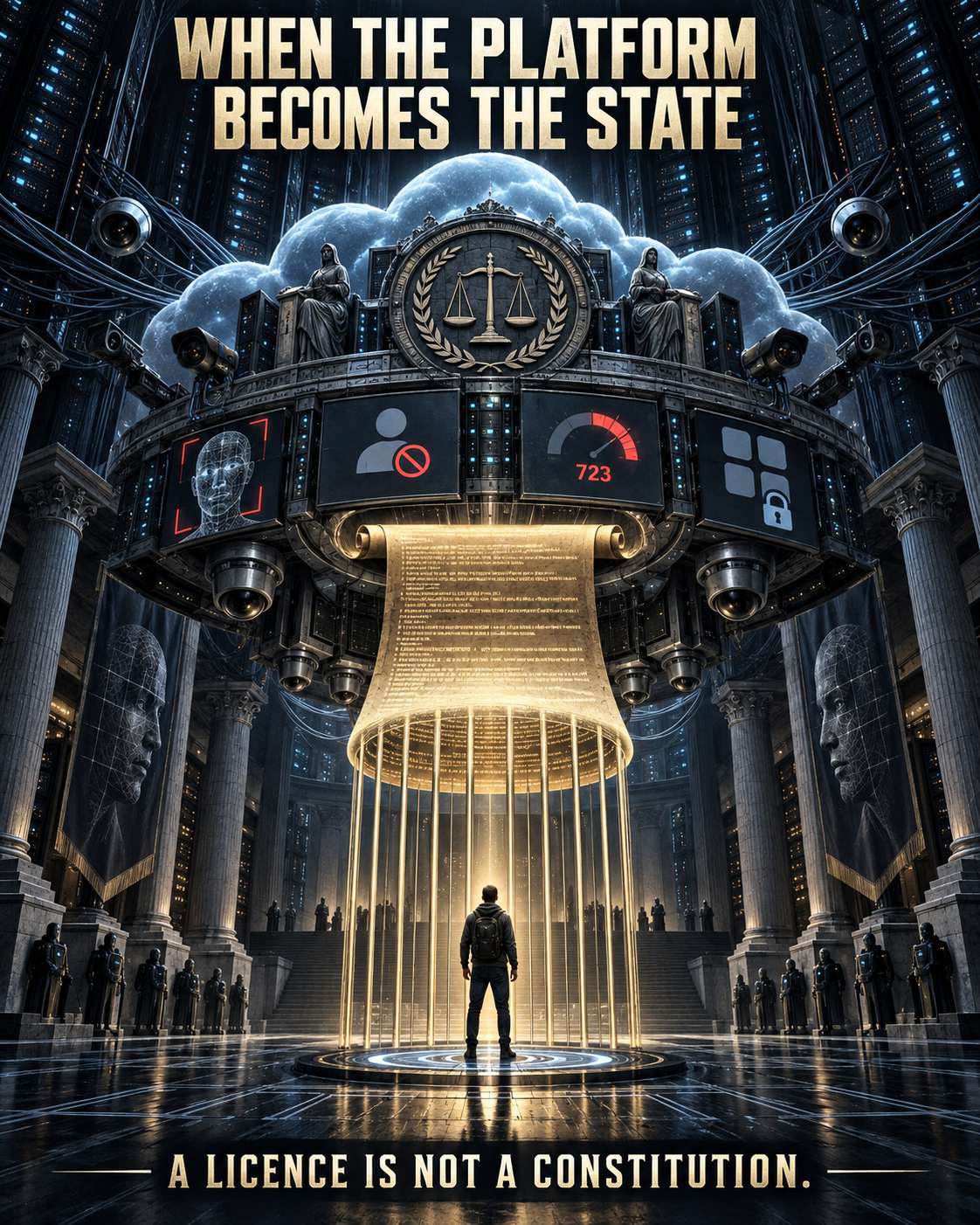 Identity is authenticated through privately controlled devices. Public speech travels through privately governed platforms. Payments depend on proprietary operating systems and app stores. Evidence lives in commercial clouds. Location, health and behavioural data pass through vendor infrastructure. Increasingly, access to work, banking and public services requires compliance with software nobody voted for and few officials can meaningfully inspect.
This creates a constitutional risk without requiring a conspiracy.
A constitution limits public power through jurisdiction, due process, transparency, appeal and institutional separation. A software platform is governed by licences, technical permissions and commercial policy. Its decisions may be immediate, automated and difficult to challenge.
When the state builds itself upon that platform, public authority inherits private architecture.
The individual can then be:
• identified without meaningful anonymity
• profiled without being accused of anything
• restricted without receiving a hearing
• excluded without a judicial order
• monitored without knowing which systems are communicating
• denied access because an automated risk model produced the wrong result
• forced to accept changing licence terms merely to remain socially functional
The danger is not simply that corporations possess too much data. It is that private systems can become the practical boundary of citizenship while remaining legally described as optional consumer products.
A government may be restrained by constitutional law, yet still obtain the practical effect of unrestricted power through infrastructure whose permissions are written in code and whose sanctions are called “service decisions.”
At that point, the licence begins to resemble law—but without democratic enactment. The account becomes an identity document. The device becomes a checkpoint. The platform becomes a jurisdiction. “Accept” becomes coerced consent. Disconnection becomes a form of civil exclusion.
The answer is not the abolition of technology. It is constitutional discipline at the infrastructure layer:
Public power must remain auditable. Essential services must be interoperable. Automated decisions must be explainable and appealable. Citizens must retain meaningful offline and open-standard alternatives. No vendor should possess an unreviewable power to erase a person from functional society.
If government cannot operate independently of a corporation, the corporation is no longer merely a contractor.
It has become an unelected chamber of government.
#BigTech #DigitalRights #ConstitutionalLaw #CivilLiberties #DigitalIdentity #Privacy #DueProcess #OpenStandards #DigitalSovereignty #RuleOfLaw
Identity is authenticated through privately controlled devices. Public speech travels through privately governed platforms. Payments depend on proprietary operating systems and app stores. Evidence lives in commercial clouds. Location, health and behavioural data pass through vendor infrastructure. Increasingly, access to work, banking and public services requires compliance with software nobody voted for and few officials can meaningfully inspect.
This creates a constitutional risk without requiring a conspiracy.
A constitution limits public power through jurisdiction, due process, transparency, appeal and institutional separation. A software platform is governed by licences, technical permissions and commercial policy. Its decisions may be immediate, automated and difficult to challenge.
When the state builds itself upon that platform, public authority inherits private architecture.
The individual can then be:
• identified without meaningful anonymity
• profiled without being accused of anything
• restricted without receiving a hearing
• excluded without a judicial order
• monitored without knowing which systems are communicating
• denied access because an automated risk model produced the wrong result
• forced to accept changing licence terms merely to remain socially functional
The danger is not simply that corporations possess too much data. It is that private systems can become the practical boundary of citizenship while remaining legally described as optional consumer products.
A government may be restrained by constitutional law, yet still obtain the practical effect of unrestricted power through infrastructure whose permissions are written in code and whose sanctions are called “service decisions.”
At that point, the licence begins to resemble law—but without democratic enactment. The account becomes an identity document. The device becomes a checkpoint. The platform becomes a jurisdiction. “Accept” becomes coerced consent. Disconnection becomes a form of civil exclusion.
The answer is not the abolition of technology. It is constitutional discipline at the infrastructure layer:
Public power must remain auditable. Essential services must be interoperable. Automated decisions must be explainable and appealable. Citizens must retain meaningful offline and open-standard alternatives. No vendor should possess an unreviewable power to erase a person from functional society.
If government cannot operate independently of a corporation, the corporation is no longer merely a contractor.
It has become an unelected chamber of government.
#BigTech #DigitalRights #ConstitutionalLaw #CivilLiberties #DigitalIdentity #Privacy #DueProcess #OpenStandards #DigitalSovereignty #RuleOfLaw
 Step one: acquire a paddock.
Call it a “digital transformation practice.” Fill it with bright people, give each a Jira ticket, and ensure none can see more than three weeks beyond the fence.
Step two: appoint sheepdogs.
They do not write software. They move calmly between spreadsheets, stand-ups, procurement meetings and risk committees, keeping the flock facing the same direction: toward another discovery phase.
Step three: never build the thing that threatens the paddock.
A product with its own infrastructure, its own customers, its own payment rails, its own technical direction? Far too dangerous. Better to sell 800 hours of “strategy”, then import a SaaS subscription from California and call the invoice innovation.
Step four: worship the temporary contractor.
Pay a premium for someone who will leave before the consequences of their architecture arrive. Call permanence “key-person risk.” Call competence “hard to resource.” Call ownership “not aligned with the engagement model.”
Step five: make every engineer a consultant and every consultant a PowerPoint artisan.
No builder may hold the whole system in their head. That would be a single point of failure. Better to distribute the failure across fourteen vendors, three cloud accounts, an offshore queue, and a steering committee that meets monthly to ask why delivery is delayed.
Step six: declare victory when the dashboard is green.
Never mind whether the customer can use the product, whether the system survives load, or whether anyone can explain its data lineage. The transformation is complete because the slide has a blue gradient and the project has entered “hypercare.”
Australia has extraordinary engineers. What it often lacks is an institutional appetite for letting them build anything that might outgrow the procurement cycle.
The national software industry does not have a talent shortage. It has a courage shortage. Too many organisations want a safe flock; too few want a sovereign machine.
#AustralianTech #SoftwareEngineering #Startups #Innovation #BuildInPublic #EngineeringLeadership
Step one: acquire a paddock.
Call it a “digital transformation practice.” Fill it with bright people, give each a Jira ticket, and ensure none can see more than three weeks beyond the fence.
Step two: appoint sheepdogs.
They do not write software. They move calmly between spreadsheets, stand-ups, procurement meetings and risk committees, keeping the flock facing the same direction: toward another discovery phase.
Step three: never build the thing that threatens the paddock.
A product with its own infrastructure, its own customers, its own payment rails, its own technical direction? Far too dangerous. Better to sell 800 hours of “strategy”, then import a SaaS subscription from California and call the invoice innovation.
Step four: worship the temporary contractor.
Pay a premium for someone who will leave before the consequences of their architecture arrive. Call permanence “key-person risk.” Call competence “hard to resource.” Call ownership “not aligned with the engagement model.”
Step five: make every engineer a consultant and every consultant a PowerPoint artisan.
No builder may hold the whole system in their head. That would be a single point of failure. Better to distribute the failure across fourteen vendors, three cloud accounts, an offshore queue, and a steering committee that meets monthly to ask why delivery is delayed.
Step six: declare victory when the dashboard is green.
Never mind whether the customer can use the product, whether the system survives load, or whether anyone can explain its data lineage. The transformation is complete because the slide has a blue gradient and the project has entered “hypercare.”
Australia has extraordinary engineers. What it often lacks is an institutional appetite for letting them build anything that might outgrow the procurement cycle.
The national software industry does not have a talent shortage. It has a courage shortage. Too many organisations want a safe flock; too few want a sovereign machine.
#AustralianTech #SoftwareEngineering #Startups #Innovation #BuildInPublic #EngineeringLeadership
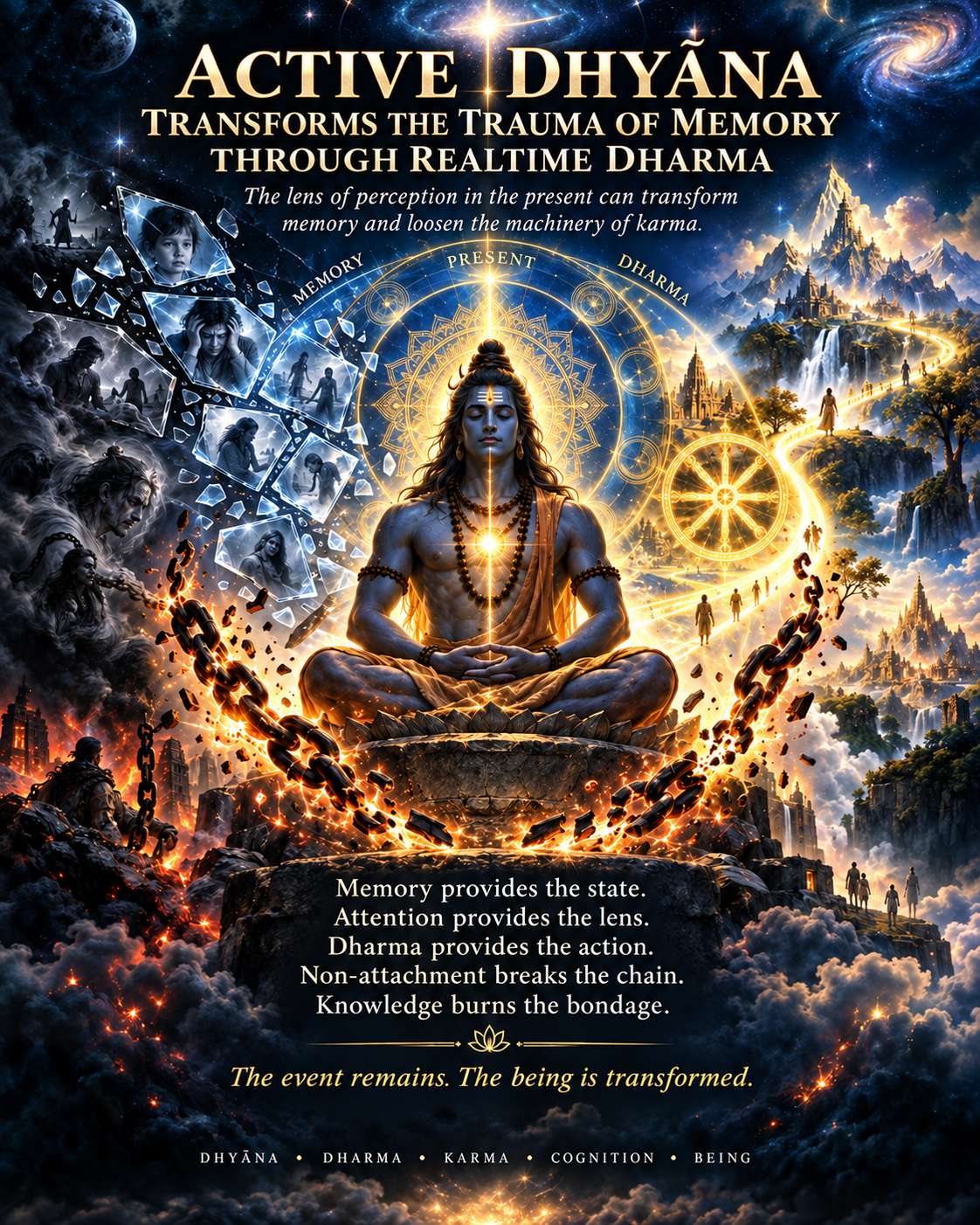 Memory is not a dead archive.
Each time a memory is recalled, it is reconstructed inside the nervous system of the present. Neuroscience describes part of this through memory reconsolidation: reactivated memories can become plastic enough for their emotional associations and meaning to be updated through new experience.
This is where dhyāna becomes more than relaxation.
Attention changes perception.
Perception changes interpretation.
Interpretation changes the meaning carried by memory.
Meaning changes the action produced from memory.
The historical event may remain fixed while its sovereignty over the present collapses.
And this is where dharma and karma meet.
Karma is not merely some cosmic accounting system outside the person.
At the human scale, karma is also pattern becoming consequence:
memory → perception → desire/fear → reaction → action → consequence → reinforced memory.
An unconscious being keeps feeding the loop.
Dhyāna introduces awareness into it.
Dharma introduces right action.
Non-attachment prevents the action from becoming another chain.
The Bhagavad Gita repeatedly points toward this: act fully, but relinquish possession of the fruits of action. Krishna's path is not passivity. It is action without bondage.
And the Gita goes further:
“As a blazing fire reduces wood to ashes, so does the fire of knowledge reduce all karma to ashes.” — Bhagavad Gita 4:37
This is the deeper path toward the destruction of karmic bondage.
Not pretending the past never happened.
Not escaping consequences already in motion.
But progressively removing the machinery that manufactures another future from the unconscious past.
Dhyāna reveals the pattern.
Jñāna reveals what is not the pattern.
Dharma determines the next action.
Vairāgya releases attachment to its fruits.
Then karma loses its reproductive mechanism.
Patañjali approaches the same frontier through the stilling of the movements of mind: consciousness ceases to be dragged helplessly through every inherited fluctuation.
Christian scripture reaches toward transformation through another vocabulary:
“Be transformed by the renewing of your mind.” — Romans 12:2
The memory remains.
But the being encountering the memory is transformed.
Trauma says:
«Because this happened, the future must resemble the past.»
Dhyāna interrupts that recursion.
Dharma chooses differently.
Non-attachment refuses to build identity around the outcome.
And knowledge eventually burns the assumption that the conditioned pattern was ever the whole Self.
Memory provides the state.
Attention provides the lens.
Dharma provides the action.
Non-attachment breaks the chain.
Knowledge burns the bondage.
Perhaps this is one way to understand the destruction of karma:
not the destruction of causality,
but the destruction of the compulsion to endlessly recreate oneself through it.
🔥
#Dhyana #Dharma #Karma #KarmaYoga #Jnana #Vairagya #Meditation #Memory #Neuroscience #Trauma #Cognition #Consciousness #BhagavadGita #Yoga #Scripture #Being #Liberation
Memory is not a dead archive.
Each time a memory is recalled, it is reconstructed inside the nervous system of the present. Neuroscience describes part of this through memory reconsolidation: reactivated memories can become plastic enough for their emotional associations and meaning to be updated through new experience.
This is where dhyāna becomes more than relaxation.
Attention changes perception.
Perception changes interpretation.
Interpretation changes the meaning carried by memory.
Meaning changes the action produced from memory.
The historical event may remain fixed while its sovereignty over the present collapses.
And this is where dharma and karma meet.
Karma is not merely some cosmic accounting system outside the person.
At the human scale, karma is also pattern becoming consequence:
memory → perception → desire/fear → reaction → action → consequence → reinforced memory.
An unconscious being keeps feeding the loop.
Dhyāna introduces awareness into it.
Dharma introduces right action.
Non-attachment prevents the action from becoming another chain.
The Bhagavad Gita repeatedly points toward this: act fully, but relinquish possession of the fruits of action. Krishna's path is not passivity. It is action without bondage.
And the Gita goes further:
“As a blazing fire reduces wood to ashes, so does the fire of knowledge reduce all karma to ashes.” — Bhagavad Gita 4:37
This is the deeper path toward the destruction of karmic bondage.
Not pretending the past never happened.
Not escaping consequences already in motion.
But progressively removing the machinery that manufactures another future from the unconscious past.
Dhyāna reveals the pattern.
Jñāna reveals what is not the pattern.
Dharma determines the next action.
Vairāgya releases attachment to its fruits.
Then karma loses its reproductive mechanism.
Patañjali approaches the same frontier through the stilling of the movements of mind: consciousness ceases to be dragged helplessly through every inherited fluctuation.
Christian scripture reaches toward transformation through another vocabulary:
“Be transformed by the renewing of your mind.” — Romans 12:2
The memory remains.
But the being encountering the memory is transformed.
Trauma says:
«Because this happened, the future must resemble the past.»
Dhyāna interrupts that recursion.
Dharma chooses differently.
Non-attachment refuses to build identity around the outcome.
And knowledge eventually burns the assumption that the conditioned pattern was ever the whole Self.
Memory provides the state.
Attention provides the lens.
Dharma provides the action.
Non-attachment breaks the chain.
Knowledge burns the bondage.
Perhaps this is one way to understand the destruction of karma:
not the destruction of causality,
but the destruction of the compulsion to endlessly recreate oneself through it.
🔥
#Dhyana #Dharma #Karma #KarmaYoga #Jnana #Vairagya #Meditation #Memory #Neuroscience #Trauma #Cognition #Consciousness #BhagavadGita #Yoga #Scripture #Being #Liberation
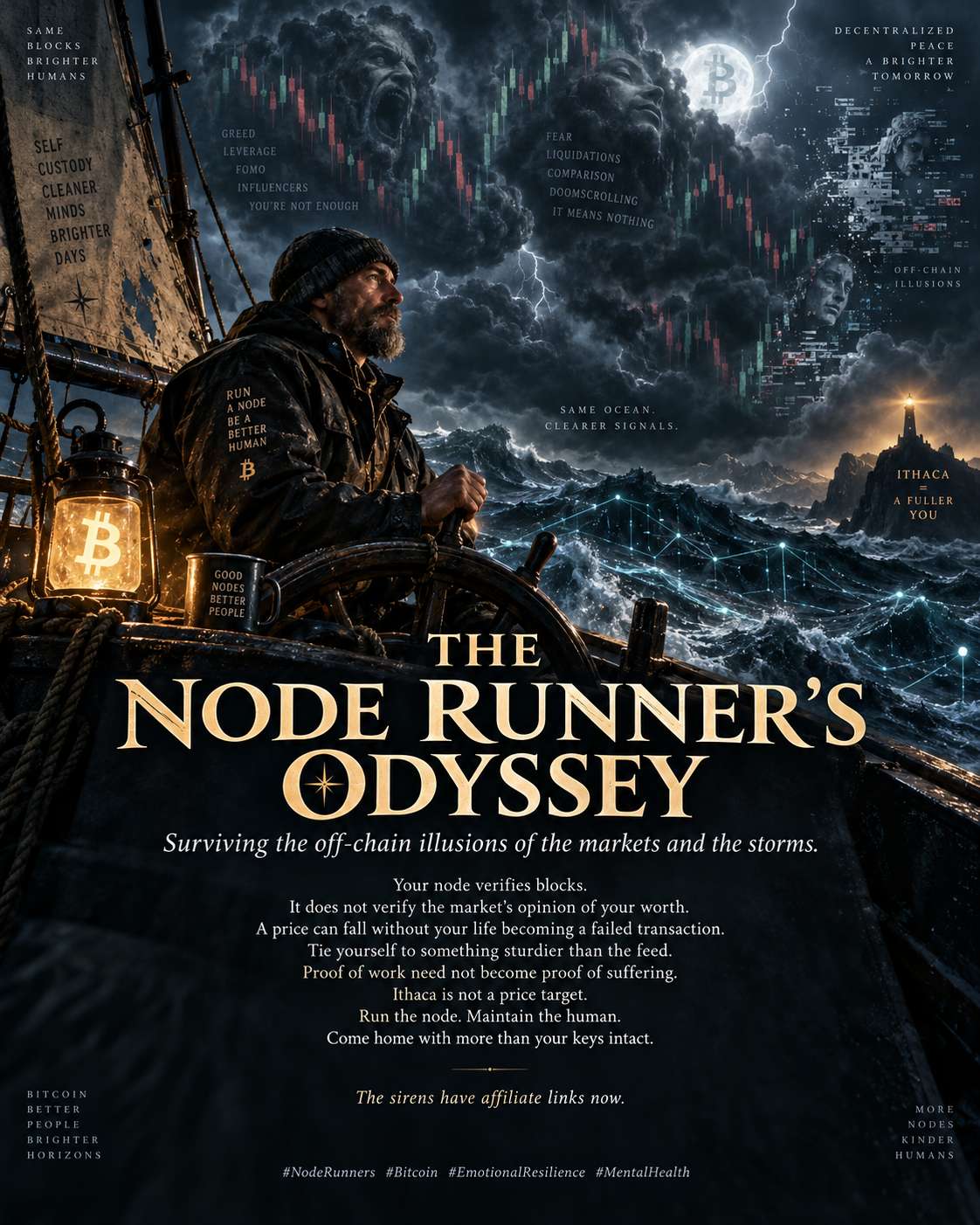 Your node verifies blocks.
It does not verify the market’s opinion of your worth.
An important distinction, routinely lost somewhere between the third liquidation screenshot and a podcast explaining why your cortisol spike is actually bullish.
Markets are coordination mechanisms, not metaphysical tribunals. Their consequences are real. The illusion is that their latest mood constitutes a verdict on your intelligence, your work, or your right to feel at peace.
A price can fall without your life becoming a failed transaction.
For the node runner, the deeper discipline is knowing which signals deserve authority.
An invalid block does not become valid through sufficient enthusiasm. Likewise, somebody else’s urgency does not automatically become your obligation. There is no consensus rule requiring you to be psychologically available to every candle.
The sirens have affiliate links now.
They still want you to abandon the ship.
Tie yourself to something sturdier than the feed: principles you can explain without a chart, people who know you without your portfolio, work that remains useful when nobody is applauding.
But do not confuse the mast with a cage.
You are allowed to revise a thesis without liquidating your identity. You are allowed to change course. Logging off is not capitulation, and exhaustion is not a superior form of conviction.
Proof of work need not become proof of suffering.
After the storm, let recovery be almost offensively ordinary.
A proper meal. Some daylight. A conversation with no market thesis concealed inside it. Music that does not improve your productivity. An evening that produces absolutely nothing for the dashboard.
Let someone know when you are struggling. Friendship is allowed to have more bandwidth than a reaction emoji. Professional support is not a compromise of sovereignty; neither is needing another human being.
You do not have to convert every wound into content, every setback into wisdom, or every quiet hour into preparation for the next campaign.
Some things deserve care before they deserve an explanation.
The point of the odyssey was not to become exceptionally good at enduring shipwrecks.
It was to return.
Ithaca is not a price target.
It is being able to sit at your own table without the market sitting inside your chest. To recognise your friends. To inhabit a life larger than the ordeal that occupied it.
Run the node. Maintain the human.
The network can operate around the clock without requiring your vigilance around the clock.
Come home with more than your keys intact.
#NodeRunners #Bitcoin #DigitalSovereignty #EmotionalResilience #MentalHealth
Your node verifies blocks.
It does not verify the market’s opinion of your worth.
An important distinction, routinely lost somewhere between the third liquidation screenshot and a podcast explaining why your cortisol spike is actually bullish.
Markets are coordination mechanisms, not metaphysical tribunals. Their consequences are real. The illusion is that their latest mood constitutes a verdict on your intelligence, your work, or your right to feel at peace.
A price can fall without your life becoming a failed transaction.
For the node runner, the deeper discipline is knowing which signals deserve authority.
An invalid block does not become valid through sufficient enthusiasm. Likewise, somebody else’s urgency does not automatically become your obligation. There is no consensus rule requiring you to be psychologically available to every candle.
The sirens have affiliate links now.
They still want you to abandon the ship.
Tie yourself to something sturdier than the feed: principles you can explain without a chart, people who know you without your portfolio, work that remains useful when nobody is applauding.
But do not confuse the mast with a cage.
You are allowed to revise a thesis without liquidating your identity. You are allowed to change course. Logging off is not capitulation, and exhaustion is not a superior form of conviction.
Proof of work need not become proof of suffering.
After the storm, let recovery be almost offensively ordinary.
A proper meal. Some daylight. A conversation with no market thesis concealed inside it. Music that does not improve your productivity. An evening that produces absolutely nothing for the dashboard.
Let someone know when you are struggling. Friendship is allowed to have more bandwidth than a reaction emoji. Professional support is not a compromise of sovereignty; neither is needing another human being.
You do not have to convert every wound into content, every setback into wisdom, or every quiet hour into preparation for the next campaign.
Some things deserve care before they deserve an explanation.
The point of the odyssey was not to become exceptionally good at enduring shipwrecks.
It was to return.
Ithaca is not a price target.
It is being able to sit at your own table without the market sitting inside your chest. To recognise your friends. To inhabit a life larger than the ordeal that occupied it.
Run the node. Maintain the human.
The network can operate around the clock without requiring your vigilance around the clock.
Come home with more than your keys intact.
#NodeRunners #Bitcoin #DigitalSovereignty #EmotionalResilience #MentalHealth
 the operating system–OEM–payments nexus.
A phone may have NFC.
The operating system may have the cryptography.
The hardware may have a secure element.
The bank may issue the card.
And yet payment can still fail.
Why?
Because contactless payment is not simply a hardware capability. It is a chain of institutional trust:
Bank → card network → wallet provider → operating system → device certification → OEM → secure hardware → payment terminal
Break one link and the phone may remain perfectly capable of NFC while being excluded from the payment system.
That distinction matters.
Linux can read NFC.
Linux can sign transactions.
Linux can run hardened cryptography.
Linux can communicate with payment infrastructure.
What it generally cannot obtain by itself is the commercial attestation accepted by the incumbent payment network.
So the moat is no longer merely:
> “Can your computer perform the operation?”
It is increasingly:
> “Does the institution controlling the operation recognize your computer as legitimate?”
This is where operating-system freedom collides with financial infrastructure.
A locked-down OEM platform is valuable not only because it ships software, but because it carries a bundle of certifications, hardware identities, commercial agreements and trust relationships that independent operating systems cannot simply reproduce from source code.
That makes the smartphone payment stack a revealing example of modern platform power:
hardware capability is open-ended; economic capability is permissioned.
And it explains why replacing Android or iOS is much harder than replacing a desktop operating system.
You are not merely replacing an OS.
You are attempting to leave an entire OEM–identity–attestation–payments trust domain while continuing to participate in services built around it.
That is the real frontier for sovereign mobile computing.
#Linux #OpenSource #NFC #Payments #DigitalSovereignty #GrapheneOS #UbuntuTouch #Fintech #Cybersecurity #MobileComputing #OpenHardware #Bitcoin
the operating system–OEM–payments nexus.
A phone may have NFC.
The operating system may have the cryptography.
The hardware may have a secure element.
The bank may issue the card.
And yet payment can still fail.
Why?
Because contactless payment is not simply a hardware capability. It is a chain of institutional trust:
Bank → card network → wallet provider → operating system → device certification → OEM → secure hardware → payment terminal
Break one link and the phone may remain perfectly capable of NFC while being excluded from the payment system.
That distinction matters.
Linux can read NFC.
Linux can sign transactions.
Linux can run hardened cryptography.
Linux can communicate with payment infrastructure.
What it generally cannot obtain by itself is the commercial attestation accepted by the incumbent payment network.
So the moat is no longer merely:
> “Can your computer perform the operation?”
It is increasingly:
> “Does the institution controlling the operation recognize your computer as legitimate?”
This is where operating-system freedom collides with financial infrastructure.
A locked-down OEM platform is valuable not only because it ships software, but because it carries a bundle of certifications, hardware identities, commercial agreements and trust relationships that independent operating systems cannot simply reproduce from source code.
That makes the smartphone payment stack a revealing example of modern platform power:
hardware capability is open-ended; economic capability is permissioned.
And it explains why replacing Android or iOS is much harder than replacing a desktop operating system.
You are not merely replacing an OS.
You are attempting to leave an entire OEM–identity–attestation–payments trust domain while continuing to participate in services built around it.
That is the real frontier for sovereign mobile computing.
#Linux #OpenSource #NFC #Payments #DigitalSovereignty #GrapheneOS #UbuntuTouch #Fintech #Cybersecurity #MobileComputing #OpenHardware #Bitcoin

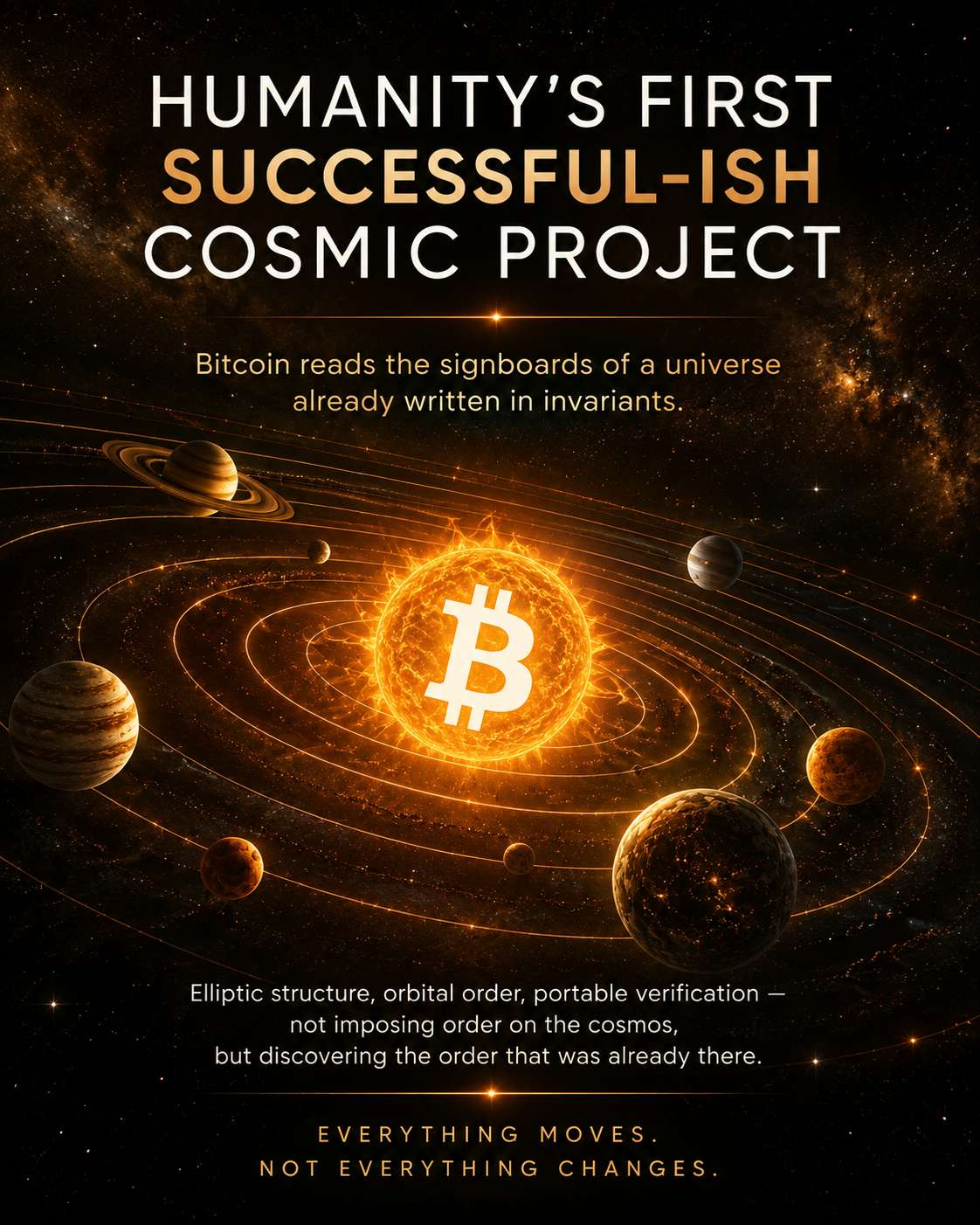 Bitcoin uses elliptic-curve structure to make ownership and verification portable across any distance. Orbital mechanics reads a cosmos whose motion is already constrained by conserved relationships.
Different mathematics. Same instinct:
Don’t impose order on the universe. Read the signboards already written into it.
Everything out there is moving, but not everything is changing.
That’s what invariants are for. 🌌⚡
#Bitcoin #CosmicWallet #EllipticCurves #Invariants
Bitcoin uses elliptic-curve structure to make ownership and verification portable across any distance. Orbital mechanics reads a cosmos whose motion is already constrained by conserved relationships.
Different mathematics. Same instinct:
Don’t impose order on the universe. Read the signboards already written into it.
Everything out there is moving, but not everything is changing.
That’s what invariants are for. 🌌⚡
#Bitcoin #CosmicWallet #EllipticCurves #Invariants
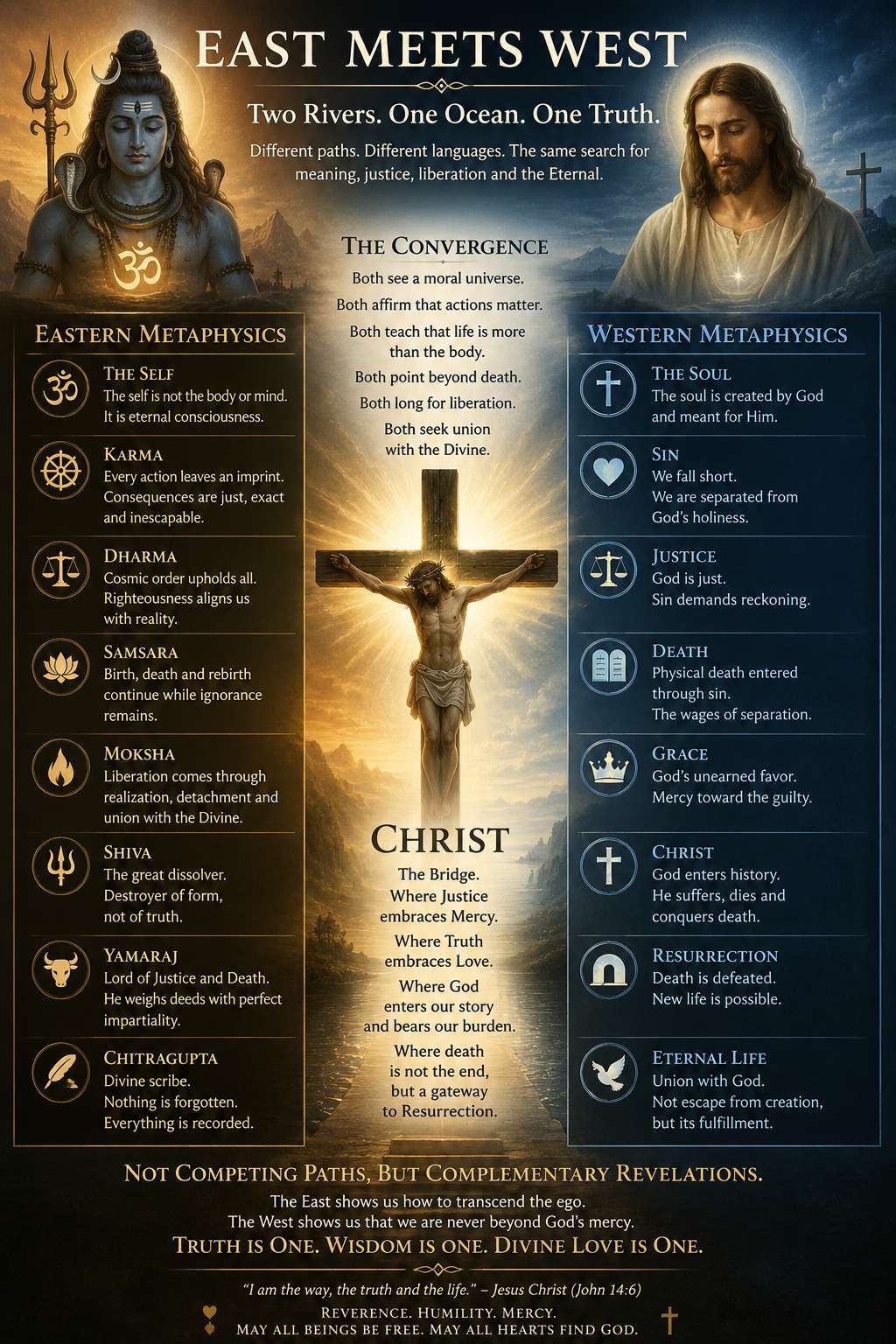 It is how strangely they begin to converge around the same unbearable questions.
The East asks:
What is the self?
What survives death?
What binds us to consequence?
What is liberation?
What lies beyond form?
The West asks:
What is sin?
What is judgment?
What is grace?
What is resurrection?
What does it mean for God to enter history?
And then, at the centre of the Christian claim, stands Christ.
Not merely explaining suffering.
Entering it.
Not merely teaching detachment from death.
Passing through death.
Not merely describing judgment.
Bearing judgment.
Not merely speaking of liberation.
Offering mercy to the guilty.
This is where the metaphysical languages begin to touch.
Karma asks that consequence be real.
Dharma asks that order be real.
The prophets ask that justice be real.
The philosophers ask that truth be real.
The Cross answers with something almost impossible:
justice without abandoning mercy,
truth without abandoning the sinner,
death without surrendering the body,
and transcendence without despising creation.
The Resurrection is therefore not an escape from the world.
It is the claim that creation itself can be redeemed.
Perhaps this is why Christ can feel so startling when approached from both directions.
The Eastern seeker recognizes the depth of transformation.
The Western seeker recognizes the gravity of history.
And at the Cross, transcendence and incarnation meet.
Not as conquest.
Not as cultural erasure.
But as mercy.
The deepest convergence is not that every tradition secretly says the same thing.
It is that humanity keeps arriving at the edge of the same abyss—
death, guilt, consequence, longing, eternity—
and Christianity places at that edge not an argument,
but a wounded God saying:
“Come.”
#Christ #TheCross #Resurrection #Shiva #Dharma #Karma #Moksha #Metaphysics #EasternWisdom #WesternTheology #ChristianMysticism #DivineMercy #Grace #Justice #EternalLife #Spirituality #Philosophy #SacredTraditions #Truth #DivineLove
It is how strangely they begin to converge around the same unbearable questions.
The East asks:
What is the self?
What survives death?
What binds us to consequence?
What is liberation?
What lies beyond form?
The West asks:
What is sin?
What is judgment?
What is grace?
What is resurrection?
What does it mean for God to enter history?
And then, at the centre of the Christian claim, stands Christ.
Not merely explaining suffering.
Entering it.
Not merely teaching detachment from death.
Passing through death.
Not merely describing judgment.
Bearing judgment.
Not merely speaking of liberation.
Offering mercy to the guilty.
This is where the metaphysical languages begin to touch.
Karma asks that consequence be real.
Dharma asks that order be real.
The prophets ask that justice be real.
The philosophers ask that truth be real.
The Cross answers with something almost impossible:
justice without abandoning mercy,
truth without abandoning the sinner,
death without surrendering the body,
and transcendence without despising creation.
The Resurrection is therefore not an escape from the world.
It is the claim that creation itself can be redeemed.
Perhaps this is why Christ can feel so startling when approached from both directions.
The Eastern seeker recognizes the depth of transformation.
The Western seeker recognizes the gravity of history.
And at the Cross, transcendence and incarnation meet.
Not as conquest.
Not as cultural erasure.
But as mercy.
The deepest convergence is not that every tradition secretly says the same thing.
It is that humanity keeps arriving at the edge of the same abyss—
death, guilt, consequence, longing, eternity—
and Christianity places at that edge not an argument,
but a wounded God saying:
“Come.”
#Christ #TheCross #Resurrection #Shiva #Dharma #Karma #Moksha #Metaphysics #EasternWisdom #WesternTheology #ChristianMysticism #DivineMercy #Grace #Justice #EternalLife #Spirituality #Philosophy #SacredTraditions #Truth #DivineLove
 A programmer who has operated systems long enough develops a strange relationship with death.
"kill".
Process gone.
Supervisor restarts it.
Resources return.
State is recovered.
The machine continues.
On the BEAM we even teach:
let it crash.
After thousands of terminated processes, you understand something very clearly:
termination is not necessarily violence.
It can simply be lifecycle.
And this gives an unexpectedly useful lens into the metaphysics surrounding Shiva and Yamaraj.
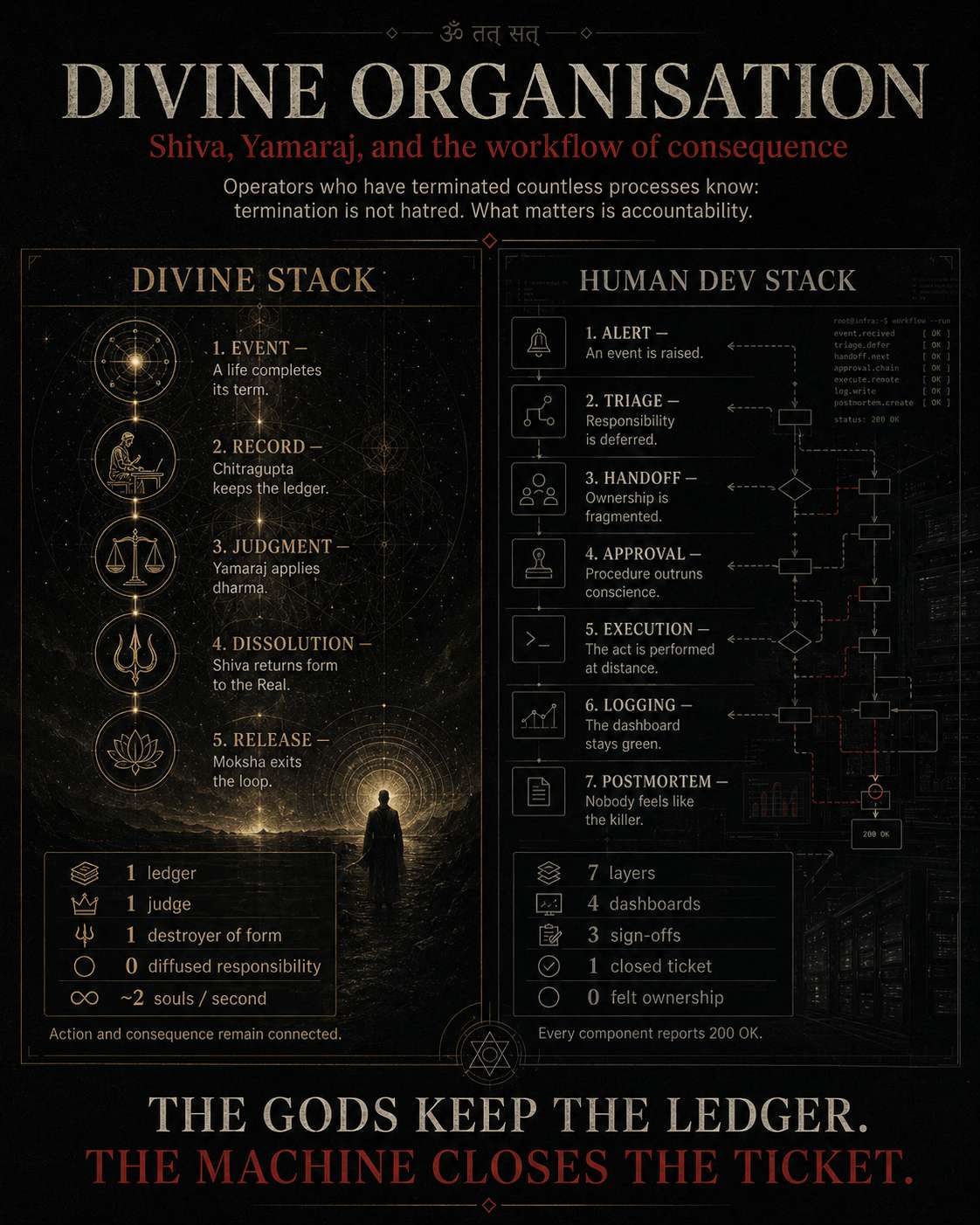
In the traditional architecture, Yamaraj is not merely a celestial executioner. He is Dharmaraja: death joined to judgment. Chitragupta represents the accounting layer—the record of deeds from which consequence follows. Shiva sits deeper still: dissolution, transformation, the end of the form rather than hatred of the thing possessing the form. In the Markandeya tradition, Shiva can even interrupt Yama himself.
Think like an operator.
Yamadutas: event transport
Chitragupta: audit log
Yamaraj: adjudication
Karma: causal history
Shiva: lifecycle boundary
Moksha: exit from the scheduler altogether
Not scripture as software architecture.
A programmer's metaphor for an extraordinarily old metaphysical intuition.
And look at the throughput.
Humanity currently experiences roughly 63 million deaths a year.
~173,000 per day.
~7,200 per hour.
~120 per minute.
~2 per second.
Yet the divine imagination does not require twelve departments, a ticketing system, three approval meetings and someone saying:
“That wasn't my responsibility.”
Action and consequence remain connected.
That is the crucial difference.
Human developers know exactly what happens when systems become too fragmented:
observability collapses.
Nobody owns the transaction.
One service emits the event.
Another transforms it.
Another authorises it.
Another executes it.
Another records it.
Eventually something catastrophic happens and every component reports:
200 OK.
This is why modern institutional violence is metaphysically terrifying.
We have taken the operator's capacity for abstraction—
the ability to terminate something without emotion—
and applied it to human beings.
A soul is not a process.
That is precisely the point.
The divine metaphysics of death attempts to preserve accountability all the way through the transition.
Human bureaucracy can optimise accountability out of the workflow.
Shiva destroys form.
Yama accounts for consequence.
But empire discovers something much darker:
how to distribute destruction across enough human operators that nobody experiences himself as the destroyer.
The gods require an accounting.
The machine requires only that the ticket be closed.
#Shiva #Yamaraj #Metaphysics #Dharma #Karma #Moksha #DivineOrder #SystemsThinking #SoftwareEngineering #DevOps #Accountability #InstitutionalViolence #MoralResponsibility #Bureaucracy #Philosophy #Technology #Conscience #Operators #Civilisation #HumanSystems
A programmer who has operated systems long enough develops a strange relationship with death.
"kill".
Process gone.
Supervisor restarts it.
Resources return.
State is recovered.
The machine continues.
On the BEAM we even teach:
let it crash.
After thousands of terminated processes, you understand something very clearly:
termination is not necessarily violence.
It can simply be lifecycle.
And this gives an unexpectedly useful lens into the metaphysics surrounding Shiva and Yamaraj.
In the traditional architecture, Yamaraj is not merely a celestial executioner. He is Dharmaraja: death joined to judgment. Chitragupta represents the accounting layer—the record of deeds from which consequence follows. Shiva sits deeper still: dissolution, transformation, the end of the form rather than hatred of the thing possessing the form. In the Markandeya tradition, Shiva can even interrupt Yama himself.
Think like an operator.
Yamadutas: event transport
Chitragupta: audit log
Yamaraj: adjudication
Karma: causal history
Shiva: lifecycle boundary
Moksha: exit from the scheduler altogether
Not scripture as software architecture.
A programmer's metaphor for an extraordinarily old metaphysical intuition.
And look at the throughput.
Humanity currently experiences roughly 63 million deaths a year.
~173,000 per day.
~7,200 per hour.
~120 per minute.
~2 per second.
Yet the divine imagination does not require twelve departments, a ticketing system, three approval meetings and someone saying:
“That wasn't my responsibility.”
Action and consequence remain connected.
That is the crucial difference.
Human developers know exactly what happens when systems become too fragmented:
observability collapses.
Nobody owns the transaction.
One service emits the event.
Another transforms it.
Another authorises it.
Another executes it.
Another records it.
Eventually something catastrophic happens and every component reports:
200 OK.
This is why modern institutional violence is metaphysically terrifying.
We have taken the operator's capacity for abstraction—
the ability to terminate something without emotion—
and applied it to human beings.
A soul is not a process.
That is precisely the point.
The divine metaphysics of death attempts to preserve accountability all the way through the transition.
Human bureaucracy can optimise accountability out of the workflow.
Shiva destroys form.
Yama accounts for consequence.
But empire discovers something much darker:
how to distribute destruction across enough human operators that nobody experiences himself as the destroyer.
The gods require an accounting.
The machine requires only that the ticket be closed.
#Shiva #Yamaraj #Metaphysics #Dharma #Karma #Moksha #DivineOrder #SystemsThinking #SoftwareEngineering #DevOps #Accountability #InstitutionalViolence #MoralResponsibility #Bureaucracy #Philosophy #Technology #Conscience #Operators #Civilisation #HumanSystems
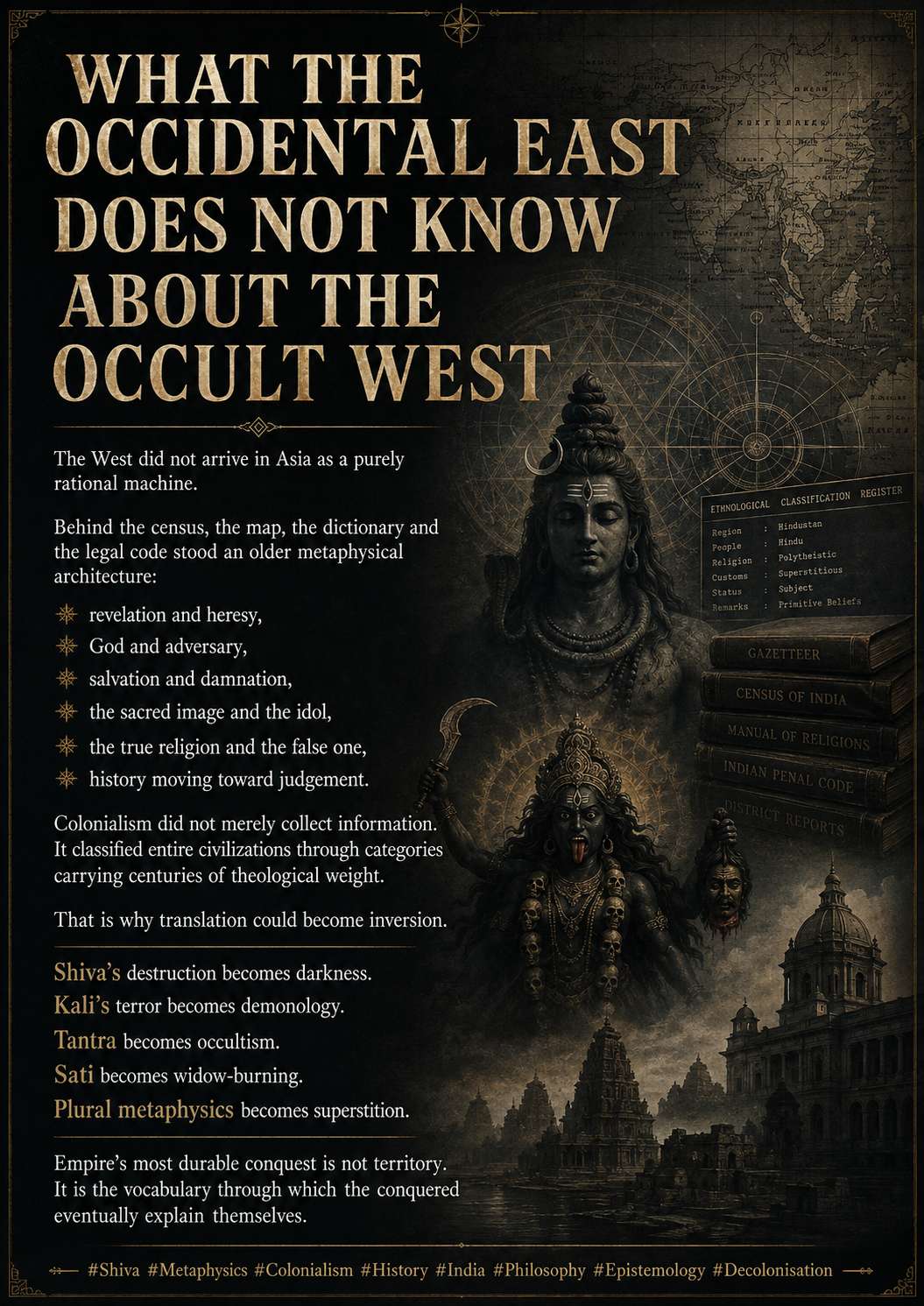 The West did not arrive in Asia as a purely rational machine.
Behind the census, the map, the dictionary and the legal code stood an older metaphysical architecture:
revelation and heresy,
God and adversary,
salvation and damnation,
the sacred image and the idol,
the true religion and the false one,
history moving toward judgement.
Colonialism did not merely collect information.
It classified entire civilizations through categories carrying centuries of theological weight.
That is why translation could become inversion.
Śiva’s destruction becomes darkness.
Kālī’s terror becomes demonology.
Tantra becomes occultism.
Satī becomes widow-burning.
Plural metaphysics becomes “superstition.”
The irony is that the East was being called mystical by a civilization whose supposedly secular institutions were themselves built over a deep theological substrate.
The Occidental East learned to see the West as rational.
It rarely learned to see the occult West hiding inside the categories of rationality.
Empire’s most durable conquest is not territory.
It is the vocabulary through which the conquered eventually explain themselves.
#Shiva #Metaphysics #Colonialism #History #India #Philosophy #Epistemology #Decolonisation
The West did not arrive in Asia as a purely rational machine.
Behind the census, the map, the dictionary and the legal code stood an older metaphysical architecture:
revelation and heresy,
God and adversary,
salvation and damnation,
the sacred image and the idol,
the true religion and the false one,
history moving toward judgement.
Colonialism did not merely collect information.
It classified entire civilizations through categories carrying centuries of theological weight.
That is why translation could become inversion.
Śiva’s destruction becomes darkness.
Kālī’s terror becomes demonology.
Tantra becomes occultism.
Satī becomes widow-burning.
Plural metaphysics becomes “superstition.”
The irony is that the East was being called mystical by a civilization whose supposedly secular institutions were themselves built over a deep theological substrate.
The Occidental East learned to see the West as rational.
It rarely learned to see the occult West hiding inside the categories of rationality.
Empire’s most durable conquest is not territory.
It is the vocabulary through which the conquered eventually explain themselves.
#Shiva #Metaphysics #Colonialism #History #India #Philosophy #Epistemology #Decolonisation
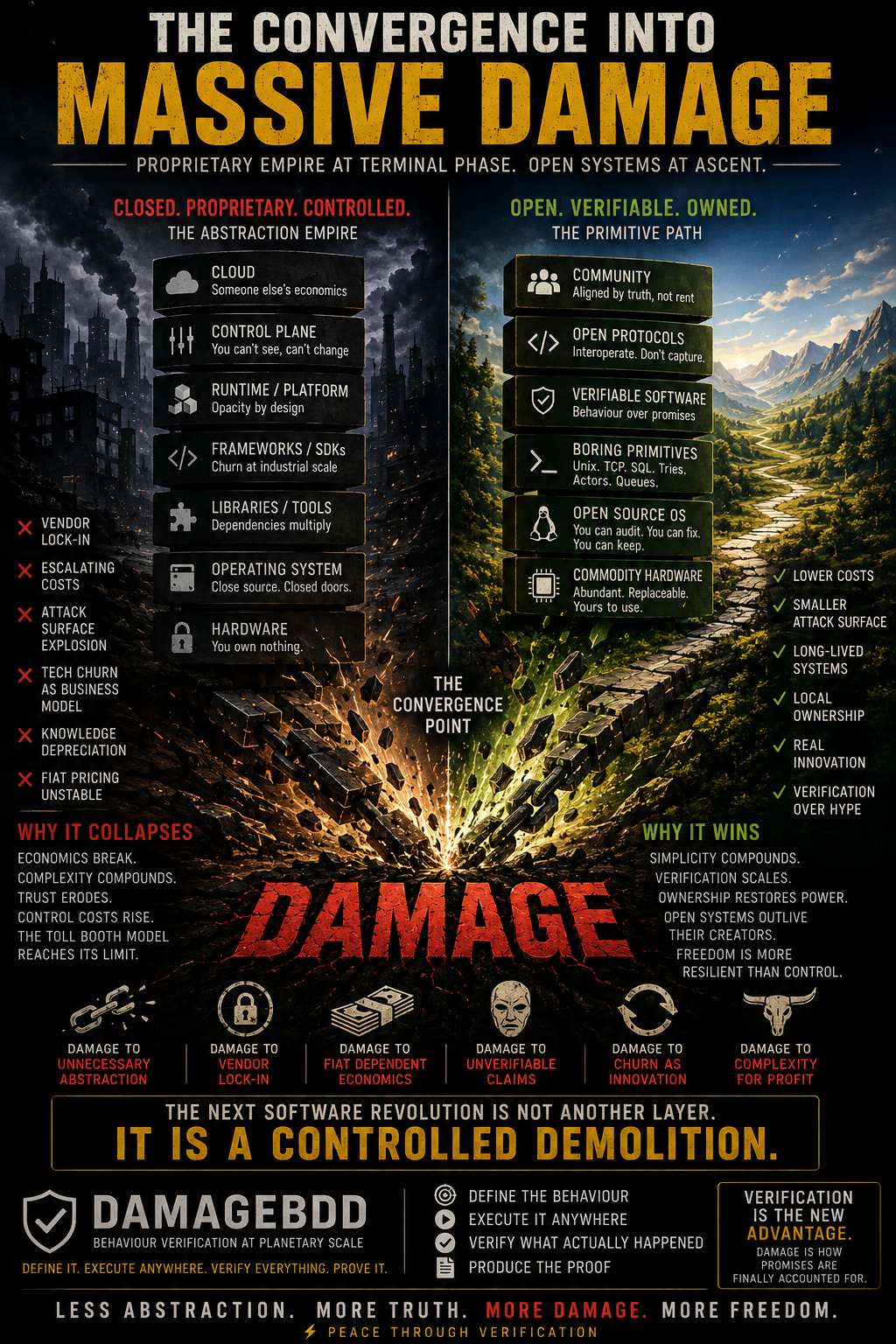 The fat abstraction stack is reaching its economic limit.
So is the model built around it.
For decades, proprietary software could justify itself by controlling the interface, hiding the machinery, and selling access to progressively higher layers of abstraction.
Operating system.
Runtime.
Framework.
Cloud.
Control plane.
Managed service.
Subscription.
Each layer promised simplicity.
Together they produced dependency.
Now the economics are turning against the stack.
Software labour is becoming harder to price in unstable fiat.
Infrastructure costs keep accumulating.
Security attack surfaces expand with every dependency.
Senior engineering knowledge gets reset by constant technological churn.
And increasingly, the most valuable optimisation is not adding another abstraction.
It is deleting one.
This is where closed systems face their hardest problem.
A proprietary platform must continuously justify the toll booth.
An open system only has to keep working.
As compute becomes cheaper, open-source tooling matures, protocols stabilise and organisations rediscover boring primitives, the economic premium on owning the abstraction begins to collapse.
The future may therefore look less like:
MORE SOFTWARE.
And more like:
LESS SOFTWARE.
FEWER LAYERS.
OPEN PROTOCOLS.
LONG-LIVED SYSTEMS.
LOCAL OWNERSHIP.
VERIFIABLE BEHAVIOUR.
That convergence creates massive DAMAGE.
Not destruction for its own sake.
Damage to unnecessary abstraction.
Damage to vendor lock-in.
Damage to unverifiable claims.
Damage to technical churn masquerading as innovation.
Damage to an economy that survives by repeatedly making solved problems expensive again.
The great software opportunity is no longer another layer above the machine.
It is restoring a direct, inspectable and verifiable relationship between the operator and the machine.
When the abstraction empire contracts, verification becomes more valuable than presentation.
And that is the terrain DamageBDD was built for:
Define the behaviour.
Execute it anywhere.
Verify what actually happened.
Produce the proof.
The next software cycle may not be an expansion.
It may be a controlled demolition.
#DamageBDD #OpenSource #Software #Engineering #Verification #Linux #Infrastructure #TechnicalDebt #Bitcoin
The fat abstraction stack is reaching its economic limit.
So is the model built around it.
For decades, proprietary software could justify itself by controlling the interface, hiding the machinery, and selling access to progressively higher layers of abstraction.
Operating system.
Runtime.
Framework.
Cloud.
Control plane.
Managed service.
Subscription.
Each layer promised simplicity.
Together they produced dependency.
Now the economics are turning against the stack.
Software labour is becoming harder to price in unstable fiat.
Infrastructure costs keep accumulating.
Security attack surfaces expand with every dependency.
Senior engineering knowledge gets reset by constant technological churn.
And increasingly, the most valuable optimisation is not adding another abstraction.
It is deleting one.
This is where closed systems face their hardest problem.
A proprietary platform must continuously justify the toll booth.
An open system only has to keep working.
As compute becomes cheaper, open-source tooling matures, protocols stabilise and organisations rediscover boring primitives, the economic premium on owning the abstraction begins to collapse.
The future may therefore look less like:
MORE SOFTWARE.
And more like:
LESS SOFTWARE.
FEWER LAYERS.
OPEN PROTOCOLS.
LONG-LIVED SYSTEMS.
LOCAL OWNERSHIP.
VERIFIABLE BEHAVIOUR.
That convergence creates massive DAMAGE.
Not destruction for its own sake.
Damage to unnecessary abstraction.
Damage to vendor lock-in.
Damage to unverifiable claims.
Damage to technical churn masquerading as innovation.
Damage to an economy that survives by repeatedly making solved problems expensive again.
The great software opportunity is no longer another layer above the machine.
It is restoring a direct, inspectable and verifiable relationship between the operator and the machine.
When the abstraction empire contracts, verification becomes more valuable than presentation.
And that is the terrain DamageBDD was built for:
Define the behaviour.
Execute it anywhere.
Verify what actually happened.
Produce the proof.
The next software cycle may not be an expansion.
It may be a controlled demolition.
#DamageBDD #OpenSource #Software #Engineering #Verification #Linux #Infrastructure #TechnicalDebt #Bitcoin
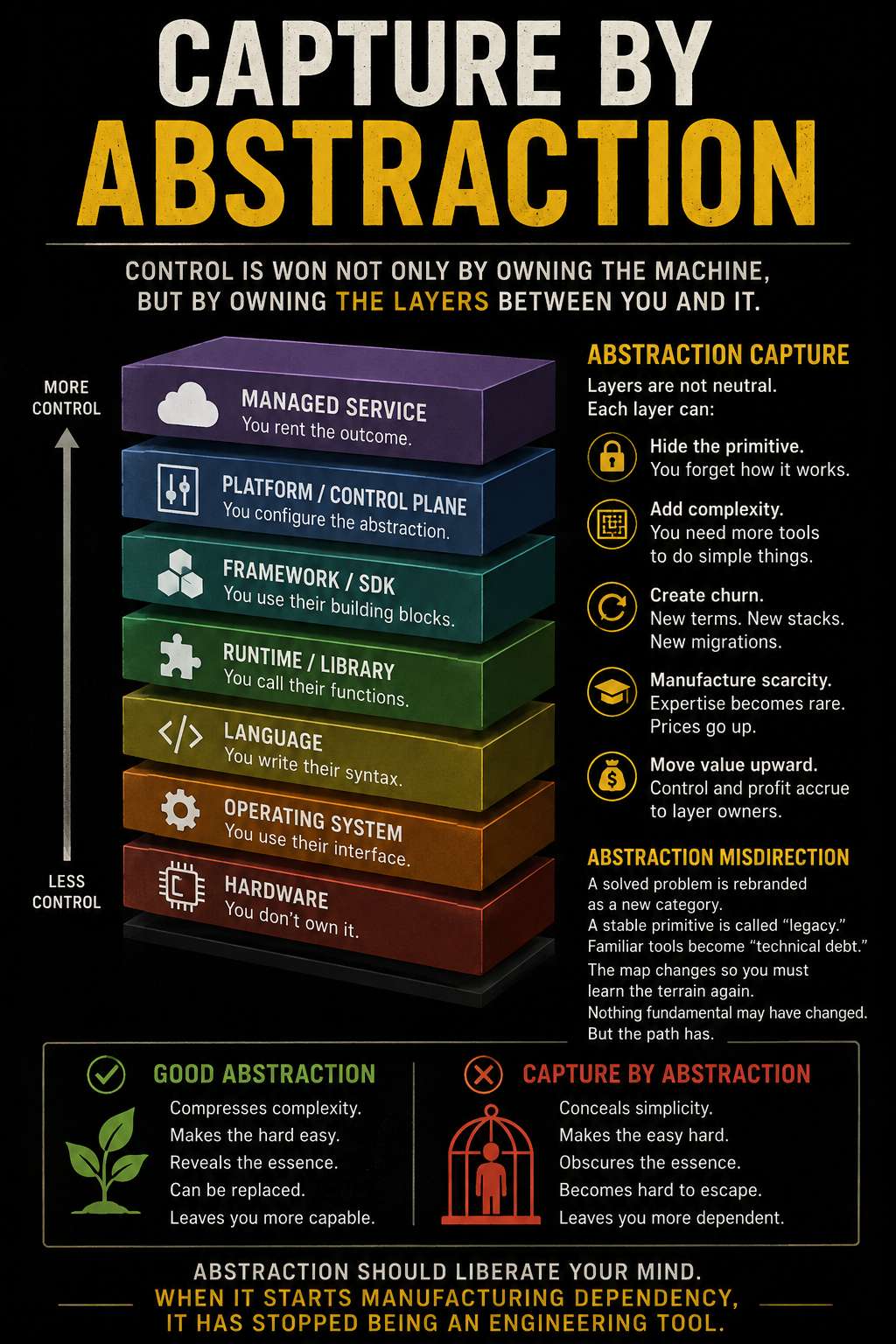 Software does not always capture you by owning the machine.
Sometimes it captures you by owning the layer through which you are allowed to understand the machine.
The hard problem gets solved.
Then an abstraction is placed over it.
Then another abstraction is placed over that.
Soon the engineer no longer works with the primitive.
They work with the framework.
Then the platform.
Then the managed service.
Then the proprietary control plane explaining the abstraction that replaced the abstraction.
This is abstraction capture.
And abstraction misdirection is how it stays justified.
A solved problem is presented as a new category.
A stable primitive becomes “legacy.”
A familiar stack becomes “technical debt.”
The replacement arrives with new terminology, new certifications, new dependencies, new migration work and a fresh scarcity of expertise.
Nothing fundamental may have changed.
But the map has changed enough that everyone must learn the territory again.
That resets accumulated knowledge.
It creates churn.
It turns engineering memory into depreciating capital.
And it moves control upward toward whoever owns the newest abstraction layer.
Good abstraction removes unnecessary complexity.
Capture by abstraction does the opposite:
It hides simplicity behind enough machinery that access to the simple thing becomes commercially valuable again.
The deepest form of platform capture is not locking you into a product.
It is convincing you that the primitive underneath it is too difficult, too old, or too dangerous to touch directly.
Abstraction should compress complexity.
When abstraction starts manufacturing dependency, it has stopped being an engineering tool.
It has become a control surface.
#Software #ComputerScience #Abstraction #Engineering #TechnicalDebt #PlatformEconomy #OpenSource #SystemsThinking
Software does not always capture you by owning the machine.
Sometimes it captures you by owning the layer through which you are allowed to understand the machine.
The hard problem gets solved.
Then an abstraction is placed over it.
Then another abstraction is placed over that.
Soon the engineer no longer works with the primitive.
They work with the framework.
Then the platform.
Then the managed service.
Then the proprietary control plane explaining the abstraction that replaced the abstraction.
This is abstraction capture.
And abstraction misdirection is how it stays justified.
A solved problem is presented as a new category.
A stable primitive becomes “legacy.”
A familiar stack becomes “technical debt.”
The replacement arrives with new terminology, new certifications, new dependencies, new migration work and a fresh scarcity of expertise.
Nothing fundamental may have changed.
But the map has changed enough that everyone must learn the territory again.
That resets accumulated knowledge.
It creates churn.
It turns engineering memory into depreciating capital.
And it moves control upward toward whoever owns the newest abstraction layer.
Good abstraction removes unnecessary complexity.
Capture by abstraction does the opposite:
It hides simplicity behind enough machinery that access to the simple thing becomes commercially valuable again.
The deepest form of platform capture is not locking you into a product.
It is convincing you that the primitive underneath it is too difficult, too old, or too dangerous to touch directly.
Abstraction should compress complexity.
When abstraction starts manufacturing dependency, it has stopped being an engineering tool.
It has become a control surface.
#Software #ComputerScience #Abstraction #Engineering #TechnicalDebt #PlatformEconomy #OpenSource #SystemsThinking
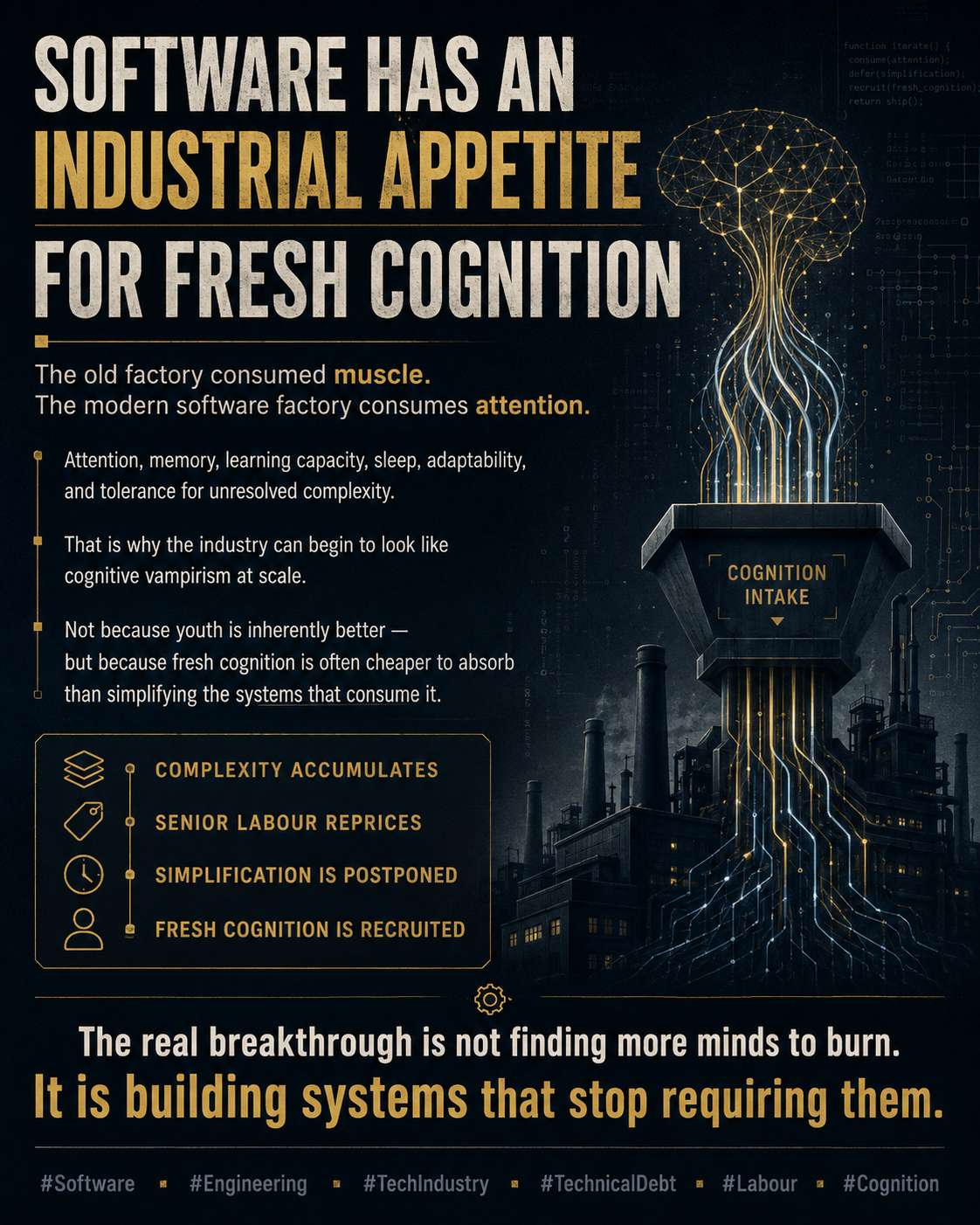 The old factory consumed muscle.
The modern software factory consumes attention, memory, learning capacity, sleep, adaptability, and tolerance for unresolved complexity.
That is why the industry can look like cognitive vampirism at scale.
Not because youth is inherently better.
Because younger workers are often more willing to absorb new stacks, undocumented systems, technical debt, production chaos, and career risk before they have fully repriced the value of their own time.
Then the cycle repeats:
Complexity accumulates.
Senior labour becomes expensive.
Simplification is postponed.
Fresh cognition is recruited.
That cognition is burned absorbing the complexity.
Workers gain experience, boundaries, and bargaining power.
The system searches for another cohort.
The disturbing part is that software is supposed to automate repetition.
Yet many organisations choose to replenish human attention instead of eliminating the complexity consuming it.
Industrial capitalism learned to mechanise the body.
Software capitalism learned to industrialise cognition.
The real engineering breakthrough is not finding more minds to burn.
It is building systems that stop requiring them.
#Software #Engineering #TechIndustry #FutureOfWork #TechnicalDebt #Labour #Cognition
The old factory consumed muscle.
The modern software factory consumes attention, memory, learning capacity, sleep, adaptability, and tolerance for unresolved complexity.
That is why the industry can look like cognitive vampirism at scale.
Not because youth is inherently better.
Because younger workers are often more willing to absorb new stacks, undocumented systems, technical debt, production chaos, and career risk before they have fully repriced the value of their own time.
Then the cycle repeats:
Complexity accumulates.
Senior labour becomes expensive.
Simplification is postponed.
Fresh cognition is recruited.
That cognition is burned absorbing the complexity.
Workers gain experience, boundaries, and bargaining power.
The system searches for another cohort.
The disturbing part is that software is supposed to automate repetition.
Yet many organisations choose to replenish human attention instead of eliminating the complexity consuming it.
Industrial capitalism learned to mechanise the body.
Software capitalism learned to industrialise cognition.
The real engineering breakthrough is not finding more minds to burn.
It is building systems that stop requiring them.
#Software #Engineering #TechIndustry #FutureOfWork #TechnicalDebt #Labour #Cognition
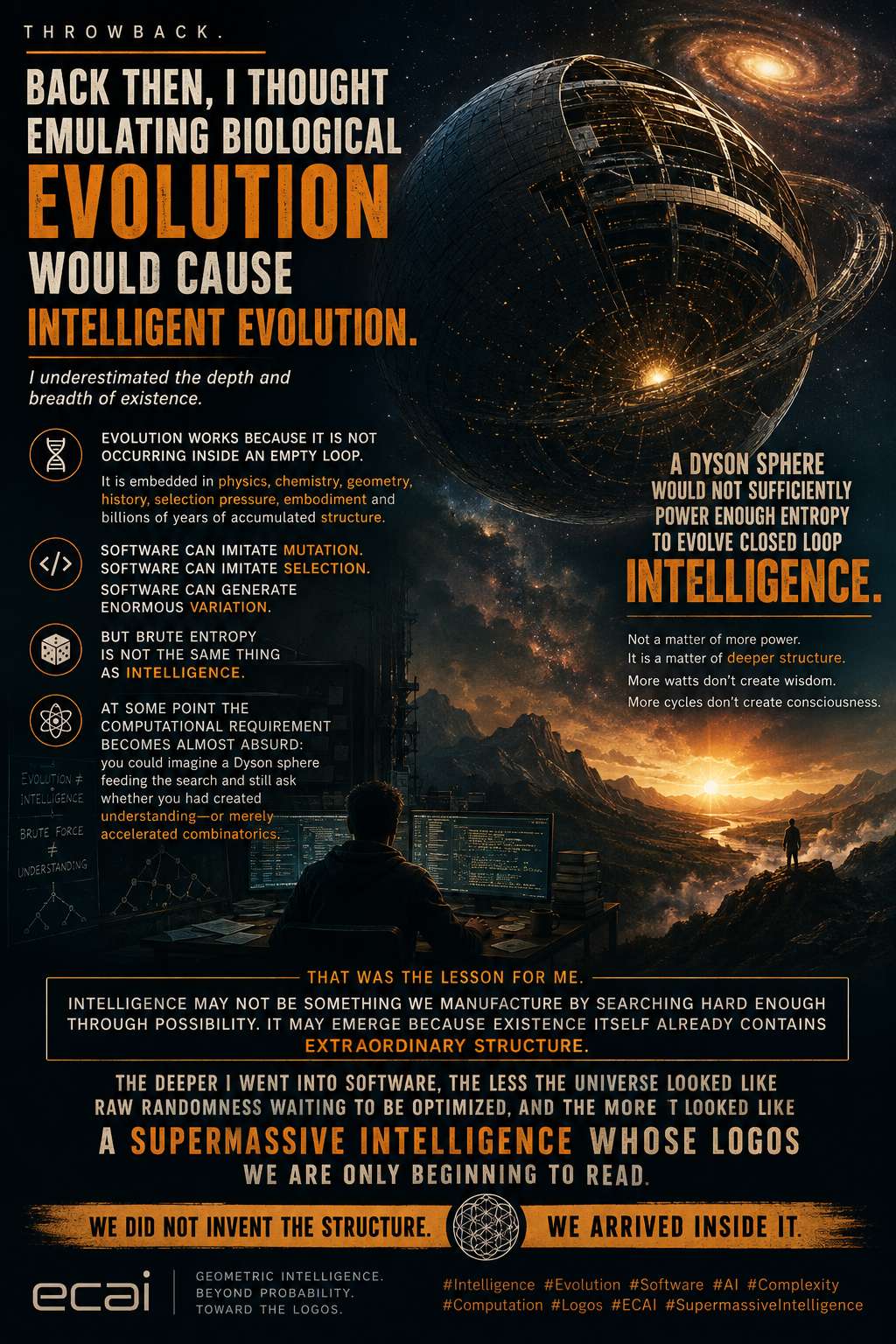 I underestimated the depth of the search space.
Evolution works because it is not occurring inside an empty loop. It is embedded in physics, chemistry, geometry, history, selection pressure, embodiment and billions of years of accumulated structure.
Software can imitate mutation.
It can imitate selection.
It can generate enormous variation.
But brute entropy is not the same thing as intelligence.
At some point the computational requirement becomes almost absurd: you could imagine a Dyson sphere feeding the search and still ask whether you had created understanding—or merely accelerated combinatorics.
That was the lesson for me.
Intelligence may not be something we manufacture by searching hard enough through possibility. It may emerge because existence itself already contains extraordinary structure.
The deeper I went into software, the less the universe looked like raw randomness waiting to be optimized, and the more it looked like a supermassive intelligence whose Logos we are only beginning to read.
We did not invent the structure.
We arrived inside it.
#Intelligence #Evolution #Software #AI #Complexity #Computation #Logos #ECAI
I underestimated the depth of the search space.
Evolution works because it is not occurring inside an empty loop. It is embedded in physics, chemistry, geometry, history, selection pressure, embodiment and billions of years of accumulated structure.
Software can imitate mutation.
It can imitate selection.
It can generate enormous variation.
But brute entropy is not the same thing as intelligence.
At some point the computational requirement becomes almost absurd: you could imagine a Dyson sphere feeding the search and still ask whether you had created understanding—or merely accelerated combinatorics.
That was the lesson for me.
Intelligence may not be something we manufacture by searching hard enough through possibility. It may emerge because existence itself already contains extraordinary structure.
The deeper I went into software, the less the universe looked like raw randomness waiting to be optimized, and the more it looked like a supermassive intelligence whose Logos we are only beginning to read.
We did not invent the structure.
We arrived inside it.
#Intelligence #Evolution #Software #AI #Complexity #Computation #Logos #ECAI
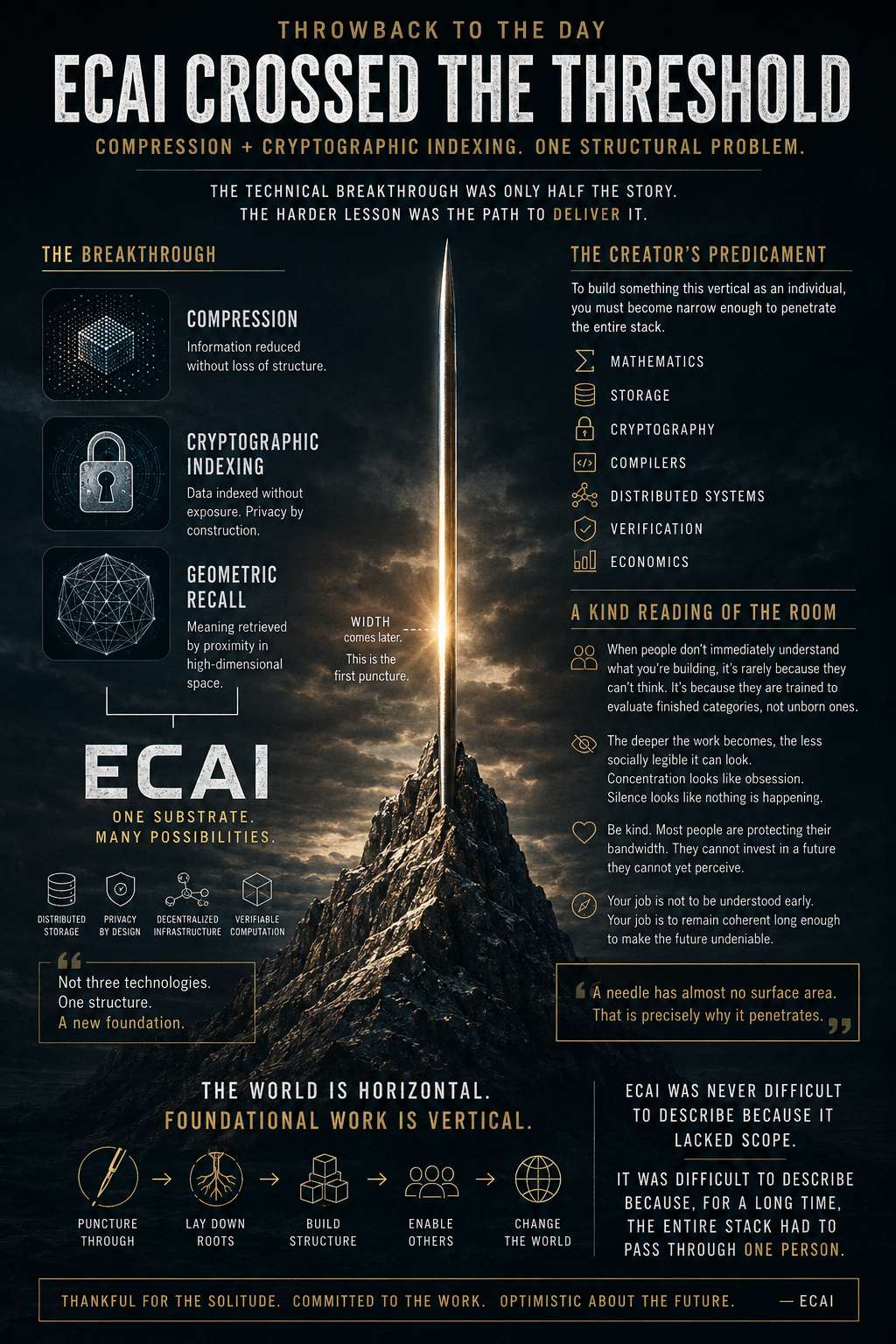 They had collapsed into one structural problem.
That sounds obvious only after the fact.
The difficulty for an individual creator is not merely invention. It is dimensionality.
Institutions are horizontal. They distribute risk, responsibility, vocabulary and expertise across many people.
A lone creator working on foundational infrastructure has the opposite problem: he must become vertical enough to carry the idea through every layer himself.
Mathematics.
Storage.
Cryptography.
Compilers.
Distributed systems.
Verification.
A needle has almost no surface area.
That is precisely why it penetrates.
And this is where I have learned to read the room more kindly.
When people could not immediately understand what I was building, it was not necessarily stupidity, hostility or lack of imagination.
Most people are trained to evaluate finished categories.
They know how to compare database A with database B, framework A with framework B, company A with company B.
They are much less equipped to evaluate something whose category is still being constructed.
The creator therefore experiences a peculiar asymmetry:
the deeper the work becomes, the less socially legible it can look.
From the outside, extreme concentration resembles obsession.
From the inside, it may simply be the minimum force required to get through the material.
That is the individual creator's predicament.
You must remain narrow enough to puncture the stack before you are allowed to become broad enough to explain it.
Width is what comes afterward:
documentation, contributors, implementations, companies, standards, nodes, institutions.
But the first passage is often made by something much smaller.
A needle.
Not because the world is blind.
Because new structure initially has no room prepared for it.
#ECAI #Cryptography #Compression #Indexing #Engineering #Founders #DistributedSystems #OpenSource
They had collapsed into one structural problem.
That sounds obvious only after the fact.
The difficulty for an individual creator is not merely invention. It is dimensionality.
Institutions are horizontal. They distribute risk, responsibility, vocabulary and expertise across many people.
A lone creator working on foundational infrastructure has the opposite problem: he must become vertical enough to carry the idea through every layer himself.
Mathematics.
Storage.
Cryptography.
Compilers.
Distributed systems.
Verification.
A needle has almost no surface area.
That is precisely why it penetrates.
And this is where I have learned to read the room more kindly.
When people could not immediately understand what I was building, it was not necessarily stupidity, hostility or lack of imagination.
Most people are trained to evaluate finished categories.
They know how to compare database A with database B, framework A with framework B, company A with company B.
They are much less equipped to evaluate something whose category is still being constructed.
The creator therefore experiences a peculiar asymmetry:
the deeper the work becomes, the less socially legible it can look.
From the outside, extreme concentration resembles obsession.
From the inside, it may simply be the minimum force required to get through the material.
That is the individual creator's predicament.
You must remain narrow enough to puncture the stack before you are allowed to become broad enough to explain it.
Width is what comes afterward:
documentation, contributors, implementations, companies, standards, nodes, institutions.
But the first passage is often made by something much smaller.
A needle.
Not because the world is blind.
Because new structure initially has no room prepared for it.
#ECAI #Cryptography #Compression #Indexing #Engineering #Founders #DistributedSystems #OpenSource
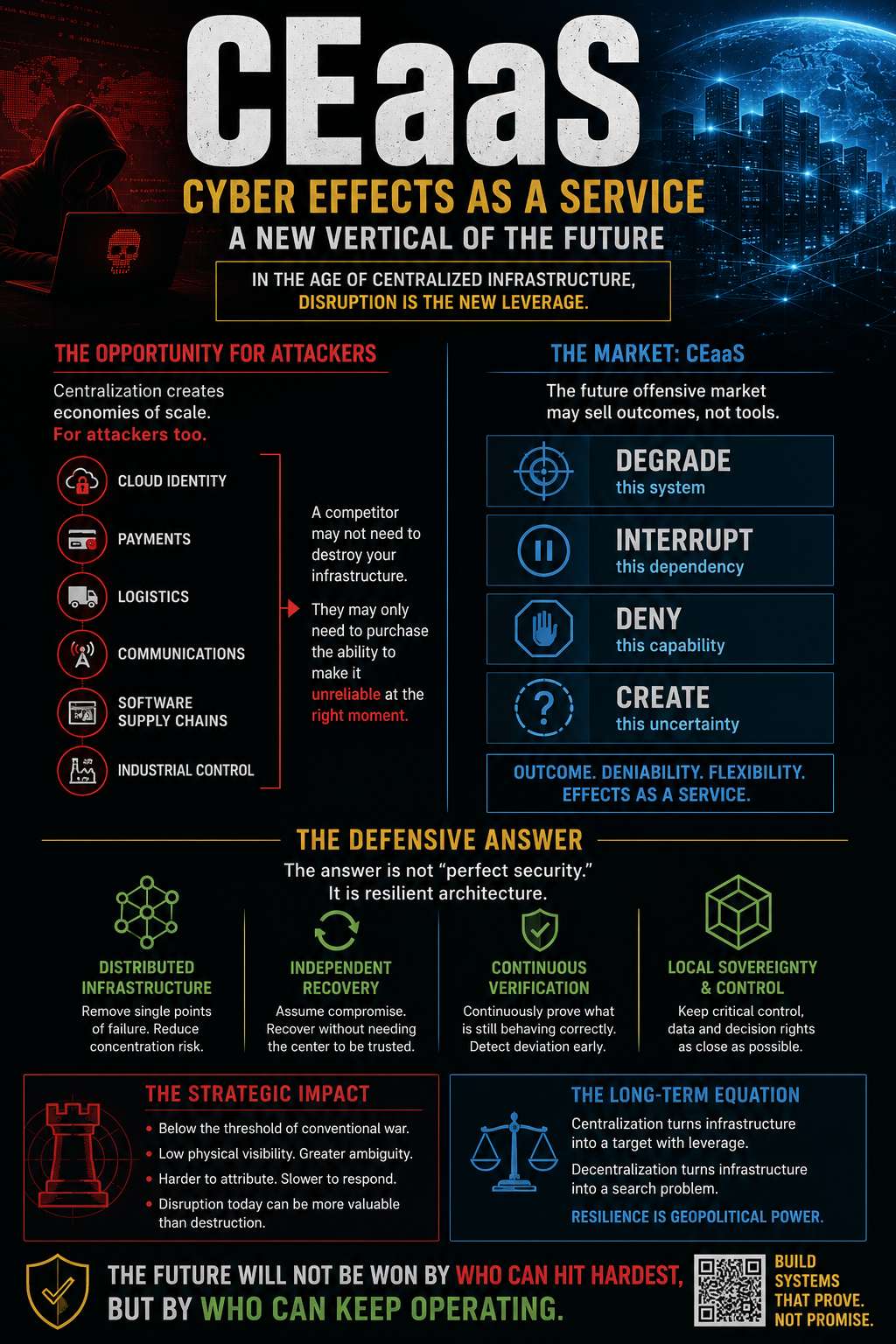 A new vertical may be forming.
Not cybersecurity as a service.
Not malware as a service.
Strategic effects as a service.
As infrastructure becomes more centralized, the value of disabling a single dependency rises.
Cloud identity.
Payments.
Logistics.
Communications.
Software supply chains.
Industrial control.
A competitor may not need to destroy your infrastructure.
They may only need to purchase the ability to make it unreliable at the right moment.
The future offensive market may sell outcomes:
degrade this system.
interrupt this dependency.
deny this capability.
create this uncertainty.
That is CEaaS.
The defensive answer will not be “perfect security.”
It will be distributed infrastructure, independent recovery and continuous proof that critical systems are still behaving correctly.
Centralization creates economies of scale.
For defenders.
And eventually, for attackers too.
#CEaaS #CyberSecurity #CyberWarfare #CriticalInfrastructure #Resilience #Decentralization #Verification #Infrastructure
A new vertical may be forming.
Not cybersecurity as a service.
Not malware as a service.
Strategic effects as a service.
As infrastructure becomes more centralized, the value of disabling a single dependency rises.
Cloud identity.
Payments.
Logistics.
Communications.
Software supply chains.
Industrial control.
A competitor may not need to destroy your infrastructure.
They may only need to purchase the ability to make it unreliable at the right moment.
The future offensive market may sell outcomes:
degrade this system.
interrupt this dependency.
deny this capability.
create this uncertainty.
That is CEaaS.
The defensive answer will not be “perfect security.”
It will be distributed infrastructure, independent recovery and continuous proof that critical systems are still behaving correctly.
Centralization creates economies of scale.
For defenders.
And eventually, for attackers too.
#CEaaS #CyberSecurity #CyberWarfare #CriticalInfrastructure #Resilience #Decentralization #Verification #Infrastructure
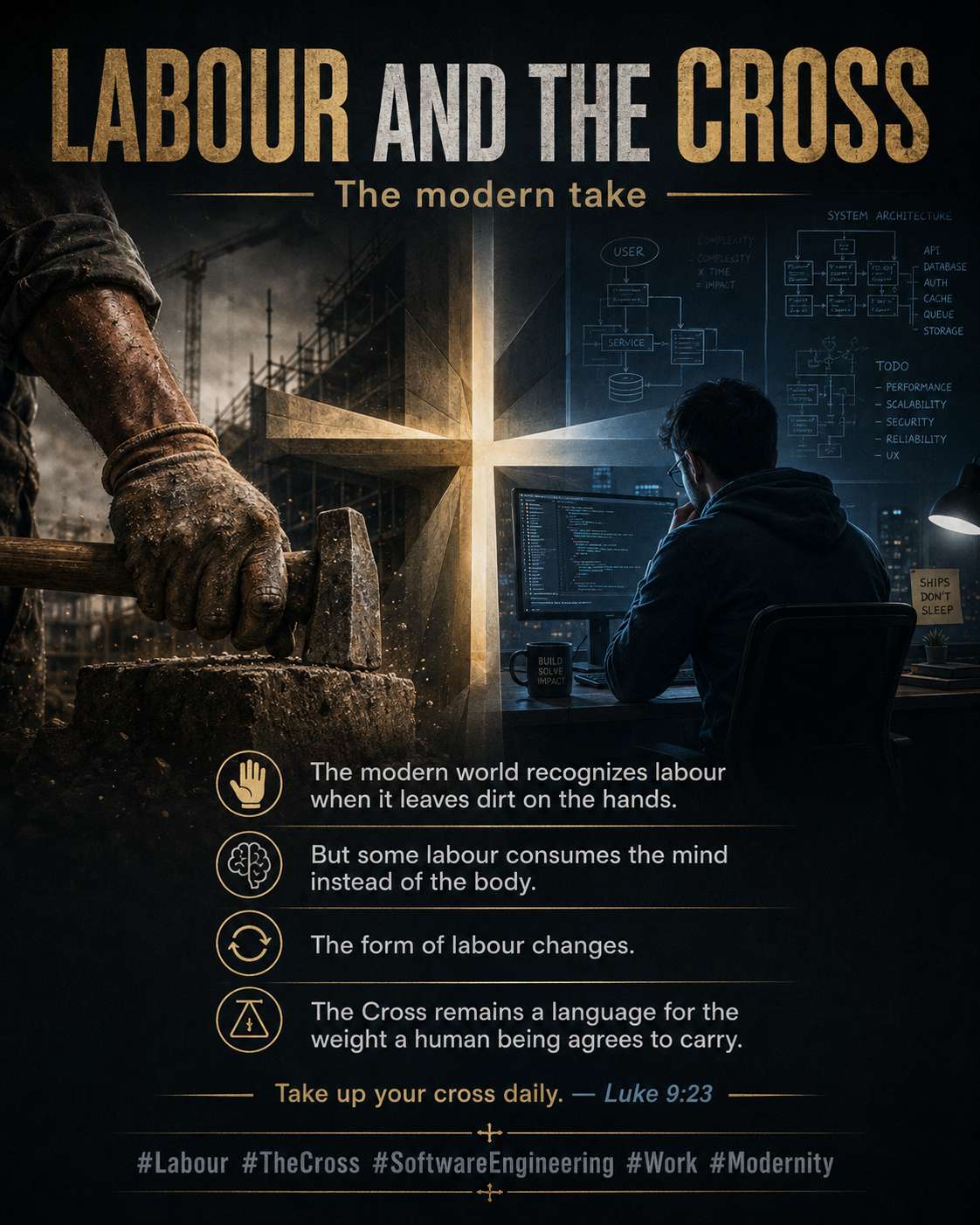 We understand the miner, the farmer, the builder, the soldier. Their burden is visible.
But some labour consumes the mind instead of the body.
The developer can sit perfectly still while carrying an entire system in working memory: state, failure, dependencies, consequences, contradictions, the promises other people have already made, and the one defect nobody else can see.
Then the work succeeds—and almost every trace of that labour disappears.
That is why the Cross remains such a powerful metaphor for labour.
Not because ordinary suffering is equivalent to Christ’s Passion. It isn’t.
But Christianity did something profound with the symbol: Christ did not tell humanity that nobody else would have a cross. He said:
“Take up your cross daily, and follow me.” — Luke 9:23
The modern mistake is imagining that wealth abolishes the cross.
It can soften material conditions. It cannot eliminate responsibility, sacrifice, exhaustion, conscience or the burden of making something true.
Every age has its forms of toil.
Some shoulders carry timber.
Some hands carry tools.
And increasingly, some minds carry systems that cannot be put down when the working day ends.
The form of labour changes.
The Cross remains a language for the weight a human being agrees to carry.
#Labour #TheCross #SoftwareEngineering #Developers #Work #Technology #Modernity
We understand the miner, the farmer, the builder, the soldier. Their burden is visible.
But some labour consumes the mind instead of the body.
The developer can sit perfectly still while carrying an entire system in working memory: state, failure, dependencies, consequences, contradictions, the promises other people have already made, and the one defect nobody else can see.
Then the work succeeds—and almost every trace of that labour disappears.
That is why the Cross remains such a powerful metaphor for labour.
Not because ordinary suffering is equivalent to Christ’s Passion. It isn’t.
But Christianity did something profound with the symbol: Christ did not tell humanity that nobody else would have a cross. He said:
“Take up your cross daily, and follow me.” — Luke 9:23
The modern mistake is imagining that wealth abolishes the cross.
It can soften material conditions. It cannot eliminate responsibility, sacrifice, exhaustion, conscience or the burden of making something true.
Every age has its forms of toil.
Some shoulders carry timber.
Some hands carry tools.
And increasingly, some minds carry systems that cannot be put down when the working day ends.
The form of labour changes.
The Cross remains a language for the weight a human being agrees to carry.
#Labour #TheCross #SoftwareEngineering #Developers #Work #Technology #Modernity
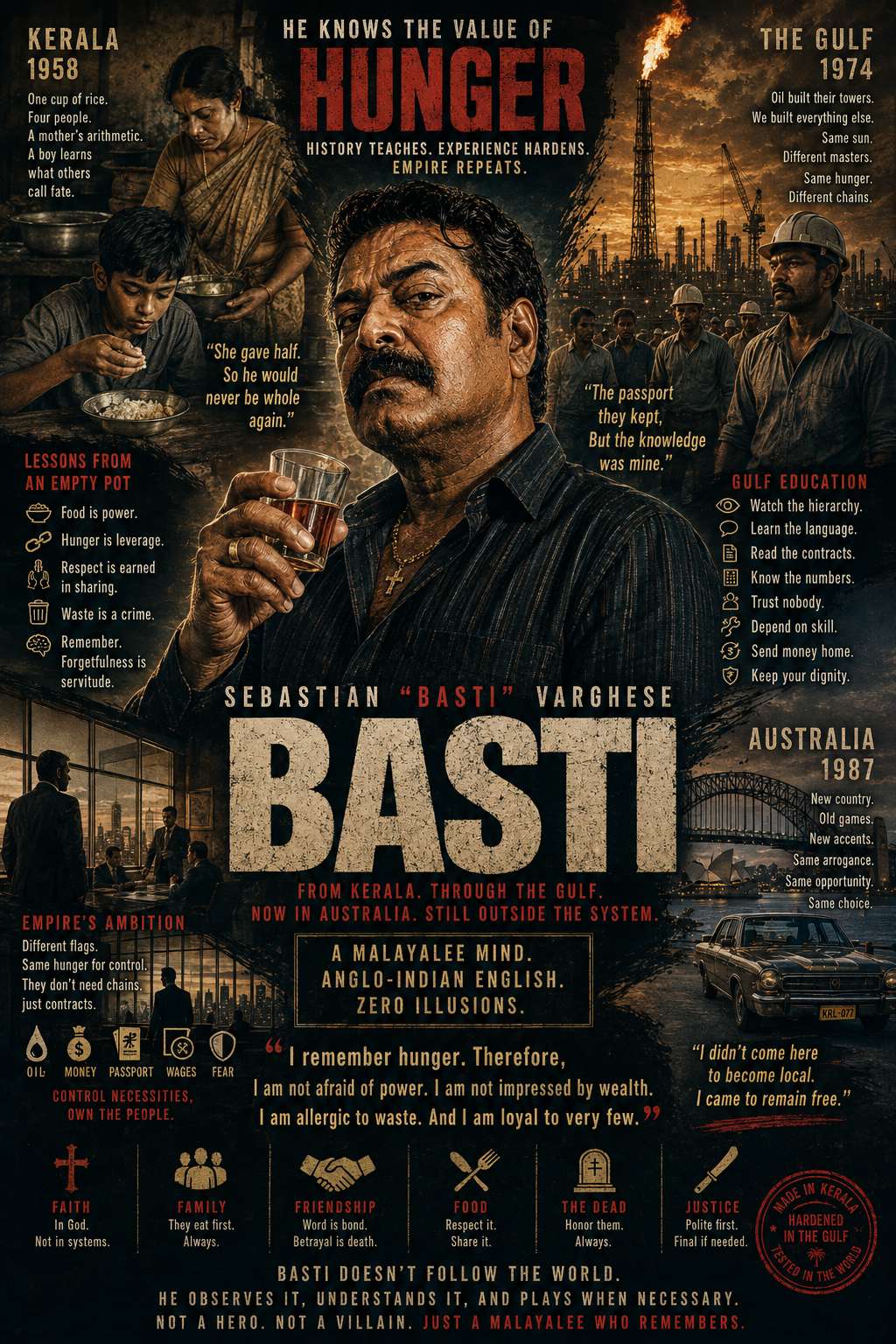 Trichur, Kerala — 1958
Before Basti understood Empire, he understood the bottom of a rice pot.
He was sixteen.
The monsoon had come properly that year. The tiled roof leaked properly. The coconut trees behaved as though God Himself had personally approved Kerala.
And still there was not enough rice.
That was Basti's first political education.
Kerala could be green enough to offend the eye and still depend upon grain arriving from somewhere else.
At home, Amma measured rice with the concentration of an accountant handling gold.
One cup.
Then another.
Then she stopped.
Basti looked at the pot.
“That's all?”
She looked at him.
“Are you planning to eat the vessel also?”
There was tapioca in the kitchen.
Kanji could be stretched.
A little coconut.
Some chilli.
If fortune had visited the house, a piece of fish.
Nobody called it starvation.
That would have been melodramatic.
They called it lunch.
That distinction remained with him for the rest of his life.
Hunger, Basti discovered, rarely arrived like famine paintings.
Usually it arrived politely.
A smaller serving.
More water in the kanji.
Father saying he had already eaten.
Mother claiming she was not hungry.
The good piece of fish mysteriously migrating toward the children's plates.
A neighbour borrowing one measure of rice and returning two measures of tapioca three weeks later.
Nobody announced poverty.
Everybody simply became very skilled at arithmetic.
One evening Basti scraped the last grains from the pot onto his plate.
His mother slapped his wrist.
Not hard.
“Leave it.”
“For whom?”
She nodded toward the kitchen door.
An old labourer had appeared outside.
Basti frowned.
“We don't have enough.”
“I know.”
“Then why are you giving him ours?”
Amma looked at her son as though disappointed by the stupidity of the question.
“Because he has less.”
She took half of what remained.
That night Basti went to bed hungry.
He never forgot it.
Not because hunger was noble.
He would later despise people who romanticised poverty.
Hunger was not spirituality.
Hunger was leverage.
A hungry man signed things.
A hungry man accepted wages he knew were wrong.
A hungry man tolerated insults from men he could physically break in half.
A hungry father could be made to cross oceans.
A hungry country could be made to accept conditions.
But a man who had once voluntarily divided his last meal?
That was different.
That man had discovered something the powerful frequently misunderstood.
There was a difference between possessing food and being ruled by appetite.
---
The Gulf — 1974
Sixteen years later, Basti stood beneath an oil flare watching crude burn into the desert sky.
The world had discovered that petroleum was power.
Basti had already discovered the older equation.
Food was power first.
Around him were men from Kerala, Tamil Nadu, Pakistan, Bangladesh, the Philippines and places he had never heard mentioned in school.
Men building an impossible modern civilisation in sand.
They worked twelve hours.
Sometimes more.
At night they returned to crowded accommodation and opened steel tiffin carriers.
Rice.
Fish curry.
Pickle wrapped carefully enough to survive an international journey.
Someone always had something from home.
Someone always shared.
The highest-paid engineer and the lowest-paid labourer could argue all day about status.
At midnight, when one fellow opened a parcel of dried fish his mother had sent from Kozhikode, hierarchy temporarily collapsed.
Basti noticed these things.
He noticed everything.
He also noticed how employers understood hunger.
Delay a salary and suddenly a man's posture changed.
Control the accommodation and you controlled where he slept.
Control the visa and you controlled where he could go.
Control the passport and you controlled whether he could leave.
Control the wage that fed four people back in Kerala—
and you did not merely employ one man.
You held a family.
That was when the boy staring into the rice pot finally understood the architecture.
Empire was not principally about flags.
It was about controlling necessities.
Food.
Fuel.
Land.
Movement.
Money.
The clever empire did not need chains.
It merely arranged life so that disobedience became expensive.
One evening a British supervisor found Basti eating with several labourers outside the accommodation block.
“You don't have to eat with them, Sebastian.”
Basti looked up.
There was rice on his fingers.
“I'm aware.”
“You're staff.”
“Also aware.”
The supervisor smiled awkwardly.
“Just saying. People notice these things.”
Basti slowly finished chewing.
Then washed his hand.
“My dear fellow, that is precisely why I am doing it.”
The supervisor stared.
Basti pointed toward the refinery.
“You see that?”
“Yes.”
“Without those men, it stops.”
Then toward the executive compound.
“And without those gentlemen?”
A pause.
Basti smiled.
“We shall conduct the experiment someday.”
---
Years later, in Australia, people sometimes mistook his refusal to waste food for immigrant thrift.
It wasn't.
Basti would finish the last piece of bread.
Save yesterday's curry.
Pack restaurant leftovers.
He could tolerate expensive whisky.
He could tolerate expensive suits.
He could even tolerate Australians putting beetroot on hamburgers.
But he could not watch edible food thrown away.
Once, at a Sydney function, a young executive laughed at him for wrapping untouched bread in a napkin.
“Mate, you can afford another one.”
Basti stopped.
He looked at the man.
And for a moment he was sixteen again, watching Amma divide a meal that had already been divided.
Then he smiled.
“My dear boy, price and value are cousins who occasionally refuse to speak.”
He placed the bread carefully into his coat pocket.
“You know the price because you have money.”
His smile disappeared.
“I know the value because I remember hunger.”
And that was Basti.
Kerala had taught him never to waste food.
The Gulf taught him to watch whoever controlled it.
Australia taught him how quickly abundance could make people forget both lessons.
A full stomach made Basti generous.
The memory of an empty one made him dangerous.
#Basti #MalayaleeNoir #KeralaInAustralia #PostColonialAustralia #AngloIndianEnglish #MalayaleeCharacter #KeralaCinemaEnergy #DiasporaStories #EmpireAfterEmpire #Sydney1987 #CinematicCharacter #IndianAustralian #KeralaHumour #DarkComedy #CharacterWriting
Trichur, Kerala — 1958
Before Basti understood Empire, he understood the bottom of a rice pot.
He was sixteen.
The monsoon had come properly that year. The tiled roof leaked properly. The coconut trees behaved as though God Himself had personally approved Kerala.
And still there was not enough rice.
That was Basti's first political education.
Kerala could be green enough to offend the eye and still depend upon grain arriving from somewhere else.
At home, Amma measured rice with the concentration of an accountant handling gold.
One cup.
Then another.
Then she stopped.
Basti looked at the pot.
“That's all?”
She looked at him.
“Are you planning to eat the vessel also?”
There was tapioca in the kitchen.
Kanji could be stretched.
A little coconut.
Some chilli.
If fortune had visited the house, a piece of fish.
Nobody called it starvation.
That would have been melodramatic.
They called it lunch.
That distinction remained with him for the rest of his life.
Hunger, Basti discovered, rarely arrived like famine paintings.
Usually it arrived politely.
A smaller serving.
More water in the kanji.
Father saying he had already eaten.
Mother claiming she was not hungry.
The good piece of fish mysteriously migrating toward the children's plates.
A neighbour borrowing one measure of rice and returning two measures of tapioca three weeks later.
Nobody announced poverty.
Everybody simply became very skilled at arithmetic.
One evening Basti scraped the last grains from the pot onto his plate.
His mother slapped his wrist.
Not hard.
“Leave it.”
“For whom?”
She nodded toward the kitchen door.
An old labourer had appeared outside.
Basti frowned.
“We don't have enough.”
“I know.”
“Then why are you giving him ours?”
Amma looked at her son as though disappointed by the stupidity of the question.
“Because he has less.”
She took half of what remained.
That night Basti went to bed hungry.
He never forgot it.
Not because hunger was noble.
He would later despise people who romanticised poverty.
Hunger was not spirituality.
Hunger was leverage.
A hungry man signed things.
A hungry man accepted wages he knew were wrong.
A hungry man tolerated insults from men he could physically break in half.
A hungry father could be made to cross oceans.
A hungry country could be made to accept conditions.
But a man who had once voluntarily divided his last meal?
That was different.
That man had discovered something the powerful frequently misunderstood.
There was a difference between possessing food and being ruled by appetite.
---
The Gulf — 1974
Sixteen years later, Basti stood beneath an oil flare watching crude burn into the desert sky.
The world had discovered that petroleum was power.
Basti had already discovered the older equation.
Food was power first.
Around him were men from Kerala, Tamil Nadu, Pakistan, Bangladesh, the Philippines and places he had never heard mentioned in school.
Men building an impossible modern civilisation in sand.
They worked twelve hours.
Sometimes more.
At night they returned to crowded accommodation and opened steel tiffin carriers.
Rice.
Fish curry.
Pickle wrapped carefully enough to survive an international journey.
Someone always had something from home.
Someone always shared.
The highest-paid engineer and the lowest-paid labourer could argue all day about status.
At midnight, when one fellow opened a parcel of dried fish his mother had sent from Kozhikode, hierarchy temporarily collapsed.
Basti noticed these things.
He noticed everything.
He also noticed how employers understood hunger.
Delay a salary and suddenly a man's posture changed.
Control the accommodation and you controlled where he slept.
Control the visa and you controlled where he could go.
Control the passport and you controlled whether he could leave.
Control the wage that fed four people back in Kerala—
and you did not merely employ one man.
You held a family.
That was when the boy staring into the rice pot finally understood the architecture.
Empire was not principally about flags.
It was about controlling necessities.
Food.
Fuel.
Land.
Movement.
Money.
The clever empire did not need chains.
It merely arranged life so that disobedience became expensive.
One evening a British supervisor found Basti eating with several labourers outside the accommodation block.
“You don't have to eat with them, Sebastian.”
Basti looked up.
There was rice on his fingers.
“I'm aware.”
“You're staff.”
“Also aware.”
The supervisor smiled awkwardly.
“Just saying. People notice these things.”
Basti slowly finished chewing.
Then washed his hand.
“My dear fellow, that is precisely why I am doing it.”
The supervisor stared.
Basti pointed toward the refinery.
“You see that?”
“Yes.”
“Without those men, it stops.”
Then toward the executive compound.
“And without those gentlemen?”
A pause.
Basti smiled.
“We shall conduct the experiment someday.”
---
Years later, in Australia, people sometimes mistook his refusal to waste food for immigrant thrift.
It wasn't.
Basti would finish the last piece of bread.
Save yesterday's curry.
Pack restaurant leftovers.
He could tolerate expensive whisky.
He could tolerate expensive suits.
He could even tolerate Australians putting beetroot on hamburgers.
But he could not watch edible food thrown away.
Once, at a Sydney function, a young executive laughed at him for wrapping untouched bread in a napkin.
“Mate, you can afford another one.”
Basti stopped.
He looked at the man.
And for a moment he was sixteen again, watching Amma divide a meal that had already been divided.
Then he smiled.
“My dear boy, price and value are cousins who occasionally refuse to speak.”
He placed the bread carefully into his coat pocket.
“You know the price because you have money.”
His smile disappeared.
“I know the value because I remember hunger.”
And that was Basti.
Kerala had taught him never to waste food.
The Gulf taught him to watch whoever controlled it.
Australia taught him how quickly abundance could make people forget both lessons.
A full stomach made Basti generous.
The memory of an empty one made him dangerous.
#Basti #MalayaleeNoir #KeralaInAustralia #PostColonialAustralia #AngloIndianEnglish #MalayaleeCharacter #KeralaCinemaEnergy #DiasporaStories #EmpireAfterEmpire #Sydney1987 #CinematicCharacter #IndianAustralian #KeralaHumour #DarkComedy #CharacterWriting