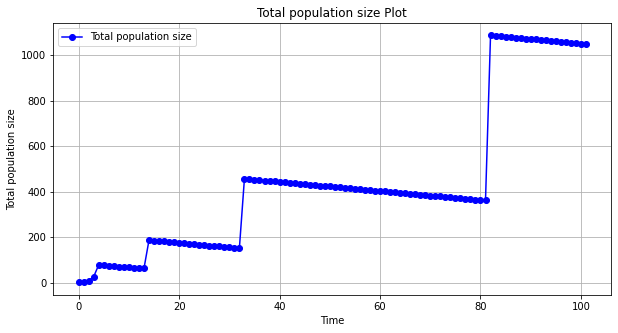
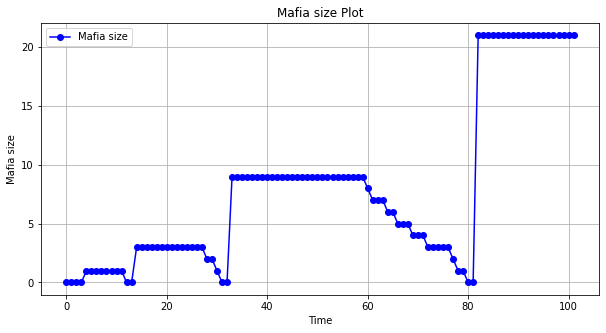
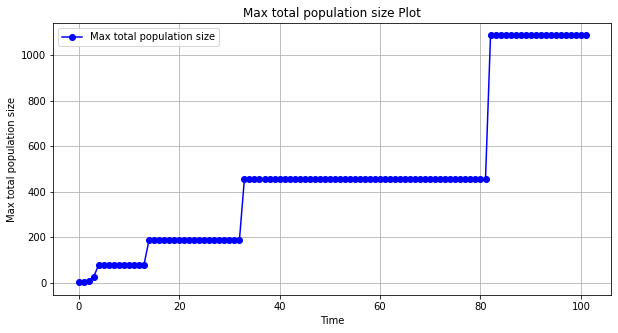
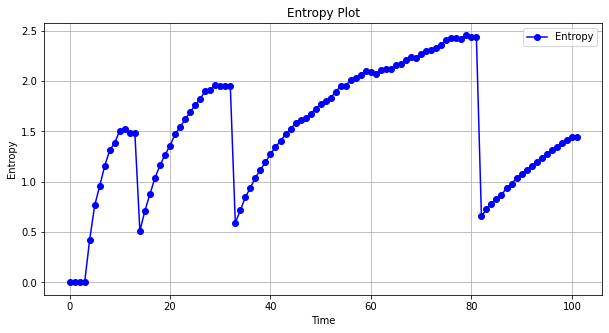
Long running pattern looks ordinary hyperbolic as localized runs of prolonged reduction do. It's just a game theoretic simulation based on deterministic selection at macro level with random and learned choice for both categories of players at micro level. Strategies are static for both categories of players (and they differ in individualistic vs. collectivist approach for peasants and mafia respectively), if they weren't, then patterns would be more complicated but probably tending to the same expansive behavior of system, given a rate of population growth which outweighs proportion of mafia which destroys one peasant per round (there are settings where the system is not expansive in long run: ex. 40% of mafia with x2 population growth per beginning of mafia stage).
But it's interesting that the good vs. evil dichotomy can be shown from mathematical/computing perspective like this.