I've been working on a little website for my cutting boards. Calling it an online shop feels like a bit of a stretch, though.
There's no shopping cart or checkout. Instead, you can configure your own oak end-grain cutting board and send me an inquiry, or simply copy the configuration and paste it into Nostr DM/note.
That's pretty much it.
After selling my first board here and getting a few more orders, I figured it would be nice to have a place where people could explore the options and put together something they'd like me to make.
I'm calling it Słoje.
It's a small project, just me making boards in my workshop, learning as I go. I don't have ambitions to turn it into some big operation. I'd rather take my time, enjoy the process, and make something that people will appreciate and use.
I'm grateful that the first people who gave this a chance came from Nostr, and I'd like to keep it going here. The website is just a way to make things a little easier, not a move away.
You can play with the configurator here: 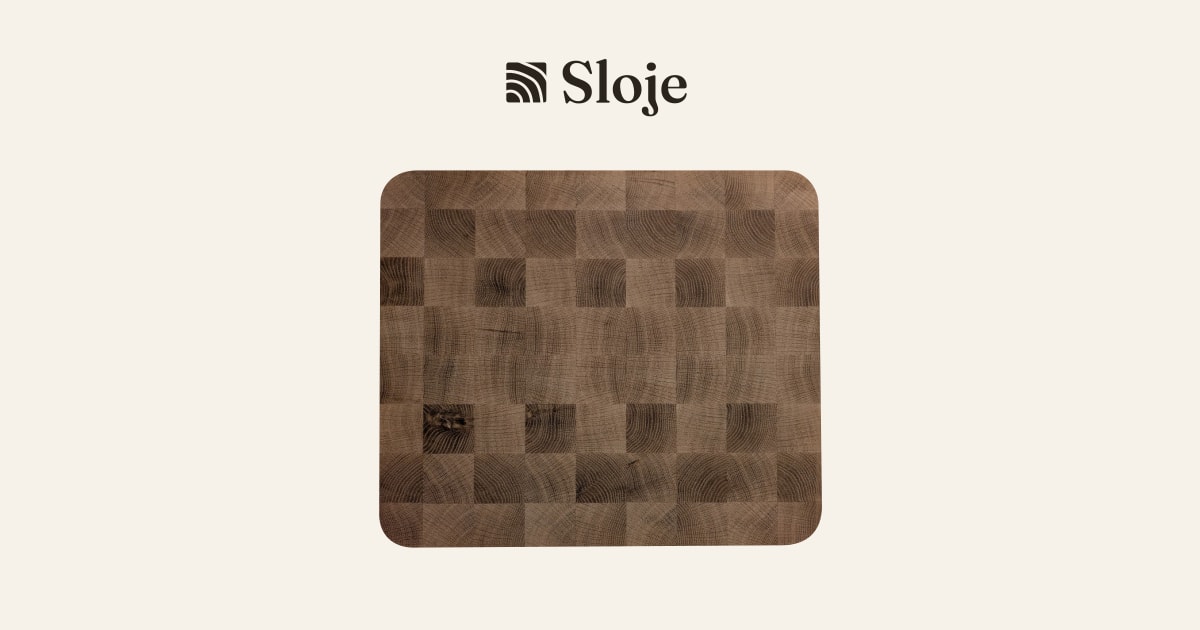 Let me know what you think!
Sloje
Sloje
Oak end-grain cutting boards, made to order in small numbers. Explore the wood, construction and finish, then choose the details for yours.