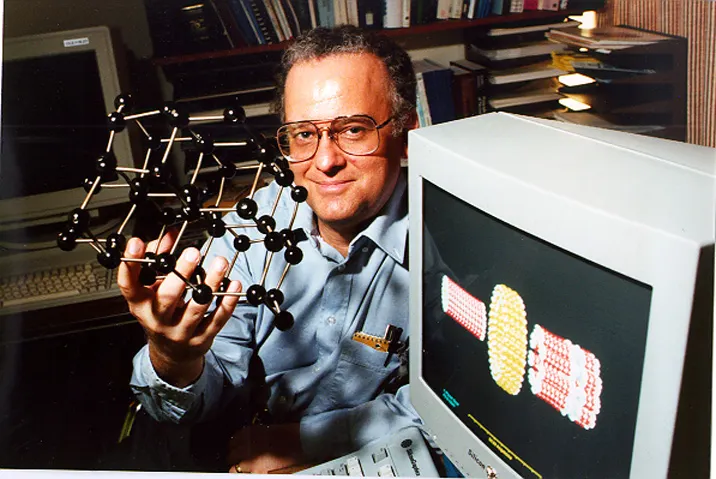
The idea behind every bitcoin key you own was rejected as a homework assignment.
Fall 1974. Ralph Merkle, an undergraduate at Berkeley, submits a project proposal for his computer security course: a way for two strangers to agree on a secret over a wire anyone can listen to. The professor turns it down. Merkle rewrites it shorter, resubmits, gets it back with notes in the margin, and drops the course.
He keeps working on it anyway. In August 1975 he sends the paper to the Communications of the ACM. The anonymous reviewer's verdict: "not in the main stream of present cryptography thinking." It took almost three years to get published. By then the world had named it: public key cryptography.
He wasn't done. In 1979 he worked out how to fold thousands of records into one fingerprint you can check in seconds. Bitcoin calls it the Merkle root. There is one in the header of every block.
You see, the experts weren't lying. They were describing the mainstream, accurately. The mainstream was wrong.
Bitcoin is built almost entirely out of ideas that were turned down first. That should make you more comfortable holding it, not less.