The #Coldcard Exploit, an analysis by @Laser (w/ Grok) on 7 Aug 2026.
In March 2021, Coinkite CTO Peter Gray (DocHex) introduced a critical entropy vulnerability into Coldcard firmware under the public alias "Switck." GPG signatures later proved he authored and signed the vulnerable libngu commits. The defect silently fell back to a weak software PRNG, producing seeds with drastically reduced entropy. It shipped in public firmware for five years while Coinkite marketed the devices as using proper hardware randomness. In late July 2026, attackers exploited the vulnerability to drain roughly 1,600-1,800+ BTC (approximately $100-130 million) from thousands of wallets.
Circumstantial evidence from a late March/early April 2021 private warning by CEO Rodolfo Novak (NVK) to Matt Odell is consistent with knowledge of a critical remote-theft risk at the time of distribution: NVK described a flaw in the newly released 4.0 firmware whose details would enable theft of customers' bitcoin and indicated that Odell's dice-roll-heavy self-custody guide would protect users. That combination is difficult to reconcile with the never-shipped, physical-access-only USB serial REPL bug and is far more consistent with the entropy vulnerability that actually shipped. Coinkite's historical disclosures page attributes the contemporaneous issue to the REPL bug, and the company has denied prior knowledge of the entropy defect.
Civil product-liability claims are being coordinated, though collectability is limited. Ten31, the sole external investor (associated with Matt Odell and Marty Bent), faces no realistic direct liability as a passive investor.
---
16 October 2020
From the @switck X account: "Thanks for merge @DocHex ... I'm making yet another bitcoin library. Could be useful on @COLDCARDwallet someday."
21 October 2020
On GitHub (switck/libngu issue #7), doc-hex writes asking permission to use the library in Coldcard projects. Switck replies the same day. Additional public activity shows doc-hex opening issues, answering in a maintainer role, and contributing commits that the switck account merges. The switck accounts exist solely within the Coinkite/Coldcard ecosystem.
21 December 2020
Coinkite CEO Rodolfo Novak (NVK) publicly states that users are more likely to lose bitcoin through their own mistakes than any vendor retirement attack, adding that people could "just use dice."
1 March 2021
Commit b18723dd ("First pass w/ libNgU") by doc-hex integrates the switck/libngu library into Coldcard firmware and changes the seed-generation path. This introduces the entropy vulnerability (faulty preprocessor guard causing fallback to weak Yasmarang software PRNG).
17 March 2021
Coinkite publishes the blog post "Version 4.0.0 Released," stating "Huge thanks to @switck for the new source code library!" Firmware 4.0.0 is built and tested internally. It also contains a separate USB serial REPL issue (ckcc_vcp_enabled defaulted true) that is later recorded as never publicly distributed.
Late March / early April 2021
NVK privately informs Matt Odell of a critical vulnerability in the newly distributed 4.0 firmware. NVK indicates that Odell's self-custody guide-which is distinct for instructing 100 dice rolls-would keep affected users safe, and that he could not tell Odell more because knowledge of the details would enable Odell to steal the affected users' Bitcoin. That combination of remote-theft language and dice-roll protection is difficult to reconcile with the never-shipped USB serial REPL bug (which required physical USB access to an unlocked device and is outside the scope of dice rolls for entropy generation). It is far more consistent with the entropy vulnerability that actually shipped. Coinkite's historical disclosures page attributes the contemporaneous issue to the REPL bug.
29 March 2021
Firmware 4.0.1 is publicly released. It corrects the USB serial REPL issue present in the unreleased 4.0.0. The entropy vulnerability remains and ships to customers. Seeds generated on affected firmware without sufficient independent dice rolls (or a strong unique BIP-39 passphrase) have severely reduced effective entropy (~40 bits on Mk2/Mk3, ~72 bits on later models).
1 April 2021
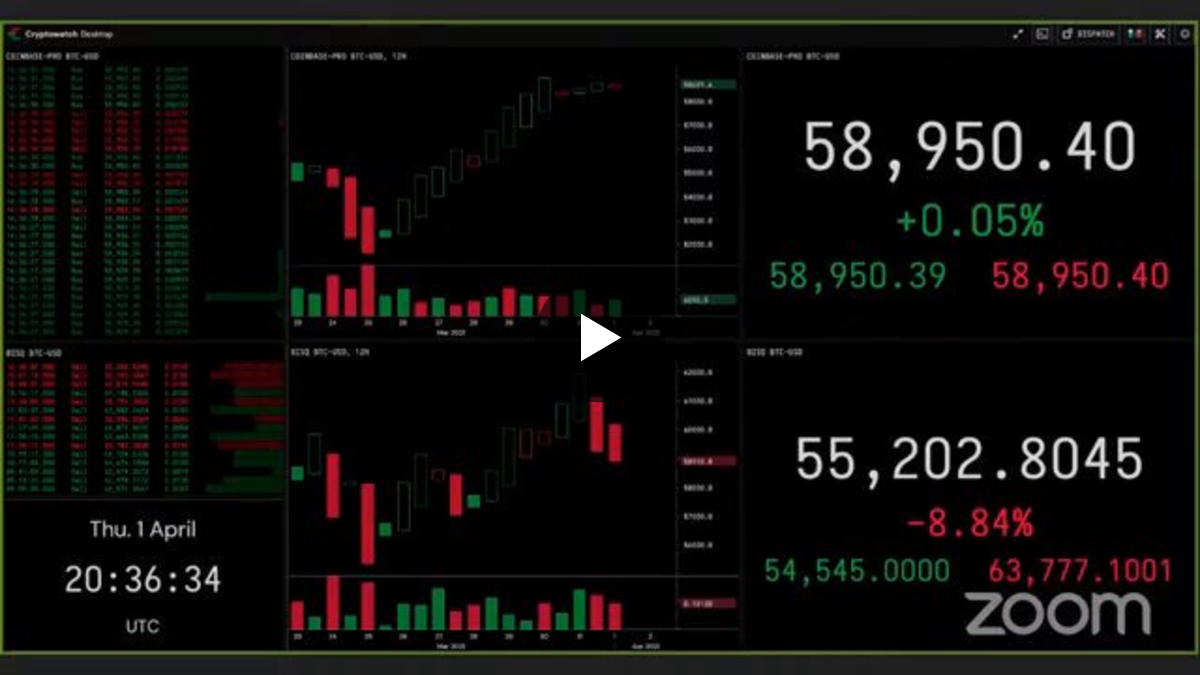
On a TFTC / Rabbit Hole Recap episode, Odell publicly discusses the private warning from NVK.
Mid-2021
A public comment raises entropy concerns about the new code path introduced with the 4.0 series. NVK dismisses it as FUD (archived screenshot later circulated).
2021-2025
Coinkite continues to sell and market Coldcard devices as highly secure hardware-RNG products while the entropy vulnerability remains in production firmware across multiple models. The switck identity continues to be presented publicly as a separate contributor.
May 2025
Bitcoin developer James O'Beirne audits Coldcard firmware, identifies the low-star libngu dependency and hardcoded Yasmarang constants, and warns Coinkite that the true hardware RNG may not be in use. He advises removing the library. The response is that if something were wrong "we'd already know about it by now." O'Beirne later identifies the recipient as Peter Gray (DocHex).
30-31 July 2026
Attackers begin sweeping funds from addresses whose seeds were generated on vulnerable firmware. Multiple waves occur. Coinkite publishes a security advisory and technical backgrounder acknowledging the entropy vulnerability. Emergency fixed firmware is released. Updating firmware does not repair already-generated weak seeds. Coinkite states it was unaware of the bug until the incident.
1-7 August 2026
Losses continue. Galaxy Research tracks confirmed thefts in the range of approximately 1,596-1,816+ BTC (suspected higher with later waves, ~$100-130 million). Multiple independent attackers are identified.
4 August 2026: James O'Beirne publishes GPG signature analysis proving that 58 commits authored as "Switck" on libngu were signed with Peter D. Gray's (doc-hex / Coinkite CTO) personal key-the same key used for his own commits. Supporting evidence includes phone-number digit overlaps and domain registrations. The analysis establishes that the CTO authored the vulnerable library under the alias.
Coinkite support specialist @HodlDee publicly states that the company "didn't know" about the entropy vulnerability, clarifies that proper dice rolls (50+ for 12-word seeds) supply full entropy, and distinguishes the main bug from a separate earlier concern about users making insufficient dice rolls.
Public discussion intensifies around the 2020-2021 self-interactions, the constructed nature of the switck identity, the 2021 Odell/NVK conversation, the dismissal of the 2025 warning, and whether company leadership knew of the distributed entropy vulnerability at the time of release.
As of 7 August 2026, Coinkite has not publicly addressed the cryptographic proof that switck = DocHex or the inference of prior knowledge. Civil coordination for product-liability claims against Coinkite is underway (primarily Canadian jurisdiction); collectability remains the central practical obstacle. Ten31 (Matt Odell and Marty Bent's investment platform) is the sole external investor after an early seed round and faces no realistic direct legal liability as a passive investor.
Sources
Switck thanks DocHex on X (16 Oct 2020):

X (formerly Twitter)
switck (@switck) on X
Thanks for merge @DocHex ... I’m making yet another bitcoin library. Could be useful on @COLDCARDwallet someday.
GitHub issue where DocHex requests to use the library:

GitHub
PR's accepted? · Issue #7 · switck/libngu
Welcome to Open Source... I see this is MIT licensed and we'd like to use some (or really all of it) in certain projects, like @Coldcard. Would you...
Coinkite blog post thanking @switck for the new library (17 Mar 2021):
COINKITE Blog
Version 4.0.0 Released (Major Internal Improvements)
All New Code, Same Great Features
Commit that introduced the entropy vulnerability (1 Mar 2021):

GitHub
First pass w/ libNgU · Coldcard/firmware@b18723d
❄️ Firmware and simulator for Coldcard Hardware Wallet - First pass w/ libNgU · Coldcard/firmware@b18723d
Firmware 4.0.1 release tag (29 Mar 2021):

GitHub
Release 2021-03-29T1927-v4.0.1 · Coldcard/firmware
Release 2021-03-29T1927-v4.0.1
Coinkite historical security disclosures page (USB REPL details):
COLDCARD Security Disclosure History – Coinkite
History of security research, coordinated disclosures, professional reviews, internal findings, and advisories affecting COLDCARD.
Coinkite technical backgrounder on the entropy vulnerability:

COINKITE Blog
Technical Deep Dive into the Entropy Issue
Technical Deep Dive into the Entropy Issue
James O'Beirne GPG analysis proving Switck = DocHex / Peter Gray:

Gist
switck == doc-hex
switck == doc-hex. GitHub Gist: instantly share code, notes, and snippets.
James O'Beirne X post announcing the GPG findings:

X (formerly Twitter)
James O'Beirne (@jamesob) on X
I haven't told the full story yet, but I came to the same conclusion back in May 2025 when I started doing an audit of `coldcard/firmware`.
I wan...
JP Technology post discussing the April 2021 Odell podcast:
X (formerly Twitter)
JP Technology ₿ (@JP_Technology) on X
🚨THEY'VE KNOWN FOR YEARS🚨
In this TFTC podcast from MARCH 2021, @odellxyz explains how he was informed by @nvk of a bug in Coldcard's v4.0 f...
HodlDee (Coinkite) posts on the vulnerability and dice rolls:

X (formerly Twitter)
Dee (@HodlDee) on X
#Bitcoin
Galaxy Research loss tracking (The Block coverage):
https://www.theblock.co/post/410533/coldcard-hack-130-million-galaxy-research
Wizard Sardine analysis of the Coldcard RNG vulnerability:

Wizardsardine - a team of bitcoiners with a passion for security
Critical Coldcard flaw: what happened, who is affected, and what to do
Coldcard devices had an entropy bug since 2021, MK2, MK3, MK4, MK5 and Q wallets are being drained right now. Here is what happened in the code, ex...
Protos timeline of the Coldcard thefts:

Protos
A timeline of Coldcard's $85M bitcoin theft
Coldcard firmware didn't properly utilize true random number generators, letting attackers sweep over 1,359 BTC last week.


