We recently came across this segment about the importance of community and wanted to share it in the spirit of Thanksgiving.
We believe in the value of community, and we're immensely grateful that we get to work with incredible communities around the world day in, day out ♥️
@Ben Sessions
Fedi
npub1uq70...u0c2
Fedi is a privacy-first Bitcoin wallet with chat and community spaces, all in one app.
Bear markets are for building some say. We hear where they're coming from, and we think these quieter periods are for learning, as well.
And so we've created this post, which explains what a federation is, how #Fedimint federations are unique, and how federations enable Community Custody.
Happy reading, and please leave any questions you might have about federations in the comments.


What Is a Bitcoin Federation? - 25 November 2026
What is a bitcoin federation? Learn how guardians share bitcoin keys, what makes Fedimint federations unique, and how federations enable community ...
If you're heading to Malawi 🇲🇼 next week for the @npub1dtvs...wc6t, be sure to use BitMsika — now a Fedi Mini App — to make #Bitcoin payments from your #Lightning wallet and have them settle as Malawian kwacha on mobile money networks.


Spend Bitcoin Anywhere In Malawi with BitMsika - 23 November 2026
BitMsika lets you pay with Bitcoin from Fedi or any Lightning wallet and have it arrive as TNM Mpamba or Airtel Money in Malawi, with zero transact...
Spotted at the Bitcoin Circular Economies Summit in El Salvador 🇸🇻:
Achachilabtc of Bolivia's 🇧🇴 @BitcoinResearch highlighting Fedi as one of the main tools his community uses.


Many federations are upgrading to a new, more decentralised management protocol called Manifold.
If your funds are in one of those federations, you'll need to move them as early as 30 November 2026 or by 15 December 2026.
Please read the post linked to in the comments to see if you're affected and to learn how to take action if so.


Important Update: Many Federations Are Upgrading — Here
Many federations are migrating. You must act to migrate your funds.
SECOND REMINDER -- Many federations will be upgrading to a newer, more decentralised setup. This will require users of those federations to move their funds.
More details here:


Important Update: Moving Your Funds to Upgraded Federations - Nov. 6, 2026
Fedi is working with federations to migrate users to a new, more advanced federation type. This means that G-Bot federations will be closing and ...

How safe is your bitcoin?
After the recent bitcoin software hacks, it’s worth asking whether your custody setup still works for you.
Our latest article walks you through seven questions to help you determine how safe your bitcoin is.
Click here to read the article:


How Safe Is Your Bitcoin? Seven Questions to Ask Yourself - October 26, 2026
Explore seven essential questions to evaluate your Bitcoin custody setup. These questions will help you figure out the best custody setup for yours...

Multispend was a response to the community's request to save on Fedi.
@npub1kp7j...487l talks about how Multispend works and how it fits within traditional community savings models.
With @Fedimint, your security set up looks like that of institutional bitcoin security setups.
Your keys are stored:
1. In multiple locations
2. On multiple devices
3. On different software implementations
4. With multiple custodians
@npub1kp7j...487l recently explained this on BMTV.
Community Custody spreads risk and responsibility across a handful of people, unlike self-custody. This custody model uses a shared Bitcoin wallet that comes with benefits that make it far more dynamic than the standard self-custody setup.
In our latest article, we share the 5 benefits of a shared bitcoin wallet.
Click here to read:


Five Benefits of a Shared Bitcoin Wallet - October 15, 2026
A shared bitcoin wallet spreads custody across trusted guardians. Learn 5 benefits of community custody: no single point of failure, privacy, and e...

"A customer list is a target list — the only list that doesn't leak is the one you never collect."
- @npub1kp7j...487l at Imagine IF


"We must progress from open-source to open specs so that anyone can build their own version of the code...
Will your version have bugs? Yes.
But your bugs and my bugs won't be the same bugs — and that's the entire point."
- @npub1kp7j...487l at Imagine IF
For more on how this progression is happening, check out this article:

Bitcoin Magazine
One Federation. Three Codebases. Fedimint’s Berlin Stress Test
Liquid and Coldcard already showed what shared software does to shared funds. Ecash Hackday put three independent Fedimint implementations on one f...
People have managed money together long before joint bank accounts existed.
The Multispend feature in the Fedi app lets you save with your group in a shared wallet that you manage together.
In our recent article, we explained how Multispend works and how it differs from traditional joint wallets.
Click here to read:


Rethinking Joint Bitcoin Wallets with Fedi Multispend - October 12, 2026
Learn how Fedi’s Multispend lets groups pool bitcoin, set voting rules, and approve withdrawals together. A step-by-step guide to a joint Bitcoin...

Take this as your reminder that whatever decision you make about how you custody your bitcoin should answer this question:
“How many independent things must fail before the money is gone?”
We've written an article which breaks down the different custody models to help you understand your options and choose what works best for you.
Click here to read the article:

Custody Compared: Fedimint as The Fourth Way - September 23, 2026
Fedimint Enables Community Custody, the Fourth Way to Custody Bitcoin
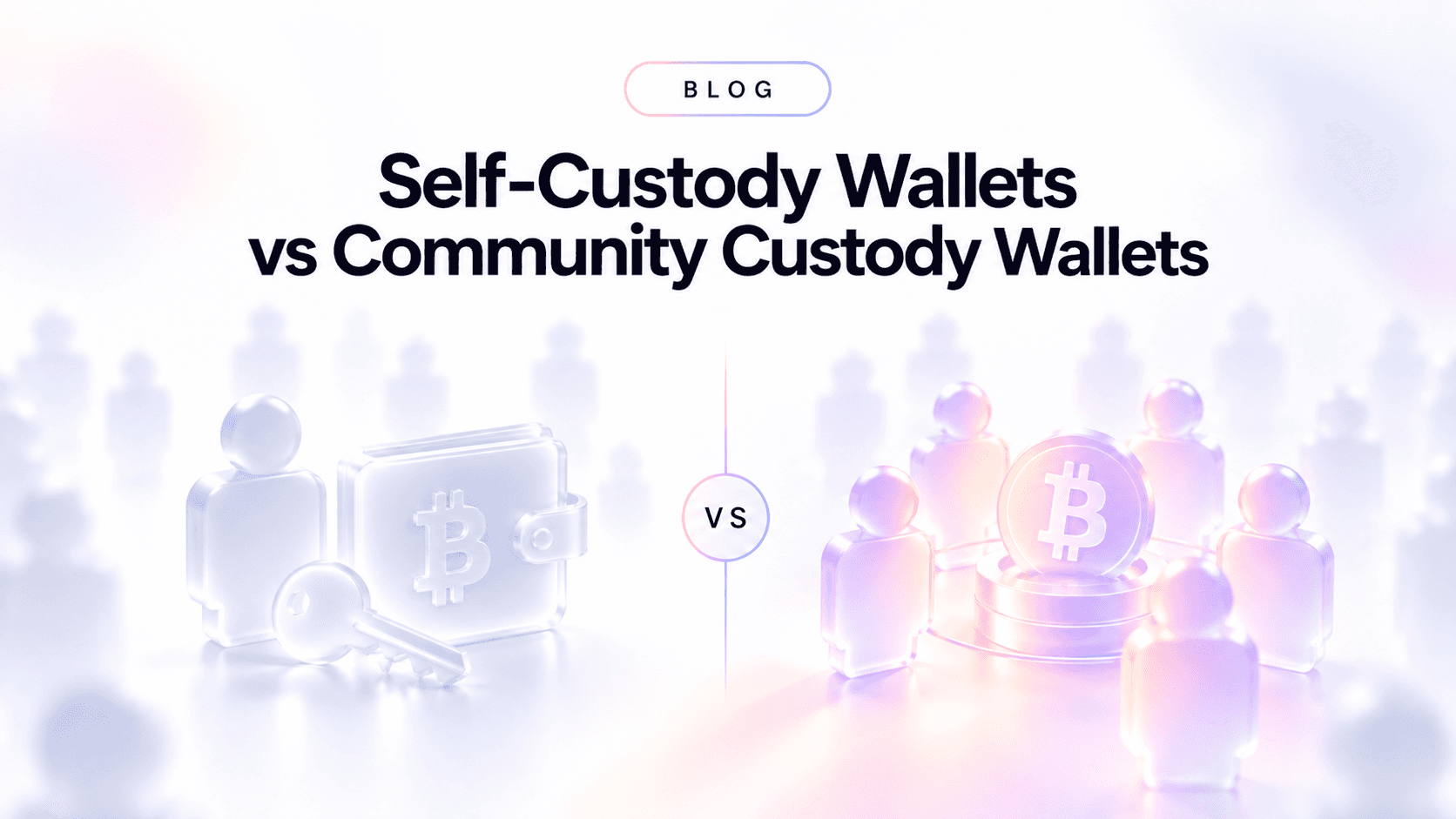
Self-custody gives you control over your bitcoin because you hold your own keys.
With community custody, trusted Guardians distribute responsibility for the funds while users access private ecash and Lightning payments.
In our article, we break down self-custody wallets and community custody, how each works, and the trade-offs to consider.
Click here to read 👇


Self-Custody Bitcoin Wallets Versus Community Custody Fedimint Federations - October 7, 2026
Compare self-custody Bitcoin wallets with Fedimint community custody, including security, privacy, Lightning payments, multisig, and key management.

Self-custody sounds simple, but managing your keys can be challenging.
Hermann Vivier of @BitcoinEkasi points to this problem. Custodial Lightning is becoming harder to rely on, while self-custody puts all the responsibility on the individual. Lose access to your wallet, and no one may be able to help.
However, there’s a fourth way: Community Custody.
With community custody, @Fedimint distributes control across a group of trusted Guardians. You get the security of shared control, removing the entire burden of key management from yourself.
For many people, community custody could be a better fit than self-custody.
Click the link in below to learn about the different custody models and why community custody is one you should consider.

Custody Compared: Fedimint as The Fourth Way - September 23, 2026
Fedimint Enables Community Custody, the Fourth Way to Custody Bitcoin
☕ Happy Ecash Coffee Day!
Five years ago today, someone bought a cup of coffee with ecash on Bitcoin for the first time.
Here's the story of that coffee, and why it still matters.
October 3, 2021. Paralelní Polis, Prague, during the Hackers Congress.
@elsirion sat down with freshly written code and one goal: buy a coffee with bitcoin, privately.
After a bit of friction, the payment went through.
It was the world's first purchase using ecash on Bitcoin. He paid through MiniMint, the early Chaumian ecash federation that became @Fedimint.
Eric tweeted about it. It was just a coffee, but, in this moment, ecash was transformed from a great concept that didn’t gain traction four decades earlier to a reality.
Some ecash history: In the 1980s, cryptographer David Chaum invented ecash (digital money that works like cash) using blind signatures. Ecash is private, fungible, and untraceable.
Chaum’s company, DigiCash, was ahead of its time.
DigiCash had a weakness, though: it relied on the centralised banking system, which left it with a single point of failure.
Approximately two decades later, Satoshi Nakamoto built Bitcoin, money that's private and permissionless. Ecash finally had a decentralised foundation to be built upon.
Hal Finney received the first Bitcoin transaction from Satoshi. He saw Bitcoin's potential, and also its limits. He predicted it would need layers on top to give users stronger privacy.
Ecash is Finney’s prediction in working code.
How ecash complements Bitcoin:
🔒 Privacy: blind signatures make payments untraceable
⚡ Off-chain: fast, cheap transfers that never touch the blockchain
🪙 Micropayments: small, everyday payments where on-chain fees would stifle spending
Since then, the ecash ecosystem has grown:
Fedimint spreads custody across multiple guardians, so no single party can steal funds, censor payments, or be pressured into censoring them.
Cashu started out by offering a single-mint model that's easy to set up and has begun working on a federated model (more on that a bit further down).
What is more, the ecash engineering community has begun to add a new layer of resilience for Fedimint users.
In September, Fedi CEO, nostr:nprofile1qqstqlfpduhsgghvqffdmqdx2yac6zcv0mu99y0m7k59au3l3hmclfcppamhxue69uhk2tnwdaejumr0dsq3vamnwvaz7tmgv5h8yetvv9ukzcnvv5hx7un870mmefcalled on the Fedimint developer community to create multiple implementations of the Fedimint protocol as a means to reduce reliance on a single codebase.
The developer community responded at Bitcoin++.
At a recent ecash hackday, Eric, Joscha, and a group of Fedimint developers created three new implementations of the protocol.
(And they challenged other developers to build a fourth.)
Plus, @calle, creator of Cashu, recently shared his new “Federated Cashu” model, which includes a Blind BLS signature scheme.
The push for privacy continues beyond federated ecash, as well. Projects and protocols including Lightning, BitVM, Ark, PIPES, Silent Payments, WabiSabi, CoinSwap all can provide users with greater privacy.
Across Bitcoin, more and more builders agree that privacy can't be optional.
The stakes are real. People living under authoritarian regimes already use ecash, as do activists and journalists under surveillance and families who just want to pay safely and with anonymity.
We’ve seen this highlighted in the work that HRF does.
Without privacy, Bitcoin is open to coercion. With it, Bitcoin is a lifeline.
We started celebrating Ecash Coffee Day in 2024 to mark the 3rd anniversary. Since then, it has moved from a celebration to a call for action.
Until Bitcoin has reliable privacy by default, for everyone, everywhere, the work isn't done.
So grab a coffee today ☕. Pay for it privately via the Fedi app or another app that supports private payments if you can. And recommit to building, funding, and supporting privacy tech.
Paying privately is a basic human right.
Happy Ecash Coffee Day 🧡


With collaborative custody, you share responsibility for securing your Bitcoin across multiple keys or people.
Community custody takes a different approach. A group of trusted Guardians collectively holds the keys on behalf of a community.
But how does it work, and where does it fit within the broader collaborative custody model?
Our latest article explores both approaches, their differences, and how Fedimint makes community custody possible.
Click here to read the article:


Exploring Collaborative and Community Custody Models for Bitcoin - September 30, 2026
Explore collaborative and community custody for Bitcoin, how each model works, and how Fedimint distributes responsibility through trusted Guardians.